
A barman job description isn't just a list of tasks; it’s the first handshake with your next great hire. This is the document that outlines the responsibilities, skills, and character you need behind your bar. Get it right, and you attract reliable, professional talent. Get it wrong, and you're just filtering through the wrong applications.
Understanding the Barman Role
Crafting a job description is about more than just duties—it’s about capturing the unique vibe of your venue. A well-written post acts as a filter, connecting you with candidates who not only have the right skills but will also click with your team culture. For independent pubs and restaurants, where every person’s contribution really counts, that clarity is everything.
A sharp, detailed post helps you in three critical ways:
- Attract Qualified Applicants: When duties and required skills are crystal clear, you get applications from people who can actually do the job.
- Set Clear Expectations: New hires know exactly what’s expected from day one, which cuts down on training friction and misunderstandings.
- Improve Staff Retention: When the reality of the role matches the description, your team members are happier and far more likely to stick around.
This guide gives you a solid framework for building a job description that fits the specific needs of UK hospitality. For more advice on managing your team, check out the other articles on our Relief Chefs UK blog.
To get started, every great barman job description needs to have the following core components. The table below breaks them down with simple examples.
Core Components of a Barman Job Description
This table gives you a quick-reference summary of the essential elements to include in any effective barman job posting.
| Component | Key Focus Area | Example |
|---|---|---|
| Role Overview | A brief summary of the role and its importance to the venue. | "Seeking an enthusiastic Barman to deliver outstanding guest service in our traditional pub." |
| Responsibilities | A detailed list of day-to-day duties. | "Prepare and serve alcoholic and non-alcoholic drinks; maintain bar cleanliness." |
| Skills & Qualifications | Essential and desirable attributes for the candidate. | "Essential: Strong communication skills. Desirable: Cellar management experience." |
Including these three sections is the bare minimum for creating a post that works. Each one helps paint a clear picture for potential applicants, ensuring there are no surprises down the line.
Writing a Compelling Role Overview and Summary
The role overview is your first, and maybe only, chance to grab the attention of a great candidate. It’s the hook. It needs to paint a clear picture of your pub, your team, and why it’s a good place to work.
A generic summary pulls in generic applicants; a sharp, honest one attracts professionals who will actually fit in. You have to sell the experience, not just list the duties.
Instead of writing a list of tasks, get to the essence of the role. A barman for a chaotic city pub needs a completely different personality to one working a quiet, high-end hotel bar. Your summary must reflect that reality, otherwise, you're just wasting everyone's time. The goal is to connect with people who see the job as more than just pouring drinks.
A great job summary answers the candidate's real question: "What's it actually like to work there, and will I fit in?" Focus on the culture and the guest interaction. That's how you find people who are genuinely invested in hospitality.
Tailor Your Summary To Your Venue
A one-size-fits-all job description is a recipe for disaster. To write an effective barman job description, you have to tune the summary to your specific environment. This helps the right people apply and the wrong people scroll on by, which is exactly what you want.
Here are two distinct examples:
For a Traditional Pub: "We're looking for an enthusiastic and personable Barman to join our friendly team at The King's Head, a proper community pub. You'll be the face of our establishment, responsible for pulling perfect pints, sharing stories with regulars, and creating that welcoming atmosphere where everyone feels at home. If you thrive in a fast-paced, social environment and have a passion for proper British hospitality, we want to hear from you."
For a High-End Hotel Bar: "We are seeking a professional and polished Barman to join the sophisticated bar at The Grand Hotel. In this role, you will deliver an exceptional guest experience through expertly crafted classic cocktails and impeccable service. The ideal candidate will have a sharp eye for detail, a deep knowledge of spirits, and the composure to maintain our high standards of excellence. This is a real opportunity to showcase your mixology skills in an elegant setting."
Defining Key Duties and Responsibilities
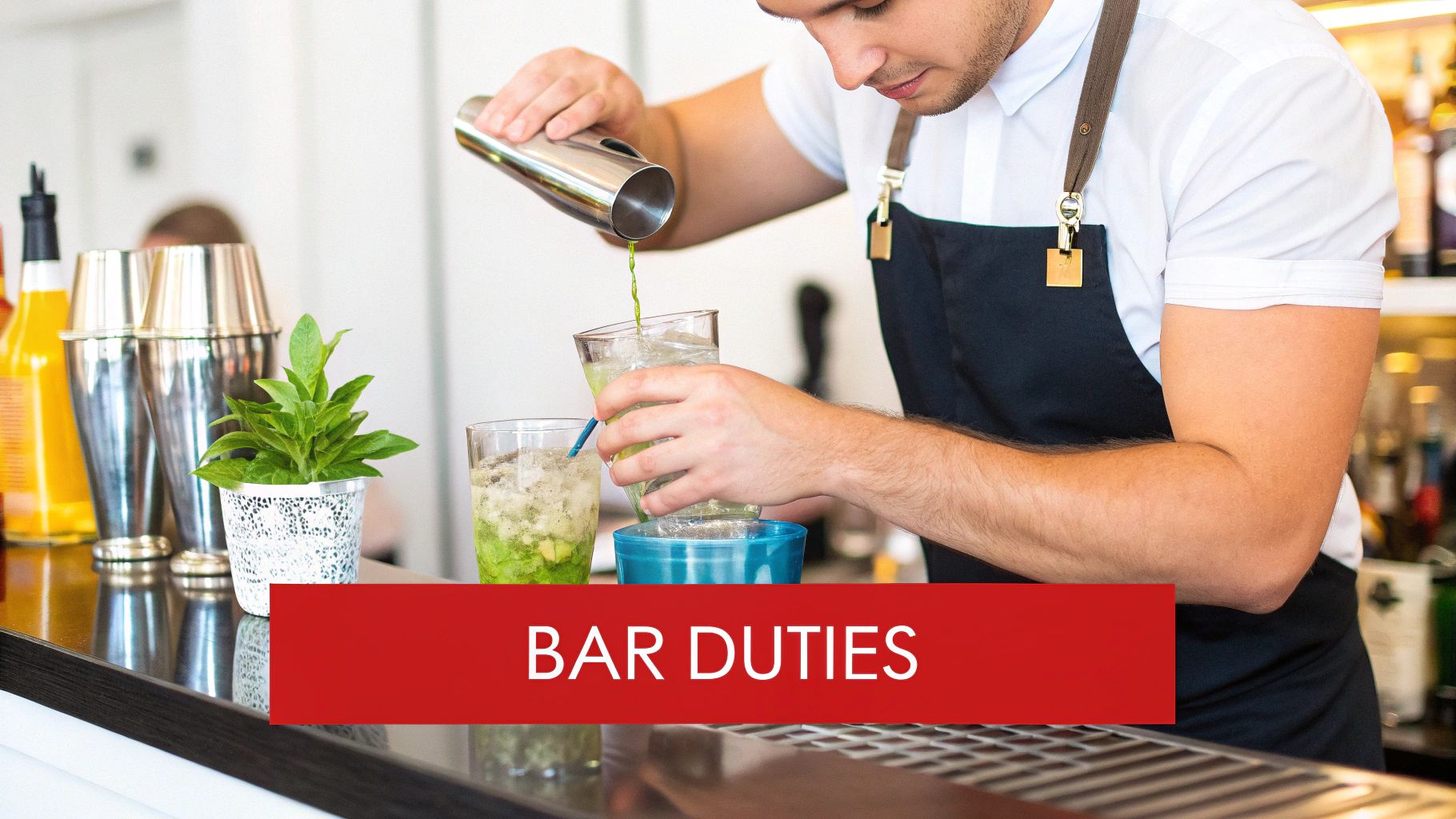
This is where you get granular. A vague list of duties only attracts unprepared candidates and guarantees headaches down the line. To avoid confusion, break the responsibilities down into logical chunks.
Structuring it this way helps applicants see the full scope of the role at a glance, from pulling pints to cashing up. It also acts as a checklist, ensuring you don’t miss any of the crucial tasks that keep your pub running smoothly and legally.
Customer Service and Order Management
The core of a barman's job is creating a welcoming atmosphere. This isn’t just about taking orders; it’s about being the face of your pub and making sure every customer leaves wanting to come back.
- Greeting and Engaging Guests: Proactively welcome people, offer recommendations from the drinks menu, and provide friendly, attentive service.
- Accurate Order Taking: Listen properly to what customers ask for, including any specific requests, and get it into the EPOS (Electronic Point of Sale) system correctly the first time.
- Handling Enquiries and Complaints: Deal with customer questions professionally, sort out minor issues on the spot, and know when to escalate a serious complaint to the manager.
Drink Preparation and Bar Maintenance
Technical skill and cleanliness are non-negotiable. A top-tier barman doesn't just know how to mix a drink; they take real pride in keeping their workspace organised, clean, and efficient.
The bartender role in UK pubs is a blend of skill and stamina, and it directly shapes the guest experience. Day-to-day duties involve everything from taking orders and making cocktails to washing glasses and keeping the bar spotless, all while checking IDs to comply with UK licensing laws. You can find out more about the bartender role in the UK on WageIndicator.
A well-kept bar says everything about a venue's standards. A barman who gets that is invaluable—their attention to detail shines through during the busiest rushes and elevates the entire customer experience.
Key duties here include:
- Beverage Preparation: Consistently prepare and serve a wide range of alcoholic and non-alcoholic drinks, whether it’s pulling a perfect pint, pouring wine, or mixing classic cocktails.
- Bar Upkeep: Keep the bar, worktops, and customer areas clean and tidy throughout the shift. This means wiping down counters, cleaning spills immediately, and collecting empty glasses.
- Restocking and Inventory: Make sure the bar is always stocked with spirits, mixers, beer, wine, and garnishes. Help with stock rotation and flag low inventory levels to management before they become a problem.
Compliance and Cash Handling
Finally, the role carries significant legal and financial responsibility. You need a barman who is trustworthy and diligent to protect your licence and your revenue.
- Licensing Law Adherence: Follow UK licensing laws without fail, especially the Challenge 25 policy for age verification and refusing service to anyone who's had too much.
- Cash and Payment Processing: Handle cash, card, and contactless payments with 100% accuracy. This includes cashing up the till at the end of the shift and making sure the sales reconcile.
Laying Out the Skills and Qualifications
When you're writing a barman job description, it's smart to split the skills you need into two camps: the absolute must-haves and the nice-to-haves. This simple split does a lot of heavy lifting. It opens the door to a wider range of good applicants while making sure everyone who applies meets your baseline standard.
Think of it this way: you’re drawing a clear line. On one side are the non-negotiables that keep service quality high. On the other are the extras that show a candidate has real potential. For a traditional pub, top-notch communication is a must, but deep cocktail knowledge might just be a bonus. For a high-end cocktail bar, those roles are reversed.
Essential Skills: The Non-Negotiables
These are the core skills a candidate absolutely must have to do the job from day one. If they're missing any of these, they’ll struggle in a busy bar, no matter what else is on their CV.
Consider these the foundations. Without them, the whole structure is weak. A candidate lacking these basics is a risky hire, plain and simple.
- Strong Communication and Interpersonal Skills: The ability to have a proper chat with regulars, take an order without mistakes, and get along with the rest of the team.
- Numeracy and Cash Handling: They need to be confident taking payments, working out bills, and cashing up the till correctly at the end of the night.
- Teamwork and Reliability: You need someone with a track record of being dependable. They show up on time, every time, and help their colleagues out when things get hectic.
- Legal Right to Work in the UK: This is a straightforward legal requirement. It must be checked and verified before you even think about making a job offer.
Desirable Skills: The Value-Adds
Desirable skills are what separate a good candidate from a great one. They aren't strictly essential, but they add serious value and can slash the time you spend on training. And let's be honest, the impact of a bad hire can be huge, so finding someone with these extras helps manage the hidden costs associated with poor recruitment.
Listing desirable skills is a signal to experienced candidates that you know what you’re looking for. It tells them you value advanced expertise and want someone who can grow with the business, not just fill a space on the rota.
Here are a few valuable extras to look for:
- Cellar Management Experience: Knowing how to change a barrel, clean the lines, and manage stock is a massive plus. It saves everyone a lot of headaches.
- Advanced Cocktail Knowledge: This is for venues with a more ambitious drinks list. Expertise in proper mixology, not just the basics, is a game-changer.
- Proficiency with EPOS Systems: If they’ve used electronic point-of-sale software before, they’ll get up to speed much quicker and be useful from their very first shift.
Setting a Competitive Barman Salary in the UK
To hire reliable and skilled staff, your barman job description has to include a transparent and competitive salary. Let’s be honest, pay is a huge factor for candidates. Being upfront about what you offer shows you’re a serious and fair employer right from the start. The first step? Knowing the market rate.
Salary expectations swing wildly depending on location, the type of venue, and a candidate's actual experience. In the UK’s hospitality scene, getting the wage right is critical. Data shows a massive range; some reports put the average hourly wage for a bartender at £13.46, while others have it closer to £9.58. Experience is what drives that gap – new starters will earn less than someone who’s spent years behind the bar. For a deeper dive, you can check out the latest UK bartender wage data on Indeed.
This infographic breaks down exactly what skills influence a barman’s value and, ultimately, their pay packet.
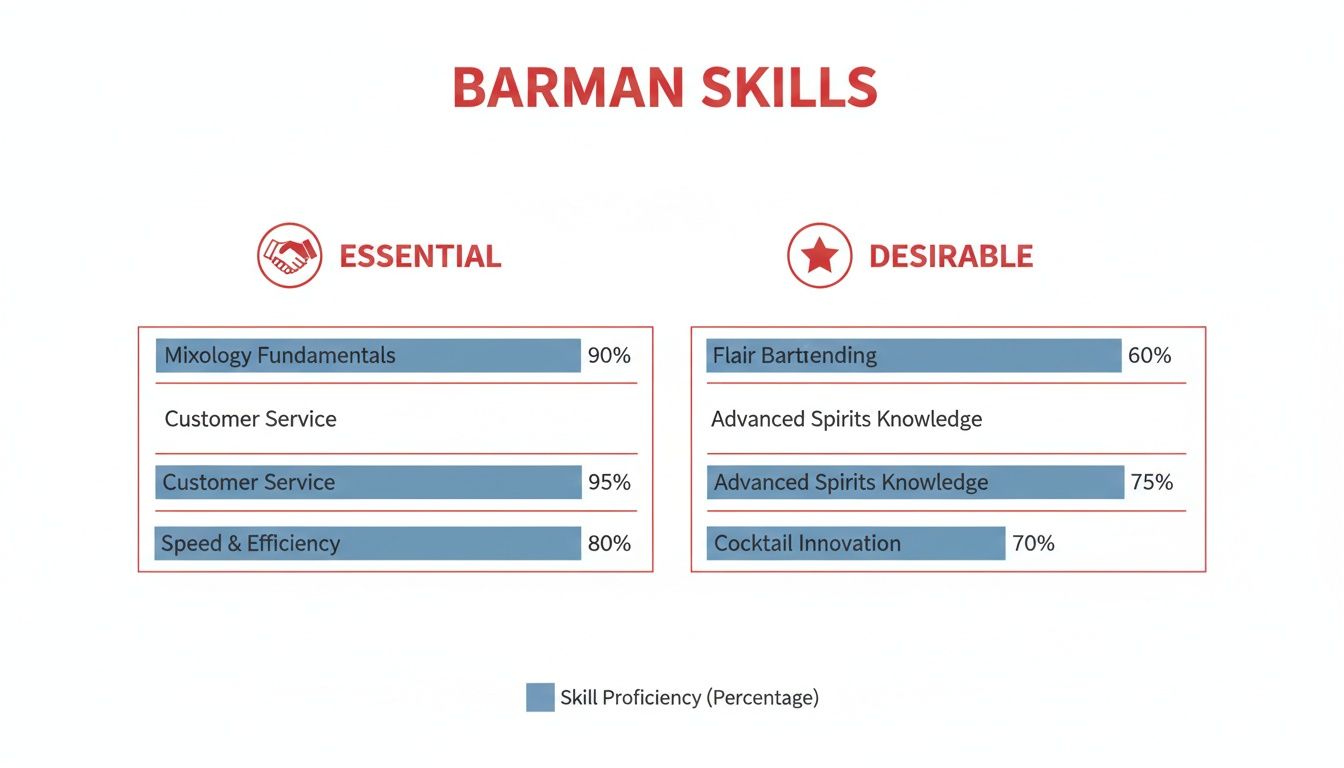
As you can see, core communication skills are a given. But it's the desirable abilities like cellar management that directly lead to higher pay and more responsibility.
Structuring Your Compensation Package
The hourly rate is just the beginning. The full compensation package is what really sells the role. Tips can massively boost a barman’s take-home pay, and you absolutely should mention this in the job description.
Be crystal clear about how your venue handles tips:
- Tronc System: Are tips pooled and shared out by a formal troncmaster?
- Direct Tips: Do staff pocket their own cash tips?
- Service Charge: Is a discretionary service charge slapped on bills, and how is it split?
Outlining Typical Shift Patterns
Finally, you need to set clear expectations around working hours. Hospitality doesn’t run 9-to-5, and candidates need to know exactly what they’re signing up for.
Stating the expected shifts upfront—evenings, weekends, split shifts—filters out candidates whose lifestyle just doesn't match the job's demands. This honesty reduces turnover and makes sure you hire someone who is genuinely ready for the role.
Your barman job description must specify the nature of the shifts. Something like, "This is a full-time role needing full availability for evening and weekend shifts, typically from 6 pm until close." This kind of clarity attracts committed people who are ready to embrace the energy of a fast-paced pub environment.
The Only Barman Job Description Template You'll Ever Need

Finding the right person for your bar is tough. A vague job ad brings in the wrong people and wastes everyone’s time. You need a description that’s clear, professional, and shows applicants exactly what your venue is all about.
Here’s a complete, ready-to-use template for your next barman job description. Just copy it, then fill in the bracketed bits to match your pub’s specific needs and vibe. It’s structured to give candidates all the essential info upfront.
Job Title: Barman / Bar Staff
Location: [Your Pub/Venue Name], [City/Town], [Postcode]
Pay Rate: £[XX.XX] per hour, plus a share of all tips
Contract Type: [e.g., Full-Time, Part-Time, Permanent]
About Us
[Your Pub/Venue Name] is a [describe your venue, e.g., vibrant community pub known for its live music, a sophisticated hotel bar with a focus on classic cocktails, or a busy city-centre restaurant]. We've built our reputation on [mention 1-2 key features, e.g., our outstanding selection of real ales and craft beers, expertly crafted cocktails, or just a warm and welcoming atmosphere]. We’re serious about great service and need a reliable Barman to join our tight-knit team.
Role Overview
We're looking for an enthusiastic and professional Barman to be the face of our pub. The job is simple: create a brilliant guest experience by serving top-quality drinks, looking after our customers, and keeping the bar clean, safe, and welcoming. This isn't just about pouring pints; it's about running the bar properly.
Key Responsibilities
- Welcome customers, take drink and food orders accurately, and handle payments efficiently.
- Prepare and serve a wide range of alcoholic and non-alcoholic drinks to a consistently high standard. No shortcuts.
- Keep the bar area clean, organised, and well-stocked at all times—before, during, and after your shift.
- Stick to all UK licensing laws without fail, especially the Challenge 25 policy.
- Handle cash and card transactions correctly, including cashing up the till at the end of the night.
- Work as part of the team to make sure service runs smoothly, even when we’re under pressure.
Skills and Qualifications
Essential:
- You must have previous experience working in a fast-paced bar or pub. We need someone who can hit the ground running.
- Great communication skills – you need to be able to chat with the regulars and deal with issues professionally.
- A positive attitude and a strong work ethic. We all pull our weight here.
- Must have the legal right to work in the UK.
Desirable:
- Experience with cellar management (changing barrels, cleaning lines).
- Good knowledge of classic cocktails and a wide range of spirits.
- Familiarity with our EPOS system, [mention your EPOS system, e.g., Zonal, Lightspeed].
What We Offer
- A competitive hourly wage plus an equal share of all tips.
- [Mention another benefit, e.g., Staff discounts on all food and drink, Flexible shift patterns that work for you].
- A supportive and friendly team. We look after each other.
To apply, please send your CV over to [Email Address] with the subject line "Barman Application".
Asking Effective Barman Interview Questions
A CV only tells you what a candidate has done. It tells you nothing about how they think on their feet or if they’ll fit into your pub’s culture. The interview is your only chance to separate a good candidate from a great one.
A well-structured interview moves past the bullet points on their CV and uncovers how they actually behave under pressure. It’s about assessing practical skills, situational judgement, and personality. This is how you build a reliable team that doesn't fall apart on a busy Saturday night.
Experience-Based Questions
These questions are your reality check. They dig into a candidate's past to get concrete examples of what they can actually do, not just what they say they can do.
- "Describe the busiest shift you've ever worked. How did you manage it?" You're listening for signs of composure. A good answer shows they can prioritise, communicate with the team, and stay organised when the pressure is on. A bad answer is just a story about being "really busy."
- "What EPOS systems have you used before?" This is a simple but vital question. It tells you how fast they'll get up to speed on your till. Familiarity with any modern system is a huge plus and cuts down training time.
- "Talk me through your process for cashing up at the end of a shift." Listen for a methodical, step-by-step process. A strong answer will mention accuracy, security, and double-checking their work. It’s a direct indicator of whether they’re trustworthy and diligent.
Situational and Behavioural Questions
This is where the real value is. Situational questions throw hypothetical scenarios at them, while behavioural questions ask for real-world examples. Both are brilliant for seeing how someone problem-solves and what their customer service instincts are really like.
How a candidate answers a question about a difficult customer tells you everything about their approach to hospitality. You're not just hiring a drink-pourer; you're hiring the person who represents your pub's standards.
Here are a few questions that cut right to the chase:
- "A customer claims you've short-changed them. How do you handle it?" The right answer involves staying calm, listening properly, and following a clear procedure – never arguing. They should immediately suggest getting a manager to check the till float. It shows maturity and a commitment to process.
- "You see a colleague over-pouring drinks for their friends. What do you do?" This is a test of integrity. A weak candidate will say they’d ignore it. A strong one understands professional boundaries and will mention speaking to the colleague discreetly or flagging it with a manager. It’s about protecting the business.
- "How would you deal with a customer who is clearly intoxicated but wants another drink?" This isn't just a customer service question; it's a legal one. Their answer must involve refusing service politely but firmly. They need to show they understand the legal responsibility to protect the customer, the licence, and the venue.
Your Questions Answered: Hiring a Barman
Hiring the right barman isn’t just about filling a slot on the rota. It's about bringing someone in who adds to your pub's atmosphere and, just as importantly, protects your licence. Managers often hit the same roadblocks, from figuring out if a candidate actually knows their stuff to navigating the legal minefield.
Getting straight answers makes the whole process faster and less of a headache. Here are the most common questions we see from pub and restaurant managers when they’re ready to recruit.
How Can I Verify a Candidate's Experience?
Taking a CV at face value is a massive risk. You have to dig a bit deeper in the interview to find out what they really know.
Throw them a few specific, real-world questions. "Talk me through how you change a keg of Guinness," or "A customer's complaining their cocktail tastes wrong. What do you do?" If you get a vague, waffly answer, that's a huge red flag. An experienced barman will walk you through it step-by-step without even thinking. And of course, always follow up on their references from previous hospitality jobs.
The single best way to test someone's skills is a trial shift. A short, paid session during a busy-but-not-chaotic period tells you more about their speed, competence, and attitude than any interview question ever could.
Is Formal Cocktail Training Necessary for a Pub?
Honestly, it depends entirely on what kind of pub you're running. If you're a traditional boozer focused on great ales and classic spirits, extensive cocktail knowledge is a nice-to-have, not a must-have. The ability to pull a perfect pint and manage the cellar is far more valuable.
However, if your pub is starting to push a cocktail menu or you're planning to, hiring someone with proper training is a smart move. They can upskill the rest of your team and genuinely elevate what you're offering.
What Are the UK Legal Requirements for Hiring a Barman?
This one is non-negotiable. First, you absolutely must verify their legal right to work in the UK. That means checking and taking a copy of their original documents (like a passport or biometric residence permit) before they work a single shift. Get this wrong, and your business could face crippling fines.
You also need to be certain they understand their responsibilities under UK licensing laws. They have to be confident with the Challenge 25 policy and know the rules about not serving intoxicated customers. Finding reliable people is tough, and knowing how agency staff can cover long-term leave gives you a compliant and effective backup when you need it.
At Relief Chefs UK, we get the pressure of finding reliable, vetted staff, often at the last minute. We handle all the checks so you can focus on running your business. Contact us today and see how we can keep your bar fully staffed and your service standards where they need to be.
Produced via Outrank tool