
Chef Recruitment Scotland: Your 2026 Guide to Hiring Top Kitchen Talent
25 March 2026

Finding and keeping good chefs is the biggest headache for any hospitality business in Scotland right now. Success with chef recruitment in Scotland comes down to knowing the market, acting fast for both emergencies and permanent roles, and having a staffing partner you can actually trust.
The Real State of Chef Recruitment in Scotland for 2026
Let's be blunt: finding reliable chefs in Scotland is harder than it's ever been. From independent pubs in Glasgow to boutique hotels in the Highlands, the daily fight to keep a full, skilled kitchen brigade is a universal problem for managers and owners. The days of a steady stream of decent CVs are over. What we have now is a brutally competitive and frustrating hiring market.
This isn't just a feeling; the numbers back it up. The whole UK hospitality sector is facing huge employment problems, and Scotland is right at the sharp end. A seriously worrying trend hit at the end of 2025, when the industry lost thousands of jobs during the busy festive period—exactly when venues need more staff, not fewer.
According to the Office for National Statistics, the hospitality sector saw 8,784 jobs disappear in December 2025 alone. The drop was even worse between September and December, hitting 20,014 positions. This squeeze is being driven by rising costs like higher employer National Insurance and looming business rate hikes. You can see the full bleak picture on the UKHospitality website.
Your Daily Kitchen Headaches
For a busy Scottish restaurant, this national data translates into very real, local crises:
- Last-Minute Sickness: Your Head Chef calls in sick before a fully-booked Saturday service. Chaos ensues.
- Seasonal Surges: Tourist spots from Edinburgh to the Isle of Skye get swamped, but you can't afford to keep a large permanent team on the books all year.
- The Shrinking Talent Pool: The number of experienced, available chefs has dwindled. You’re all fighting for the same few good people.
- Unreliable Agencies: Too many business owners have been burned by generalist recruitment agencies who don’t know the difference between a Commis and a Sous Chef, sending unsuitable candidates who waste your time.
This constant fire-fighting makes it almost impossible to focus on growing the business, delighting your guests, or training the team you already have. Every day is just about keeping the kitchen doors open.
The real problem isn't just finding a chef anymore. It's finding the right chef, right now, without dropping your standards or letting service fall apart. This is where a specialist staffing partner becomes essential for survival.
A Strategic Way Forward
You need a clear plan to handle this market. This decision tree maps out the two main routes for chef recruitment in Scotland, depending on how urgent your need is.
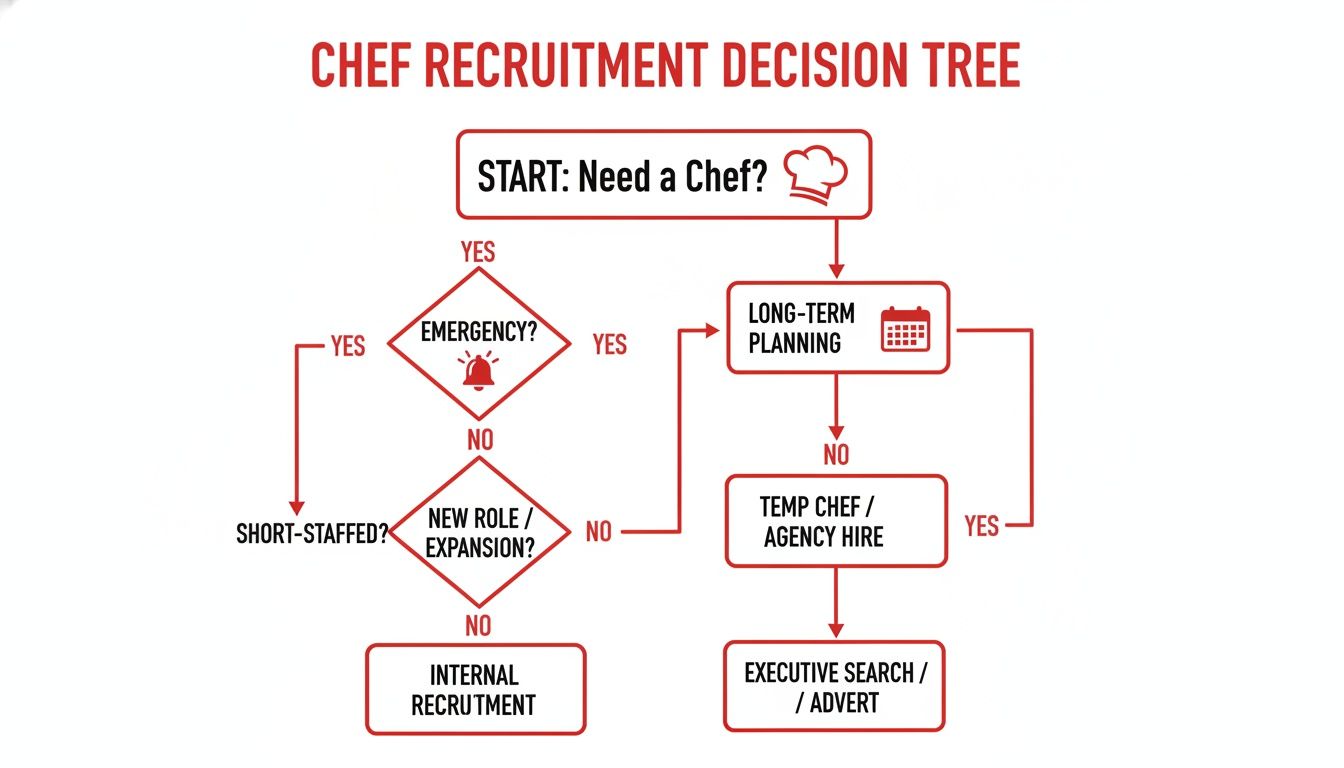
As the flowchart shows, whether you’re dealing with a sudden crisis or planning a long-term hire, having a relationship with a specialist agency already in place is the most efficient way to get results.
This isn’t an impossible situation. It’s the new reality of running a hospitality business, and it demands a modern, flexible solution. Instead of constantly reacting to staffing emergencies, you can build a system that gives you stability.
Scottish Chef Recruitment Options: A Quick Comparison
Here's a practical overview of your main options, so you can see at a glance which route best fits your immediate needs.
| Recruitment Method | Best For | Speed | Vetting Responsibility | Flexibility |
|---|---|---|---|---|
| Direct Permanent Hire | Long-term stability, building a core team, and filling key senior roles. | Slow (weeks/months) | Yours | Low |
| Relief Chef Agency | Emergency cover, seasonal peaks, holiday/sickness cover, and trying chefs before hiring. | Fast (hours/days) | Agency's | High |
| Permanent Recruiter | Sourcing candidates for senior or specialist permanent roles when you lack the time. | Medium (weeks) | Shared | Low |
Each method serves a purpose. A direct hire is an investment in your future, but for the day-to-day reality of running a service, having a reliable agency on speed dial is non-negotiable.
Established in 2013, Relief Chefs UK has been that system for hundreds of businesses across the UK, including hospitality hotspots like Berkshire, Dorset, and Devon. We provide a safety net of vetted, professional relief chefs for emergencies and also handle the difficult process of permanent chef recruitment for your long-term stability.
By partnering with a team of experienced chefs—not just recruiters—you get instant access to a nationwide network of talent, from a Sous Chef in Aberdeen to a Pastry Chef in Perth. Don't let staff shortages control your business. Get in touch with Relief Chefs UK today to build a recruitment strategy that protects your service and gives you back your peace of mind.
How to Find and Attract the Right Chef Talent
Finding a great chef in Scotland isn’t about sticking a “Chefs Wanted” sign in the window anymore. In a market this tight, where the best talent is already employed and in high demand, you need to stop recruiting and start hunting. You’re not just filling a role; you’re selling an opportunity.
The old-school methods just don't cut it. To find quality chefs in Scotland today, you need to think like a marketer. This means combining smart advertising that sells your vision, tapping into local networks, and knowing when to bring in a specialist recruitment partner.
Writing Job Adverts That Actually Work
Your job advert is your pitch. It’s the first, and often only, chance you get to grab a talented chef's attention. A dry list of duties is a complete waste of time. Today's chefs are scanning for more than a paycheque; they want to know about your kitchen's culture, the chance for a decent work-life balance, and whether they'll have any creative freedom.
To write an advert that gets responses, focus on what matters to them:
- Sell the Vision, Not Just the Job: What's your story? Are you a boutique hotel in Perthshire with a fierce farm-to-table ethos? A buzzing Glasgow gastropub that geeks out on craft beer pairings? Lead with what makes you different. That's your hook.
- Be Specific About the Role and the Freedom: Of course, you need to outline the duties. But also talk about the creative input. Mentioning responsibilities like menu development, building supplier relationships, or training junior chefs will attract chefs who are looking for that specific next step.
- Answer the "What's In It For Me?" Question: Go beyond the salary. Talk about the tips, tronc system, flexible rotas, staff meals, and training opportunities. A clear promise of a 4-day work week can be a much bigger draw than an extra £1,000 on the salary.
Pro Tip: Ditch the generic "apply now" button. Make your call to action personal. For example: "Ready to lead a passionate team and make your mark on the Dundee food scene? Send your CV directly to our Head Chef, Sarah, at [email]." It feels like a real conversation, not a faceless application portal.
A Practical Job Advert Template That Gets Results
Here’s a real-world example for a Sous Chef role in a Scottish boutique hotel. Notice how it leads with the culture and opportunity, not a boring list of tasks.
Job Title: Creative Sous Chef – Boutique Hotel, Scottish Borders
Location: Peebles, Scottish Borders
Salary: £34,000 – £36,000 per year, plus excellent tips & benefits
About Us:
We’re a family-owned, 20-bedroom boutique hotel nestled in the stunning scenery of the Scottish Borders. Our 40-cover restaurant has built its reputation on showcasing the absolute best of local and seasonal produce. We're not a big chain; we are a close-knit team dedicated to creating unforgettable experiences, and our kitchen is the heart of it all.
The Role:
We're looking for a passionate and ambitious Sous Chef to become our Head Chef’s right-hand person. You'll help lead a small, dedicated team, drive menu innovation, and be obsessed with maintaining our high standards. This is a hands-on role with real creative input—perfect for a chef looking to step up and truly make their mark.
What We Offer:
- A competitive salary and a genuine, generous share of tips.
- Real work-life balance with a 4-day working week.
- The creative freedom to design specials and contribute to our seasonal menus.
- A positive, respectful kitchen environment where your ideas are valued.
- Clear opportunities for career progression as we continue to grow.
Who We're Looking For:
- A chef with a solid background cooking with fresh, high-quality ingredients.
- Someone with a genuine passion for local, seasonal Scottish produce.
- A natural leader who enjoys mentoring and developing junior chefs.
- Calm, organised, and professional under pressure.
Ready to take the next step in your career? Send your CV and a brief note about your culinary style to us. We can't wait to hear from you.
Leveraging Networks and Specialist Agencies
A great advert is crucial, but let's be honest: many of the best chefs aren't even looking at job boards. They're too busy. You need to go where they are, which includes local hospitality groups on social media and industry events.
But the most direct and effective way to access this hidden talent pool is by partnering with a specialist chef recruitment agency. Established in 2013, Relief Chefs UK has been building a nationwide network of vetted, high-calibre chefs. We provide everything from emergency relief chefs to cover a sudden gap, to finding the perfect candidate for your most critical permanent chef roles.
Instead of you wasting weeks sifting through irrelevant CVs and conducting dead-end interviews, we do the heavy lifting. We present you with a tight shortlist of professionals who aren't just skilled, but are a genuine fit for your kitchen’s culture and specific demands.
This saves you an incredible amount of time, reduces the risk of a bad hire, and gives you immediate access to talent you simply wouldn't find on your own.
Don't let staff shortages dictate your success. Contact Relief Chefs UK today to discuss your recruitment needs and let our experts find the perfect chef for your Scottish kitchen.
Vetting Candidates to Protect Your Kitchen
Hiring the wrong chef does more than waste money. A bad hire can poison your kitchen culture, destroy morale, and tank your reputation. A great-looking CV is one thing, but a chef's real value is their attitude, reliability, and how they perform when the dockets are flying.
Proper vetting is your only real defence against the chaos a bad hire brings. This isn't just reading a CV. It’s a methodical process of reference checks, strict ‘Right to Work’ verification, and a practical trial that tests skill and temperament. In a market as tight as Scotland's, cutting corners on vetting is a risk you can’t afford.
Going Beyond the Standard Reference Check
A reference check should never be a box-ticking exercise. Vague questions get vague, useless answers. Forget asking, "Were they a good chef?". You need to dig for details that reveal their real character.
When you get a previous employer on the phone, ask targeted questions:
- "How did they react to a sudden rush or a mistake during a busy Saturday service?"
- "Can you give me an example of their input on menu development or costing?"
- "How was their timekeeping and reliability with the rota?"
- "On a scale of 1-10, how would you rate their ability to work calmly with the front-of-house team under pressure?"
These questions force the referee to give you real-world examples, not just generic praise. It’s that detail that helps you build a genuine picture of who you're about to let into your kitchen.
A huge red flag is a candidate who only provides mobile numbers for references, or seems cagey about putting you in touch with their last Head Chef. It usually means they left on bad terms. Always insist on speaking to their direct line manager at the business.
The Working Trial: A Real-World Test
The single best way to vet a chef is to get them in your kitchen. A well-structured working trial is not about getting free labour—it’s a paid assessment of their practical skills, cleanliness, speed, and, crucially, how they fit in with your brigade.
Here’s how to structure it for a clear result:
- Be Clear on Expectations: Tell them exactly what they'll be doing. Ask them to prepare a specific dish from your menu or create something from a mystery box of core ingredients. This tests their ability to follow instructions and their creativity.
- Observe Their Process: Watch their mise en place. Are they organised and clean, or chaotic and messy? The way a chef sets up their station tells you everything about their professionalism.
- Assess Their Attitude: How do they take direction? Do they ask smart questions? How do they communicate with other chefs and the KP? A skilled chef with a bad attitude is a liability.
This practical test quickly separates the professionals from the pretenders.
The Legal Essentials: Right to Work Checks
This part is non-negotiable. Before anyone sets foot in your kitchen—even for a paid trial shift—you must verify their legal right to work in the UK.
Failing to do this can land you with crippling fines and serious legal trouble. The process is strict: you must check and take copies of original documents, like a passport or specific visa combinations. The government's guidelines must be followed to the letter for every single hire.
This entire vetting process is time-consuming and demands expertise. It’s a core part of the value offered by reputable employment agencies for chefs.
At Relief Chefs UK, we do all this heavy lifting for you. Established in 2013, our bulletproof vetting system is the foundation of our business. Every chef on our books has been meticulously checked. We verify their experience, chase down their references, confirm their Right to Work status, and assess their practical skills.
When you get a chef from us, you get peace of mind. You get a fully vetted, insured, and work-ready professional who can step into your kitchen and perform from day one. Protect your kitchen from the risk of a bad hire and get access to our network of pre-vetted talent.
Onboarding and Retaining Your Best Chefs
Getting a chef to sign the contract isn’t the finish line. Those first few weeks are critical. A chaotic, disorganised welcome can make a great new hire regret their decision before they’ve even plated a main course.
A structured onboarding process shows you respect their time and are invested in their success. It transforms a new hire into a loyal team member from day one.
A Practical First-Week Checklist
A great first week is planned. It's not about drowning them in paperwork. It's about integrating them into the team and the kitchen's rhythm.
Here’s a real-world checklist:
- Day 1 Morning: A proper welcome from you or the Head Chef. Get HR paperwork done first, then give a full site tour—including staff areas. End with a coffee and a walk-through of the kitchen, pointing out stations, storage, and key safety equipment.
- Day 1 Afternoon: Introduce them to the entire team, not just the other chefs. Make sure they meet front-of-house managers, the bar team, and the KPs. Explain the docket system.
- Days 2-3: Shadowing and learning. Pair them with a trusted senior chef. Let them absorb the flow of service and learn the menu specs without the pressure of running a section.
- Days 4-5: Phase in responsibility. Give them a quieter section to run or specific prep tasks. At the end of the week, schedule a quick, informal chat to ask for their feedback and answer any questions.
This isn’t hand-holding. It’s a professional induction that gets rid of the "sink or swim" mentality that drives so many good chefs out of the industry.
Your onboarding is not a task to delegate and forget. It’s your single best opportunity to prove your business is a great place to work. A well-managed first week can be the difference between a chef staying for three months or three years.
Strategies for Long-Term Chef Retention
Onboarding gets them in the door, but keeping your best chefs requires constant effort. In a market as competitive as Scotland's, you can’t afford to lose good people over preventable issues. It's not just about pay; it's about the entire experience.
Recent data from hospitality specialists Pineapple, which surveyed 35,000 employees, showed that staff turnover in hospitality dropped from 75% to 67% in 2025. This was linked directly to better promotion rates, more employee development, and improved training. You can read more about these hospitality employment findings.
The data proves it: investing in your team reduces turnover. Here are strategies that genuinely work:
- Create Clear Career Paths: Show your Commis Chef the path to becoming a Chef de Partie. Show a Sous Chef what they need to do to land the Head Chef role. Give them a reason to stay and grow.
- Invest in Meaningful Training: Go beyond mandatory health and safety. Fund courses in butchery, pastry, or wine pairing. It sharpens their skills and proves you are invested in their career.
- Promote a Genuine Work-Life Balance: This is a top priority for modern chefs. Stick to the rota. Avoid last-minute changes. If you can make a four-day week work, do it. A respected, well-rested team is a loyal team.
Of course, investing in your core team's development requires stability. You can't focus on training plans if you're constantly fighting fires because of short-notice sickness or holiday gaps.
This is where a strategic partnership with Relief Chefs UK becomes invaluable. By using our professional temporary chefs to handle unexpected gaps, you create the operational calm needed to properly train and retain your permanent team. We provide flexible hospitality staffing support that gives you the breathing room to build a stronger kitchen for the long term.
Contact Relief Chefs UK today to see how our flexible staffing support can help you retain your best talent.
Managing Emergency Cover And Seasonal Demand

It’s the call every manager dreads. 8am on a Friday, your Head Chef is sick, and you have a fully booked weekend. Or a sudden heatwave hits your Aberdeenshire coastal spot, and the kitchen is swamped with walk-ins your small brigade can’t handle.
These aren't just hypotheticals. For hospitality managers across Scotland, they're reality. Whether it’s the tourist surge during the Edinburgh Festival Fringe or covering a sudden departure, the battle to manage unpredictable demand is constant. The stress of scrambling for cover and watching service quality slip is immense.
This kind of constant fire-fighting isn't sustainable. It burns out your best people and damages your reputation. There is a much calmer, more strategic way to operate.
The Real Cost of a Staffing Crisis
A single shift without a key chef creates a domino effect that costs you far more than a day's wages. The true damage includes:
- Lost Revenue: Forcing you to limit covers, turn away bookings, or shut the kitchen for a service.
- Reputation Damage: Inconsistent food and slow service lead to bad reviews that linger for months.
- Team Burnout: Pushing your remaining team leads to mistakes, sinks morale, and often triggers more staff to leave.
- Management Overload: Your time gets sucked into rota-juggling and panic-phoning instead of being on the floor.
Recent industry surveys paint a clear picture. Looking ahead to 2026, 71% of UK restaurant owners expect growth, yet a huge 60% are simultaneously worried about labour shortages. This comes off the back of a tough 2025, where half of all owners reported moderate to extreme problems with hiring. You can read more about the industry's growth and labour concerns.
The data highlights a critical truth: you can't plan for growth without a solid plan for flexible staffing. A reliable staffing partner isn't a luxury; it’s a core part of your strategy.
A crisis is only a crisis if you're not prepared for it. By establishing a relationship with a trusted chef agency before you need them, you transform a potential disaster into a manageable operational task.
A Seamless Solution for Unpredictable Needs
This is exactly the problem Relief Chefs UK was established to solve back in 2013. We are a nationwide agency run by experienced chefs, not just recruiters. We know the intense pressure of service and understand that when you need cover, you need a reliable, skilled professional who can step in without fuss.
Instead of a panicked scramble, picture this: your chef calls in sick. You make one phone call. We already know your kitchen’s standards and what you expect.
As quickly as we can, subject to availability, a fully vetted, insured, and experienced relief chef is heading to your venue—whether you're in central Glasgow, rural Perthshire, or a remote Highland hotel. They walk in ready to work, blending into your team and keeping standards high. Service continues without a hitch, your customers are happy, and your permanent team isn't pushed to breaking point.
This is the peace of mind our nationwide support system is designed to provide:
- Rapid Response: We acknowledge your request and start the search immediately.
- Short-Notice Placement: We are committed to getting a skilled chef into your kitchen as quickly as we can, subject to availability.
- 24/7 Support: Kitchen crises don't work 9-to-5, and neither do we.
Our support covers everything from emergency temporary agency chef cover and seasonal support to sourcing high-calibre yacht chefs and villa chefs. For businesses looking for long-term stability, our expert permanent chef recruitment services find you the talent that fits your vision.
Don't wait for the next staffing crisis to derail your business. The best time to build your support system is now.
Contact Relief Chefs UK today to discuss how our flexible hospitality staffing can protect your service, support your team, and give you the stability to focus on growth.
Got Questions About Finding Chefs in Scotland?
Even when you know you need help, bringing in a new chef—temporary or permanent—can feel like a big leap. It’s a move built on trust. Here are some straight-talking answers to the questions we hear most often from hospitality managers across Scotland.
How quickly can I actually get a relief chef in Scotland?
We know a kitchen crisis doesn’t wait for office hours. A no-show or sudden illness is a direct threat to your service, and speed is everything.
For a genuine emergency in a major hub like Glasgow or Edinburgh, we can often have a fully vetted, experienced chef at your door at short notice, subject to availability.
Across the rest of Scotland, from Aberdeen down to the Borders, we can arrange vetted chef cover, subject to availability. It’s all backed by a 24/7 support line. You make one call, and we get to work.
Is using a chef agency more expensive than hiring directly?
It’s the first question everyone asks. Looking at the day rate alone is a classic mistake. The real costs of hiring yourself are the ones you don’t see on an invoice.
Think about the time and money you burn doing it yourself:
- Advertising Fees: The bills for posting on multiple job boards add up.
- Wasted Management Time: How many hours do you lose sifting through CVs, chasing references, and interviewing unsuitable people?
- Lost Revenue: One disastrous, understaffed service can cost you thousands and do serious damage to your reputation.
- The Cost of a Bad Hire: Getting the wrong person in your kitchen causes chaos, tanks morale, and forces you to start the whole expensive process again from scratch.
When you partner with a specialist agency, you swap all those unpredictable costs and risks for one clear, manageable fee. We deliver a reliable, insured professional who adds value from their first shift, protecting your revenue and giving you your time back.
What's the difference between a relief chef and a permanent hire?
Getting this right is key to building a flexible, resilient kitchen team. Each role serves a different but equally vital purpose.
A relief chef (or temporary chef) is your short-term, tactical solution. They’re the specialists you bring in to handle specific, immediate problems like:
- Sudden sickness or planned staff holidays
- Busy seasonal peaks, like the summer tourist rush or the festive period
- Covering a key section while you search for a new permanent team member
A permanent hire, on the other hand, is a long-term strategic investment. This is a core member of your brigade, on your payroll, who will help grow the business and define your kitchen's future.
We are experts in both. We can get a temporary agency chef into your kitchen at short notice, subject to availability, to keep service running without a hitch, while our permanent recruitment team handles the detailed search for your ideal long-term candidate. It’s a dual approach that ensures your kitchen never misses a beat.
Don't let staff shortages dictate whether your Scottish venue succeeds or fails. The expert team at Relief Chefs UK, established in 2013, is ready to deliver the fast, reliable, and professional kitchen support you need, whether it's for an emergency shift tomorrow or a strategic hire for the months ahead.
Contact us today to find the right chef for your kitchen and get the peace of mind that comes with having a trusted staffing partner on your side.
Call the team.
Office 01392 715474 · info@reliefchefs.co.uk