
Mastering Chef Recruitment in the UK: A Practical Guide for Hospitality Managers
27 March 2026

Finding and keeping good chefs isn't just a headache; it's a critical threat to your kitchen's stability and your bottom line. Relying on last-minute job ads and hoping for the best is a recipe for disaster. To survive the constant pressure of staff shortages, high turnover, and unexpected sickness, you need a smarter, more proactive approach to how you hire.
This guide provides actionable advice for hotel managers, head chefs, and operations teams facing the realities of chef recruitment across the UK.
Navigating the UK Chef Shortage
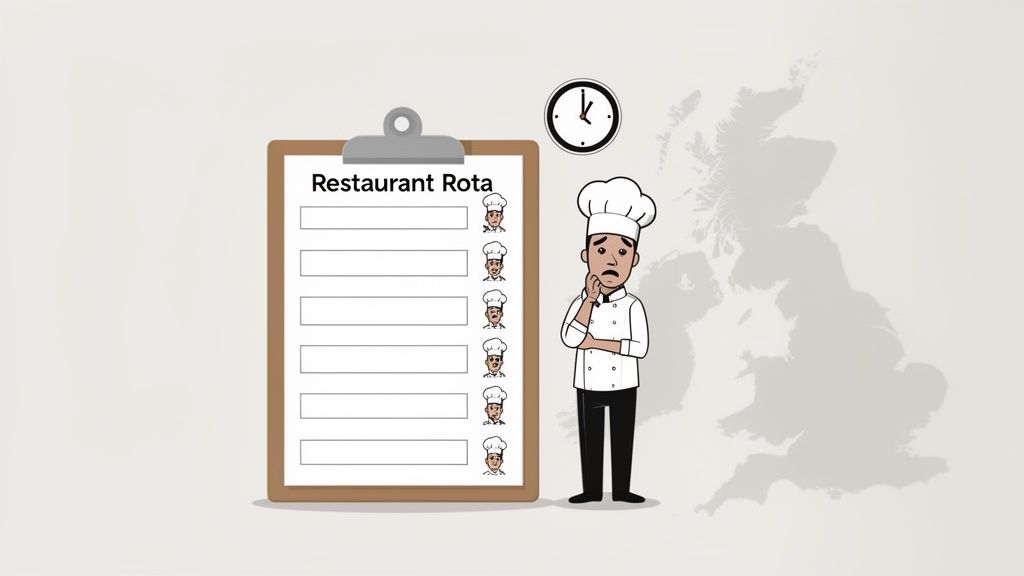
If you’re a hospitality manager staring at another gaping hole in the rota, you know the feeling. Whether you’re running a busy gastropub in Bristol or a boutique hotel in Windsor, the pressure is relentless. The ongoing chef shortage has turned recruitment into a constant battle, leaving far too many kitchens in a permanent state of crisis.
This isn’t a small problem. It hits your bottom line directly. Every unfilled shift puts more strain on your best people, skyrockets the risk of burnout, and can even force you to cut service hours or close the doors on what should be your busiest days. This is the reality of the current staffing crisis.
The Real Costs of Kitchen Instability
The numbers don’t lie. When kitchens are understaffed, the business suffers. With rising costs squeezing margins, many hospitality businesses are now cutting their operating hours just to cope. This is a perfect storm for any hospitality venue:
- Lost Revenue: Empty tables because the kitchen can’t keep up with the dockets.
- Team Burnout: Your best chefs are overworked, making them more likely to leave for a better offer.
- Inconsistent Quality: Standards inevitably drop when the team is stretched to its breaking point.
- Reputational Damage: Unhappy guests leave negative online reviews that are hard to recover from.
In this environment, having a solid recruitment strategy isn't just good practice—it's a survival tactic. Relying on luck and last-minute ads simply won't work anymore.
Why a Specialist Partner Is Your Lifeline
The endless cycle of recruiting, hiring, and losing chefs is exhausting and incredibly expensive. This is where a proper partner makes a tangible difference. An agency that actually understands the relentless pressure of a professional kitchen can be a genuine lifeline, especially when dealing with short-notice sickness or seasonal demand.
At Relief Chefs UK, we've been that partner for businesses across the country since 2013. We’re run by chefs, for chefs, so we know exactly what you’re up against and what a good chef looks like. Our nationwide chef recruitment agency was established to solve real kitchen problems.
Whether you need to cover last-minute sickness in Dorset, plan for a seasonal rush in Wales, or run a full recruitment drive for a permanent role, our nationwide network delivers. We provide pre-vetted, professional temporary chefs who are ready to perform from the second they walk through your door, giving you the kitchen stability and peace of mind you need.
If your kitchen is feeling the strain, don't wait for it to break. Contact Relief Chefs UK today and let's talk about how our flexible hospitality staffing support can protect your business.
How to Write a Job Spec That Actually Gets You Good Chefs
A vague job spec is the fastest way to drown your inbox in irrelevant CVs, wasting hours you simply don’t have. To attract high-calibre chefs, you need to ditch the generic templates. A great job spec isn’t just a list of duties; it's a sales pitch for your business.
Think of it as the single most important step in your hiring strategy. Whether you're hiring directly or bringing in a specialist like Relief Chefs UK for a permanent role, getting this document right is non-negotiable. It’s what separates a flood of time-wasters from a shortlist of real contenders.
Go Beyond the Generic Job Title
"Chef de Partie wanted" tells a candidate next to nothing. What kind of CDP? For a high-volume hotel in Reading churning out 300 covers a night, or a fine-dining spot in a boutique hotel in Windsor? The skills, pressure, and personality required are worlds apart.
Your job title and the first few lines must provide instant context. Be specific about the level, the environment, and what makes your job different from the ten others they’ve already scrolled past.
Here’s a weak opening:
“We are looking for a reliable Sous Chef to join our team. Must be a team player and able to work under pressure.”
This is a carbon copy of every other bad ad out there. It’s boring, generic, and will attract anyone just looking for "a job" rather than the right person for your job.
And here’s a strong one:
“Sous Chef – Modern British Gastropub – Bristol. We’re seeking an ambitious Sous Chef to help lead our creative, fast-paced kitchen. You’ll be the Head Chef’s right hand, driving menu development and mentoring a passionate team in one of Bristol’s most celebrated independent gastropubs.”
See the difference? This immediately paints a picture, targeting a specific kind of chef and setting a professional tone from the get-go.
Detail the Role and Responsibilities with Clarity
This is where you get into the nitty-gritty of the job. Don't just list tasks; describe the impact of those tasks. Connect the dots between what they’ll be doing and the success of the kitchen.
Instead of just "Stock control," try "Manage GP through meticulous stock control, ordering, and waste reduction." Instead of "Run a section," use "Confidently lead the grill section during a frantic weekend service, ensuring consistency and quality for up to 150 covers."
A well-defined job spec proves you're an organised, professional employer who respects a chef’s time and career. It shows you’ve actually thought about the role and are serious about finding the right person.
Sell Your Culture and What You Offer
Why should a great chef choose your kitchen over the one down the road? In a market this competitive, you are selling an opportunity, not just filling a gap in the rota. This is your chance to show off your venue’s culture and the benefits that aren’t just about the money.
Think about what makes your place stand out:
- Work-Life Balance: Do you offer a 4-day work week or consistent days off? Shout about it.
- Creative Input: Will the chef get to contribute to menu development? This is a huge draw for ambitious chefs.
- Team Vibe: Is your team supportive and collaborative? Describe the atmosphere. Don’t just say it’s a "family."
- Location Perks: Are you a seasonal resort in Devon offering live-in accommodation? Or a city-centre venue in Reading or Slough with great transport links? Put it in.
Equally, be honest about the tough parts. If it's a high-pressure environment where they'll be in the weeds every Saturday, say so. The right candidate will be fired up by that challenge, and the wrong ones will see themselves out, saving everyone a lot of time.
Finally, you have to talk about money. You might not want to list the exact salary, but providing a competitive and realistic range is crucial for getting serious applicants. For more guidance on this, our detailed breakdown of how much UK chefs make can help you make sure your offer hits the mark.
By crafting a detailed, honest, and compelling job spec, you lay the foundation for a successful hire. If you need help defining roles or want to tap into a pool of pre-vetted talent, contact Relief Chefs UK today for expert support with your permanent chef recruitment.
Choosing Your Recruitment Path: Direct Hire vs. Specialist Agency
You’ve got the perfect job spec. Now comes the hard part: finding the actual person. This is where you make a crucial commercial decision, not just an HR one. Do you try to go it alone, or do you bring in a specialist partner?
The Direct Approach: The DIY Gamble
On paper, handling recruitment yourself seems like the obvious way to save money. You post an ad, maybe share it on your socials, and wait for the perfect CVs to land in your inbox. Simple.
Except it never is. The reality of direct hiring is far more complicated and, frankly, often more expensive than you think. The biggest hidden cost is your own time. Every hour you spend wading through dozens of terrible CVs is an hour you’re not managing your kitchen, controlling stock, or actually running your business.
Let’s be honest about what that looks like for a Head Chef role in a Berkshire hotel:
- Advertising Costs: You can burn through hundreds of pounds on job board credits with absolutely no guarantee of finding a single suitable applicant.
- The Admin Black Hole: You’ll be flooded with applications, but most will be from people who lack the right skills, the right experience, or even the legal right to work in the UK. Filtering them is a soul-crushing time sink.
- No-Shows and Wasted Time: There’s nothing more frustrating than blocking out your diary for interviews only for candidates to not even bother turning up.
A clear job spec is your first line of defence against this chaos, attracting better talent from the start and saving you from a mountain of irrelevant applications.
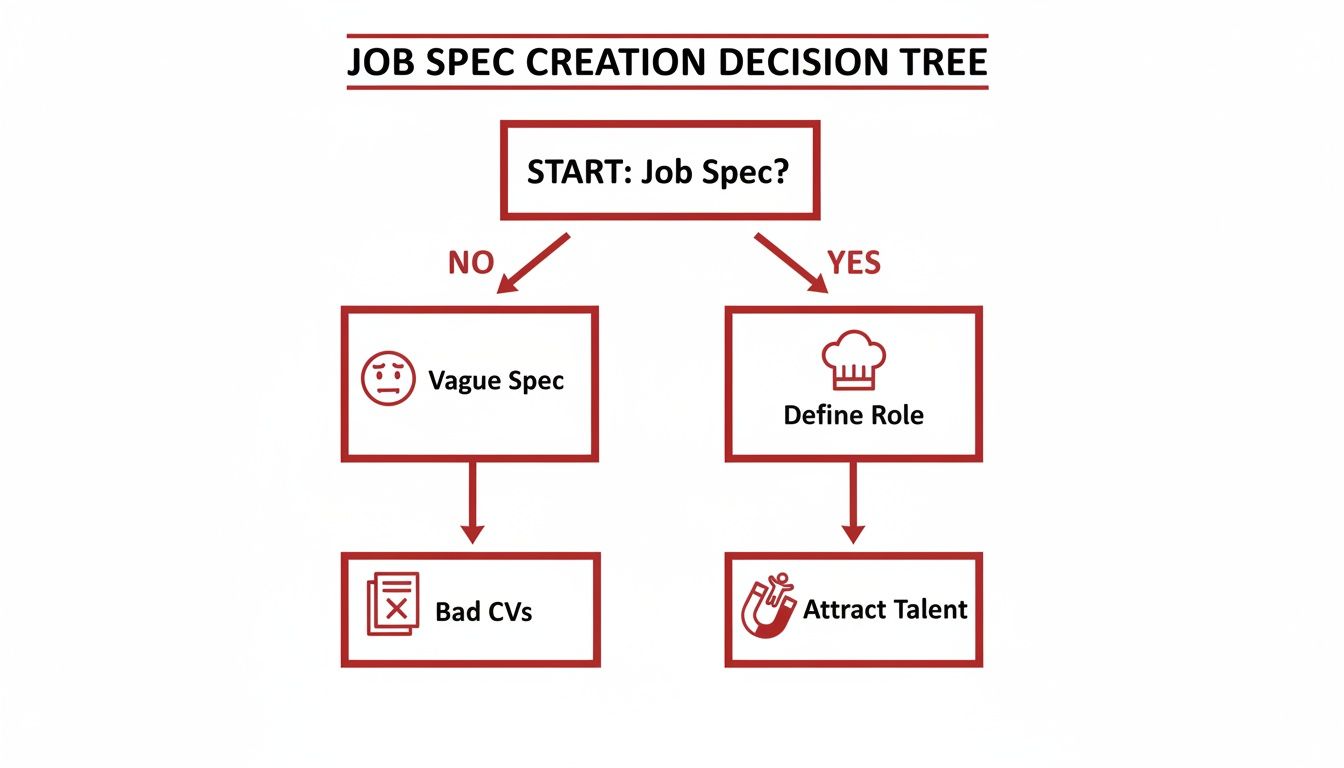
As this shows, a vague brief guarantees a frustrating and unproductive search. The DIY route feels like a gamble where the odds are stacked against you, especially in a market this tight.
The Strategic Alternative: Partnering With a Specialist
Now, let’s compare that struggle with the strategic alternative: partnering with a specialist chef recruitment agency. This isn't about just outsourcing a problem; it's about investing in a solution. A good agency doesn’t just forward you a stack of CVs—they deliver vetted, qualified, and genuinely interested candidates.
This is exactly where a consultancy like Relief Chefs UK adds real value. Founded in 2013 and run by experienced chefs, we understand the reality of a working kitchen in a way generalist recruiters never can.
When you partner with a specialist, you are buying back your time and investing in certainty. You're not just paying a fee; you're securing a pre-vetted pipeline of professional talent.
The benefits are immediate.
- A Vetted Talent Pool: We have a live network of professional chefs—for both permanent and temp roles—who have already been interviewed, reference-checked, and assessed for their skills and reliability.
- Real-World Expertise: We know what a great chef looks like, both on a CV and in person. We spot the red flags and identify the rising stars, saving you from expensive hiring mistakes.
- Speed and Efficiency: Need a new permanent Head Chef, or urgent cover for one who’s just gone down with norovirus? We cut through the noise and give you a small, curated shortlist of people who are a genuine fit for your venue.
Recruitment Channel Comparison: Direct Hire vs. Agency Partner
It's crucial to weigh the true costs and benefits. While an agency fee is a line item, the costs of direct hiring—like lost revenue and your own time—are often hidden. This table breaks down the reality of both approaches.
| Factor | Direct Hiring | Specialist Agency (Relief Chefs UK) |
|---|---|---|
| Upfront Cost | Low (advertising fees) | Higher (placement fee) |
| Hidden Costs | High (management time, admin, lost revenue) | Minimal (all-inclusive fee structure) |
| Time to Hire | Slow and unpredictable | Fast, with a ready talent pool |
| Candidate Quality | Low to variable; high volume of unsuitable CVs | High; candidates are pre-vetted and qualified |
| Vetting & Compliance | Your responsibility (time-consuming and high-risk) | Handled by the agency (Right to Work, references) |
| Success Rate | Low; high risk of no-shows and bad hires | High; vetted, experienced chefs matched to the role |
Ultimately, the choice depends on what you value more: saving a fee or saving your time, sanity, and revenue.
Yes, there’s an agency fee. But you have to weigh it against the very real cost of an empty position: lost takings, a burnt-out team, and service standards taking a nosedive. Our guide on how a specialist recruitment agency for chefs can be a surprisingly cost-effective strategy explains this in more detail.
For businesses ranging from independent Dorset pubs to large hotel groups, the choice is becoming clearer. Direct hiring may look cheaper at first glance, but partnering with a specialist offers a more efficient, reliable, and ultimately more profitable way to build the strong kitchen team you need.
Vetting Chefs Beyond the CV: The Interview and Trial Shift
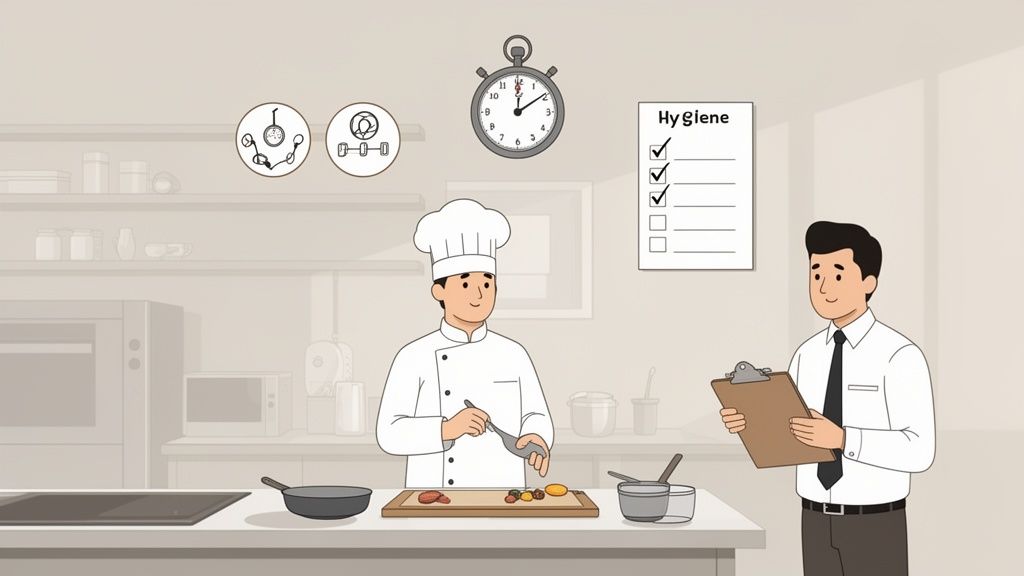
A polished CV gets a chef through the door. That’s it. It tells you nothing about how they’ll perform when the dockets are flying and a Saturday night service is going sideways. This is where your vetting gets real.
A sharp interview and a properly structured trial shift are the only ways to know if you’ve found a solid professional or just someone who looks good on paper. This is the stage of chef recruitment uk where many managers drop the ball, and it's a costly mistake. Getting it right protects your kitchen’s stability, your team’s morale, and your reputation.
The Interview Questions That Matter
Your goal here isn't to re-read their CV. It's to find out if they can think, solve problems, and handle the specific pressures of your kitchen, whether it's a high-volume hotel in Reading or a gastropub in Bristol.
Ditch the cliché questions like, "What's your biggest weakness?" They only invite rehearsed, meaningless answers. Get practical instead.
- Scenario-Based Questions: "You're on the fish section, it's a busy Saturday. A key ingredient hasn't turned up, and we've got 20 covers of sea bass on the books. What's your move?" This tests their ability to think on their feet, not just follow a recipe.
- Teamwork and Temperament: "Describe a time you disagreed with a Head Chef's decision. How did you handle it?" This question cuts straight to their ego and whether they can work within a brigade's structure.
- Hygiene and Process: "Walk me through your exact process for closing down your section at the end of service." A great chef will give you a detailed, systematic answer covering cleaning, labelling, stock rotation, and prep for the next day.
The answers to these questions reveal a chef's real professionalism. A vague or defensive response is a huge red flag. It points to a lack of experience or a difficult attitude that can poison a kitchen.
Structuring a Paid Trial Shift That Works
The trial shift is your single most important assessment tool, but it has to be fair, structured, and, most importantly, paid. Never ask a chef to work for free—it's unprofessional and sends a terrible message.
A disorganised trial is a waste of everyone's time. Don't just throw them onto the busiest section during peak service and hope for the best.
Here's how to run a trial that gives you real insight:
- Start Before Service: Get them in an hour or two before the rush. This is your chance to see how they handle basic prep without the pressure of service.
- Assign a Specific Task: Give them a clear, controlled brief. For example, "Here are the ingredients for our chicken ballotine. I need four portions prepped." This lets you assess their knife skills, organisation, and technique.
- Observe During Service: Put them on a section alongside one of your trusted senior chefs. Watch how they move, how they communicate, and how they react when the pressure builds.
- Check Their Clean-Down: A chef's professionalism is most obvious in how they leave their station. Is it spotless and ready for the morning, or a disaster zone?
The Non-Negotiable: Right to Work Checks
Beyond skill and attitude, there's one absolute legal requirement you cannot skip: you must verify every candidate's Right to Work in the UK. Getting this wrong can lead to crippling penalties, including fines of up to £60,000 per illegal worker.
The administrative headache of these checks, on top of interviews and trials, is a huge drain on time. This is where a specialist agency provides immediate value. At Relief Chefs UK, we handle all this rigorous vetting for you. Every chef we supply, whether for a temporary chef placement or a permanent role, arrives fully insured, reference-checked, and with their Right to Work status confirmed.
Although staff turnover has eased slightly, a 2026 survey found that 60% of UK restaurant owners still see staffing shortages as a primary concern. Many report moderate to extreme hiring difficulties, a pressure that makes efficient, reliable vetting more critical than ever. You can read more about how staffing issues are impacting UK restaurants in this 2026 report.
If you’re tired of the endless cycle of interviewing and trialling chefs only to be let down, let us take care of it. Contact Relief Chefs UK today and get access to a network of pre-vetted professionals ready to step straight into your kitchen.
Using Temporary Chefs to Solve Staffing Gaps

It’s the scenario every hospitality manager dreads. A key chef calls in sick at 7 am before a fully booked service. An unexpected heatwave brings crowds flocking to your pub garden in Dorset. Or, worse, a staff member just doesn't show up.
These moments can bring a kitchen to a grinding halt, directly threatening your service, revenue, and the reputation you’ve worked so hard to build.
When disaster strikes, your approach to chef recruitment uk can't be about finding a permanent hire. It’s about getting immediate, professional cover on the line. This is where temporary chefs become a genuine lifeline, protecting your business from the chaos of short-notice staffing gaps.
The UK's hospitality market is a powerhouse, adding an estimated £93 billion to the economy each year. As the nation's third-largest employer, the persistent recruitment strains threaten the very pubs and boutique hotels that drive its success. You can see more on the industry's challenges in these UK hospitality statistics. This pressure makes reliable access to skilled chefs more critical than ever.
Relief Chef vs. Temporary Chef: What Is the Difference?
Knowing the right tool for the job is essential. While people use these terms interchangeably, there’s a crucial distinction that helps you make a smarter commercial decision.
A Relief Chef is your emergency service. This is the pro you call for immediate, short-term cover—think a few days to a week. They are your fix for sudden illness, no-shows, or bridging the gap after a chef walks out. Their entire job is to step in, adapt instantly, and keep the kitchen running with zero drama.
A Temporary Chef is for planned, fixed-term needs. This could mean covering maternity leave, a long-planned holiday, managing a seasonal peak at a resort in Wales, or supporting a big event. They're brought in for a set period, usually from a few weeks to several months.
At Relief Chefs UK, we do both. We are experts in deploying rapid-response relief chefs to solve a crisis and placing skilled temporary chefs for longer-term projects, including highly specialised roles like yacht and villa chefs.
How Our Rapid Response Model Works
Picture this: your Head Chef in Berkshire gets hit by norovirus on a Monday morning. NHS advice is clear—they must stay home for 48 hours after symptoms stop. That means they could be out for the entire week, putting your whole service at risk.
Instead of panic-calling every contact in your phonebook, you make one call. Straight away, a plan is in motion. As quickly as we can, subject to availability, a fully vetted, professional chef walks into your kitchen, ready to go. That’s not a luxury; it’s a modern business necessity.
Our process at Relief Chefs UK, refined since 2013, is built for exactly this scenario.
First, you call us or fill out a simple online form with what you need.
Our commitment is a prompt response, 24/7, confirming we’ve got your request and are activating our network.
Next, our team of experienced chefs gets to work. We don't just use recruiters; we use chefs to find chefs. We match the right skills, experience, and temperament to your kitchen’s specific needs.
The result? A fully insured, reference-checked, and Right to Work-verified chef arrives at your venueanywhere from Bristol to Slough, subject to availability.
This isn’t just about filling a space on the rota. It's about providing a professional who can read a kitchen, handle the pressure, and deliver the quality your customers demand.
If you’re facing a staffing emergency or need to plan for future cover, contact Relief Chefs UK now for immediate support.
Your Chef Recruitment Questions Answered
When you're running a kitchen, staffing problems aren't just an inconvenience; they're a direct threat to your revenue and reputation. We get the same questions all the time from managers, owners, and head chefs who are right in the thick of it. Here are some straight-talking answers to help you navigate a staffing crisis or just plan ahead a bit better.
How Quickly Can I Get a Relief Chef for My Kitchen?
We know that when you need a chef, you needed them yesterday. Our entire process is built for that reality. Once you call us or fill in a request online, our recruitment team, available 24/7, gets back to you to get the essential details.
From there, our chef-led team gets to work. We don't just search a database; we make calls. We work to have a fully vetted, insured, and experienced professional on-site at your venue, anywhere in the UK, subject to availability. Our recruitment team is available 24/7. This is designed for those moments when a chef calls in sick or walks out, to help you avoid missing a service.
What Is the Real Cost of Using a Chef Recruitment Agency?
It’s easy to look at an agency fee as a cost, but that’s the wrong way to think about it. The real cost is what you’re losing without one. Factor in the money you burn on job ads that go nowhere, and more importantly, the hours of your own time you sink into reading CVs, interviewing, and chasing people who don't even show up. The cost of a failed hire or an empty station is always higher.
At Relief Chefs UK, our pricing is completely transparent. There are no nasty surprises.
An agency fee isn't an expense; it's insurance against lost revenue and team burnout. You're buying back your time and guaranteeing a professional solution when you need it most.
Our approach makes professional chef recruitment in the UK a cost-effective strategy. We provide the stability you need to keep the doors open and the dockets flowing.
How Do I Know a Temporary Chef Will Fit My Team?
This is the big one, and the answer comes down to our chef-led vetting. With over 60 years of combined hospitality experience, our founders don’t just read a CV. We’ve run kitchens. We know what to look for and, just as importantly, what to avoid.
We personally assess a chef’s attitude, their ability to adapt on the fly, and their professionalism. We know a high-pressure hotel in Berkshire needs a different kind of person to a laid-back gastropub in Dorset. Our deep industry knowledge means we match the chef not just to the job spec, but to your kitchen's unique culture.
And if for any reason a chef isn’t the right fit? Tell us and we'll work with you to find suitable alternative cover, subject to availability. No arguments, just a solution.
Can You Also Help with Permanent Chef Recruitment?
Yes, absolutely. While we're known for our fast-response temporary cover, our nationwide network is an incredibly powerful tool for finding permanent chefs. We use the same tough vetting process to find you a long-term team member who has the right skills and actually fits your kitchen’s culture.
We handle the entire search, screening, and shortlisting process for you. That saves you weeks of admin and means you only see serious, high-calibre candidates. It's a much more direct path to finding the core talent you need to build your business.
What Happens If My Chef Calls in Sick with Norovirus?
This is a kitchen manager’s nightmare scenario. Official UK health advice is clear: anyone with norovirus symptoms must stay off work for 48 hours after their symptoms have gone completely. That means a key team member could be out for the best part of a week, throwing your entire rota into chaos.
Our service is literally designed for this kind of emergency. One call to us, and we can deploy a relief chef to cover the whole absence. You maintain standards, protect your team, and keep service running without breaking a sweat.
Don't let staffing gaps dictate your success. Whether you need immediate emergency cover, a temporary chef for a few weeks, or support with your next permanent hire, Relief Chefs UK has the experience and the network to help.
Contact us today to discuss your chef recruitment needs and get the support your kitchen deserves.
Call the team.
Office 01392 715474 · info@reliefchefs.co.uk