
In the high-pressure environment of a professional kitchen, a skilled catering assistant is the backbone of the entire operation. Far from simply being an extra set of hands, they are the key to efficiency, hygiene, and seamless service delivery. Their contributions directly impact everything from food safety to the speed at which a head chef can execute a complex menu, making this role indispensable for any successful culinary team.
This comprehensive guide delves into the specific catering assistant duties and responsibilities that define this vital position. We will move beyond a basic job description to provide a detailed, actionable breakdown of what truly makes an exceptional catering assistant. For hospitality employers, including independent pubs, bustling restaurants, boutique hotels, and even private yacht crews, understanding the full scope of this role is crucial for effective hiring, training, and operational management.
A well-defined set of responsibilities ensures that everyone, from permanent staff to temporary cover, operates from the same playbook. For businesses utilising on-demand staffing solutions to fill peak-season gaps or find temporary kitchen cover, a clear understanding of these duties is non-negotiable. It allows a relief chef or temporary assistant to integrate into your team instantly, maintaining the high standards your customers expect without disruption. This guide provides the clarity needed to build a resilient, efficient, and consistently high-performing kitchen team, outlining the critical tasks that form the foundation of culinary excellence. We will explore everything from meticulous food preparation and stock control to customer-facing support and rigorous safety compliance.
1. Food Preparation and Mise en Place
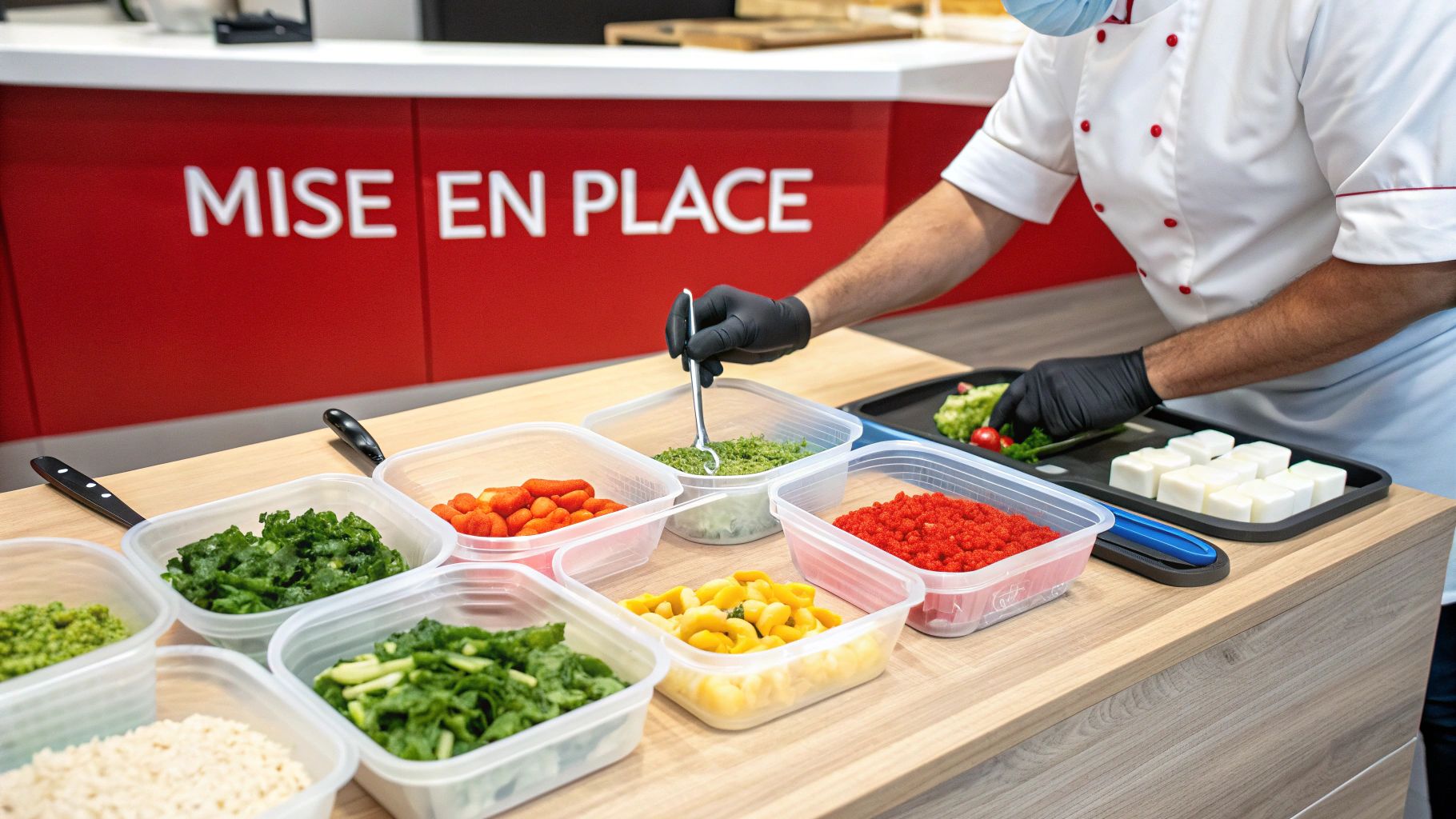
One of the most fundamental catering assistant duties and responsibilities is mastering the art of food preparation and mise en place. This French term, meaning "everything in its place," is the cornerstone of an efficient and calm professional kitchen. It involves the methodical preparation of all necessary ingredients and the organisation of the workstation before service begins. A catering assistant’s role here is to meticulously wash, peel, chop, and portion ingredients according to precise recipe specifications and the head chef's standards.
This pre-service preparation is what allows the kitchen team to execute dishes swiftly and consistently during the busiest periods. It transforms a potentially chaotic service into a smooth, choreographed performance, reducing stress and minimising errors.
Why Mise en Place is a Critical Duty
A well-executed mise en place is especially vital for establishments that utilise temporary staff, such as relief chefs. When a visiting chef steps into an unfamiliar kitchen, a perfectly organised station allows them to integrate seamlessly and begin cooking immediately. This reduces setup time, prevents service disruptions, and ensures the venue’s quality standards are maintained without interruption. The catering assistant essentially sets the stage for success, directly impacting kitchen productivity and food quality.
Practical Examples of Mise en Place
- Pubs: Pre-chopping onions, carrots, and celery for stews; portioning proteins like steak or fish for grill service; preparing batter for the day's fish and chips.
- Boutique Hotels: Organising delicate garnishes for à la carte dishes; preparing components for multiple courses, from appetiser cold stations to dessert finishing touches.
- Yachts: Prepping fresh ingredients for the day's custom menus in a compact galley, ensuring every item is immediately accessible for the chef.
Actionable Tips for Perfect Prep
- Prevent Cross-Contamination: Always use colour-coded chopping boards (e.g., red for raw meat, green for vegetables) to maintain food safety standards.
- Label Everything: Clearly label all prepared items with the date, time, and contents. This minimises waste and ensures compliance with health regulations.
- Organise for Service: Arrange your prepped ingredients in the order they will be used. This streamlines the cooking process for the entire kitchen brigade.
- Communicate Effectively: If a relief chef is on duty, provide a quick but thorough handover of your prep, highlighting any special preparations or ingredient locations.
This foundational skill not only demonstrates competence but also builds trust within the kitchen team. A reliable catering assistant who excels at preparation is an invaluable asset, contributing directly to the venue's operational efficiency and profitability. Understanding these responsibilities is also key when considering your career path and potential earnings, which you can explore further using this monthly salary calculator.
2. Kitchen Hygiene and Safety Compliance
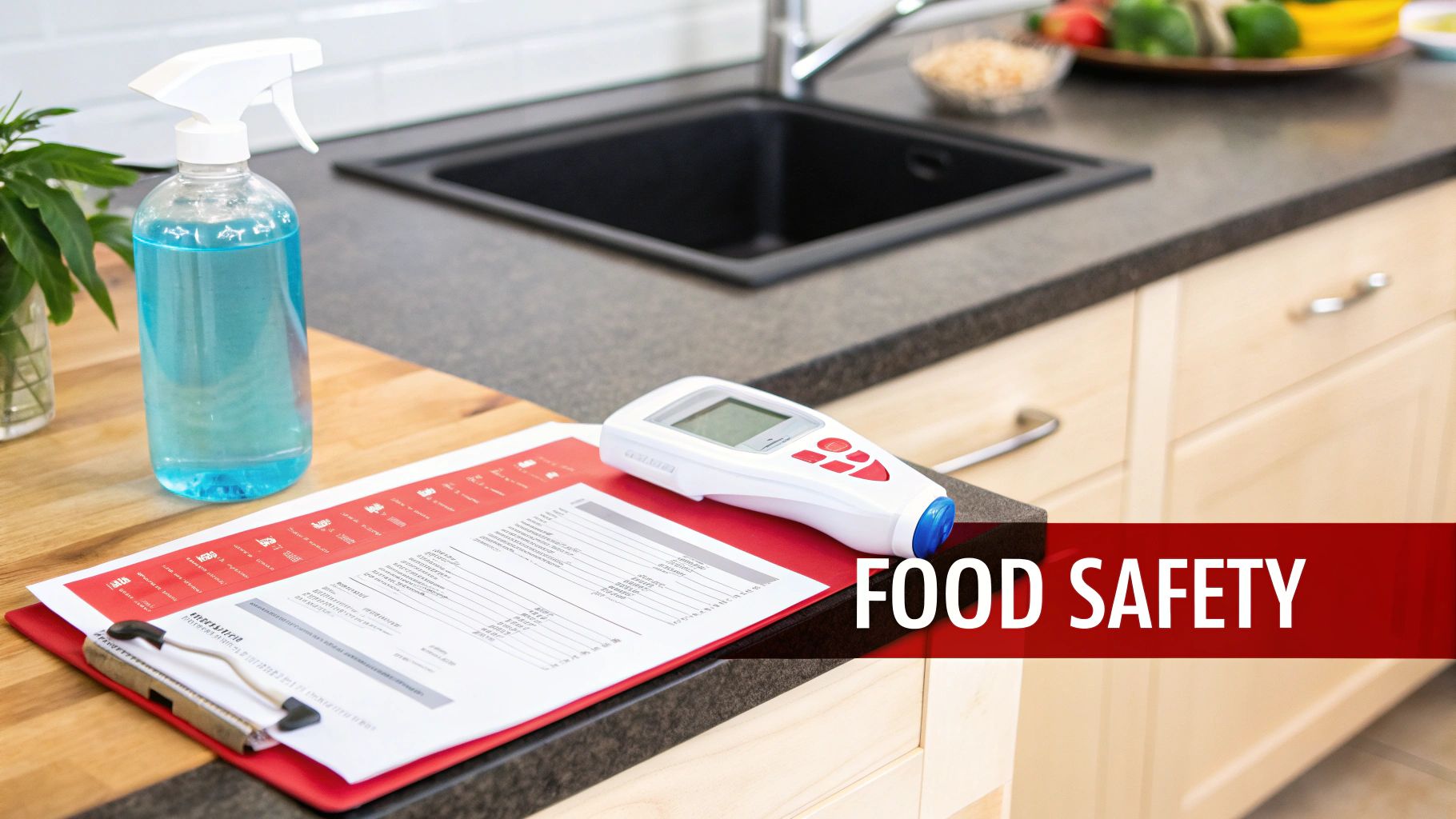
Beyond preparing ingredients, one of the most critical catering assistant duties and responsibilities is upholding impeccable kitchen hygiene and safety standards. This involves the rigorous, daily execution of cleaning protocols, sanitisation procedures, and food safety compliance. A catering assistant is on the front line of defence against foodborne illnesses, ensuring that every surface, utensil, and piece of equipment is hygienically maintained and that all food is stored and handled correctly according to HACCP principles.
This constant vigilance is the bedrock of a professional kitchen's reputation and legality. It ensures the well-being of both customers and staff, preventing cross-contamination and creating a safe, organised working environment for the entire team.
Why Safety Compliance is a Non-Negotiable Duty
Maintaining consistent hygiene protocols is especially crucial for establishments that frequently hire temporary staff. When a relief chef joins the team, they must be able to trust that the environment meets all food safety standards. The catering assistant’s diligence in logging temperatures, managing cleaning schedules, and handling allergens correctly creates a reliable system. This allows visiting chefs to focus on cooking, confident that the foundational safety work is already in place, protecting the venue from legal risks and reputational damage.
Practical Examples of Hygiene in Action
- Pubs: Completing daily sanitisation logs for high-traffic areas like beer taps, door handles, and food preparation surfaces; ensuring deep fryer oil is changed at regular intervals.
- Boutique Hotels: Diligently checking and recording temperatures for walk-in refrigerators and freezers at the start and end of every shift; correctly segregating raw meats from ready-to-eat foods.
- Multi-Site Restaurants: Verifying allergen information on menus matches the kitchen’s preparation procedures before any dish is plated and sent to a customer.
Actionable Tips for Excellent Hygiene
- Create Visual Checklists: Post daily and weekly cleaning checklists in prominent areas to ensure all tasks are completed and signed off by the responsible team member.
- Colour-Code Your Cleaning: Use distinct, colour-coded cloths, buckets, and brushes for different areas (e.g., blue for general areas, red for washrooms, green for food prep) to prevent cross-contamination.
- Master Allergen Protocols: Ensure you are fully trained on the 14 major allergens and the venue’s specific procedures for handling them to protect guests with dietary needs.
- Stay Vigilant with Labels: Always label stored food with the item name, preparation date, and use-by date to comply with food safety regulations and minimise waste.
A robust understanding of kitchen hygiene is a core competency for any catering assistant. It demonstrates professionalism, a commitment to public health, and respect for the culinary craft, making you an indispensable part of any high-functioning kitchen team.
3. Equipment Maintenance and Kitchen Setup
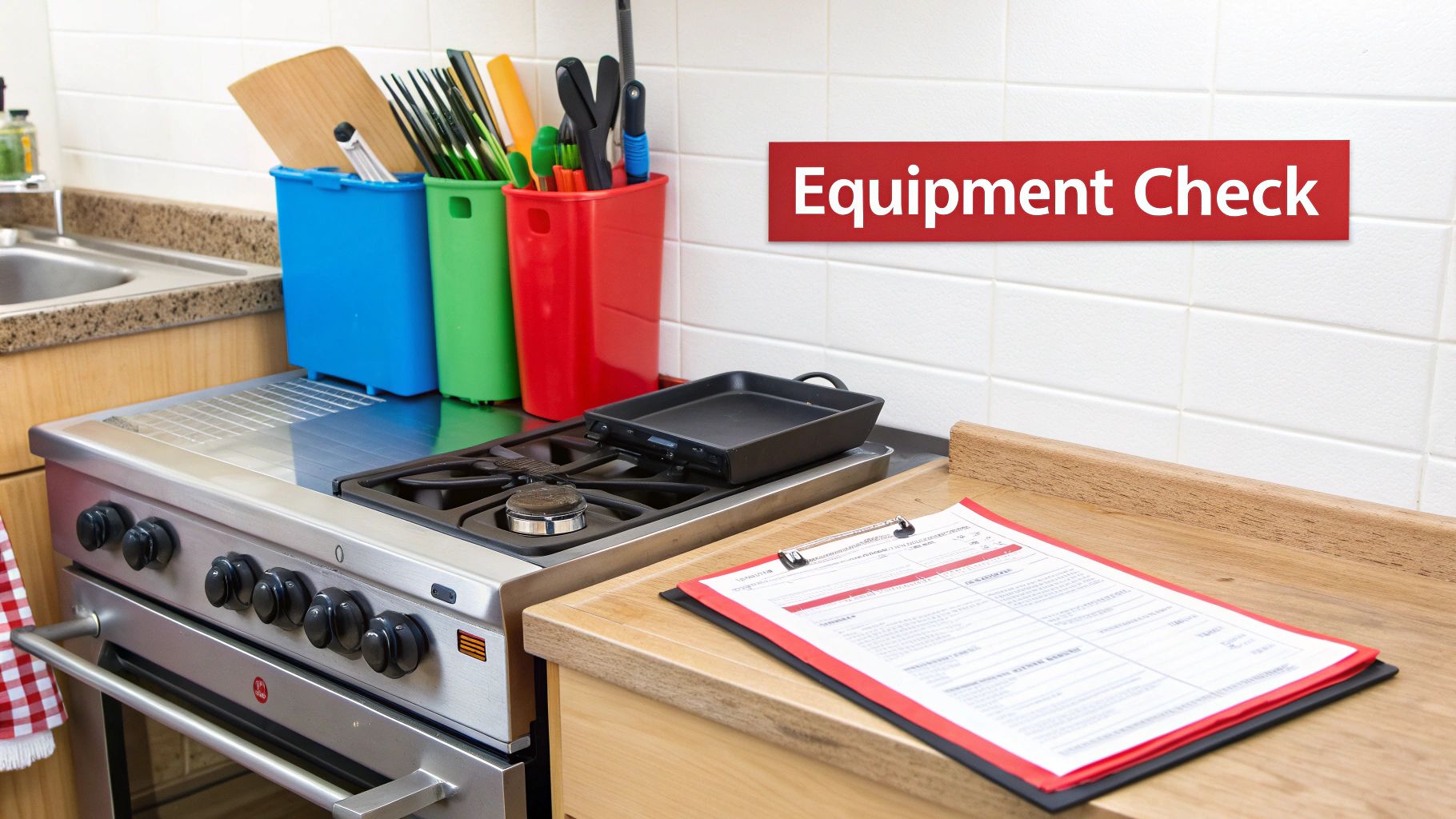
Beyond preparing ingredients, another core set of catering assistant duties and responsibilities involves ensuring the kitchen itself is primed for service. This means taking ownership of equipment maintenance and the daily setup of workstations. Catering assistants are often the first line of defence in a busy kitchen, responsible for checking that all appliances are clean, functional, and safe to use. This includes everything from ovens and stovetops to refrigeration units and smallwares. They must report any faults or damage promptly to prevent service disruptions.
A well-maintained and properly organised kitchen is a non-negotiable for operational success. It ensures safety, enhances efficiency, and directly impacts the quality of the food produced. For any kitchen, especially one expecting temporary staff, this groundwork is indispensable.
Why Equipment Functionality is a Critical Duty
A functional kitchen is particularly crucial for venues that bring in relief chefs. A temporary chef needs to be able to step in and start cooking immediately without wasting valuable time trying to work around a faulty burner or a malfunctioning freezer. Unexpected equipment failures can halt service, spoil expensive stock, and damage a venue's reputation. A proactive catering assistant who ensures all tools are in working order provides a stable foundation for any chef, permanent or temporary, to perform at their best.
Practical Examples of Equipment Setup
- Pubs: Performing a daily deep clean of the ice machine to prevent mould; testing all gas burners on the main range before the evening rush begins.
- Restaurants: Reporting a faulty walk-in freezer thermostat before food spoilage occurs; organising knife rolls and small equipment in a dedicated station for an incoming relief chef.
- Yachts: Ensuring all galley equipment is secured and functioning correctly before leaving port; checking that compact refrigeration units are holding the correct temperature.
Actionable Tips for Perfect Maintenance
- Create Checklists: Develop daily and weekly checklists for all major appliances. This creates accountability and ensures nothing is overlooked.
- Document Everything: Keep a detailed kitchen log to record all maintenance checks, reported faults, and completed repairs. This helps track recurring issues.
- Establish a Reporting System: Ensure all staff know the exact procedure for reporting faulty equipment immediately to the head chef or manager.
- Train for Basic Troubleshooting: Provide basic training on how to handle common, minor issues, such as re-igniting a pilot light, to minimise downtime.
Proper equipment management is a significant responsibility that protects the venue's assets and ensures a smooth, safe service. Understanding the financial impact of equipment failure helps highlight the importance of this role, and you can learn more about the overall cost of employing hospitality staff to see how maintenance fits into the bigger picture.
4. Stock Management and Inventory Control
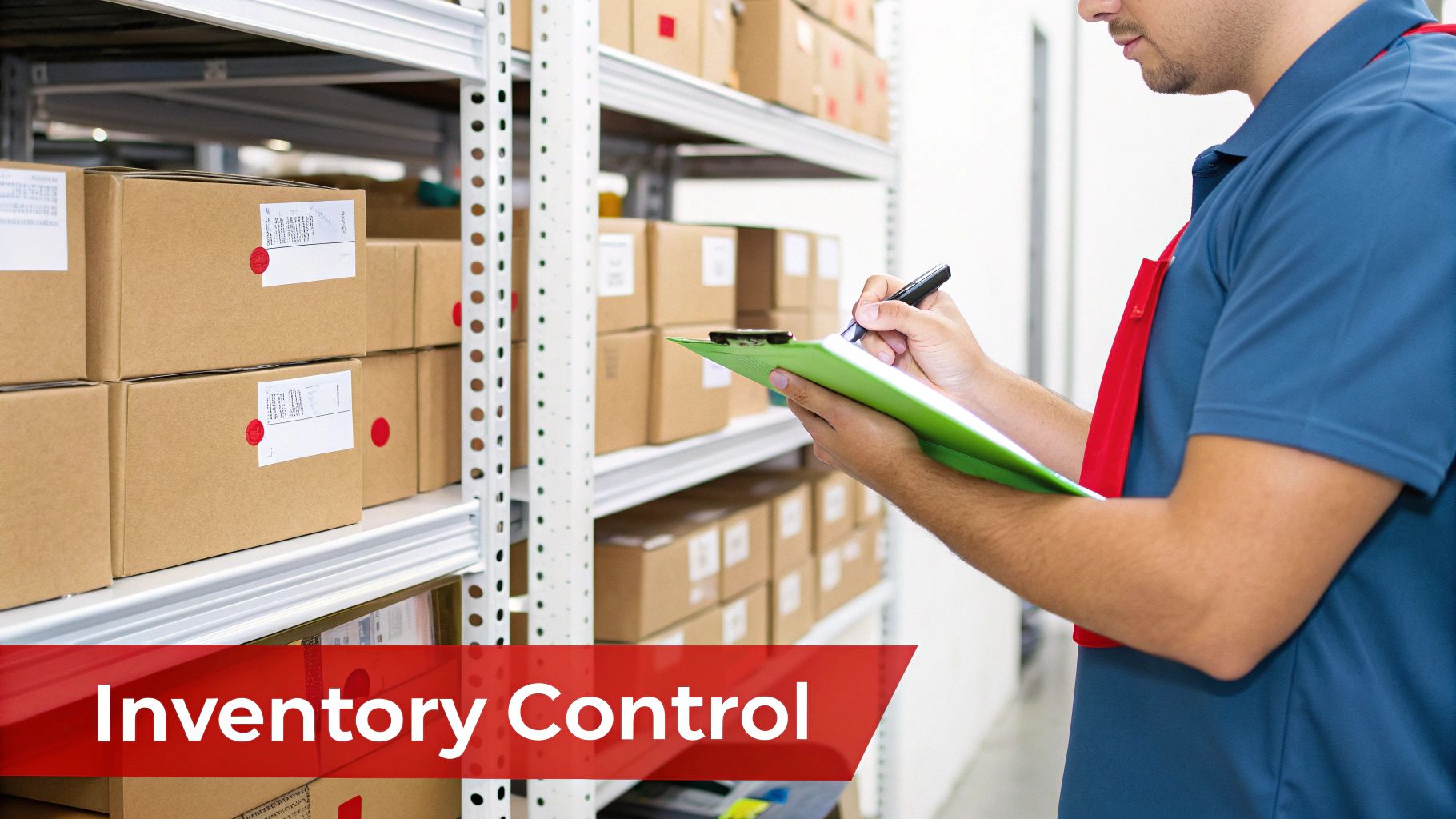
Another of the core catering assistant duties and responsibilities is diligent stock management and inventory control. This involves more than just counting boxes; it is the systematic process of monitoring ingredient levels, tracking stock rotation, receiving deliveries correctly, and communicating shortages to senior staff. Proper inventory control is the backbone of a profitable kitchen, as it directly prevents wastage, ensures ingredient freshness, and avoids the disaster of running out of essential items mid-service.
This role is crucial for maintaining the financial health and operational stability of the kitchen. By managing stock effectively, a catering assistant ensures that every ingredient is accounted for and used optimally, minimising unnecessary expenditure and maximising food quality.
Why Inventory Control is a Critical Duty
Effective stock management is particularly important for venues that hire temporary staff, such as those using Relief Chefs UK. When a relief chef arrives, an accurate and organised inventory allows them to quickly understand what ingredients are available and plan menu execution without delay. Poor stock control can force a chef to improvise dishes, potentially compromising quality, consistency, and guest satisfaction. The catering assistant’s meticulous oversight ensures a smooth transition and empowers visiting chefs to perform at their best.
Practical Examples of Stock Management
- Cafés: Daily rotation of fresh produce to ensure morning pastries are made with the freshest ingredients, preventing spoilage of berries and dairy.
- Boutique Hotels: Performing a weekly stock check in the main kitchen to help the head chef and any relief chefs plan the following week's menu and specials.
- Restaurants: Identifying and removing expired items from dry stores and walk-in chillers before they can accidentally be used in service.
Actionable Tips for Flawless Inventory
- Embrace FIFO: Always practise the "First In, First Out" (FIFO) principle. Place new deliveries at the back of shelves so older stock is used first, reducing waste.
- Use Clear Labels: Apply colour-coded labels with clear expiry dates on all stored items. This visual system makes it easy for anyone to identify what needs to be used soon.
- Maintain a Shopping List: Keep a running shopping list in a central location, noting items that are running low. This streamlines the reordering process.
- Brief the Team: When a relief chef starts, provide a quick rundown of available ingredients, pointing out any speciality items or recent stock updates to set them up for a successful service.
By mastering inventory control, a catering assistant moves beyond basic prep and becomes a key player in the kitchen’s financial and operational success. This responsibility demonstrates reliability and commercial awareness, making them an indispensable member of the hospitality team.
5. Dishwashing and Utensil Management
A critical, though often overlooked, aspect of catering assistant duties and responsibilities is the management of dishwashing and kitchen utensils. This role goes far beyond simply cleaning plates; it is the engine room of kitchen sanitation and operational flow. A catering assistant is responsible for the systematic cleaning, sanitising, and organisation of all dishes, glassware, cutlery, and cooking equipment both during and after service.
This continuous cycle ensures the kitchen brigade has a constant supply of clean, safe tools, preventing service from grinding to a halt. An efficient dishwashing station directly supports food safety by eliminating cross-contamination risks and is fundamental to maintaining a smooth, uninterrupted service, especially during peak hours.
Why Efficient Dishwashing is a Critical Duty
An organised and efficient dishwashing process is absolutely essential, particularly in kitchens that frequently welcome temporary staff like relief chefs. When a relief chef arrives, they rely on a predictable and steady flow of clean equipment to perform their job effectively. A well-managed wash station means they aren't left waiting for a specific pan or utensil, allowing them to focus entirely on cooking and maintaining the quality of the dishes. The catering assistant's work in this area directly impacts the kitchen's agility and resilience.
Practical Examples of Utensil Management
- Pubs: Running continuous wash cycles during a hectic Saturday night service to ensure a constant return of plates, cutlery, and pint glasses to the front of house and kitchen.
- Boutique Hotels: Meticulously hand-washing delicate wine glasses and bespoke crockery to prevent breakage and maintain the high standards of presentation required for fine dining.
- Cafés: Implementing a three-compartment sink system for manual washing, sanitising, and rinsing during an equipment breakdown to ensure service continues seamlessly.
- Yachts: Organising knife rolls and specialist utensils in a compact galley, ensuring the most frequently used items are always clean and accessible for the chef.
Actionable Tips for Perfect Dishwashing
- Monitor Temperatures: Regularly check that dishwasher water temperatures meet food safety standards, typically 60-65°C for the wash cycle and over 82°C for the final rinse to ensure effective sanitisation.
- Organise the Flow: Use racks and trolleys to safely and efficiently transport dirty items to the wash station and clean items back to their storage points or service lines.
- Create a Queue System: Keep a clear visual separation between dirty and clean items to prevent re-contamination. Let chefs know what is currently being washed and what is ready for use.
- Establish a Protocol: Create a clear procedure for reporting and removing broken or damaged equipment. This prevents hazardous items from re-entering circulation.
6. Waste Management and Sustainability
A key part of modern catering assistant duties and responsibilities involves managing waste effectively and championing sustainability. This goes far beyond simply emptying bins; it requires a systematic approach to segregating waste streams, ensuring compliance with local regulations, and actively supporting the venue’s environmental goals. Proper waste management is no longer a footnote but a central operational function that reduces a venue’s ecological footprint, cuts disposal costs, and enhances its public image.
For any professional kitchen, especially those welcoming temporary staff like relief chefs, a clear and efficient waste system is non-negotiable. It ensures that every team member can contribute to the venue's sustainability targets without confusion, maintaining high standards of cleanliness and legal compliance.
Why Waste Management is a Critical Duty
Effective waste management directly impacts a venue's bottom line and brand reputation. By properly segregating recyclables, food waste, and general refuse, establishments can significantly lower their landfill taxes and disposal fees. Furthermore, a visible commitment to sustainability is a powerful marketing tool, attracting environmentally conscious customers and staff. A catering assistant who masters this duty demonstrates a broader understanding of kitchen operations, contributing to a more professional and responsible business model.
Practical Examples of Waste Management
- Boutique Hotels: Implementing a composting programme for all kitchen food scraps, aiming to reduce landfill waste by 30% and using the compost in hotel gardens.
- Pubs: Setting up clearly labelled, colour-coded bins in the kitchen to ensure all staff, including temporary relief chefs, can easily segregate glass, cardboard, and food waste.
- Multi-Site Restaurant Groups: Managing the collection and disposal of used cooking oils through a licensed, certified contractor to ensure full compliance and receive a waste transfer note.
Actionable Tips for Perfect Prep
- Use Clear Signage: Implement colour-coded bins with clear, pictorial signage to guide all staff, making the system intuitive for everyone, including those for whom English is a second language.
- Conduct Regular Audits: Perform a quarterly waste audit to identify the main sources of waste and find new opportunities for reduction or recycling.
- Provide Day-One Training: Ensure that all new staff and relief chefs receive a brief but thorough induction on the venue's waste segregation procedures on their first shift.
- Celebrate Success: Monitor waste volumes and share reduction achievements with the team. Recognising these efforts helps build a strong, sustainable culture within the kitchen.
7. Customer Interaction and Service Support
While often seen as a purely back-of-house position, one of the crucial catering assistant duties and responsibilities involves supporting front-of-house operations and, at times, directly interacting with customers. In many settings, the catering assistant acts as a vital link between the kitchen and the dining area, ensuring a seamless flow of service and contributing to a positive guest experience. Their role is to provide logistical support, from clearing tables to assisting servers, which is essential for maintaining a high standard of service.
This bridge between back-of-house and front-of-house transforms the catering assistant from a kitchen support role into an integral part of the entire service team. This adaptability ensures that operations run smoothly, especially during peak hours or when unexpected staffing challenges arise.
Why Service Support is a Critical Duty
Excellent service support is particularly important in venues that rely on temporary staff, such as a relief chef. The catering assistant, familiar with the establishment's layout and service protocols, can provide continuity and ensure the guest experience remains consistent. They can relay special dietary requirements accurately to the visiting chef, assist with plating presentation, and ensure dishes are delivered promptly, preventing any disruption that could arise from staffing changes. This support system allows the relief chef to focus solely on food quality, knowing the service logistics are in capable hands.
Practical Examples of Service Support
- Pubs: Promptly clearing plates and tables during a busy Friday night service, allowing for faster table turnover and keeping the dining area tidy.
- Boutique Hotels: Ensuring every plate meets the hotel's exacting presentation standards, from precise garnish placement to a spotless rim, before it leaves the kitchen pass.
- Restaurants: Clearly communicating a guest's severe allergy or dietary modification to the on-duty relief chef, ensuring the information is understood and correctly executed.
- Multi-Site Cafés: Stepping in to support the front counter during a sudden rush, taking orders or preparing beverages while the relief chef manages the kitchen.
Actionable Tips for Excellent Service Support
- Develop Hand Signals: Create a clear, non-verbal communication system between the kitchen and front-of-house for coordinating service, such as signalling when a large table's order is ready.
- Train Basic Menu Knowledge: Equip all catering assistants with fundamental knowledge of the menu, including key ingredients and potential allergens, so they can answer basic customer queries.
- Establish Communication Protocols: Create a clear process for communicating special requests or modifications to the chef, especially when a relief chef is on duty, to prevent errors.
- Encourage Guest Feedback: Encourage catering assistants to pass on observations about guest reactions or popular dishes, providing valuable insights to the kitchen team.
This aspect of the role showcases the versatility of a catering assistant. Their ability to step in and support the service cycle not only enhances operational efficiency but also directly impacts guest satisfaction and the venue's reputation.
8. Training, Documentation, and Team Support
Beyond the immediate tasks of cooking and cleaning, a key part of catering assistant duties and responsibilities is fostering team cohesion and operational continuity. This involves supporting knowledge transfer through clear documentation and assisting with the training of new team members. An organised catering assistant helps create and maintain the systems that allow any chef, especially temporary staff, to understand kitchen operations quickly and efficiently. This includes updating recipe cards, standard operating procedure (SOP) documents, and crucial allergen information.
This responsibility is fundamental to a venue’s long-term stability and consistency. By meticulously documenting processes, the catering assistant ensures that vital operational knowledge isn't lost during staff turnover and that quality remains high regardless of who is in the kitchen.
Why Documentation and Support are a Critical Duty
Excellent documentation and a supportive handover are invaluable for venues that rely on temporary staffing solutions, such as relief chefs. When a visiting chef arrives, clear, accessible information significantly reduces their onboarding time, allowing them to integrate seamlessly and start producing high-quality dishes from their very first shift. This proactive support system, managed by the catering assistant, prevents service disruptions, upholds the establishment's reputation, and empowers temporary chefs to perform at their best immediately.
Practical Examples of Systemised Support
- Pubs: Maintaining an illustrated plating guide and a simple SOP document that a relief chef can review on their first morning to understand the pub's signature dishes.
- Boutique Hotels: Creating a short video walkthrough of the kitchen, highlighting the location of key equipment, storage areas, and emergency procedures for new starters.
- Restaurants: Developing detailed allergen cards for every dish, which are reviewed daily with the on-duty chef before service to ensure full compliance and guest safety.
Actionable Tips for Effective Support
- Use Visuals: Incorporate photos and illustrations alongside written descriptions in recipe cards and guides. A picture of the final plated dish is often clearer than words alone.
- Keep Documents Accessible: Ensure procedures are available in both digital formats (on a shared drive or tablet) and as printed, laminated copies in the kitchen.
- Review and Update: Schedule a quarterly review of all documentation, or update it immediately after any significant menu changes to ensure it remains accurate.
- Create a 'Day One' Checklist: Develop a specific checklist for relief chefs covering key information like Wi-Fi passwords, delivery schedules, key contacts, and opening/closing procedures.
This duty transforms a catering assistant from a helper into a custodian of the kitchen’s operational integrity. A comprehensive understanding of this responsibility is detailed further in the job description of a catering assistant, highlighting its importance to smooth kitchen management.
8-Point Comparison of Catering Assistant Duties
| Role / Task | Implementation Complexity 🔄 | Resource Requirements ⚡ | Expected Outcomes 📊 | Ideal Use Cases 💡 | Key Advantages ⭐ |
|---|---|---|---|---|---|
| Food Preparation and Mise en Place | Moderate — routine skills, high accuracy | Skilled staff time, prep space, knives, storage | Fast service start; consistent dishes; reduced waste | Busy services, relief chef handovers, à la carte | Immediate chef readiness; consistent presentation |
| Kitchen Hygiene and Safety Compliance | High — strict protocols and recordkeeping | Cleaning supplies, monitoring tools, training, documentation | Reduced foodborne risk; regulatory compliance | High-risk venues, multi-site chains, temp-staffed sites | Protects customers & reputation; lowers liability |
| Equipment Maintenance and Kitchen Setup | Moderate–High — technical checks and logs | Maintenance tools, spare parts, contractor access | Fewer breakdowns; reliable service; longer equipment life | Kitchens with complex kit; frequent relief placements | Prevents downtime; reduces emergency repair costs |
| Stock Management and Inventory Control | Moderate — disciplined tracking and rotation | Storage space, labeling, inventory system, staff time | Lower waste; accurate ordering; menu predictability | High-volume kitchens, multi-site operations | Ensures ingredient availability; improves cost control |
| Dishwashing and Utensil Management | Low–Moderate — continuous, routine process | Dishwashers, chemicals, water/energy, staffing | Constant supply of clean equipment; maintained hygiene | Busy services, catering events, relief shifts | Sustains workflow; prevents cross-contamination |
| Waste Management and Sustainability | Moderate — segregation, audits and training | Bins, collection contracts, space, staff training | Reduced landfill, cost savings, regulatory compliance | Boutique hotels, eco-focused venues, multi-site groups | Lowers environmental impact; reduces disposal costs |
| Customer Interaction and Service Support | Low–Moderate — requires hospitality skills | Training, coordination with FOH, occasional time away from prep | Improved guest satisfaction; smoother service flow | Casual dining, boutique hotels, small venues | Enhances guest experience; supports relief chefs |
| Training, Documentation, and Team Support | High — content creation and upkeep | Time, documentation tools, digital/print access, reviews | Faster onboarding; consistent standards; fewer errors | Multi-site groups, frequent relief chef placements | Accelerates onboarding; preserves institutional knowledge |
Empowering Your Kitchen with the Right Talent
Navigating the extensive list of catering assistant duties and responsibilities reveals a clear and undeniable truth: this role is far more than an entry-level position. It is the bedrock of a successful culinary operation. From meticulous food preparation and unwavering hygiene standards to efficient stock management and seamless service support, a skilled catering assistant is the critical link that holds the entire kitchen ecosystem together. They are the enablers, the organisers, and the guardians of consistency.
A well-defined understanding of this role transforms how a hospitality business functions. When a catering assistant excels, the benefits ripple outwards. Head chefs are freed from routine tasks, allowing them to focus on menu innovation and quality control. Service runs smoother because front-of-house staff are supported by a clean, well-stocked, and organised back-of-house. Most importantly, the operational stability they provide creates an environment where temporary or relief chefs can integrate seamlessly, ensuring your kitchen remains productive and profitable even during staff shortages or unexpected absences.
Key Takeaways: Beyond the Checklist
Thinking of these duties merely as a checklist misses the bigger picture. The true value lies in how these responsibilities intertwine to build a resilient and efficient kitchen. Let's recap the core principles:
- Foundation of Efficiency: Duties like mise en place and equipment setup are not just about preparation; they are about creating a workflow that minimises delays and maximises output during the busiest service periods.
- Guardianship of Standards: Strict adherence to hygiene protocols, safety compliance, and proper waste management protects your customers, your staff, and your reputation. This is a non-negotiable aspect of the role.
- Operational Backbone: Effective stock control and dishwashing management directly impact your bottom line. An assistant who understands this prevents unnecessary waste, avoids costly stockouts, and ensures the kitchen has the tools it needs to function at all times.
- The Human Element: Supporting the team, assisting with documentation, and even interacting positively with customers elevates the role from a purely functional one to a collaborative and integral part of the hospitality experience.
Actionable Next Steps: Turning Insight into Impact
Understanding the scope of catering assistant duties and responsibilities is the first step. The next is implementation. For hospitality managers, pub owners, and yacht representatives, this means moving from theory to practice.
- Refine Your Job Descriptions: Use the detailed categories from this article to build a comprehensive, clear, and compelling job description. Attract candidates who understand the depth of the role and are eager to contribute meaningfully.
- Enhance Your Onboarding: Develop a structured training programme that covers every key responsibility, from your specific hygiene protocols to the correct operation of specialist equipment. Don't assume prior knowledge; build it.
- Empower, Don't Just Delegate: Foster an environment where catering assistants feel valued. Solicit their feedback on kitchen organisation and workflow. Acknowledge their crucial contribution to a successful service. This empowerment builds loyalty and encourages proactive problem-solving.
Ultimately, investing in the right support staff is an investment in your entire culinary vision. A proficient catering assistant ensures that whether your kitchen is led by your trusted head chef or a highly skilled professional from a relief agency, the standards of excellence never falter. They are the constant that ensures quality, the linchpin that provides stability, and the unsung heroes who make exceptional dining experiences possible every single day.
When you need to bridge a staffing gap without compromising on quality, the right support structure is everything. For those times you require a vetted, professional chef to step in seamlessly, Relief Chefs UK provides the experienced talent that can integrate with your core team and maintain your high standards. Visit Relief Chefs UK to discover how we can deliver the flexible, top-tier culinary support your establishment deserves.