
A Modern Guide to Chef Recruitment in the UK
22 March 2026
Finding and keeping a great chef is no longer just about the quality of food on the plate. For any pub, hotel, or restaurant manager across the UK, chef recruitment has become one of the single biggest operational headaches. It’s not about finding the perfect candidate anymore; it's about finding any skilled, reliable professional who can keep your kitchen from grinding to a halt.
The old method of posting a job ad and waiting for CVs is broken. In today's market, success means partnering with a specialist who understands the real pressures you face and can deliver vetted talent when you need it most.
The New Reality of UK Chef Recruitment
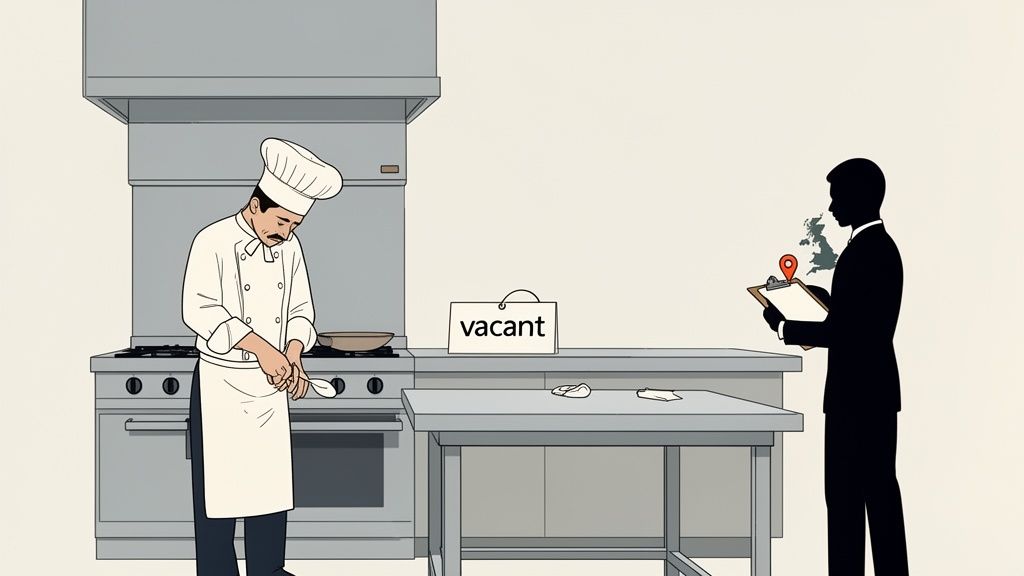
Let's be frank—the national chef shortage is not just industry gossip. It's a full-blown crisis hitting businesses hard, from boutique hotels in Dorset to gastropubs in Devon. A single sick call on a Friday night can derail an entire service, forcing you to turn away paying customers and damaging the reputation you’ve worked so hard to build.
A vacant chef position isn't an inconvenience; it's a direct threat to your bottom line. That empty spot on the rota puts immense pressure on your loyal staff, pushing them towards burnout and creating a domino effect of chaos in the kitchen.
The Post-Brexit Squeeze
The recruitment landscape was completely upended by Brexit. The steady flow of experienced EU chefs that many UK kitchens relied on has slowed to a trickle. Since 2021, an estimated 120,000 EU workers have left the hospitality sector, and new visa rules have made it incredibly difficult to fill that gap.
When chef roles were removed from the Shortage Occupation List in 2024, it was another nail in the coffin. The higher salary thresholds and sponsorship red tape made hiring from overseas a non-starter for most independent businesses. You can get a deeper look at the visa and chef shortage situation to see the full picture.
This creates a brutal, unpredictable environment. You could be a hotel manager in Windsor gearing up for the summer tourist rush or a restaurant owner in Bristol who just had a Sous Chef hand in their notice. In both cases, the traditional hiring process is simply too slow and unreliable.
The real cost of a chef shortage isn't the empty position. It's the lost revenue from reduced covers, the reputational damage from inconsistent service, and the burnout you inflict on your best people.
Navigating the Staffing Crisis
Trying to solve today’s staffing problems with yesterday’s methods is a recipe for disaster. The current climate demands a more agile, strategic approach to chef recruitment. It's not just about filling a permanent role anymore; it’s about building resilience into your kitchen with a flexible mix of staffing solutions.
This is where turning to a professional chef recruitment agency is no longer a luxury, but a necessity. Embracing different staffing models protects your business from market volatility. This might look like:
- Relief Chefs to plug the gap from a last-minute sick call or cover annual leave.
- Temporary Chefs to handle a seasonal surge in places like Berkshire or Wales without the long-term commitment.
- Permanent Chef Recruitment support to find a vetted, long-term hire without you having to sift through dozens of unsuitable CVs.
To help you get a clear picture of the situation, here’s a quick summary of the common challenges and the real-world solutions that work.
Chef Recruitment Challenges and Solutions at a Glance
| Common Challenge | Immediate Impact on Your Business | Effective Solution |
|---|---|---|
| Sudden Staff Absences | Reduced covers, service chaos, stressed team | Use a relief chef service for rapid, emergency cover. |
| Seasonal Demand Spikes | Inconsistent quality, staff burnout, missed revenue | Bring in temporary chefs to manage the rush without long-term overheads. |
| Prolonged Vacancies | Overworked staff, declining standards, management distraction | Partner with a specialist recruitment agency to access a pre-vetted talent pool. |
| Shrinking Talent Pool (Post-Brexit) | Fewer qualified applicants, longer hiring times | Leverage an agency's nationwide network to find talent you can't reach. |
This table highlights a crucial truth: having a plan for flexible staffing is no longer optional. It's the only way to safeguard your service and your sanity.
At Relief Chefs UK, we’ve been the go-to partner for hospitality staffing since 2013, helping hundreds of businesses just like yours stay stable and profitable. Whether you need a chef for a short-notice emergency shift or are planning a permanent Head Chef hire, we connect you with the right professionals, fast.
Ready to find reliable chefs without the usual stress? Get in touch today to tell us what you need, and let our nationwide network solve your kitchen staffing problems.
How to Attract Top Chef Talent Today
In a market this tight, a generic job advert is a complete waste of time and money. If you want to get your chef recruitment right, you must stop thinking about filling a vacancy and start marketing a genuine career opportunity. This mindset shift is what separates the kitchens that are constantly scrambling from those that are thriving.
The best chefs aren't just scrolling for another job. They're looking for a place where they can grow, feel valued, and have a life outside the kitchen. Your job post is your first, and most important, chance to show them you offer exactly that. It needs to do more than list duties—it has to sell a vision.
Craft a Compelling Job Advert
You need to think like a marketer, not just a manager. What makes your business a great place to work? Is it the supportive team? The beautiful location? The state-of-the-art kit you just invested in? These are your real selling points.
For instance, if you run a hotel in Windsor, don't just write "Sous Chef required". That’s lazy. Try something like this: "Join our award-winning kitchen in Windsor, leading a passionate team creating modern British cuisine. We offer a structured 45-hour week and a clear path to a Head Chef role." That single sentence immediately speaks to a chef's ambition and their desperate need for a better work-life balance.
To write an advert that genuinely cuts through the noise, you need to hit these three pillars:
- Culture: Use words that describe a positive, professional environment. Phrases like "supportive team," "no-ego kitchen," and "collaborative menu development" are like gold dust to a good chef.
- Balance: Be explicit about work-life balance. Simply stating "fair rotas," "4-day week," or "paid overtime" can make your advert stand out from 90% of the others out there.
- Growth: Show them a future. Talk about opportunities for training, supplier visits, or internal promotions. A Chef de Partie in Bristol will be far more interested if they can see a real path forward, not just a dead-end job.
The goal of your job advert isn't just to describe a role. It's to make a talented chef stop scrolling and think, "This is the kind of place I want to work."
Target the Right Platforms
Posting your advert in the right place is just as critical as writing it well. Casting a wide net on general job boards will flood your inbox with irrelevant applications, wasting the little time you have. A targeted approach is the only way to get results.
Focus your energy on platforms where serious culinary professionals are looking: niche hospitality job boards, dedicated chef groups on social media, and industry-specific networks. If you're struggling to get your role in front of the right people, professional recruitment in hospitality support can give you a massive advantage by tapping into an established, pre-vetted network.
From Job to Career Opportunity
Ultimately, attracting top talent means fundamentally changing how you present the role. Instead of a list of demands, frame it as a mutual partnership. What can you offer them beyond a payslip?
Just look at this example for a Head Chef role at a boutique hotel in Wales:
Old Way: "Head Chef needed. Must have 5+ years experience, manage budgets, and oversee a team of 5."
New Way: "An exciting opportunity for a creative Head Chef to take the helm of our acclaimed restaurant in the heart of Wales. You'll have full creative autonomy over the menu, a dedicated budget for sourcing premium local ingredients, and the chance to mentor a talented junior team. We believe in investing in our leaders and offer a competitive salary, performance bonus, and relocation support."
The difference is stark. The second version sells a dream, not just a job. It speaks directly to a chef's desire for creativity, autonomy, and recognition. This approach doesn't just attract higher-calibre candidates; it also lays the groundwork for better retention, helping you break the costly cycle of constantly hiring.
A Practical Process for Vetting and Interviewing Chefs
A promising CV is one thing; a chef's real worth is only proven in the heat of a chaotic service. Too many managers have been burned by hiring someone who looked perfect on paper but couldn't handle the pressure of a real kitchen.
A solid vetting process is your only real defence against a bad hire. It saves you the time, money, and stress of a kitchen that's constantly on the verge of meltdown. This isn't about ticking boxes. It’s about building a system that filters for the three things that actually matter: practical skill, genuine reliability, and a personality that fits your existing brigade.
This flow chart shows the core elements that skilled chefs are looking for today. Frame your interview process around these ideas to attract the right people.
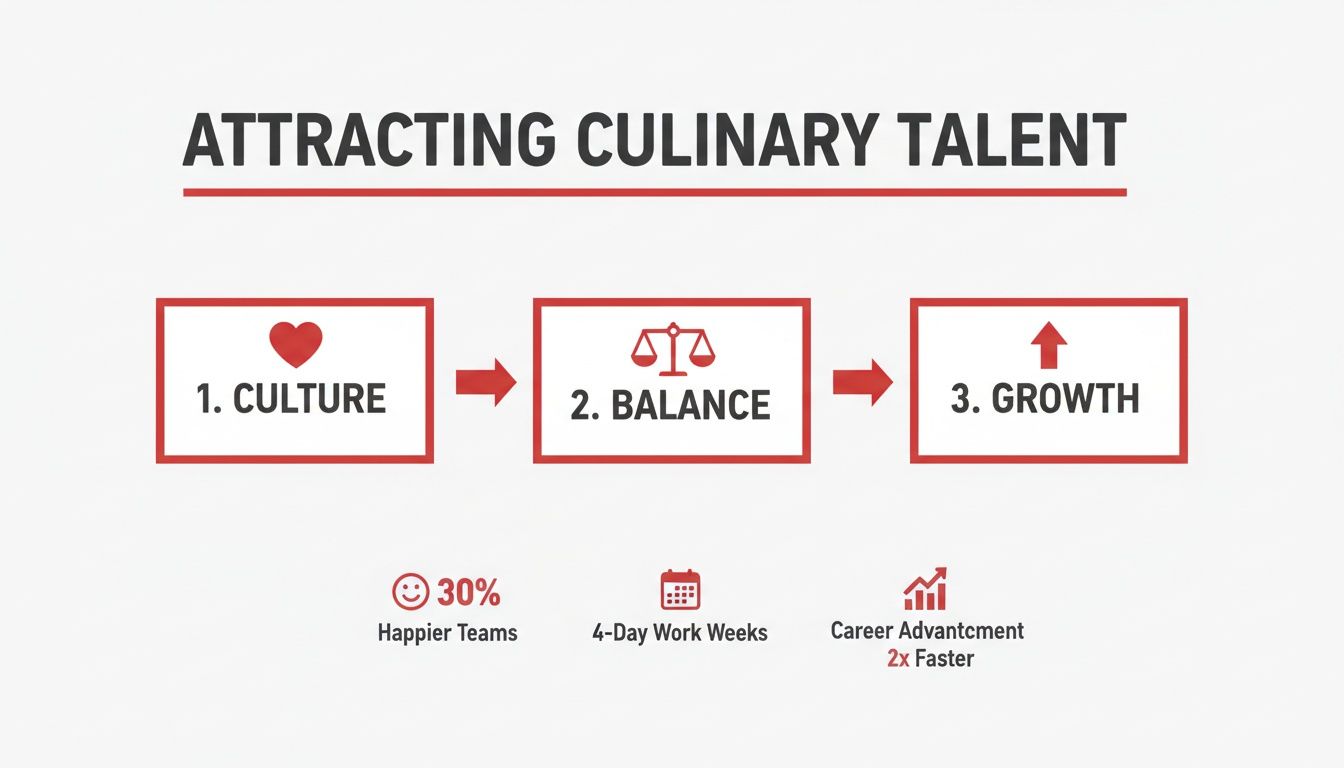
The journey from culture to balance and growth shows that a job is more than just a salary. It's an ecosystem that needs to support a chef's professional and personal life.
Design a Trade Test That Reveals True Ability
The trade test is where the CV meets reality. A classic mistake is asking a chef to cook one of their own signature dishes. While it shows creativity, it tells you nothing about their ability to work clean, follow instructions, or handle pressure when things go wrong.
A much better trade test simulates a real service scenario.
- The Mystery Box: Give them a selection of ingredients, including a couple of awkward ones, and ask them to create a balanced dish. This tests their improvisation, palate, and resourcefulness on the spot.
- Cook From Your Menu: This is the ultimate test. Ask them to cook one of your menu items from a spec sheet. Can they adapt to your style and deliver a dish your customers expect?
- Watch Their Process: Don't just judge the final plate. Observe how they move. Are they organised and clean? How do they manage their time? How do they interact with the KP or other staff in the kitchen?
The goal is to assess their practical skills, not their ability to perform a single, rehearsed masterpiece. A chef who can create a fantastic dish from a limited selection while keeping their station immaculate is a far greater asset.
Ask Interview Questions That Dig Deeper
After the practical, the interview is your chance to get past the polished answers and uncover their real work ethic and attitude. Generic questions get generic responses. You need to ask questions that force them to draw on actual experience.
Instead of asking, "Are you a team player?", try this:
"Tell me about a time you had a major disagreement with a Head Chef or colleague during a busy service. What was the issue, and how did you resolve it?"
This single question reveals their conflict resolution skills, respect for the kitchen hierarchy, and ability to stay professional under immense pressure.
Here are a few more powerful questions to add to your list:
- "Describe a time a supplier failed to deliver a key ingredient right before service. What did you do?" (Tests problem-solving and adaptability)
- "How do you handle receiving critical feedback on a dish you were proud of?" (Uncovers ego and how coachable they are)
- "What do you believe is the single most important factor in maintaining a stable, positive kitchen environment?" (Shows their understanding of kitchen culture)
Don't Skip the Compliance Checks
This final step is completely non-negotiable. Before you even think about making an offer, you have to meticulously verify their right to work in the UK. Getting this wrong can lead to crippling fines and legal trouble. You must also check their food hygiene certifications are valid and actually follow up on references. A quick, two-minute call to a previous employer can tell you everything you need to know about their reliability and punctuality.
This whole vetting process—from sifting CVs to trade tests and compliance checks—is incredibly time-consuming. It’s a massive drain on resources for any busy manager.
This is where the value of a trusted chef recruitment partner becomes crystal clear. At Relief Chefs UK, every single professional on our books—whether for a temporary chef role or a permanent chef recruitment placement—has already passed this exact, rigorous process. Since 2013, we've been perfecting our vetting to ensure we only supply chefs who are skilled, reliable, and legally compliant.
By working with us, you bypass the entire risky and time-intensive hiring funnel. You gain instant access to a pool of vetted talent, from relief chefs for emergency cover to specialist yacht chefs, saving you countless hours and removing the risk of a bad hire.
Tired of the endless cycle of interviewing and vetting? Contact us now, and let us connect you with a fully vetted, professional chef ready to step in and support your kitchen.
Finding the Gems in a Flood of Worthless CVs
It’s one of the great frustrations of modern hospitality recruitment. You hear about a crippling chef shortage, yet a single advert for a Chef de Partie in Bristol can dump 200+ applications into your inbox. The worst part? Finding a single decent candidate in that pile feels impossible.
This isn't just bad luck. It's a broken system.
The sheer volume is enough to paralyse any busy manager. Your gut tells you to sit down and read every CV, but that’s a direct path to burnout. Let’s be honest: most of that flood is just noise. It’s a mix of desperate job seekers spamming every ad they see and, crucially, a huge number of candidates who don’t have the right skills or even the legal right to work in the UK.
The latest data shows this isn't just a feeling. In Q1 2025 alone, candidate activity on major job boards shot up by 47%, pushing the average number of applications per role to 75.3. While many of those were for entry-level jobs, specific chef positions still pulled in a staggering 220,000 applications in total. You can read more on the latest hospitality recruitment trends of Q1 2025 and see just how big this problem has become.
Create a Ruthless 30-Second Filter
You have to get your time back. To do that, you need a system to filter the good from the junk, fast. Forget reading every CV from top to bottom. Instead, scan for the deal-breakers first.
Build a simple, non-negotiable checklist for the role. For instance, if you're hiring a Sous Chef for your gastropub in Reading, your instant "no" pile might be for anyone with:
- A patchy work history: Big, unexplained gaps or a string of three-month jobs? That screams unreliability. Constant job-hopping is a massive red flag.
- Irrelevant experience: Is their CV all fast food and casual dining when you're a fresh-food-led, 2 AA Rosette kitchen? It's not a match.
- No geographical sense: Is the applicant based 200 miles away in Manchester but hasn't bothered to write a single line in a cover letter explaining why they're looking to move? They're not a serious candidate.
This first pass should take you no more than 30 seconds per CV. You are not looking for reasons to hire someone. You're looking for quick, obvious reasons to say no.
Don't waste hours searching for the one perfect candidate in a pile of 200 CVs. Your first job is to mercilessly bin the 190 who are clearly unsuitable. This leaves you with a small, manageable shortlist of genuine contenders.
Spotting the Real Chefs in Your Shortlist
Once you’ve cleared out the noise, you can afford to invest proper time in what's left. This is where you hunt for the signs of a true professional—the details that separate career-minded chefs from the job-hoppers.
Look for these green flags:
- Real Progression: Have they been promoted internally? Seeing someone go from Chef de Partie to Junior Sous at the same restaurant tells you they were valued and reliable.
- Solid Achievements: Do they just list duties, or do they mention results? Things like "helped the kitchen achieve its first AA Rosette" or "instrumental in reducing food waste by 15%" show a chef who thinks about the business, not just their station.
- Professionalism: Is the CV tight, well-written, and free of typos? It sounds basic, but a sloppy CV often points to a sloppy chef.
This structured approach turns a nightmare task into a manageable process. But let's be realistic—even with a great system, it’s a huge drain on your time. Time you should be spending running your business.
This is where the value of specialist employment agencies for chefs becomes crystal clear.
The entire process I just described—the sifting, the ruthless filtering, the shortlisting—is exactly what we do all day, every day. Since 2013, Relief Chefs UK has been perfecting a rigorous vetting system. We handle the flood of applications for you, so you only ever see the gems.
A single phone call to us means you bypass that whole frustrating, time-sucking stage. Instead of wasting days wading through hundreds of unsuitable CVs, you get connected with a fully vetted, professional chef who is ready to go, whether you need immediate temporary chef cover or a new permanent star for your team.
Stop wasting time on recruitment. Get back to running your business. Contact Relief Chefs UK today, and let us deliver the vetted talent you need, right when you need it.
When to Use Temporary Chefs for Kitchen Stability
Thinking of temporary chefs as just a panic button for emergencies is one of the most common and costly mistakes a manager can make. The smartest operators in this industry don't see them as a last resort; they see them as a strategic tool for guaranteeing kitchen stability and, ultimately, protecting profits.
Being proactive with your staffing, rather than constantly reacting to chaos, is what separates a smooth, profitable kitchen from one that’s always one phone call away from a meltdown. Using temporary chefs strategically is about future-proofing your business. It allows you to protect service standards, safeguard your reputation, and stop your core team from burning out.
It turns a potential staffing crisis into a manageable, predictable part of your operation.
Beyond the Emergency Call-Out
A last-minute sick call on a Saturday morning is the most obvious time to get help, but it's far from the only one. Truly effective chef recruitment is about planning for the gaps you know are coming. A reliable temporary chef service becomes invaluable in a few key situations.
- Managing Seasonal Rushes: If you’re running a business in a hotspot like Dorset or Cornwall, you know the summer trade spike is coming. Using temp chefs lets you meet that demand head-on without the crippling financial weight of carrying extra permanent staff all year. You get expert hands, precisely when you need them.
- Bridging the Permanent Hiring Gap: Let's be honest, finding the right permanent chef can take months. A temporary chef can step in immediately, keeping your kitchen running smoothly and taking the immense pressure off you and your team during a long, drawn-out recruitment process.
- Covering Planned Leave: Annual leave, paternity leave, or a planned sabbatical can blow a massive hole in your rota. A temporary professional can cover these absences seamlessly, ensuring total consistency for your customers.
- Specialist Projects and Events: Need a skilled pastry chef just for wedding season? Or a private chef for an exclusive one-off event? Specialist temporary staffing, including for private villa and yacht chefs, gives you access to niche skills without the long-term commitment.
The brutal reality of the staffing crisis makes this flexibility essential. In the last year alone, the UK hospitality sector lost a staggering 89,000 jobs, leaving countless kitchens dangerously exposed and piling pressure on businesses already fighting rising costs.
As UK Hospitality reports, this accounts for a shocking 53% of all job losses nationwide, showing just how vulnerable our industry is. You can discover more about how firms are being urged to adapt their recruitment to survive these challenges.
Tackling Common Objections Head-On
Many managers, particularly in places like Bristol or Reading, have been burned by dodgy agencies in the past. They have valid worries about inconsistent quality, hidden fees, and chefs who just don't show up. These fears are real, born from a fragmented and often deeply unprofessional agency market.
But a genuinely professional partner operates on a completely different level.
The right temporary chef isn't just a pair of hands; they're a fully vetted professional who understands kitchen dynamics. They are chosen not just for their skills, but for their reliability and their ability to integrate with your team fast.
A trusted agency like Relief Chefs UK, established back in 2013, is built to eliminate these risks. We operate with total transparency. Our pricing is crystal clear with no hidden agency fees, and every single chef on our books has been rigorously vetted for their skill, reliability, and their legal right to work in the UK.
We understand the pressure you're under because we're run by chefs, for chefs. We know what a busy service feels like, so we only provide professionals who can handle it.
This proactive approach changes the entire game. Instead of scrambling when a chef calls in sick, you have a dependable partner ready to send a skilled professional, often at short notice. This is the kitchen stability you need to focus on what actually matters: your guests and your bottom line.
Ready to turn your staffing challenges into a strategic advantage? See what to expect from a temporary agency chef and how we deliver peace of mind. Or, if you need cover right now, contact our team today.
Building a Kitchen Culture That Makes Great Chefs Stay

Finding a brilliant chef is one thing. Creating a kitchen they never want to leave is the real game-changer. That’s how a stable, successful business is built.
A positive kitchen culture isn’t some fluffy “nice-to-have” item on a checklist. It’s your single most effective weapon against high staff turnover and the soul-destroying cycle of constant chef recruitment.
Sure, competitive pay matters. But it's almost never the real reason a talented chef hands in their notice. The real culprits? Relentless pressure, a lack of basic respect, and a toxic atmosphere that grinds people down. Loyalty starts the moment you treat your chefs like skilled professionals, not just cogs in the service machine.
Fair Rotas Are Non-Negotiable
Let’s be honest: the era of expecting chefs to grind through endless split shifts and 70-hour weeks is dead. The best talent now demands—and gets—a genuine work-life balance. The businesses winning this war for talent are the ones that actually deliver it.
This means putting fair rotas into practice. Give your team predictable days off so they can actually have a life outside the kitchen. A rota slapped up just a week in advance is a recipe for anxiety and resentment.
Aim to get it out two or three weeks ahead. This simple act of consideration builds more loyalty than a small pay rise ever could.
Create Real Paths for Growth
A kitchen lives or dies on communication, but it’s often the first casualty under pressure. You need to build proper channels for open, honest dialogue. Run quick pre-service briefings to go over specials and hold proper one-to-ones every month to talk about their performance and career goals.
When a chef can see a genuine path for progression within your business, they become personally invested. Don’t just talk about training; make it happen.
- Fund external courses: Sending a promising Sous Chef on an advanced butchery or pastry course is an investment that pays you back tenfold in skill and commitment.
- Organise supplier visits: Let your team get out and see where their ingredients come from. It builds incredible passion and a much deeper connection to your menu.
- Map out internal promotions: Show a Chef de Partie the exact skills they need to master to become a Junior Sous in your kitchen. Make it clear and achievable.
A chef who feels heard, respected, and invested in is a chef who will stay. They’ll pull you through a disastrous service and become a genuine ambassador for your business, not just another employee.
This commitment to culture is what creates a truly stable kitchen. But even the best-run operations face unexpected challenges. When you need to bridge a staffing gap, cover annual leave, or manage a sudden departure, having a reliable partner on speed dial is crucial.
Since 2013, Relief Chefs UK has been the backbone for hundreds of kitchens across the country. We provide everything from emergency relief chefs to strategic permanent chef recruitment, helping you protect your standards and your team. We give you the breathing room to focus on building a culture that lasts.
Need immediate, professional chef support or a long-term staffing strategy? Contact us today and discover how our nationwide network can provide the stability your kitchen deserves.
Got Questions? Here Are the Straight Answers
When you’re in the middle of a staffing crisis, you don’t have time for a sales pitch. You need straight-talking answers to the questions that actually matter. Here are the things we get asked most often by hospitality managers and head chefs who are right in the thick of it.
How Quickly Can You Actually Get Me a Chef?
This is the first thing everyone asks. If you're facing a genuine emergency, like a last-minute sickness or a walkout, our entire system is built to get a vetted, professional temporary chef confirmed and on their way as quickly as we can, subject to availability.
We've built our name since 2013 on being the people you call when your service is on the line.
For a permanent chef recruitment search, the timeline is obviously different. But we’re not just posting an ad and waiting. We tap into our nationwide network of proven talent straight away, getting you a shortlist of serious candidates far faster than you could on your own.
Are Your Chefs Actually Any Good?
Yes. We stake our entire reputation on it, every single day. The last thing you need when you're already under pressure is to babysit an agency chef who can't handle a busy section. That's why every single professional on our books—from an emergency relief CDP to a private yacht chef—goes through a vetting process designed by people who have actually run kitchens.
This isn't just a quick glance at a CV. It’s a proper, rigorous screening that includes:
- Real Skill Checks: We find out what they can actually do, not just what they say they can do. We assess their practical skills for the kind of kitchens they'll be working in.
- Proper Reference Vetting: We speak to their recent head chefs to confirm they're reliable, have the right attitude, and can perform under pressure.
- Compliance Lock-Down: We meticulously verify their right-to-work documents and food hygiene certifications. There are no shortcuts here.
The difference is simple: we're run by chefs, for chefs. We know what a great kitchen professional looks like because we've worked with them—and we've been them. We only send out the people we'd be happy to have on a section next to us.
This process removes the gamble. It means the chef who walks into your kitchen in Reading, Bristol, or Dorset isn’t just a pair of hands; they’re a capable professional ready to get their head down and get on with it from the first minute.
When your kitchen is facing a crisis, you need a partner who delivers results, not excuses. Relief Chefs UK brings the stability and talent you need to keep your standards high and your service flowing, whether it’s for one emergency shift or a strategic long-term hire.
Contact us today and solve your chef staffing problems for good.
Call the team.
Office 01392 715474 · info@reliefchefs.co.uk