
A Modern Guide to Head Chef Recruitment in the UK
23 March 2026
Hiring a head chef has become more than just filling a vacancy; it’s about finding the one person who will guard your kitchen's reputation and lead your team. The old method of placing an ad and waiting for the best to apply just doesn't cut it anymore. It's an incredibly tough market that demands a sharp, strategic game plan.
The New Reality of Recruiting a Head Chef

If you're finding it harder than ever to recruit a head chef, you're not imagining things. The market has completely changed, leaving pubs, restaurants, and hotels across the country with a massive leadership gap in their kitchens. This isn't just a London problem or a pinch point in Bristol; it's a nationwide crisis, fuelled by a perfect storm of policy shifts, chef shortages, and economic pressures.
Let's be honest: the challenges are real and they are everywhere. A dramatically smaller talent pool, made worse by new immigration rules, has slammed head-first into soaring salary demands. This creates a battlefield where even a fantastic offer might not be enough to land the leader you need to ensure kitchen stability.
The Forces Shaping Today's Chef Shortage
Several huge factors have combined to create this incredibly difficult hiring environment for hospitality business owners and managers:
- A Shrinking European Talent Pool: Post-Brexit visa rules have choked off the steady flow of experienced European chefs who once powered UK kitchens.
- Fierce Salary Competition: With fewer skilled chefs to go around, bidding wars are now the norm, pushing wage costs through the roof.
- Widespread Kitchen Vacancies: Countless venues are running with skeleton crews, piling on the pressure to find a leader who can bring stability and deal with issues like short notice sickness.
The data tells a grim story. The UK chef shortage went into overdrive after chefs were cut from the Shortage Occupation List in 2024 and left off its replacement, the Immigration Salary List. That single move made hiring from overseas almost impossible for most restaurants and pubs. One industry analysis showed how this has spiralled into a crisis, with ONS data revealing over 89,000 hospitality job losses in the last year alone. That's a staggering 53% of all UK job losses, leaving a trail of unfilled kitchen vacancies. You can dig into more data on how this affects peak seasons in this hospitality industry report.
This isn't just a recruitment headache; it's a direct threat to your kitchen’s stability and the quality of every plate you send out. A long-term head chef vacancy leads to inconsistent standards, crushed team morale, and a direct hit to your bottom line.
In a market like this, a reactive approach is a recipe for failure. You need a proactive strategy. This is where a specialist partner becomes your most valuable asset. As a trusted, nationwide chef recruitment agency established in 2013, Relief Chefs UK was built to solve these exact problems. We provide immediate temporary chef support to plug the gaps and expert permanent chef recruitment to secure your kitchen’s long-term leadership.
Crafting a Job Spec That Gets True Leaders to Actually Apply
Let's be blunt. A generic head chef job advert is a complete waste of your time and money. It will attract dozens of unsuitable applications that you have to wade through, while the real talent—the chefs who aren't desperately scrolling job boards—will scroll right past it.
To hire a proper leader, you need to think of your job spec as a marketing document, not a shopping list. It's your first, and maybe only, chance to sell the role to the high-calibre candidates who aren't even looking. It has to go way beyond a list of duties and articulate your venue’s mission, its culture, and the exact impact the new chef will make.
Stop Using Vague, Meaningless Phrases
The difference between a job spec that gets ignored and one that gets a response is all in the detail. Too many ads fall back on tired, lazy language that tells a talented chef absolutely nothing of substance.
Here’s the kind of thing we see all the time.
Bland & Useless:
- "Must manage a team and control costs."
This tells a good chef nothing. A compelling spec gives them a mission.
Compelling & Specific:
- "We need a leader to mentor our brigade of five, build a culture that slashes staff turnover, and consistently hit a 70% GP through smart menu engineering and tough supplier negotiations."
The second example doesn't just list tasks; it defines what success looks like. It immediately shows a commercially-minded chef that you're a serious, data-driven business. That's the kind of language that attracts people who lead with purpose, not just fill a rota.
Define the Mission and the Reward Before You Write Anything
Before you even open a document, you need total clarity on two things: what the job really is, and what you’re prepared to pay for it.
1. The Mission and The Culture
What is the actual challenge here? Be completely honest about it. This is a practical, actionable step.
- Is the mission to turn around a struggling kitchen in a Dorset pub?
- Is it to protect a 2 AA Rosette standard in a Berkshire boutique hotel near Windsor?
- Is it to launch a brand-new concept for a restaurant group in Bristol?
Get specific about the challenge and the opportunity. Define your culinary style, the leadership you expect, and your non-negotiables. You can get a baseline for the required skills by reading up on the typical qualifications for a chef, but your job spec has to bring those skills to life inside the four walls of your business.
2. The Salary and The Benefits
In a market where the best chefs have their pick of offers, a lowball salary is a non-starter. You need to put forward a package that's genuinely competitive for your area, whether you're in a city like Bristol or a hospitality hotspot like Reading or Slough.
A well-defined job spec is the foundation of successful head chef recruitment. With over 60 years of combined hospitality experience, our team at Relief Chefs UK helps clients define these roles with precision from the very start, ensuring you attract leaders, not just applicants.
This means looking beyond just the basic salary. What else can you put on the table? This practical advice helps you convert readers into enquiries.
- Performance Bonuses: Tie them directly to targets like GP, staff retention, or review scores.
- Accommodation: This is a huge perk, especially in high-cost areas like Berkshire or Dorset.
- Work-Life Balance: A five-day week or guaranteed days off can easily trump a slightly higher salary for many experienced chefs.
- Professional Development: Will you support them in further training or entering competitions?
Getting this right is the most important part of the entire hiring process. It filters out the wrong people from day one and actively pulls in the right ones, saving you a huge amount of time and protecting you from the crippling cost of a bad hire.
How to Find and Vet Your Top Candidates
With a solid job spec in your hands, the next challenge is getting it in front of the right people. This is where most head chef recruitment drives fail. Let’s be honest: just posting an ad on a job board and hoping for the best is a high-risk gamble that almost never attracts the calibre of talent you actually need.
The truth is, the very best head chefs—the ones with stable jobs, great reputations, and the commercial awareness you’re looking for—are almost always passive candidates. They aren’t spending their evenings scrolling through Caterer.com. They’re too busy running successful kitchens.
The Problem with Public Job Adverts
While job boards might seem like a good idea, they come with huge downsides. They tend to generate a flood of applications, forcing you to waste countless hours sifting through CVs from candidates who are miles away from what you need in terms of experience, leadership, or cultural fit. This is a real staffing problem many hospitality businesses face.
This is a massive time-drain for busy managers in places like Windsor or Reading. It also points to a fundamental flaw in the market; for years, the data has shown that top chefs prefer to move jobs through personal networks or specialist agencies. Between 2012 and 2016, for instance, head chef job postings shot up by 33%, but applications couldn't keep pace, creating a stubborn 4% shortfall. This proves just how limited public advertising really is.
Tapping Into the Hidden Talent Pool
This is where a specialist, chef-run agency gives you a strategic edge. At Relief Chefs UK, we’ve been building our trusted, nationwide network of exceptional chefs since 2013. These are professionals we know personally—we understand their skills, their career ambitions, and their leadership styles.
When you work with us, you aren’t just getting access to a database. You’re tapping into a live, pre-vetted network of talent that you simply cannot reach through a job advert. This is a critical advantage in the competitive world of head chef recruitment.
We find the passive candidates who are open to the right opportunity but aren't actively searching. This turns your recruitment from a public lottery into a targeted, discreet, and far more effective headhunting exercise. This approach is essential for successful recruitment in hospitality today.
Head Chef Recruitment: A Realistic Comparison
When you're weighing your options, it's easy to underestimate the true cost of DIY recruitment. This table breaks down the reality of what you're committing to versus partnering with a specialist.
| Factor | DIY Recruitment (Job Boards, Social Media) | Specialist Agency (Relief Chefs UK) |
|---|---|---|
| Time Investment | 40-60 hours spent on writing ads, sifting CVs, initial calls, and scheduling. | 5-10 hours spent on briefing the agency and interviewing a pre-vetted shortlist. |
| Reach | Limited to active job seekers; misses the top 70% of talent who are passive. | Access to a nationwide network of passive, high-calibre candidates. |
| Vetting Quality | Relies on your own limited time for reference and background checks. | Comprehensive vetting is done for you: Right to Work, references, skills, and temperament are all checked. |
| Hidden Costs | Job board fees, hours of lost management time, and the high cost of a bad hire. | A single, transparent fee, only payable upon a successful placement. |
| Risk | High risk of a bad hire, leading to damaged morale, lost revenue, and repeating the process. | Low risk. Candidates are vetted for fit before they reach your shortlist. |
Looking at it side-by-side, the value of an expert-led process becomes clear. It's not just about finding a chef; it's about protecting your time, money, and business from the consequences of a bad hire.
Your Essential Vetting Checklist
Once you have a shortlist, the vetting process has to be rigorous. It's not just about verifying claims on a CV; it's about digging deeper to understand a candidate's real capabilities. A thorough check at this stage is what saves you from a disastrously expensive bad hire down the line.
Your vetting should cover three core areas:
- Legal & Professional Verification: This is non-negotiable. It includes Right to Work checks, food hygiene certification, and verifying any qualifications they claim to have.
- Reference Checks: Don't just confirm their employment dates. Ask specific, probing questions about their leadership, temperament under pressure, and financial management skills.
- Skill & Acumen Assessment: This is where you test their culinary and commercial intelligence before they even get to a trial shift.
This infographic breaks down the foundational steps to defining your role before you even think about sourcing.
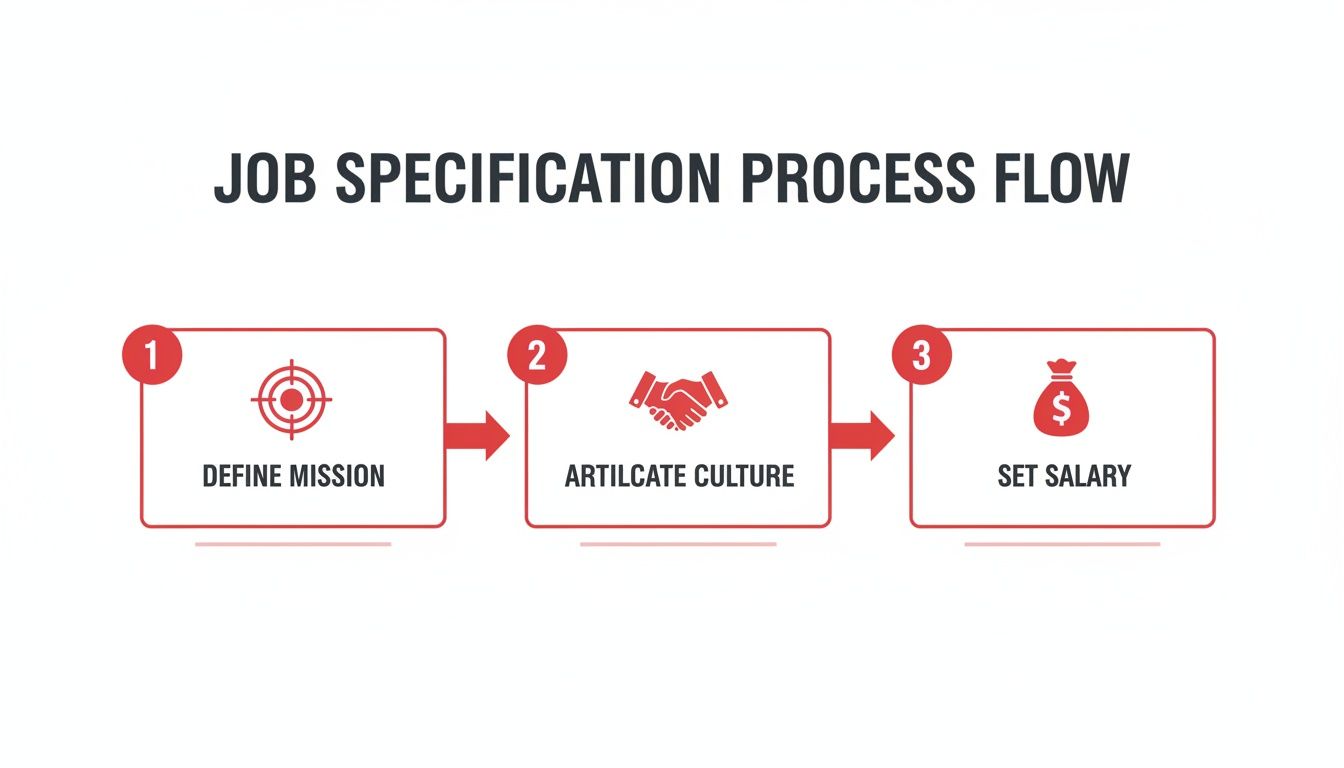
Following this process ensures that by the time you start vetting, you're only considering candidates who are genuinely aligned with your venue's mission and financial goals.
At Relief Chefs UK, we handle this entire exhaustive process for our permanent recruitment clients. Every candidate we introduce has already passed our rigorous vetting, saving you huge amounts of time and giving you confidence that you’re only meeting serious, high-calibre professionals. Whether you need a permanent leader, emergency relief chefs, or even specialised yacht chefs, our focus is always on providing vetted, reliable talent.
The Interview and Trial Shift That Reveal Real Talent
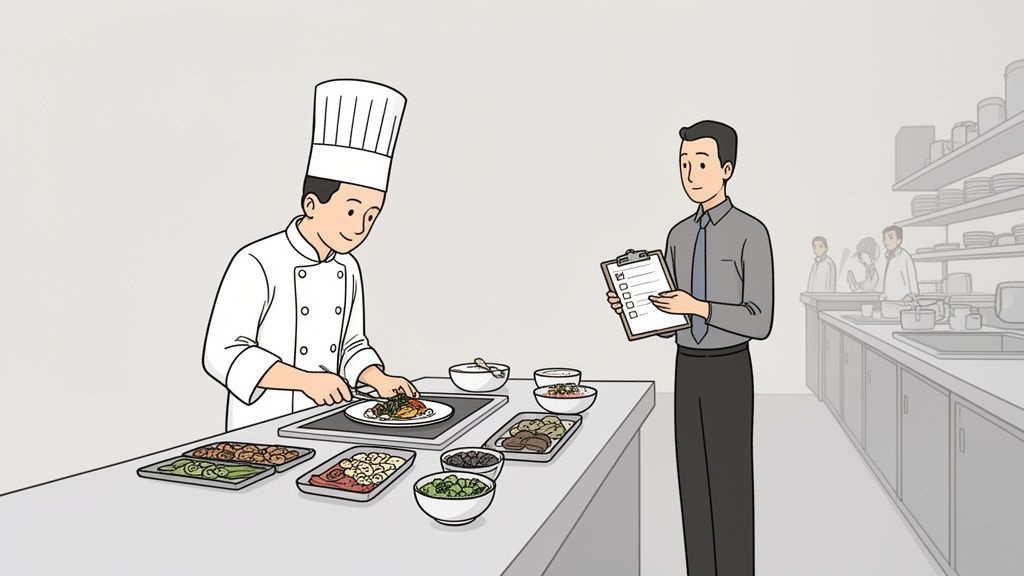
Once you’ve got a promising shortlist, the real work begins. A well-polished CV and a charming personality are one thing; performing under the intense pressure of a busy service is another entirely. This is where you separate the talkers from the true performers.
The interview and trial shift are the two most critical stages in your head chef recruitment. They are your direct window into a candidate’s leadership style, financial brain, technical skill, and temperament. Get them right, and you save yourself from the catastrophic cost of a bad hire.
Go Beyond Generic Interview Questions
To really understand a candidate, you have to move past the tired old, “What are your strengths and weaknesses?” You need competency-based questions that force them to give you real-world examples of what they’ve actually done. This is how you uncover their true thought processes and past behaviours, not just a rehearsed answer.
Here are some powerful, practical examples we use to probe the key areas of a head chef’s role:
- Financial Acumen: "Walk me through how you would cost a new dish for our menu to achieve a 72% GP. I want to hear about everything, from managing supplier negotiations to accounting for waste."
- Leadership & Crisis Management: "Describe a busy Saturday night service when a key team member called in sick at the last minute. How did you adapt the section plan, what was the outcome, and how did you manage team morale?"
- Creativity & Menu Development: "Our venue in Bristol is known for its modern British cuisine. Tell me about a dish you created that successfully blended traditional flavours with a contemporary technique. What was your inspiration and how did it sell?"
- Team Building & Culture: "You’ve just inherited a kitchen brigade with low morale. What are the first three practical steps you would take in your first month to start building a positive, high-performing culture?"
These questions don't have simple right or wrong answers. They reveal how a candidate thinks, solves problems, and leads. They show you if their experience is genuinely relevant to the challenges your business in Wales or Berkshire might be facing.
The Paid Trial Shift: A Window into Reality
The trial shift is the single most effective way to assess a chef's true ability. But let's be clear: this must be structured as a professional assessment, not a way to get free labour. It’s about evaluating their skill and, just as importantly, their cultural fit.
A well-run trial shift isn't about asking a chef to cook their most complex signature dish. It's about observing how they operate in your environment—how they communicate, organise themselves, and handle the pressure of a real service.
This is where pre-vetted candidates really shine. The chefs we put forward for permanent chef recruitment have already been assessed for their professionalism and reliability, so they consistently excel in these practical tests.
What to Look for During the Trial
Your observation has to be methodical. Focus on the core competencies that define an exceptional head chef, not just the final plate of food.
Key Observation Points:
- Organisation (Mise en place): Do they arrive early and set up their station in a clean, logical way? A tidy station is the sign of a tidy mind, every single time.
- Cleanliness and Hygiene: Watch how they work. Are they constantly cleaning as they go? Do they follow food safety standards without needing to be told?
- Cooking Technique: Observe their knife skills, their understanding of heat management, and their respect for the ingredients. Do they treat your produce with care?
- Communication Style: How do they interact with your team? Are they calm, clear, and respectful, or do they become flustered and arrogant under pressure?
- Composure Under Pressure: How do they react when a docket is delayed or a mistake is made? A true leader stays calm and finds solutions; they don't assign blame.
By focusing on these behaviours, you get a deep insight into how a candidate will perform day-in, day-out. You see their real character, not the polished interview version. It’s this level of detailed evaluation that ensures the person you hire will bring stability and excellence to your kitchen.
If your recruitment process is stalling or you're struggling to find candidates who can pass these critical tests, we can help. Contact Relief Chefs UK today to discuss how our expert-led approach connects you with genuinely talented chefs who are ready to prove their worth.
Making the Offer and Onboarding for Long-Term Success
Getting a 'yes' from your top candidate is the goal, but how you get there matters. After a strong trial shift, you cannot afford to hesitate. The best Head Chefs are always in play, often juggling multiple offers. If you drag your feet, a competitor will beat you to it. Simple as that.
A professional, competitive offer isn't just a formality; it's your first real statement about how much you value their leadership. Get it right, and you not only secure your chef but also set a positive, respectful tone for their entire time with you.
Building an Offer They Won’t Walk Away From
A compelling package is about more than the headline salary. While the money has to be right, the other details are what seal the deal and show you’ve thought this through properly.
Your formal offer needs to be clear and detailed. It must include:
- A Competitive Salary: You must benchmark this against current market rates for your specific area, whether you're in a high-cost city like Windsor or a regional hub in Devon.
- A Clear Bonus Structure: Don't be vague. Link bonuses directly to real-world results like hitting a GP percentage, improving staff retention, or achieving a 5-star food hygiene rating.
- A Full Benefits Package: List everything. Pension contributions, holiday entitlement, private health cover, and any accommodation perks need to be spelled out.
- A Proposed Start Date: This shows you’re organised and ready to get them started, not just thinking about it.
The market for top chefs is unbelievably tight right now. Industry reports describe chefs as being 'more fickle than ever' thanks to a perfect storm of rising pay and a chronic skills shortage. We’re seeing Head Chef salaries jump quarter-on-quarter. The competition is fierce.
Data also shows that the sector loses a huge number of chefs once they hit their early thirties, making experienced leaders an incredibly valuable and scarce resource. You can read more on the trends shaping the chef recruitment challenge on The Caterer.
The Onboarding Process That Protects Your Investment
Once the contract is signed, the real work begins. A disorganised or unwelcoming start can sour the relationship before they’ve even finished their first week, wasting all the time and money you just spent on recruitment.
The first 90 days are everything. A well-planned onboarding programme dramatically reduces turnover by properly integrating your new leader, aligning them with your goals, and making them feel part of the team from day one.
A solid onboarding plan isn’t just a checklist; it’s about making sure your new chef feels competent and connected as quickly as possible.
From Keys to Culture: A 3-Part Onboarding Plan
First, nail the practical setup. This is the basic stuff that, if missed, causes immediate frustration. Have their keys, uniform, and any security codes ready. Set them up on the till system, ordering software, and rota platform before they arrive. Arrange proper introductions to key suppliers and your front-of-house managers.
Next, focus on the cultural fit. Schedule one-on-one time with you and other senior leaders to talk about the business vision. Organise a proper team meeting so they can introduce themselves to the brigade and set expectations. Crucially, explain the unwritten rules—how your team communicates, the kitchen's flow, and the general vibe of the business.
Finally, align them with your strategy. Don't hide the numbers. Walk them through the P&L and the financial goals for the kitchen. Discuss your long-term vision for the menu and where you see the food going. Be crystal clear about how their performance will be measured and get that first formal review in the diary.
This structured, thoughtful approach is exactly why the leaders we place through our permanent chef recruitment service have such a high retention rate. We focus on finding the right long-term fit from the very beginning.
If you need help securing a leader who will stick around and drive your kitchen forward, contact Relief Chefs UK today.
Your Essential Contingency Plan to Keep the Kitchen Running
Let's face a hard truth: even the most meticulous head chef recruitment process can't protect you from emergencies. The reality of hospitality is that things go wrong, often at the worst possible moment. A key chef calls in sick before a fully booked Saturday, a new hire’s start date gets pushed back, or a sudden departure leaves a gaping hole at the top of your brigade.
These situations throw an entire operation into chaos. They damage your reputation, burn out your remaining team, and hit your revenue hard. This is precisely why a reliable contingency plan isn't a luxury; it's an essential part of modern kitchen management. Without one, you’re gambling with your business every single day.
Your Safety Net for Kitchen Stability
This is where Relief Chefs UK becomes your most valuable partner. Since 2013, we have been the go-to safety net for hospitality businesses across the country, providing immediate, professional cover when disaster strikes. We are not just a list of names; we are a chef-led agency built to solve the real-world staffing problems you face.
Our service is designed for rapid response. The process is incredibly simple:
- You call us or fill out our online form, detailing your immediate need.
- We respond fast, confirming availability from our nationwide network of vetted chefs.
- A professional chef arrives, ready to step in and keep your kitchen running smoothly.
This immediate support provides invaluable peace of mind. It allows you to handle unexpected short-notice sickness or seasonal demand without a drop in standards. It also gives you breathing room during a long-term head chef recruitment drive, so you’re not forced into making a rushed, desperate hire you’ll later regret.
A contingency plan isn't about planning for failure; it’s about ensuring success no matter what happens. Having a reliable temporary chef partner means you never have to compromise on quality or close your doors.
Our flexible support covers every possibility, from a single-day emergency to several weeks of cover. For businesses in hospitality hotspots like Slough, Dorset, and across Wales, this support is a lifeline. We offer everything from skilled relief chefs and experienced temporary chefs to specialised yacht chefs and villa chefs.
If you're worried about kitchen stability or struggling to find the right permanent leader, don't wait for a crisis to force your hand. A quick conversation today can save you a huge amount of stress tomorrow.
Don’t let staff shortages disrupt your service. Contact Relief Chefs UK today for a no-obligation chat about our permanent and temporary chef staffing support and discover how we can protect your business.
Frequently Asked Questions About Head Chef Recruitment
When you're hiring a Head Chef, a lot of questions come up. It's a high-stakes role, and getting it wrong is expensive. Here are some straight-talking answers to the questions we hear most often from hospitality managers trying to navigate the process.
How Long Should a Head Chef Recruitment Process Take?
Honestly, in the current UK market, you need to budget for 4 to 12 weeks. That's from the day you post the advert to your new chef’s first day on the pass. This gives you realistic time for proper sourcing, a few interview stages, a practical trial shift, and respecting professional notice periods.
A specialist recruitment partner can often slash that timeframe. Why? We have access to a network of pre-vetted chefs who aren't even actively looking. Even better, our temporary chefs can step in at short notice, subject to availability, to run the kitchen. This means you’re not forced into a bad hire just to plug a desperate gap.
What Is a Competitive Salary for a Head Chef in 2024?
Head Chef salaries are all over the map, driven entirely by the venue's location, style, and reputation. In hyper-competitive spots like London or prime Berkshire towns such as Windsor, you're looking at a range of £45,000 to £70,000+.
Move to other regional hotspots like Dorset or Bristol, and a strong offer might be closer to £38,000 to £55,000. Of course, any venue with Rosettes or Michelin stars will always command a serious premium on top of these figures. As part of our service, we give clients the most current salary data to make sure every offer we build is compelling enough to land the right person.
A bad hire is one of the most expensive mistakes a hospitality business can make, factoring in lost revenue, recruitment costs, and damage to team morale. A replacement guarantee from your recruitment partner is essential protection.
What Happens If My New Head Chef Doesn't Work Out?
This is the number one fear, and for good reason. A bad hire is disruptive, costly, and a nightmare for team morale. It’s exactly why our permanent chef recruitment service is built around careful vetting and matching, so the chef fits your kitchen from the start.
If a chef we place leaves within an agreed period, we find you a suitable replacement at no extra recruitment cost. It's that simple. This policy protects your investment and gives you the peace of mind to focus on finding the right long-term leader, not just a quick fix.
Can I Hire a Temporary Chef While I Am Looking for a Permanent One?
Absolutely. In fact, it’s a core strategy we recommend to every client. Bringing in a relief chef protects your standards, safeguards revenue, and, most importantly, buys you time so you don't rush the permanent search.
Our experienced relief chefs are built to step in seamlessly and keep your kitchen firing on all cylinders. We have clients all over the UK, from busy hotels in Wales to destination pubs in Devon, using our temporary chefs to bridge these exact gaps. It turns a potential crisis into a controlled, manageable process.
Don't let a gap in your senior team put your business at risk. At Relief Chefs UK, we provide vetted, reliable chefs to ensure your kitchen never misses a beat.
Contact us today for a no-obligation chat about your permanent and temporary staffing needs.
Call the team.
Office 01392 715474 · info@reliefchefs.co.uk