
Don't be fooled into thinking the sous chef is just the head chef's number two. They are the engine room, the operational core that keeps the entire kitchen running. A sous chef is the second-in-command, yes, but their real job is to take the head chef’s vision and make it a reality, plate after plate, service after service.
The Sous Chef as the Kitchen Conductor
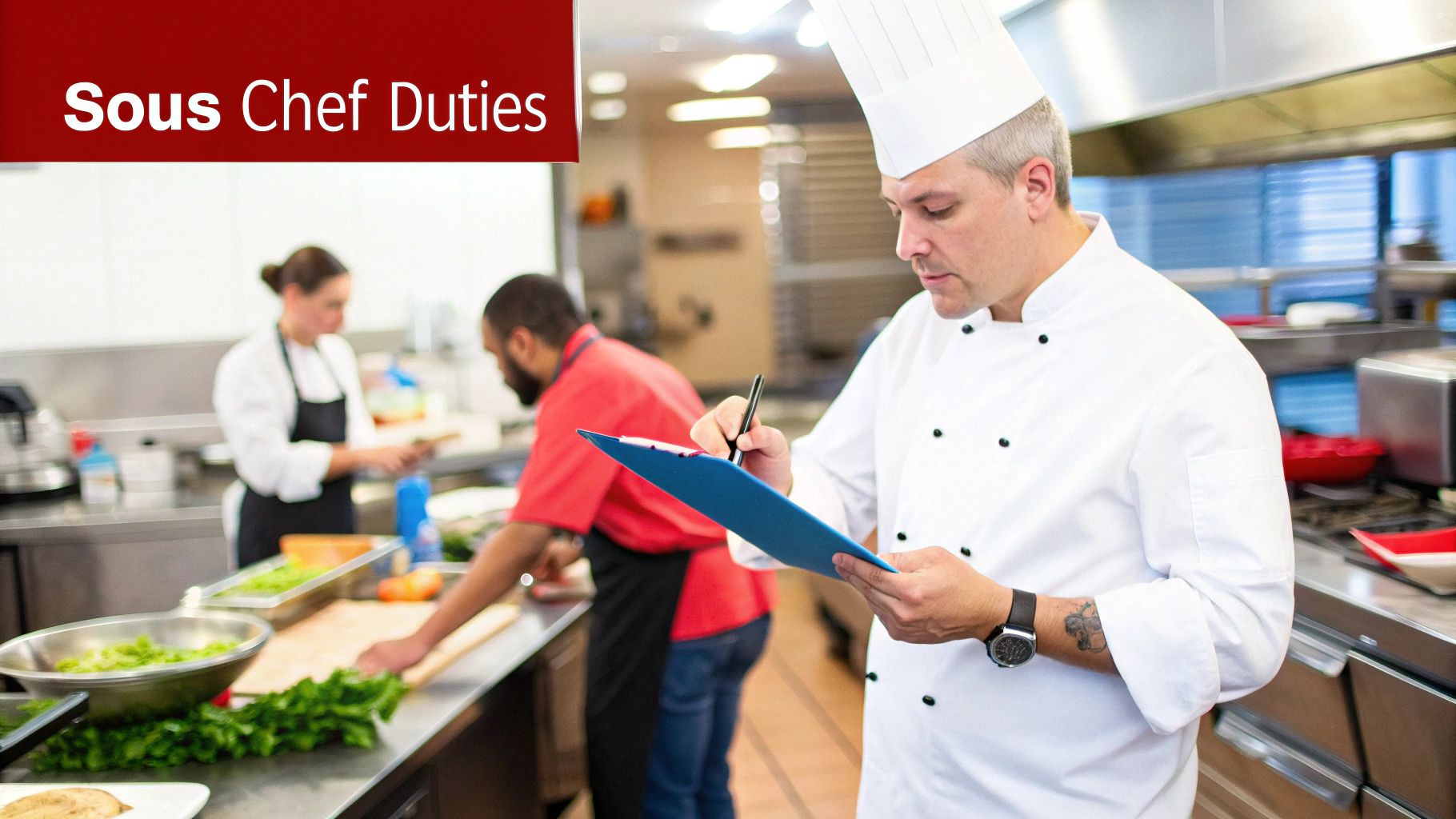
If the head chef writes the music, the sous chef conducts the orchestra. They don’t just know the score; they make sure every section—from grill to garde manger—hits their notes perfectly, especially during the chaos of a Saturday night service. This isn't about barking orders. It’s hands-on leadership, constant quality control, and mentoring the junior chefs.
The sous chef is the crucial link between the head chef's big-picture plan and what the line cooks are actually doing on the ground. They run the kitchen brigade, make sure every station is set for a smooth service, and ensure every single dish that goes out is up to standard.
Core Functions of the Role
The role is a mix of cooking skill, sharp operational management, and people skills. While the day-to-day grind changes depending on the venue, the job really boils down to four key areas:
- Leading the Kitchen Team: This means supervising the crew, training up the commis chefs, sorting out the rota, and keeping everyone motivated when the pressure is on.
- Managing Daily Operations: From overseeing the morning prep (mise en place) to calling the pass during service, the sous chef makes sure the kitchen flows without a hitch.
- Upholding Quality and Consistency: They’re the final gatekeeper. They taste the sauces, check the plating, and make sure every dish is exactly as it should be, every time.
- Deputising for the Head Chef: When the gaffer is off, the sous chef steps up. They take full command, making all the key decisions to keep the kitchen firing on all cylinders.
A great sous chef doesn't just manage tasks; they manage people and pressure. They are the calm centre of the storm, turning potential chaos into a seamless and successful service through decisive action and clear communication.
To get a clearer picture, let's break down these responsibilities into a quick overview. This table shows exactly how a sous chef's work directly impacts the smooth running and profitability of a kitchen—something every owner and manager needs to understand.
Core Sous Chef Responsibilities at a Glance
This table summarises the essential, day-to-day functions a sous chef performs to ensure a professional kitchen runs like a well-oiled machine.
| Duty Category | Key Responsibilities | Impact on Kitchen Operations |
|---|---|---|
| Team Leadership | Staff supervision, training junior chefs, shift scheduling, leading pre-service briefings. | Boosts team morale, reduces staff turnover, and ensures consistent performance. |
| Operational Control | Overseeing food preparation, managing inventory, expediting orders, quality control. | Minimises waste, maintains high food standards, and ensures efficient service flow. |
| Quality Assurance | Final inspection of dishes, enforcing food safety standards, recipe adherence. | Guarantees guest satisfaction, protects the venue's reputation, ensures compliance. |
| Menu Execution | Assisting with menu development, testing new recipes, managing food costs. | Drives profitability, fosters culinary innovation, and maintains menu integrity. |
Ultimately, these duties show that the sous chef isn't just a senior cook; they are a manager, a leader, and a vital part of the kitchen's success.
Leading the Brigade with Skill and Precision
Forget just being a great cook. A sous chef’s real power is in their leadership. They are the field commander, turning the head chef’s vision into a perfectly executed service, night after night. It’s less about being a senior cook and more about being the manager, mentor, and motivator who keeps the kitchen brigade running with a steady hand.
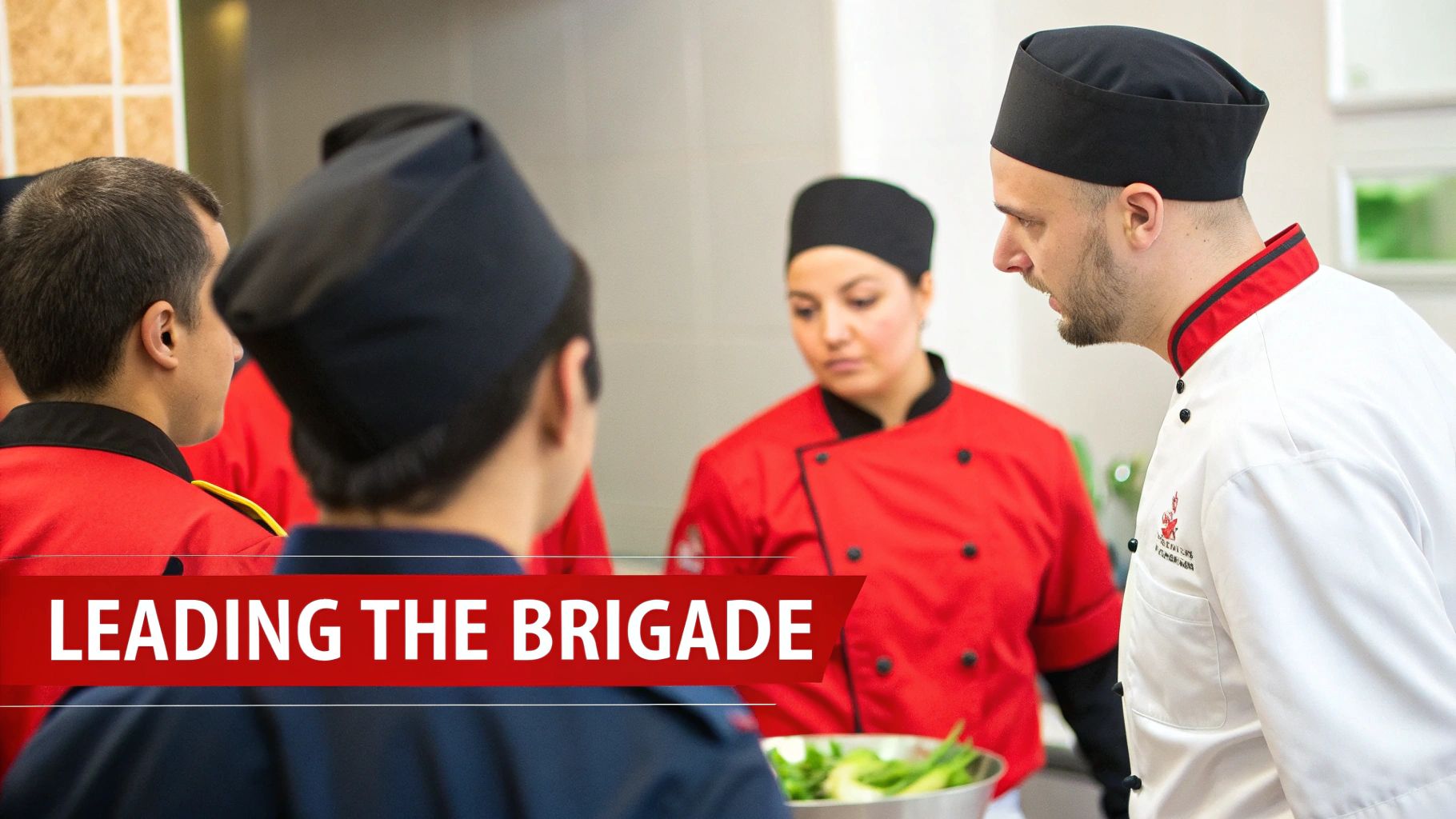
This isn’t abstract leadership; it's hands-on and has a direct impact on the kitchen's vibe and output. We're talking about everything from designing fair staff rotas to running punchy pre-service briefings. Those briefings are critical. They set the tone, flag potential problems, and get the entire team focused and ready for the onslaught.
From Chaos to Control: A Saturday Night Scenario
Picture a slammed Saturday night. The docket machine is spitting out tickets relentlessly. A new commis chef is drowning on the garnish station, and the grill section is falling behind. This is the moment a good sous chef becomes the kitchen’s most valuable asset.
While the head chef might be focused on the pass or dealing with front-of-house, the sous chef wades into the chaos. They don’t just bark orders. They calmly shift resources, maybe moving a stronger chef to help the grill for ten minutes or quietly showing the commis a faster way to set up their station. Their composure stops panic from spreading, turning a potential meltdown into a controlled, professional service. This is one of the most vital, yet often unseen, duties of a sous chef.
"A sous chef's real authority comes from their ability to earn respect, not demand it. They lead from the trenches, jumping on a station when needed and mentoring junior staff with patience. This hands-on approach builds a loyal, resilient team that can handle any challenge."
This leadership role also means stamping out fires between staff. In a high-stress kitchen, arguments happen. By stepping in quickly and fairly, a sous chef protects morale and stops disputes from derailing service. That's essential for keeping good staff and building a culture people want to work in.
Mentoring the Next Generation of Chefs
One of the most important parts of a sous chef’s job is training the junior staff. They are the main mentor for commis chefs and demi chefs de partie, responsible for sharpening their skills and hammering home high standards. This is way more than just showing someone how to chop an onion. It involves:
- Constructive Feedback: Giving clear, practical advice on everything from knife skills to plating consistency. No fluff, just what needs to be fixed.
- Patience and Guidance: Understanding that mistakes are part of the learning curve and using them as teaching opportunities, not reasons to shout.
- Instilling Professionalism: Teaching the importance of turning up on time, keeping a clean station (mise en place), and working as a team.
This commitment to training pays off massively. It doesn't just create a more skilled team; it builds loyalty. A chef who feels like you’re invested in them is far more likely to stick around, cutting the huge costs that come with high staff turnover.
The Financial Impact of Strong Leadership
In the fast-paced kitchens of UK pubs and boutique hotels, the sous chef's duty to manage staff is absolutely critical, especially when seasonal rushes expose staffing gaps. Good leadership isn’t just about a happy team; it translates directly into financial stability.
The average sous chef salary is around £27,393, a figure that reflects the immense value of this role. They oversee complex rotas for long shifts and are tasked with training junior chefs who are the engine room of the kitchen. This focused supervision is proven to boost kitchen efficiency by 20-30% by coordinating the team better, which directly impacts the bottom line and improves staff retention. You can find more insights on sous chef salary benchmarks over at PayScale.com.
Driving Kitchen Operations and Profitability
Beyond running the line, a sous chef’s duties cut straight to the financial heart of the kitchen. This is where the craft of cooking meets the reality of business. They aren’t just managing people; they’re managing resources, strangling costs, and directly shaping the venue’s bottom line.
Think of them as the kitchen's operational accountant. A head chef might dream up a brilliant menu, but it’s the sous chef on the ground who makes sure it can be delivered consistently and, crucially, profitably, night after night. They turn the artistic vision into a sustainable business.
Mastering Inventory and Supplier Relations
One of the first places a sous chef proves their worth is in the stockroom. Mastering inventory is about far more than just counting boxes. It’s about anticipating demand, understanding usage patterns, and ruthlessly minimising waste. A tidy, well-managed stockroom is a direct reflection of a well-managed budget.
This boils down to a few critical tasks:
- Conducting Regular Stocktakes: Physically counting everything to see what’s walking out the door versus what’s on the books. This is how you spot waste, over-portioning, or even theft.
- Implementing FIFO (First-In, First-Out): It sounds simple, but enforcing this system is vital. It ensures older stock gets used first, which drastically cuts down on spoilage and lost money.
- Managing Supplier Orders: This means building proper relationships with suppliers. A good sous chef can negotiate better prices, guarantee quality, and is often the one placing the daily orders for fresh produce.
This constant vigilance prevents two classic kitchen disasters: the financial drain of over-ordering and the operational chaos of running out of a key ingredient mid-service.
Controlling Food Costs and Maximising Yield
Controlling food cost is arguably one of the most impactful financial duties of a sous chef. With food costs eating up 28-35% of a restaurant's revenue, even tiny improvements here have a huge effect on profitability. The sous chef is the chief enforcer of cost-control on the floor.
They do this by drilling down on portion control, making sure every plate that leaves the pass has the exact, costed amount of each ingredient. They also train junior chefs on butchery and prep techniques that maximise yield—things like how to trim a prime cut with almost zero waste, or how to turn vegetable offcuts into stocks and sauces instead of throwing them in the bin.
A great sous chef sees profit in the details. They know that an extra 30 grams of protein on every plate or a poorly checked-in vegetable delivery can be the difference between a good month and a bad one. Their discipline protects the venue's margins.
This financial sharpness is non-negotiable. If you want to understand the numbers behind kitchen staffing, you can learn more about the true cost of employing a chef and see how these roles impact the budget.
Menu Development and Mise en Place Management
While the head chef usually gets the final say on the menu, the sous chef is essential to its practical development. They’re the ones working alongside the head chef, testing new recipes and giving honest feedback on whether a dish can actually be executed under the pressure of a busy service.
They also analyse the cost of every single ingredient to help price dishes correctly, finding that sweet spot between creativity and commercial sense.
More importantly, they are the conductor of the daily mise en place—the complex web of prep work that makes service possible. This isn't just about chopping veg; it's a critical management task. The sous chef writes the prep lists, assigns them to each station, and ensures everything is ready on time and to standard. This prevents delays, kills inefficiency, and is the foundation of a smooth service.
How Sous Chef Duties Adapt to Different Kitchens
The title "sous chef" isn't a one-size-fits-all label. The role is a chameleon, changing its colours to match the kitchen it's in. While the core duties of leadership and keeping the operation tight remain the same, the day-to-day can look dramatically different depending on whether you’re in a bustling pub, a fine-dining spot, a huge hotel, or even a private home.
Understanding these differences is critical if you're hiring. The skills that make a sous chef thrive in a high-volume pub kitchen are miles away from what's needed to manage the tiny details of a Michelin-starred service. Your job description has to reflect the reality of your operation.
A sous chef in an independent restaurant might spend most of their time cooking and mentoring their team directly. By contrast, a hotel sous chef could be buried in admin, managing rotas and budgets across several different dining outlets.
Comparing Sous Chef Responsibilities by Venue
To really see the difference, it helps to put them side-by-side. The table below breaks down how the focus and daily tasks of a sous chef shift depending on the type of establishment they work in.
| Venue Type | Primary Focus | Typical Team Size | Key Differentiators |
|---|---|---|---|
| Pub | Speed, consistency, volume | Small (3-6 chefs) | Hands-on cooking, running a station, simple stock control |
| Fine-Dining Restaurant | Precision, quality control, technique | Medium (5-15 chefs) | Upholding head chef's vision, meticulous plating, mentoring juniors on complex skills |
| Large Hotel | Operations, logistics, budget management | Large (15-50+ chefs) | Overseeing multiple outlets (e.g., banqueting, room service), heavy on admin and HR |
| Private Household / Yacht | Adaptability, total autonomy | Very Small (1-2 chefs) | Menu planning, procurement, cooking, and budgeting all in one; caters to specific client tastes |
As you can see, while the title stays the same, the job itself is transformed by the environment.
The Pub Sous Chef: The All-Rounder
In a classic British pub, the sous chef is the engine room's most hands-on leader. The team is usually small, and the menu is all about speed, consistency, and getting plates out the door. The duties here are almost entirely practical.
- Direct Line Cooking: They are almost always on a station during service, often running the grill or the pass while keeping an eye on the whole line.
- Stock Management Focus: With a high turnover of pub classics, their main inventory job is stopping the kitchen from running out of key ingredients on a packed Saturday night.
- Team Versatility: They're training a small, flexible team where everyone needs to be able to jump onto any station when things get busy.
This job needs a leader who has mastered the basics and can hold quality steady under relentless pressure. They are less of a boardroom strategist and more of a field commander.
The Fine-Dining Sous Chef: The Guardian of Standards
In a fine-dining or rosette-level restaurant, the sous chef's role shifts from speed to surgical precision. The whole game is about flawless execution, creativity, and protecting the head chef’s exact vision.
Here, the focus is on obsessive quality control. That means tasting every sauce, checking every garnish, and making sure every plate is a perfect copy of the standard. They are the final gatekeeper before a dish hits the pass.
The fine-dining sous chef is an artist and a scientist. They must have the palate to understand nuanced flavours and the discipline to ensure every single component is executed with technical perfection, service after service.
Their leadership style is different, too. They mentor in a more technical way, teaching complex techniques and building a culture of quiet professionalism and intense focus. Their main job isn't just managing the operation; it's protecting the culinary integrity of the menu.
The Hotel Sous Chef: The Operations Manager
In a big hotel, the sous chef role often becomes a senior management position. They might be in charge of multiple kitchens at once—the main restaurant, room service, banqueting, and even the staff canteen.
This requires a completely different skillset. Their duties as a sous chef become far more administrative and strategic:
- Multi-Outlet Coordination: Managing staffing, ordering, and prep lists across different kitchens that are all running at once.
- Budgeting and Reporting: They are deeply involved in financial reports, tracking food costs, and managing much larger budgets.
- Large-Scale Team Management: This means supervising a bigger and more diverse brigade, which demands strong delegation and clear communication.
While they need solid kitchen skills, their success hinges on their ability to organise complex operations. They spend less time on the line and more time in the control tower, directing the flow of the entire culinary department. You can see how junior roles like catering assistant duties fit into this larger structure in our guide.
The Private Household or Yacht Sous Chef: The Total Package
Working in a private home or on a luxury yacht is a unique beast. Here, the sous chef (who might also be the only chef) has total responsibility for everything. They're the menu planner, the supplier, the cook, and the accountant all rolled into one.
This job demands extreme adaptability and a massive culinary range, as they have to cater to the specific—and often changing—tastes of their employer. They handle everything from buying ingredients and managing the budget to cooking the food, requiring a huge amount of autonomy and personal organisation.
The map below shows how a sous chef's core duties—managing inventory and the menu—directly impact the bottom line.
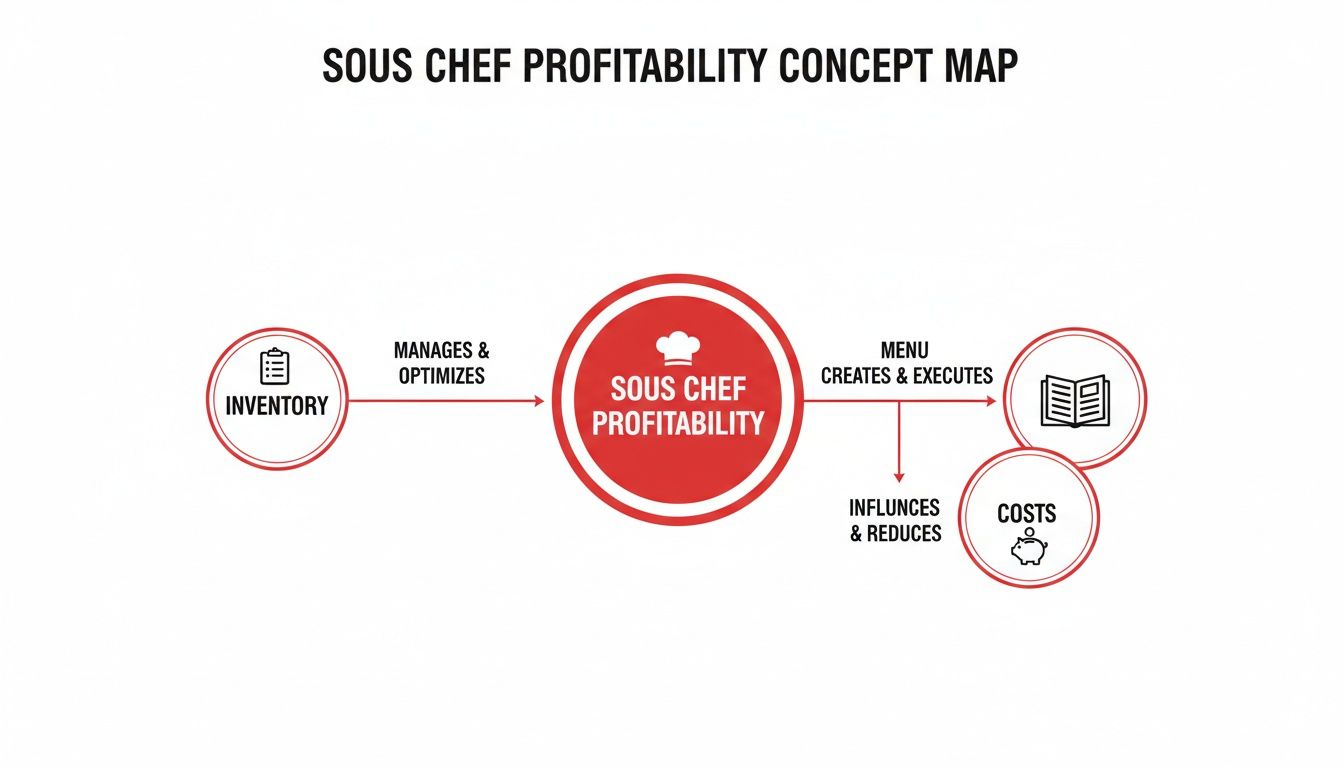
This highlights that no matter the venue, a sous chef’s ability to control stock and execute the menu is central to managing costs and driving success.
The Skills That Define a Great Sous Chef
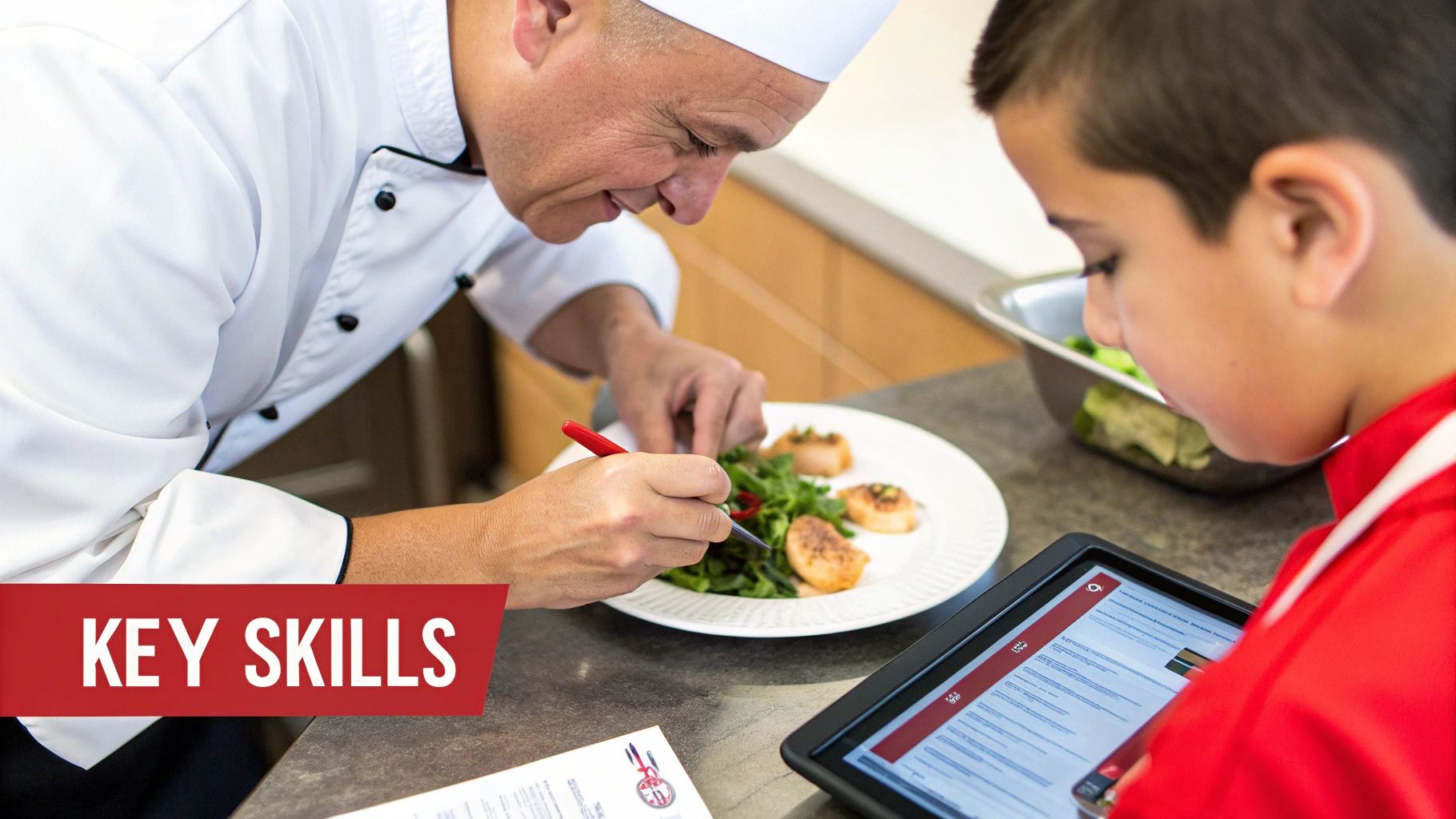
Knowing the duties of a sous chef is one thing. Mastering the skills that make someone truly indispensable is another beast entirely.
An adequate sous chef can follow a prep list and run a service. But an exceptional one? They transform the whole kitchen culture, elevate the food, and fiercely protect the bottom line. It’s a delicate balance of hard-earned technical skill and those crucial, often undervalued, soft skills.
For hiring managers, spotting this blend is the key to finding a leader, not just another line cook. These skills aren't just buzzwords for a job description; they're the real-world attributes that separate a good hire from a great one. The right person brings more than just culinary talent—they bring stability, profit, and a standard of excellence that infects the entire brigade.
Essential Hard Skills
These are the non-negotiables. The technical abilities learned through years of repetition, discipline, and a genuine obsession with the craft. Without these, a sous chef simply cannot command respect or execute the menu to the required standard. A candidate’s trial shift tells you everything you need to know.
- Culinary Precision and Speed: This is about more than just cooking well. It’s the muscle memory to execute complex dishes perfectly under extreme time pressure, ensuring plate #1 and plate #100 look and taste identical.
- Menu and Recipe Costing: A great sous chef sees a dish not just as food, but as a financial equation. They can break it down to the penny, understanding how a small shift in supplier prices will impact the Gross Profit margin.
- Inventory Management Systems: This means religious adherence to systems like FIFO (First-In, First-Out) and proficiency with stock control software. It's not glamorous, but it’s what stops profits from ending up in the bin.
- Health and Safety Compliance: Deep, practical knowledge of HACCP principles is a given. They are the ones enforcing these standards daily, ensuring the kitchen is always compliant, safe, and ready for an unexpected inspection.
These practical skills are the bedrock. Everything else is built on top.
A sous chef's true value is their ability to translate the head chef's vision into tangible, profitable results. This demands a sharp financial mind that sees every ingredient, every portion, and every minute of labour as a factor in the restaurant's success.
Crucial Soft Skills
If hard skills are the what, soft skills are the how. They dictate how a sous chef leads, communicates, and handles the inevitable chaos of service. In many ways, these are even more important for long-term success, because they’re what build a positive, resilient, and loyal kitchen team.
Poor soft skills will poison a kitchen culture faster than anything else, leading to high staff turnover and inconsistent service. You can spot these skills in how a candidate talks to the pot wash, not just the head chef.
- Decisive Leadership Under Fire: Anyone can lead when things are calm. The real test is the ability to make quick, confident decisions during a chaotic service without losing composure. This calm authority stops panic from spreading down the line.
- Clear, Concise Communication: Kitchens are loud and stressful. A top sous chef cuts through the noise with direct, unambiguous instructions. Everyone knows their role, what’s expected, and errors drop dramatically.
- Problem-Solving and Adaptability: An oven breaks. A delivery is late. A key CDP calls in sick. A great sous chef doesn't just report the problem—they have already started working on three different solutions before anyone else has noticed.
- Mentorship and Patience: They invest time in training junior chefs, offering constructive feedback that builds people up, not tears them down. This skill is fundamental to reducing staff turnover and building a stronger, more capable brigade for the future.
Navigating Kitchen Gaps with an Expert Sous Chef
Every kitchen manager knows the feeling. A key team member hands in their notice, the head chef needs unexpected time off, or the summer rush hits harder than anyone planned.
Suddenly, your stable, well-run kitchen is staring down a critical gap. One that threatens to derail service, burn out your remaining team, and damage the reputation you've worked so hard to build.
These aren't just inconvenient moments; they're direct threats to your operation. The traditional recruitment process is painfully slow, often taking weeks or months to find the right person. In the meantime, the pressure piles onto your existing staff, standards start to slip, and the stress can easily lead to more people leaving. It's a vicious cycle that can quickly spiral out of control.
But these challenges don't have to become full-blown crises. Instead of seeing them as staffing disasters, think of them as opportunities to bring in targeted, expert support exactly when you need it most.
The Strategic Advantage of a Relief Sous Chef
This is where bringing in a temporary expert, like a properly vetted relief sous chef, becomes a game-changing strategy. A professional relief chef is much more than just an extra pair of hands. They are a stabilising force, designed to slot straight into your kitchen’s command structure. They arrive with enough experience to immediately get up to speed and uphold your standards from day one.
Think of it like calling in a specialist consultant who also happens to be a master on the grill. Instead of suffering through a long and costly hiring process, you get immediate, high-calibre support. This approach fixes the biggest pain points of a staffing emergency.
- Immediate Stability: A skilled sous chef takes command of the line, manages the brigade, and maintains quality from their very first shift. No drop in service.
- Preventing Team Burnout: By filling that leadership vacuum, they absorb the extra pressure that would otherwise crush your loyal, hardworking team. Morale stays up, and fatigue stays down.
- Maintaining Momentum: They make sure daily operations—from stock ordering to prep lists—continue without a single hiccup, protecting your consistency and your bottom line.
A relief sous chef isn't a temporary fix; they are a strategic asset. They provide the leadership and expertise needed to bridge a critical gap, ensuring your business not only survives a staffing challenge but continues to thrive through it.
Instead of scrambling to find a permanent replacement under immense pressure, you give yourself breathing room. You can take the time to find the perfect long-term fit while a reliable professional keeps your kitchen running at full strength. As you plan, it helps to know how to properly integrate agency staff to cover long-term leave, making the whole transition smooth. This proactive approach turns a potential crisis into just another manageable task.
Frequently Asked Questions About the Sous Chef Role
To wrap up our deep dive into the duties of a sous chef, let's tackle some of the most common questions that pop up. These are the things aspiring chefs and hiring managers always want to know, and the answers really clarify what the job is all about.
What Is the Main Difference Between a Head Chef and a Sous Chef?
Think of it this way: the Head Chef is the architect, and the Sous Chef is the site foreman.
The Head Chef dreams up the vision—the menu, the style, the financial targets. They create the blueprint. The Sous Chef is the one on the ground with the crew every day, making sure that blueprint becomes a reality, built to the highest standard. They run the brigade, manage the timings, and are the undisputed leader when the Head Chef isn't in the kitchen.
How Much Hands-On Cooking Does a Sous Chef Actually Do?
This totally depends on the size of the operation. In a small, independent pub kitchen, the Sous Chef is right in the thick of it. They're often running a busy section themselves, plating dishes and calling checks while keeping an eye on everyone else. In that environment, they are a senior chef first, a manager second.
In a big hotel or a large restaurant, the role leans much more towards management. You’ll find them on the pass expediting, tasting every dish for quality, and directing the flow of service rather than being glued to a stove. A great Sous Chef, no matter the venue, never loses their connection to the food—they're always tasting, checking, and tweaking.
What Is the Typical Career Path for a Sous Chef?
The Sous Chef role is the final, most important training ground for becoming a Head Chef. Simple as that. It’s where a talented chef learns to stop just cooking and starts to truly run a business—mastering the financials, the team management, and the operational grit needed to lead a kitchen from the front.
Once you’ve proven yourself as a Sous Chef, the natural next step is taking on a Head Chef role in a smaller kitchen. Other routes include moving up to a Senior Sous or Executive Sous Chef position in a larger organisation, where you take on even more responsibility. Either way, it’s the make-or-break step on the journey to the top.
When a key team member is suddenly absent, keeping the service running smoothly is all that matters. Relief Chefs UK provides fully vetted, expert chefs who can walk into your kitchen and instantly uphold your standards. Find reliable chef cover today and turn a staffing crisis into a solved problem.