
Your Guide to Sourcing Hospitality Temp Staff in the UK
19 March 2026
Relying on hospitality temp staff isn't a luxury for emergencies anymore. For any hotel manager, general manager, or head chef, it's become a core part of staying profitable and sane in a market that's more unpredictable than ever. From bustling hotels in Bristol to quiet coastal pubs in Dorset, flexible staffing is now a vital tool to protect your standards and your bottom line.
Why Hospitality Temp Staff Are Your New Kitchen Essential
Let's be honest: the days of a stable, predictable kitchen rota are long gone. The reality for most hospitality managers is dealing with constant chaos—last-minute sickness before a bank holiday service, a sudden heatwave driving unexpected trade, and the constant, nagging pressure of the nationwide chef shortage.
These aren't just small headaches. They're real business threats that lead to fewer covers, a damaged reputation, and, in the worst cases, having to close your doors for the night. Thinking of temporary chefs as just a plaster for these crises is a critical mistake. A strategic approach to using temp staff is one of the most powerful tools you have. It gives you agility, protects your core team from burnout, and keeps the kitchen stable, no matter what.
The New Reality of Hospitality Staffing
The UK workforce has completely changed, and the hospitality sector is at the very centre of the storm. The latest figures paint a stark picture: the UK hospitality sector has been one of the hardest-hit parts of the entire UK labour market, with significant job losses year on year. You can read more on the scale of the problem in this report on the hospitality labour crisis.
This isn't just a number on a page; it's the daily reality for managers in Reading, Windsor, and across the country. The consequences are plain to see:
- Sky-high Recruitment Costs: Constantly searching for permanent staff is an expensive, time-sucking drain on resources.
- Operational Strain: Your existing team gets stretched to its breaking point, leading to low morale and costly mistakes during service.
- Lost Revenue: You can't staff a full service, which means turning away paying customers and leaving money on the table.
By embracing a flexible staffing model, you turn an unpredictable problem into a manageable solution. Instead of scrambling when a crisis hits, you have a plan in place to deploy skilled professionals who can step in and perform immediately.
From Crisis Management to Strategic Advantage
This is where having a genuine partner makes all the difference. A proper agency doesn't just fill a gap on your rota; they provide a lifeline. Since 2013, Relief Chefs UK has been supplying reliable, vetted hospitality staff to businesses nationwide. We understand the pressure you're under because we're industry professionals, not just recruiters.
When your Head Chef in Berkshire calls in sick on a Friday morning, we find a skilled replacement to run the pass. When your boutique hotel in Wales needs to scale up for a packed wedding season, our temporary agency chef services deliver the experienced hands you need without the long-term cost of a permanent hire.
We have a solution for every staffing problem, whether it's an emergency relief chef for a single shift, help with your permanent chef recruitment, or even finding specialist yacht chefs and villa chefs. Partnering with a specialist agency like us turns staffing from a constant headache into a strategic asset. It gives you the confidence to run your business, knowing you have the backup to handle any challenge.
Your Vetting Checklist for Sourcing Quality Temp Chefs
Finding a reliable temp chef goes way beyond a quick CV scan, especially when you need cover at short notice. The difference between a true professional who slots right into your brigade and someone who creates more problems than they solve is all in the vetting.
Let's be frank: a rushed decision when you're under pressure can lead to pure chaos during service.
But as a busy manager, you don’t have time for multi-stage interviews. You need a fast, effective way to filter for quality. This is where a focused, practical vetting checklist becomes your most valuable tool for assessing a potential temp chef.
Beyond the CV: A First-Glance Filter
A CV is just the starting point, not the whole story. You need to look past the job titles and focus on the details that signal reliability and a good fit for your kitchen—whether that's a high-volume pub in Reading or a fine-dining restaurant in Slough.
Here's what actually matters on a CV:
- Relevant Experience: Have they worked in kitchens with a similar style, size, and pace to yours? A chef from a quiet café will likely buckle under the pressure of a 200-cover hotel restaurant.
- Clear Career Progression: A history of steady roles or jobs with increasing responsibility is a great sign. Be wary of CVs that show a lot of short, unexplained stints—it’s often a huge red flag for unreliability or a bad attitude.
- Local Knowledge: Experience in your area, be it Berkshire, Dorset, or Wales, is a definite bonus. They might already be familiar with local suppliers and what your customers expect.
The Five-Minute Phone Screen
Once a CV catches your eye, a brief phone call is the most efficient next step. This isn't a formal interview; it’s a quick-fire validation to confirm their skills and professionalism. Your only goal here is to gauge their attitude and practical knowledge.
Ask direct, practical questions that cut straight to the point:
- "What kind of menus have you been working with recently?" This instantly tells you if their recent experience matches your food style.
- "When was your Level 2 Food Hygiene certificate last updated?" This is a non-negotiable compliance check that also reveals their level of professionalism.
- "What's your availability over the next few weeks?" This confirms they're genuinely available for temporary work and helps you start planning.
A candidate's communication style on this brief call says it all. Are they clear, professional, and direct? This is almost always a strong indicator of how they'll behave in your kitchen.
Non-Negotiable Compliance and Red Flags
Legal checks are not optional. Before any chef steps foot in your kitchen for a shift, you absolutely must verify their compliance. Failing to do this puts your entire business at serious risk.
The two absolute must-haves are:
- Proof of Right to Work in the UK: You must see and verify their original documents. No excuses.
- Valid Food Hygiene Certification: A current Level 2 certificate is the bare minimum standard for anyone handling food in a professional kitchen.
This administrative burden is one of the biggest headaches of hiring directly. And with temporary employment in the UK hitting around 1.54 million as of January 2025, it’s a problem that’s only getting bigger. You can see more on this trend in Statista's UK temporary worker report.
This is where working with a specialist partner shows its true value. At Relief Chefs UK, we handle this entire intensive vetting process for you. Every single chef on our books—from our emergency relief chefs to our permanent recruitment candidates—has already been thoroughly screened. We verify their skills, check their references, and ensure all their legal and safety certifications are in order long before they're ever put forward for a role.
This protects your business and guarantees that the person walking into your kitchen is a compliant, skilled, and trustworthy professional who is ready to get to work.
How to Onboard a Temp Chef for Instant Impact
The first hour a temp chef is in your kitchen decides their entire shift. Forget the corporate history and the staff handbook. When you're under pressure, you need a relief chef who can start cooking, not one filling out forms. Their value is in their ability to get up to speed immediately.
A slow, confusing start doesn't just waste money; it piles stress onto your permanent brigade. The only way to get an instant return is to give them a rapid-fire briefing focused on what they need to know to function from minute one. This is all about operational reality, not a welcome tour.
The Lightning-Fast Kitchen Tour
Your first ten minutes with a relief chef should be a high-speed, functional tour. This isn't a casual walkabout; it's about building a mental map of the workspace so they can move efficiently when the dockets start flying. They don't need to know where the staff room is yet, but they absolutely must know where to grab a clean pan during a busy service.
Focus your tour on three core areas:
- Sections and Flow: Show them the main stations—garde manger, sauce, grill, pass. Explain how dockets move from the printer to the plate.
- Key Equipment: Point out the combi oven, fryers, and walk-in fridge. Be direct about any equipment quirks. A simple, "the grill on the left runs hotter" saves time and prevents mistakes.
- Storage Locations: This is vital. Show them the dry store, where to find clean cloths, and the specific shelves for fresh prep in the walk-in. Nothing kills momentum faster than a chef having to ask where the salt is.
The Essential Menu and Allergen Brief
Once the tour is done, the menu is the next priority. A professional temp chef can pick up a dish fast, but they need clear, concise information. Don't drown them in a 20-page spec book; focus on what they'll be cooking right now.
Your briefing needs to cover:
- Top-Selling Dishes: Point out the 3-5 most popular items. These are the dishes they'll be making repeatedly, so that’s where their focus should be.
- Allergen Matrix: Hand them a physical copy. This is a non-negotiable safety step. Highlight any dishes with hidden allergens and stress your exact protocol for handling allergy tickets.
- Plating and Garnishes: Pull up photos of your key dishes on a phone or tablet. A quick visual guide is far more effective for ensuring consistency than a long-winded verbal description.
The goal of onboarding isn't to overwhelm; it's to empower. Give a temp chef the critical tools to function independently, and you'll immediately see the value of investing in quality cover.
This is precisely why at Relief Chefs UK, we put so much emphasis on finding professionals who can adapt in minutes. Our vetting process is designed to ensure any chef we send has the experience to integrate seamlessly without hand-holding.
The infographic below shows the core stages of our vetting for all hospitality temp staff.
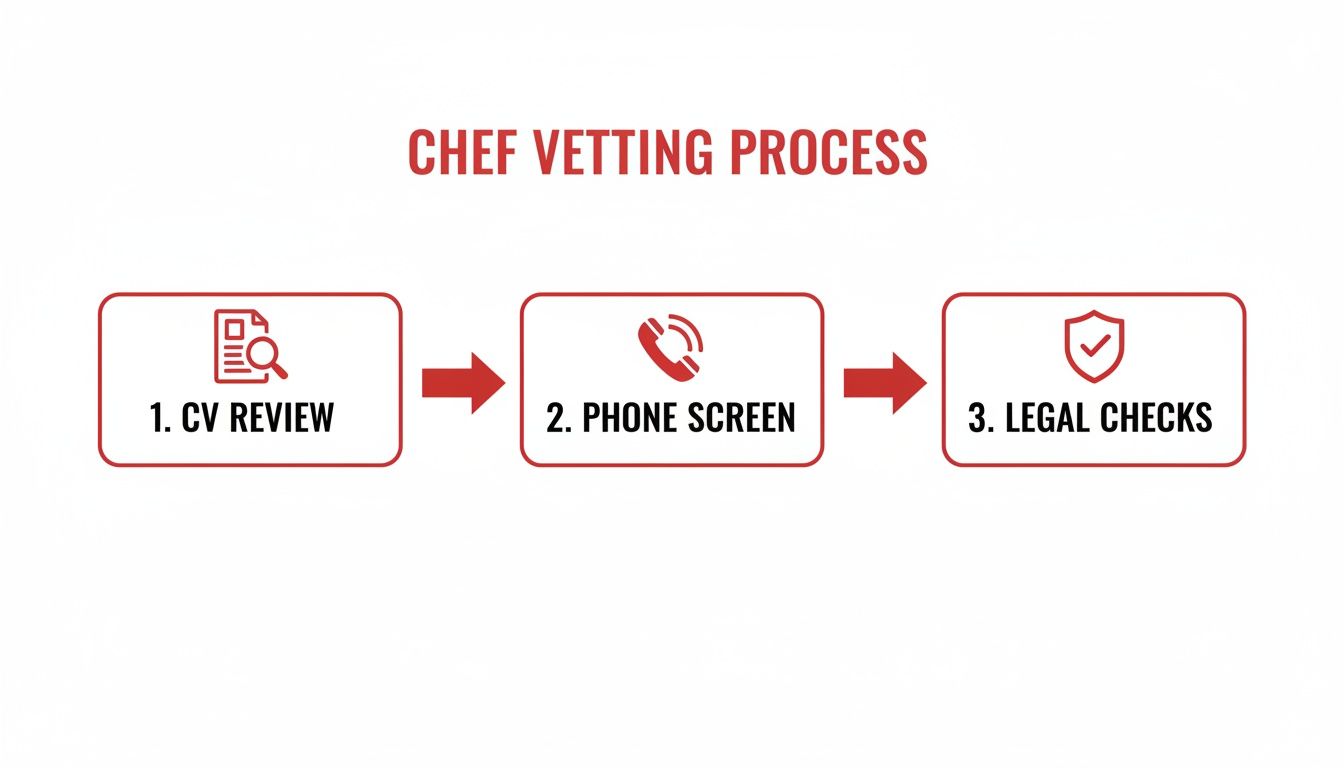
This structured approach means that by the time a chef arrives at your venue, whether it’s in Bristol or Windsor, they’ve already been verified as skilled, compliant, and ready to perform.
Introducing the Core Team
Finally, take 60 seconds to introduce the temp chef to the key people they'll be working with. This isn't about making friends; it's about establishing operational clarity. They need to know who's running the pass, who the senior chef on duty is, and which kitchen porter to talk to for equipment.
A brief, "This is Dave, he's on the pass tonight," is all you need. It clarifies the chain of command and makes communication smoother during a hectic service. This quick connection helps the chef feel part of the team, not an outsider, encouraging them to maintain your high standards from the get-go.
To make this even easier, have a pre-filled sheet ready for their arrival. It’s a simple gesture that makes a massive difference.
Temp Chef Quick Start Template
| Information Category | Details for the Chef |
|---|---|
| Your Point of Contact | [e.g., Head Chef Sarah / Sous Chef Mike] |
| Senior Chef on Pass | [e.g., Dave] |
| Your Section/Duties | [e.g., Larder Section / Plating starters & desserts] |
| Wi-Fi Password | [e.g., KitchenGuest2024] |
| Key Service Times | [e.g., Lunch: 12-3pm, Dinner: 6-10pm] |
| Allergen Protocol | [e.g., Red ticket system, confirmed by Head Chef] |
| End of Shift Tasks | [e.g., Clean down section, label/date all prep] |
| Emergency Contact | [e.g., Manager on Duty – 07…] |
This simple template ensures they have all critical information at their fingertips, empowering them to get straight to work.
When you're facing a staffing crisis, every second counts. To get a fully vetted, professional chef who can make an instant impact in your kitchen, contact Relief Chefs UK now.
The Real Cost of Temp Staff vs. The Cost of an Empty Kitchen
Let's talk money. For any hospitality manager, wrestling with the numbers is a daily reality. When it comes to staffing, those numbers can get complicated, fast. You have to know the different ways to hire temp chefs to protect your bottom line.
The main routes are PAYE, hiring self-employed chefs directly, or using an all-in-one agency. On paper, direct hiring looks cheaper. But it’s loaded with hidden costs and admin work—think National Insurance, pension schemes, holiday pay accrual, and the sheer time burn of payroll. These are the details that sink budgets.
This is where you need to shift your thinking. An agency fee isn't just another bill to pay. It's an investment in reliability, legal compliance, and your own sanity.
The True Cost of a Staffing Gap
Let's run a real-world scenario. It's the Friday of a bank holiday weekend at your busy riverside restaurant. Your Head Chef is out sick, no warning. You're left with two options: run a skeleton crew and deliver terrible service, destroying your reputation, or close sections and turn away hundreds of covers. Both cost you a fortune.
Now, imagine you have a trusted agency on speed dial. At short notice, a vetted relief chef walks in. The agency fee might seem like an extra cost, but that chef allows you to operate at full capacity. The revenue you bring in from a packed service massively outweighs the fee. You've just turned a disaster into a profitable weekend.
The real cost isn't the agency fee. The real cost is the lost revenue, the reputational damage, and the team burnout that happens when you don't have reliable cover. Investing in a professional temp solution is a proactive measure to protect your income.
The Hidden Costs of Hiring Direct
The endless cycle of recruitment is already a massive drain on the industry. Staff turnover is at a crisis point, with studies showing almost 40% of hospitality employees jump ship every year. This creates a horribly expensive loop of hiring and training. If you want to go deeper, you can see how the current recruitment climate is hitting businesses hard in this analysis.
When you hire a temp directly, you’re taking on far more financial and admin risk than just their hourly rate.
The Real Costs of a "Cheaper" Direct Hire:
- Employer's National Insurance: A hefty percentage slapped on top of their wages.
- Holiday Pay: A legal requirement that stacks up quickly across multiple temps.
- Pension Contributions: Another mandatory cost you have to manage yourself.
- Payroll Admin: The time and software needed just to pay them correctly.
- Liability: You are 100% on the hook if they make a mistake, aren't insured, or don't have the right certs.
In contrast, a proper agency like Relief Chefs UK gives you a single, all-inclusive invoice. We sort all the payroll, NI, and legal deductions for every chef we supply. This straightforward approach cleans up your accounting and kills the admin headache, letting you get back to running your business. You can see a full breakdown in our guide to the true cost of employing staff.
Partnering with us isn’t just about hiring a chef; it's about securing a fully compliant, vetted, and insured professional. It transforms your temp staffing from a risky gamble into a smart, strategic investment with a clear return. Don’t let a staff shortage dictate your revenue.
Facing a staffing shortfall and need to understand the costs? Contact Relief Chefs UK today for transparent pricing and immediate, professional cover.
Building a Resilient Kitchen Rota That Actually Works
Constantly scrambling to fill gaps from last-minute sickness or a surprise rush isn't a strategy—it's a recipe for burnout. Reactive hiring is exhausting, expensive, and completely unsustainable. The only way to get ahead is to stop firefighting and start building a kitchen rota that can handle the reality of modern hospitality.
The answer is a ‘blended model’. This isn't some fancy corporate theory; it's a practical way to combine your core permanent team with a reliable pool of hospitality temp staff. It gives you the flexibility to control wage costs when it's quiet but scale up instantly when you need the firepower.
The Blended Staffing Model Explained
The concept is simple. You keep your core team of trusted, permanent chefs—the people who live and breathe your kitchen’s culture. Around them, you build a flexible layer of high-quality temporary chefs you can call on as needed.
This isn’t about replacing your loyal staff; it's about protecting them from the very burnout that drives the industry's disastrously high turnover. By using temp chefs to absorb the pressure of peak demand, your team stays fresh and focused. It’s how you say "yes" to more bookings, knowing you have the crew to deliver without breaking your people.
Picture the summer season in Devon or a major race week in Berkshire. Instead of running your small team into the ground, you bring in two or three pre-vetted temp chefs. Service quality stays high, your staff don't quit, and you bank the extra revenue.
How It Works for Different Venues
The real power of a blended rota is its adaptability. It can be shaped to solve the exact staffing headaches that different venues face every single day.
- Independent Pubs & Restaurants: A gastro-pub in Bristol can use a trusted relief chef to cover their Head Chef’s annual leave. There's no panicked search for cover, and no drop in standards. Just seamless service.
- Boutique Hotels: For a hotel in a seasonal hotspot like Dorset, bringing in temp staff for the entire summer is a game-changer. They can operate at full capacity without carrying the crippling cost of extra permanent salaries through the dead of winter.
- Multi-Site Groups: A hotel group with sites in Reading, Slough, and Windsor can use a nationwide agency as a central contingency plan. When one kitchen has a staffing crisis, a temp is deployed from a shared pool. The problem is solved before it can damage a single service.
This approach turns staffing from a reactive headache into a proactive tool. It’s how you build a stable, adaptable, and genuinely future-proof kitchen operation.
Why a Partnership Beats a Little Black Book
So, where do you find these reliable chefs? Trying to build your own list of freelancers often leads you right back to the same old problems. Will they answer the phone on a Friday night? Are their food hygiene certs still valid? Do they even have the right insurance?
A proper partnership with a specialist agency like Relief Chefs UK cuts out all that uncertainty. Since 2013, we’ve built a nationwide network of professional, fully vetted chefs who are used to stepping into busy kitchens. We act as your dedicated staffing partner, because we understand what you’re up against.
When you need to cover a shift or scale up for an event, you make one call. We handle everything else—from finding a chef who knows your style of service to making sure they are fully compliant and ready to go. Our support ranges from providing emergency relief chefs to helping with your long-term permanent chef recruitment.
This is about more than just filling a gap on a rota. It's about having a dependable partner who is committed to your kitchen's stability. By blending your brilliant core team with our flexible, professional temp chefs, you create an operation that’s truly built to last.
Ready to build a more flexible and resilient kitchen team? Contact Relief Chefs UK today to see how our hospitality staffing support can protect your business.
Frequently Asked Questions About Using Hospitality Temp Staff
Even with the clearest benefits, letting a temporary chef into your kitchen for the first time can feel like a big leap. It’s a move built on trust. Here are some straight-talking answers to the questions we've heard most often from hospitality managers since we started back in 2013.
How Can I Be Sure an Agency Chef Has the Right Skills?
This is the big one, and it's a completely valid worry. The last thing you need is someone who can't handle the pace of your kitchen, whether it's a high-volume gastro-pub in Bristol or a fine-dining hotel in Windsor.
A proper agency doesn’t just send you a name from a list. They should be running a detailed matching process. At Relief Chefs UK, that always starts with a real conversation to get under the skin of your operation, understanding your:
- Menu style (e.g., classic British, modern European, rosette-level)
- Kitchen pace and volume (e.g., 50 covers a night vs. 300)
- Team dynamic and brigade structure
We then dig into our network to find a chef with recent, proven experience in a kitchen just like yours. When you talk to an agency, ask them to walk you through their matching process. Their answer separates the true specialists from the generalist recruiters.
Isn't It Cheaper to Hire a Self-Employed Chef Directly?
On paper, a direct hourly rate can look tempting. In reality, it’s a classic false economy that leaves your business exposed to huge risks and a surprising number of hidden costs.
When you hire a freelancer direct, you become solely responsible for everything. That includes:
- Compliance: Verifying their Right to Work, insurance, and food hygiene certificates. Get this wrong, and you're facing serious fines.
- Reliability: If your direct hire doesn't show up for a critical Saturday night service, you have zero backup. The crisis is yours alone to solve.
- Admin: You’re now in charge of managing their payments and making sure you’re compliant with complex tax rules like IR35.
An agency fee isn't just a markup; it’s an investment in reliability, compliance, and your own peace of mind. It protects your business from risk, saves you countless administrative hours, and insures you against a no-show.
What Happens if a Temp Chef Cancels at the Last Minute?
This is where a good agency proves its worth. If you’ve hired a chef directly and they cancel, you’re back to square one—panicking and desperately calling contacts who are probably already busy. The damage to your service can be catastrophic.
A professional agency partner has a rock-solid contingency plan because our entire business is built on reliability. Because we maintain a wide, active network of chefs across the UK, we can often find a suitable replacement even at incredibly short notice.
Our nationwide reach means that whether your venue is in a remote part of Wales or in the heart of London, we have the resources to act fast. That ability to solve your problem is exactly what you're paying for; it's your business’s essential safety net. We offer this guarantee as part of our hospitality staffing support.
How Quickly Can You Provide a Relief Chef?
In a staffing emergency, every minute counts. The gap between a smooth service and closing your doors is often just a few hours.
Because we have a pre-vetted, live database of available chefs, we can often have a professional confirmed and briefed at short notice, subject to availability. The key is our established network and an internal process we've been refining since 2013.
We don’t start searching when you call; we match you with a verified professional who is ready to go. If you're staring down a last-minute staff shortage, the best thing you can do is call us. We understand the urgency because we are chefs, not just recruiters, and can act immediately to prevent any disruption to your business.
Is your kitchen facing a staffing gap? Don't let it affect your service or your revenue. Relief Chefs UK provides fully vetted, reliable, and professional chefs at short notice. Contact us now to get the immediate cover you need.
Call the team.
Office 01392 715474 · info@reliefchefs.co.uk