
A well-written job description of a catering assistant is your only real tool for finding reliable support for your kitchen. In today's hospitality scene, these people are the secret weapon that lets a chef perform under pressure, especially in fast-paced UK venues like pubs, hotels, and event spaces.
What Is a Catering Assistant and Why Are They So Important
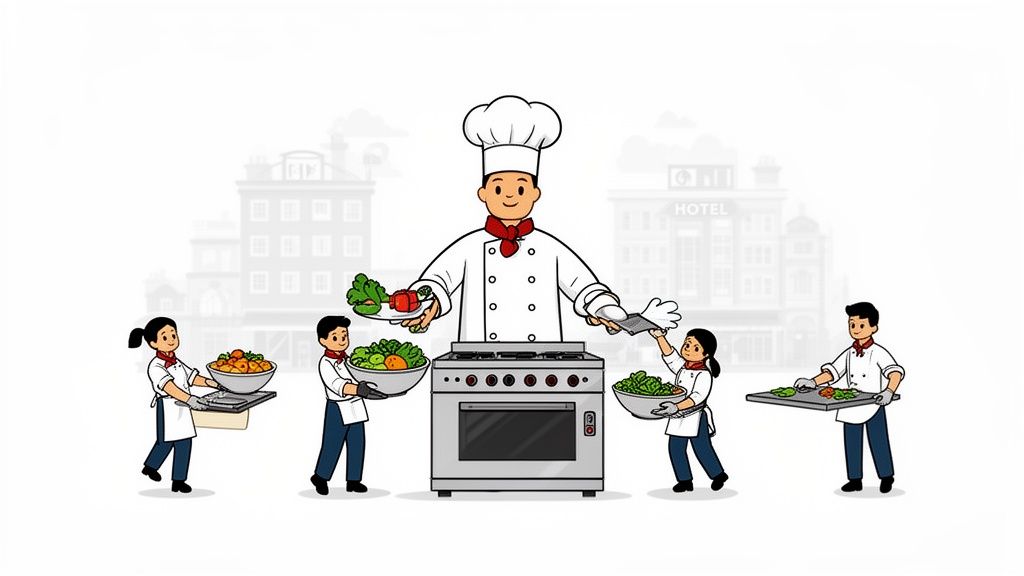
Think of it like this: your head chef is the driver in a high-stakes race. The catering assistant is the pit crew. While the chef focuses on creating exceptional dishes, the assistant makes sure every tool, ingredient, and piece of equipment is ready to go. Without that support, even the best chef will crash.
These aren't just extra hands. They own the foundational tasks that keep a professional kitchen from falling apart. They are the backbone of the service, managing everything from basic food prep and stock rotation to the relentless demands of hygiene. Their work is what allows your senior chefs to focus purely on cooking, plating, and getting food out to guests.
The Unsung Heroes of the Kitchen
In the current UK market, finding good staff is a constant battle. Many venues are fighting against persistent labour shortages, which makes a flexible and hard-working assistant more valuable than ever.
Here is the direct impact they have on your service:
- They Boost Efficiency: Assistants handle the time-draining prep work—peeling, chopping, washing, and portioning. This frees up your expensive chefs to do the skilled work you hired them for.
- They Uphold Standards: A kitchen's reputation lives and dies on its hygiene. Assistants keep workstations spotless, run the dishwasher, and follow food safety protocols, protecting your business from risk.
- They Manage Kitchen Logistics: They handle deliveries, organise walk-in fridges, and rotate stock correctly. This prevents waste and stops the service-killing nightmare of running out of a key ingredient mid-shift.
A great catering assistant doesn't just follow a prep list; they anticipate what the kitchen needs next. They see a pan is dirty and clean it before it's called for. They spot low stock and flag it. They keep the workflow moving without needing to be asked.
Ultimately, their contribution directly affects the quality and speed your kitchen can deliver. For a busy gastropub, they are the reason you can survive a Sunday roast rush. In a boutique hotel, they’re the ones who prepared the delicate components for that flawless afternoon tea service.
By understanding how critical this role is, you can write a job description of a catering assistant that pulls in people who want to be an indispensable part of your team, not just fill a gap. This guide will show you exactly how to do that.
Core Responsibilities and Daily Duties
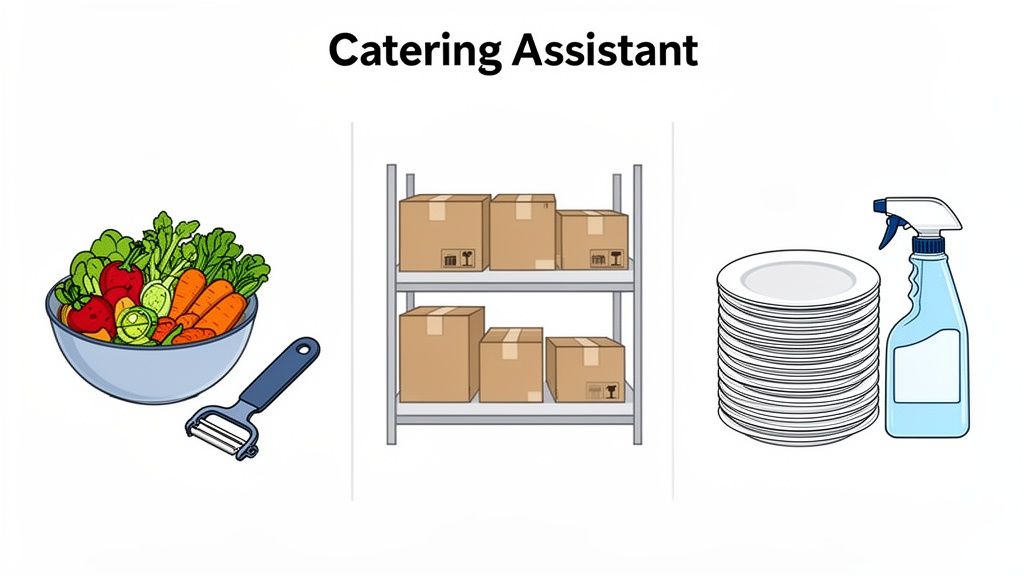
Don't let the title "assistant" fool you. This role is the bedrock of a functioning kitchen. Their duties aren't just a simple checklist; they are the gears that keep the entire culinary machine from grinding to a halt.
If you want to write a job description of a catering assistant that attracts people who actually understand the pressure, you need to be clear about what the job really involves. A typical day is a mix of relentless prep, smart logistics, and an absolute commitment to hygiene.
We can break the role down into three core areas that all feed into each other.
Food Preparation Support
This is where your catering assistant becomes the chef’s best friend. Think of them as the person who handles all the high-volume, time-consuming jobs, freeing up your skilled chefs to focus on cooking, plating, and running the pass. They are the first and most visible part of the kitchen engine.
Common food prep duties include:
- Basic Vegetable Prep: Peeling endless sacks of potatoes for a Sunday roast, washing and prepping salad leaves, or dicing mountains of onions and carrots for a stew.
- Ingredient Portioning: Weighing out precise amounts of flour for a pastry recipe, dividing minced meat for burgers, or portioning side dishes to ensure consistency and control costs.
- Simple Assembly: Building sandwiches for a lunch service, arranging buffet platters, or plating up cold starters before service kicks off.
Kitchen Logistics and Stock Management
Beyond the chopping board, a great assistant controls the flow of goods into, through, and out of the kitchen. They are the guardians of your stockroom, making sure everything is where it should be, when it's needed. This control prevents expensive waste and stops service from collapsing because someone can’t find the right ingredients.
The best assistants live by the FIFO (First-In, First-Out) principle. When a delivery arrives, they don’t just dump it in the fridge. They move the older stock to the front and put the new stuff at the back. It's a simple habit that drastically cuts spoilage and saves the business a fortune.
Key logistical tasks involve:
- Unpacking deliveries and checking them against invoices to make sure you got what you paid for.
- Organising dry stores, walk-in fridges, and freezers so the brigade can find what they need under pressure.
- Monitoring stock levels of essentials like cooking oil, salt, and blue roll, and flagging it to a manager before you run out mid-service.
Hygiene and Safety Protocols
This is the non-negotiable part of the job. A catering assistant is your first line of defence in food safety. They maintain the standards of cleanliness that protect your reputation, your customers, and your food hygiene rating. They ensure the entire team has a safe, clean space to work.
The demands change with the venue. In a high-volume gastropub, their main focus might be on clearing and washing hundreds of plates during a frantic Sunday service. In a boutique hotel, the task might be meticulously polishing delicate glassware and silverware for an afternoon tea where appearance is everything.
Both jobs demand the same unwavering focus on standards. These responsibilities are absolute and include keeping work surfaces spotless, running the dishwasher efficiently, disposing of waste correctly, and following all food safety and HACCP guidelines without fail.
The Essential Skills That Define a Great Catering Assistant
A long CV rarely tells the full story. For a catering assistant, what really matters isn't years of experience, but the right blend of practical skills and personal character. It’s what separates a real asset from someone just filling a gap in the rota.
When you're writing the job description of a catering assistant, you need to think beyond formal qualifications. Focus on the abilities that directly protect your kitchen’s speed, safety, and standards. You're not just hiring hands; you're hiring stability.
The Hard Skills: Trainable but Non-Negotiable
Hard skills are the bedrock of any kitchen. They’re the tangible, teachable abilities that keep a service running smoothly and safely. While you can train someone on the job, a candidate who already has these locked down is worth their weight in gold.
These are the basics that matter most:
- Basic Knife Handling: Can they chop, dice, and peel safely without needing constant supervision? This isn't about fancy cuts; it's about speed and safety during prep.
- Kitchen Equipment Knowledge: Do they know their way around a commercial dishwasher, a combi-oven, or a planetary mixer? Familiarity here cuts down on training time and prevents costly breakages.
- Food Safety and Hygiene Standards: A candidate with a Food Safety Level 2 certificate is a massive advantage. It proves they understand the critical importance of temperature control, cross-contamination, and general cleanliness—the things you simply can't afford to get wrong.
The Soft Skills That Keep a Kitchen from Breaking
Soft skills are what determine how someone performs under pressure. In the chaos of a busy service, these personal traits are often far more valuable than technical ability. They decide if someone will be a supportive team player or a source of stress.
Picture a frantic Saturday night. The pass is slammed, and the head chef is shouting for more prepped garnish for a top-selling dish. The stock is about to run out. A bad assistant freezes. A great one has already noticed the stock is low, quietly told the chef, and is prepping a suitable alternative before it becomes a crisis.
That’s not about knife skills. That’s about awareness, calm communication, and composure. These are the soft skills that truly make an exceptional catering assistant.
Other vital traits include:
- Teamwork: A kitchen is a unit. A good assistant jumps in to help a struggling section without being asked. They’ll wash an urgent stack of pans or help plate a large order because they see the team’s success as their own.
- Strong Work Ethic: This job means long hours on your feet, often doing repetitive tasks. A solid work ethic is about showing up on time, staying focused, and bringing consistent energy from the start of the shift to the end.
- Clear Communication: The ability to listen properly to instructions and ask questions when unsure is what prevents mistakes. In a loud, fast-paced kitchen, clear communication stops small errors from turning into major problems.
Catering Assistant Salary and Pay Rates in the UK for 2026
Setting the right pay is the most critical part of a catering assistant job description. Go too low, and you’ll only attract unreliable people. Go too high, and you’ll burn through your budget. To find that sweet spot, you need a realistic view of the typical salary and pay rates across the UK for 2026.
Pay for a catering assistant isn't one flat figure. It's a range, and it moves based on a few key things. A candidate’s real-world experience, where you’re located, and the type of work—permanent or temporary relief—all shape what you should expect to pay for this essential role.
Experience and Geographic Variations
In the UK’s hospitality scene, catering assistants are the backbone of kitchens, especially in busy independent pubs and hotels. For 2026, the average hourly pay sits at around £9.36, which reflects the role’s entry-level nature. But this figure isn't set in stone.
Assistants with less than a year of experience typically start around £8.53 per hour. Those with one to four years under their belt see a small but important bump to £8.80 per hour. You can explore more detailed pay insights on PayScale's research.
This chart shows how core skills directly affect a catering assistant's value and earning potential.
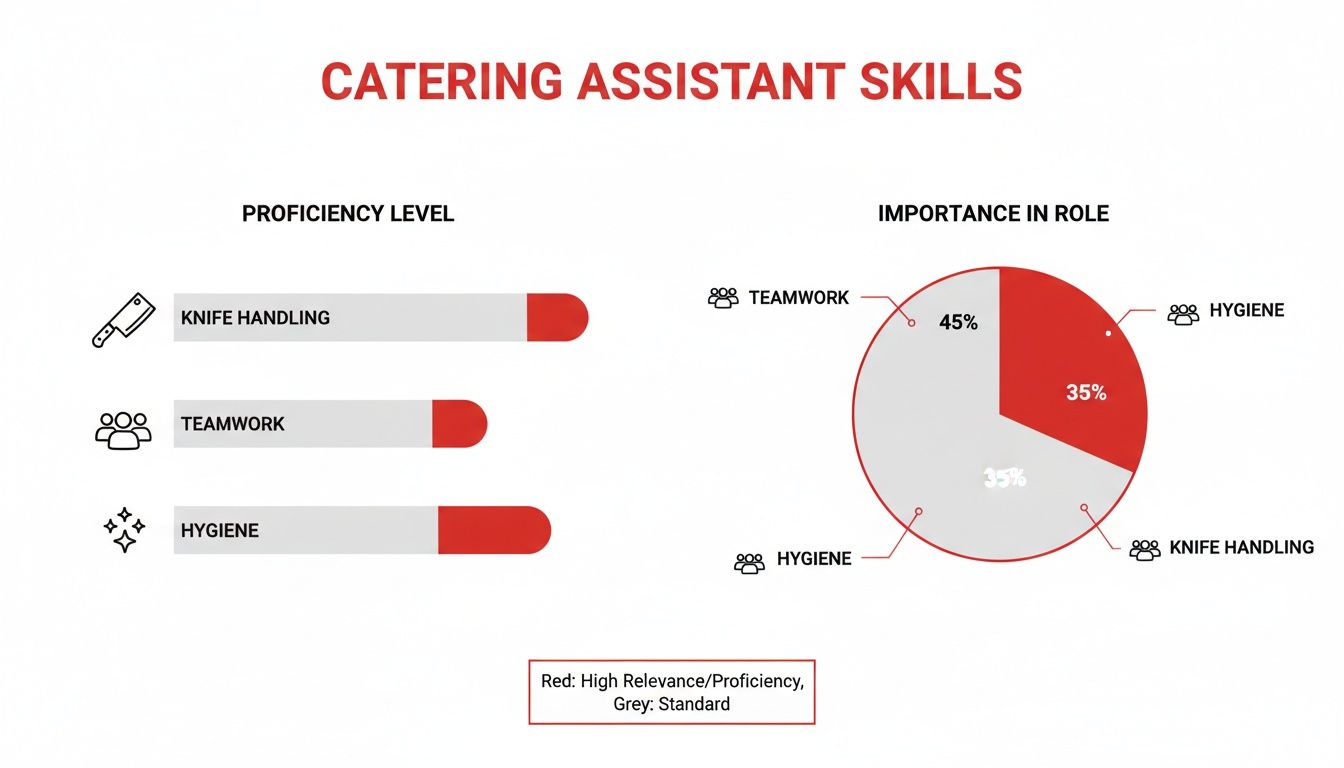
As you can see, practical skills like knife handling and food hygiene are non-negotiable for kitchen efficiency. But good teamwork is what ensures service stays smooth when the pressure hits.
London Premiums and Contract Types
Location is a huge driver of pay. While the national average gives you a baseline, London rates are always higher to cover the city's cost of living. Data from Breakroom shows a wide pay band in the capital, from £7.77 to £13.00 per hour. Some job sites, like Indeed, report an even higher UK average of £12.63 per hour, a number almost certainly skewed by London’s premium rates.
For a permanent, full-time role, the annual salary equivalent is estimated to be around £27,994, according to ERI. This figure is great for budgeting your payroll, but remember that many venues rely heavily on temporary or relief assistants who are paid hourly—often at a higher rate to make up for the lack of permanent benefits.
The type of contract matters. Permanent staff get perks like paid holidays and sick leave, which is why temporary staff command a higher hourly wage. When you write a job description of a catering assistant, be crystal clear about the pay and contract type. It’s the only way to attract the right people for your specific needs.
To get a better handle on your own staffing costs, check out our guide on calculating salaries.
Ready-to-Use Job Description Templates
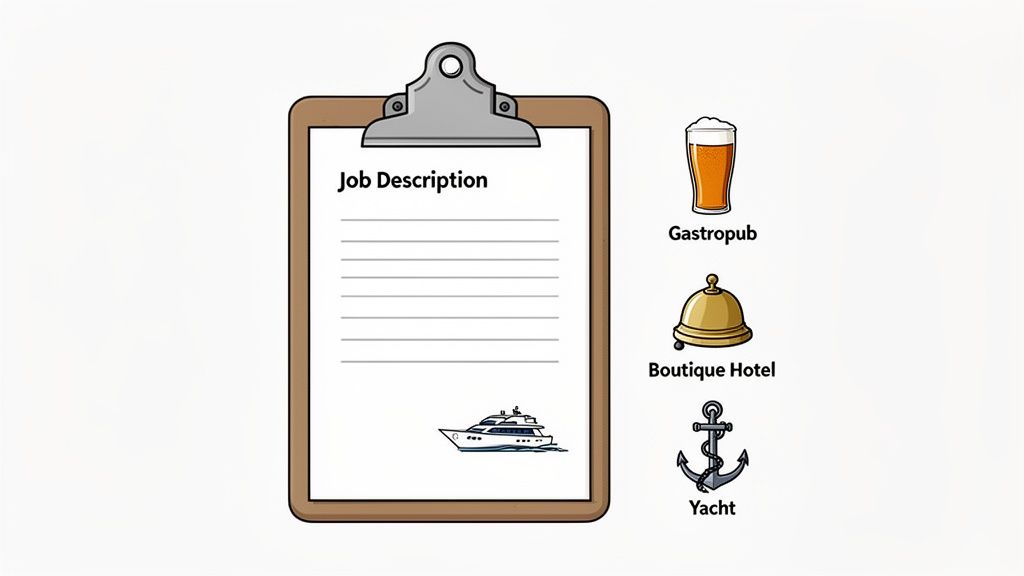
A vague job post gets you vague applicants. If you want to find someone who can actually handle the pressure of your kitchen, you need an advert that speaks their language and sets clear expectations from day one.
To save you the guesswork, we've put together a master template that covers all the non-negotiables for a job description of a catering assistant. It's built to be tweaked.
Below it, you’ll find three specific versions for the most common environments: a high-volume gastropub, a polished boutique hotel, and a high-stakes private yacht. Each one hones in on the specific skills needed to survive—and thrive—in that setting.
Master Catering Assistant Job Description Template
Job Title: Catering Assistant
Location: [City, e.g., Manchester, Edinburgh]
Job Type: [e.g., Full-Time, Part-Time, Temporary Relief]
Salary: [e.g., £X per hour or £XX,XXX per annum, plus tips]
Job Summary:
We’re looking for a dependable and hard-working Catering Assistant to join our kitchen brigade. You’ll be the engine room, providing the essential support that lets our chefs focus on the food. The right person is proactive, organised, and keeps a cool head in a fast-paced environment. A serious commitment to hygiene and teamwork is a must.
Core Responsibilities:
- Help with basic food prep—washing, peeling, and chopping veg, portioning ingredients, and plating simple dishes.
- Keep all kitchen areas spotless, including work surfaces, equipment, and floors. Hygiene is everything.
- Run the pot wash, making sure all crockery, cutlery, and glassware are clean and ready for service.
- Take in deliveries, check them off, and store everything correctly using the FIFO (First-In, First-Out) method to keep waste down.
- Support the service team by keeping them stocked with clean plates, utensils, and anything else they need on the pass.
- Follow all health, safety, and food hygiene rules without exception.
Skills and Qualifications:
- A solid work ethic and the ability to stay focused under pressure.
- Good communication skills and the ability to work as part of a team.
- A sharp eye for detail and a commitment to keeping things clean.
- Physically fit—you’ll be on your feet for long periods.
- Previous kitchen experience is great, but a can-do attitude is what we really want. We can teach the rest.
- (Desirable) A Level 2 Food Safety and Hygiene certificate.
Benefits:
- [e.g., Share of tips, free staff meals on duty, 28 days holiday, opportunities for training and career progression]
Tailored Template 1: The Fast-Paced Gastropub
Key Focus: Speed, resilience, and high-volume prep.
Job Summary (Amended):
Our busy gastropub needs a resilient Catering Assistant who thrives when the pressure is on. You will be absolutely critical to keeping our kitchen moving during packed services, especially our legendary Sunday roasts. We need someone who can match our pace, maintain strict hygiene standards, and support the chefs without being asked twice.
Core Responsibilities (Additions):
- Handle massive volumes of vegetable and ingredient prep for a busy service line.
- Work at speed to keep the pot wash clear and ensure a constant flow of clean plates and pans to the line.
Tailored Template 2: The Boutique Hotel
Key Focus: Presentation, guest awareness, and an eye for detail.
Job Summary (Amended):
Our elegant boutique hotel is looking for a meticulous Catering Assistant with an exceptional eye for detail. You’ll be supporting our kitchen in producing beautifully presented food for our restaurant, room service, and popular afternoon tea. The right candidate is polished, discreet, and understands that how a dish looks is just as important as how it tastes.
Core Responsibilities (Additions):
- Assist with the careful assembly of delicate items like afternoon tea tiers and canapés.
- Ensure all guest-facing crockery, glassware, and silverware are polished to a perfect shine.
- Occasionally help the front-of-house team set up for events or special services.
Tailored Template 3: The Private Yacht
Key Focus: Discretion, adaptability, and impeccable standards.
Job Summary (Amended):
We are recruiting a highly professional and adaptable Catering Assistant for a private yacht. This is a unique role that demands total discretion, flexibility, and the ability to work in a small, tight-knit team. You will be responsible for maintaining the highest possible standards of cleanliness and supporting the chef in a luxury, high-pressure environment.
In the UK, catering assistants are vital for maintaining standards during busy periods. Visa-sponsored roles in 2026, offering £20,000-£25,000 annually or £10-£12 hourly plus tips, target shortages in cities like Edinburgh, often including perks like free meals and training. Explore more about current UK catering roles and visa sponsorship opportunities.
Core Responsibilities (Additions):
- Maintain absolute confidentiality and professionalism around guests and crew at all times.
- Manage stock and provisions in tight spaces with military-grade organisation.
- Be ready to adapt your duties instantly based on guest requests or changes to the itinerary.
And if you’re also looking for front-of-house staff, our guide to writing a barman job description might be useful.
A Quick Checklist for Hiring Your Next Catering Assistant
You have the templates. You know what you need. But finding a reliable catering assistant is about more than just posting a job description of a catering assistant and waiting. You need a process that weeds out the unsuitable candidates fast.
This isn't about bureaucracy. It's a simple, three-phase checklist designed for a fast-paced kitchen, helping you spot the right people and ignore the rest.
Phase 1: Pre-Interview Screening
Before you waste time scheduling calls, a quick scan of the CVs will filter out at least half the applicants. Think of this as your first line of defence against unreliable staff.
- Verify Right to Work: This is a legal must in the UK. No right to work, no interview. It’s a non-negotiable first check.
- Scan for Relevant Experience: Look for any time spent in a kitchen, café, or even a fast-food chain. A short stint is better than nothing—it shows they’ve at least seen a professional kitchen environment.
- Check for Stability: High turnover is normal in hospitality, but watch out for candidates who jump jobs every few weeks. It’s often a huge red flag for poor reliability.
Phase 2: During the Interview
The interview is where you find out who they really are, beyond the CV. Ditch the generic questions and use scenarios to see how they handle pressure.
Ask them directly: "It’s the middle of a frantic service. A chef barks an order at you for a garnish you’ve never seen before. What do you do?" A bad candidate will guess. A great one will ask for a quick demo to ensure it’s right. That’s the attitude you want.
Phase 3: Post-Interview Evaluation
Once the interviews are done, it's decision time. A perfect CV means nothing if their attitude is wrong. Skills can be taught on the job; a proactive, positive outlook cannot.
Look at these final points:
- Attitude and Enthusiasm: Did they actually seem interested in the job and your venue, or were they just going through the motions to get any job?
- Team Fit: Can you honestly picture them working alongside your existing brigade without causing friction? A good team dynamic is what gets you through a tough service.
- Reliability: Simple things matter. Did they show up on time? Were they professional? These details reveal their work ethic.
The constant cycle of recruitment in hospitality is a massive drain on any manager's time. For many, partnering with a specialist staffing platform is the only way to break the cycle. It removes the entire hiring headache, supplying pre-vetted assistants when you need them, so you can focus on running the business.
Frequently Asked Questions
When you're hiring a catering assistant, a few questions always come up. Here are the straight answers every manager needs.
Is Previous Experience Necessary for a Catering Assistant?
Not always, but it depends entirely on your kitchen. For most operations, this is the perfect entry-level role.
A candidate with a good attitude and a strong work ethic will always beat someone with six months of experience in a slow kitchen. You're hiring for potential. Look for someone who is keen, reliable, and ready to learn your way of doing things. In high-pressure environments, however, some basic kitchen exposure is a definite advantage.
What Is the Career Path for a Catering Assistant?
This role is a fantastic launchpad into a professional kitchen career. It's where the best chefs learn the foundations of discipline, speed, and hygiene.
With the right training and a bit of grit, a good catering assistant can quickly move up. The natural progression is to commis chef, then chef de partie. From there, they can climb the ladder to a supervisor role or choose to specialise in a specific area like pastry or high-volume event catering.
What Hygiene Certifications Should I Look For?
While you can train a new starter on the job, a candidate who already holds a Level 1 or Level 2 Food Safety and Hygiene certificate is a much safer bet.
It’s not just a piece of paper. It shows they take the profession seriously and already understand the non-negotiables of kitchen safety. A candidate with this qualification is demonstrating a commitment to standards before they've even stepped through the door.