
Finding the right people for your event isn't just about hiring bodies at the last minute. That’s a recipe for disaster. Proper recruitment for events is about having a solid plan before you even think about posting a job. It’s what separates a flawless guest experience from a service meltdown.
Building Your Event Staffing Blueprint
The success of your event is decided long before the first welcome drink is poured. It’s decided by the quality of the team you put on the floor.
Too many managers make the same costly mistake: they rush recruitment. A haphazard approach always leads to the same problems—undertrained staff, glaring service gaps, and a stressful night that damages your reputation.
The foundation of any great event is a well-thought-out staffing blueprint. This isn't guesswork. It's a calculated process that should start weeks, sometimes even months, before showtime.
Forecast Your Headcount and Roles
First things first, you need to get forensic about your event's demands. A 150-guest wedding with a plated three-course meal needs a totally different crew than a weekend festival buzzing with food stalls.
Ask yourself these questions:
- Event Type and Scale: Is it a formal sit-down dinner, a busy conference, or an intimate private party?
- Service Style: Will your team be running table service, managing a buffet, or just serving drinks from a bar?
- Guest Count and Flow: How many people are coming, and will they all arrive at once or in waves?
Answering these moves you from a vague "we need cooks and servers" to a precise, actionable list. For example, you might realise you need one head chef, three line cooks handling specific grill and saucier stations, six servers, two bartenders, and a kitchen porter.
Defining roles with this level of clarity—like specifying a pastry specialist for a high-tea event—ensures you hire for actual skill, not just to fill a space.
Map Your Recruitment Timeline
Once you know who you need, the next job is figuring out when you need to get them. The best way to do this is with a reverse timeline. Start with your event date and work backwards, locking in firm deadlines for every stage of the hiring process.
This chart shows you exactly how to structure your plan, from the initial forecast right through to finalising your team.
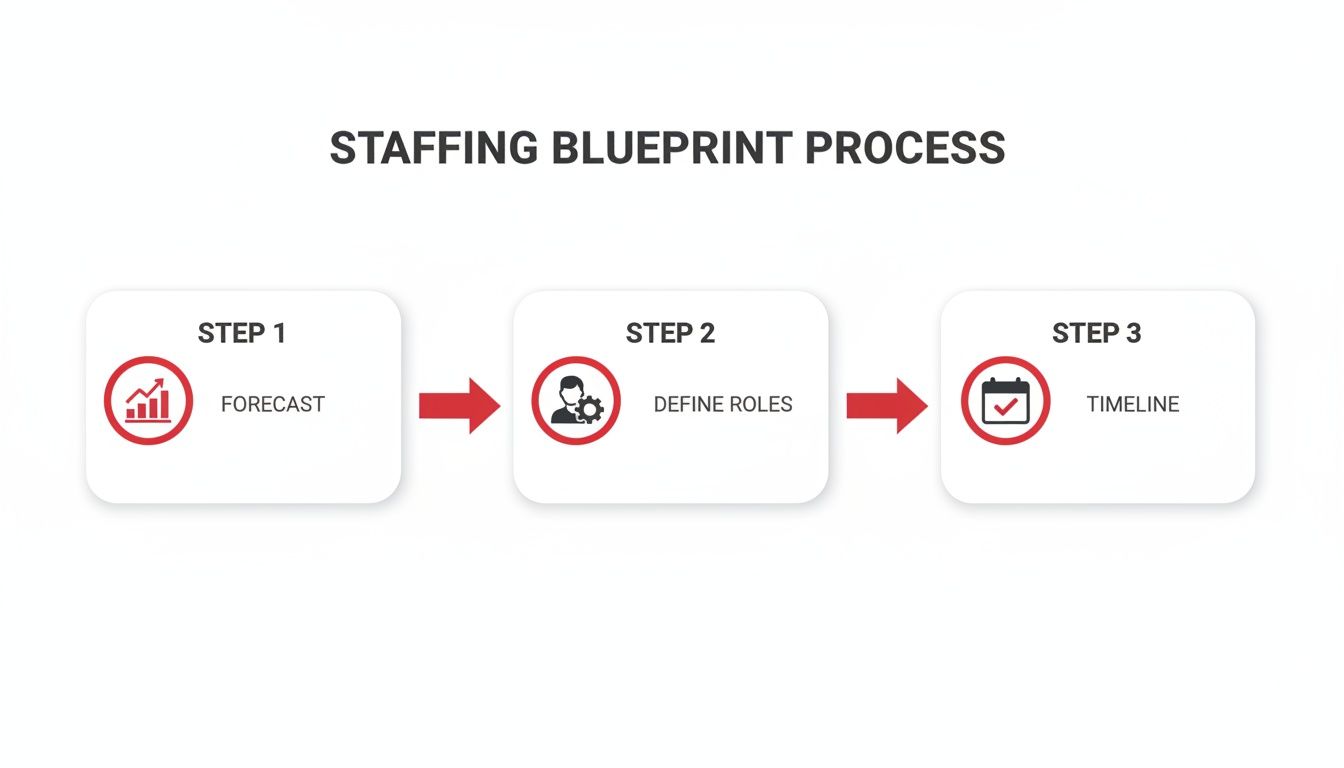
As you can see, forecasting, defining roles, and mapping your timeline are sequential. Each step builds on the last, creating a workflow that’s logical and manageable.
When you plan this way, you account for the true cost of employing staff, which includes the time and resources you sink into hiring. It turns what could be a chaotic scramble into an organised, predictable project.
How to Source and Attract Top Event Talent
You’ve got your staffing blueprint sorted. Now for the real challenge: finding the people. In the current market, just posting a job advert and hoping for the best is a guaranteed way to fail. Good recruitment for events is proactive, not reactive.
Relying on a single job board is a classic mistake. It limits your reach and buries you in a mountain of unsuitable CVs. To find quality staff, you need to go where they are.
Cast a Wider Net
Finding reliable event staff isn't about luck; it's about having a smart, multi-channel strategy. Combining the right digital tools with solid industry connections is what separates the pros from the panicked.
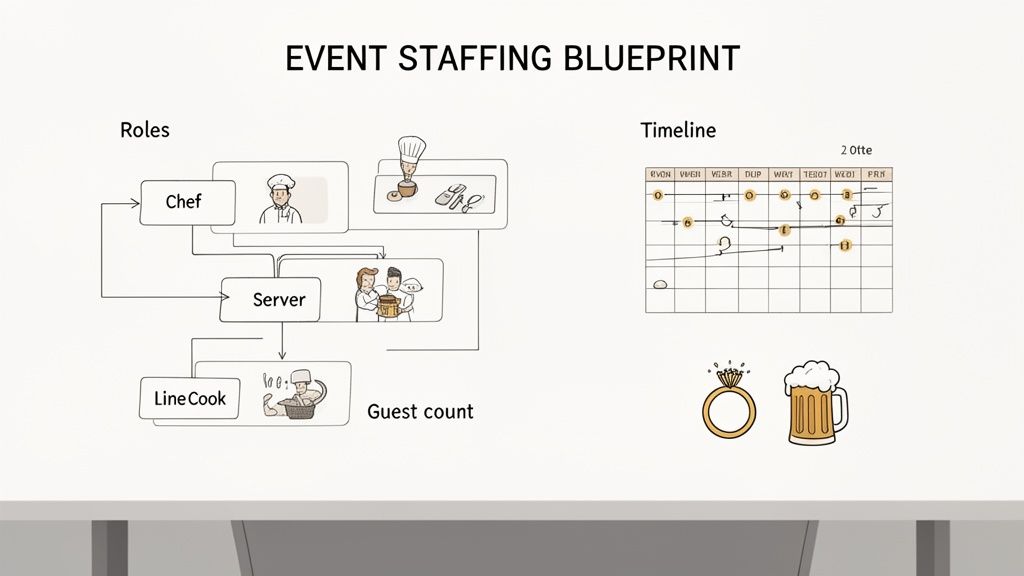
A balanced sourcing plan should include a mix of these channels:
- Niche Hospitality Job Sites: Forget the huge, generic platforms. Sites focused purely on hospitality attract serious professionals who are actively looking for roles in our industry. That means less time wasted filtering out irrelevant applications.
- Professional Social Media Groups: LinkedIn groups for chefs, event managers, and front-of-house staff are goldmines. These are active communities where people share opportunities and advice, making them perfect for finding skilled individuals.
- Specialist Staffing Agencies: Working with a good agency gives you instant access to their pre-vetted network. It's the fastest way to find insured, reliable staff, especially when you have an urgent, last-minute gap to fill.
The real game-changer is building a talent pipeline. This is your private network of qualified, trusted professionals you can call on for future events. It cuts your hiring time dramatically and turns a stressful scramble into a simple phone call.
Craft Job Adverts That Actually Work
Your job description is your sales pitch. It's often the only chance you get to grab a great candidate's attention, and a generic, vague post will get ignored every time.
To attract top talent, you need to be direct and tell them what they actually want to know. Forget the fluffy language.
A solid job description must include:
- Clear Expectations: Be specific. Are you looking for staff for fast-paced festival bar service or formal fine-dining at a wedding? Detail the exact responsibilities so people know what they're signing up for.
- Transparent Pay: State the hourly rate or salary upfront. No excuses. Professionals respect honesty and are far more likely to apply when they can see the compensation is fair from the start.
- A Good Working Environment: Mention the positives. Is it a well-organised kitchen? A supportive team leader? The chance for repeat work? A positive culture is a massive selling point for experienced staff.
By focusing on these points, you’re not just listing a job—you’re selling an opportunity. That simple shift in mindset is what attracts the calibre of people who will make your event a success. If you're weighing up your options, you might find our comparison of top chef job search agencies in the UK useful.
Vetting Candidates for Skill and Reliability
Finding potential staff is one thing; making sure they won't crumble under pressure is another. Vetting is where most recruitment for events falls apart. A strong CV means nothing when service is at its peak and you need someone who can think on their feet.
Skipping proper checks is a gamble. One unreliable staff member can disrupt service, damage your client’s reputation, and create chaos for the rest of the team. Your vetting has to be fast, but it absolutely has to be thorough. You're not just filling a role; you're buying competence and reliability.
Fast and Effective Interviews
You don’t have time for drawn-out, multi-stage interviews. For temporary event work, a single, sharp phone or video call is all you get. Forget tired questions like "What are your weaknesses?" They tell you nothing.
Instead, hit them with real-world scenarios.
For a chef, ask: “A VIP table of 12 just arrived an hour early with three last-minute dietary changes. The kitchen is already at capacity. What are your first three actions, in order?” Their answer shows you everything about their ability to prioritise, communicate, and stay calm.
For front-of-house staff, try this: “A guest is complaining loudly that their drink is wrong and it’s causing a scene at the bar. How do you handle it?” You’ll immediately see whether they have the instincts for de-escalation and customer recovery.
The Minefield of Right to Work Checks
This is the one area where you cannot afford to make a mistake. It is non-negotiable. As the employer, you are legally responsible for verifying that every person you hire has the legal right to work in the UK.
The penalties for employing an illegal worker are severe, climbing up to £60,000 per worker. The Home Office doesn’t accept "I didn't know" as an excuse. This is a business-ending risk.
For every single worker, you must physically or digitally:
- Obtain their original, valid identity documents.
- Check that the documents are genuine and belong to the person in front of you.
- Copy and date the documents, then store them securely for their employment term and for two years after.
This isn’t a quick glance at a passport. It’s a detailed process that requires knowing what to look for on visas, share codes, and biometric permits. Getting it wrong is easy, and the consequences are brutal. The compliance burden is a significant factor in why managers turn to specialists, as understanding the full scope of your legal duties is critical, much like when using employment agencies for chefs.
Don’t Forget Insurance
Beyond legal status, your hires must be covered by your Employers’ Liability and Public Liability insurance. Don’t just assume they are. Many policies contain specific clauses about temporary or casual staff.
You must check with your provider to confirm your coverage extends to them. An accident involving an uninsured temporary worker can lead to financial and legal ruin.
The admin load of proper vetting, Right to Work checks, and insurance verification is immense. This is precisely why so many event managers opt for a professional staffing agency. A good agency removes this entire burden, guaranteeing every worker they supply is vetted, insured, and legally compliant. It’s not just about finding people; it’s about removing risk.
Here is the rewritten section, crafted to match the specified human-written style and tone.
Onboarding: The Difference Between Chaos and Control
The final step in locking down your team isn't just about recruitment; it's about integration. A fast, sharp onboarding process is what separates a smooth service from a stressful one.
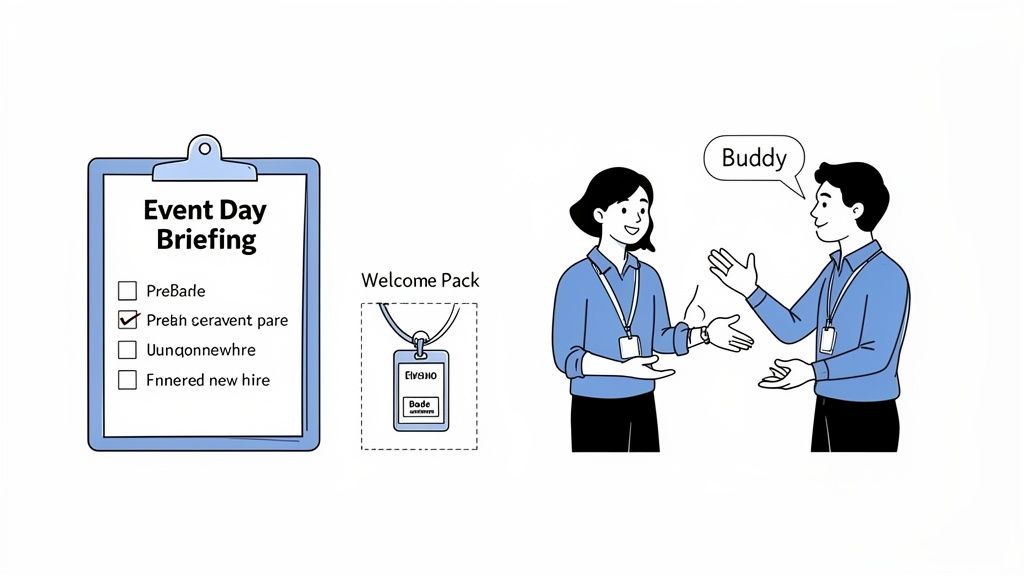
Throwing a new person into a busy kitchen an hour before service without a proper briefing is a classic recipe for failure. You can’t expect someone to perform under pressure if they don’t even know where the storeroom is. The goal is to get them up to speed instantly, turning a stranger into a confident part of your team from the moment they walk in.
The Welcome Pack: Your First Line of Defence
Your first tool is a simple but powerful welcome pack. This isn’t a hefty HR manual; it’s a pre-prepared folder or digital doc with the absolute essentials. It stops new hires from having to ask basic questions during a high-pressure service.
Think of it as their cheat sheet for the day. It needs to be concise and easy to scan.
Your pack should include:
- Key Contacts: A list of names, roles, and even photos of the Head Chef, Event Manager, and Bar Supervisor. Knowing who to ask for what is critical.
- Venue Layout: A simple map highlighting the kitchen, storerooms, staff areas, and fire exits. No one should be wandering around lost.
- Menu & Allergy Information: A printed menu with non-negotiable allergy protocols clearly highlighted. This is a zero-tolerance area.
- Basic Timings: A quick rundown of the event schedule, covering the pre-shift brief, service times, and break allocations.
The Pre-Shift Huddle and Buddy System
With the welcome pack as their foundation, the pre-shift huddle is where it all clicks. This quick, 10-minute meeting isn't just for your core team; it’s for everyone.
The event manager or head chef should lead it. This is your chance to set the tone, confirm roles, and kill any last-minute confusion. It aligns the entire team on the mission for the day.
My personal tip that has never failed me: assign a 'buddy' to each new hire. Pair them with a trusted, experienced member of your core team. This simple gesture does more than just show them the ropes; it makes them feel supported and confident.
This buddy system drastically shortens the learning curve. Instead of feeling isolated, new staff have a go-to person for small queries, which stops them from interrupting senior staff during crucial moments. They feel like part of the team from minute one, which translates directly to better performance.
After the huddle, you’ll also want to run a final check to ensure every temporary staff member is briefed on the non-negotiables. A quick checklist ensures nothing gets missed in the rush.
Here’s a simple one you can use to make sure your key points have landed.
Essential Event Day Briefing Checklist
| Briefing Point | Details to Cover | Confirmation (Tick Box) |
|---|---|---|
| Health & Safety | Location of fire exits, first aid kit, and designated first aider. | ☐ |
| Key Personnel | Point out the Event Manager, Head Chef, and their direct supervisor. | ☐ |
| Station & Role | Confirm their specific role, station, and the "buddy" they're paired with. | ☐ |
| Allergy Protocol | Verbally confirm they have read and understood the allergy procedure. | ☐ |
| Menu Familiarity | Quick Q&A on 1-2 key dishes or drinks they will be handling. | ☐ |
| Service Standards | Outline the single most important service standard (e.g., "no empty glasses"). | ☐ |
| Communication | Explain how to communicate issues (e.g., stock running low, guest complaint). | ☐ |
| Final Questions | Ask "What questions do you have for me right now?" | ☐ |
Taking a few minutes to run through this confirms everyone is on the same page. It’s a small investment of time that pays huge dividends in service quality and prevents the kind of small mistakes that can derail an event.
What’s Your Plan B? Building a Staffing Contingency Plan That Actually Works
Even the most meticulously planned event is vulnerable to one thing: human unpredictability. A key team member calls in sick. A server’s car breaks down. Someone just doesn’t show up. These are the moments that can derail an entire event, regardless of how perfect your recruitment process was.
But a last-minute staffing crisis doesn’t have to end in disaster. It’s all about having a professional Plan B ready to go—not just a frantic list of friends to call. A solid contingency plan is your insurance policy against the chaos, protecting your service quality and, most importantly, the guest experience.
The 'Plus One' Rule for Your Most Critical Roles
One of the simplest and most effective tactics I’ve seen is the ‘Plus One’ rule. It’s straightforward: for every absolutely critical role, you book one extra, fully briefed person. Think head chef, event manager, or lead bartender.
This doesn’t mean you’re overstaffing and blowing the budget. Instead, you have a designated professional on paid standby, ready to step in at a moment's notice. They’ve seen the event plan, they know the menu, and they’re familiar with the venue.
If everyone arrives as planned? You can either send the 'plus one' home with a pre-agreed standby fee or, even better, assign them as a floater to support any stretched sections. That small cost is a tiny price to pay to avoid the carnage a key no-show can cause.
Your Professional Outsourced Back-Up Plan
For a truly robust solution, nothing beats partnering with a specialist on-demand staffing agency. This isn't just a list of contacts; it's an outsourced, professional contingency plan managed by experts in recruitment for events.
A good agency is an operational partner. When your lead bartender quits two hours before service, they don’t just send a body; they deploy a vetted, skilled, and insured professional who can be at your venue, often within the hour. This turns a potential catastrophe into a manageable hiccup.
Working with an agency provides layers of protection you just can’t replicate on your own.
- Speed: They find qualified replacements far faster than you ever could scrambling through your phone.
- Reliability: Their reputation is on the line. Staff are pre-vetted for their skills, dependability, and, crucially, their Right to Work status.
- Reduced Risk: The agency handles all the paperwork—compliance, insurance, and payroll. This removes a massive administrative and legal headache from your shoulders.
This approach transforms your contingency plan from a hopeful list of phone numbers into a guaranteed professional response. When service standards and your reputation are at stake, having a partner who can instantly plug a critical gap is invaluable. It ensures that no matter what’s happening behind the scenes, your guests experience nothing but flawless service.
Your Top Event Staffing Questions, Answered
Even the most seasoned event managers hit the same roadblocks when it comes to staffing. Time pressures, legal minefields, and budget realities create a familiar set of headaches. Here are the straight answers to the questions we hear most often.
Getting your team right isn't just about filling slots; it's about managing risk and protecting your event's reputation. Knowing how to handle these challenges is what separates a smooth operation from a chaotic one.
How Far Ahead Should I Start Recruiting?
For a big event like a wedding or major corporate function, you should be thinking about recruitment at least four to six weeks out. That gives you breathing room to properly define what you need, find good people, and run the right checks without cutting corners. Rushing this process is a recipe for disaster.
Of course, in the real world of events, a four-week lead time is a luxury you rarely get. Last-minute bookings and unexpected client demands are just part of the job.
This is where a specialist staffing agency proves its worth. A good one can get you fully vetted, insured, and skilled professionals in as little as 24-48 hours. It gives you the power to say 'yes' to those last-minute jobs without panicking.
What are the Biggest Legal Risks with Temporary Staff?
When you hire temporary staff directly, you’re taking on all the legal liability yourself. The two biggest tripwires are Right to Work checks and insurance. Get either wrong, and the consequences can be brutal.
If you fail to correctly check a worker’s legal right to work in the UK, you’re looking at fines of up to £60,000 per illegal worker. It’s your job to see, check, and copy their original documents. Claiming you didn't know the rules won't save you.
You also have to make absolutely sure your Employers’ Liability and Public Liability insurance covers temporary staff. If an uninsured worker has an accident, the financial fallout could cripple your business. Using a reputable agency moves that risk off your plate and onto theirs. They guarantee every person they send is compliant and insured.
Is It Cheaper to Hire Directly or Use a Staffing Agency?
On paper, hiring directly looks cheaper because you avoid the agency fee. But that’s a dangerously narrow view that ignores the huge hidden costs of doing it all yourself.
Think about the actual hours your team burns on tasks like:
- Writing and posting job ads everywhere.
- Wading through hundreds of CVs, most of them useless.
- Running interviews and chasing down references.
- Managing the nightmare of Right to Work paperwork.
- Setting up and running payroll for a handful of shifts.
This isn't just admin; it's dozens of hours you should be spending on planning the actual event. On top of that, you carry all the financial risk if someone doesn’t show up or is simply no good. That can poison your client relationships and your reputation in an instant.
When you factor in your time and the risks involved, an agency’s fee is often the more cost-effective move. You're not just buying staff; you're buying speed, reliability, and peace of mind.
Don't let staffing gaps put your events on the line. Relief Chefs UK provides a trusted, professional fix for your kitchen team. We deliver fully vetted, experienced chefs who are ready to step in, even at a moment's notice, so you can get back to running a flawless event. Get dependable cover fast by visiting https://www.reliefchefs.co.uk.