
24/7 Recruitment Solutions: Your Guide to UK Chef Staffing
9 April 2026
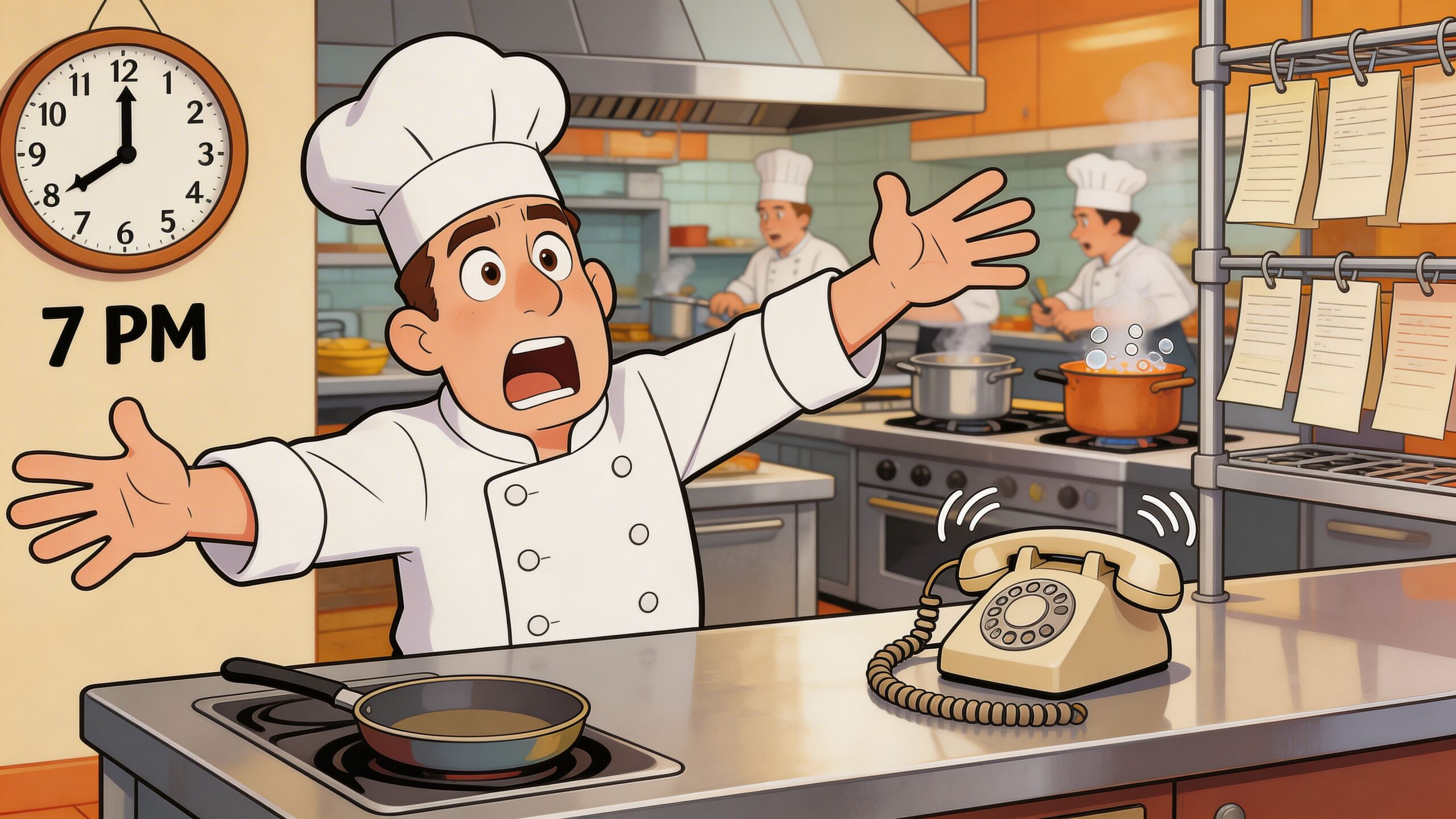
Friday lunch. Twelve tables already seated. Deliveries half checked in. Then your sous chef rings and says he is not coming in.
That is the moment most hospitality businesses discover whether they have a staffing plan or just hope.
I have seen this in pubs in Devon, hotel kitchens in Windsor, restaurants in Bristol, and seasonal sites in Dorset. One absence turns into six problems at once. Prep stalls. The pass backs up. Standards slip. The head chef gets dragged off the stove to ring round old contacts. Front of house starts making apologies before service has even found its rhythm.
The true damage is not only tonight’s service. It is what happens after. Tired teams quit. Managers lose half a day chasing cover. Owners start accepting lower standards because they feel they have no choice.
That is why 24/7 recruitment solutions matter in hospitality. Not as a buzzword. As an operating safeguard for kitchens that cannot pause.
When Your Kitchen Stability Depends on One Phone Call
The usual version of a staffing emergency is familiar.
A chef de partie goes off sick. Your breakfast chef says they can stretch into lunch, but not dinner. The KP is new and cannot support a stripped-back service on their own. The bookings have not slowed. There is a wedding tasting in the private room. The GM wants certainty. The guests want consistency.
What panic hiring looks like in real life
Most venues respond the same way.
They ring an agency that covers “hospitality”, only to find the person answering also handles warehouse shifts, drivers, care roles, and whatever else landed in the inbox that morning. They promise to “send profiles”. What arrives is often a CV, not a solution.
Then the compromises start:
- Menu cuts: Dishes disappear because nobody on shift can execute them properly.
- Overtime pressure: The remaining chefs stay longer, get sharper with each other, and make mistakes they would never make on a normal rota.
- Brand damage: Regulars notice the drop. Hotel guests complain. Event clients remember.
A proper 24/7 model changes that response. Instead of asking, “Who have you got?”, you ask, “Who can walk into this kitchen and hold the line tonight?”
The difference between cover and stability
There is a big difference between sending any chef and sending the right chef.
A chef who can handle a pub kitchen in Reading on a wet Sunday is not automatically the right fit for a boutique hotel in Berkshire with a tasting menu, or a villa chef role where discretion matters as much as cooking. The same applies to yacht chefs. Tempo, standards, kit, guest expectations, and kitchen culture change.
Good emergency staffing is not about filling whites. It is about protecting service, food quality, and team morale in one move.
That is why many operators now treat 24/7 recruitment solutions as part of their resilience planning, not a last-ditch fix. The best systems are built before the crisis lands. You know who to call. They know your venue. They know the kind of chef who will settle into your kitchen without turning the shift into an argument.
The venues that cope best
The operators who stay calm in these moments usually have three things sorted already:
- A specialist contact who understands kitchen roles properly.
- Clear role briefs for the types of cover they need most often.
- An agreed process for urgent bookings, checks, and arrival times.
When that framework is missing, a small absence becomes expensive chaos.
When it is in place, one phone call can be the difference between a service that falls apart and one that carries on.
What Are 24/7 Recruitment Solutions in Hospitality
A real 24/7 recruitment solution is not an after-hours voicemail and a promise to call back on Monday.
It works more like an on-call specialist for your kitchen. The service is built to respond when hospitality needs help, which is early mornings, late nights, weekends, bank holidays, event days, and those awkward in-between hours when standard office recruiters have vanished.
More than a phone line
A proper model has several moving parts behind it:
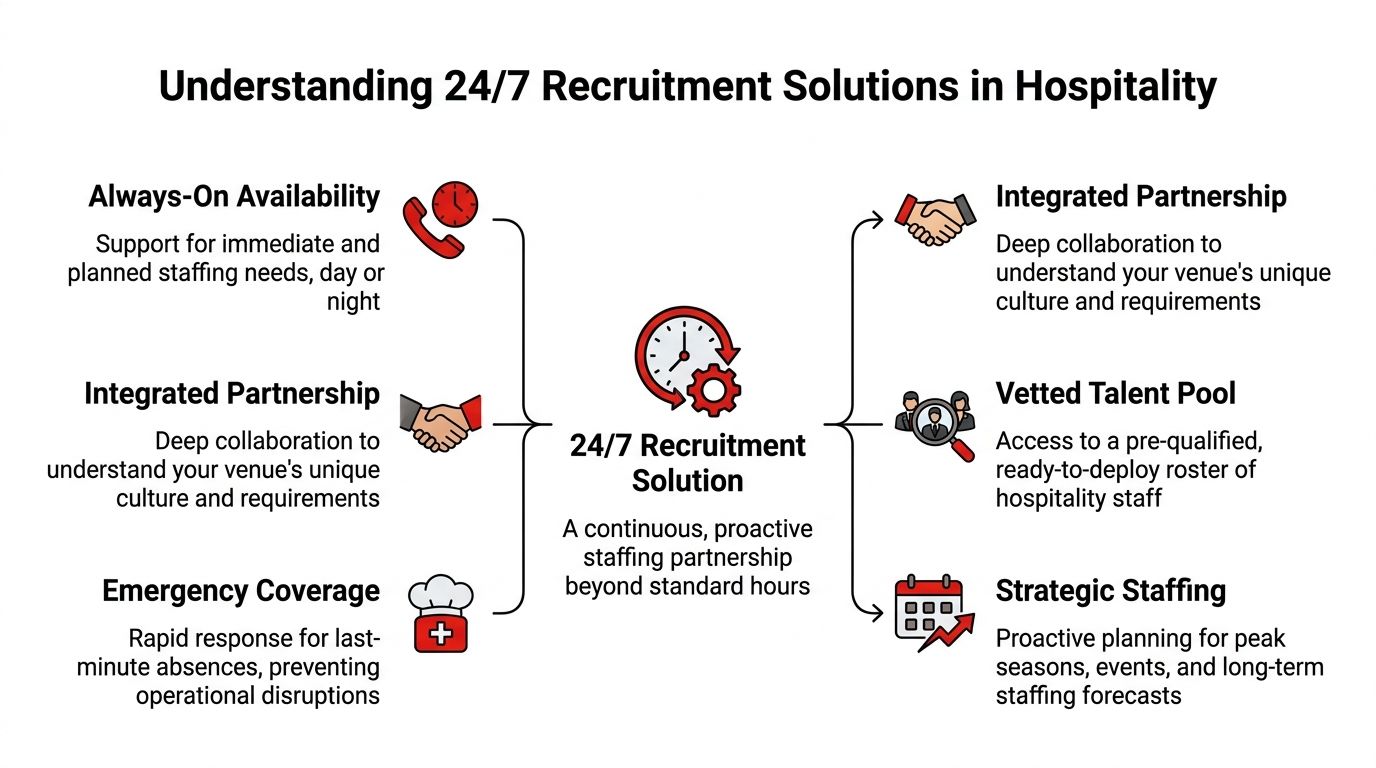
- Immediate access: Someone is available when the problem happens, not when office hours resume.
- Pre-vetted chefs: The useful work has already been done before the emergency. Right to work checks, references, and suitability should not start after your chef has called in sick.
- Venue knowledge: The partner knows whether you need a steady pair of hands for banqueting, a strong all-rounder for a country pub, or a polished private chef for a villa or yacht placement.
- Planned support: It is not only for crises. Good partners help with summer peaks, Christmas trading, race weeks, festivals, and permanent chef recruitment when your rota needs long-term repair.
Why speed matters so much in hospitality
UK hiring delays are not abstract admin problems for this sector. They hit the pass.
According to UK recruiting statistics on time-to-hire and staffing pressure, partners of 24/7 staffing providers achieve a 50% reduction in time-to-hire versus in-house methods, while 39% of UK companies take a month or more to fill roles. A month is an inconvenience in an office. In a kitchen, it can wreck a season.
That is why chef staffing needs a different model from standard recruitment. Kitchens do not run on polite lead times. They run on service times.
What it should include
A serious hospitality-focused 24/7 setup should give you:
Fast triage
When you call, the first conversation should sort the practical basics quickly. What section needs cover. What level of chef. What shift pattern. What food style. What transport issues could affect arrival.
If the recruiter cannot ask kitchen-specific questions, they are guessing.
A live talent pool
Most weak agencies fall down here. They have databases. They do not have deployable chefs.
There is a difference. A database is a list of names. A live pool contains people who are available, checked, and suitable for current hospitality work.
Commercial awareness
The right partner should understand cost pressure. Sometimes you need an experienced relief chef to stabilise a difficult week. Sometimes you need a practical temporary chef to cover prep, breakfast, or volume service while you rebuild the core team.
A 24/7 recruitment solution should help you choose the option that protects margin as well as standards.
The best staffing partner acts like a kitchen operator. They think about service risk, wage pressure, guest experience, and team fatigue at the same time.
Where specialist hospitality support stands apart
General staffing firms often treat chef cover as just another vacancy. Specialist hospitality support treats it as an operational issue.
That difference matters in Devon holiday trade, busy Bristol weekends, hotel pressure in Windsor, and private hospitality work where trust and presentation count as much as technical ability. A chef-led service understands the difference between a CV that looks acceptable and a chef who will settle into your brigade.
That is the standard venue owners should look for when they assess 24/7 recruitment solutions.
Why Standard Chef Recruitment Is Failing UK Venues
Chef recruitment fails many venues because too much of it works like a numbers game.
That approach might suit sectors where volume is the main challenge. It does not suit kitchens. A bad hire in hospitality is not a spreadsheet problem. It lands on the stove, in the staff room, and in guest feedback.
Too many agencies do not understand kitchens
A lot of 24/7 recruitment content still centres on warehouse, logistics, and broad labour supply. Hospitality gets bolted on as an extra category. That is one reason operators get fed up with unsuitable chef CVs and vague promises.
According to industry commentary on sector mismatch and chef-background trust, 68% of independent venues distrust recruiters who lack a chef background, and that mismatch leads to 40% higher churn. Anyone who has spent time running a kitchen will recognise why. A recruiter who has never worked service often cannot tell the difference between a chef who can lead a shift and one who only interviews well.
DIY hiring eats management time
Some venues react by handling everything themselves.
That sounds sensible until the owner, GM, or head chef loses hours writing ads, screening applicants, chasing no-shows, checking references, and trying to judge technical ability from a short interview squeezed between deliveries and service. The process looks cheaper on paper than agency support, but the hidden cost is management distraction.
A kitchen under pressure does not need its strongest operator buried in inbox admin.
One useful breakdown of that wider commercial damage appears in this piece on the hidden cost of bad chef cover and emergency booking pressure. It speaks to a problem most operators already feel in practice. Weak cover costs more than the fee you were trying to avoid.
Generic recruitment breaks under hospitality pressure
The common failure points are easy to spot:
- Weak vetting: Candidates arrive with gaps nobody flagged.
- Poor matching: A volume chef gets sent into a refined site, or a fine dining background gets dropped into a rough-and-ready fast-paced pub and struggles.
- Office-hours mentality: Trouble happens on Saturday night. The recruiter reappears Monday morning.
- No accountability: If the placement fails, the venue carries the mess.
The market pressure is real
Chef shortages are not just anecdotal frustration. The wider labour market has become harder to manage, and hospitality feels that strain fast. Standard recruiter habits have not kept up. Too many still rely on dated lists, broad keywords, and sales-led conversations instead of operational understanding.
A kitchen does not need another recruiter saying, “We’ll see who’s available.” It needs someone who knows what the shift demands and who can do it.
What works better
The strongest results usually come from specialist, chef-led models that stay close to the trade. They know the difference between replacing labour and restoring confidence.
That matters whether you are hiring relief chefs for a week in Wales, temporary chefs for a seasonal push in Dorset, permanent chefs for a hotel in Slough, or private hospitality staff for yachts and villas where trust, discretion, and adaptability matter just as much as knife skills.
The old approach is failing because it was never built around kitchen reality. The venues coping best are now choosing partners who understand service first and recruitment second.
Three Kitchen Nightmares Only 24/7 Support Can Solve
There are staffing gaps you can plan for. Then there are the shifts that go wrong so quickly that only immediate support keeps the business steady.
The trade has plenty of those.
According to ONS-linked hospitality vacancy reporting and operational downtime estimates, UK accommodation and food services recorded a 15.2% vacancy rate as of Q4 2025, nearly double the economy-wide average, with an estimated 25% increase in operational downtime for independent venues during peak seasons. That pressure shows up in exactly the kind of kitchen crises below.
Short-notice sickness in a busy Bristol restaurant
A Friday dinner service in Bristol can turn ugly fast. You are already carrying a compact brigade because labour is tight. Then your grill chef goes down with illness at midday.
You can try to reshuffle. The sous chef covers the section. Someone weaker gets pushed onto sauce. Prep starts slipping. Breaks disappear. By 8pm, everyone is chasing the service instead of controlling it.
What helps in this situation is not a stack of names. It is a recruiter who can ask the right questions quickly:
- What service style are you running
- How many covers are on the books
- Do you need section leadership or support
- Is transport an issue for a late finish
Proper emergency relief chef cover across the UK is vital here. Not tomorrow. Today.
The right relief chef stabilises the shift. The wrong one creates a second problem.
Summer surge in a Dorset boutique hotel
This nightmare is quieter at first.
Bookings climb with good weather. Walk-ins increase. Residents stay longer over dinner. Afternoon tea overruns into evening trade. The rota that looked workable on Tuesday is no longer enough by Saturday.
This kind of pressure catches coastal and countryside sites every season. Managers often think they can absorb it with overtime and goodwill. That usually lasts a few days. Then quality slides and the team starts making tired decisions.
A good 24/7 partner can supply temporary chefs before the kitchen reaches breaking point. The practical win is not just extra hands. It is preserving consistency. Guests who pay for a boutique hotel expect the same standard on a packed weekend as they do on a quiet midweek stay.
A flexible staffing model also lets the venue step support up or down without rebuilding the whole kitchen structure.
Here is a short look at the kind of pressure operators face when service gaps hit suddenly:
Multi-site strain across Berkshire pubs
Single-site problems are difficult enough. Multi-site issues can spread in a day.
One pub loses a head chef. Another site has annual leave booked. The third is heading into a local event weekend and needs stronger prep support. Operations teams often make the same mistake here. They move their best chef between venues and hope each site can cope.
That rarely works for long. Standards become uneven. Managers get frustrated. The strongest chefs burn out because they are doing rescue work instead of running their own kitchens.
What multi-site operators need
A proper 24/7 recruitment solution gives pub groups something more useful than ad hoc patching:
- Consistency across sites: Chefs can be matched to venue type, volume, and standards.
- Priority escalation: One contact point can coordinate across several kitchens.
- Short-term and long-term balance: You can protect today’s service while still searching for a permanent chef where needed.
The biggest benefit in a multi-site business is not speed alone. It is control. One staffing problem stays in one venue instead of infecting the whole group.
These are the moments where specialist support proves its worth. The business does not just survive the shift. It avoids the knock-on damage that poor cover causes across the next week, the next rota, and the next round of staff morale.
How to Choose the Right 24/7 Recruitment Partner
Plenty of agencies claim to offer chef cover around the clock. Very few are worth relying on when your kitchen is under strain.
The right partner reduces pressure. The wrong one adds admin, uncertainty, and extra cost.
A useful starting point is this. Companies working with professional 24/7 recruitment providers can achieve up to a 40% reduction in total hiring costs, covering advertising, screening, and internal resource allocation, according to this profile of 24/7 Recruitment Solutions Ltd and related hiring efficiencies. That saving only matters if the provider is competent. Cheap but unreliable support is never cheap in a kitchen.
Essential Requirements
When you assess a 24/7 recruitment partner, ask direct questions.
Response and access
Can you reach someone outside office hours, and will they act on the request straight away?
A venue does not need a provider who is technically open all night but functionally useless after 6pm.
Chef vetting
Ask what checks happen before a chef is offered to your site.
You want clarity on right to work, references, hygiene awareness, previous roles, and whether anyone has tested the chef’s fit for your kind of operation.
Insurance and accountability
If something goes wrong, who carries the risk?
A serious partner should be clear about insurance, replacement processes, and who owns the problem if the booking does not go to plan.
Pricing transparency
You should understand the charging model before the crisis call happens.
If fees, mark-ups, or extras are vague, expect friction later.
If a recruiter cannot explain their process in plain language, they probably do not have a strong process.
Comparing 24/7 Chef Support Plans
| Feature | Traditional Agency | Occasional Cover (e.g., Relief Chefs UK) | Ongoing Cover (e.g., Relief Chefs UK) |
|---|---|---|---|
| Availability | Often limited by office hours | 24/7 support for urgent and planned cover | 24/7 recruitment team |
| Venue understanding | Broad sector coverage, often generic | Hospitality-focused support | Deeper account knowledge across sites or departments |
| Vetting depth | Varies widely | Pre-vetted chefs with core compliance checks | Pre-vetted chefs with stronger matching and continuity |
| Speed of booking | Can depend on who answers | Built for rapid chef cover requests | Fast escalation with priority handling |
| Account management | Usually pooled desk model | Shared support | Experienced recruitment team |
| Best fit | One-off transactional hiring | Small pubs, cafés, single-site operators | Hotels, pub groups, multi-site businesses |
| Service style | Reactive | Flexible monthly support | Strategic staffing support plus urgent cover |
This is why many operators now compare specialist options through focused routes such as employment agencies for chefs in the UK hospitality market, rather than defaulting to broad labour suppliers.
Questions worth asking before you sign
Use these in your first conversation:
- How quickly do you respond to an emergency request
- What kind of chefs do you place most often
- How do you match for venue style, not just job title
- What happens if the chef is not the right fit
- Can you support both temporary chefs and permanent chef recruitment
- Do you cover specialist private roles such as yacht chefs or villa chefs
A good answer should sound practical, not rehearsed.
What strong partners do differently
They ask smart operational questions.
They tell you candidly when a brief is unrealistic.
They separate urgent cover from long-term hiring strategy, while helping you manage both. They also understand that staffing is not an isolated HR task in hospitality. It is tied to revenue, guest experience, team retention, and whether your kitchen feels calm or combustible.
Putting Your 24/7 Staffing Plan into Action
A staffing plan only helps if it is easy to use under pressure.
The best 24/7 recruitment solutions are simple to set up before you need them. That matters because nobody wants to be filling forms and explaining menu style while a dinner service is drifting sideways.
Step one is a proper brief
Start with the work that needs covering.
Not a vague “we may need chefs”. Be specific. Which roles break your rota fastest. Breakfast chef. Sous chef. Strong CDP. Event support. Seasonal volume cover. Permanent head chef search.
Also define the environments. A country pub in Wales needs a different chef from a townhouse hotel in Reading or a private yacht contract with close-quarters working.
Step two is matching standards, not just availability
Many rushed bookings fail at this stage.
You need a partner to understand your food style, team dynamic, pace of service, and the kind of personality that fits your kitchen. A technically capable chef who clashes with the brigade can still leave you worse off.
Useful points to settle early include:
- Section expectations: What should this chef be able to own without hand-holding?
- Shift reality: Split shifts, breakfast starts, event finishes, live-in arrangements, or travel constraints.
- Non-negotiables: Right to work, reliability, hygiene discipline, and communication.
Step three is a clean onboarding process
Good onboarding should feel light for the venue.
You agree terms, communication channels, booking process, and who signs off requests. After that, using the service should be straightforward. One message or one call. Clear brief. Fast answer.
For operators with more than one site, this is the stage to decide who can request cover and how those requests get prioritised.
The calmest kitchens are usually the ones that prepared before the emergency. A staffing partner is most useful when they already know your operation.
Step four is using the service early enough
Do not wait until your team is at breaking point.
If summer trade is building in Devon, if festival dates are approaching in Bristol, or if your hotel in Windsor has back-to-back events, bring support in before standards wobble. Temporary chefs are not only for collapse scenarios. They are also useful as planned reinforcement.
A common pattern looks like this. A pub starts with one urgent cover request after a sickness issue. The first shift holds. The venue then realises it also needs steadier support for weekends and starts using the same partner for ongoing temporary chefs and later for permanent chef recruitment. Crisis response becomes a staffing system.
That shift from reactive to organised is where 24/7 recruitment solutions start earning their keep.
Your Questions About 24/7 Chef Recruitment Answered
Operators usually ask the same questions before they commit, and they should. Plenty have paid for agency cover before and ended up with a late arrival, a weak chef, or a bill that made no commercial sense.
Are hidden agency fees still a common problem
Yes.
Some agencies still bury costs in overtime rules, transport add-ons, cancellation terms, or transfer fees that only appear once the pressure is on. Good providers keep it plain. You should know the shift rate, the terms, and exactly what changes if the booking runs longer, ends early, or needs to be replaced.
For independents, that clarity matters because every staffing mistake comes straight off margin.
How do I know the chef will fit my kitchen
You do not know from a CV. You know from the questions asked before the booking is confirmed.
A chef-led recruiter should want details about your menu, service style, covers, equipment, brigade structure, and who the relief chef reports to. If the consultant cannot talk kitchen, the match is a guess. That is a key difference between a specialist service run by chefs and a volume agency working through a call sheet. One is trying to protect service. The other is trying to fill a slot.
Independent venues usually prefer dealing with one person who knows the site properly. That is not theory. It is how kitchens avoid having to re-explain the basics every time somebody calls for help.
Is a 48-hour chef start realistic
Sometimes, subject to availability. It depends on preparation.
If the agency already has vetted chefs available, knows your operation, and can brief properly, a fast start is realistic. If they begin searching after your first call, the clock goes quickly. Location matters too. A city-centre booking is usually easier to fill than a rural gastropub thirty miles from the nearest station.
Short-notice cover can happen. It should never be sold as guaranteed magic.
What if the relief chef is not right on the day
Ask how replacements work before you ever need one.
A serious partner will tell you who to call, how issues are escalated, and what happens if the chef is late, unsuitable, or cannot handle your service. Generic agencies often go quiet once the shift starts. A specialist hospitality partner should stay accountable because the job is not done when somebody walks through the back door. The job is done when your kitchen gets through service properly.
Is a recruitment agency worth it for smaller venues
Usually, yes.
Even one busy pub or restaurant benefits when the same person remembers your set-up, pressure points, and the sort of chef who settles in fast. That saves time during an urgent booking and cuts down the risk of getting somebody technically qualified but wrong for the kitchen.
For multi-site operators, it matters even more. Repeating the same brief to a different desk every week is how details get missed.
Can one partner help with more than emergency chef cover
They should.
The stronger operators I see use one trusted specialist for more than panic cover. That can mean relief chefs for sickness, temporary chefs for peak trading, permanent hires when a key role opens up, and more specialist placements where discretion matters. The benefit is continuity. One partner already knows your standards, your pace, and the level of chef you will accept.
That matters because kitchen problems rarely arrive one at a time.
What should I do now if my kitchen feels one absence away from trouble
Set the relationship up before the crisis.
Give the brief while the kitchen is stable. Agree who can request cover, how approvals work, and what a good replacement looks like for your site. If possible, test the service on a planned booking first. That is how independents turn emergency staffing from a gamble into a usable system.
If your kitchen needs dependable chef cover, permanent chef recruitment, or specialist support for pubs, restaurants, boutique hotels, villas, and yachts, contact Relief Chefs UK. They are a nationwide chef staffing partner established in 2013, run by chefs, not recruiters, with 24/7 support, transparent pricing, fully vetted chefs, and fast response for urgent and planned hospitality staffing across the UK.
Call the team.
Office 01392 715474 · info@reliefchefs.co.uk