

If you're hiring chefs in Hampshire right now, you already know this isn't just a recruitment issue. It's an operations problem. One weak rota can wreck service, burn out the rest of the brigade, and turn a busy weekend into refunds, complaints, and lost repeat trade.
That pressure is hitting every part of the county. Boutique hotels in the New Forest, pubs in market towns, waterfront venues around Southampton and Portsmouth, and restaurants in Winchester all need the same thing. Reliable chefs who can turn up, slot into service, and protect standards. Traditional job boards still have a role, but they won't rescue tonight's shift and they won't always solve a wider kitchen stability problem.
The local market also isn't priced at one simple level. Chef salaries in Hampshire average £24,999, with reported pay ranging from £22,492 to £32,499. For operators, that matters because it sets a real hiring baseline when you're trying to attract permanent chefs or secure short-notice cover during busy trading periods.
For chef jobs in Hampshire UK, or for those aiming to fill them without risking service, the smartest move is to stop treating every vacancy as a one-off. Use a mix of permanent hiring, relief support, and specialist partners who understand kitchens properly. These are the agencies and staffing options worth knowing.
1. Relief Chefs UK
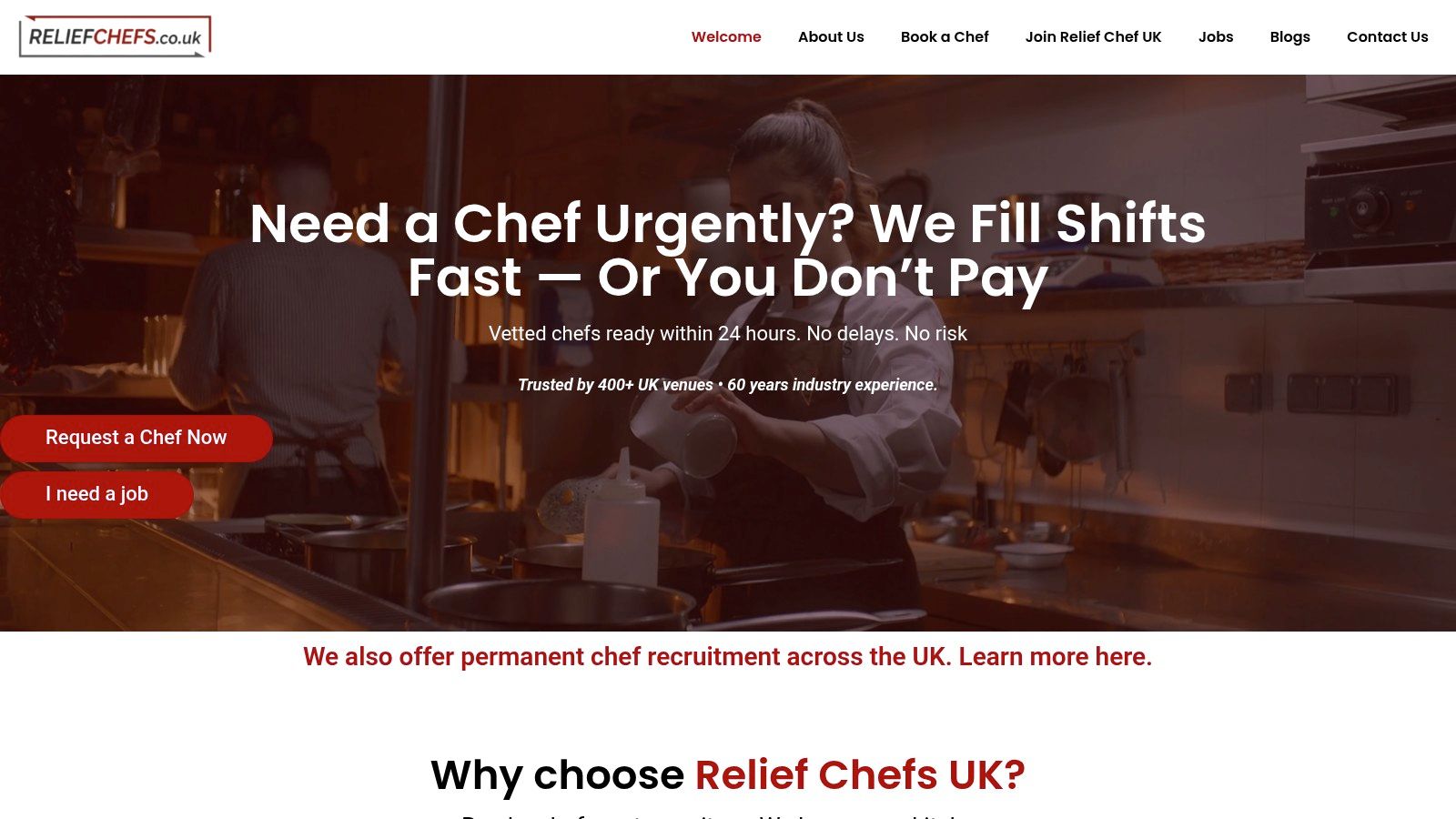
Friday lunch is booked out, prep is half done, and a chef phones in sick. At that point, the problem is not recruitment. It is service risk, team fatigue, and lost revenue if the pass slows down or the menu has to be cut. Relief Chefs UK is built for operators who need cover that protects trading, not just a stack of CVs.
The practical difference is its model. Relief Chefs UK is chef-run, which matters when you need someone who can step into a live kitchen, read the setup quickly, and work at service pace. Venues can request cover by phone or a short form, get a response within two hours, and bring in fully vetted, right-to-work-checked chefs who can usually start within 24 to 48 hours. It supports pubs, restaurants, cafés, boutique hotels, yachts, villas and multi-site hospitality businesses across the UK.
Where it fits best in Hampshire
Hampshire is a mixed hospitality county. One day the pressure is a hotel breakfast team in the New Forest. The next, it is a pub kitchen covering a busy weekend near Winchester or a waterfront venue trying to hold standards through peak trade. That is why a relief chef partner has real operational value here. It gives managers a way to keep service stable while they sort the longer-term staffing gap.
There is also a wider strategy point. Relief cover should not sit outside your hiring plan. Used properly, it buys breathing room, protects the existing brigade from burnout, and stops rushed permanent hires that create more problems a month later.
Practical rule: If you start calling for chef cover after the sickness call, your contingency plan is already late.
Relief Chefs UK also makes sense if the issue runs beyond one shift. Some sites need short blocks of support during seasonal demand. Others need temporary chefs while replacing a head chef or rebuilding a kitchen team. It also handles permanent chef recruitment and specialist placements including yacht chefs, villa chefs, and wider hospitality staffing support, which gives operators one partner for immediate cover and longer-term team planning.
Trade-offs to know
This service suits managers who buy on reliability, speed, and kitchen fit. It is less useful for buyers who want to compare agencies from a public shift-rate card alone, because pricing is quoted case by case. That can be a drawback at first pass, but many operators will accept that if the chef turns up on time, is compliant, and can hold service without hand-holding.
Key strengths and limits:
- Chef-run support: Better understanding of sections, prep pressure, handover quality, and service standards.
- Fast turnaround: Response within two hours, with cover often available inside 24 to 48 hours.
- Checks built in: Right-to-work verification, vetting, and insurance are handled.
- Flexible use case: Suitable for one-off emergencies, seasonal support, temp-to-perm hiring, and permanent recruitment.
- Main limitation: No public rate card, so comparison starts with a conversation.
For Hampshire hospitality managers trying to build a kitchen team that can absorb sickness, turnover, and spikes in demand, Relief Chefs UK is a strong first call. It is most useful when the goal is bigger than filling a vacancy. The ultimate goal is keeping the kitchen trading.
2. Platinum Recruitment
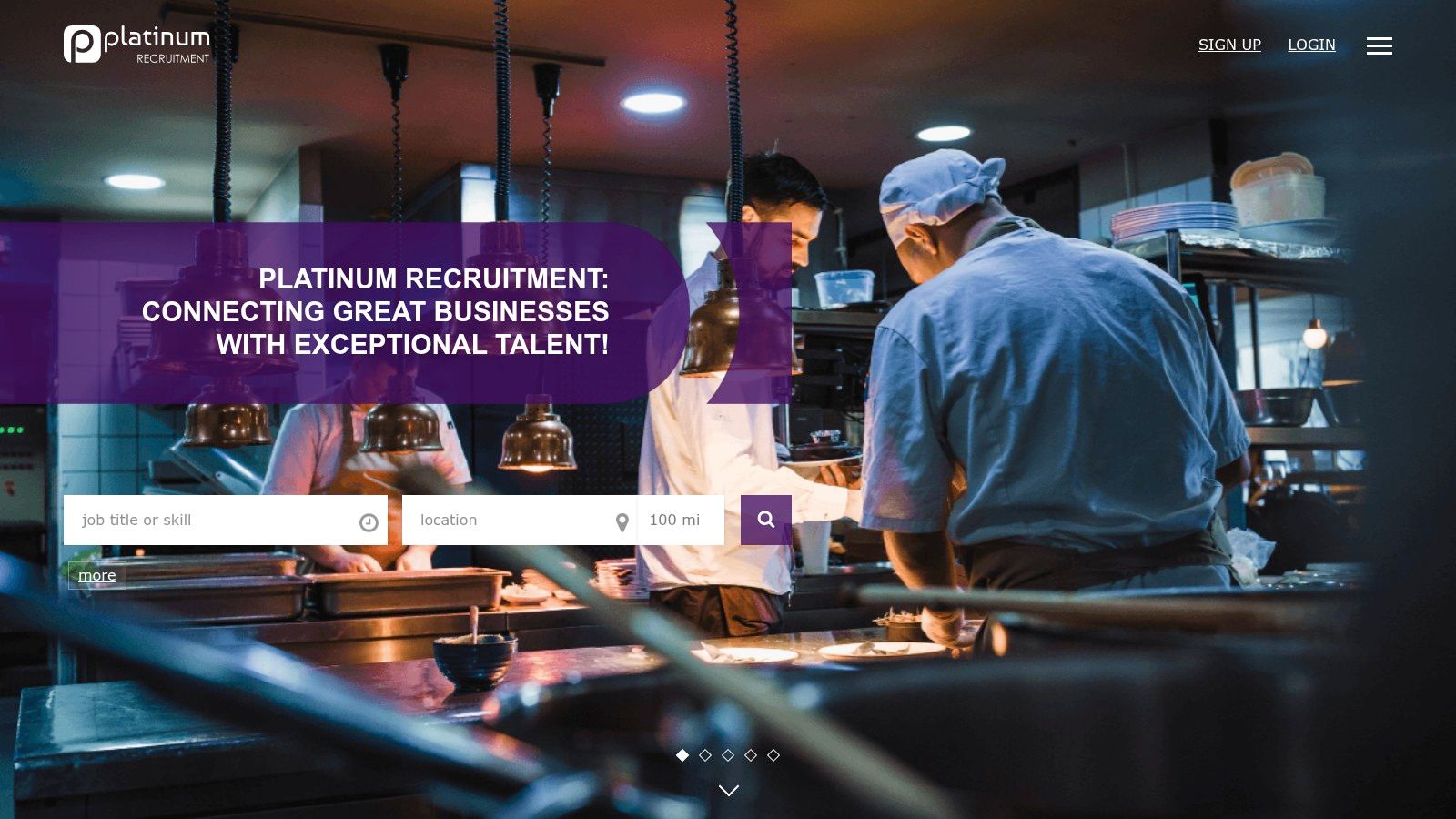
Platinum Recruitment is a long-established hospitality recruiter with a strong South Coast footprint. If you run hotels, pubs, restaurants or contract catering sites in Hampshire, it's a practical name to keep in the mix because it regularly handles temporary, permanent and temp-to-perm chef hiring.
Its strength is range. Platinum isn't only focused on one type of venue, so it can be useful if your business hires across different formats or if you're looking at both kitchen and wider hospitality recruitment. The chef desk is established, and the agency regularly advertises relief shifts as well as longer-term kitchen roles.
Where Platinum fits best
This agency makes most sense when you need a proven hospitality recruiter with broad market coverage rather than a highly specialised emergency-only chef partner. For planned recruitment, seasonal reinforcement, and steady vacancy flow, it can be effective.
That matters in a county where specialist hiring demand is visible and where many venues are competing for the same calibre of chef. A recruiter with regular South Coast activity can help widen your options, especially if you've exhausted direct ads and referrals.
A broad agency can help when your hiring need is predictable. It becomes less reliable when the job is "send someone who can run this section tonight".
Pros and cons are fairly clear:
- Established hospitality focus: Good breadth across hotels, pubs, restaurants and contract catering.
- Flexible hiring routes: Temp, perm and temp-to-perm all available.
- Useful for seasonal planning: Better suited to upcoming pressure periods than pure last-minute firefighting.
- Less Hampshire-specific: The business is based in Dorset, not Hampshire.
- Filtering needed: Not every vacancy on the site is chef-only, so managers and candidates may need to sort through mixed hospitality listings.
If you're filling planned vacancies or building a bench before peak periods, Platinum is a sensible option. If your head chef has just called with a crisis, a chef-only relief specialist is usually the safer move.
3. Blue Arrow Southampton
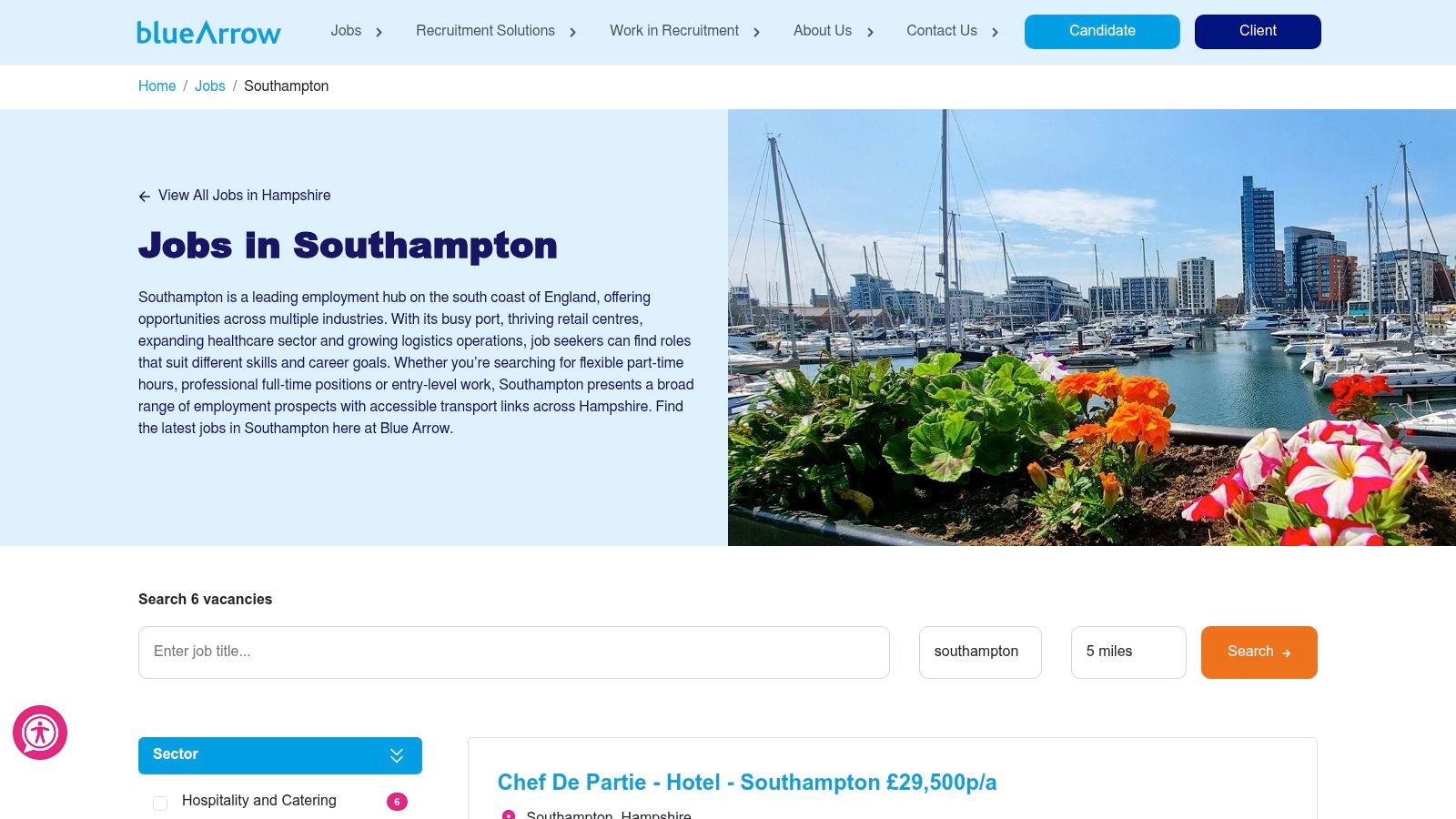
Blue Arrow Southampton sits in a different category from the more boutique hospitality agencies. It's a large national recruiter with a dedicated catering and hospitality arm, and that scale can be useful if your kitchen hiring needs are steady, structured, and compliance-heavy.
For Hampshire employers, Blue Arrow is often more relevant for permanent recruitment and for sectors where consistency matters as much as creativity. Education, care, business and industry, hotels and pubs all feature in its broader mix. If you're looking for chefs who want a stable move rather than freelance relief work, that positioning can help.
Best use case
Blue Arrow works well when you're recruiting into roles with clear hours, clear procedures and longer-term stability. That's especially true for operators who want process, documentation and a recognisable national brand behind the hire.
Its local Southampton page also gives a straightforward snapshot of current vacancies, which is useful for gauging role types and candidate expectations in the area. For candidates searching chef jobs in Hampshire UK, it can be a practical route into permanent positions with transparent advert details.
A few trade-offs are worth being honest about:
- Strong local vacancy flow: Southampton and wider Hampshire roles appear regularly.
- National systems: Useful for businesses that want established compliance processes.
- Good for permanent stability: Better aligned to long-term roles than crisis cover.
- Less relief-specialist: Same-day or ultra-short-notice chef cover may be less predictable than with chef-first agencies.
If your main challenge is replacing a stable permanent team member, Blue Arrow can be worth a look. If your challenge is making sure Saturday service survives a late collapse in the rota, this wouldn't be my first call.
4. Jubilee Talent
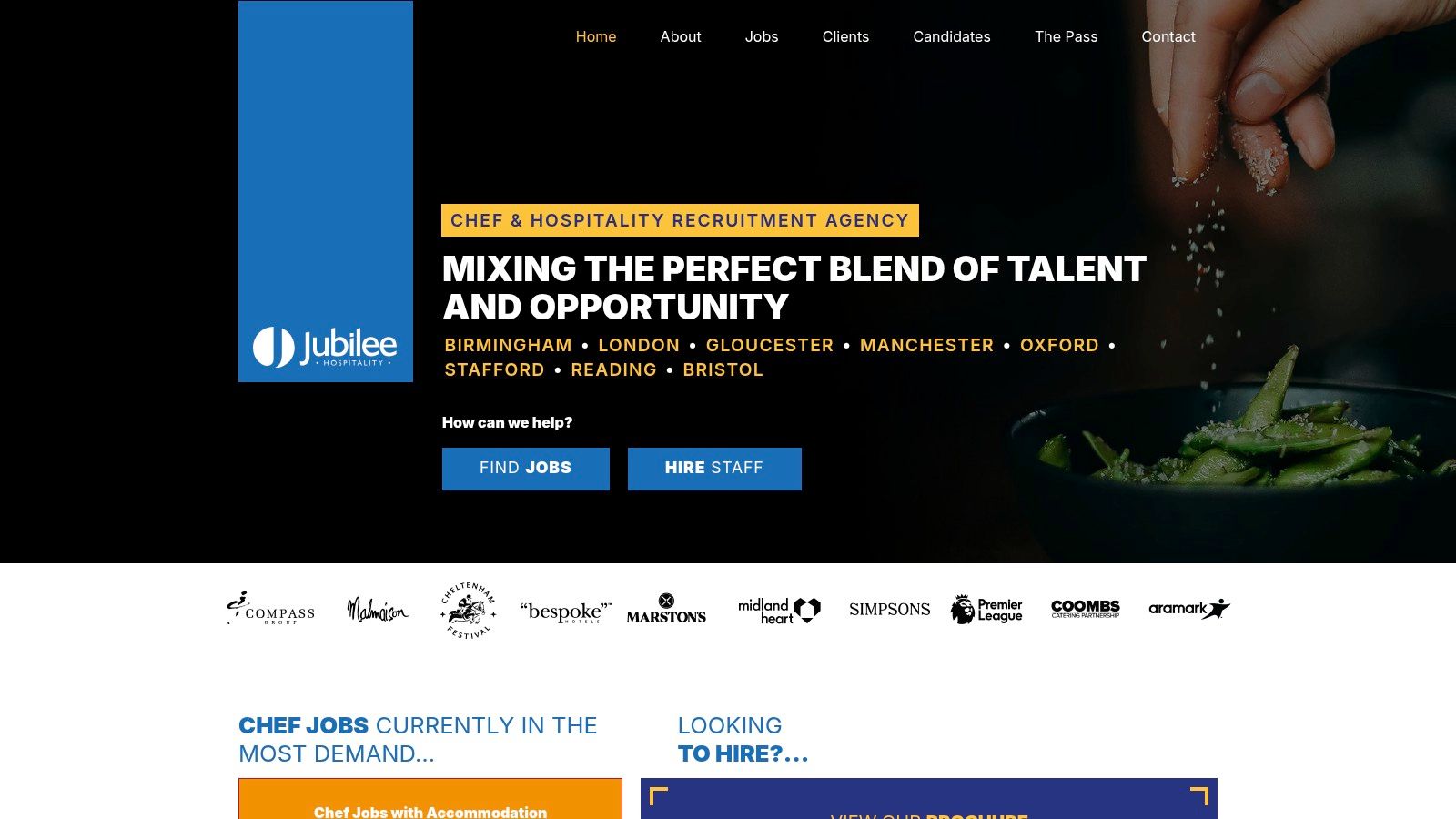
Jubilee Talent has built a strong reputation around chef-first hospitality staffing, and that makes it more relevant than a generic recruiter when your issue is kitchen continuity. It offers temporary and permanent placements and is particularly visible in fast-moving relief chef cover.
The practical attraction is simple. Jubilee understands urgent bookings, flexible shift patterns, and the reality that kitchens don't fail on a neat Monday-to-Friday hiring timeline. Its South and South East presence, including support around Reading and Oxford, gives Hampshire businesses a regional route into temporary chef cover without relying only on London supply.
Emergency cover and flexible staffing
One feature that stands out is the 24/7 emergency chef cover line. For managers, that's useful because staffing problems often land outside office hours. The banqueting chef drops out on a Friday night. The breakfast chef disappears before a busy Saturday check-in. The value of a staffing partner is measured in response and realism, not polished marketing.
Jubilee is also strong if your venue sits somewhere between standard pub trade and premium food-led operation. It has visible experience across fine dining, events, pubs and hotels, so it's often a good option when standards matter and the role needs more than basic line support.
Operator view: The further your site is from major staffing hubs, the more you should test an agency on actual local chef availability, not just coverage claims.
That leads to the main limitation. Rural Hampshire can still be difficult for any agency if the brief is highly specific and the timing is tight. Jubilee is busy across a broad southern remit, so availability for remote sites may depend on who is active locally at the time.
For emergency bookings, event-heavy periods and flexible chef cover, Jubilee deserves serious consideration. For isolated sites, confirm reach before you rely on it.
5. Berkeley Scott
Berkeley Scott is one of the biggest names in UK hospitality recruitment, and its long-standing presence makes it a practical option for employers who need scale. If you run multiple sites, contract catering operations, education kitchens, or larger groups across Hampshire and neighbouring regions such as Berkshire, Dorset, Bristol or Wales, that scale can help.
This is not the agency I'd choose for a highly customized boutique search where culture fit is the entire brief. It is, however, a useful partner when volume, consistency and process matter more than hand-holding.
Strong on volume and cross-sector hiring
Berkeley Scott's strength is reach across temporary and permanent roles, with specialist hospitality and catering focus rather than generalist recruitment. That makes it especially useful if your group hires chefs at different levels and across several service environments.
One point worth considering is where the pressure sits in the wider chef market. UKHospitality's analysis of the 3,500 jobs it distributed in 2023 found chef shortages of 10% for head chefs and 21% for production chefs. For operators, that usually means the hardest day-to-day gaps are often in prep-heavy and line roles, not only senior kitchen leadership. Agencies that can handle broader volume hiring become more useful in that environment.
Pros and limitations:
- Good for groups: Helpful where several sites need a consistent recruitment approach.
- Cross-sector options: Contract catering, education and agency temp hiring are well suited to this model.
- Recognisable national brand: Useful if internal procurement prefers established suppliers.
- Less boutique: Independents may find the experience less customized than with smaller hospitality specialists.
If you need one chef for a very specific food-led pub, a boutique recruiter may feel sharper. If you're staffing at scale across multiple kitchens, Berkeley Scott becomes much more attractive.
6. Scattergoods Agency
Scattergoods Agency is a useful option for Hampshire venues that prefer dealing with a smaller, relationship-driven recruiter rather than a national machine. It has been around for decades and has a clear South East focus, including temporary chef coverage in Hampshire.
That local focus matters. A consultant who understands the difference between a country pub near Alresford, a branded hotel near Basingstoke, and an event-led venue on the South Coast will usually give you more honest feedback on fill chances than a call centre style desk reading from a system.
Better for managers who want honest matching
Scattergoods feels best suited to independents and owner-led businesses that value direct communication and realistic expectations. If you've ever been promised a "perfect chef" by an agency that hadn't grasped your menu, pace or staffing structure, you'll understand why that matters.
The agency covers chefs, kitchen assistants and front-of-house roles for temporary and permanent placements, which can help if your staffing issue isn't isolated to one section. That's often the case in pubs and smaller hotels. Kitchen pressure and service pressure arrive together.
A practical summary:
- Local knowledge: Stronger on Hampshire and nearby counties than many national firms.
- Relationship-led support: Useful if you want a consultant who knows your venue over time.
- Suitable for regular flexible cover: A good option for recurring temporary needs.
- Smaller footprint: Less useful if your operations stretch far beyond the South East.
Smaller agencies often give better honesty on whether they can fill a shift. That's worth more than false confidence when service is at stake.
Scattergoods won't suit every multi-region operator. For Hampshire independents who want responsive local support, it can be a strong fit.
7. C&E Recruitment
C&E Recruitment has one obvious advantage for this topic. It's based in Hampshire. For employers who want a regional specialist with local relationships and a boutique style of service, that makes it immediately relevant.
Its approach is more customized than high-volume national recruitment. That can be valuable when the hire needs to fit the tone of the business, not just the section and salary band. Premium pubs, clubs, hotels and restaurants often need that kind of shortlist.
Good for fit, less certain for heavy surge demand
C&E offers both permanent and temporary placements and puts visible emphasis on candidate support, CV guidance and interview preparation. For permanent hiring, that's often a good sign because better-prepared candidates usually interview more credibly and understand the role more clearly.
The limitation is scale. Boutique agencies can deliver strong matches, but if your operation suddenly needs several temporary chefs at once during a peak week, capacity may vary. That's not a criticism. It's the trade-off that comes with a more hands-on regional model.
For Hampshire venues, especially premium independents, that can still be a worthwhile trade:
- Local base: Strong relevance for Hampshire and the wider South.
- Boutique shortlisting: Useful when culture fit matters as much as skill.
- Permanent hiring support: Candidate prep can improve match quality.
- May not suit surge demand: High-volume temporary cover may be harder than with larger or relief-specialist agencies.
If your next hire needs to stay, not just arrive, C&E is worth considering. If your problem is urgent kitchen rescue at scale, I'd still lean toward a dedicated relief chef partner first.
Top 7 Hampshire Chef Recruitment Agencies, Comparison
A Saturday dinner service with one section uncovered changes the whole shift. Tickets back up, senior chefs get pulled off prep, managers step into firefighting mode, and revenue starts leaking long before the last table complains. That is why agency choice should be judged on operational fit, not just brand recognition.
This comparison is more useful if you read it through two lenses. First, how quickly can an agency protect service when the rota breaks? Second, how well can it help build a team that holds together over a full season, not just a difficult weekend?
| Service | 🔄 Implementation complexity | ⚡ Resource requirements | 📊 Expected outcomes | 💡 Ideal use cases | ⭐ Key advantages |
|---|---|---|---|---|---|
| Relief Chefs UK | Low, short form or phone request; fast match process | Low, direct support and flexible plan options | Fast access to vetted cover, often suited to short-notice gaps | Emergency absence, peak trade, multi-site support planning | Chef-run model; quick response; vetted staff; flexible commercial setup |
| Platinum Recruitment (Platinum Hospitality) | Medium, standard agency briefing and shortlist process | Moderate, consultant support and regional candidate network | Dependable seasonal and short-term fills, plus permanent recruitment support | Hotels, pubs and venues needing South Coast coverage | Longstanding hospitality focus; broad role coverage |
| Blue Arrow (Southampton) | Medium, larger recruiter process with standard compliance steps | Low, established national infrastructure | Regular local hiring activity across permanent and temporary roles | Businesses needing a known national supplier with local reach | Strong compliance processes; wide market visibility |
| Jubilee Talent | Low to medium, quick briefing with chef-focused consultants | Moderate, out-of-hours contact and specialist talent network | Fast cover for urgent gaps and stronger options for higher-end kitchens | Events, fine dining, hotels and short-notice chef needs | Emergency support; chef-specialist approach |
| Berkeley Scott | Medium to high, more structured process suited to larger hiring volumes | High, broad office network and larger delivery model | Better suited to ongoing volume hiring across multiple sites or sectors | Groups, contract caterers, schools and larger operators | Scale; long trading history; multi-sector reach |
| Scattergoods Agency | Low, direct consultant-led approach | Low, focused local network | Straightforward temporary support with realistic feedback on availability | Independents and local sites that value relationship-based supply | Local market knowledge; hands-on service style |
| C&E Recruitment | Low to medium, tailored shortlist process | Low, regional focus with candidate preparation support | Stronger alignment on culture fit for permanent and specialist hires | Premium pubs, hotels and bespoke Hampshire placements | Regional specialism; candidate coaching; tailored matching |
The practical trade-off is clear. Larger agencies usually give wider reach and more process. Smaller or specialist firms often give faster judgement, closer screening and a better read on whether a chef will work in your kitchen.
For Hampshire operators, the strongest staffing setup often uses more than one route. A permanent recruitment partner helps reduce long-term churn. A relief chef specialist protects service, gross profit and team morale when sickness, holidays, events or walkouts hit at the same time.
Used properly, this table is not a league ranking. It is a buying guide for different operating pressures. Choose the partner that fits your risk profile, service style and the speed at which your kitchen can absorb disruption.
Your Next Step Secure a Reliable Chef Partner Today
At 10:40 on a busy Saturday, the rota breaks. A chef is off sick, prep is slipping, and the lunch booking sheet is still full. By first orders, the problem is no longer staffing. It is ticket times, cover counts, refunds, wastage, team fatigue and whether dinner service starts from a stable position or a backlog.
That is why smart operators in Hampshire do not treat chef recruitment as a one-off vacancy exercise. They set up cover before the pressure hits. One route handles permanent hires that bring consistency, reduce churn and give the kitchen a stronger base. Another route handles relief support for sickness, holidays, events, no-shows and sudden departures.
Relief Chefs UK offers both. The practical value is simple. Chef-run support tends to understand the difference between sending a CV and sending someone who can step into a live service, hold a section and work to your standards without creating more pressure for the head chef.
This matters commercially. Every weak shift has a cost. Slower service affects spend per head. Tired teams make more mistakes. Good supervisors start looking elsewhere if they spend every week patching the rota instead of running the kitchen properly.
Get a partner in place before the next gap lands.
If your Hampshire site needs relief chefs, temporary cover, permanent chef recruitment, or specialist support across pubs, hotels, restaurants, yachts or villas, contact Relief Chefs UK and put a chef staffing plan in place before service is on the line.