

Know your competition. Who is hiring in Birmingham this Christmas?
If you manage a pub, hotel, restaurant or events kitchen, the search term Christmas temporary jobs Birmingham isn't just something jobseekers type into Google. It's a live signal of where your seasonal labour pool is going. The usual advice says post earlier, offer a decent rota, and hope for the best. That isn't enough in Birmingham at Christmas.
You're not only competing with the pub down the road. You're competing with retailers, warehouse operators, parcel networks and national chains that sell structure, recognisable brands and clearer shift patterns. At the same time, demand for holiday staffing rises sharply across hospitality. Indeed data, cited by Personnel Today's Christmas hiring report, says searches for Christmas jobs were up 28% year on year while seasonal job postings were up 16%.
That gap matters. Candidate demand is rising faster than supply, and the people you want for kitchen porter, prep, commis and line support roles are seeing alternatives everywhere.
This list isn't a directory for applicants. It's a competitive intelligence brief for Birmingham hospitality managers. These are the employers pulling from the same local temporary workforce you need for December service, parties, banqueting, breakfasts and late finishes.
1. Royal Mail
Royal Mail is one of the biggest magnets for seasonal workers, and that matters if you're trying to fill urgent hospitality shifts in Birmingham. The attraction is simple. The work is clear, the employer is familiar, and the operation feels organised.
For first-time temporary workers, that can look safer than a busy kitchen where rotas change, service gets intense, and standards still need to hold.
Why Royal Mail pulls from your labour pool
At the Royal Mail Christmas careers page, candidates are pushed into a dedicated seasonal recruitment process. That reduces friction. Applicants can follow a more structured route than they often get with independent hospitality hiring.
That's the key lesson for Birmingham operators. If your festive hiring still relies on a vague social post and a slow callback, you'll lose people before they ever visit for a trial.
Practical rule: If a general temp employer makes applying easier than your venue does, the candidate is gone.
Royal Mail also suits workers who want task-based roles instead of guest-facing pressure. Sorting work is still demanding, but it doesn't carry the same stress as a Saturday night service with Christmas bookings stacked on top of walk-ins.
What this means for hospitality managers
The threat isn't just volume. It's predictability.
- Structured intake: Royal Mail gives seasonal workers a recognisable hiring route and visible process.
- Shift clarity: Multiple shift patterns appeal to applicants who want certainty before they commit.
- Operational simplicity: Straightforward, team-based tasks can beat the perceived chaos of independent venue work.
If you're trying to recruit kitchen support through the same broad temp market, you're already fighting uphill. That's why many operators stop relying on generic labour channels and use specialist support for kitchen cover instead. Relief Chefs UK works with hospitality businesses that need chefs rather than warehouse-style general labour, and even their view of warehouse recruitment competition in Manchester shows how quickly logistics can absorb flexible workers.
Royal Mail is a warning sign. If your kitchen plan depends on “someone decent turning up”, your Christmas staffing plan isn't a plan.
2. Boots
Boots competes for a different slice of your Christmas workforce. These aren't warehouse applicants. These are people who'd also consider front-of-house, bar support, host roles, café service, and some entry-level back-of-house support if they wanted a hospitality route.
At Christmas, a national high-street brand has obvious appeal. The environment looks cleaner, the training feels more formal, and the brand name helps candidates justify the job on their CV.
Where Boots wins
The Boots Christmas Customer Advisor role in the Bullring shows exactly what independent operators are up against. Central location. Retail structure. Clear role identity.
For a candidate choosing between tills and stock replenishment in a major retail brand or pot wash and prep support in a pressured kitchen, the retail option often feels easier to understand.
That matters most if you run:
- A city-centre restaurant: You're drawing from the same public transport-based workforce.
- A hotel with mixed service roles: Candidates may pick retail over breakfast, lounge or bar support.
- A casual dining site: You need flexible people who can handle pace, but those same people can slide into Christmas retail.
Retail doesn't need to prove the work will be glamorous. It only needs to feel more stable than your December rota.
The management takeaway
Boots highlights a basic problem with festive hiring. Hospitality often explains the pressure but forgets to sell the opportunity. If your advert reads like a plea for help, while a retailer offers clear duties and branded training, applicants will drift away.
The answer isn't to imitate retail. It's to stop using general Christmas recruitment for specialist hospitality problems. A chef shortage won't be solved by chasing the same local pool everyone else wants.
That's why operators often separate roles into two buckets. General seasonal labour can come through your own channels. Kitchen-critical roles should be handled through a specialist chef partner. Relief Chefs UK supports venues that need targeted kitchen cover, and the wider pattern is visible in other markets too, including seasonal hospitality job competition in Leeds.
Boots won't take your head chef. It can absolutely take the flexible people who keep service moving.
3. Tesco
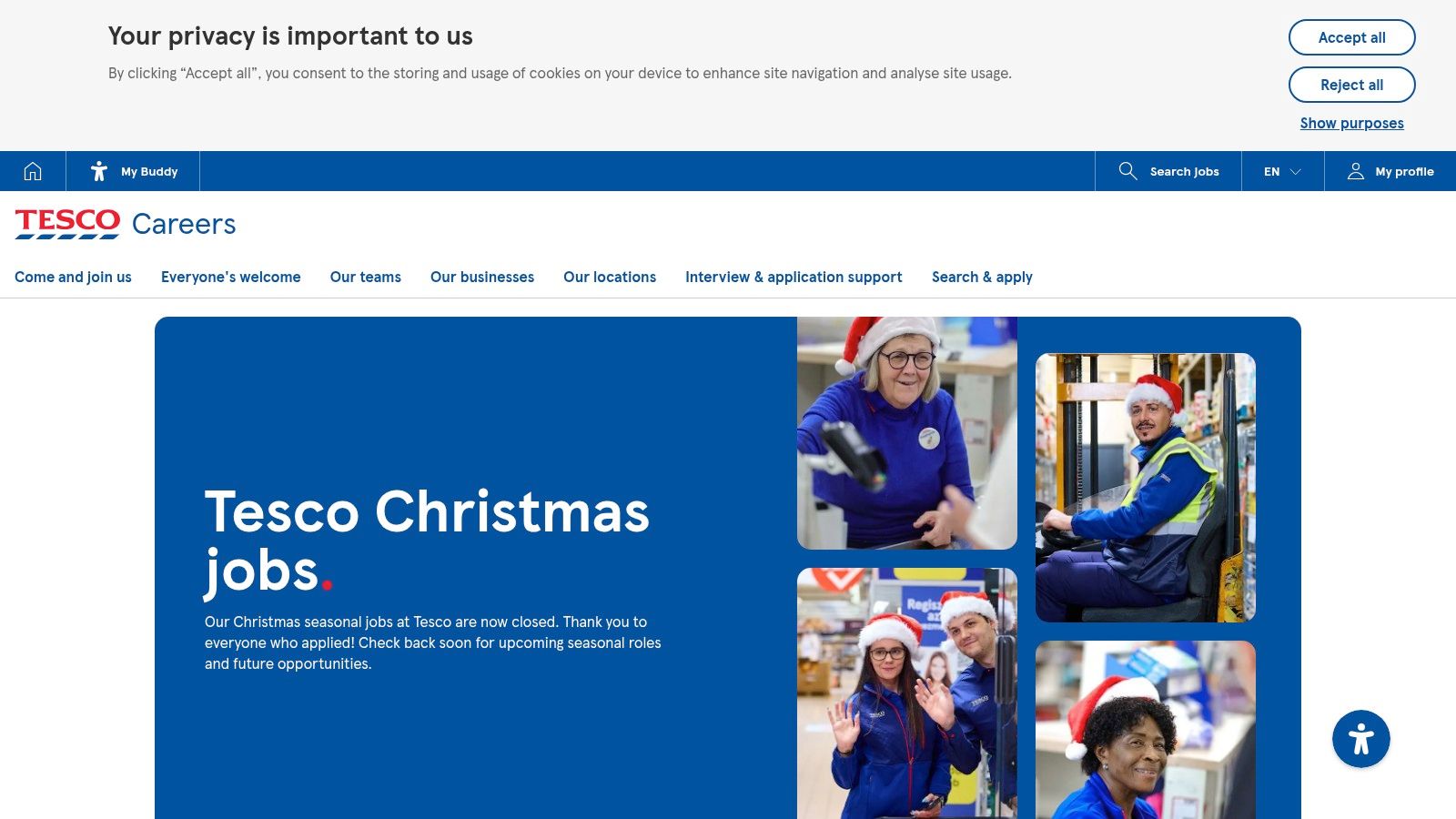
Tesco is dangerous competition because it recruits across multiple store formats and multiple types of work. One brand can attract checkout staff, shelf fillers, online pickers and night workers at the same time. That breadth matters more than any single job title.
For Birmingham hospitality managers, Tesco drains the middle of the labour pool. Not specialists, but the dependable hourly workers who'd otherwise cover prep, pot wash, basic service support and flexible shifts.
Why Tesco appeals to flexible workers
The Tesco festive jobs campaign makes seasonal hiring easy to understand. Candidates can look for location fit, role fit and shift fit in one place.
That simplicity beats many independent operators, especially when managers are too busy to run a clean hiring process in November.
Workers also like options. Tesco can offer different environments under one employer. If somebody wants nights, replenishment or picking instead of direct customer pressure, the brand can often accommodate that.
What to do instead of chasing the same candidates
If Tesco is pulling from your pool, your response has to be operational, not emotional.
- Tighten your response time: Delayed follow-up kills festive recruitment.
- Separate critical and non-critical hiring: Don't treat chef cover like a casual temp vacancy.
- Protect your kitchen core: Use experienced temporary chefs for service continuity, then fill lighter tasks around them.
Many Birmingham venues make the wrong call. They spend December trying to recruit “extra hands” when what they truly need is kitchen stability. One strong relief chef can steady prep, service, ordering flow and junior staff confidence far better than several untested festive hires.
Tesco's campaign is broad and efficient. Your answer shouldn't be broader. It should be sharper. If a section is hard to cover, secure specialist kitchen support early and stop expecting the general labour market to rescue your Christmas week.
4. Amazon
Amazon sits at the top of the non-hospitality threat list because it pulls in workers at scale and offers a process-heavy environment many temporary applicants find easier to trust. For managers in Birmingham, that affects more than warehouse-style labour. It reduces the number of people willing to take physically demanding kitchen support roles too.
The attraction is straightforward. Big company. Clear systems. Defined tasks. Centralised application.
Why Amazon changes the market
The Amazon Jobs UK portal gives candidates a direct route into seasonal fulfilment work. For people comparing options quickly, that matters. They can see a large employer with formal onboarding and a familiar operating model.
That's especially relevant when your venue needs:
- Kitchen porters at short notice
- Commis-level support for prep-heavy weeks
- Reliable hands for early starts or late finishes
- Back-of-house staff willing to work repeated peak shifts
Those workers often overlap with the exact people fulfilment operations want.
If your staffing strategy depends on broad local availability in December, Amazon will expose that weakness fast.
The real hospitality risk
A lot of managers think the issue is pay alone. It isn't. Process wins candidates. Certainty wins candidates. Speed wins candidates.
Hospitality loses when:
- the trial shift takes too long to arrange
- nobody confirms hours properly
- references and right-to-work checks happen late
- the rota looks improvised
Amazon doesn't need to understand hospitality to hurt hospitality. It only needs to recruit faster and look more organised.
That's why specialist chef agencies matter in festive trading periods. A proper chef agency isn't competing in the same lane as Amazon. It isn't trying to supply generic labour into a broad Christmas rush. It supplies vetted kitchen professionals to businesses that can't afford instability. If your grill section, breakfast pass or party menu prep depends on whoever answers a last-minute ad, you're exposed.
Amazon should push you to do one thing now. Remove chef recruitment from the general temp scramble and secure dedicated kitchen cover before your December pressure peaks.
5. Selfridges Birmingham

Selfridges doesn't compete on volume in the same way as logistics, but it competes hard for polished, customer-ready candidates. If you run a premium restaurant, boutique hotel, private dining space or quality-led pub, that matters.
These are often the same applicants you want for host, waiting, lounge and smart support roles. They're also the kind of people who may progress into stronger hospitality positions if you can bring them in early.
Why premium retail attracts your better seasonal candidates
The Selfridges jobs search page positions seasonal work inside a luxury environment. That changes perception immediately. Candidates see prestige, presentation standards and recognised brand experience.
For managers, this creates a frustrating problem. A well-run independent venue may offer a stronger long-term hospitality path, but seasonal applicants often choose the easier story. Luxury retail looks polished from the outside. Christmas service in hospitality looks hard, because it is.
Who should worry most
Selfridges is a bigger threat if you operate in premium or city-centre spaces where presentation, polish and guest interaction matter.
- Boutique hotels: You need staff who can handle guests well from the first shift.
- Quality restaurants: You want composed personalities, not just bodies on the floor.
- Private households and luxury settings: Service standards matter immediately.
That's also why specialist hospitality recruitment works better than broad festive advertising for skilled placements. Relief Chefs UK doesn't just support temporary chefs. It also helps venues and private clients source more specialist hospitality support, including permanent chef recruitment, yacht chefs and villa chefs, where polish and reliability matter just as much as availability.
Premium retail doesn't steal everyone. It steals the most presentable and easiest-to-place people first.
If your Christmas plan relies on attracting quality seasonal candidates through generic public adverts, Selfridges will beat you more often than you think.
6. Card Factory
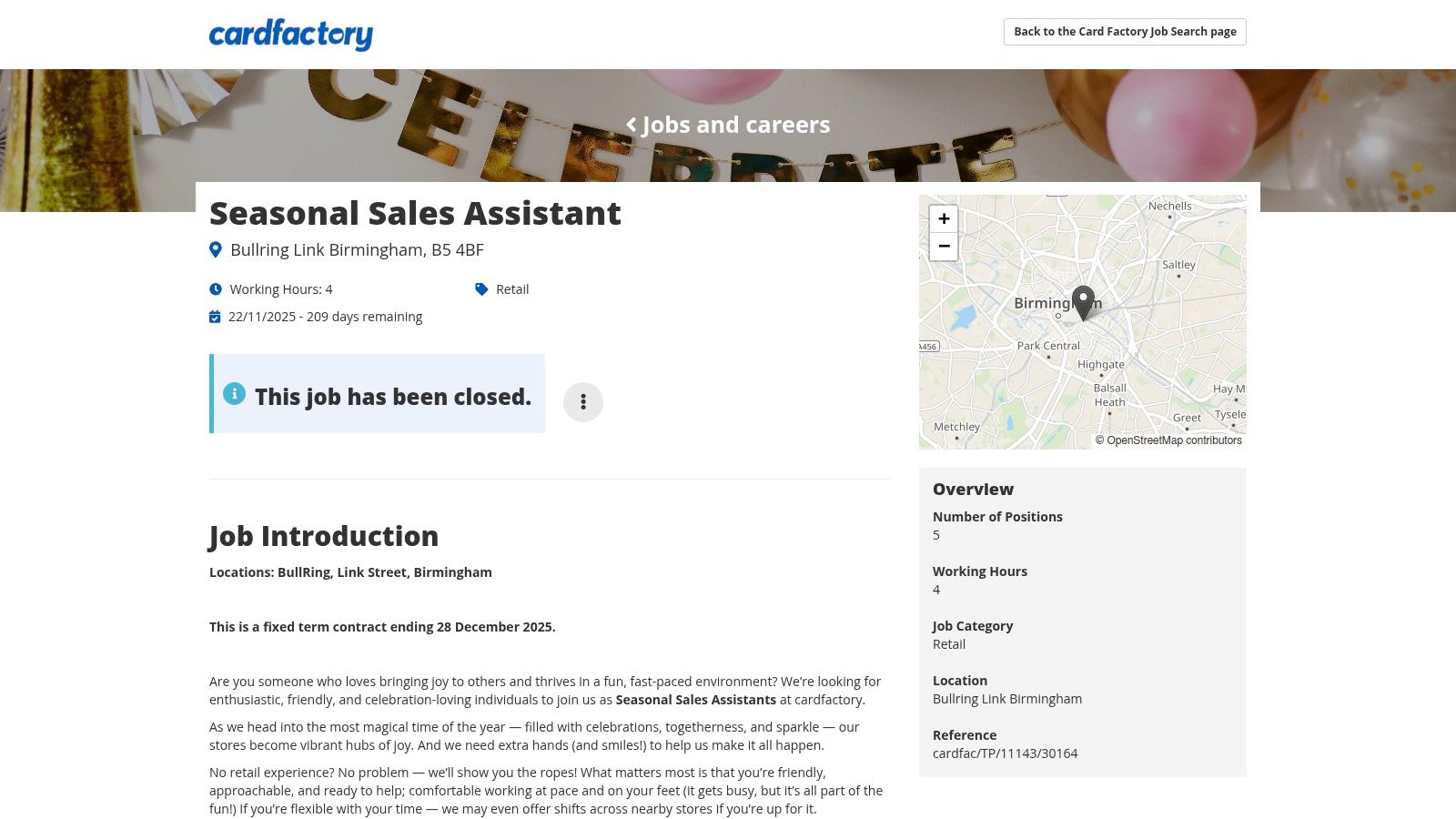
Card Factory competes through accessibility. It doesn't need prestige or massive scale to affect your hiring. It just needs to look easy to enter.
That's exactly why it takes a share of the Christmas temporary jobs Birmingham audience that many independent hospitality venues rely on. Students, part-time workers, people after extra income, and workers who want a short contract without specialist pressure all see retail as a simpler route.
Why easy-entry seasonal retail hurts hospitality
The Card Factory seasonal vacancy reflects the kind of role that appeals to candidates who might otherwise take basic hospitality support work. The tasks are visible. The environment is familiar. The fixed seasonal nature is expected.
That's a problem if your kitchen staffing model assumes you can always find:
- a kitchen porter with weekend availability
- a basic prep hand
- someone for simple runner or clear-down duties
- a part-time support worker over key dates
Retail employers like Card Factory remove those people from circulation early.
The bigger lesson for operators
You can't recruit specialist kitchen labour using entry-level seasonal logic. If your chef de partie is covering pot wash, prep and stock because support staff never landed, standards drop fast.
The hospitality businesses that hold up best in December usually do two things well. They simplify hiring for low-risk support roles, and they protect the kitchen spine with experienced temporary chef cover.
Card Factory should remind you that “simple seasonal jobs” are plentiful in Birmingham. Your venue will not win a race for convenience against every retailer in the city. What you can do is stop placing critical service delivery in the hands of an uncertain casual pool.
When the bookings stack up and sickness hits, the issue won't be whether someone wanted extra Christmas money. The issue will be whether your kitchen still functions.
7. Greene King
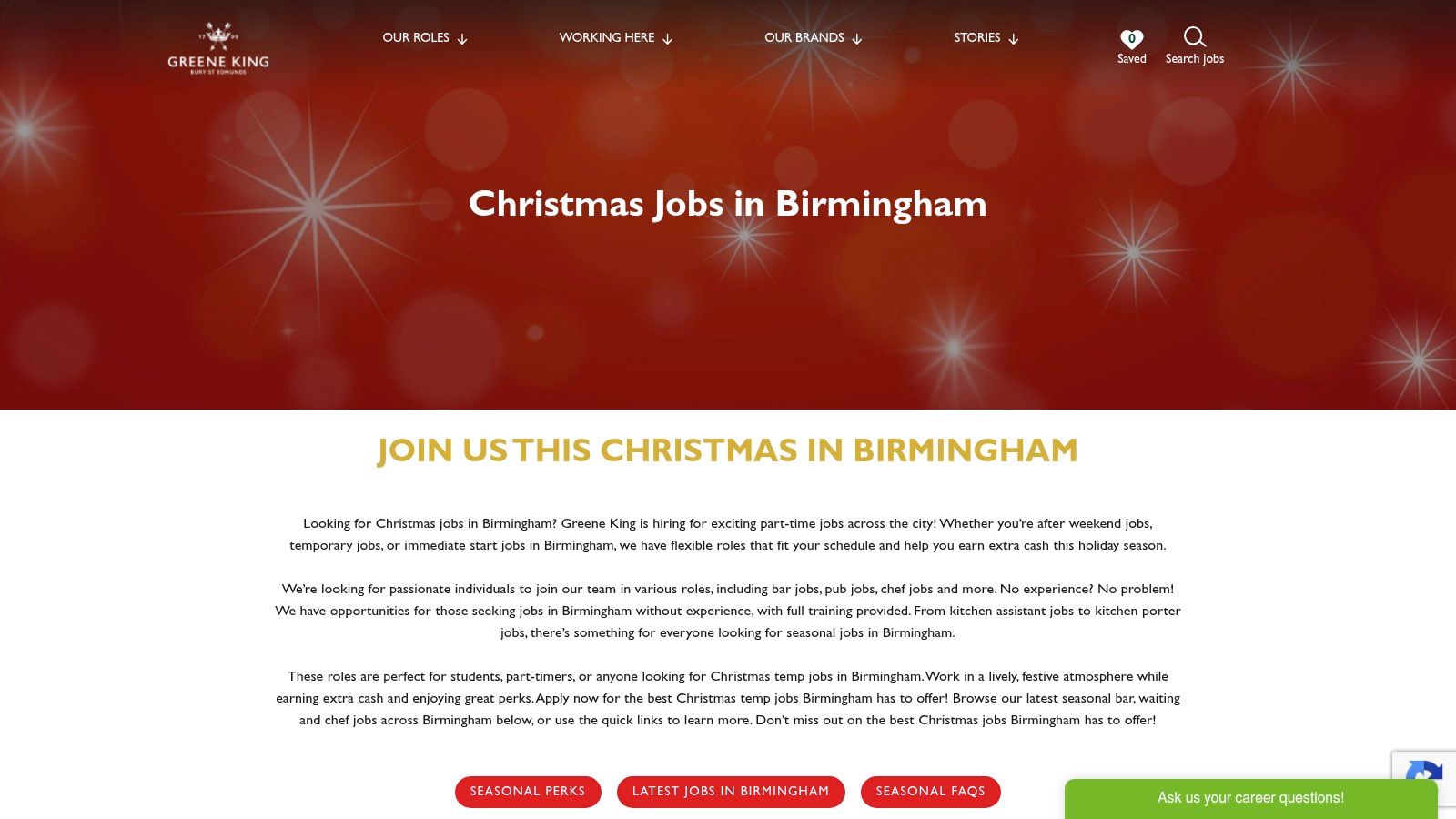
Greene King is the most direct competitor on this list because it isn't pulling workers away from hospitality. It's keeping them inside hospitality, but inside a larger, more structured operator than many independents can match.
That makes it especially relevant for Birmingham pubs, casual dining venues and hotel food operations.
Why chain hospitality can beat independents
Greene King's seasonal Birmingham hiring page confirms festive recruitment for Bar & Waiting and Kitchen roles. It also confirms that shortlisted applicants are invited to interview. That's useful because it shows a structured hiring journey, not a vague expression of interest.
The wider Birmingham challenge is timing and competition. Public seasonal-work guidance says many employers start hiring in late October or early November, and Greene King is one visible example of that pattern. If you wait until the festive diary is already packed, you're recruiting after larger operators have started picking off available staff.
What managers should do about it
Independent venues can't out-chain a chain. Don't try.
Instead:
- Lock in chef cover first: Head chef gaps, sous gaps and CDP gaps do the most damage.
- Use agencies that understand kitchens: Generic temp supply won't protect standards.
- Reduce hiring friction: Fast contact, clear shifts, immediate vetting.
- Assume competition is already active: By the time you feel the pinch, the market has already moved.
A lot of operators still misunderstand agency support. They think “temp agency” means random availability and weak fit. That's true of broad labour supply. It isn't true of a specialist kitchen partner. If you want to understand the difference, this guide to working with a temp agency in hospitality is a useful benchmark.
Greene King proves the point. Your biggest hospitality competitor at Christmas may not be the independent nearby. It may be the larger group with cleaner hiring systems and a bigger bench.
Christmas Temp Jobs in Birmingham, 7-Employer Comparison
| Item | 🔄 Implementation complexity | ⚡ Resource requirements | 📊 Expected outcomes | 💡 Ideal use cases | ⭐ Key advantages |
|---|---|---|---|---|---|
| Royal Mail – Seasonal Mail Sorters | Low, streamlined seasonal profile & tracking | Moderate, physical stamina, shift flexibility required | High short‑term fill rates; predictable coverage | High‑volume sorting and simple shift work | Large intake, clear tasks & structured onboarding |
| Boots – Christmas Customer Advisor | Low, centralised retail hiring with set training | Moderate, customer‑service skills, weekend/late availability | Reliable front‑of‑house coverage; brand‑attractive hires | Customer‑facing roles in busy city locations | Branded experience, transferable retail skills |
| Tesco – Festive Colleague | Low, wide campaign hiring, simple online application | Variable, range of roles across store formats | Broad coverage across shifts and functions | Checkout, stocking, online picking and night roles | Schedule/location flexibility; clear pay bands |
| Amazon – Seasonal Warehouse Operatives | Medium, centralised, process‑driven onboarding | High, physical demand and productivity targets | Very high volume staffing; stable shift patterns once trained | High‑throughput logistics and repeatable tasks | Competitive pay and scalable intake |
| Selfridges Birmingham – Seasonal Sales and Service | Medium, brand standards and selective recruitment | Moderate, high service expectations, evening peaks | Higher‑quality candidate pool; skilled front‑of‑house | Luxury retail customer service and visual merchandising | Prestigious CV value and customer‑experience training |
| Card Factory – Seasonal Sales Assistant | Low, simple retail hiring and short contracts | Low, student‑friendly hours, basic retail tasks | Fast fills for entry‑level roles; high turnover | Short‑term, low‑skill seasonal roles | Accessible entry point with defined tasks |
| Greene King – Seasonal Pub and Kitchen Roles | Medium, chain recruitment with standardised training | Moderate, hospitality skills, evenings and weekends | Reliable hospitality staffing; potential internal mobility | Pub/restaurant front‑of‑house and kitchen support | Hospitality‑specific experience and progression paths |
Stop competing for general labour. Secure specialist chefs.
The pattern is clear. Birmingham's festive labour market doesn't just tighten because other pubs and restaurants are hiring. It tightens because general temporary workers can choose Royal Mail, Boots, Tesco, Amazon, Selfridges, Card Factory and major pub chains as well. Many of those options look simpler, more structured and less pressured than a Christmas kitchen.
Hospitality demand also rises sharply at the same time. The British Hospitality Association reports that the UK hospitality sector sees a 30% increase in workforce demand during Christmas, driven by higher customer volumes in pubs, restaurants and hotels. In Birmingham, this pressure is visible in the local market too, with Indeed's Birmingham Christmas market job listings showing temporary roles built around weekends, evenings and early mornings, and some adverts stating they typically respond within 1 day.
That should shape your staffing response. December hiring isn't a standard recruitment exercise. It's an operational risk exercise. If your rota depends on the same diluted temp pool that retail and logistics are targeting, you'll see exactly what most managers see every festive season. Late dropouts, slow responses, weak kitchen support, stressed senior chefs and service standards slipping at the worst moment.
The fix is to stop recruiting critical kitchen roles as if they're ordinary Christmas jobs. They aren't. A relief chef, temporary chef or permanent chef hire protects revenue, consistency and team morale in a way a generic temp never can.
Relief Chefs UK has been operating since 2013 and works with hospitality businesses that need dependable kitchen cover across Birmingham and wider UK hospitality hotspots including Bristol, Devon, Berkshire, Windsor, Reading, Slough, Dorset and Wales. The business supports relief chefs, temporary chefs, permanent chef recruitment, yacht chefs, villa chefs and wider hospitality staffing needs.
If you want your kitchen stable through parties, festive menus, breakfasts, private events and New Year trade, move early. General labour will keep spreading across other sectors. Specialist chef cover needs to be secured before the market gets tighter.
If your venue needs dependable Christmas kitchen cover, contact Relief Chefs UK. You can secure vetted relief chefs, temporary chefs and permanent chef recruitment support before festive gaps turn into lost service, lost revenue and an exhausted brigade.