
Chef Jobs Northern Ireland: Your 2026 Career Guide
1 June 2026
Those looking for chef jobs in Northern Ireland, or aiming to fill one, have likely encountered a familiar issue. The work is there, but the route to it is messy. Good roles are split across multiple job boards, some employers move quickly, others disappear after posting, and plenty of kitchens only start recruiting properly when the pressure is already on.
That creates frustration on both sides. Chefs waste time chasing vague adverts. Operators lose hours filtering applicants who aren't available, don't match the level required, or can't clear the basic compliance checks that should have been dealt with before a trial shift was even discussed.
Northern Ireland has a strong hospitality identity. Belfast is busy, coastal trade can turn quickly, and hotels, pubs, restaurants, events businesses and private clients all compete for the same pool of kitchen talent. In that sort of market, the old approach of posting an advert and hoping for the right CV doesn't hold up for long.
The Reality of Finding Chef Work in Northern Ireland
The pressure in the market is real. A People 1st International report on the chef shortage found that chef vacancies in Northern Ireland rose by 150% over a four-year period. That's not a minor staffing wobble. It's a structural shortage.
For chefs, that sounds positive at first. More vacancies should mean more opportunity. In practice, it often means rushed hiring, unclear briefs, and kitchens trying to solve urgent problems with permanent recruitment language. A role advertised as a head chef job may, in reality, need a stabilising sous chef. A “great opportunity” might really be a brigade under strain with no proper handover.
For employers, the issue is even sharper. One sick leave, one resignation, or one failed trial can put service at risk by the weekend. Independent pubs, boutique hotels, restaurant groups and busy seasonal sites all feel it differently, but the result is the same. You need reliable chefs, quickly, and you can't afford repeated hiring mistakes.
What strong candidates and serious employers both want
The best chefs usually look for more than pay alone. They want to know:
- Who they're working for. Is the kitchen organised, or is the team firefighting every shift?
- What the service looks like. High-volume banqueting and fresh-food gastropub work require different strengths.
- Whether the role is stable. A good chef won't leave one difficult job for another with the same problems.
Employers want the same clarity from the other side.
- Can this chef step into service without drama
- Can they handle the pace and standards required
- Will they turn up, communicate properly, and fit the brigade
Practical rule: In Northern Ireland, speed matters, but fit matters more. A fast bad hire usually costs more than a slightly slower right one.
That is why generic advice around chef jobs in Northern Ireland usually misses the point. The challenge isn't just finding vacancies. It's identifying which vacancies are real opportunities, which kitchens are worth your time, and which hiring routes are effective.
Where to Actually Look for Chef Vacancies
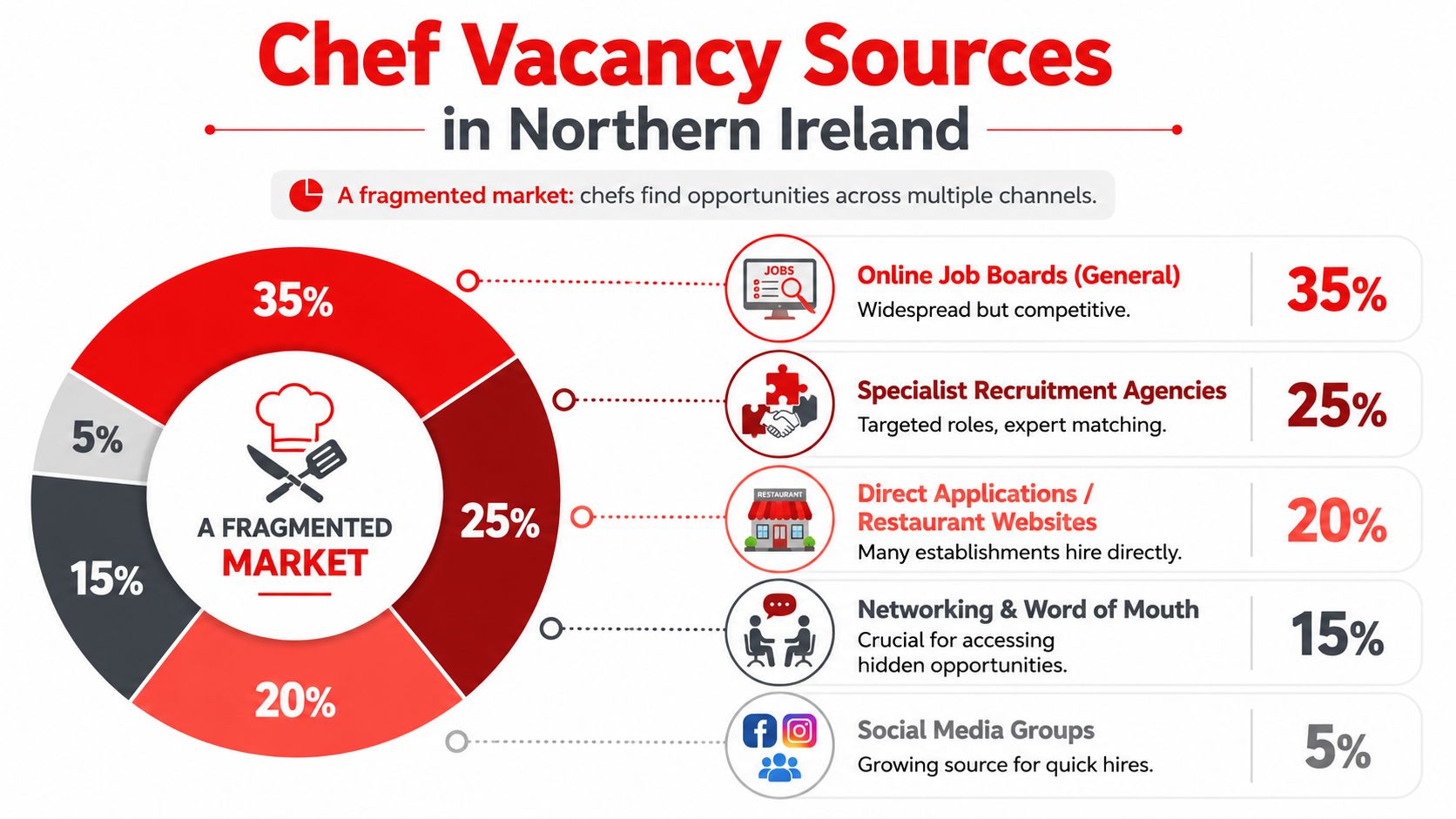
A lot of chefs still rely on one platform and assume they're seeing the whole market. They aren't. Northern Ireland's vacancy picture is fragmented, and that fragmentation wastes time.
Public listings already show the split. A search snapshot for chef roles in Northern Ireland shows 37 chef jobs on NIJobs, 170 on Indeed, and 217 on Glassdoor, with Belfast alone showing 154 chef jobs on Glassdoor, as noted in this Northern Ireland chef jobs search snapshot. That tells you two things immediately. First, demand is spread across platforms. Second, city visibility can drown out opportunities elsewhere.
Belfast gets the attention, but not all the opportunity
Belfast naturally dominates online visibility. That's where larger hotels, branded operations and busier independent venues generate volume. But chefs who only search Belfast can miss strong roles in smaller towns, resort locations, golf-led hospitality, destination dining sites and private households.
For employers outside the city, the opposite problem applies. Your vacancy may be perfectly good, but it can look invisible if it sits beside a wall of Belfast listings with bigger branding and more polished adverts.
A manual search can still work, but it needs discipline.
| Route | What it does well | Where it falls short |
|---|---|---|
| Job boards | Good for volume and quick scanning | Repetition, stale adverts, mixed quality |
| Direct venue websites | Useful for hotels and established groups | Time-consuming, often inconsistent |
| Word of mouth | Strong for trusted kitchens | Hard to scale if your network is small |
| Specialist agencies | Better for role fit and speed | Only works if the agency understands kitchens |
What works in practice
If you're a chef, use a layered approach:
- Check major boards briefly, not endlessly. Scan for movement, not just volume.
- Target venue types, not only job titles. A strong sous chef fit in a hotel may be a poor fit in a scratch-led restaurant.
- Speak to hospitality specialists. Better roles often move through relationships before they become public adverts.
For operators, broad advertising alone usually isn't enough when the need is urgent or specialist. You need someone filtering availability, level, documentation and suitability before candidates land in your inbox. That's why many businesses use specialist chef recruitment agencies earlier in the process instead of treating them as a last resort.
The hidden cost in chef recruitment isn't the advert. It's the time your head chef or GM loses chasing the wrong people.
Optimising Your CV for the NI Market
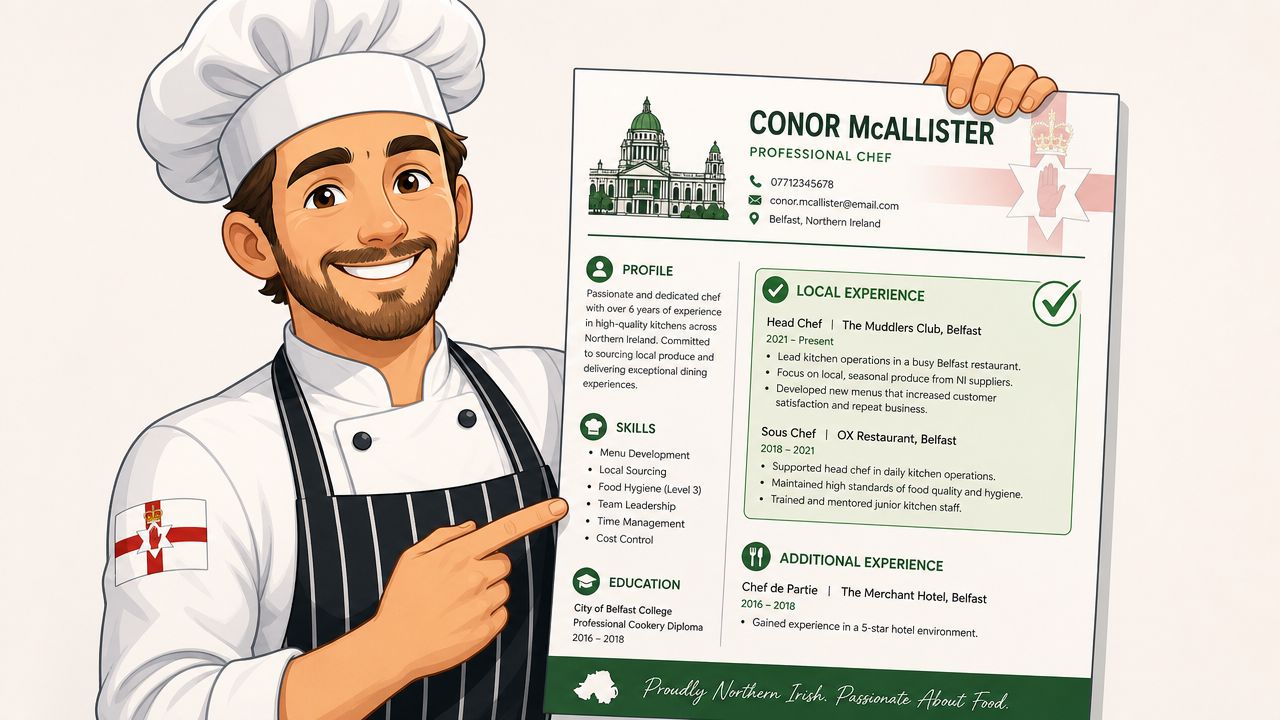
A chef CV doesn't need to be flashy. It needs to be fast to read, credible, and relevant to the kitchen hiring you. Most decision-makers give it a short scan before they decide whether to call, park it, or reject it. If your strongest points aren't obvious in that first read, you've made the employer work too hard.
Put the useful information at the top
The top third of your CV should answer practical questions immediately.
Include:
- Current level. Commis, chef de partie, junior sous, sous, head chef.
- Venue background. Hotel, gastro pub, fine dining, banqueting, contract catering, private household.
- Key strengths. Fresh food, volume service, pastry support, menu development, stock control, team supervision.
- Availability. Immediate, one week, one month, temporary only, permanent only, open to relocation.
- Compliance basics. Right to work, food safety training, driving licence if relevant.
If you're applying for chef jobs in Northern Ireland, tailor the CV to the type of site. A boutique hotel in County Fermanagh may care about breakfast consistency, banqueting support and guest expectations. A Belfast restaurant may care more about pace, section control and standards under pressure.
Your experience should show outcomes, not job descriptions
Don't write “responsible for preparing dishes”. Every chef is.
Write things that tell an employer how you work:
- Ran garnish and larder during peak service
- Supported menu changes and seasonal specials
- Covered sous chef duties on days off
- Worked in small teams with shared prep and ordering responsibility
- Handled weddings, events or high-turnover breakfast service
That reads like someone who understands kitchens, not someone copying old CV language.
Add a sample menu if the role justifies it
For stronger positions, a short sample menu can help. Not a giant document. One page is enough.
A useful sample menu shows:
- Judgement. Dishes that match the venue style.
- Commercial sense. Not every plate needs ten components.
- Local awareness. Northern Irish employers will notice whether your food feels grounded or generic.
- Practicality. Can a brigade produce it during service?
A smart sample menu says more about your level than a page full of buzzwords.
If your CV needs tightening, this guide on chef qualifications and what employers look for is worth reviewing before you send applications out.
Preparing for Interviews and Trial Shifts
Most chef interviews are short. The practical assessment usually happens when the jacket goes on and service starts. That's why preparation needs to cover both conversation and performance.
Interview properly from both sides
A chef who asks nothing in interview usually looks passive. Ask clear operational questions.
Good ones include:
- How stable is the current brigade
- Why is the role open
- What does the busiest service look like
- Who writes menus and who controls ordering
- How are rotas handled
- What support is there on prep, KP cover and stock organisation
Those questions do two jobs. They help you judge the kitchen, and they show that you think beyond your own section.
Employers should do the same. Don't just ask what a chef has cooked. Ask how they work in difficult services, how they communicate on the pass, and what kind of kitchen structure brings out their best work.
Trial shifts expose everything quickly
A trial shift strips away polished interview answers. In an unfamiliar kitchen, good chefs become obvious fast.
Turn up with the basics sorted. Clean kit. Sharp knives if requested. Proper shoes. Pen. A calm attitude. If paperwork or right-to-work evidence is needed before the shift, send it early. Last-minute scrambling doesn't create confidence.
Once you're in the kitchen, focus on the fundamentals:
Read the room fast
Check the section layout, fridges, labels, allergens system, cleaning standards and who is in charge.Listen before trying to impress
Some chefs fail trials because they start “improving” everything before they've understood the setup.Work clean and communicate clearly
Speed without organisation doesn't help the brigade.Respect the existing system
A trial is not the moment to show ego. It's the moment to show control.
If a chef can step into a strange kitchen, stay composed, and make service easier for the team, that chef will always be valuable.
For employers, the best trial-shift test isn't whether a candidate cooks one attractive plate. It's whether the brigade would trust that person on a hard Saturday.
Understanding Pay Scales and Employment Terms
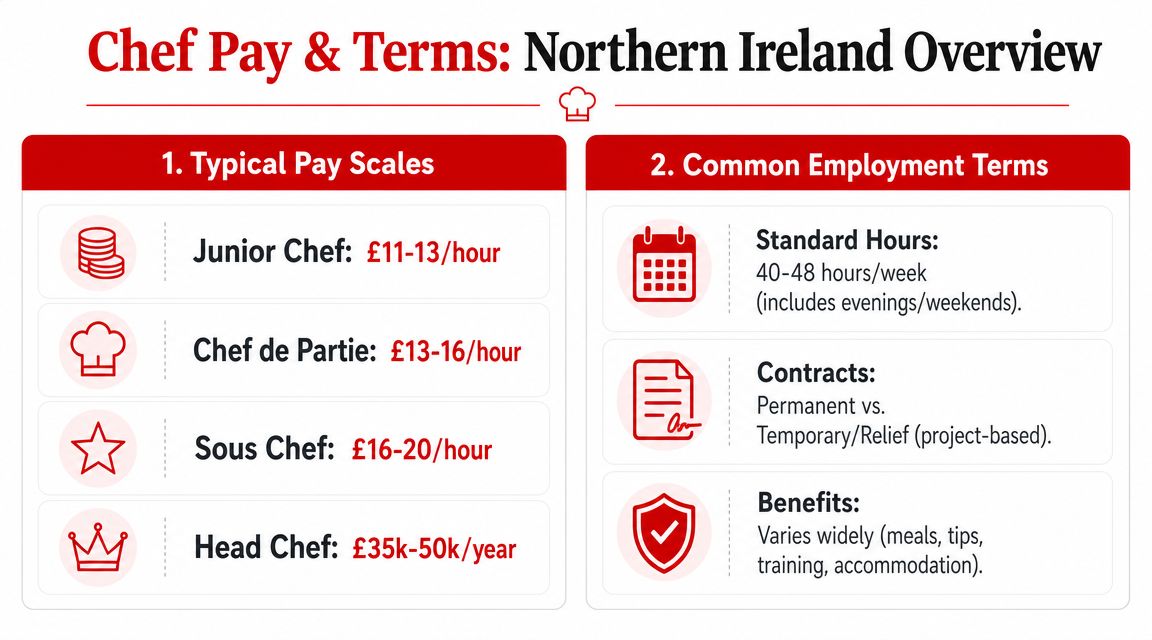
Chef pay in Northern Ireland isn't one neat number because the market isn't one neat category. A junior hourly role, a busy relief booking, and a senior salaried kitchen post are all part of the same conversation, but they operate differently.
A current spread from live vacancy examples makes that clear. Northern Ireland chef job listings on Indeed show a senior sous chef role at £32,000–£41,387.57, while other chef roles start at £12.71 per hour, and Caterer listings referenced in the same verified data show £14–£19 per hour. The same verified market snapshot also notes 811 chef-related Northern Ireland visa sponsorship searches, which shows clear interest from candidates looking for sponsored routes.
Why the pay gap is so wide
A wage range only makes sense when you connect it to the actual job.
| Role type | Usually suits | Main trade-off |
|---|---|---|
| Permanent salaried role | Chefs wanting progression and stability | Less flexibility if the kitchen isn't the right fit |
| Temporary booking | Chefs who want variety or immediate work | Less long-term certainty |
| Relief cover | Operators with urgent gaps, chefs who adapt quickly | Requires confidence in unfamiliar kitchens |
Hourly rates can look attractive, but you still need to assess rota patterns, shift length, travel, and whether the job is reliably steady. Salaried roles can look strong on paper, but if the brigade is thin and the weekly reality is relentless, the package may not feel as good once you're in post.
Terms matter as much as headline pay
Chefs should ask about:
- Shift pattern. Evenings, weekends and bank holidays are normal in kitchen work.
- Paid breaks and meals
- Holiday arrangement
- Tips or service structure
- Accommodation, if any
- Notice period
- Whether the role includes management duties beyond the title
A junior sous doing ordering, rota support and stock work shouldn't be assessed the same way as someone only covering service.
Compliance is not optional
The UK National Careers Service notes that chefs can enter the trade through apprenticeship, college, university or work-based progression, and it also states that a food safety certificate is expected, as set out on the National Careers Service chef profile. For non-UK workers, employers in Northern Ireland generally need to hire through the UK's points-based visa route rather than informal arrangements.
That means employers should screen for three things early:
- Right to work
- Food safety evidence
- Role fit
Those are the filters that stop wasted interviews and failed trial shifts. If you want a broader breakdown of kitchen earnings by level and contract type, this article on how much chefs make adds useful context.
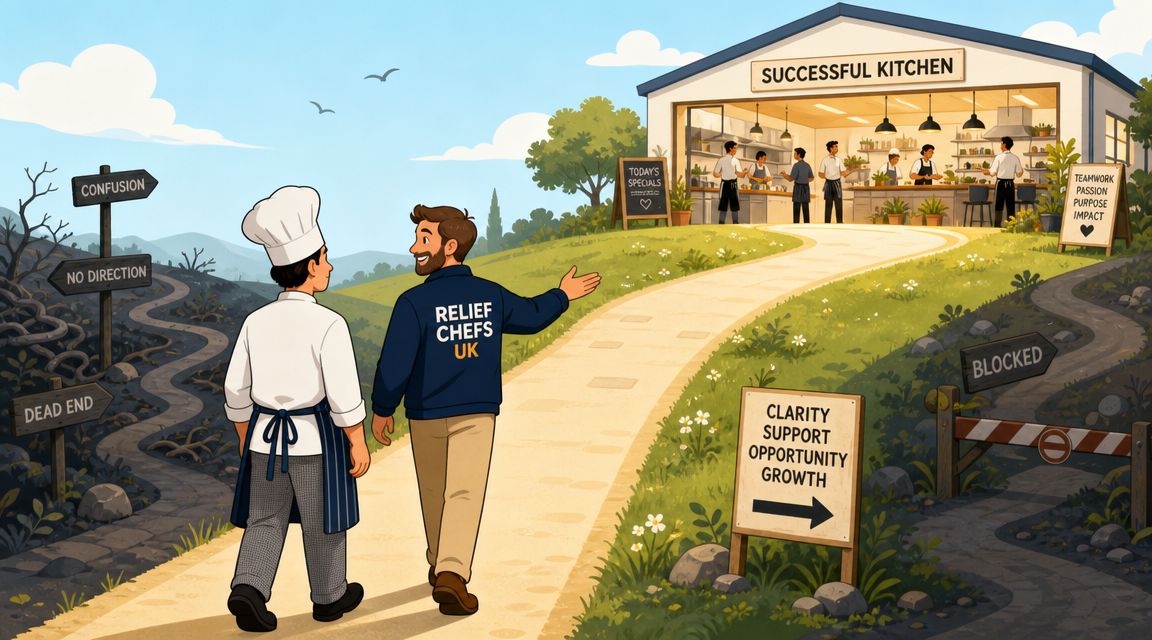
The Smartest Route to a Chef Job A Staffing Partner
Friday, 4pm. A head chef has just lost a sous for the weekend, service is fully booked, and three CVs from the public job boards are still sitting unanswered because none of them fit the brief. That is how a lot of chef hiring happens in Northern Ireland. It is reactive, fragmented and slow.
The public market only shows a slice of what is available. Good roles are often filled through existing contacts, quiet referrals or trusted recruiters before a broad advert produces anything useful. The same problem hits employers. A live vacancy may attract volume, but volume is not the same as suitability.
Why strong chefs use agencies early
Serious chefs do not use a staffing partner because they have run out of options. They use one to avoid wasting time on the wrong options.
A specialist recruiter should know the difference between a site that needs calm, experienced cover for two difficult weeks and a business that needs a long-term senior hire to rebuild standards. That distinction matters. So does knowing whether the owner interferes with service, whether the brigade can handle pressure, whether accommodation is workable, and whether the advertised title matches the actual responsibility.
That level of detail rarely appears on public listings.
For chefs, that means fewer blind applications and better conversations. For employers, it means the shortlist is filtered before anyone steps into the kitchen.
Why operators get better results through a specialist partner
Many operators call an agency once the rota has already collapsed. By that stage, choice is narrower and the pressure is higher.
Used properly, a staffing partner is a hiring filter and a risk control tool. They can help with:
- Short-notice cover when sickness or no-shows hit service
- Temporary support during seasonal peaks or events
- Permanent recruitment when a key role needs the right fit
- Private households, yachts or villas where discretion matters
- Multi-site hiring where consistency matters as much as speed
Relief Chefs UK is one example of a specialist chef staffing business working across relief, temporary, permanent and private-placement briefs. The value is not just access to people. It is access to chefs and vacancies that have already been qualified against the operational reality.
That is the point many candidates and employers miss. In a market as patchy as Northern Ireland, a specialist agency is often the first smart move, not the fallback after every public advert has failed.
Frequently Asked Questions
| Question | Answer |
|---|---|
| What's the difference between a temporary chef and a relief chef? | A temporary chef may be booked for a defined period such as holiday cover, a project, a launch phase or a seasonal block. A relief chef is usually brought in to keep service running during short-notice gaps, sickness, rota pressure or sudden departures. In practice, the lines can overlap, but relief work usually demands faster adaptation. |
| Are chef jobs in Northern Ireland mostly permanent or temporary? | Both exist. Permanent roles are common in hotels, restaurants and pubs building a stable brigade. Temporary and relief work is common when operators need urgent cover, added support during peak trading, or a stop-gap before a permanent appointment is made. |
| Do I need formal qualifications to get hired as a chef? | Employers usually care about proof of competence, reliability and suitability for the role. Documented training helps, and food safety evidence matters. Experience still carries weight, but kitchens are far more comfortable when your paperwork is in order before interview or trial. |
| Can I get a chef role in Northern Ireland if I need sponsorship? | Some candidates are actively searching for sponsored chef routes, but sponsorship isn't available for every vacancy. The practical approach is to confirm right-to-work position, visa route and role eligibility early, before a trial shift is discussed. |
| What should an employer check before offering a trial shift? | Right to work, food safety evidence, actual level, availability and whether the chef's background matches the service style. That saves time and avoids avoidable rework. |
| Do agencies only deal with emergency cover? | No. A specialist hospitality agency may cover relief placements, temporary contracts, permanent chef recruitment, private households, villas, yachts and broader staffing support. The better agencies do much more than emergency patching. |
| What kinds of venues usually use specialist chef staffing support? | Independent pubs, boutique hotels, restaurants, event venues, contract caterers, private estates and multi-site groups all use it. The common factor is operational risk. If a kitchen can't afford a staffing mistake, specialist support becomes useful quickly. |
If you're hiring chefs in Northern Ireland, or you're a chef looking for the right move rather than just the next one, contact Relief Chefs UK. We work with hospitality businesses that need dependable kitchen cover and long-term recruitment support, and with chefs who want roles that genuinely fit their level, availability and working style.
Call the team.
Office 01392 715474 · info@reliefchefs.co.uk