
Glastonbury Festival Jobs: Impact on Your Kitchen 2026
31 May 2026

Late June arrives, bookings are strong, the weather helps, and then a capable chef asks for time off because they want to work Glastonbury. On paper it sounds manageable. In practice it lands in the same week as holidays, weddings, sickness, and the stretch where every service matters.
That's why hospitality managers need to understand Glastonbury festival jobs as a labour market issue, not a lifestyle story. If you run a hotel in Berkshire, a pub in Devon, a restaurant in Bristol, or a coastal operation in Dorset, the festival doesn't just happen in Somerset. It pulls staff from across the wider South West and beyond, exactly when your own rota is under pressure.
Why Glastonbury Is Your New Staffing Competitor
A lot of managers still treat Glastonbury as background noise. It isn't. It competes for the same flexible workers many venues rely on in summer, especially chefs, kitchen porters, event cooks, front-of-house teams, and people happy to work hard for a short intense period.
A useful way to look at it is this. You are not only competing with the pub down the road or the hotel in the next town. You are competing with a temporary operation built at huge scale, with short deadlines and immediate staffing needs.
Glastonbury's current licence allows up to 210,000 people on site, including fans, staff, and performers, according to reporting on the festival's scale and labour impact. That size matters because it creates concentrated demand for labour in build, live event delivery, and de-rig. It also helps explain why roles span catering, logistics, security, and site services rather than one tidy category of “festival work”.
What this looks like in a real rota
A head chef in Reading might lose a solid CDP for a few days. A hotel in Windsor might suddenly need breakfast cover because a junior chef has picked up event work. A pub in Wales might find that two casual kitchen staff have made themselves unavailable in the same week.
None of those issues sounds dramatic on its own. Together, they create service drift:
- Prep gets pushed later because fewer hands are available early
- Senior chefs stop leading and start firefighting
- Menu standards slip because the rota is built around survival, not execution
- Managers approve leave reactively because they don't want to lose staff altogether
Practical rule: Treat festival dates the way you treat Christmas party season or bank holiday weekends. The staffing pressure is predictable, even if the individual requests are not.
For operators trying to understand the wider event labour pull, it helps to watch how festival jobs across the UK affect hospitality staffing, not just Glastonbury in isolation.
What works and what doesn't
What works is early visibility. Ask your team in spring what they're planning for late June. Get honest answers before the rota becomes fragile.
What doesn't work is pretending nobody will go. They will. The better staff often do, because they're confident they can pick up work, adapt quickly, and handle pressure.
The Reality of Glastonbury Hospitality Roles
Managers need facts here, because a lot of staff still see festival work as a paid week with music around it. The work is tougher, more physical, and far more operational than the sales pitch.
The work is broad, but not soft
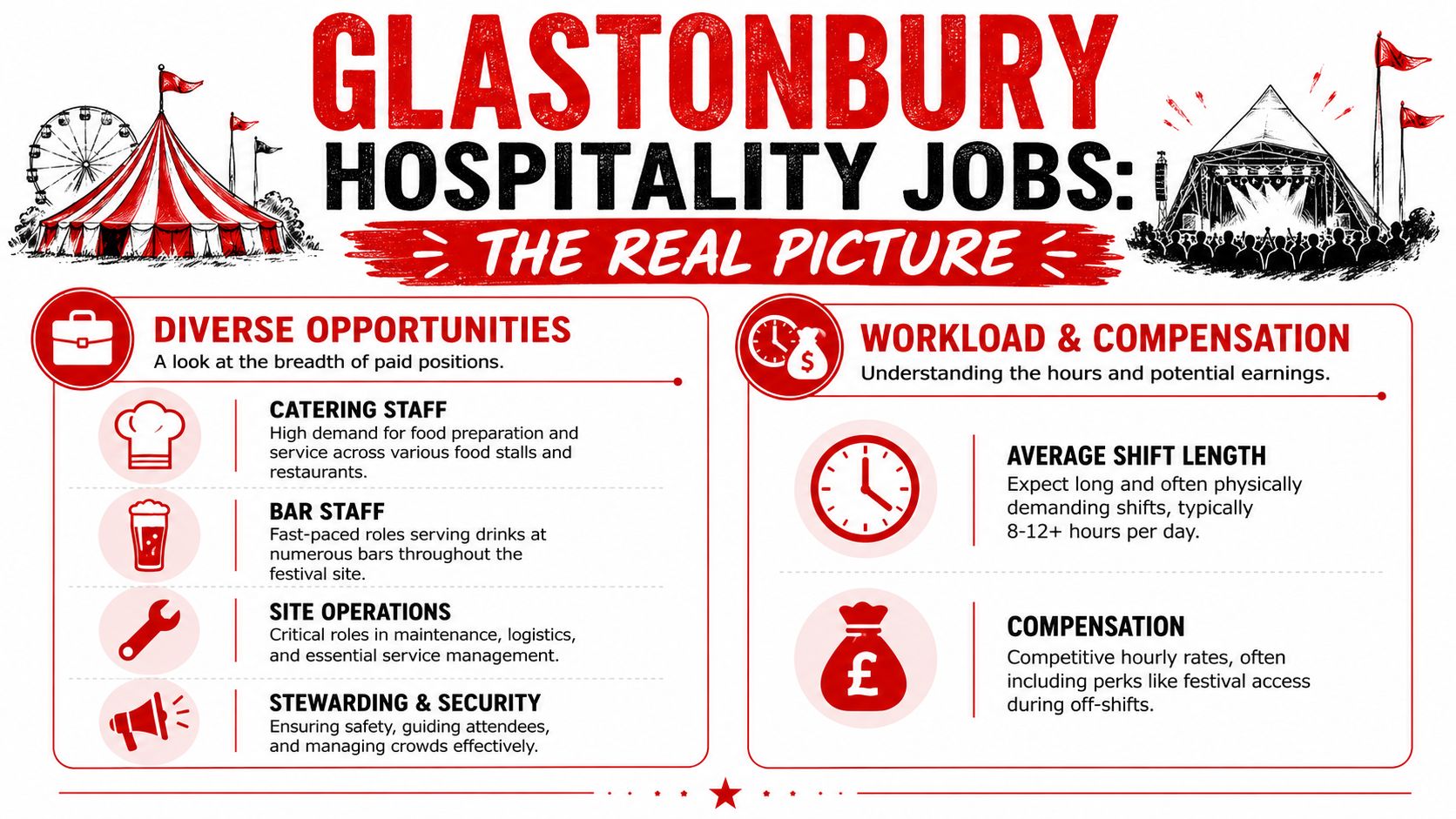
Festival hiring covers a wide spread of roles. Some are close to mainstream hospitality. Others sit closer to site operations than restaurant life.
Typical paid work can include:
- Catering support for high-volume food traders, production kitchens, and service points
- Bar work in fast, repetitive, high-throughput environments
- Back-of-house support where speed matters more than finesse
- Operational site roles that involve moving stock, towing, outdoor setup, and basic logistics
That's a different proposition from a settled hotel kitchen in Slough or a restaurant brigade in Bristol. The chef who enjoys a structured pass, consistent suppliers, and a known team may find festival work rougher than expected.
Hours, conditions, and pay trade-offs
Available job listings show some roles paying up to £14 per hour for a 45-hour week, with work described as physically active and outdoors, including early starts, late finishes, weekend work, and overtime, as shown on current Glastonbury-related job listings.
That matters for two reasons.
First, the headline hourly rate can look attractive to junior staff comparing it to a standard shift at home.
Second, the conditions are very different from what many imagine. A festival role may mean mud, poor rest, irregular breaks, long walks across site, weather exposure, heavy lifting, and constant pace.
The mistake managers make is arguing only on hourly rate. Staff compare adventure to routine. You need to compare the full job, not just the payslip.
A better manager conversation
When someone says they want Glastonbury work, don't dismiss it. Break it down properly.
| Question | Festival role | Standard venue role |
|---|---|---|
| Shift pattern | Can be long, early, late, and changeable | Usually more predictable |
| Work setting | Outdoor, temporary, high-footfall | Controlled kitchen or venue |
| Team consistency | Often mixed and temporary | Known brigade and managers |
| Skill use | Often volume-led and task-heavy | More scope for development and consistency |
This is usually where the glamour fades a bit. Not because festival work is bad, but because it isn't the same as career-building kitchen stability.
What managers should take from this
If one of your chefs goes to Glastonbury for paid work, don't assume they're replacing a normal hospitality job with something easier. In many cases, they're taking on a harder, shorter-term version of event labour.
That insight helps with retention. Good managers don't try to ban the idea. They make sure staff understand the trade-off.
Navigating the Application and Vetting Process
Festival hiring isn't a casual walk-up arrangement. The stronger operations run proper checks, structured recruitment, and role-specific gatekeeping. That's useful for managers to know because it explains why staff often commit earlier than you'd like and why some disappear from availability once they start applying.
The main routes into Glastonbury work
The festival's own jobs information points applicants to a dedicated jobs and work experience pathway for office-based and administrative functions through the official Glastonbury jobs and work experience page. That tells you something important. This isn't only ad hoc summer labour. There's a formal employment pipeline around the event.
For operational and hospitality roles, applicants usually go through contractors, specialist teams, or crew-specific processes. In practical terms, your staff may not be “just seeing what's about”. They may already be inside a recruitment workflow with deadlines and compliance checks.
For event operators reviewing the broader mechanics, it's worth understanding how recruitment for hospitality events is usually structured, because festivals often use a layered mix of direct hiring and contractor supply.
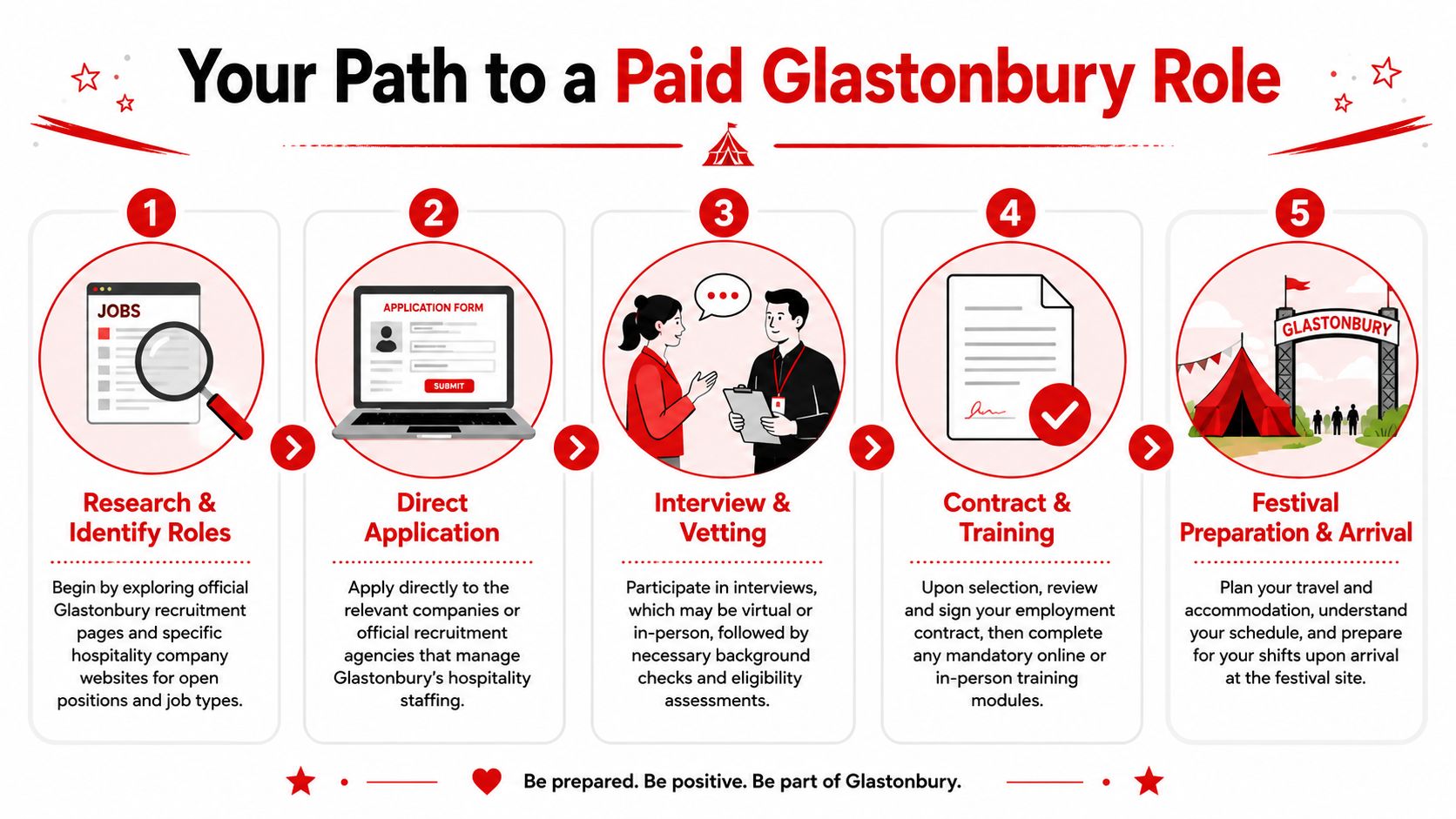
Here's the typical pattern managers should expect staff to follow:
- Role search through official pages, contractors, or crew-specific sites
- Application and availability checks
- Right-to-work verification
- Confirmation, onboarding, and shift allocation
- Arrival planning and commitment to complete assigned work
A useful visual summary sits below.
Reliability controls are stricter than people think
The clearest example is the Recycling Crew. Applicants must register, be recommended by a current member, upload UK right-to-work evidence, and pay a refundable security deposit. The deposit is £380 in a volunteer's first or second year and £75 from the third year onward, according to the Recycling Crew application process.
That tells managers two things:
- Festival operators actively screen for reliability
- Applicants are expected to commit financially and administratively
Manager's note: If a staff member says they're “thinking about” working Glastonbury, ask whether they've already applied, completed right-to-work checks, or paid anything. That answer tells you how real the risk is.
What this means inside your business
Once someone has gone through referral, vetting, and deposit steps, they are much less likely to back out for your weekend rota. At that stage, you are not negotiating with a casual idea. You are dealing with a committed labour move.
That's why leave requests linked to festival work need a deadline, a yes or no answer, and a contingency plan behind them.
The Impact on Your Kitchen's Stability and Morale
The core issue isn't one chef taking time off. The core issue is what that absence does to the rest of the kitchen.
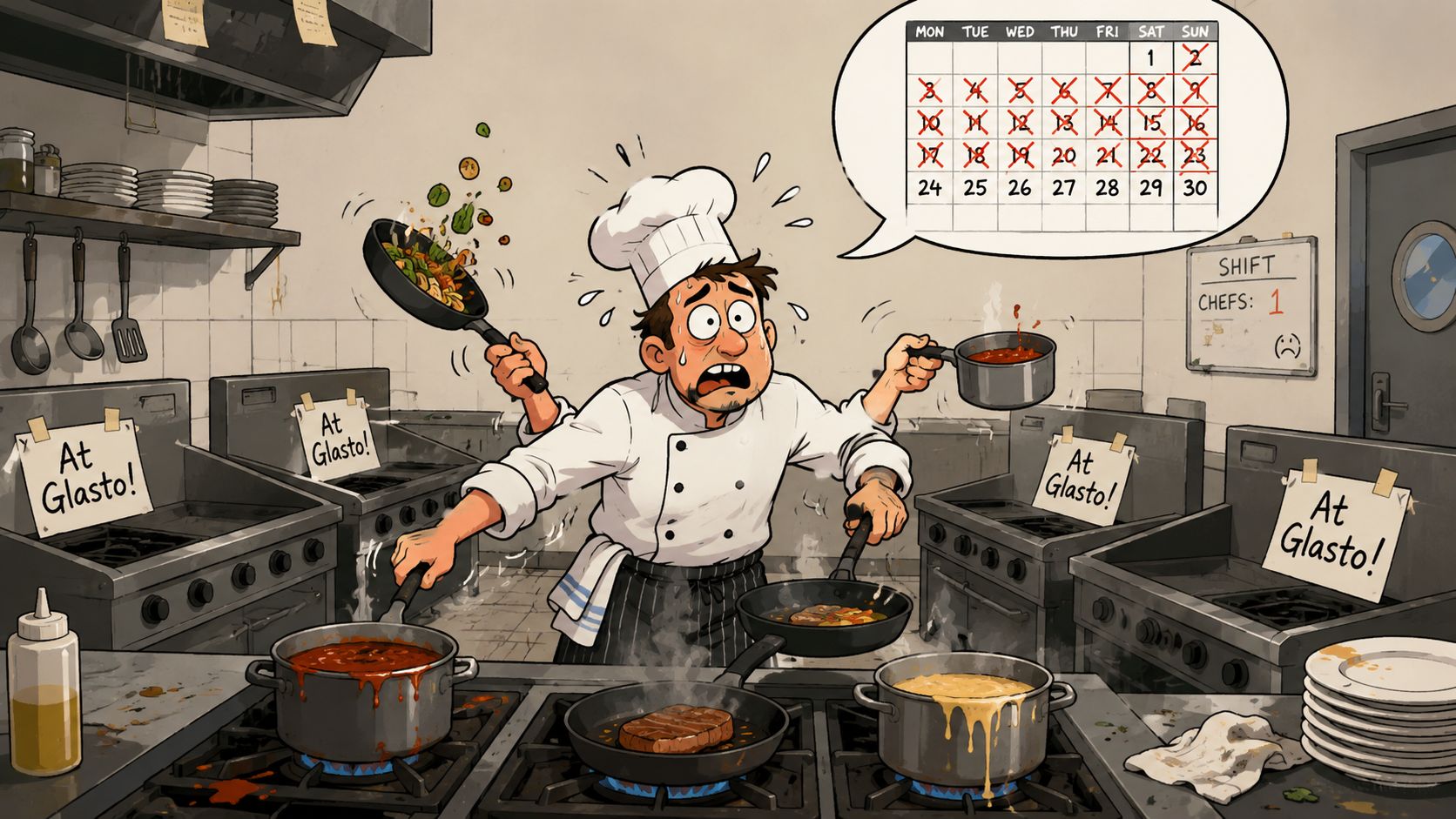
A thin brigade can absorb one planned holiday. It struggles when that holiday lands in a period already full of pressure. The sous chef covers prep. The head chef picks up ordering. A junior gets pushed onto a section too early. Front-of-house feels the drop in consistency before the kitchen says anything out loud.
Instability shows up fast
In most venues, the signs appear in a clear order.
- First comes fatigue. Senior people start plugging holes instead of leading service.
- Then standards loosen. Cleaning slips, handovers get shorter, and wastage creeps in.
- After that, morale turns. The staff who stayed feel they're carrying the team.
That last point matters. A kitchen can cope with hard work when it feels shared. It gets resentful when reliable staff think they're paying for someone else's summer plans.
The morale issue managers often miss
Festival work can create a low-level “why am I here?” mood among the team left behind. One person gets novelty, a change of scene, and a story to tell. The others get split shifts, extra covers, and cancelled days off.
That doesn't just affect June. It can affect retention later in the season, especially in independent businesses where every team member sees the pressure up close.
A stretched rota doesn't only damage service. It changes how good staff judge fairness.
Where managers go wrong
The common mistakes are operational, not emotional.
| Mistake | What happens next |
|---|---|
| Approving leave too late | You end up buying cover in a panic |
| Refusing every request outright | Staff disengage or leave later |
| Relying on favours | The same dependable people get overused |
| Ignoring post-event fatigue | Returning staff come back flat, tired, or unavailable |
A chef coming back from festival work may also need a reset before they're useful at normal level again. That's not criticism. It's just how intense temporary event work can be. Managers who roster them straight back into peak service often get a weaker shift than expected.
A steadier approach
The sensible line is balance.
Allow flexibility where you can. Protect service where you must. Put the business first without turning every request into a confrontation. If you don't, one staffing decision can push your whole kitchen into reactive mode just as trade improves.
How to Build a Resilient Rota with a Staffing Partner
The smartest way to handle Glastonbury pressure is to stop treating every June staffing issue as a one-off. It's a pattern. Patterns need systems.
A resilient rota starts before the request lands. You identify the dates that will be difficult, review likely weak points in the brigade, and decide which sections cannot be left exposed. For some sites that means breakfast and prep. For others it means pastry, banqueting, or a single key chef who carries too much of the operation.
Build cover around business risk
Start with a simple triage model.
Critical roles
These are the jobs that affect service immediately if uncovered. Head chef support, sous coverage, banqueting execution, and core line positions sit here.
Flexible roles
These are the shifts that can be redesigned for a few days. You may reduce menu complexity, shorten hours, or move labour between departments.
Non-negotiable dates
These are the periods where leave can't be approved without replacement already in place. Wedding weekends, race fixtures, local events, and peak holiday handovers belong in this category.
Once managers separate roles that are awkward from roles that are dangerous to lose, staffing decisions become much cleaner.
What a reliable staffing partner actually changes
A good staffing partner gives you options before the rota fails. Not generic names on a spreadsheet. Actual cover for actual pressure points.
That matters in several scenarios:
- Short-notice sickness when one absence lands on top of approved leave
- Seasonal demand spikes in places like Devon, Dorset, Bristol, and Wales where summer trade moves quickly
- Agency fatigue when venues are tired of last-minute cancellations and weak briefs
- Permanent gaps where the business has been carrying a vacancy too long
For many operators, the practical answer is a specialist hospitality staff agency with nationwide chef support, especially when kitchen stability matters more than chasing the cheapest shift rate.
The commercial benefit
Managers sometimes hesitate because they see outside cover as a cost. The actual cost is a poor service period in peak season.
If one missing chef leads to slower tickets, reduced menu execution, more guest complaints, and a burnt-out brigade, the damage is operational and financial. Stable cover protects revenue, reviews, and team retention.
Operational advice: Buy certainty early. Last-minute staffing nearly always costs more in quality, management time, or both.
The wider staffing picture
The strongest operators don't only solve today's gap. They also use quieter periods to strengthen the core team.
That means combining different staffing routes as needed:
- relief chefs for immediate gaps
- temporary chefs for planned leave and seasonal volume
- permanent chef recruitment where the brigade has a structural hole
- support for specialist placements such as yacht chefs, villa chefs, and wider hospitality staffing when the business model goes beyond a conventional kitchen
That layered approach is what keeps a venue steady through summer rather than merely open.
FAQs for Managers on Glastonbury Staffing
Is festival pay actually better than what I offer
Sometimes it looks better at first glance. But staff often compare the hourly figure and ignore the conditions. Festival roles can involve outdoor work, early starts, late finishes, and a more demanding setup than a standard kitchen shift. The better comparison is total working experience, reliability, progression, and how sustainable the work is across a full season.
How should I handle a chef asking for leave to work Glastonbury
Have the conversation early and keep it factual. Ask whether they've applied, whether dates are fixed, and whether they're willing to commit to return dates. Then decide based on business need, not frustration. If the role is critical, only approve leave when cover is secured.
Should I ban festival-related time off
Usually no. Blanket refusals often store up bigger retention problems. A clearer policy works better. Define blackout dates, decision deadlines, and the requirement for enough notice to arrange cover.
Can festival work help a chef develop
It can help with stamina, adaptability, and handling pressure in temporary teams. It is less likely to build the kind of structured kitchen standards most hotels, restaurants, and gastro pubs need day to day. Don't overvalue it, but don't dismiss it either.
What is the biggest risk to my operation
Unplanned overlap. One approved festival absence is manageable. One festival absence plus sickness plus peak bookings is where kitchens come unstuck.
When should I arrange backup
Earlier than feels necessary. If you already know late June is exposed, build your contingency before the rota starts wobbling.
If late June already looks fragile, get ahead of it now. Relief Chefs UK has supported hospitality businesses nationwide since 2013 with relief chefs, temporary chefs, permanent chef recruitment, yacht chefs, villa chefs, and wider hospitality staffing support. If you need dependable kitchen cover for seasonal pressure, short-notice sickness, or long-term brigade stability, contact Relief Chefs UK and secure the cover before service standards drop.
Call the team.
Office 01392 715474 · info@reliefchefs.co.uk