
Choosing a Freelance Chef Agency: A Manager’s Guide 2026
2 June 2026
Friday, 4pm. One chef has called in sick. Another's gone quiet on messages. You've got a full book, functions on, deliveries half checked in, and the KP can't bail you out of a service this size. That's when most operators realise a freelance chef agency isn't a convenience. It's part of business continuity.
A bad agency sends you a body in whites. A good one sends you someone who can walk in, read the board, hold a section, and stop your kitchen from slipping into chaos. That difference shows up in covers, refunds, staff morale, and online reviews by the end of the night.
Plenty of managers still buy chef cover on day rate alone. That's a mistake. The core of the decision is risk management. If your agency choice is weak, you pay for it in delayed prep, stressed teams, inconsistent food, compliance worries, and the very expensive reality of a half-functioning kitchen.
When Your Kitchen Needs a Freelance Chef Agency on Speed Dial
You don't usually start looking for agency support when things are calm. You start when the rota has fallen apart.
It might be a pub in Devon with a packed Sunday lunch and no grill chef. It might be a hotel in Berkshire with weddings on and a sous chef off for the weekend. It might be a Bristol restaurant heading into Friday service with one section uncovered and no realistic internal fix. Different postcode, same problem. You need someone competent, fast, and low drama.
This isn't bad luck. It's a market reality
The wider problem has been sitting there for years. The UK hospitality sector was already under pressure before Covid, with a workforce gap of about 60,000 chefs reported by the British Hospitality Association, which is why resilience staffing became a normal part of running kitchens, not a last-resort oddity, as noted in this UK chef shortage background.
That matters because it changes how you should think about agencies. You're not buying emergency labour. You're building a back-up system for a structurally short market.
If your kitchen can't absorb one absence without service risk, you don't have a staffing plan. You have a staffing hope.
What poor cover really costs
Managers often focus on whether they can get someone in. The sharper question is whether the wrong person will make the shift worse.
A weak freelance chef agency creates hidden costs such as:
- Slow confirmation: You waste hours ringing round while prep time disappears.
- Poor matching: A chef with hotel banqueting experience lands in a fast casual pass and struggles all service.
- No replacement process: If the chef isn't fit for the job, you're left carrying the problem.
- Thin vetting: Your senior team spends service babysitting instead of running the kitchen.
The agency fee is visible. The operational damage usually isn't until after the shift.
Think like an operator, not a buyer
The smart move is to have a freelance chef agency lined up before the panic starts. Keep one on speed dial. Test them on a lower-risk booking before your peak weekends hit. Use them for holiday cover, busy periods, and planned absences so you know what standard they deliver.
Relief Chefs UK has been established since 2013 and works across short-term cover, temporary chefs, permanent chef recruitment, yacht chefs, villa chefs, and broader hospitality staffing support. For venues that need nationwide coverage, that kind of range matters because staffing problems rarely stay neatly in one category.
If you run pubs, restaurants, hotels, or private hospitality operations in places like Wales, Dorset, Reading, Windsor, Slough, or Bristol, don't wait for the next walkout or sickness call. Sort the supply line before the pressure lands.
How to Spot a Genuinely Trustworthy Chef Agency
Most agencies sound reliable on the phone. That means nothing. Judge them by process.
If an agency can't explain exactly how they check compliance, assess kitchen ability, and handle problems when they happen, move on. You're not hiring copywriting. You're hiring risk control.
Start with non-negotiables
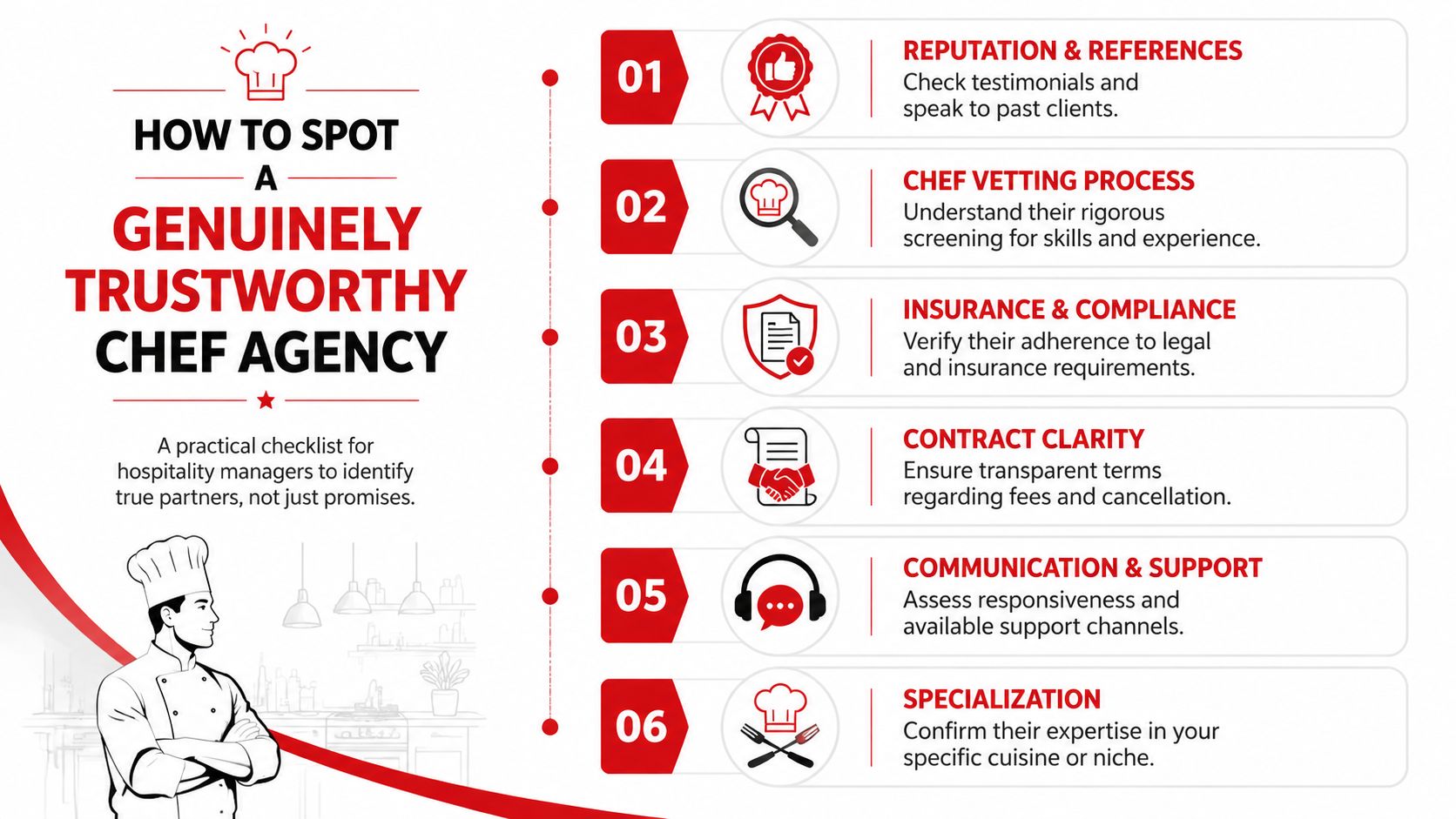
A proper agency should have a two-stage vetting process. First, they confirm legal and operational basics such as right-to-work and Food Hygiene Level 2. Then they validate performance with a paid trial shift. That standard matters in a tight market where 79% of hospitality firms were struggling to recruit in 2024, as outlined in this guidance on private chef recruitment and vetting.
That two-stage approach is the line between a real chef partner and a CV forwarding service.
Here's what I'd treat as mandatory:
- Right-to-work checks: If they're vague on this, stop the conversation.
- Food Hygiene Level 2 or equivalent: Basic but essential.
- Recent, relevant brigade experience: Not just “chef experience”. Relevant to your service style.
- Reference checks: Real conversations, not box ticking.
- Paid trial shift or practical validation: Kitchens expose the truth quickly.
Don't get fooled by a polished CV
A CV tells you where someone says they've worked. It doesn't tell you whether they can handle eight checks at once, keep section discipline, or stay calm when the docket machine starts screaming.
That's why practical validation matters more than nice formatting. A chef who can effectively run garnish in a busy hotel kitchen is worth far more than someone with better-looking paperwork and worse service habits.
Practical rule: If the agency sells hard but can't explain how they test chefs under live conditions, you're taking their risk onto your floor.
Ask what happens when it goes wrong
Even decent agencies get mismatches now and then. The difference is how they handle them.
Ask these questions plainly:
- What happens if the chef is late?
- What happens if the chef isn't the right fit?
- How quickly can you send replacement cover?
- Who answers the phone outside office hours?
- Do you understand my kitchen style, or are you just filling shifts?
If you're comparing providers, this chef employment agency guide is a useful benchmark for what a specialist chef staffing service should cover.
Reputation still matters
Talk to past clients if you can. Not just testimonials on a website. Actual operators.
Ask them whether the agency sent chefs who turned up prepared, fitted the brief, and reduced pressure on the permanent team. That's the standard. Not “they were nice”. Not “they tried hard”.
The Critical Questions to Ask Before You Commit
Picking a freelance chef agency without asking hard questions is how you end up paying premium rates for premium stress.
You need direct answers before the first booking, because once your kitchen is under pressure, you won't have time to argue over terms, chase updates, or fix a bad brief.

Ask about response and replacement, not just availability
The first question isn't “Do you have chefs?” Every agency says yes.
Ask this instead:
How fast can you confirm cover for my shift, and what's your replacement process if the chef doesn't work out?
That tells you whether they run an actual operation or just a contact list. Fast cover matters, but clean recovery matters just as much. If a chef no-shows, arrives underprepared, or can't hold the section, you need the agency to own the fix.
Get clear on matching
A lot of agency failures come from lazy matching.
A gastropub in Dorset needs something different from a boutique hotel in Windsor. A banqueting-heavy hotel in Reading needs a different chef from a seaside restaurant doing tight à la carte service in Wales. If the agency doesn't ask proper questions about menu style, service volume, section needs, equipment, and team structure, they're guessing.
Use this shortlist when you speak to them:
- Kitchen style: Pub, hotel, fine dining, events, care, private household, yacht.
- Role needed: CDP, sous, head chef, pastry, breakfast, banqueting, all-rounder.
- Service pressure: Steady trade, peak weekend, weddings, holiday rush, turnaround breakfast.
- Length of booking: One shift, one week, season, temp-to-perm.
Price the risk properly
Plenty of managers err by comparing day rates and stopping there.
The better way is to compare the agency fee against the cost of reduced service, a closed kitchen, overtime burn, or a rough guest experience. That's the true commercial test, especially when UK accommodation and food service vacancies remain structurally high, as discussed in this article on agency chef cost and ROI.
A cheap chef who can't cope is expensive. A pricier chef who protects service can be the better buy all day long.
Nail down terms before the panic booking
Don't leave these until later:
- Cancellation terms: What happens if trade changes?
- Minimum shift length: Does it fit your operation?
- Timesheets and invoicing: Who signs off and when?
- Temp-to-perm terms: Can you hire someone permanently if they're a fit?
- Out-of-hours support: Nights and weekends matter in hospitality.
If they dodge straightforward questions, that's your answer.
Good agencies welcome scrutiny. Weak ones hide behind vague promises, generic guarantees, and “we'll sort it”. That phrase usually means you'll sort it.
Best Practices for Booking and Onboarding Freelance Chefs
Once you've chosen your agency, don't sabotage the shift with a poor handover. Even a strong chef will lose time in a badly briefed kitchen.
Most booking problems start before the chef arrives. The venue gives half a brief, forgets key menu details, doesn't mention broken kit, then complains the chef wasn't a perfect fit. That's operator error.
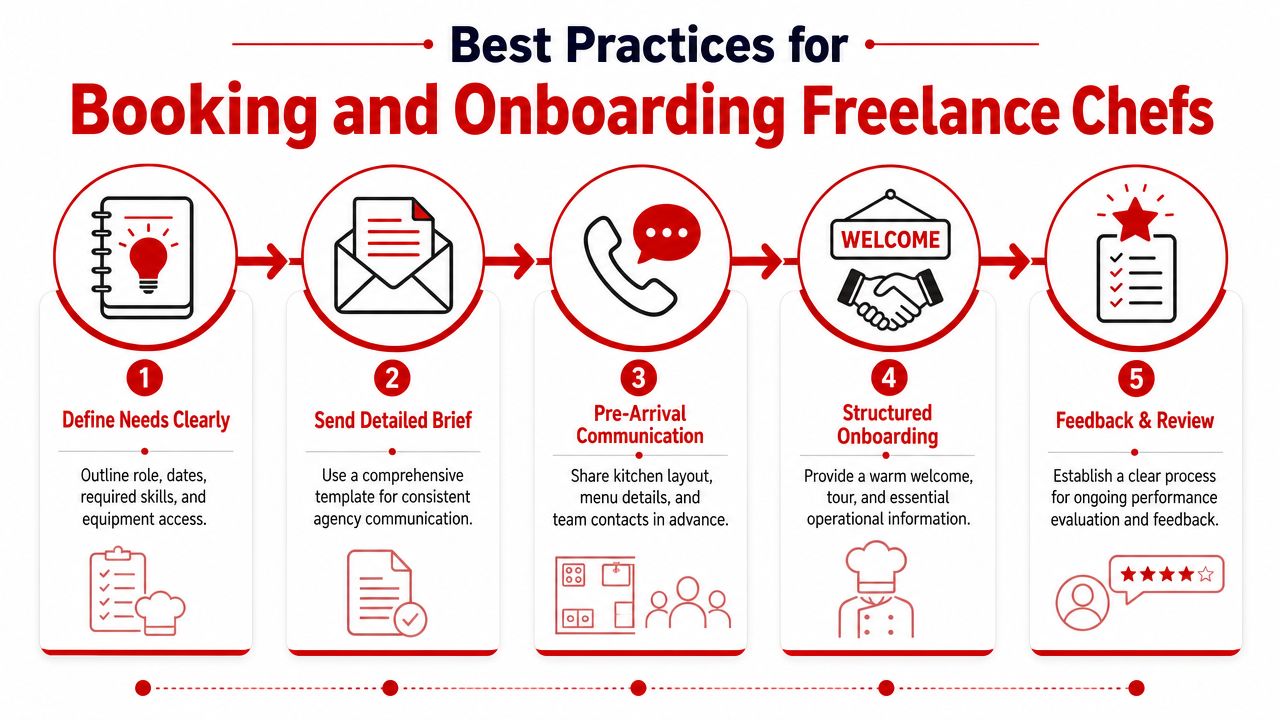
Send a proper brief
If you want a decent match, give the agency enough to work with.
Use something like this:
Shift brief template
Venue type and style
Role required
Dates and shift times
Section to be covered
Menu style and service format
Expected pressure points
Team size on shift
Any accommodation offered
Uniform and knife requirements
Site address, parking, and arrival contact
Short, clear, complete. That saves time on both sides and improves the match.
If you want a clearer sense of how temp agency working fits into practical chef cover, this guide to working with temp agencies covers the basics from an operational angle.
Set the chef up to succeed on arrival
Don't dump a freelancer into service blind.
Give them a rapid, structured start:
- Show the pass and section first: That's where orientation matters most.
- Explain the menu changes: Specials, allergens, prep gaps, sold-out items.
- Point out the non-obvious: Fridge layout, dry store, bin area, plating photos, probe location.
- Name the decision maker: Who they report to during service.
- Confirm standards quickly: Portioning, garnishes, ticket flow, cleaning routine.
Treat onboarding as part of service prep
A relief chef doesn't need a corporate induction. They need a sharp briefing and ten useful minutes.
A freelance chef can rescue your shift, but only if you give them the information your permanent team takes for granted.
The best venues also tell the existing brigade how to use the extra pair of hands. If your team sees the freelancer as an outsider, they'll hold back information and create friction. If they treat them as working support, the shift runs cleaner.
Finish with feedback
When service ends, don't leave it hanging. Tell the agency what worked, what didn't, and whether you'd book that chef again.
That feedback builds a better bench over time. It also helps the agency send you stronger fits on the next booking instead of starting from scratch every time.
Moving from Emergency Cover to Strategic Staffing
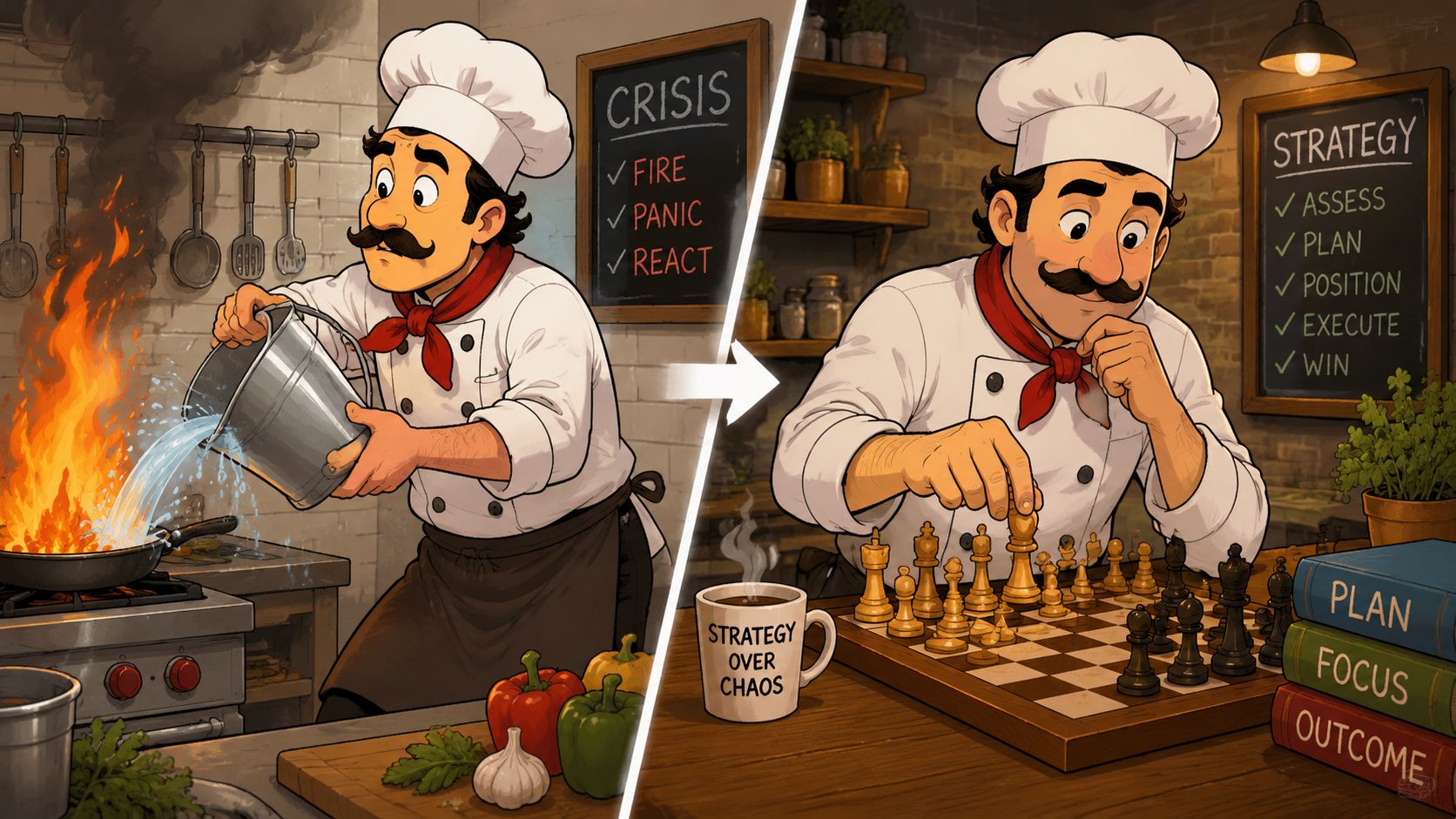
Reactive cover keeps the doors open. Strategic staffing protects margin, standards, and management sanity.
That shift matters because hospitality doesn't just suffer from one-off absences. It deals with recurring demand spikes, holiday gaps, turnover, and service pressure that lands in predictable waves. The Office for National Statistics has reported that accommodation and food service activities consistently face high vacancy pressure and seasonality, which is why flexible staffing has become a structural response rather than an occasional fix, as summarised in this discussion of UK hospitality vacancy pressure.
Use agency support before the rota breaks
The strongest operators don't wait for sickness to trigger a booking. They use agency cover for known pressure points.
Examples:
- Seasonal peaks in Dorset and Wales: Holiday trade surges. Core teams tire quickly.
- Planned leave: Holidays, parental leave, training weeks, and notice periods.
- Menu changes or relaunches: You may need a stronger section lead temporarily.
- New site openings: Early weeks often need extra support before permanent teams settle.
That's where a freelance chef agency becomes a planning tool, not a panic purchase.
Temp-to-perm is often the sensible move
If you've ever hired a chef off a polished interview and regretted it three services later, you already know why this matters.
A temporary booking lets you see how someone works. Can they organise themselves? Can they fit your pace? Can they communicate without drama? If they can, you've effectively trialled a permanent hire in live trading conditions.
That matters across all sorts of operations, from country house hotels to private staffing for villas and yachts, where technical ability and personal fit both count.
A short explainer is worth watching here:
Build a staffing mix that matches your reality
Most venues don't need one staffing model. They need a mix.
You might keep a core permanent brigade, use relief chefs for peak weekends, bring in temporary chefs during holiday periods, and rely on specialist recruitment support when replacing key roles. That's a more realistic setup for multi-site groups, independent hotels, and busy food-led pubs than pretending one rota structure will absorb every shock.
The operators who handle volatility best are usually the ones who stop treating staffing as a fixed cost and start treating it as controlled flexibility.
How to Measure Agency Performance and Build a True Partnership
If you never review your agency, you'll keep paying for the same avoidable problems.
A proper freelance chef agency relationship should improve with time. The brief gets tighter. The matches get better. The communication gets faster. If none of that is happening, you haven't got a partnership. You've got repeat transactions.
Judge performance on what affects service
Forget vague “satisfaction” talk. Track what matters on the floor.
Use a simple review set like this:
- Reliability: Did the chef turn up on time and ready?
- Fit: Could they handle the section and kitchen style?
- Pressure reduction: Did your senior team gain time or lose time managing them?
- Communication: Did the agency respond clearly and quickly?
- Rebook value: Would you ask for that chef again?
That tells you very quickly whether the agency is helping your operation or draining it.
Standardise the commercial side
You should also know exactly what you're paying and how the booking is structured. If pay, charge rates, and invoicing create confusion every week, friction builds fast between management, payroll, and the kitchen.
Clear terms around net and gross pay for chef agency work help operators avoid admin mess and pricing misunderstandings.
The right agency should reduce management load over time. If it creates more checking, chasing, and correcting, it's the wrong one.
Back one partner properly
Spreading bookings across several weak agencies often feels safer. In practice, it usually gives you inconsistent standards and no accountability.
A better approach is to work closely with one agency that learns your sites, your menu style, your non-negotiables, and the type of chef your team respects. That's how you move from random cover to a dependable staffing pipeline.
If you're still firefighting every rota gap as if it's a separate crisis, fix the system. Don't just patch the shift.
Frequently Asked Questions About Freelance Chef Agencies
When should I use a freelance chef agency instead of hiring permanently
Use a freelance chef agency when the risk sits in timing, uncertainty, or short-term pressure. Sickness, holiday cover, notice periods, seasonal peaks, functions, and relaunches all suit temporary support. Permanent hiring makes sense when the workload is stable and the role is clearly defined.
What should I send with my booking request
Send the role, shift times, section, menu style, expected service pressure, site details, uniform requirements, and who the chef reports to. The more accurate the brief, the better the match. Vague requests create weak placements.
Can a relief chef actually protect standards in a busy service
Yes, if the agency has vetted properly and matched properly. No, if they've just filled a gap with whoever was free. The difference comes down to compliance, relevant experience, and whether the chef can settle into your kitchen rhythm quickly.
Is the cheapest agency rate ever the right choice
Rarely. A low rate can hide weak screening, poor communication, and zero replacement support. If the chef slows service, misses standards, or needs hand-holding all shift, the “saving” disappears.
What types of venues use freelance chefs
Food-led pubs, restaurants, boutique hotels, event venues, private households, yachts, villas, and multi-site hospitality groups all use them. Any operation that can't afford service disruption can benefit from flexible cover.
How do I know if an agency understands my kitchen
Listen to their questions. If they ask about section, menu style, service format, volume, team structure, and the actual problem you're solving, they probably know the trade. If they only ask for dates and rates, they're selling labour, not solving kitchen problems.
Should I keep using more than one agency
Only if there's a clear reason. Most venues do better with one reliable partner that learns the site and sends stronger matches over time. Multiple agencies can create inconsistency, duplicated admin, and no real accountability.
If you want fewer rota emergencies, better chef cover, and a staffing setup that protects service, contact Relief Chefs UK. Whether you need relief chefs, temporary chefs, permanent chef recruitment, yacht chefs, villa chefs, or wider hospitality staffing support, get in touch and sort the problem before the next shift goes sideways.
Call the team.
Office 01392 715474 · info@reliefchefs.co.uk