
Let's be honest: running a hospitality venue in the UK feels like you're constantly fighting fires. You’re stretched thin dealing with last-minute call-outs, a revolving door of staff, and costs that just keep climbing. This isn’t a theoretical guide. It’s a lifeline from people who have stood exactly where you are, and it’s packed with solutions that actually work.
The Reality of Hospitality Staffing Today
It’s a familiar, sinking feeling. Friday night, the dockets are flying, and a key team member calls in sick. The whole operation starts to creak. Service slows down, stress shoots through the roof, and the quality you’ve worked so hard for begins to slide. For too many managers, this isn't a rare emergency anymore. It’s just another week.
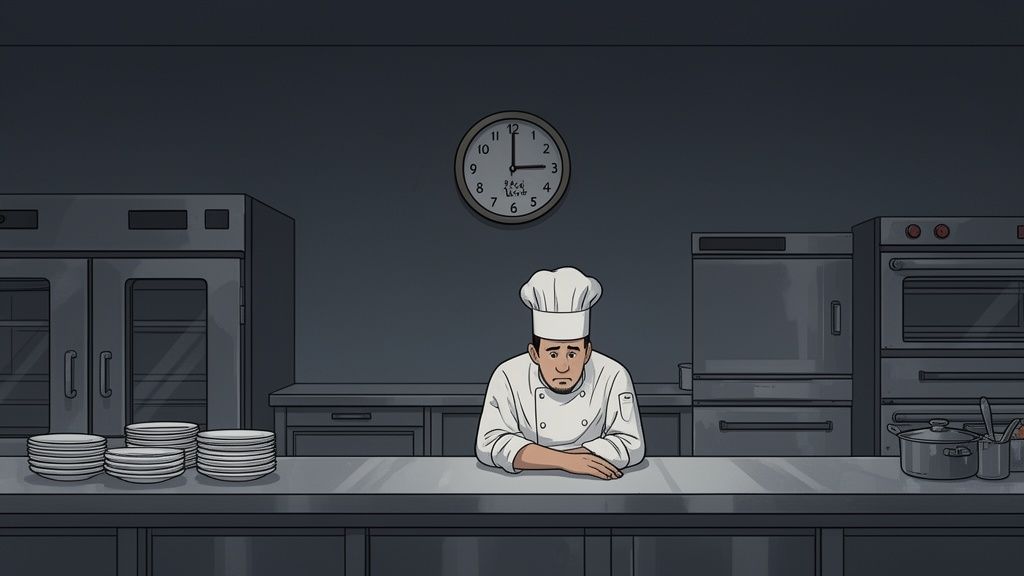
The root of the problem is a perfect storm: immense pressure on the floor and a talent pool that keeps getting smaller. Finding, training, and holding onto good hospitality staff has become the single biggest headache in the industry. We all dread the empty kitchen, but the issue goes far deeper than just covering one shift.
The Shrinking Talent Pool
The numbers don't lie. The UK's hospitality sector lost a staggering 59,000 workers over the last 12 months alone, making it the hardest-hit industry in the country. This isn't just a headline; it's a brutal reality for independent pubs, restaurants, and hotels, confirmed by the latest Office for National Statistics (ONS) data.
This mass exit creates a domino effect. Fewer good people means you’re spending longer trying to hire, and you’re competing fiercely for anyone with real experience. The result? Venues are forced to take a gamble on less experienced staff, which puts a massive strain on your senior team who have to carry the extra weight.
The True Cost of Staffing Gaps
Gaps in the rota don't just cause stress—they hit your bottom line, hard. An overworked team burns out fast, which is why staff turnover is so high. The endless cycle of recruiting, hiring, and training isn't just a drain on your time; it's incredibly expensive.
The constant scramble to fill rota gaps forces managers into reactive, short-term fixes. This firefighting approach is completely unsustainable. It kills morale and, eventually, the guest experience.
This guide goes beyond just pointing out the problems. We're going to break down the essential roles that make a venue tick, get to the real causes of your staffing issues, and give you practical strategies for hiring and retention. We’ll also show you when to bring in flexible support. To see the full financial picture, check out our guide on the hidden costs of employing hospitality staff.
Understanding Your Front and Back of House Teams
Every successful service runs on two distinct teams working in perfect sync. Think of it like this: your venue is a high-performance machine. To keep it running smoothly, you need to understand both the customer-facing parts and the engine that powers them—your Front of House and Back of House.
Seeing your operation this way stops you from thinking in job titles and starts you thinking about systems. The two crews are completely codependent. One can’t function without the other, and if one side fails, the entire guest experience grinds to a halt.
Front of House: The Face of the Operation
Your Front of House (FOH) team is your brand in the eyes of the guest. They are the first and last impression, and they control the entire customer experience from the moment someone walks through the door.
This team isn’t just there to take orders and deliver plates. They are responsible for the atmosphere, for managing expectations, and for turning a simple meal into a memorable event. A strong FOH team builds relationships that bring people back.
Key roles on the floor usually include:
- Restaurant or General Manager: The director of the whole show. They oversee every aspect of the service, manage the staff, and are the ultimate problem-solvers.
- Waiting Staff: Your primary actors. They are the main point of contact for guests, taking orders, serving, and shaping the dining experience table by table.
- Bartenders and Bar Staff: These specialists don't just pour drinks; they run a critical revenue centre, engage with customers, and often set the energy for the entire venue.
- Hosts and Hostesses: They control the flow of the room. A good host manages reservations, prevents bottlenecks, and makes guests feel welcome from the second they arrive.
- Sommeliers: The wine experts who elevate the guest experience and increase spend per head by guiding diners to the perfect pairing.
Back of House: The Engine Room
If the FOH is the public-facing part of the machine, the Back of House (BOH) is its high-pressure engine. This is where your core product—the food—is actually made. Hidden from the guest, the skill and speed of the BOH team define the quality of everything that lands on the table.
A professional kitchen is a hierarchy built for speed and precision. Every station has a purpose. If one person falls behind, the entire line can collapse during a busy service.
This structure, the classic kitchen brigade system, exists for one reason: to produce consistent, high-quality food under immense pressure. Your BOH team is the foundation of your reputation.
The traditional BOH brigade includes:
- Executive Chef or Head Chef: The chief engineer. They design the menu, manage costs, lead the team, and carry the ultimate responsibility for the kitchen's output.
- Sous Chef: The second-in-command. They run the day-to-day operations and take charge of the kitchen when the Head Chef is absent.
- Chef de Partie (Station Chefs): These are the line cooks, each owning a specific station like grill, sauce, or pastry. They are the backbone of the production line.
- Commis Chef: The junior chefs who support the Chefs de Partie. They learn the trade by rotating through the different stations, building their skills.
- Kitchen Porter: The unsung heroes of the BOH. They keep the engine clean and running by managing the wash-up and ensuring the kitchen stays organised and hygienic.
Why Finding Good Hospitality Staff Is So Difficult
If you feel like you’re stuck in a permanent cycle of hiring, training, and losing people, you’re not imagining it. The fight to find and keep good hospitality staff has become one of the biggest operational headaches in the UK. This isn’t bad luck; it’s a systemic problem.
Let's break down the three core challenges every manager is up against. Once you understand the ‘why’ behind your staffing problems, you can stop firefighting and start building a more resilient team.
The Crippling Effect of Staff Turnover
First, there's retention. The industry has always had high staff turnover, but the problem is getting worse. Experienced people are leaving hospitality for good, and fewer new recruits see it as a long-term career.
While the UK hospitality workforce might hit 1.853 million by the end of 2024, keeping those people is the real challenge. A shocking 32% of staff are already thinking about leaving within the next two years. The reasons are no surprise: an 'unhealthy culture' and 'work-life imbalance' are the main drivers, creating a constant drain on talent. You can see the full breakdown of these retention issues in the latest hospitality snapshot from New Possible.
This 'revolving door' is incredibly expensive. Constant recruitment burns through your budget, while losing experienced staff hits morale and service quality hard. Every time a good employee walks out, their knowledge and guest relationships go with them.
The following chart shows the distinct teams within a venue, highlighting how turnover in one area ripples through the entire operation.
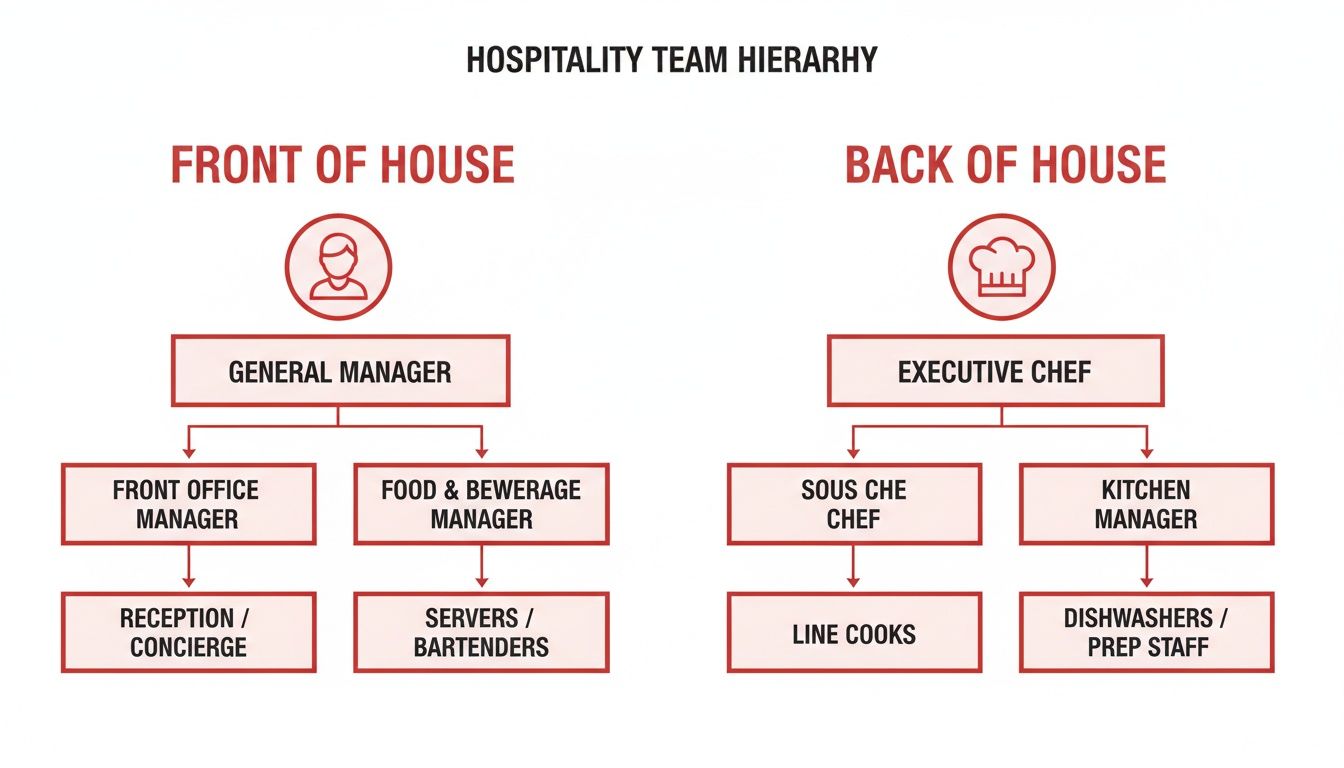
This visual shows the clear structure of Front and Back of House, underscoring just how much they depend on each other for a smooth service.
The Boom-and-Bust Seasonal Cycle
The second major hurdle is seasonality. Hospitality isn't a nine-to-five job. Demand swings wildly, from the summer rush and Christmas chaos to the dead spells in January. This creates a constant staffing dilemma.
Do you hire enough permanent staff to cover your busiest day, leaving you overstaffed and over-budget during quiet periods? Or do you run a lean core team, leaving yourself scrambling and unprepared when a sudden heatwave fills your beer garden?
This boom-and-bust cycle forces managers into a lose-lose situation. You are either paying for staff you don’t need or losing revenue because you can’t meet customer demand.
This is where a flexible staffing strategy is essential. Relying only on permanent hires for a business with fluctuating demand is like trying to fit a square peg in a round hole. It’s an inefficient model that puts huge pressure on your budget and your core team.
The Widening Skills Gap
Finally, there’s the skills gap. It’s real, and it’s especially bad in the kitchen. Finding a genuinely skilled and experienced Chef de Partie or Sous Chef has become incredibly difficult. Years of churn have thinned the ranks of mid-level and senior chefs.
This shortage hits your business directly:
- Quality and Consistency: Without experienced hands, keeping food quality consistent becomes a daily fight.
- Training Burden: Your Head Chef ends up spending more time training junior cooks than creating new dishes, which just leads to their own burnout.
- Menu Limitations: You’re forced to simplify your menu or avoid ambitious dishes because you don't have the technical skill in the kitchen to pull them off.
This skills gap means that even when you can find people, they often don’t have the experience to perform at the level you need. This just puts more strain on your existing senior staff, speeding up the cycle of burnout and turnover.
How to Hire and Vet Your Permanent Team
Hiring your permanent team isn't just about filling a rota—it's the single most important decision you'll make for the long-term health of your business. Think of it as building the core of your brigade. You need professionals who have the skills, of course, but more importantly, who are committed to your standards and fit the culture of your kitchen or floor.
Getting this right from the start means moving past the old way of just posting a list of duties. It’s about building a solid, motivated team that delivers the kind of service that turns first-time visitors into regulars. A stable crew is your best defence against the constant, exhausting cycle of reactive hiring.
Craft Job Descriptions That Attract the Right People
Your job description is a sales pitch, plain and simple. A boring, generic list of tasks will only ever attract uninspired candidates who just need a paycheque. To get the best people, you need to sell them on your vision.
Lead with your 'why'. Don't start with the duties. Start with what makes you different. Are you a gastropub obsessed with local suppliers? A boutique hotel that prides itself on knowing guests by name? This is what gets a great candidate to actually read the rest of the ad.
Describe the team they're joining. Talk about the reality of the environment. Mention the fast-paced, collaborative spirit in the kitchen or the friendly competition your bar team has to create the cocktail of the week. Let them picture themselves there.
Show them a future. Good people want to grow. Mention on-the-job training, mentorship from your senior staff, or the chance to help shape the menu. This proves you’re willing to invest in their career, not just rent their time.
A well-written job description acts as a filter. It weeds out the people looking for any job and pulls in the ones looking for your job. For a solid template, our guide on crafting a compelling barman job description can easily be adapted for any role.
Interview for Skills and Cultural Fit
The interview is where you look past the CV. Technical skills are easy to list, but it’s a candidate's attitude and personality that determine if they'll be an asset or a liability. A brilliant but toxic chef can poison an entire team faster than an inexperienced commis who’s keen to learn.
Use a few different tactics to get the full picture:
Behavioural Questions: Ditch the hypotheticals and ask for real-world examples. "Tell me about a time you had to deal with a complaint," or "Describe a situation where you disagreed with a colleague on service." Their past behaviour is the best predictor of their future performance.
Working Trials (Stages): For any kitchen or bar role, a paid working trial is non-negotiable. It’s the only way to see how they handle pressure, their real speed, their cleanliness, and how they communicate with the rest of your team.
Ask About Their Goals: A simple question like, "Where do you want to be in two years?" tells you everything about their ambition. It helps you see if you can offer a genuine career path, which is the secret to keeping your best people from leaving.
A candidate's personality and their ability to slot into your existing team are just as important as their technical skills. One bad apple really can spoil the bunch, so hire for attitude as much as you hire for aptitude.
The Non-Negotiable Vetting Process
Finally, never, ever skip the final checks. It doesn’t matter how well the interview or trial went. This is the due diligence that protects your business, your team, and your reputation.
Your vetting process must include thorough reference checks. Don't just tick a box. Actually speak to their previous employers to confirm their work history, reliability, and attitude. Alongside this, a UK Right to Work check is a legal requirement you cannot ignore. Failing to do this can lead to massive fines.
These two steps are your final safety net. They ensure your new hire isn’t just good on paper, but is credible, reliable, and legally cleared to work.
Proven Strategies to Keep Your Best People
Getting good people through the door is one thing. Keeping them is another. The constant cycle of hiring and training new hospitality staff drains time, money, and morale. The real win isn’t just filling a rota; it’s building a team that wants to stay.
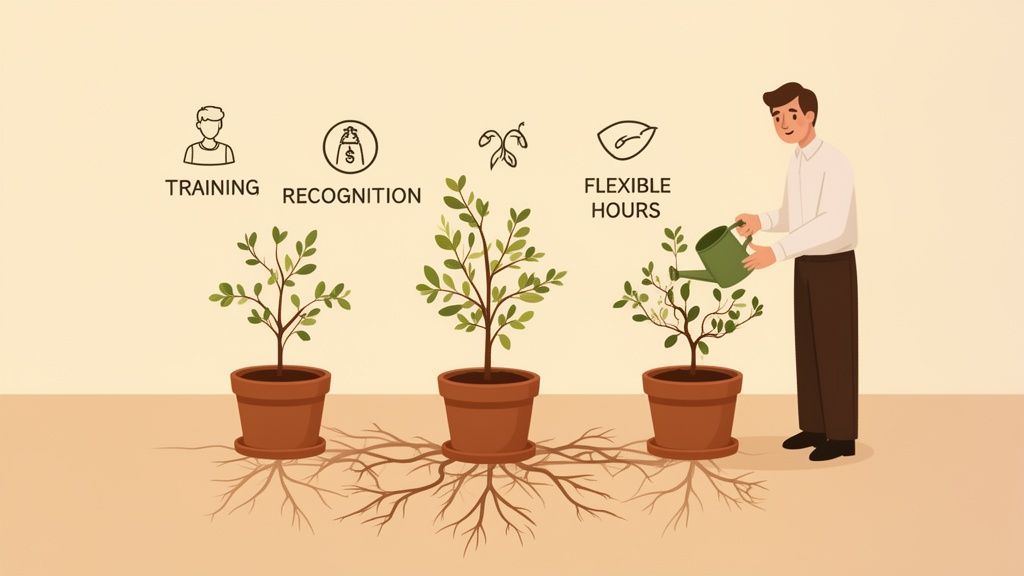
Think of your team as an investment. You don’t just hire them and hope for the best. You have to actively support them with real opportunities, solid support, and a reason to care. A stable team isn't just less stressed and more productive—they deliver the kind of guest experience that builds a reputation.
Fix The Culture, Not Just the Rota
Culture isn’t a mission statement stuck on the breakroom wall. It’s what happens during a chaotic Saturday night service. It’s how a manager corrects a mistake without humiliation, and whether staff feel like valued team members or disposable hands.
A good culture is built on respect and clear communication. That means having check-ins that are more than just a rota discussion. It means creating a way for staff to give honest feedback without worrying about their next shift. A kitchen run on shouting will always be looking for chefs.
This is even more vital right now. The current economic strain is immense, with UK hospitality losing a staggering 8,784 jobs between November and December 2025 alone due to a crushing 'cumulative tax burden'. As venues are forced to make cuts, holding onto your core team is no longer a goal—it's a survival strategy. You can read the full analysis of these job losses on UKHospitality's website.
Offer a Career, Not Just a Job
A competitive wage is the bare minimum, but it’s rarely what makes great people stay. The best staff are looking for flexibility and a sense of forward momentum. They want to know their hard work leads somewhere.
A job is just a job. A career is a path forward. The best employers understand this and invest in their people's growth, turning a short-term role into a long-term commitment.
Look beyond the payslip. What else can you offer?
- Flexible Scheduling: Can you offer more predictable hours? Can you work with your team to create a rota that supports a decent work-life balance? This is a massive advantage.
- Real Training Opportunities: Show you’re invested in them. Send a promising commis chef on a butchery course. Pay for your bar team to do a mixology masterclass. It proves you see a future for them in your business.
- Clear Progression Paths: Don’t let good people feel stuck. Show your kitchen porter a clear and achievable path to becoming a commis chef. When people see a future, they’re far more likely to stick around for it.
- Staff Discounts and Meals: Small perks go a long way. A staff meal and a discount make your team feel like they're part of the family, not just employees.
Acknowledge Good Work—It Costs Nothing
Never, ever underestimate the power of a simple, genuine "thank you." Recognition is one of the most effective and least expensive tools you have. When someone goes the extra mile, make sure they know you noticed.
This doesn’t have to be a formal bonus scheme. Publicly praise a team member in the pre-shift briefing for how they handled a difficult guest. Celebrate work anniversaries. Create an 'employee of the month' that comes with a real reward, like a gift voucher or the best parking spot.
When you focus on building a strong culture, offering real benefits, and consistently recognising hard work, you stop the revolving door. Your staffing shifts from being a constant headache to becoming your single greatest asset.
When to Use a Relief Staffing Partner
Building a great permanent team is the goal, but relying only on full-time hospitality staff can leave your business dangerously rigid. A permanent hire isn't always the right answer, especially when you're facing a problem today.
This is where a relief staffing partner becomes one of the most important tools in your toolkit.
Think of it like having a specialist on call. You don't hire a full-time plumber just in case a pipe bursts. You have a reliable expert you can ring up when disaster strikes. A relief partner works the same way, delivering immediate, vetted expertise to solve specific problems without the long-term overheads.
Covering Unexpected Absences
It’s the scenario every manager dreads. A key chef calls in sick an hour before a fully booked Friday night service. A single no-show can cripple the kitchen, forcing you to slash the menu, compromise on quality, or even turn paying customers away.
This is the number one reason venues call for relief. A good partner can have a vetted, experienced chef on their way to your kitchen in hours. This isn’t just about filling a space; it’s about guaranteeing service continuity and protecting your reputation when you're most vulnerable.
Managing Seasonal Peaks and Troughs
Hospitality is a business of extremes. You have the frantic Christmas party season and the summer wedding rush, then the quiet Tuesdays in January when the restaurant is half-empty.
If you hire permanent staff to cover your busiest day of the year, you’ll be haemorrhaging money during the quiet months. But running too lean means you’re overwhelmed and burning out your team when demand surges. A relief partner lets you scale your team up and down strategically.
- Ramp Up for Peak Season: Bring in an extra Chef de Partie or two for the summer months without committing to a year-round salary.
- Scale Down in Quiet Times: Lean on your core team during slow periods, keeping your wage bill efficient.
This flexible approach ensures you always have the right number of staff for the trade you’re doing, optimising your labour costs all year round.
Partnering with a relief agency gives you an elastic workforce. You gain the ability to expand and contract your team based on real-time demand, turning a fixed labour cost into a flexible operational expense.
Bridging the Gap During Permanent Hiring
Finding the perfect Head Chef or Sous Chef takes time. You can’t afford to rush such a critical decision, but you also can’t afford to leave that position empty for weeks or months. An empty leadership role puts huge pressure on the rest of the brigade and standards inevitably start to slip.
Using an experienced relief chef to fill that gap is the ideal solution. They can step in, maintain stability, uphold standards, and keep the kitchen running smoothly while you take the time to find the right long-term fit. It stops you from making a panic hire you'll regret. If you're in this boat, it's worth seeing how a temporary agency chef can provide this crucial support.
Testing New Concepts Without Risk
Thinking about launching a new menu, opening for brunch, or trying out a pop-up food concept? These moves come with a lot of uncertainty. Hiring permanent staff before you've even proven the idea is a massive financial gamble.
A relief chef lets you test the waters with almost zero commitment. Bring in a specialist for a few weeks to help develop and execute a new menu. If it's a hit, you can confidently hire a full-time team member. If it doesn't work out, you simply end the contract with no strings attached. It makes innovation much safer.
Choosing the right approach—hiring a permanent team member versus bringing in a relief partner—depends entirely on the problem you're trying to solve. One offers long-term stability, while the other provides speed and flexibility.
Hiring Full-Time vs Using a Relief Partner
| Factor | Permanent Hire | Relief Chef Partner (e.g., Relief Chefs UK) |
|---|---|---|
| Speed | Slow: 4-8 weeks to find, interview, and onboard. | Fast: Vetted chefs can be on-site in hours. |
| Cost | High upfront: Recruitment fees, salary, NI, pension. | No upfront costs: Pay a simple day or hourly rate. |
| Commitment | Long-term: Employment contracts, notice periods. | Flexible: Book for a single shift, a week, or a season. |
| Flexibility | Low: Fixed rota and hours. | High: Scale your team up or down based on daily demand. |
| Best For | Building a core team, filling key leadership roles. | Covering sickness, managing seasonal peaks, bridging hiring gaps. |
Ultimately, a permanent team is your foundation, but a relief partner is your insurance policy. Smart operators know they need both to run a resilient and profitable business.
Your Essential Hospitality Staffing Checklist
All the strategies we’ve talked about boil down to one thing: making deliberate, intelligent decisions about your team.
This checklist isn't just theory. It's a set of immediate, practical questions to ask yourself. Use it as a quick audit to see where the cracks are in your current staffing plan and where you can make the biggest impact. Stop reacting to problems and start building a team that's genuinely resilient.
Evaluate Your Staffing Mix
Take a hard look at your rota from the last month. Forget what you think it looks like. What do the numbers actually say about your ratio of core permanent staff to flexible, temporary cover?
- Core Staff Ratio: Is your permanent team lean and efficient? Or are you paying for overstaffing during quiet periods, watching your budget bleed out on an empty floor?
- Flexibility Gaps: When was the last time a no-show or a surprise rush left you short-staffed and scrambling? How much potential revenue walked out the door because service slowed to a crawl?
- Contingency Plan: What happens—honestly—if your lead chef calls in sick tomorrow morning? Having a relief partner on standby isn’t a luxury; it’s a non-negotiable part of running a modern kitchen.
Review Your Retention Efforts
It’s always, always cheaper to keep good people than to find new ones. You have to be honest with yourself about what it’s really like to work in your venue.
- Identify Your Biggest Pain Point: Is it the brutal hours? The dead-end career path? A toxic, high-stress environment? The only way to know for sure is to ask your team directly.
- Measure Your Investment: Look beyond the wage bill. What are you actively doing to invest in your people’s well-being and their professional growth?
- Recognise Good Work: How often do you genuinely stop to acknowledge and reward your team’s hard work? A simple "thank you" or a small, meaningful gesture can make a massive difference to morale.
Building a strong team is not a one-off task. It’s a constant process of assessment, adjustment, and being honest about what’s working and what isn’t. This checklist is your starting point for creating a more stable, profitable, and less stressful operation.
Don't let staff shortages dictate your success. Relief Chefs UK provides vetted, reliable chefs to keep your kitchen running smoothly, whether you need emergency cover or seasonal support. Find your chef now.