
A well-written job description for a catering assistant is your first move in attracting the reliable, proactive people who become the backbone of your kitchen. This role is so much more than chopping vegetables; it’s about supporting the entire culinary operation to make sure service runs smoothly and guests leave happy.
The True Role of a Modern Catering Assistant
Think of your kitchen team like a high-performance racing crew. The head chef might be the star driver, but the catering assistant is the indispensable pit crew, working tirelessly behind the scenes so everything runs at peak efficiency. Their work directly impacts the speed, safety, and final outcome of the race—or in this case, the dining experience.
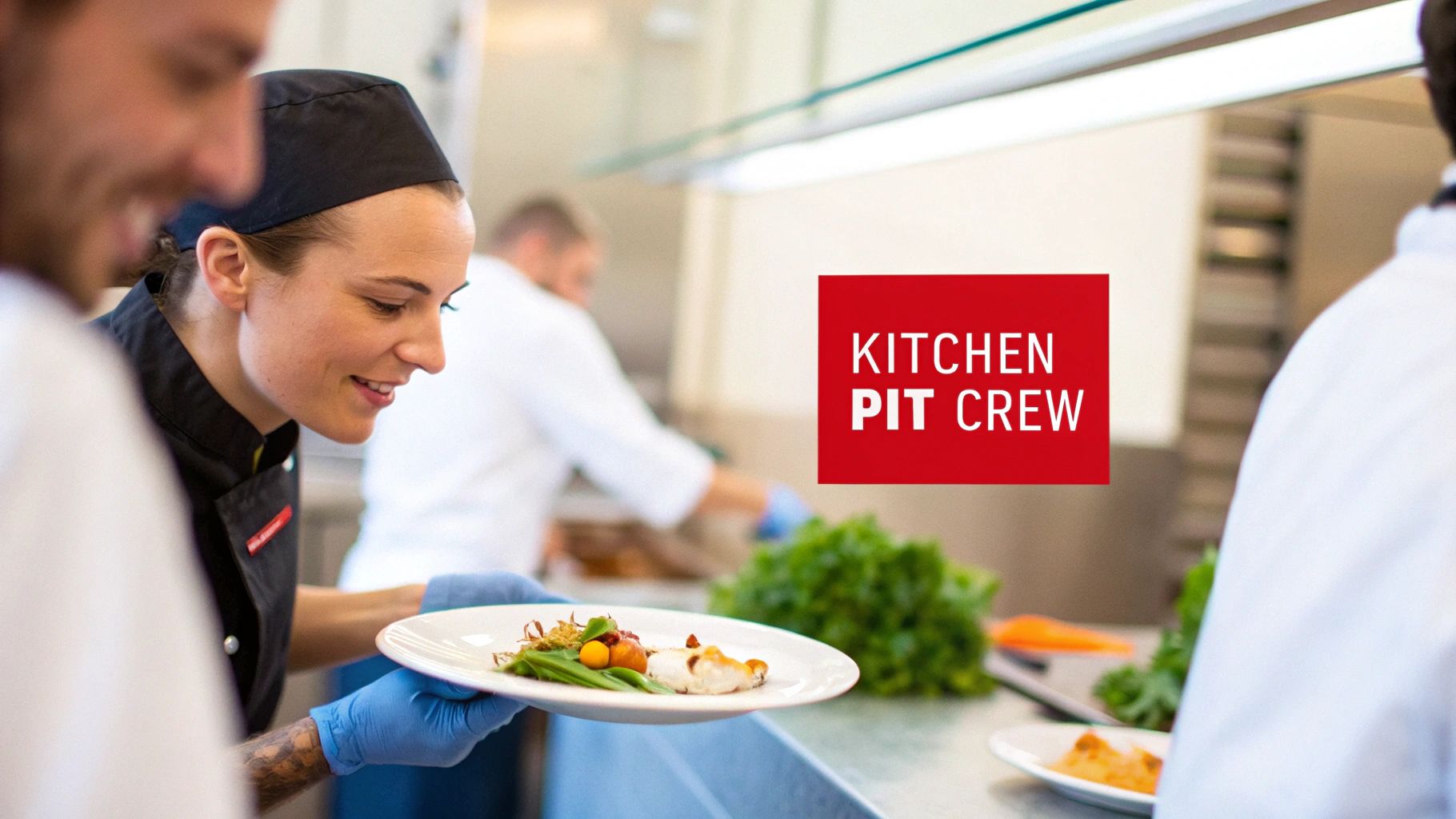
This foundational importance is often overlooked. A great catering assistant doesn’t just follow instructions. They anticipate what the chefs need, keep hygiene standards impeccable, and provide crucial support when the pressure is on. They are the invisible thread that holds the whole operation together.
More Than Just an Extra Pair of Hands
Hiring the right person for this role can genuinely transform your kitchen's dynamic. Their responsibilities go far beyond basic food prep and have a direct impact on your business's bottom line in several key areas:
- Kitchen Efficiency: By handling the essential prep tasks (mise en place), they free up senior chefs to focus on more complex work. This simple act massively increases the kitchen's overall productivity.
- Hygiene and Safety: They are your frontline defence for upholding food safety regulations. From correct storage to keeping work areas spotless, their diligence is non-negotiable in any professional kitchen.
- Service Support: During busy periods, they often help with plating, running food, and making sure the service area is stocked and organised. This prevents bottlenecks and keeps service flowing. It’s especially vital when you need dependable cover; knowing how agency staff can cover long-term leave gives you a valuable backup plan.
A proactive catering assistant becomes an extension of the chef's vision, ensuring every component is in place for a flawless service. They are the guardians of consistency and the engine of a well-run kitchen.
Understanding this broader impact is the first step. It helps you write a job description that attracts candidates who see the value they can bring, not just a list of tasks to tick off.
Breaking Down Core Responsibilities and Daily Duties
To write a job description that attracts the right people, you have to go beyond a simple task list. Think about the catering assistant's real impact on your operation. Their day is a constant mix of prep, service, and organisation, and if one part fails, the entire guest experience feels it.
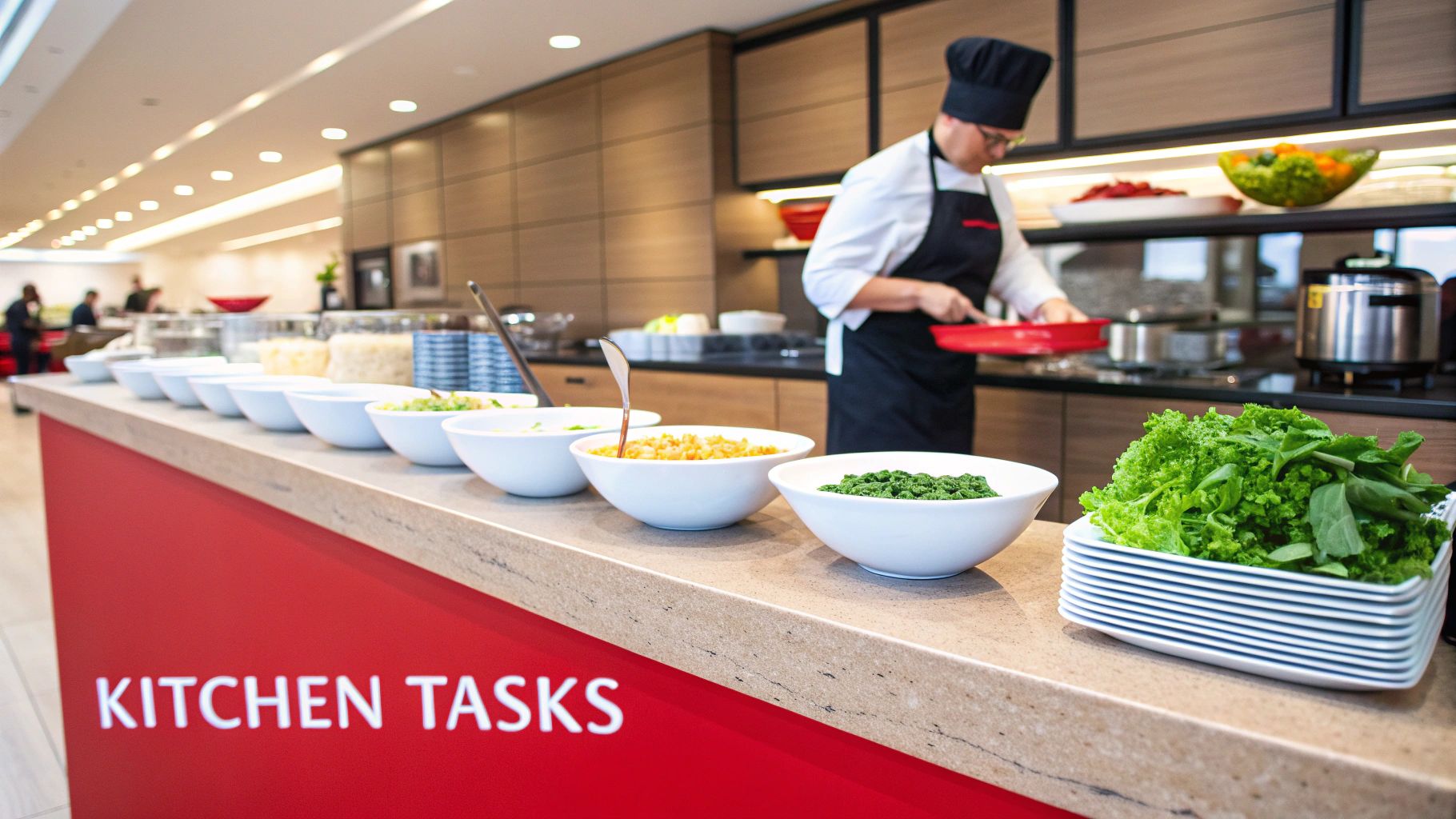
When you break their duties down into a few core areas, it becomes much easier to explain what you need. This structure helps you set clear expectations and find candidates who actually understand the rhythm of a professional kitchen.
Food Preparation and Chef Support
This is the foundation of the role. A good catering assistant is the chef's right hand, doing the essential groundwork that makes a fast, consistent service possible. Think of them as setting the stage before the main performance begins.
Their support isn't just about chopping onions. It’s about seeing the flow of the kitchen and thinking one step ahead.
Key duties here usually involve:
- Mise en Place: Helping with all the ingredient prep—washing, peeling, and chopping veg, weighing out spices, or making basic sauces and marinades.
- Basic Cooking Tasks: Handling simple cooking jobs under supervision, like putting together salads, plating up starters, or using standard kitchen equipment.
- Stock Management: Unloading deliveries, checking the quality of produce, and storing everything correctly to meet food safety standards. This keeps ingredients fresh and cuts down on waste.
Service and Guest-Facing Assistance
While most of their work is behind the scenes, a catering assistant often becomes the bridge between the kitchen and the dining room, especially during a busy event. They make sure the standards set by the chef are carried all the way to the guest’s table.
A catering assistant who moves with purpose during service can be the difference between a smooth operation and a chaotic one. Their support is the glue that binds the kitchen and service teams.
This guest-facing side of the job demands a different skillset. It's about being efficient while staying professional and friendly.
For instance, their responsibilities might include:
- Buffet and Station Management: Setting up, stocking, and maintaining buffet lines or food stations, keeping them clean, presentable, and full throughout the service.
- Food Running: Carrying plates from the kitchen to the dining area, making sure the right orders get to the right tables quickly.
- Clearing and Resetting: Helping clear tables, resetting them for new guests, and generally keeping the dining space tidy.
Kitchen Hygiene and Organisation
This might be their most critical responsibility: keeping the kitchen spotless and organised. A clean, hygienic kitchen is a safe and efficient one. The catering assistant is often the main person responsible for this, handling tasks that are non-negotiable for any reputable food business.
This is more than just washing up. It means following a system for kitchen maintenance and ensuring compliance with UK food hygiene regulations at all times. Their work here protects your customers, your staff, and your reputation, making it a cornerstone of the job description of a catering assistant.
What to Look For: The Skills That Really Matter
When you're hiring a catering assistant, a CV only tells you half the story. The best candidates have a mix of practical skills and the right attitude for a high-pressure kitchen. You can teach someone how to chop an onion, but you can't teach them to stay calm when the tickets start piling up. Getting this balance right in your job description of a catering assistant is crucial.
Think of it like building a team. The hard skills are the essential, non-negotiable foundations. But the soft skills? That's the mortar holding it all together. A technically gifted assistant with a bad attitude or poor communication skills will create more problems than they solve.
Crucial Hard Skills for the Kitchen
These are the tangible, teachable skills that a candidate needs to hit the ground running safely and efficiently. They're the absolute baseline for any professional kitchen.
Look for evidence of these abilities:
- Basic Food Preparation: Can they handle the fundamentals? We’re talking washing, peeling, and chopping veg, plus accurately weighing and measuring ingredients without constant supervision.
- Knife Handling Skills: A solid, safe grasp of knife work is non-negotiable. It’s about both safety and speed – you can't have one without the other.
- Knowledge of Kitchen Equipment: They should be familiar with the standard kit, from commercial mixers and food processors to ovens and dishwashers.
Invaluable Soft Skills for a Strong Team
In the fast-paced, often chaotic world of catering, soft skills are what separate a good hire from a great one. These are the qualities that allow someone to anticipate what's needed next, work smoothly with others, and keep their head when things get frantic.
In a busy service, a catering assistant who sees what the chef needs next without being told is far more valuable than one who just follows instructions perfectly. Proactivity is the secret ingredient.
Prioritise candidates who show:
- Strong Work Ethic: You need someone willing to work hard, stay focused through a long shift, and take pride in getting every job done properly. No cutting corners.
- Adaptability and Calm Under Pressure: The kitchen can turn on a sixpence. The best assistants can switch tasks instantly, handle an unexpected rush, and keep a positive attitude when service gets hectic.
- Clear Communication: They must be able to listen carefully to instructions from senior chefs and communicate clearly with the entire kitchen and front-of-house team. No room for misunderstandings.
Mandatory UK Qualifications and Experience
Finally, let's talk about the essentials. For any food business in the UK, compliance isn't optional—it's mandatory.
Your job description must specify the Food Hygiene Level 2 certificate as a requirement. It’s the industry standard and shows a candidate understands the fundamentals of food safety.
When it comes to experience, be realistic. A small café might only need someone with a few months in a kitchen. But if you’re a large hotel catering major events, you’ll need someone with at least a year or two in a similar high-volume environment. Tailor your expectations to what your operation actually needs.
Setting Competitive Pay and Fair Working Conditions
Let's be honest. In today's hospitality scene, good people have options. To attract the right talent for your catering team, your offer needs to be competitive from the get-go. A well-structured pay package isn't just a number; it shows you value their work before they've even started their first shift.
First things first, you need to know the market rate. In the UK, the average annual salary for a catering assistant is £24,420 in 2025, and that's expected to climb to £25,500 in 2026. This isn't just for high-end events; it reflects their essential role everywhere from school canteens to major functions. If you want a deeper dive into pay trends, the latest UK salary guide from Quest Employment is a great resource.
That annual figure translates to an hourly wage that shifts with experience. Someone new to the industry might start around £8.53 per hour, but an assistant with a few years under their belt will be looking for something closer to £8.80 per hour. Pitching your offer within this bracket makes your job advert immediately competitive.
Describing the Working Environment
Pay gets their attention, but a clear picture of the job keeps them there. The role of a catering assistant is physically demanding and unfolds in a high-energy, often chaotic, environment. Don't sugarcoat it.
Being upfront about the realities of a professional kitchen isn't a negative—it's a filter. It helps you find candidates who are genuinely ready for the pace and pressure, which is your best defence against high staff turnover.
Be specific about what the job actually involves day-to-day.
- Shift Patterns: Are there early mornings? Late nights? Split shifts or weekend work? This is a deal-breaker for many candidates trying to manage their work-life balance.
- Physical Demands: Mention that the job means being on their feet for hours, lifting heavy pots and boxes, and moving quickly in a hot, fast-paced kitchen.
- Pace of Work: Use honest language. Terms like "high-volume," "fast-paced," or "thrives under pressure" set clear expectations about the intensity of the job.
The infographic below shows the mix of skills someone needs to really succeed in this setting.
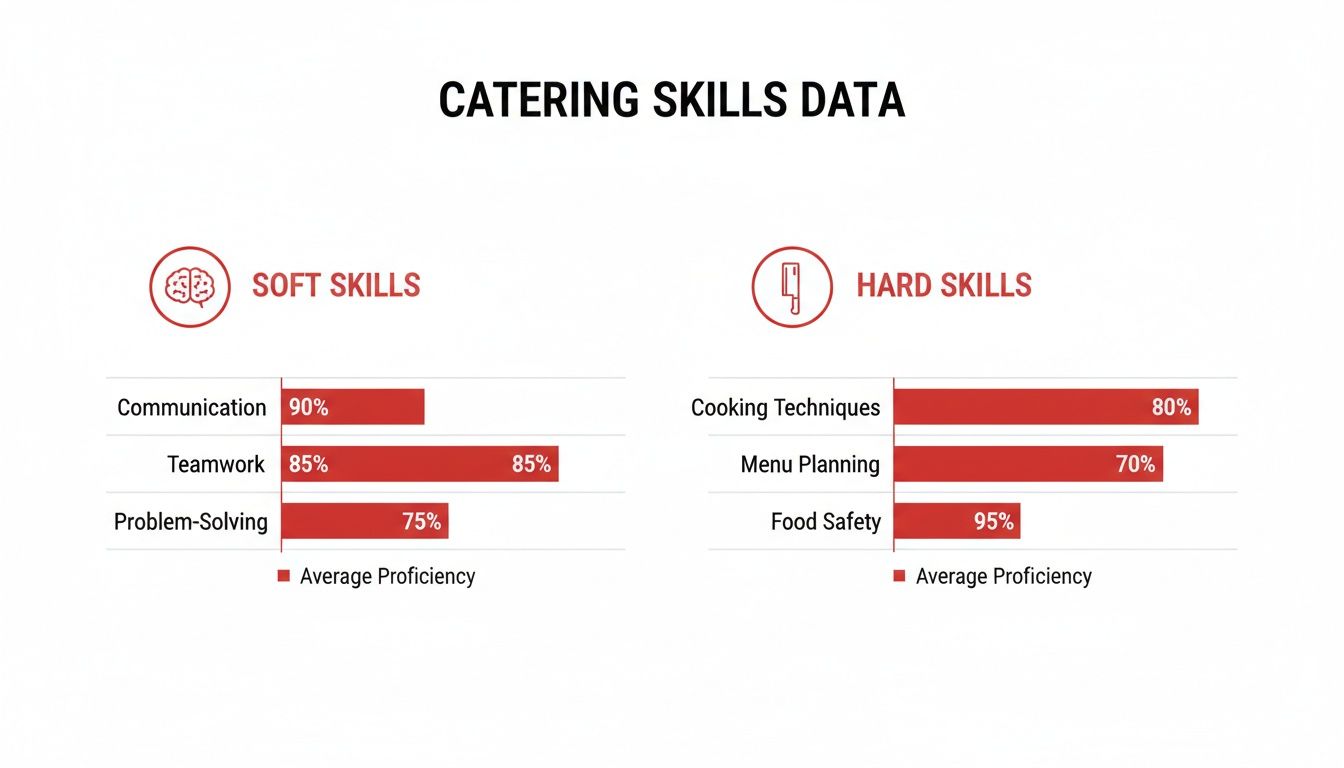
It’s a clear reminder that while knowing your way around a kitchen is vital, it’s the resilience and teamwork that make a catering assistant truly indispensable.
By pairing competitive pay with an honest description of the working conditions, you build trust from the very first interaction. This approach attracts serious candidates who are ready to become a reliable part of your team, not just fill a vacancy.
Your Catering Assistant Job Description Template
Right, we’ve covered what makes a great catering assistant and the reality of the job. Now, let's put it all together into a job description that actually works.
This template is designed to be clear, direct, and easy for you to adapt. It doesn't matter if you're running a country pub or a city hotel; this structure will help you find the right people.

Use this as your foundation. Just swap out the text in the brackets with the specifics of your business. Doing this will attract candidates who aren't just qualified, but who will genuinely fit into your team and kitchen culture.
Job Summary
Job Title: Catering Assistant
Location: [Your City/Town, e.g., Manchester]
Job Type: [e.g., Full-Time, Part-Time, Permanent, Temporary]
Salary: [e.g., £11.50 per hour or £23,000 per annum, depending on experience]
About Us: [Keep it short and punchy. Two sentences max. Example: "The Rose & Crown is a vibrant gastropub in the heart of Bristol, known for its modern take on British classics and a lively, welcoming atmosphere."]
Role Overview: We’re looking for a reliable and energetic Catering Assistant to join our busy kitchen team. You’ll be the backbone of our operation, supporting the chefs with food prep, keeping our hygiene standards impeccable, and making sure service runs without a hitch. The right person for this role is proactive, thrives under pressure, and has a real passion for hospitality.
Key Responsibilities
- Assist chefs with daily food preparation (mise en place), including washing, peeling, chopping, and weighing ingredients.
- Handle basic cooking tasks under supervision, like preparing salads, plating up starters, and using standard kitchen equipment.
- Keep all kitchen areas spotless and organised—from work surfaces to storage—and stick to all food safety rules.
- Manage the pot wash, ensuring a constant supply of clean dishes, cutlery, and utensils for a busy service.
- Help the front-of-house team by setting up buffets, running food to tables, and clearing down when needed.
- Receive and properly store deliveries, checking everything for quality and rotating stock to keep waste to a minimum.
This list covers the core duties. Be sure to add any tasks specific to your venue, like helping with event setups or managing a particular station. That extra detail helps candidates get a true feel for a typical day.
Required Skills and Qualifications
- Essential: A valid Level 2 Food Safety and Hygiene for Catering certificate. No exceptions.
- Experience: Previous experience in a professional kitchen or catering environment is a huge plus.
- Skills: Strong communication, great time management, and the ability to work well as part of a team.
- Attributes: A positive attitude, a solid work ethic, and the ability to stay calm and focused when things get hectic.
Benefits
- Competitive hourly wage/salary.
- A fair share of tips.
- [e.g., Staff meals on duty, 28 days holiday, pension scheme].
- Real opportunities for training and to build a career with us.
Following this template creates a job ad that's clear, professional, and appealing. This structure is pretty standard for service roles. For more ideas on how to frame responsibilities, have a look at our guide on the barman job description to see how a customer-facing position is laid out.
Interview Questions That Reveal the Best Candidates
A strong job description gets people to apply. The right interview questions help you find the perfect fit.
You have to move beyond the CV to see how a candidate thinks on their feet. The goal here is simple: uncover their problem-solving skills, their attitude, and whether they truly understand the realities of a kitchen environment.
The best way to do this is to mix up your questions to test different attributes. A balanced approach gives you a complete picture of who you're talking to, not just the polished version they prepared for.
Situational and Behavioural Questions
These questions are designed to reveal how a candidate actually behaves under pressure and handles the challenges every kitchen faces. You’re not looking for textbook answers; you’re looking for resilience, common sense, and a team-first mentality.
- Question: "Describe a time you had to deal with a sudden, unexpected rush during service. What did you do?"
- What to listen for: Good answers will mention prioritising tasks, communicating clearly with the team, and staying calm instead of getting flustered. They solved a problem, they didn't just work harder.
- Question: "Imagine you're extremely busy and falling behind. How would you maintain high hygiene standards?"
- What to listen for: A strong candidate will be direct: hygiene is non-negotiable. They should mention practical things like "clean as you go" and confirm they would never, ever compromise safety for speed.
The best answers to behavioural questions are specific stories, not vague promises. A candidate who says, "I reorganised my station and asked the chef what the new priority was" is far stronger than one who just says, "I’d work harder."
Skills-Based Questions
These questions confirm their practical knowledge. They ensure the candidate understands the fundamental duties outlined in the job description of a catering assistant.
- Question: "A stock delivery arrives, and you notice some of the produce isn't fresh. What is your immediate next step?"
- What to listen for: The only correct answer involves rejecting that part of the delivery and immediately telling a senior chef or manager. This shows they understand stock quality, procedure, and protecting the kitchen's standards.
Finding the right person is a key step, and for more insights into the hospitality job market, you can learn more about how UK job search agencies operate and support businesses.
Your Questions Answered: Hiring a Catering Assistant
Hiring for the kitchen always throws up a few practical questions. Here are some quick, straightforward answers to help you make the right call with confidence.
Do I Need to Provide Training?
Yes, always. Even if you hire someone with years of experience and a Level 2 Food Safety certificate, they don’t know your kitchen.
Plan for on-the-job training that covers your specific workflows, how your equipment runs, and the service standards you live by. This small investment up front is what ensures they bed in properly and protect your quality.
What Is a Realistic Probationary Period?
A three-month probationary period is pretty standard across UK hospitality, and for good reason. It’s the sweet spot.
This gives you enough time to see how a new hire performs under real pressure, assess their work ethic, and see if they click with the rest of the team. It also gives them a fair chance to get to grips with the job before you both commit long-term.
How Do I Handle No-Shows for Interviews?
First off, don't take it personally. No-shows are, unfortunately, just part of the game in this industry. It’s a fast-moving market.
In the last year alone, UCAS reported a staggering 554,023 vacancies for kitchen and catering assistants. Good candidates have options. To cut down on no-shows, keep your communication clear and always send a confirmation reminder the day before the interview. You can dig into more stats about the UK's hospitality job market on UCAS.com.
The best defence is to build a small pool of good candidates. If your first choice ghosts you or doesn’t work out, you can move straight to your next option without having to start the whole painful process from scratch.
Finding reliable kitchen staff is a constant headache, especially when you need someone yesterday. Relief Chefs UK connects you with fully vetted, experienced chefs and assistants who are ready to step in at a moment's notice. We make sure your service never misses a beat. Get dependable kitchen cover today.
Enhanced by the Outrank tool