
Friday dinner is building, the bookings look strong, and the head chef is already firefighting before first tickets land. One commis is slow on prep. A section chef has called in sick. Deliveries arrived late. The pass is getting noisier by the minute.
If your second-in-command can steady that kitchen, service survives. If they can't, the whole operation starts to wobble.
That's why a job for a sous chef isn't just another vacancy. It's a business-critical hire. In hotels, pubs, restaurants, golf clubs, and boutique venues across Devon, Bristol, Berkshire, Dorset, Wales, Windsor, Reading and Slough, the wrong sous chef creates stress, inconsistency and avoidable turnover. The right one protects standards, backs up your head chef and keeps the kitchen functioning when reality gets messy.
Why Your Next Hire Could Make or Break Your Kitchen
A kitchen rarely breaks because nobody can cook. It breaks because nobody is controlling the shift.
That is what a poor sous chef costs you. Service loses shape. Prep priorities change by the hour. Ordering slips into last-minute problem solving. Junior chefs work without direction, and your head chef gets dragged away from planning, standards and margin control to deal with preventable issues.
I see that pattern in underperforming kitchens again and again. Managers call it a staffing problem. It is usually a supervision problem sitting right in the middle of the brigade.
For a hotel manager, this hire carries more weight than the job title suggests. Your sous chef is often the person who keeps the kitchen steady when the head chef is off, a section falls apart, or covers spike without warning. If you need a clear view of the role before hiring, review these core duties of a sous chef and assess candidates against the operational realities of your site.
What this looks like in real life
A summer Saturday in a Dorset hotel exposes weak hires fast. Breakfast has overrun. A wedding function is building. The restaurant is fully booked. Deliveries are late, one junior chef is behind, and front of house wants timings.
A capable sous chef restores order quickly. They reset prep, move labour to the right section, protect food safety, and keep output consistent without creating panic. The kitchen stays saleable.
A poor one triggers the usual chain reaction:
- Prep falls behind, so corners get cut
- The head chef gets pinned to the pass, losing control of the wider shift
- Junior chefs start guessing, which creates waste and inconsistency
- Managers get pulled into kitchen problems, distracting them from guests and revenue
A sous chef should absorb pressure and organise the brigade under it.
Why employers keep getting this hire wrong
Too many employers hire for technical cooking and hope leadership follows. It usually does not.
A strong chef de partie can produce good plates. A strong sous chef protects service, standards, labour efficiency and team discipline at the same time. Those are different skills. If your interview process focuses on menus, passion and presentation but ignores judgement, delegation and control, you will fill the rota and still have the wrong person in the job.
There is also a commercial mistake many operators make. They rush into a permanent hire when the kitchen needs immediate stability first. If your service is already under strain, using a trusted relief chef agency can buy you breathing room, protect standards, and stop you making an expensive permanent hiring error under pressure.
The best operators treat this role as a business decision, not a routine vacancy.
What a Sous Chef Really Does for Your Business
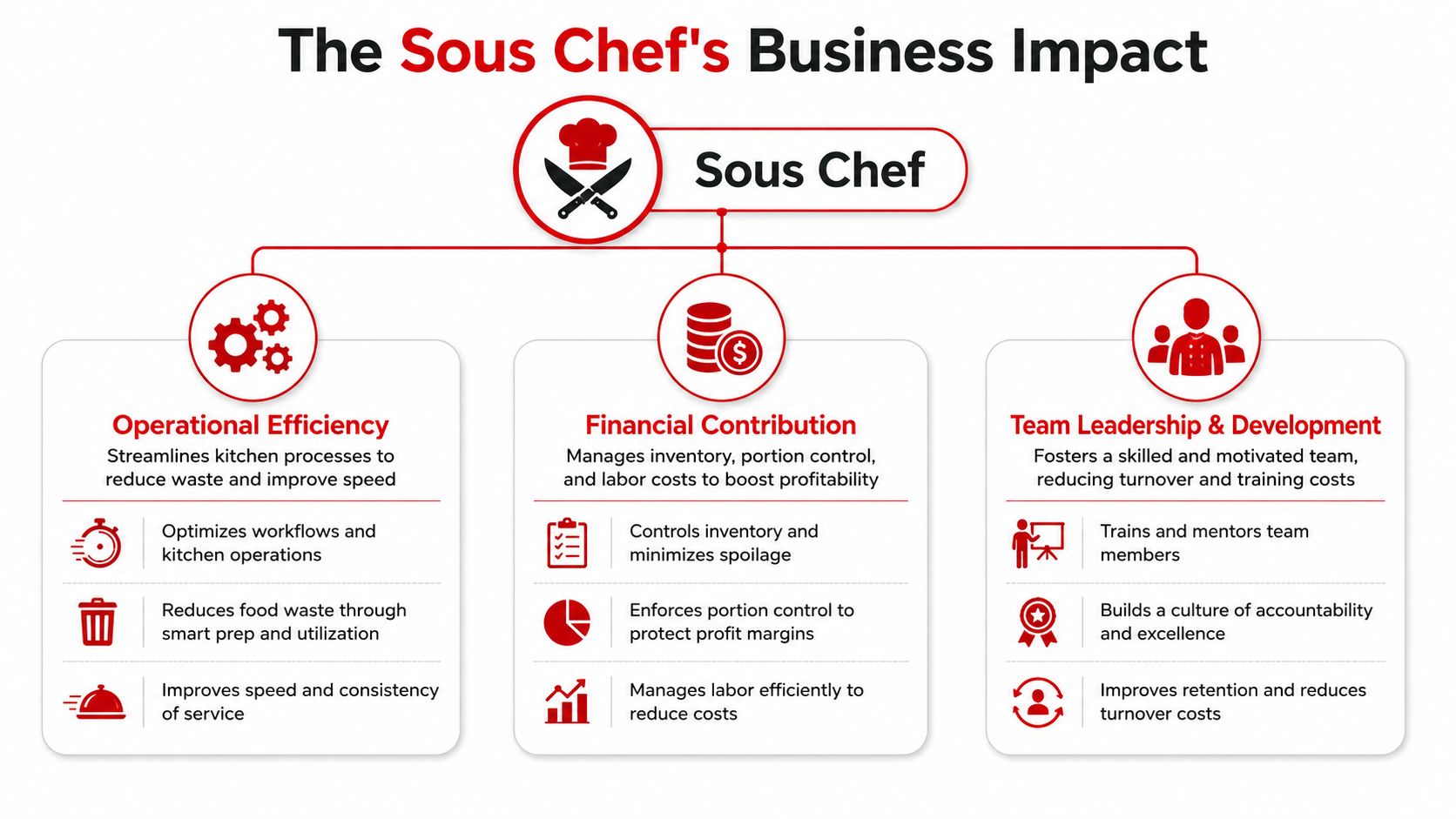
A sous chef protects output, standards and control during the hours when kitchens make or lose money. If you hire this role as a senior line cook, you will feel the mistake in service quality, team discipline and margin.
The job carries real operational weight. As noted earlier, UK pay for sous chefs reflects that. You are hiring a supervisor who can run the kitchen properly, not just a chef who can cook well under pressure.
They hold the kitchen together between planning and service
The head chef sets standards. The sous chef makes sure those standards survive contact with a live shift.
That means controlling prep priorities, checking section readiness, reallocating labour when a station slips, spotting weak execution early and keeping communication clean across the brigade. In a hotel kitchen, that also means handling the friction between restaurant service, breakfast, banqueting and room service without letting one area wreck another.
Good kitchens do not stay stable by accident.
They control the small failures that become expensive problems
A weak sous chef lets minor issues drift until they turn into lost revenue. A strong one cuts them off early.
They notice stock risk before a key item runs out. They challenge poor storage before it becomes waste. They correct weak hygiene habits before they become a compliance issue. They step in on training gaps before a junior chef slows down the whole pass.
If you want a practical breakdown of the duties of a sous chef, compare that list against what your current team can already cover and what still depends too heavily on the head chef.
A commercially useful sous chef should take ownership of work like this:
- Section control so every chef starts service clear on priorities and pace
- Stock and ordering discipline so shortages and over-ordering stop eating into margin
- Food safety enforcement so standards hold on busy shifts, not just quiet ones
- On-shift coaching so weaker staff improve instead of repeating the same mistakes
- Service problem-solving so the kitchen keeps moving when bookings spike or staffing drops
They turn leadership into consistent results
This is the core business value. A sous chef closes the gap between what management expects and what guests receive.
If the head chef is off site, on leave, or tied up with supplier issues, the sous chef should still be able to run a full service, protect standards and keep the team in line. If they cannot, you do not have a proper second-in-command. You have a skilled cook with a senior title.
That distinction matters when you decide between a permanent hire and temporary cover. If your kitchen needs immediate stability, a trusted relief sous chef can protect service now while you avoid rushing into the wrong permanent appointment. Smart operators use that flexibility to buy time, steady the team and hire properly.
Key Skills That Define a Great Sous Chef
Most applicants can tell you they're hardworking, passionate and calm under pressure. Ignore that language. It's standard CV filler.
A strong sous chef stands out in more demanding ways. The role comes from the French for “under chef” in Escoffier's brigade system, and reaching it typically takes 4 to 8 years of professional experience, according to Wikipedia's entry on the sous chef role. That matters because this is a mid-career leadership post, not a promotion you hand out because someone plates neatly and works fast.
If you're reviewing applicants for a job for a sous chef, look for depth, not polish.
What actually separates strong candidates
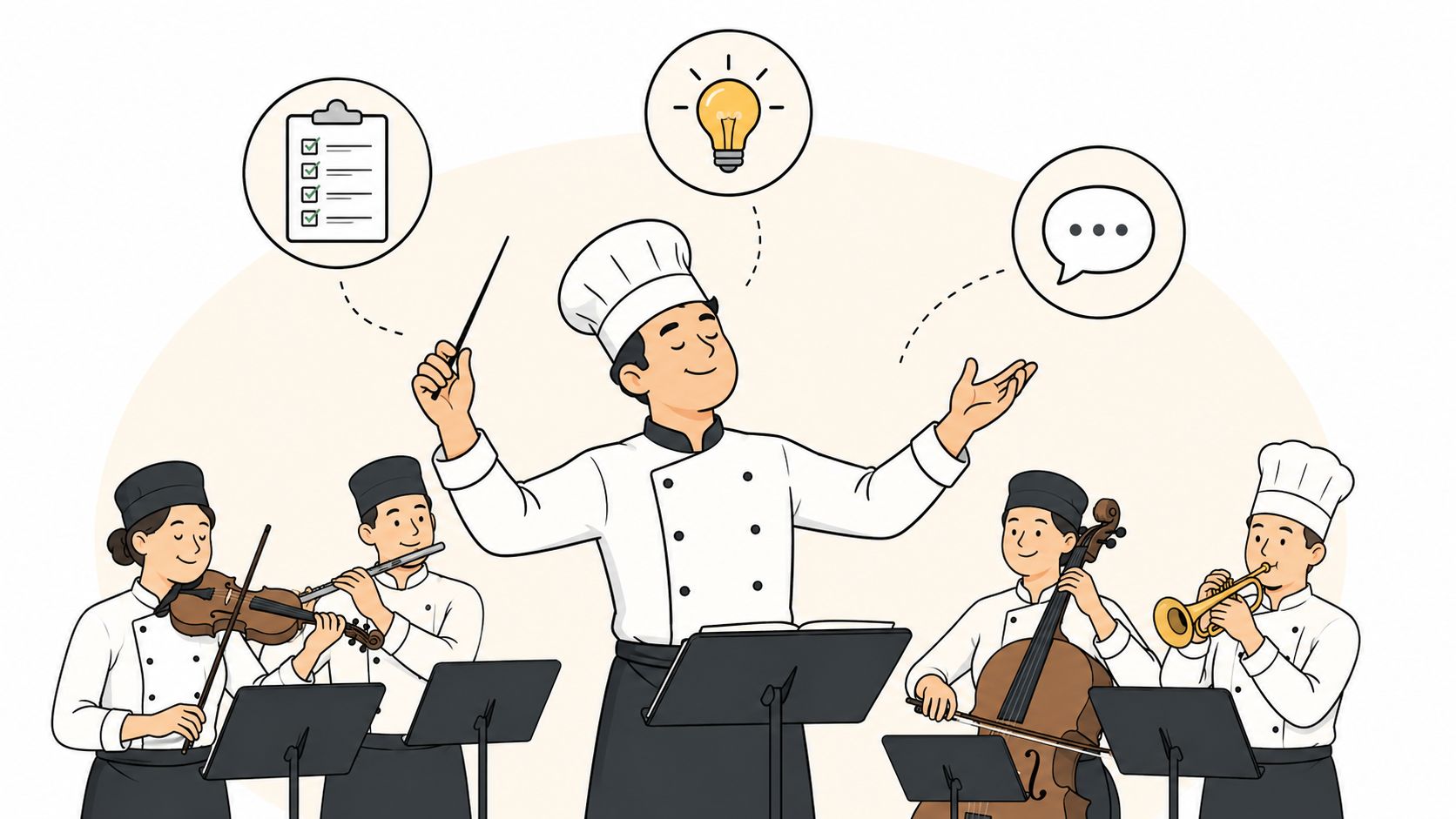
The best sous chefs combine technical credibility with managerial judgement. One without the other isn't enough.
I'd assess candidates against these areas first:
Leadership under pressure
Can they direct a team during a difficult service without becoming the problem themselves?Standards enforcement
Do they challenge weak prep, poor section discipline and sloppy hygiene, or do they let things slide to keep the peace?Training instinct
A proper sous chef develops junior chefs on shift. They don't just complain that nobody is good enough.Operational awareness
They should understand stock, ordering, waste points, handover quality and rota pressure.Presence and credibility
The brigade should listen when they speak. That usually comes from experience, not volume.
A useful comparison point for career progression is this sous chef career guide, which helps clarify whether a candidate's background reflects real progression or just title inflation.
Red flags on a CV
Some CVs look impressive until you read them like an operator instead of a recruiter.
Be cautious if you see:
| CV signal | What it often means |
|---|---|
| Several short roles with bigger titles each time | Fast promotion without depth |
| Lots of menu language, no team language | Strong cook, weak manager |
| No mention of ordering, rotas or training | Candidate may never have held real control |
| Vague claims about “supporting the head chef” | Limited accountability |
You also need to test how they think, not just what they've done. This short video is worth using as a prompt for that discussion in your hiring process.
Hire for control, judgement and team influence. Cooking skill gets someone through trial shift. Leadership keeps your kitchen stable for the next year.
How to Write a Job Description That Attracts Talent
A weak sous chef advert creates an expensive problem. Service gaps stay open, your head chef carries too much, and you fill the pipeline with applicants who want a title rather than the responsibility.
Write the role as an operational brief, not a generic vacancy. Strong candidates scan for three things fast. Scope, standards and whether the business is serious about support. If your advert is vague, the best people move on.
Hospitality Staffing Agency's sous chef job page highlights a mistake employers make repeatedly. They describe kitchen production, then leave out the management side of the role. That brings in cooks who can plate food but cannot run a shift, manage stock or keep a team steady when pressure rises.
What your advert must include
Start with the core purpose of the job. You are hiring someone to protect standards and keep the kitchen under control, especially when the head chef is off site, tied up with admin, or dealing with recruitment and supplier issues.
Use this checklist:
Set out operational ownership
Spell out who owns shifts, ordering, stock counts, HACCP, prep standards, training and pass control.Describe the site accurately
Boutique hotel, golf resort, event venue and high-volume restaurant all demand different strengths. Say what service truly looks like.Match pay to responsibility
If the role carries team management and service leadership, the package must reflect it.State the working pattern
Include split shifts, breakfast, banqueting, weddings, peak weekends and seasonal swings.Clarify reporting lines
Candidates need to know whether they are joining a settled team, supporting a new head chef, or walking into a turnaround.Show what success looks like
Good applicants want to know the target. Lower waste, tighter consistency, better handovers, cleaner audits, stronger junior development.
If your brief is too broad, tighten it with a proper sous chef job description guide and remove anything that reads like filler.
Where to recruit
The channel matters almost as much as the wording.
Generic job boards bring volume. They rarely bring accuracy. Referrals can work, but they depend on who happens to be available in your network. Direct advertising suits businesses with a strong reputation and a stable kitchen. If you need a sous chef quickly, or you are trying to stabilise service while recruiting permanently, use specialist support.
Relief Chefs UK supplies temporary and permanent chef staffing across the UK. That gives hotel and restaurant operators another option. You can secure immediate relief cover to protect service now, then hire permanently without rushing into the wrong appointment.
A strong advert should screen out weak fits before they ever reach interview. If it appeals to everyone, it is too loose.
Interview Questions That Reveal True Potential
Stop asking soft interview questions and expecting hard operational answers.
A sous chef interview should tell you one thing above all else. Can this person run your kitchen properly when pressure lands all at once? The role blends culinary execution with operational control, including recruitment, training, scheduling and compliance, which is why Betterteam's sous chef job description treats those responsibilities together rather than as separate extras.
Ask for pressure examples, not personality traits
You don't need another candidate telling you they're organised. You need proof.
Use questions like these:
A supplier misses a key delivery before a busy evening service. What do you do in the next hour?
This shows whether they can reprioritise, communicate and protect service without panicking.Two junior chefs are clashing on section during a full restaurant service. How do you deal with it?
You're testing authority, judgement and whether they solve conflict or inflame it.The head chef is off, the rota is short, and standards are slipping by the middle of the shift. What changes first?
Good candidates will talk about triage, section control, simplification and communication.
Test management depth
A lot of applicants can describe service. Fewer can explain how they manage the people and systems around it.
Ask:
- How do you train a weak but willing junior chef during live service without slowing the whole kitchen down?
- How do you hand over ordering and stock control so nothing gets missed on your days off?
- When do you push back on a menu item that looks good on paper but causes service issues in practice?
Listen for specifics. If they speak only in broad statements, they probably haven't held much real responsibility.
What strong answers sound like
Good answers usually contain three things:
| You hear this | It suggests this |
|---|---|
| Clear sequence of actions | They think operationally |
| Reference to team communication | They can lead people, not just tasks |
| Attention to standards and continuity | They understand the business impact |
Don't hire the most fluent interviewee. Hire the person whose answers sound like they've actually carried a kitchen through a difficult shift.
If possible, pair the interview with a working trial that includes briefing the team, not just cooking a dish.
When to Use a Relief Sous Chef for Kitchen Stability
There are times when permanent recruitment is the wrong first move.
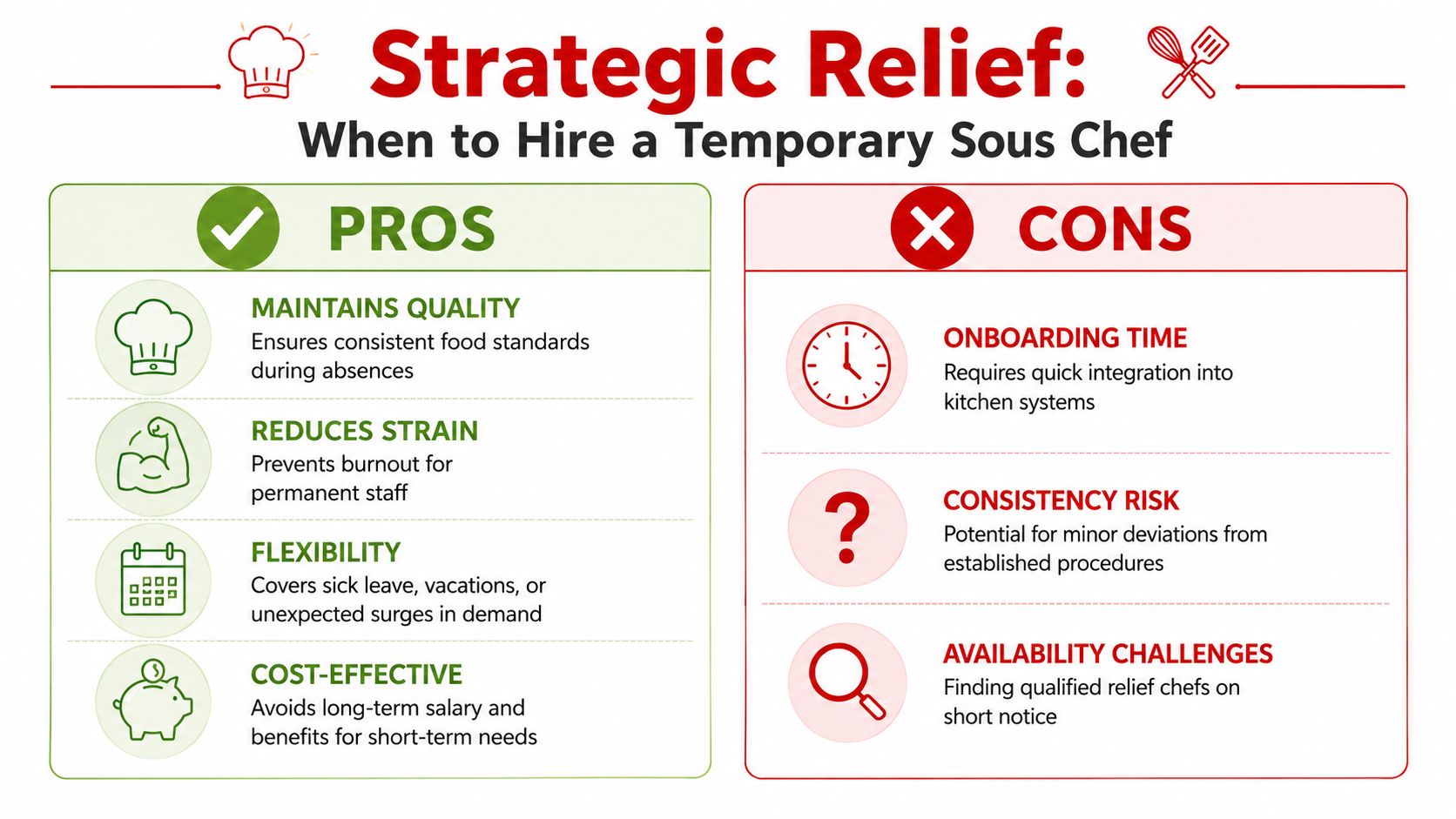
If your sous chef has left suddenly, your head chef is burning out, or summer trade is about to hit in Devon or Dorset, you don't need a long hiring debate. You need kitchen stability now. That's where relief cover earns its keep.
In the UK market, there's a practical difference between a permanent sous chef and a relief or freelance one. The core duties around kitchen control, quality and ordering still apply, but temporary roles demand chefs who can adapt instantly, as highlighted on Brigad's UK sous chef page. That point matters because short-notice cover only works if the chef can walk into a live operation and contribute fast.
When relief cover is the smart call
Use a relief sous chef when the cost of delay is higher than the cost of cover.
That usually means situations like these:
- Short-notice sickness during a busy week or major event period
- Seasonal surges in tourist hotspots such as Windsor, Bristol or coastal Wales
- Notice-period gaps after a resignation
- Kitchen resets where the permanent structure isn't settled yet
- Holiday pressure when your core team is stretched too thin
A relief sous chef buys you breathing room. More importantly, they stop the rest of the brigade from absorbing unsustainable pressure.
Permanent hire versus temporary cover
This isn't either-or. Strong operators use both.
| Situation | Smarter move |
|---|---|
| Immediate service risk | Relief sous chef |
| Stable kitchen, planned growth | Permanent hire |
| Senior chef departure with no handover | Relief first, recruit properly after |
| Seasonal uplift with uncertain duration | Temporary cover |
The key mistake is trying to force a rushed permanent hire because you're desperate. That's how businesses end up repeating the process three months later.
A relief sous chef isn't a compromise. Used properly, it's a buffer that protects guests, staff morale and revenue while you make a better long-term decision.
If you've dealt with unreliable agency chefs before, the answer isn't to avoid relief cover altogether. It's to tighten your vetting and partner selection.
Frequently Asked Questions About Hiring Sous Chefs
What's the real difference between a sous chef and a head chef
The head chef sets the direction. The sous chef makes sure the kitchen can execute it every day.
In practice, the head chef owns the wider culinary and staffing strategy, while the sous chef runs the day-to-day engine room. If your sous chef can't lead shifts independently, the structure is too weak.
How much should we offer for a genuine senior sous chef role
Pay has to match responsibility, standards and venue type. If the role includes team leadership, ordering, stock control, training and covering the head chef, don't advertise it like a stepping-stone chef vacancy.
Luxury hotels, high-end restaurants and multi-outlet sites usually need a stronger package because the expectations are higher and the candidate pool is tighter.
Should we hire permanently or use temporary cover first
If the kitchen is under pressure now, temporary cover first is often the more sensible move. It keeps service stable and gives you time to recruit without panic.
If the operation is already stable and the vacancy is planned, permanent recruitment may be the right route immediately.
How long should probation be for a sous chef
Long enough to assess consistency across real services, stock routines, handovers, team management and pressure periods. Don't judge the hire on one polished trial shift.
You need to see how they perform on ordinary days, difficult days and understaffed days.
What should we test in a trial shift
Don't just watch knife skills and plating. Test briefing, pace control, communication with junior staff, cleanliness, adaptability and pass awareness.
A sous chef who cooks well but can't organise others will still leave you exposed.
What if we also need other chef cover, not just a sous chef
That's common. Hotels and groups often need a mix of relief chefs, temporary chefs and permanent recruitment support across multiple levels, sometimes including specialist placements such as yacht chefs and villa chefs.
If your operation has recurring gaps, solve the staffing model, not just the next shift.
If your kitchen needs a stronger second-in-command, or you need immediate cover while you recruit properly, contact Relief Chefs UK. They support independent hotels, pubs, restaurants, private households and hospitality groups across the UK with relief chefs, temporary chefs, permanent chef recruitment, yacht chefs, villa chefs and wider staffing support.