

Using a monthly salary calculator is the quickest route to turning an annual salary into a sensible monthly budget for your hospitality venue. It takes that big headline number and translates it into the real gross pay you'll be processing each month—before any deductions. This isn't just admin; it's the bedrock of solid financial planning.
Why Accurate Salary Planning Is Crucial for Your Venue

Getting monthly salary figures right is so much more than a routine payroll task. It's a core part of running a stable, successful hospitality business. When you budget with precision, you avoid the kind of cash flow surprises that can cripple a venue, especially when you're leaning on temporary relief chefs during a frantic peak season.
When your team understands their pay—and sees it's calculated correctly and transparently every single time—it has a massive impact on morale. That kind of clarity helps bring down staff turnover, making your pub, hotel, or restaurant a far more attractive and reliable place to work.
The True Cost of Small Errors
Even tiny miscalculations have a habit of snowballing. A small mistake in working out National Insurance or pension contributions for one chef might seem trivial at the time. But multiply that across the whole brigade over a year, and it can leave a serious dent in your bottom line.
Getting payroll right isn't just about compliance; it's a statement about how you value your team. Accurate and transparent pay builds the trust that is essential for a high-performing kitchen.
These financial leaks do more than just eat into your profit margin. They tie your hands, limiting your ability to bring in top-tier talent right when you need it most, like during the Christmas rush or summer holidays.
Getting your numbers straight gives you the financial confidence to bring in the skilled chefs you need, exactly when you need them. To get a better handle on all the associated costs, you can learn more about the cost of employing staff in our detailed guide.
This understanding is the foundation for managing your most valuable asset: your kitchen team. By mastering these calculations, you secure the financial stability of your venue and ensure fair, reliable compensation for the people who make it all happen.
Converting Annual Salary to Gross Monthly Pay
Before you can even think about deductions like PAYE or National Insurance, you need a solid starting point. That number is your gross monthly pay—the full amount an employee earns before a single penny is taken out. Getting this figure right is the first and most critical step in running payroll accurately.
The formula couldn't be simpler: just divide the annual salary by 12.
Annual Salary ÷ 12 = Gross Monthly Pay
This calculation gives you the baseline you'll work from for all other deductions. It offers a clear, fixed view of your wage commitments for salaried team members.
Putting the Formula Into Practice
Let’s run the numbers for a couple of common hospitality roles. A Sous Chef on £32,000 a year will have a gross monthly pay of £2,666.67 (£32,000 ÷ 12). For a more senior position, like a Head Chef earning £45,000, that comes out to £3,750 per month (£45,000 ÷ 12).
These figures are important, especially with the wage growth we've seen across the sector. Median salaries hit £27,258 as of 2026, which is around £2,271 in gross monthly pay. Knowing how to make these conversions helps you stay competitive and budget with confidence. You can discover more about recent hospitality pay trends to see how your venue stacks up.
Your gross monthly pay figure is the single most important number for payroll. Getting it right ensures every subsequent calculation for tax, NI, and pensions is accurate, preventing compliance issues and keeping your team happy.
For staff on hourly rates, the maths is a bit different but just as crucial. Take a relief chef working a typical 48-hour week at £18 per hour. Here’s how you’d calculate their gross monthly pay:
- First, get the weekly pay: 48 hours × £18/hour = £864
- Then, estimate the monthly figure: £864 × 4.33 weeks = £3,740.72
This method gives you a reliable forecast for your variable wage costs, which is vital for roles like a catering assistant where hours can change week to week. You can find more on that in our guide to the job description of a catering assistant.
To make things even clearer, here’s a quick reference table showing these conversions at a glance.
Annual Salary to Gross Monthly Pay Conversion Examples
This table breaks down common annual and hourly rates into their gross monthly and weekly equivalents, helping you forecast your wage bill with greater confidence.
| Job Title | Annual Salary | Gross Monthly Pay | Gross Weekly Pay |
|---|---|---|---|
| Sous Chef | £32,000 | £2,666.67 | £615.38 |
| Head Chef | £45,000 | £3,750.00 | £865.38 |
| Relief Chef (Hourly) | N/A (£18/hr) | £3,740.72 (Avg) | £864.00 |
Having these numbers handy makes it much easier to manage your budget and ensure every team member is paid correctly from the get-go.
Understanding PAYE, NI, and Pension Deductions
Once you’ve got that gross monthly figure, the real work begins. Now you need to bridge the gap between what you pay out and what your chef actually takes home. This is where the main statutory deductions come into play, turning a gross salary into the net, or take-home, pay.
For any UK employee, this means wrestling with three key things: PAYE Income Tax, National Insurance (NI), and auto-enrolment pension contributions.
These three deductions are exactly why a simple monthly salary calculator is so valuable. They bring in variables like tax codes and earnings thresholds that can feel complicated, but they all follow clear, predictable rules. Getting your head around them is vital for forecasting your total employment cost—not just the headline salary figure you agreed on.
This diagram shows the first simple step: converting an annual salary into the gross monthly pay that forms the starting point for all deductions.
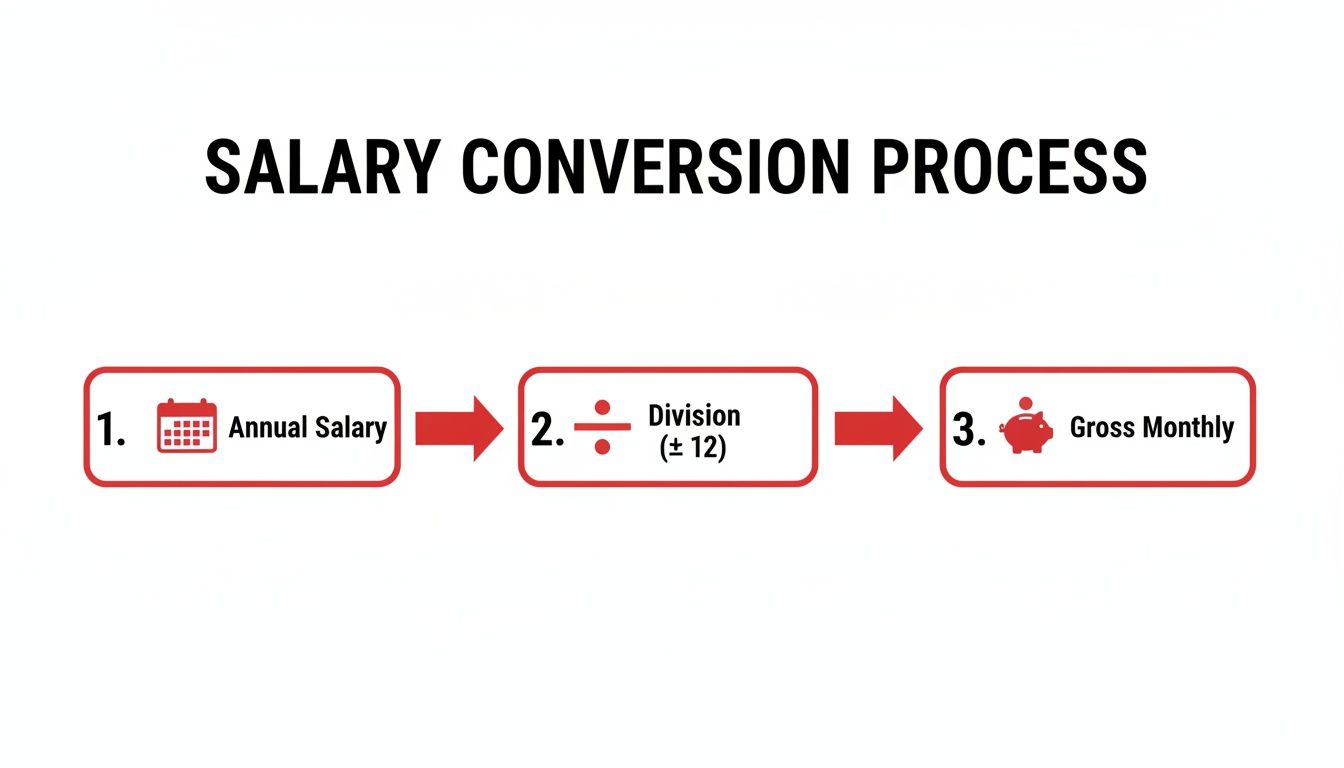
As you can see, calculating deductions always starts with one consistent number—the gross monthly pay.
Demystifying PAYE Income Tax
Pay As You Earn (PAYE) is the system HMRC uses to collect Income Tax and National Insurance directly from someone's wages. How much tax an employee pays depends on their gross earnings and their personal tax code, which for most people is 1257L.
This code tells you they have the standard tax-free Personal Allowance of £12,570 per year. Any earnings above this are taxed in bands.
Here’s a simplified look at the rates for the 2024/25 tax year in England, Wales, and Northern Ireland:
- Personal Allowance: £0 tax on the first £12,570 earned.
- Basic Rate: 20% tax on earnings between £12,571 and £50,270.
- Higher Rate: 40% tax on earnings between £50,271 and £125,140.
So for our Sous Chef on £32,000 a year (£2,666.67 gross per month), only the income above that £12,570 allowance gets taxed. This is where a good calculator saves you from doing the maths yourself.
National Insurance Contributions Explained
On top of tax, both you and your employee have to pay National Insurance contributions (NICs). These payments fund state benefits like the State Pension and Jobseeker's Allowance. The amount an employee pays is based on their earnings and their NI category letter—for most staff, this will be category 'A'.
For the 2024/25 tax year, a category 'A' employee pays:
- 8% on their monthly earnings between £1,048 and £4,189.
- 2% on any monthly earnings above £4,189.
It's crucial to remember that National Insurance is calculated per pay period, not annually like income tax. This means a high-earning month from lots of overtime could lead to a bigger NI deduction for that specific month.
Factoring in Pension Auto-Enrolment
Since 2012, UK employers have been legally required to automatically enrol eligible staff into a workplace pension scheme. This rule applies to employees who are aged between 22 and the State Pension age and earn over £10,000 a year.
The minimum contribution rates for the current tax year are:
- Employee Contribution: 5% of qualifying earnings.
- Employer Contribution: 3% of qualifying earnings.
"Qualifying earnings" aren't the whole salary. It’s a specific band of earnings between £6,240 and £50,270 per year. This is another fiddly calculation that a good monthly salary calculator will handle for you automatically.
Chef salaries can vary massively, with a general chef earning an average of £31,682 annually. For a role like this, those pension and NI contributions add a significant chunk to the real cost of employment. You can explore more detailed chef salary data to benchmark your own payroll against the market.
Budgeting for Overtime and Seasonal Fluctuations
Hospitality runs on its own clock, and it rarely lines up with a neat 9-to-5. Your payroll calculations need to reflect this reality. Overtime, tips managed through a tronc system, and the dramatic seasonal swings of a busy pub or restaurant add layers of complexity that a basic salary calculator just can't handle.
These variables aren’t just minor details—they're central to your financial planning. Without a clear strategy for them, you’re risking your cash flow and leaving the kitchen understaffed when you can least afford it. This is especially true when planning for peak times like the Christmas rush or summer holidays, when your reliance on skilled relief chefs skyrockets.
Forecasting these costs is the only way to maintain a fully staffed, high-performing kitchen without any last-minute financial panic.
Nailing Your Overtime Pay Calculations
When a salaried chef works beyond their contracted hours, you need a clear, consistent formula to calculate their overtime pay. The industry standards are typically time-and-a-half (1.5x) or double-time (2x).
First things first, you have to work out their standard hourly rate from their salary.
- Start by getting their weekly pay: Annual Salary ÷ 52
- Then, find the hourly rate: Weekly Pay ÷ Contracted Weekly Hours
Let's take a chef on a £35,000 salary with a 45-hour contract. Their standard hourly rate works out to be £14.96 (£35,000 ÷ 52 weeks ÷ 45 hours).
If that chef works 10 hours of overtime at time-and-a-half, the calculation is simple:
10 hours × (£14.96 × 1.5) = £224.40
That extra £224.40 must be added to their gross monthly pay before you calculate any deductions. Meticulous records of extra hours are completely non-negotiable for accurate payroll.
Key takeaway: Planning for overtime isn't just a reaction to a busy week; it's a strategic part of your annual budget. By analysing past trends, you can forecast your peak periods and set funds aside in advance. You turn a potential crisis into a manageable, expected cost.
Handling Tips and Tronc Systems Correctly
Tips are a huge part of hospitality compensation, but how you manage them has massive payroll implications. If you operate a tronc system, where a designated "troncmaster" distributes tips, the rules are very specific.
- PAYE Tax: You must deduct PAYE tax from any payments made through the tronc.
- National Insurance: Here's the crucial part. NI contributions (both for the employee and you, the employer) are not due on tips distributed through a qualifying tronc system.
That NI exemption can add up to a substantial saving, but only if the system is managed correctly and is truly independent of the employer's direct control. If you just add tips to your normal payroll run, they become subject to both PAYE and NI. This increases your costs and shrinks the take-home amount for your staff.
Forecasting Your Seasonal Staffing Needs
The real budgeting challenge for many venues is planning for those seasonal peaks. A quiet January is a world away from a fully booked December, and your staffing budget has to reflect that. The best way to manage this is to dive into your historical data.
- Identify Your Peaks: Go back through your books and pinpoint the months you consistently need extra cover. Think summer holidays, Christmas parties, and local festivals.
- Estimate the Hours: Look at last year's rotas. How many extra chef-hours did you actually need? Was it 40, 80, or maybe 120 hours a month during those crazy periods?
- Budget for Relief Cover: Find an average hourly rate for a good relief chef (let's say £20/hour) and build a seasonal fund. If you know you'll need 80 extra hours in August, you should budget at least £1,600 for that month's cover, plus any related costs.
By creating a specific line item in your budget for seasonal cover, you transform unpredictable staffing gaps from an emergency into a planned, manageable expense.
A Simple Monthly Salary Calculator Tool

Okay, we’ve walked through the theory behind gross pay, deductions, and all the seasonal curveballs. Now it’s time to make it practical.
To save you from wrestling with spreadsheets and deciphering tax tables, we’ve built a straightforward monthly salary calculator designed specifically for hospitality businesses. It’s an interactive tool to give you instant clarity on your real payroll costs.
It cuts out the guesswork completely. You can start with an annual salary for a permanent hire or an hourly rate for temporary cover, and the tool crunches the numbers for you on the spot.
How the Calculator Works
Our tool boils the whole process down to a few clicks. It’s built to handle the scenarios you face every day, whether you’re hiring a new Sous Chef or just need a relief chef to cover a busy weekend.
Here’s the only information you’ll need to plug in:
- Pay Rate: Just enter the full annual salary or the agreed-upon hourly rate.
- Hours Worked: For hourly staff, tell it the total hours for that pay period.
- Tax Code: Use the standard 1257L code for most employees, or pop in a specific one if they have it.
Once that’s in, the calculator instantly gives you a clear, detailed breakdown. This means you can see the true financial impact of a new hire in seconds, not hours.
This calculator is more than just a convenience; it's a powerful budgeting resource. Use it to model different staffing scenarios and understand the true cost of employment before you even post a job advert.
Understanding Your Results
The real value here is in the detail. The tool doesn't just spit out a single number; it gives you a complete overview of where every penny is going.
The results will clearly show you:
- Gross Monthly Pay: The total earnings before anything gets taken off.
- Estimated Deductions: A simple breakdown of PAYE tax, employee National Insurance, and auto-enrolment pension contributions.
- Net Take-Home Pay: The final figure your employee will actually see hit their bank account.
This clear layout helps you answer any staff queries about their payslips with total confidence. By using this monthly salary calculator for every hiring decision, you keep your budget tight, your planning precise, and your business safe from costly payroll mistakes. It’s an essential bit of kit for keeping your finances under control.
Common Questions on Hospitality Payroll
Navigating payroll in hospitality throws up a lot of unique challenges. It's not as simple as a standard nine-to-five. With zero-hours contracts, complex tip arrangements, and seasonal staff, there are plenty of moving parts that a basic monthly salary calculator just can't handle on its own.
Let's tackle some of the most frequent questions that pub, hotel, and restaurant managers ask about getting their team's pay right, every single month.
How Do I Calculate Monthly Pay for a Chef on a Zero-Hours Contract?
For staff on zero-hours contracts, there's no annual salary to divide up. Their monthly pay is a direct reflection of the exact hours they worked in that pay period.
The formula is simple: Total Hours Worked × Hourly Rate = Gross Pay.
Say a relief chef works 120 hours in a month at an agreed rate of £18 per hour. Their gross pay for that month is £2,160. PAYE and National Insurance are then calculated on this specific amount. Keeping meticulous, accurate timesheets isn't just good practice—it's essential for compliance.
And don't forget, these team members also accrue holiday pay. The standard way to calculate this is by taking 12.07% of their gross earnings. This is a legal entitlement and you have to factor it into your budget for every temporary or zero-hours team member.
What Is the Employer's National Insurance Contribution?
The deductions you see on an employee’s payslip are only half the story. As the employer, you are also required to pay Class 1 National Insurance on top of their gross salary.
This payment is calculated on your employee's earnings once they go above the Secondary Threshold. The government updates these rates and thresholds every year, so it's vital to always check the current guidelines on the HMRC website.
This employer NI contribution is a direct, significant cost of employment. When you're using a monthly salary calculator to budget for a new hire, you must add this cost on top of the gross salary to see the true financial commitment for your business.
Forgetting this cost is a common mistake that can lead to a serious underestimation of your monthly payroll expenses. It can put a real strain on your cash flow if you haven't accounted for it from day one.
Are Tips Included When Calculating PAYE and NI?
This is a big one, and how tips are handled has a major impact on your payroll calculations. The answer depends entirely on how your venue manages and distributes them.
If you operate a tronc system, where a designated "troncmaster" pools and shares tips among staff, the rules are very specific. You are responsible for deducting PAYE tax from these payments. However, a key benefit of a properly run tronc is that NI contributions are not due on these tips.
On the other hand, if a customer gives a cash tip directly to a staff member, that individual is personally responsible for declaring that income to HMRC. For roles like a barman, who might receive more direct cash tips, understanding these distinctions is key. You can learn more about the specifics of a barman's job description and its related pay structures in our guide.
How Do I Account for Holiday Pay for Temporary Chefs?
Holiday pay for temporary or relief chefs is nearly always managed through an accrual system. This ensures they receive their legal entitlement even if they're only with you for a short-term assignment.
As we touched on earlier, the standard calculation is 12.07% of their gross earnings. Let’s take another example. If a relief chef earns £2,500 during a busy month, you must set aside an additional £301.75 (£2,500 × 0.1207) for their accrued holiday pay.
This amount is then paid out either when they take annual leave or as a final lump sum when their contract with you ends. Factoring this accrual into your monthly salary calculations from the start is essential for both accurate financial planning and staying on the right side of the law.
When you need reliable, vetted chefs to cover any gap in your rota, Relief Chefs UK is your trusted partner. Run by chefs for chefs, we provide fast, flexible cover to keep your kitchen running smoothly. Find your next chef with us today.