
Relief Chefs Devon: Expert & Vetted Chefs, 24/7
11 April 2026

Friday afternoon. The weather turns in your favour after a rough week, bookings climb, the terrace fills, and then your sous chef phones in sick. By five o’clock, your KP is covering prep, the head chef is rewriting service in real time, and front of house is already asking what’s off the menu.
That’s not a rare Devon problem. It’s normal operating pressure in a county built around seasonal trade, weekend spikes, coastal traffic, events, weddings, and holiday demand that doesn’t care whether your rota is short.
Managers across the county are dealing with the same thing. ONS data from 2025 shows Devon had a 28% hospitality vacancy rate, above the UK average of 22%, and a 2025 UKHospitality Devon survey found 65% of independent operators reported last-minute cancellations affecting service (hospitality vacancy and cancellation figures for Devon). If you’re running a pub, hotel, restaurant, marina operation, or private venue, that pressure is already on your kitchen.
Is Your Devon Kitchen Ready for the Rush
A lot of staffing problems start subtly.
One chef asks for a weekend off. Another is covering doubles. Someone good leaves because they’re exhausted. Then a bank holiday lands, the county fills up, and a small staffing issue turns into a full operational failure.

What the pressure looks like on the ground
In Devon, the warning signs are usually obvious to anyone running service:
- The menu gets reduced because there aren’t enough skilled hands on section.
- Senior chefs stop managing and start firefighting.
- Owners end up in the kitchen instead of running the business.
- Events feel risky because one absence can derail the whole shift.
That’s why Relief chefs Devon searches have grown so important for operators. People aren’t browsing. They’re trying to keep doors open, standards intact, and payroll under control without gambling on whoever happens to answer the phone first.
The expensive mistake isn’t paying for proper cover. It’s trying to wing a busy service with the wrong person.
Devon doesn’t forgive weak kitchen planning
A quiet Tuesday in an inland site is one thing. A packed coastal pub, wedding venue, or holiday hotel in Devon is another. Once bookings are in, there’s no time for trial and error.
The local market adds extra strain:
| Devon pressure point | What it means in practice |
|---|---|
| Seasonal tourism | Demand can jump quickly, especially around weekends and holidays |
| Coastal and rural locations | Hiring gets harder, and replacements aren’t always nearby |
| Independent operators | Small teams have less slack when one chef drops out |
| Mixed service styles | Breakfast, lunch, events, bar food, private dining all pull the brigade in different directions |
Good operators already know the truth. Kitchen chaos usually isn’t caused by one bad day. It comes from running too lean for too long.
Understanding the Role of a Professional Relief Chef
A professional relief chef isn’t just a temporary body in whites. They’re there to stabilise service fast, slot into an existing team, and keep standards from slipping while you deal with the staffing issue.
That’s the difference managers need to understand.
Temp cover and relief cover aren’t the same thing
A generic temp often arrives needing direction on everything. They may be able to prep, they may be willing, but they still drain time from your strongest people because someone has to supervise them.
A proper relief chef works differently. They read the kitchen quickly, adapt to your systems, and get on with the job.
Think of them as the kitchen equivalent of emergency engineering support. You don’t call them in to learn the site from scratch. You call them in because they can function under pressure with minimal hand-holding.
A professional relief chef should be able to handle things like:
- Jumping onto a live section without slowing the rest of the pass
- Working with your ordering and prep reality, not the ideal version on paper
- Protecting consistency when the regular team is stretched
- Respecting the house style instead of trying to reinvent the menu mid-shift
- Communicating cleanly with front and back of house
What good relief chefs protect
The immediate problem is usually the rota. The underlying issue is everything the gap affects.
When one skilled chef is missing, the impact spreads fast:
| Area | What goes wrong without proper cover |
|---|---|
| Food quality | Section standards drift and plates become inconsistent |
| Service speed | Tickets bunch up and the pass starts chasing |
| Team morale | Your regular chefs resent carrying the gap again |
| Management time | GMs and owners get dragged into operational firefighting |
| Guest confidence | Poor service becomes reviews, refunds, and lost repeat trade |
A relief chef should reduce pressure within the first service, not add to it.
Why chef-run staffing matters
Managers can usually tell within minutes whether someone has been placed by people who understand kitchens or by people who only understand CVs.
Relief chefs know the practical basics that matter in Devon venues. Holiday parks, pubs with rooms, marina hospitality, boutique hotels, event venues, and private households all need different temperaments as well as different skill sets.
That’s why the best staffing support doesn’t start with buzzwords. It starts with the right brief. What style of food. What level of autonomy. What sort of shift. How much prep. What kind of team. How remote the site is. Whether the chef needs to steady a section, lead a pass, or hold the whole kitchen together for a few days.
That’s not recruitment theatre. That’s operational thinking.
Five Signs Your Devon Business Needs Relief Chef Cover
Some operators wait until the kitchen is already in trouble. That costs more than acting early.
If you recognise more than one of the signs below, you don’t have a one-off staffing headache. You’ve got a kitchen stability problem.
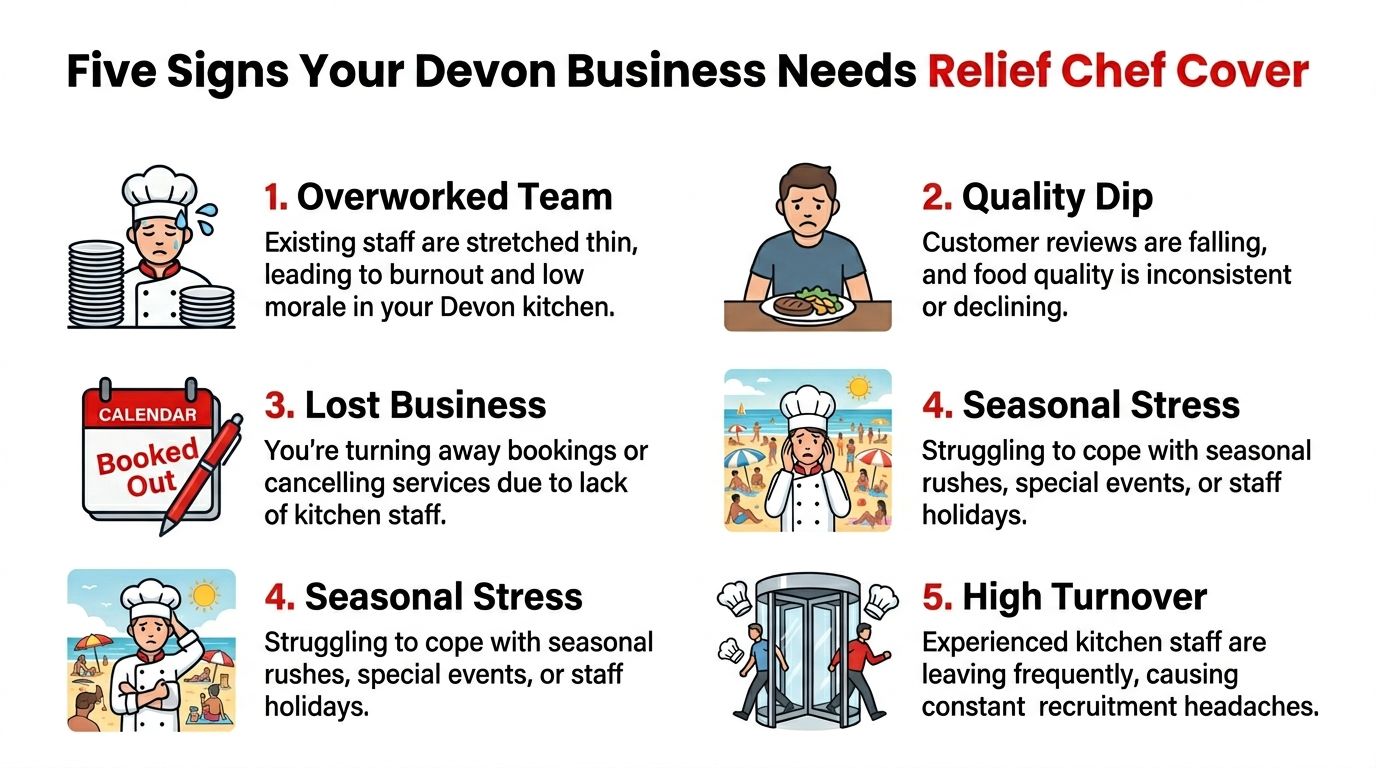
Your core team is running hot all the time
If your best chefs are doing constant extra shifts, skipping proper days off, or covering multiple sections, burnout is already in play.
That’s usually when mistakes start creeping in. Prep gets rushed. Ordering gets messy. Standards slide in small ways first, then bigger ones. Managers often miss this stage because the team is still “coping”. They aren’t coping. They’re absorbing damage.
You’ve started accepting weak cover because it feels quicker
You’ve started accepting weak cover because it feels quicker. Many sites lose money this way without realising it.
Amid a UK hospitality skills shortage of 15% to 20% in 2025 to 2026, UK catering audit data also indicates unvetted temps can increase food waste by 15% because of inconsistent mise-en-place execution (skills shortage and food waste impact in relief chef staffing).
That matters because weak temporary cover doesn’t just affect speed. It affects yield, prep discipline, portioning, and the confidence of the whole kitchen.
Cheap cover becomes expensive the moment your senior team has to babysit it.
You’re turning business away
You may not call it lost revenue internally. You might call it “managing capacity”. But if you’re reducing covers, declining events, trimming breakfast, or cutting lunch service because the kitchen can’t support demand, that’s business you should have been able to take.
This is worth a quick look if you need a sharper picture of emergency staffing risk in service:
Your head chef is stuck doing survival work
A head chef should lead. If they’re permanently covering absences, plugging prep gaps, and handling every rota crisis personally, they can’t coach juniors, develop menus, manage suppliers properly, or keep control of labour in a sensible way.
That kind of pressure also affects retention. Good chefs leave kitchens that live in emergency mode.
Seasonal trade keeps catching you out
Devon operators know when the pressure points are coming. School holidays, bank holidays, wedding weekends, summer coastal demand, event periods, and private bookings don’t arrive without warning.
The problem is that many kitchens still plan as if all weeks are equal. They aren’t.
Quick self-check
If any of these are happening, relief cover should be part of your operating plan:
- Reviews mention inconsistency after busy periods
- Managers are covering kitchen tasks too often
- Chef holidays create panic instead of a plan
- You rely on the same one or two people to save every service
- Recruitment is always reactive rather than scheduled
How to Get a Vetted Relief Chef in Devon Fast
When you need cover, speed matters. So does the quality of the match. Fast and wrong is still wrong.
The best process is simple. Brief properly, verify properly, and confirm clearly.
Step one, brief the job like an operator
The fastest way to get the wrong chef is to give a vague brief.
Don’t just ask for “a chef for the weekend”. Say what the kitchen needs. Is it Chef de Partie level? Is the site pub food, hotel, events, fine dining, yacht, or café? Is the chef leading a section or supporting prep? Are there split shifts, accommodation issues, travel considerations, allergen-heavy menus, breakfast demands, or banqueting pressure?
A strong brief should include:
- Service style and expected pace
- Level of responsibility on shift
- Dates and start times
- Location realities, especially in rural or coastal parts of Devon
- What success looks like, such as section stability or event cover
Step two, insist on proper vetting
“Available” doesn’t mean “suitable”.
You need someone who’s legal to work, professionally credible, and ready to walk into service without creating extra risk. In practical terms, that means checking right to work, experience, references where needed, and whether the chef can handle your level of operation.
For Devon businesses needing regional cover, it helps to work with a specialist network focused on the South West such as agency chefs in the South West.
Practical rule: If the agency can’t explain how they vet chefs, you’re taking their staffing problem and making it your kitchen problem.
Step three, get clarity on response time and pay
The process shouldn’t feel murky. You need to know how quickly the agency can respond, what the chef level costs, and what shifts are hardest to fill.
In Devon, agencies can deploy chefs for immediate starts within 48 hours, typical PAYE hourly rates for Chef de Partie roles sit at £19.00 to £20.00, and Sunday enhancements at 1.5x base pay can boost availability by 50% (current Devon relief chef pay and deployment data).
That doesn’t mean every role is identical. A straight weekday kitchen support shift is easier to fill than a Sunday in a remote coastal site with no staff meal, awkward access, and no flexibility.
What speeds the booking up
| Speeds things up | Slows things down |
|---|---|
| Clear shift details | Vague job descriptions |
| Realistic pay and conditions | Last-minute haggling |
| Travel help where needed | Hard-to-reach sites with no plan |
| Decisive confirmation | Long approval chains |
| Accurate kitchen brief | Surprises after arrival |
The point isn’t just getting a chef in. It’s getting the right chef in, fast enough to matter.
Relief Chef Use Cases Across Devon
Relief chefs Devon isn’t one type of booking. The county needs different kinds of cover in different kinds of businesses.
The strongest operators use relief chefs to solve specific problems, not just fill random gaps.
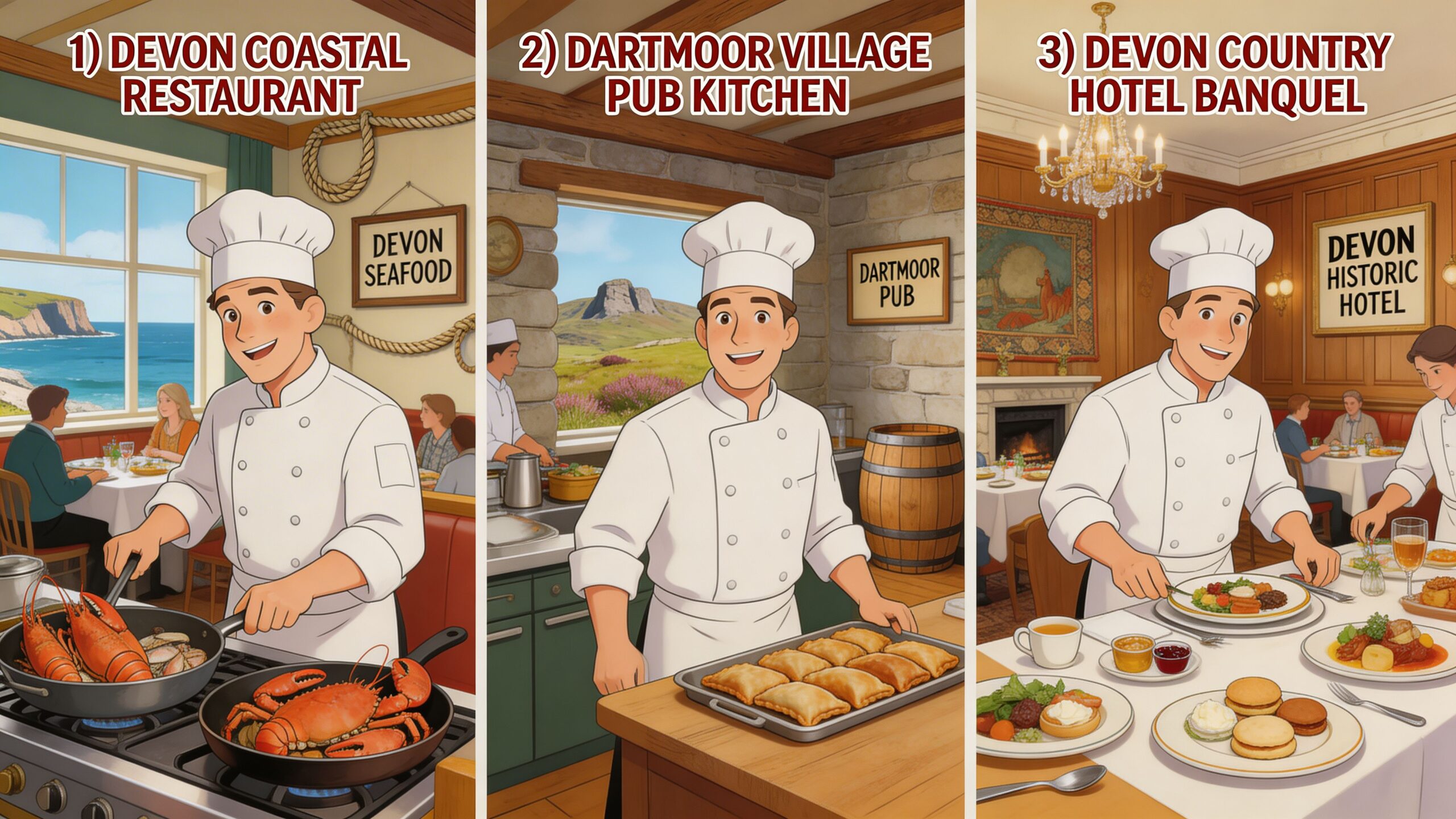
Coastal pub near Bideford
A busy pub on the coast doesn’t need theory. It needs a chef who can walk into a hot service, handle volume, and keep the grill, fry, or sauce section steady while the team gets through the weekend.
In that setting, relief cover works best when the chef can do three things immediately:
- Read the pace of trade
- Fit the menu style
- Take pressure off the strongest permanent chef
If they can’t do that, they’re not cover. They’re another moving part.
Boutique hotel in Exeter
Hotels feel staffing issues differently. One missing chef doesn’t only affect dinner. It can hit breakfast, room service, function prep, afternoon service, and private events in the same day.
A good relief chef for a boutique hotel needs range. They may cover breakfast one day, event prep the next, then support a full evening service.
When hotels leave this too late, standards wobble across several touchpoints at once. Guests notice that quickly.
For venues dealing with repeated emergencies, this guide to kitchen disasters and emergency relief chef booking is a useful reality check.
Yacht and marina work in South Devon
Yacht and marina staffing is different again. Technical cooking ability matters, but discretion, organisation, and sourcing awareness matter just as much.
Recent 2025 reports indicate a 15% rise in eco-conscious staffing demands in South Devon marinas, driven by yacht charters prioritising chefs with sustainable sourcing skills, while traditional recruiters often struggle with typical 5-day delays (eco-conscious yacht chef demand in South Devon).
That’s a niche most broad agencies don’t understand properly. Yacht clients don’t want a generic temp. They want a polished chef who can provision well, work neatly, adapt to guest preferences, and handle a premium environment without fuss.
Where this matters beyond Devon
The same logic carries into other hospitality markets. Bristol, Dorset, Wales, Berkshire, Windsor, Reading, and Slough all have sites that face the same operational issue. The shape of the trade changes, but the staffing risk stays familiar.
The right relief chef doesn’t only keep the shift afloat. They protect the reputation of the venue while your permanent structure catches up.
Why a Staffing Partner Outperforms One-Off Bookings
One-off bookings solve tonight. A staffing partner helps you protect next month, next season, and the next resignation you haven’t had yet.
That distinction matters more than most operators admit.
Reactive buying creates repeated chaos
If every chef booking starts from zero, your managers keep repeating the same work. They brief the role again, explain the kitchen again, chase updates again, and gamble again on whether the person arriving will fit the site.
That isn’t efficient. It’s just familiar.
A proper staffing partner builds context over time. They learn your menu style, your standards, your service pressure, your location constraints, and which personalities fit the team.
That makes every future booking cleaner.
Partnership gives you operating control
The benefit isn’t only convenience. It’s control.
With a regular staffing partner, you can plan cover around holidays, local peaks, events, and known weak points in the rota. You also avoid the scramble of calling around when everyone else in the county is trying to fill the same weekend gap.
If your business needs ongoing flexibility, temporary agency chef support is far stronger as a repeat operating arrangement than as a one-off panic purchase.
One-off booking versus staffing partner
| One-off booking | Staffing partner |
|---|---|
| Starts from scratch each time | Builds knowledge of your site over time |
| Often reactive | Can be planned around your calendar |
| More manager time spent briefing | Less repeated admin and chasing |
| Fit is less predictable | Matching improves with familiarity |
| Useful in emergencies | Useful in emergencies and planned cover |
The best operators don’t wait for the rota to collapse before organising support. They build a staffing safety net while the kitchen is still functioning.
Your Questions About Relief Chefs in Devon Answered
Can a relief chef really help at short notice
Yes, if the brief is realistic and the agency already works with chefs who understand the region. The more clearly you describe the role, the faster the match tends to happen.
Short notice doesn’t mean careless. It means decisive.
Are relief chefs only for emergencies
No. Emergency sickness is the obvious use case, but the smarter use is planned support. Holidays, weddings, event weekends, menu changes, launch periods, and temporary gaps between hires are exactly where relief cover earns its keep.
Operators who use it only when they’re already in trouble usually end up paying for stress they could have avoided.
What should I ask before confirming a chef
Keep it practical.
Ask about:
- Relevant kitchen background
- Right to work checks
- Whether they can handle your service style
- Travel and access
- Shift pattern
- Who to call if plans change
If an agency can’t answer those cleanly, move on.
Are rural and coastal Devon sites harder to cover
Yes, sometimes. Access, travel time, and accommodation can all affect speed and availability. That doesn’t make cover impossible. It means you need to be upfront about location and practical realities from the start.
The sites that struggle most are usually the ones that understate the travel issue and expect the market to absorb it.
Is relief chef cover only for pubs and restaurants
Not at all. Devon has demand across pubs, boutique hotels, cafés, private households, yachts, villas, and event-led venues. The staffing model changes slightly, but the principle stays the same. You need someone competent, vetted, and commercially useful from the moment they arrive.
What if I also need a permanent chef
That’s common. Temporary cover keeps the kitchen stable while you recruit properly. It buys time, protects the team, and stops rushed permanent hiring decisions that usually create a second problem a few weeks later.
If your kitchen is under pressure and you need reliable cover without the usual agency guesswork, speak to Relief Chefs UK. They provide relief chefs, temporary chefs, permanent chef recruitment, yacht chefs, villa chefs, and wider hospitality staffing support across Devon and the UK. If you need a vetted chef fast, or want a longer-term staffing partner that understands hospitality properly, get in touch now.
Call the team.
Office 01392 715474 · info@reliefchefs.co.uk