
Relief Chefs Wales: Find & Book Quality Temporary Cooks
25 April 2026

Friday night. Full bookings. Two functions on. Your head chef rings in sick, your sous is already covering prep, and the KP is asking who’s running service.
That’s how most operators start searching for relief chefs Wales. Not from a calm office. From a hot pass, with tickets building and no time for agency nonsense.
I’ve been in that kitchen. The mistake isn’t needing cover. The mistake is treating chef cover like a last-second gamble instead of a system. Welsh venues that handle staffing well don’t rely on luck. They know who to call, what brief to give, what checks matter, and how to get a temporary chef productive fast.
If you run a pub in Carmarthenshire, a hotel in Cardiff, a restaurant on the Pembrokeshire coast, or a multi-site operation covering Wales and Bristol, this matters. Short notice sickness, holiday cover, seasonal spikes, recruitment gaps, menu changes, and burnout don’t announce themselves politely. They hit service.
The End of Kitchen Chaos Why Welsh Venues Need a Relief Chef Strategy
Bank holiday weekends expose every weak point in a kitchen. One chef goes down, one commis doesn’t turn up, and suddenly your menu shrinks, standards slip, and the front of house team starts apologising before guests have even ordered.
That isn’t bad luck. That’s an operational risk you failed to plan for.

Wales doesn’t have the luxury of a deep, easy chef market. A Cardiff Catering Scoping Study identified 5,250 chefs and cooks in the region, while also highlighting persistent skills gaps and labour shortages. That’s why so many venues end up recycling the same panic response. Ring around. Ask mates. Pull someone from another site. Cut the menu. Hope for the best.
Hope isn’t a staffing plan.
The real cost of winging it
When you don’t have a relief strategy, you usually pay in one of four ways:
- Reduced covers: You stop taking bookings because you can’t trust the kitchen to deliver.
- Falling standards: The team rushes, corners get cut, and regulars notice.
- Manager burnout: Someone senior jumps on a section they shouldn’t be covering.
- Reputational damage: A bad Saturday can poison the next month’s trade.
Practical rule: Your relief cover plan should sit beside your food safety procedures, not somewhere in the owner’s head.
What a proper strategy looks like
A working plan is simple. Keep a current staffing map, know your pressure periods, define which roles are hardest to fill, and have a trusted route for temporary chefs before the crisis lands.
For a Cardiff hotel, that might mean lining up breakfast and banqueting support before conference dates. For a Tenby or Pembrokeshire venue, it means planning summer pressure well before the coast gets busy. For an independent pub, it may be one thing only. Protect the head chef’s days off so they don’t walk.
Relief chef cover isn’t just emergency medicine. Used properly, it keeps your kitchen stable enough to trade properly, recruit properly, and grow without breaking the team.
Emergency Cover vs Scheduled Relief Deciding What You Need
Most managers ask for “a relief chef” when what they need is one of two very different things. If you don’t define it properly, you get the wrong person, at the wrong speed, for the wrong job.
Emergency cover
Emergency cover is about damage control. You need a chef because service is under threat now, or very soon.
Typical triggers include sickness, no-shows, sudden resignations, walkouts, transport failures, or an unexpected surge in trade. In these cases, speed matters, but so does realism. Don’t ask for a pastry specialist if what you really need is someone who can run a solid grill, hold standards, and get your lunch service out.
Scheduled relief
Scheduled relief is different. This is planned cover for holiday, seasonal demand, events, recruitment gaps, menu changes, or giving your core team breathing room.
Used well, scheduled relief is smarter than waiting for your kitchen to crack. It lets a head chef take leave without chaos. It gives a hotel cover during wedding runs. It buys time while you recruit a permanent sous instead of forcing the wrong hire just to plug a hole.
Choosing Your Chef Cover In Wales
| Feature | Emergency Cover | Scheduled Relief |
|---|---|---|
| Main purpose | Protect service at short notice | Maintain stability over planned periods |
| Typical trigger | Sickness, no-show, walkout, sudden pressure | Holidays, events, peak season, recruitment gap |
| Speed required | Immediate or near-immediate | Booked in advance |
| Best brief | Core section skills, shift times, kitchen style | Broader role details, team fit, longer objectives |
| Manager focus | Keep service alive | Keep standards consistent |
| Common mistake | Overcomplicating the brief | Leaving it too late and reducing options |
If the pass is in danger tonight, simplify the brief and fill the gap. If the problem is next month, plan properly and protect quality.
How to decide fast
Ask three questions.
- Will service fail without cover? If yes, treat it as emergency cover.
- Is the gap already visible on the rota? If yes, that’s scheduled relief.
- Do you need a safe pair of hands or a specialist? Emergency usually means reliable execution. Scheduled cover gives you more room to be specific.
If your issue is immediate, use a dedicated emergency relief chef cover service across the UK rather than a general staffing route. Generalist agencies often talk well and deliver badly when the pressure is on.
The best operators in Wales separate urgent cover from planned cover because the booking process, briefing, and expectations are different. Treat them the same and you’ll waste time you don’t have.
Your Five-Step Process for Securing a Quality Relief Chef
The worst time to invent a hiring process is mid-service. Good operators use the same booking method every time, whether they need a breakfast chef in Swansea, a pub all-rounder in West Wales, or short-term support while recruiting in Cardiff.
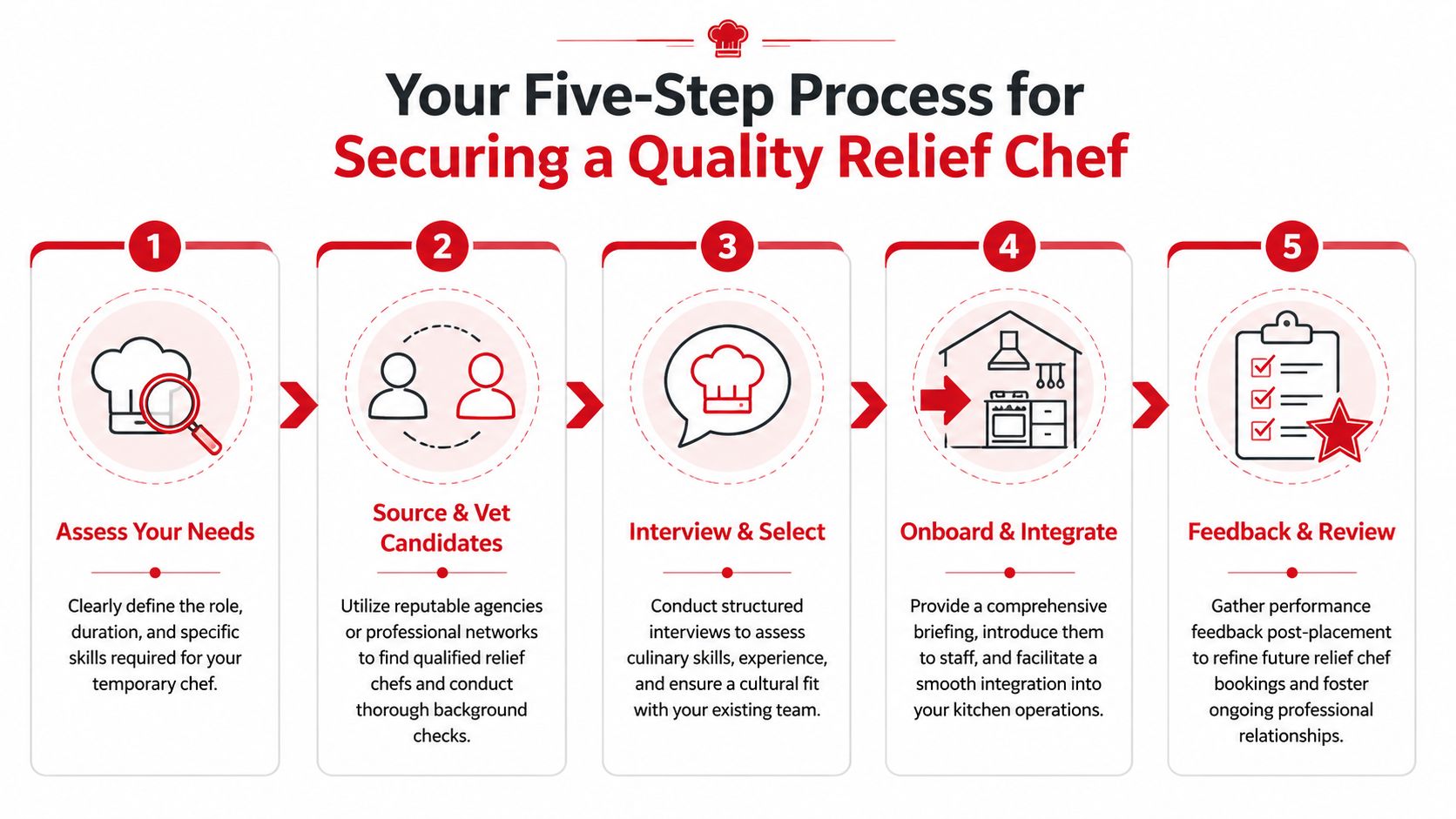
Step one. Write a brief that a chef can actually work from
Most bad bookings start with a vague message. “Need a chef ASAP” tells nobody anything useful.
Your brief should cover:
- Role level: Commis, CDP, sous, head chef, breakfast chef, events support.
- Dates and hours: Exact shifts, split shifts, finish times, days off.
- Kitchen type: Fresh food pub, hotel, banqueting, care setting, school, private household.
- Section needs: Grill, sauce, pastry, prep, breakfast, volume service.
- Site realities: Live-in available or not, parking, uniform, equipment, allergens, menu style.
A relief chef doesn’t need poetry. They need facts.
Step two. Choose the source carefully
Losing control is a common issue for many businesses. A proper chef staffing partner filters talent before it reaches your kitchen. A random social post or freelance message board pushes that risk back onto you.
That difference matters when standards matter. You’re not just buying labour. You’re protecting service, food safety, team morale, and guest experience.
Book from a source that understands kitchens, not one that just forwards CVs and hopes for the best.
Step three. Check the checks
A professional process should cover the basics without you having to chase them all yourself. Ask what gets verified before a chef walks through your door.
Look for:
- Right to work: This should be confirmed before placement.
- Food hygiene knowledge: Especially important when the chef is stepping into a busy service immediately.
- Relevant references: Not generic claims. Real kitchen history.
- Role fit: A banquet chef and a gastropub chef aren’t interchangeable.
- Insurance position: You need clarity before the first shift starts.
This is also where Welsh businesses should think commercially, not just operationally. For the 2026 to 2027 financial year, the Welsh Government is offering 15% non-domestic rates relief for eligible pubs and restaurants, and applying through your local council can free up budget for staffing decisions such as relief cover, as reported by Business News Wales on the Welsh hospitality rates relief scheme.
If you qualify, use that breathing room properly. Don’t let it vanish into drift.
Step four. Confirm the booking in writing
Once the chef is agreed, lock the details down. You want written confirmation covering role, rate, shift pattern, location, kit, reporting line, and what happens if the match fails.
Short emails cause long arguments. Spell it out.
A decent booking confirmation should make it clear who the chef reports to on shift, what section they’re covering, and who to ring if plans change out of hours. If a provider can’t give that level of structure, they’re not running a serious operation.
Step five. Onboard properly on day one
Even a strong relief chef can lose half a shift if your onboarding is poor. Don’t dump them in the kitchen and expect magic.
Set them up to win:
- Send the basics early: Site address, arrival time, dress code, contact number.
- Brief on the menu and section: Focus on bestsellers, allergens, service style, and known pressure points.
- Introduce one clear lead: The chef needs to know who calls the shots.
- Show key systems fast: Fridges, dry store, ticket flow, waste, cleaning, close-down.
- Get feedback after the shift: If they’re good, keep them in your rotation.
Turn panic into process
This is the difference between reactive businesses and stable ones. One scrambles every time a rota fails. The other follows a system and protects service.
If you operate across Wales, Berkshire, Dorset, Devon, or Bristol as part of a wider group, this matters even more. Once one site is under pressure, the knock-on effect spreads quickly. A repeatable process keeps one problem from turning into a week of kitchen instability.
What to Expect Pricing Legal and Insurance Essentials
Managers often ask the wrong pricing question. They ask, “What’s the hourly rate?” They should ask, “What’s included, what’s protected, and what will this cost me if it goes wrong?”
The rate is only one part of the decision
In Wales, relief chef rates typically range from £10 to £12 for a commis chef and £15 to £25 for an experienced head chef. Those figures give you a benchmark, not a complete buying decision.
A cheaper shift can become an expensive mistake if the chef is late, can’t handle volume, doesn’t understand allergens, or needs replacing after one service.
What you should expect to be covered
When you pay for professional relief cover, you’re paying for more than hands on a section. You should expect clarity around:
- Right to work compliance
- Food hygiene awareness
- Allergen understanding
- Relevant kitchen experience
- Insurance backing
- A process for replacement if the fit is wrong
That’s why comparing a proper staffing partner with an informal arrangement is pointless. They are not the same product.
Cheap cover usually becomes expensive during service, not before it.
Legal checks are not optional
If someone cooks in your kitchen, touches stock, handles allergens, and works around your team and guests, basic compliance matters. In this context, weak agencies and desperate direct hires create risk.
Ask direct questions. Has right to work been checked? Is the chef suitable for the role you’ve booked? Is there confidence around hygiene and allergen awareness? What happens if there’s a problem on shift?
If the answer is vague, walk away.
Insurance matters when pressure hits
Good operators don’t think about insurance until there’s an incident. That’s too late.
You need to know whether the staffing arrangement includes proper insurance protection and where responsibilities sit. A professional agency model adds a layer of protection and accountability that casual bookings don’t. That’s part of the value.
If you want a realistic view of what poor cover can cost, read this breakdown of the hidden cost of bad chef cover and emergency chef booking mistakes. It mirrors what operators learn the hard way. Saving money on the booking often loses money on the service.
Budget properly, then buy properly
Relief chefs give you access to skill without the overhead of rushing into a permanent hire. That’s useful when you’re bridging recruitment, covering leave, testing trade patterns, or stabilising a struggling kitchen.
Don’t chase the lowest line on the invoice. Buy reliability, role fit, and protection. In hospitality, that’s usually the cheaper decision overall.
Beyond the Restaurant Kitchen Specialised Relief Chef Needs
Relief chefs in Wales aren’t just for pubs and restaurants. That’s far too narrow.
A boutique hotel in the Brecon Beacons has different pressures from a coastal café, an event caterer in Cardiff, or a care home kitchen in North Wales. The brief, the compliance standard, and the pace of service all change.
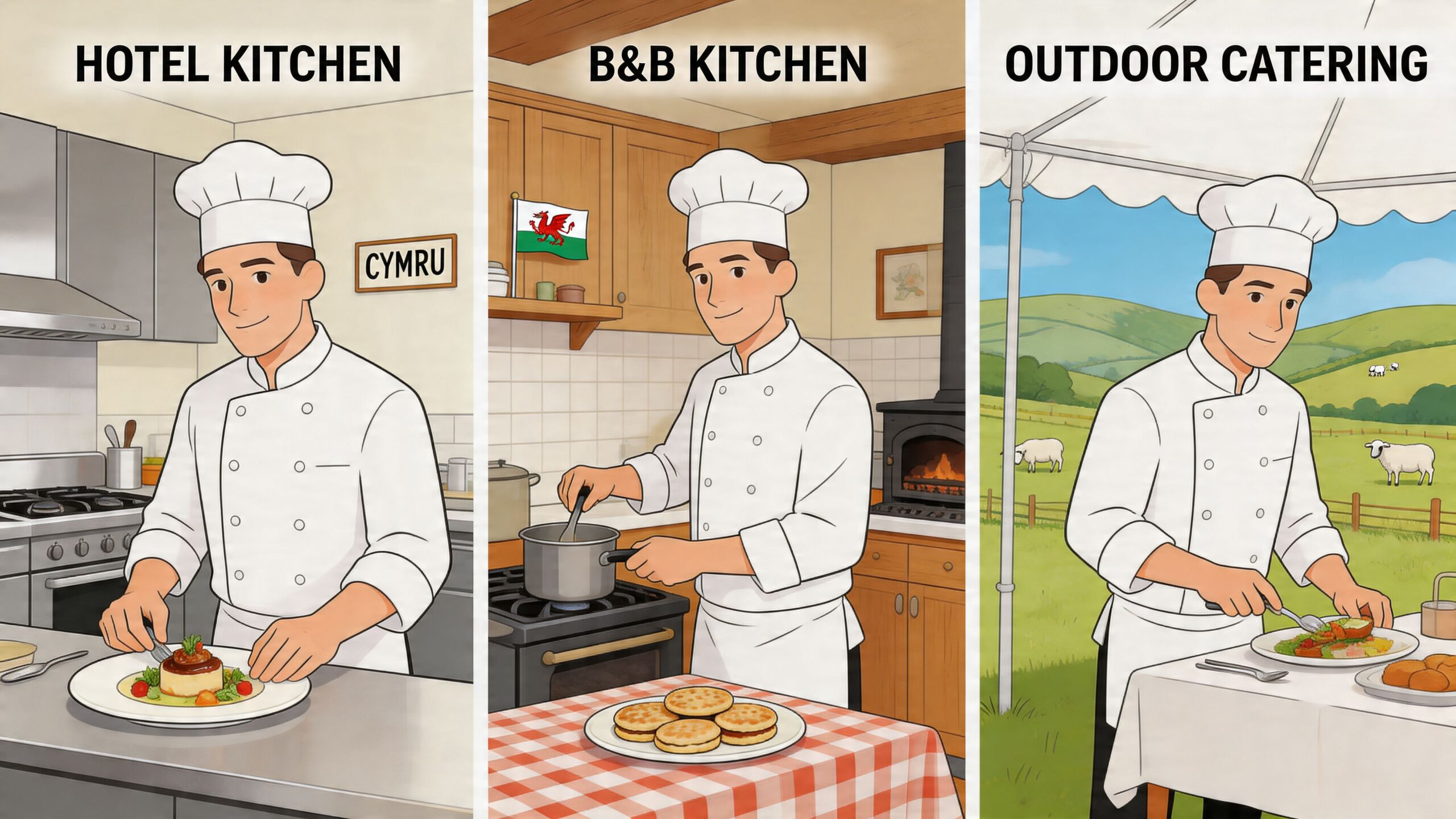
Hotels events and volume operations
Hotels need range. Breakfast, banqueting, weddings, room service, afternoon tea, and last-minute group bookings can all hit the same brigade. A relief chef for a hotel must adapt quickly and respect systems.
Event caterers need something else again. They often need calm, organised chefs who can prep in volume, move between production and service, and stay useful in an unfamiliar setup.
Care homes schools and sensitive settings
General staffing options often fall apart. There is a clear gap in Wales for DBS-checked relief chefs, especially for care homes, and Indeed job listings for relief chefs in Wales show frequent demand while specialist agencies can fill the gap with pre-vetted chefs suited to Care Inspectorate Wales standards.
That matters because these kitchens are not standard hospitality sites. Texture-modified diets, allergen control, safeguarding expectations, routine, and documentation all matter. A chef who is excellent in a busy gastropub may still be the wrong fit for a care environment.
In specialist settings, speed matters less than suitability. A fast wrong booking is still a wrong booking.
Private households yachts and villas
At the high end, the brief shifts again. Private households, yacht chefs, and villa chefs need discretion as much as skill. They often work alone, shop independently, adapt to personal preferences, and deliver restaurant-level food without a brigade behind them.
That’s why specialist hospitality staffing support matters beyond mainstream kitchens. The wider your operation, the more dangerous generic staffing becomes.
If you’re running multiple formats across Wales and the wider UK, you need a staffing partner that understands the difference between a wedding breakfast chef, a pub sous, a care home cook, and a yacht chef. Those roles are not interchangeable, and pretending otherwise is how standards collapse.
Why Welsh Venues Trust Relief Chefs UK
Welsh operators usually don’t need more promises. They need a staffing partner that understands what a broken rota does to service, payroll, morale, and reputation.
That’s where Relief Chefs UK’s Wales service stands apart. The business has roots in Carmarthenshire, and founders Paschal and Brenda Haughey built it from 50+ years of hands-on catering experience, not from a call-centre recruitment model, as outlined on the Relief Chefs Wales background page.
Why that matters in practice
Run-by-chefs agencies speak the language of service. They understand section pressure, standards, mise en place, menu flow, and the difference between “can cook” and “can hold a shift”.
For venue owners and GMs, that means less explaining and fewer bad matches. It also means support across the wider staffing picture, not only temporary relief chefs. If you need temporary chefs today, permanent chef recruitment next month, or specialist placements such as yacht chefs, villa chefs, and broader hospitality staffing support, you’re dealing with a team that understands kitchens from the inside.
A direct recommendation
If you operate in Cardiff, Swansea, Carmarthenshire, Pembrokeshire, or anywhere else in Wales, stop treating relief cover as an occasional panic purchase. Build a dependable route now and use it repeatedly.
The best time to set up chef cover is before your next chef calls in sick.
Your Questions Answered About Booking Relief Chefs
How quickly should I ask for cover
As soon as the gap appears. For planned leave, book early. For sickness or a no-show, call the moment you know service is at risk.
What information should I have ready
Keep it tight. Role level, shift times, dates, menu style, section, site address, and whether you need specific experience such as banqueting, breakfast, care, or high-volume service.
Should I use relief cover while recruiting permanently
Yes. It’s usually the sensible move. It protects the kitchen while you hire properly instead of forcing a rushed permanent decision.
Can relief chefs work outside standard pubs and restaurants
Absolutely. Hotels, events, care homes, schools, private households, yachts, and villas all need temporary chef support. The brief just needs to match the setting.
What’s the biggest booking mistake
Being vague. A vague brief gets vague results. The clearer you are, the better the match and the smoother the shift.
Is short-term cover only for emergencies
No. Strong operators use it for holidays, peak periods, menu development, recruitment gaps, and team stability.
If your kitchen needs dependable cover, contact Relief Chefs UK. They supply relief chefs, temporary chefs, permanent chef recruitment, yacht chefs, villa chefs, and wider hospitality staffing support across Wales and the UK. If you need urgent cover or want to build a proper staffing plan before the next crisis lands, get in touch and sort it now.
Call the team.
Office 01392 715474 · info@reliefchefs.co.uk