
Saturday night. Full book. Two functions on. Deliveries half checked in. Then the phone rings and your sous chef is off sick.
That single call can wreck the whole shift. Prep gets rushed, standards slip, the head chef gets dragged onto a section, and everyone else pays for it in stress, late finishes, and unhappy guests. In hospitality, sickness absence isn't a paperwork issue. It's an operating risk.
Too many businesses still treat sickness absence policies as an HR document they'll sort out later. That's a mistake. If you run a pub in Devon, a hotel in Berkshire, a restaurant in Bristol or a country house venue in Windsor, you need a policy that tells staff exactly what happens when they're unwell, what managers do next, and when outside cover gets called in. Otherwise you're making decisions on the hop, and that's where inconsistency, arguments, and service failures start.
Why Your Kitchen Needs a Watertight Sickness Policy
Hospitality owners usually know they need a sickness policy. They just don't always realise how much money and operational pain sits behind not having one.
A short-notice absence in a kitchen doesn't stay contained. One chef off can mean a delayed prep list, reduced menu execution, more pressure on the pass, longer ticket times, and another chef staying late to clean down. If the absence lands on a bank holiday in Wales or during summer trade in Dorset, the effect gets worse fast.
It's a business control, not a staff handbook extra
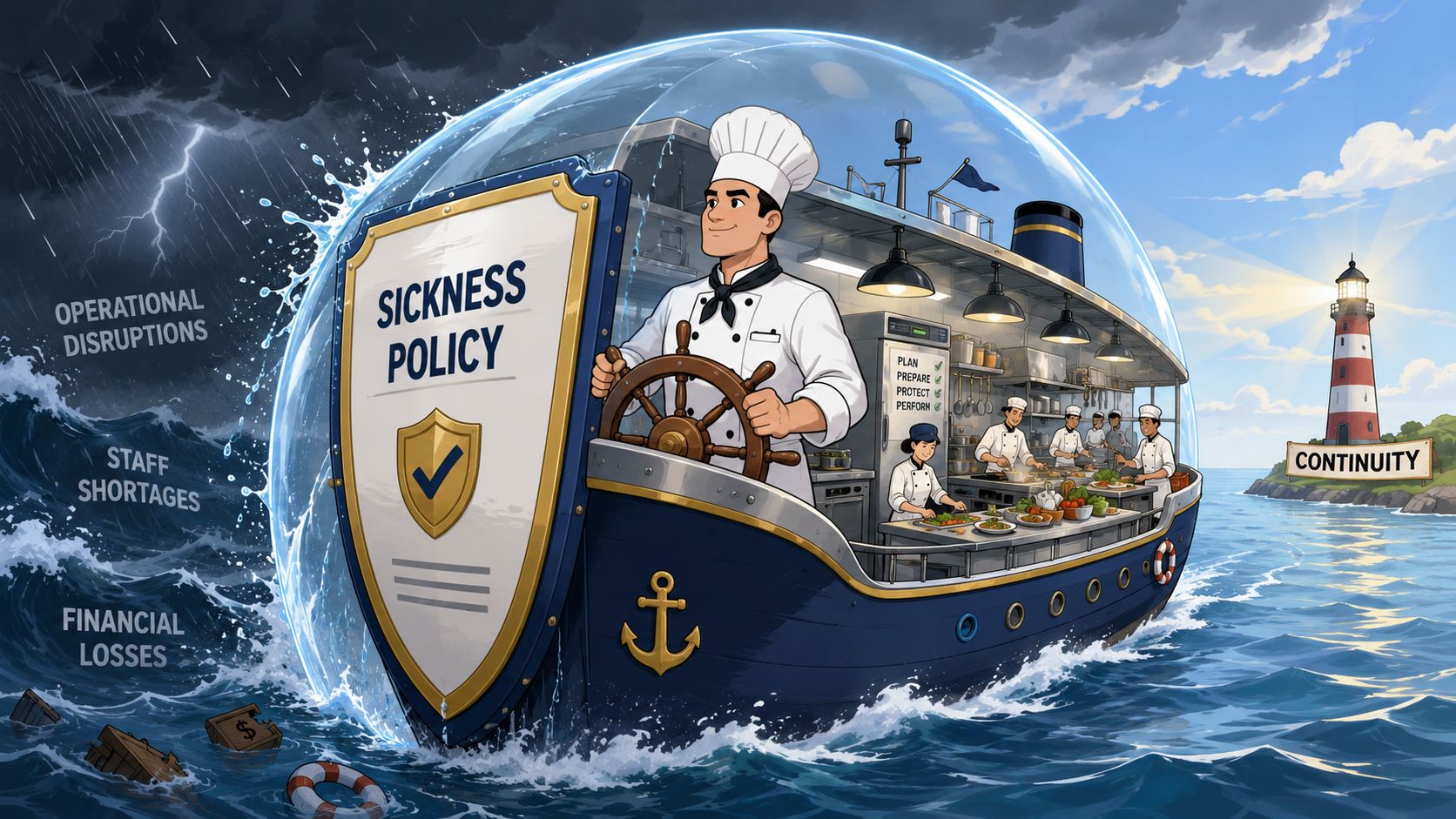
A proper sickness absence policy does three jobs.
- It creates certainty: Staff know who to call, by when, and what information they must give.
- It protects managers: Supervisors aren't inventing rules mid-service or treating similar cases differently.
- It keeps kitchens trading: You can trigger cover early instead of waiting until the rota is already broken.
Consider stock control. You wouldn't run a kitchen with no ordering system and hope ingredients appear. Staff cover is no different.
Practical rule: If a missing chef can affect service, your sickness policy is part of your continuity plan.
The gap in the market is obvious. The UK government's employer behaviour study found that only 41% of employers had a specific sickness-absence policy, with a big split by size: 85% of large employers versus 37% of small employers (UK government employer behaviour study). In practical terms, many independent hospitality businesses are still trying to manage absence without a proper framework.
Why this matters more now
Kitchens are already tight on labour. Recruitment takes time, dependable agency cover isn't always easy to secure, and one unreliable process leads straight to another. If your business doesn't define reporting rules, evidence requirements, and escalation points, you'll get late texts, missing updates, and inconsistent responses from different managers.
That inconsistency costs you twice. It makes abuse harder to challenge, and it also makes genuine sickness harder to support properly.
A good policy isn't anti-staff. It's anti-chaos. It gives everyone the same rules and gives the business a clear point to activate emergency cover. If you've ever had to patch a service together with a KP on garnish and the head chef tied to the stove, you already know the hidden cost of bad chef cover and emergency booking decisions.
What a weak policy looks like
Here's what operators usually call a “policy” when it isn't one at all:
| Common mistake | What it causes in service |
|---|---|
| Staff text whichever manager they fancy | Messages get missed |
| No reporting cut-off time | Cover gets arranged too late |
| No written trigger points | Managers play favourites or avoid action |
| No return-to-work process | Patterns go unnoticed |
| No cover plan | Service quality drops immediately |
If absence can knock your kitchen sideways, the policy is essential.
Drafting Your Policy The Core Legal Components
Most sickness absence policies fail because they're vague. “Let us know if you're ill” isn't a policy. It's an invitation for confusion.
The Office for National Statistics reported that the UK sickness absence rate was 2.0% in 2024, down from 2.3% in 2023 but still above the pre-coronavirus level, with 148.9 million working days lost and minor illnesses the most common reason for absence (ONS sickness absence data for 2023 and 2024). In hospitality, that makes short-notice reporting rules a core operating issue, not an admin detail.
Start with reporting rules that work in real kitchens
Your policy should state exactly:
- Who must be contacted: Name the role, not “management”.
- How contact must happen: Usually a phone call, not a message passed through a colleague.
- When the call must be made: Before the shift, with enough time for cover planning.
- What must be said: Reason for absence, likely duration, and whether medical advice has been sought.
For a breakfast hotel kitchen in Reading, that might mean calling the duty manager before the prep window starts. For a late-service gastro pub in Slough, it may mean a different reporting time. The point is clarity.
If you allow vague texts at the last minute, don't be surprised when that becomes the norm.
Set out evidence and certification properly
You need a written position on evidence. Keep it simple and specific.
| Policy component | What to state clearly |
|---|---|
| Self-certification | When staff can self-certify and how |
| Fit notes | When a fit note is required |
| Ongoing updates | How often absent staff must update the business |
| Contact during absence | Who maintains welfare contact |
A lot of operators get sloppy in these situations. A chef goes off, sends one message, then disappears for days. That creates uncertainty on rota planning, payroll, and cover.
If the business doesn't define the evidence standard in writing, managers will improvise. Improvisation is where disputes start.
Include sick pay and confidentiality in plain English
Your policy should spell out statutory and contractual sick pay rules in language managers and staff can readily follow. It also needs a short section on confidentiality. Health information should be handled carefully and only by the people who need it for management purposes.
Don't bury this in legal jargon. A policy no one understands won't be followed.
Use trigger points, but don't let the score run the kitchen
The government employer-behaviour study notes that some employers use the Bradford Factor as a trigger score within a wider absence management system, often alongside sickness policy, disciplinary, and capability processes. That's useful, but only if you treat it as a prompt to review, not a machine that makes decisions for you.
A repeated Friday-night pattern should trigger a conversation. So should several short absences around peak trading periods. But you still need manager judgement, proper records, and consistency.
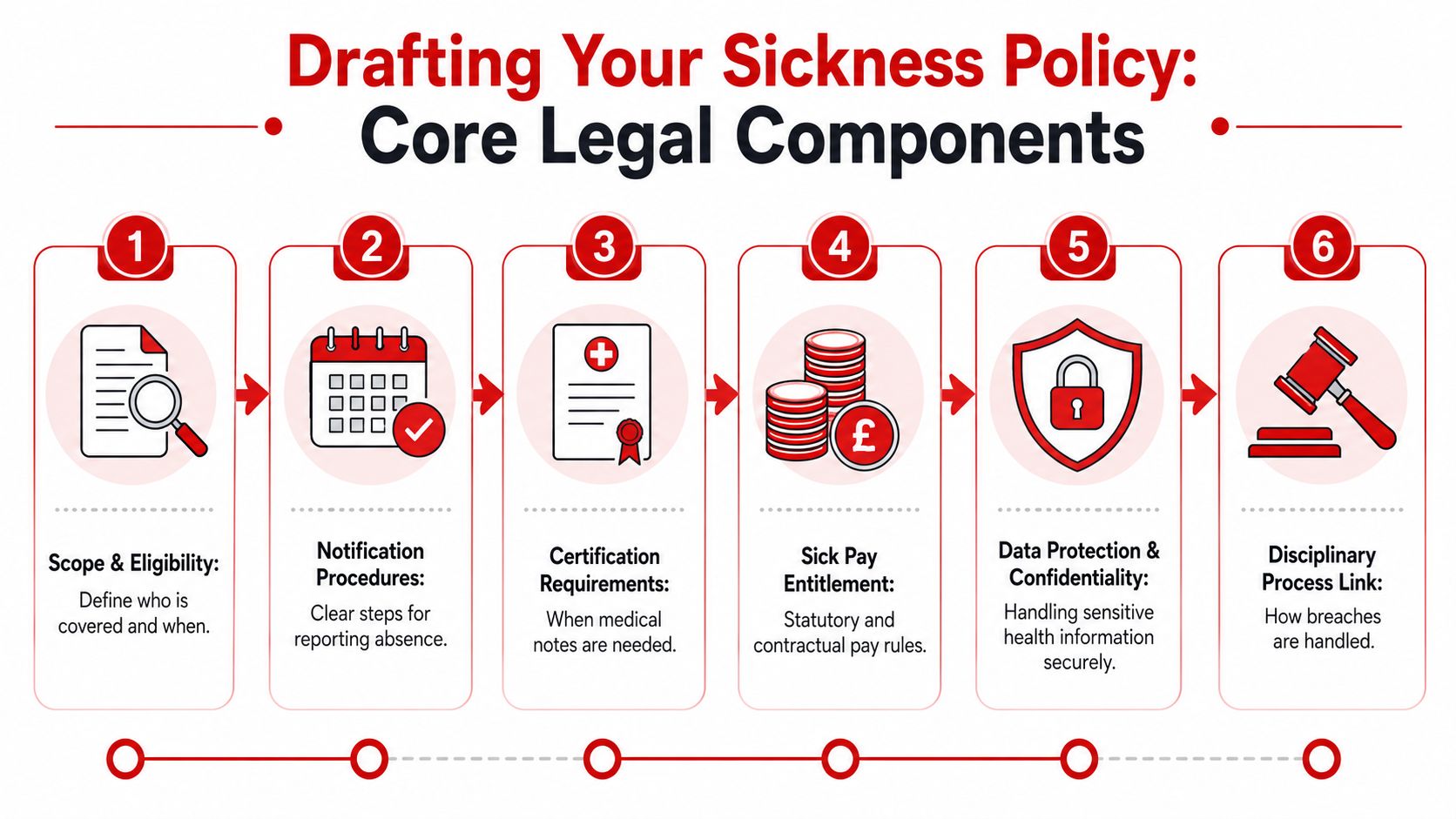
A sensible drafting checklist looks like this:
- Scope and eligibility for who the policy covers.
- Notification rules that fit your trading hours.
- Evidence requirements for short and longer absences.
- Sick pay rules written clearly.
- Confidentiality rules for health data.
- Trigger points and formal stages for review and action.
That's the backbone. Once that's on paper, managers can put it to use.
Implementing The Policy and Getting Staff Buy In
A policy rolled out by email is nearly useless in hospitality. People don't absorb rules that way, especially in a busy kitchen where everyone is working at speed.
Implementation needs face-to-face communication, manager training, and repetition. Staff need to hear what the policy says, why it exists, and how it protects both the team and the business. Head chefs and GMs need to apply it the same way on a wet Tuesday in February as they do on a packed August weekend in Dorset.
Buy-in decides whether the policy works
A UK implementation study found that high employee participation during implementation was necessary for a high intervention effect on sickness absence, and organisations without active employee involvement or a clear sense of urgency saw no improvement (UK implementation study on tailored sickness-absence interventions).
That finding matches real hospitality life. If staff think the policy has been dropped on them as a disciplinary weapon, they'll resist it. If they understand it's there to make reporting clear, keep workloads fair, and get shifts covered properly, they're much more likely to engage.
What good rollout looks like
Don't launch it with a long memo. Do this instead:
- Brief every team in person: Kitchen, front of house, housekeeping, events.
- Explain the reason: Service stability, fairness, legal consistency, and better cover planning.
- Train every line manager: They need to know how to record absences, hold return-to-work conversations, and escalate concerns.
- Answer awkward questions early: Mental health, repeat absences, genuine emergencies, and medical evidence.
A small hotel group in Berkshire might do this through site-by-site toolbox talks. A pub operator in Wales might cover it in pre-service briefings over a week. The format matters less than the consistency.
A sickness policy only works when staff know it, managers use it, and the business backs it every single time.
Build cover into the process
The smart move is to treat staffing cover as part of policy implementation, not as a separate panic purchase. If a breakfast chef reports sick before dawn or a CDP drops out ahead of Saturday dinner, managers need a clear trigger for who starts ringing round and when external cover is approved.
That reduces pressure on the remaining team. It also stops head chefs making bad decisions out of desperation, like stretching a weak brigade too far or cutting menu sections too late.
This is one place where an operator may choose a staffing partner such as Relief Chefs UK, which provides temporary chef cover, permanent chef recruitment, yacht chefs, villa chefs and wider hospitality staffing support across the UK. The key point isn't the brand. It's that your policy should tell managers when to act, not leave them guessing.
Managing Absence Proactively With Return to Work Interviews
The return-to-work interview is one of the simplest tools in absence management, and one of the most neglected. In too many venues, staff come back, grab an apron, and crack on. No conversation. No record. No check on whether they're fit to be there.
That's poor management.
A return-to-work meeting doesn't need to be formal or hostile. In most cases, it should be brief, private, and done on the first day back. The purpose is to confirm fitness, catch any underlying issues early, and show that absence is noticed and managed.
What to ask on day one
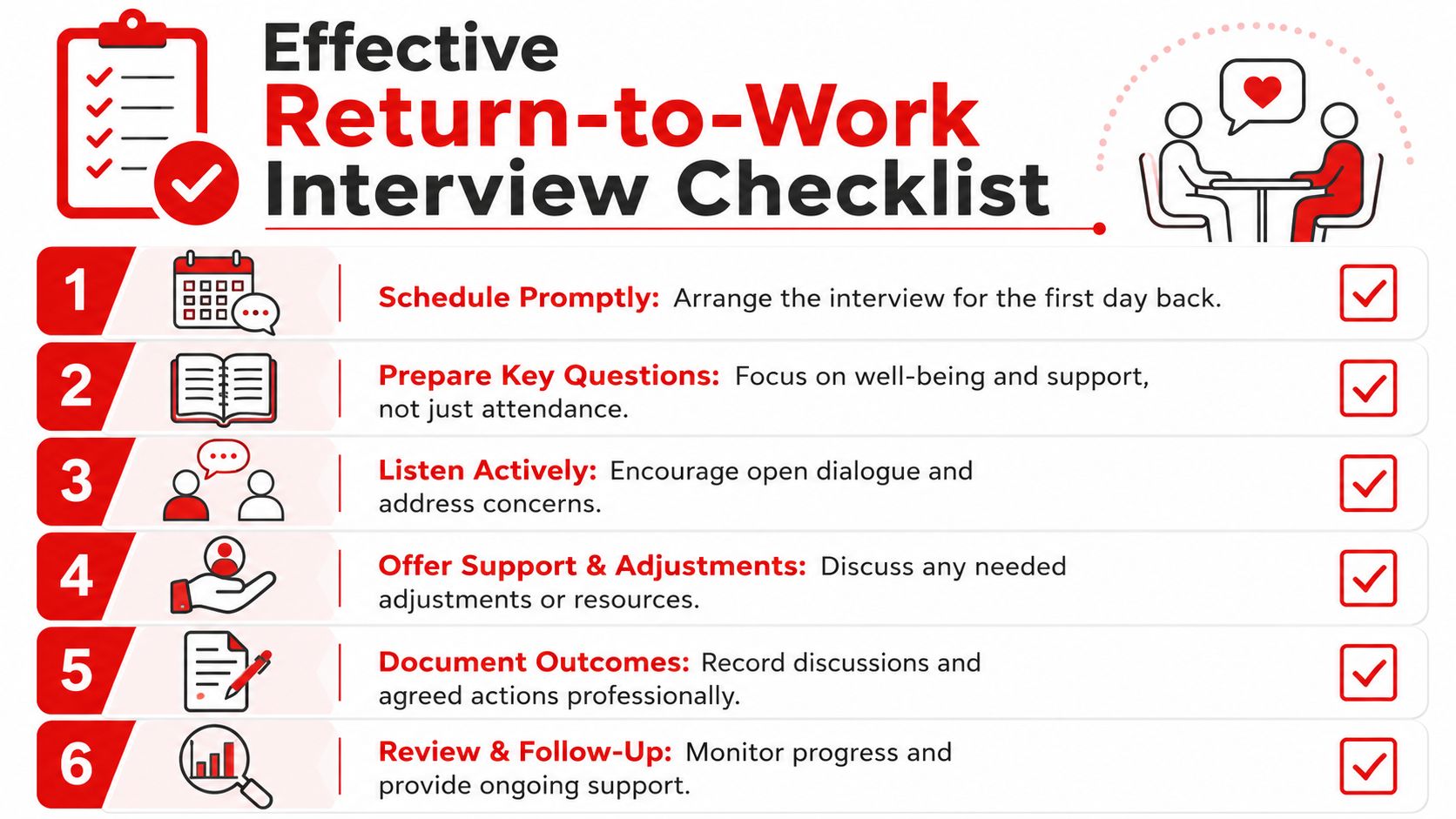
Keep the conversation steady and practical. A useful checklist is:
- Are you fit to return? Confirm they're well enough to work safely.
- Do we need to know anything about restrictions? Especially in kitchens with knives, heat, lifting, and fast pace.
- Has the absence highlighted a wider issue? Health, workload, home pressure, team conflict.
- Do you need any short-term support? Adjusted duties, a slower start, or a quick welfare review.
- Do you understand what was recorded? Make sure the absence record is accurate.
For a chef de partie returning after a stomach bug, that may be a short factual conversation. For a supervisor returning after stress-related absence, it should be more thoughtful and private.
Here's a useful explainer to share with managers during training:
Keep it supportive, not soft
Supportive doesn't mean woolly. You can be human and still be firm.
If someone has had several short absences, say so. If a reporting rule wasn't followed, address it. If there's a pattern around weekends, note it and move to the next management stage if needed. The point is to deal in facts, not suspicion.
Manager's note: The return-to-work interview is where you spot the difference between a one-off illness and a pattern that needs action.
Record enough, but don't overcomplicate it
Good records matter. They help you spot trends, apply the policy consistently, and support fair decisions later. For a small pub in Devon, this may be a secure HR file and a standard form. For a boutique hotel in Berkshire, it may sit in a central people system.
Keep records factual. Date of absence, reason given, evidence provided, return date, key points discussed, and any agreed actions. Don't turn notes into opinion pieces.
A clean record after every absence does two things. It protects the business, and it often changes behaviour because staff know absences aren't being ignored.
Handling Long Term Sickness and Repeated Absences
Managing sickness absence causes many hospitality operators to wobble. Short absences are annoying. Long-term or repeated absences are harder because the staffing pressure builds while the legal risk rises.
You still need to manage it. Avoiding action helps no one.
The retention side matters as well. Cezanne HR highlights a 1 in 5 risk of an employee not returning to work after just 4 weeks of sickness absence (Cezanne HR on why one-size absence policies don't fit all). In hospitality terms, that means long-term sickness can quickly become a resourcing problem, not just a temporary rota issue.
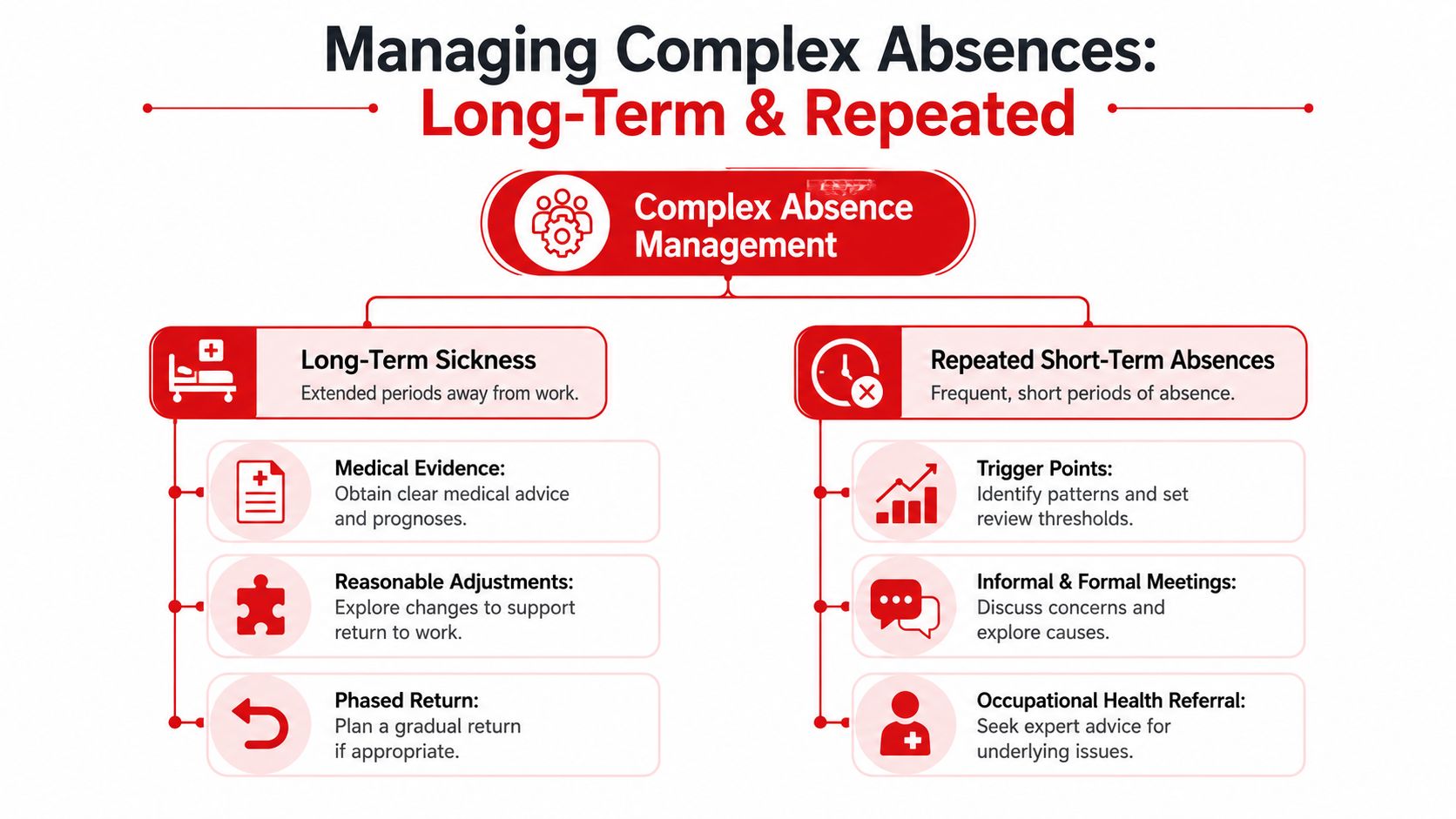
Treat long-term absence as a process, not a holding pattern
When someone is off for a sustained period, don't leave the case sitting untouched. Maintain reasonable contact, gather medical evidence where appropriate, and keep reviewing whether a return is realistic and what support may be needed.
This matters even more in safety-critical kitchen work. A line chef with a hand injury, a pastry chef affected by medication, or a manager dealing with acute stress may need a different route back than “come back when you're fine”.
Repeated short absences need proper review
Persistent one-day and two-day absences can be just as disruptive as one long spell off. In fact, in kitchens they're often worse because they hit with no warning.
Use your trigger points. Then review the pattern properly.
| Situation | What managers should do |
|---|---|
| Frequent short absences | Hold a review meeting and check for underlying causes |
| Absences linked to a health condition | Consider medical input and possible adjustments |
| Stress or mental health concerns | Focus on support, workload, and whether work factors are involved |
| Persistent operational disruption | Move to formal stages with documentation |
Shoosmiths' employer guidance makes clear that when short-term absence becomes persistent, employers may need a clear attendance policy, documented warning stages, and medical evidence, while underlying health conditions can change the process (Shoosmiths guidance on managing short-term sickness absence).
Don't use the policy as a blunt instrument
Hospitality businesses often find themselves in trouble. If an absence may relate to disability, pregnancy-related illness, or a fluctuating condition, you can't just hammer through the same process you'd use for casual unreliability.
That doesn't mean you stop managing. It means you manage properly.
- Mental health needs care: Stress and anxiety absences shouldn't be treated as weakness or laziness.
- Medical evidence matters: If the picture isn't clear, get better information before making decisions.
- Adjustments may be necessary: Duties, hours, pace, or phased returns may need review.
- Capability is different from misconduct: Illness isn't a disciplinary offence.
A fair policy is not a soft policy. It is a structured one.
The real question isn't “Can we take action?” It's “Have we followed a fair process, used evidence, and considered what sits behind the absence?”
Know when to escalate cover
When long-term leave starts dragging on, you need staffing stability. That's especially true for independent hotels, seasonal coastal venues, and country houses where specialist kitchen roles aren't easy to fill at short notice.
At that point, temporary support stops being a convenience and becomes part of continuity planning. If your team is carrying an open section for weeks, you're risking burnout, resignations, and falling standards. That's exactly where agency staff can cover staff on long-term leave without forcing the rest of the brigade to absorb the gap indefinitely.
Your Policy Is Your Plan Your Relief Chef Is Your Solution
A sickness absence policy gives you control. It tells staff how to report absence, tells managers how to respond, and gives the business a fair process when absence becomes repeated or prolonged.
But the policy doesn't plate the food.
If your grill chef goes down on a Friday in Bristol, or your hotel loses a breakfast chef during peak trade in Windsor, the document won't save service on its own. You still need skilled cover, quickly, from people who can walk into a working kitchen and cope.
That's where a relief chef earns their keep. Your policy identifies the trigger. Your staffing plan fills the section. If you already know where your emergency cover comes from, you'll make better decisions under pressure and keep standards intact.
For immediate kitchen support, a temporary chef option like temporary agency chef cover is the practical end of the process. The policy creates order. The chef keeps the service moving.
If sickness absence is disrupting your kitchen, don't leave it to guesswork. Relief Chefs UK has supported hospitality businesses nationwide since 2013 with relief chefs, temporary chefs, permanent chef recruitment, yacht chefs, villa chefs, and wider staffing support. If you need dependable cover for a pub, hotel, restaurant, private household or multi-site operation, get in touch and secure a staffing plan before the next call-off lands.