
Friday night is done. Service held. Guests left happy enough. Then payroll lands on your desk and the numbers tell a different story. Two chefs stayed late again. Someone covered a sickness on double shifts. The KP washed up past close because the kitchen limped into service short. What looked like a busy but manageable week has turned into another hit on margin.
That's how overtime creeps in. Not as one dramatic decision, but as a chain of small operational failures that become normal. A late prep list. A weak handover. A rota that looked fine on Monday and collapsed by Saturday. In pubs, hotels and restaurants across Devon, Bristol, Berkshire, Wales and beyond, managers keep treating that pattern as unavoidable. It isn't.
If you want to learn how to reduce overtime costs, start by dropping the idea that this is just a payroll issue. It's a resilience issue. A kitchen that depends on overtime to stay open is a kitchen with no buffer, no cover and no control. Fix that, and you don't just cut labour leakage. You protect standards, reduce burnout, steady your service and stop firefighting every weekend.
Your Guide to Taming Runaway Overtime Costs
The dangerous part about overtime is how ordinary it feels.
A head chef asks to keep one section on for another hour because prep ran over. A hotel kitchen in Windsor extends a breakfast chef because a function lunch landed late. A pub in Dorset asks the sous to cover a sickness instead of risking a weak service. None of that sounds reckless in isolation. Done week after week, it becomes a habit your P&L carries.
The cost is bigger than many operators realise because overtime sits on top of an already heavy wage base. The UK Office for National Statistics reported that overtime added about £20 per week to average full-time pay in 2024, based on £682 total weekly pay versus £662 excluding overtime, as referenced in this overtime cost breakdown. In hospitality, where labour is one of the biggest controllable costs, that extra creep matters fast.
Overtime is usually a symptom
When I look at a kitchen with chronic overtime, I rarely see a team working harder than everyone else. I see one of four things:
- Weak planning. The rota doesn't match demand, so the team catches up in paid extra hours.
- No cover bench. One absence triggers panic because nobody can step in cleanly.
- Poor section flexibility. Too few people can move across larder, garnish, prep or pastry.
- Messy close-down routines. The team finishes late because the operation is badly organised.
Overtime that shows up every week isn't a badge of commitment. It's evidence that the operation is relying on strain instead of structure.
What actually works
You won't solve this with one stern message about “no more overtime”. That usually drives the problem underground. Staff still stay late, standards dip, or managers approve hours after the damage is done.
The fixes that hold are simpler and tougher:
- Diagnose the root causes
- Build rotas around demand, not hope
- Create staffing resilience for the gaps you know are coming
- Set rules that managers and chefs follow
That's the difference between trimming a timesheet and fixing a leaking operation.
First Diagnose Your Overtime Problem Before You Fix It
Most businesses measure overtime too late. They see the total cost after payroll, complain about it, then repeat the same staffing decisions next week.
That isn't analysis. It's hindsight.
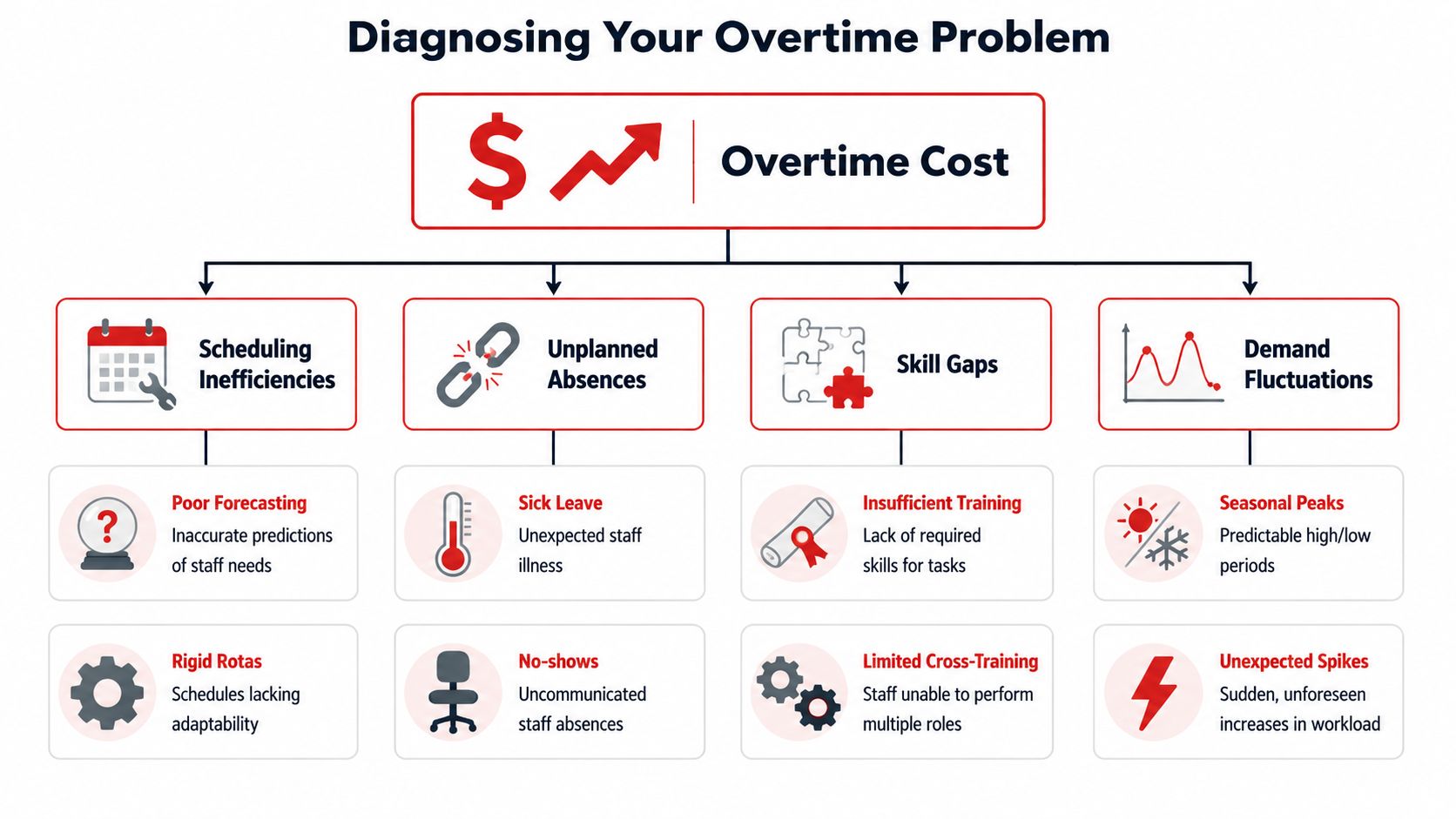
Start with a weekly overtime diagnostic. Compare the rota against the hours worked. Then break every overtime instance down by role, shift, site and trigger. If you run more than one kitchen, split it by venue too. A boutique hotel in Reading may have a very different overtime pattern from a food-led pub in Devon, even under the same group.
Track the who, when and why
If your overtime log only shows hours and cost, it's too blunt to help. You need the story behind the hours.
Use a simple log with entries like:
| Date | Employee | Role | Planned finish | Actual finish | Reason |
|---|---|---|---|---|---|
| Friday | CDP | Grill | 22:00 | 23:15 | Late bookings and no cover |
| Saturday | Sous chef | Pass | 21:00 | 00:00 | Sickness cover |
| Sunday | KP | Close | 18:00 | 19:30 | Delayed close-down and prep spillover |
Then review it every week against service notes.
Look for repeated triggers:
- Weekend peaks that were predictable but not staffed properly
- Late kitchen finishes caused by poor close procedures
- Sickness cover falling on the same senior people
- Prep overruns because quiet-day production isn't being used well
- Skill bottlenecks where only one chef can run a section confidently
Focus on the costly few, not everybody
Blanket policies usually fail because overtime is rarely spread evenly. In most operations, the highest-overtime 20% of staff generate about 80% of overtime spend, according to this workforce management reference. That means your fastest win is usually targeted.
If one breakfast chef always overruns, inspect breakfast production. If the same sous chef covers every absence, the issue is bench strength. If Friday nights always run long on one site, that venue needs a different service plan.
Practical rule: Don't ask “How do we reduce overtime everywhere?” Ask “Which three roles, shifts or triggers are causing most of it?”
Run a cost reality check
A lot of operators underestimate overtime because they compare it only with hourly rate. That's the wrong comparison. The right comparison is what that recurring overtime is doing to the full labour model, your service consistency and your team's stamina.
A proper cost of employing comparison for hospitality staffing is beneficial. It forces you to weigh repeated overrun, absence cover and burnout risk against smarter planned cover.
Here's what doesn't work:
- Cutting approved hours without solving the cause
- Telling managers to “keep labour down” with no staffing plan
- Assuming busier trade is the only reason costs rise
Here's what does:
- Audit overtime weekly.
- Sort it by reason, not just person.
- Isolate the repeat patterns.
- Fix the operational trigger before you touch policy.
Once you can name the pattern, you can stop paying for it.
Build a Rota That Bends Not Breaks
A rigid rota looks efficient on paper and falls apart in service.
That's the trap. Managers write a tight schedule to protect labour, then one booking spike, one no-show or one sick call blows a hole in it. The answer isn't to overstaff every shift. It's to build a rota with movement in it.

Forecast demand like an operator, not a gambler
A food-led pub in Devon has different pressure points from a city-centre restaurant in Bristol. Coastal trade swings with weather, holidays and tourism. A hotel in Slough or Reading may have steadier midweek business demand and sharper event-driven peaks. A venue in Windsor might carry weekend and function volatility.
Your rota has to reflect your own trading pattern.
Use your own booking pace, sales history, events calendar and local knowledge. Then build staffing around pressure periods before they happen.
A stronger rota usually includes:
- Staggered starts so prep, lunch and dinner pressure don't all sit on the same arrival time
- Protected prep hours on quieter days to reduce late finishes later in the week
- Earlier close-down discipline so the last hour of service doesn't create two more paid hours after it
- Role-specific cover for the sections most likely to bottleneck
Cross-train to remove bottlenecks
If only one person can run larder properly, you don't have a rota. You have a dependency.
Cross-training is one of the few labour controls that improves both cost and service. A commis who can support garnish, a CDP who can switch to breakfast, or a kitchen porter who can handle basic prep gives you internal flexibility before overtime even enters the conversation.
That matters most when:
- A chef calls in sick on the day
- The pastry or breakfast section runs thin
- A function lands against normal service
- You need to move labour mid-shift without wrecking standards
Train for coverage, not just development. The point isn't to make everyone do everything. The point is to stop one gap turning into expensive overrun.
Build buffer without carrying dead hours
Some managers hear “buffer” and think “wasted labour”. Not if you do it properly.
A useful buffer is targeted. It might be a short prep shift on a known pressure day. It might be an overlap around handover. It might be a flexible chef whose brief is to plug the busiest section, finish prep and stabilise close.
Compare the two models below:
| Weak rota design | Strong rota design |
|---|---|
| Exact staffing to ideal trade | Staffing with planned flexibility on pressure points |
| Same shift pattern every week | Shift pattern shaped by bookings, events and seasonality |
| One person owns one section only | Key sections have cover options |
| Overtime used for catch-up | Catch-up designed out of the day |
Tight rotas create false savings
The easiest way to lose control is to chase a perfect labour percentage at rota stage and ignore operational reality.
I've seen this repeatedly. A venue trims one shift to “save labour”, then pays more later because the senior team stays on, prep falls behind, standards wobble and service drags. The wage line looks disciplined until actual hours arrive.
To reduce overtime costs, write rotas that can absorb normal hospitality chaos. That means planning for peaks, training for movement and protecting the handovers that stop one shift infecting the next.
The Strategic Role of Flexible Staffing Solutions
Even a well-built rota has limits. Hospitality is live trading. Staff get sick at short notice. A chef walks out. A wedding party extends. A seaside pub gets hit by weather-driven footfall. A boutique hotel loses a breakfast chef on the morning of a full house.
That's where most overtime decisions are really made. Not in the rota meeting, but in the panic between a staffing gap and service.
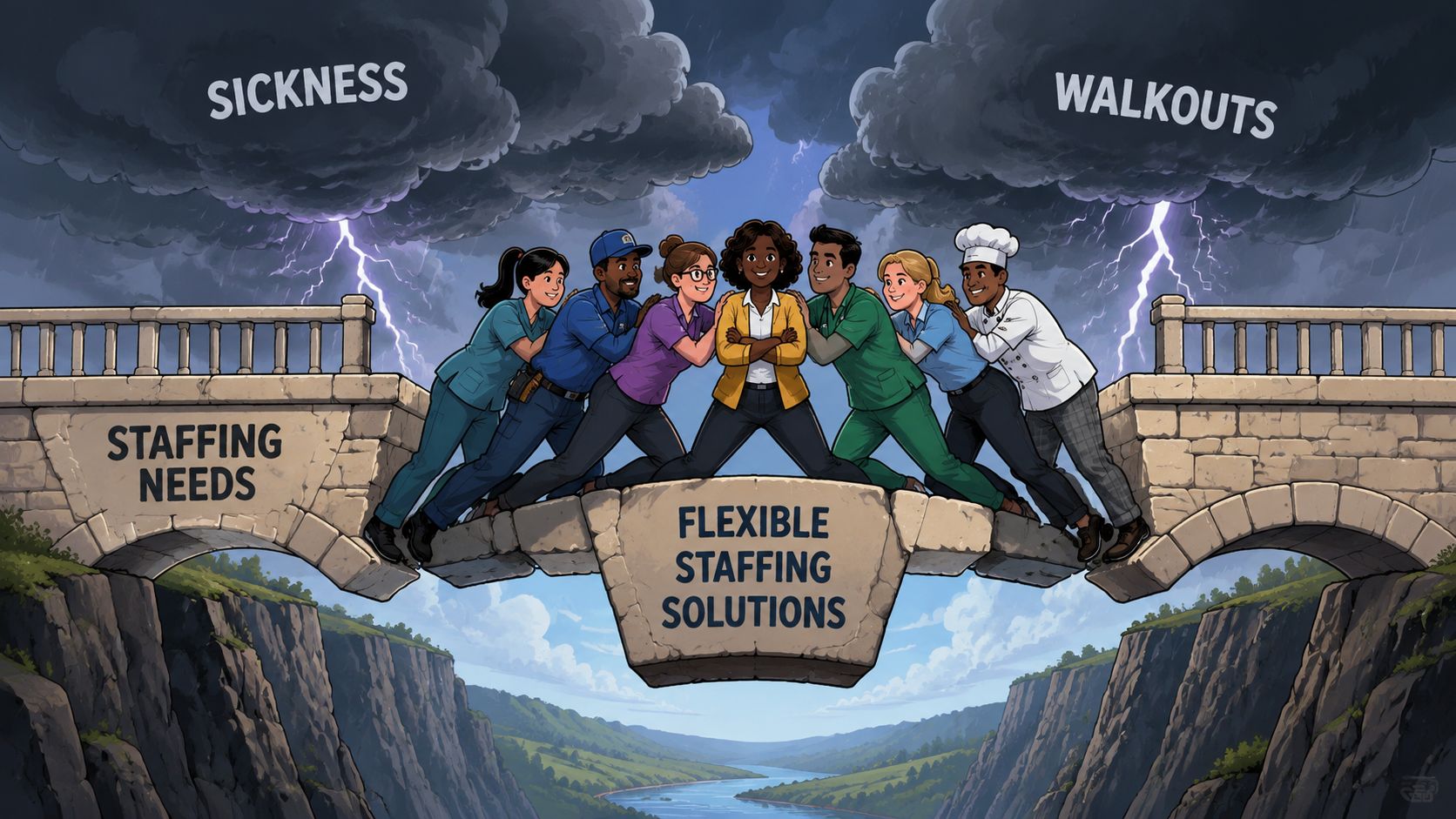
Reducing overtime is often a staffing resilience problem, not just a scheduling problem. With persistent vacancy pressure in UK hospitality, overtime can become a structural substitute for unavailable labour, as discussed in this analysis of overtime and staffing resilience.
Reactive temp cover and strategic cover are not the same
A lot of operators have been burned by generic agency supply. Someone turns up late, can't handle the menu, doesn't fit the pace of the kitchen, and the permanent team still ends up carrying the service. That doesn't reduce overtime. It just adds frustration.
Strategic flexible staffing looks different. You use it to protect the operation where your permanent structure is naturally vulnerable.
That might mean:
- Short-notice sickness cover for a pub kitchen in Dorset
- Seasonal reinforcement in Devon during holiday trade
- Temporary chefs for event-heavy hotel periods in Berkshire
- Permanent chef recruitment where recurring gaps keep creating the same overtime pattern
- Specialist support such as yacht chefs or villa chefs when private hospitality work needs experienced cover rather than general labour
The point is simple. If the same gap keeps triggering overtime, it isn't a surprise anymore. It's a staffing need that hasn't been solved properly.
Build a relief pipeline before you need one
The strongest operators don't wait for the phone call at 8am to start looking for cover. They already know who they can call, what level they need and how quickly someone can slot in without derailing service.
That's why many groups keep a flexible staffing channel open with a specialist provider. One example is hospitality temp staff support through Relief Chefs UK, which covers relief chefs, temporary chefs and wider hospitality staffing support across the UK. For venues that need continuity, it can also sit alongside longer-term recruitment rather than replacing it.
Use a flexible staffing partner for the jobs that damage overtime most:
- Emergency chef cover
- Known seasonal spikes
- Bridging vacancies while recruiting
- Multi-site balancing when one venue gets hit harder than another
- Pressure periods where standards can't drop
A chef-run staffing partner usually understands kitchen reality better than a generic temp desk. That matters when a venue needs someone who can step into service, read the section, work clean and keep the brigade settled.
Here's a practical look at the logic behind flexible cover:
Overtime can cost you more than wages
When managers refuse outside cover on principle, they often push hidden costs elsewhere.
You see it in:
- Burnout in the reliable core team
- More mistakes and wastage
- Poor closes and weak prep for the next day
- Standards slipping because tired chefs stop caring about detail
- Resignations caused by constant overloading
If your operation relies on the same loyal people absorbing every gap, you don't have flexibility. You have a failure point.
Professional relief staff aren't a luxury purchase. In the right situations, they're a control mechanism. They stop a short-term gap from becoming a long-term labour problem.
Setting New Policies and Legal Guardrails
Once you've diagnosed the cause and fixed the obvious rota weaknesses, put guardrails in place. Otherwise the old habits come back the moment trade gets busy.
Managers need a clear overtime policy. Not a vague instruction to “watch hours”, but a working rule set the team can follow under pressure.
Write a policy people can use
A good overtime policy is short. If it runs to pages of HR language, kitchen managers won't use it in real time.
At minimum, include:
- Approval rule. Who can authorise overtime, and in what situations.
- Recording rule. How actual hours must be logged on the day.
- Exception rule. What counts as acceptable emergency overtime.
- Review rule. When overtime gets reviewed and by whom.
- Follow-up rule. What operational action is taken if the same trigger repeats.
Unapproved overtime often hides in culture. The chef stays because “the team needed it”. The manager signs it off after service because there was no realistic alternative. If you want change, that chain has to become visible.
Use legal limits as an operational control
The Working Time Regulations 1998 created the default 48-hour average weekly limit for most workers in Great Britain. That legal framework is one reason hospitality operators need to monitor hours closely, not just for cost but for fatigue, rest and compliance. Workforce-management guidance also notes that businesses combining better scheduling and attendance control can often achieve a 15% to 20% reduction in overtime costs within 60 to 90 days, as outlined in this review of overtime reduction methods.
That doesn't mean every kitchen can force overtime down overnight. It means the discipline works when it's applied properly.
A useful support route for operators juggling temporary cover, contract staffing and compliance is to understand how contract employment agencies in hospitality fit into lawful staffing practice.
Get buy-in without pretending this is painless
Some staff rely on overtime pay. Some managers rely on overtime to save a weak week. If you announce a crackdown without changing the operation, you'll create resentment and still fail.
Handle it directly:
| What to say | Why it works |
|---|---|
| We're fixing repeat overtime caused by poor planning | Staff hear a business reason, not blame |
| We want cleaner rotas and better notice of changes | Predictability matters to teams |
| We still approve genuine operational exceptions | You keep credibility in real service conditions |
| We're monitoring hours for welfare and compliance too | This isn't only about cost |
The tone matters. Don't frame it as punishment. Frame it as control.
Your 8-Week Plan to Cut Overtime Costs
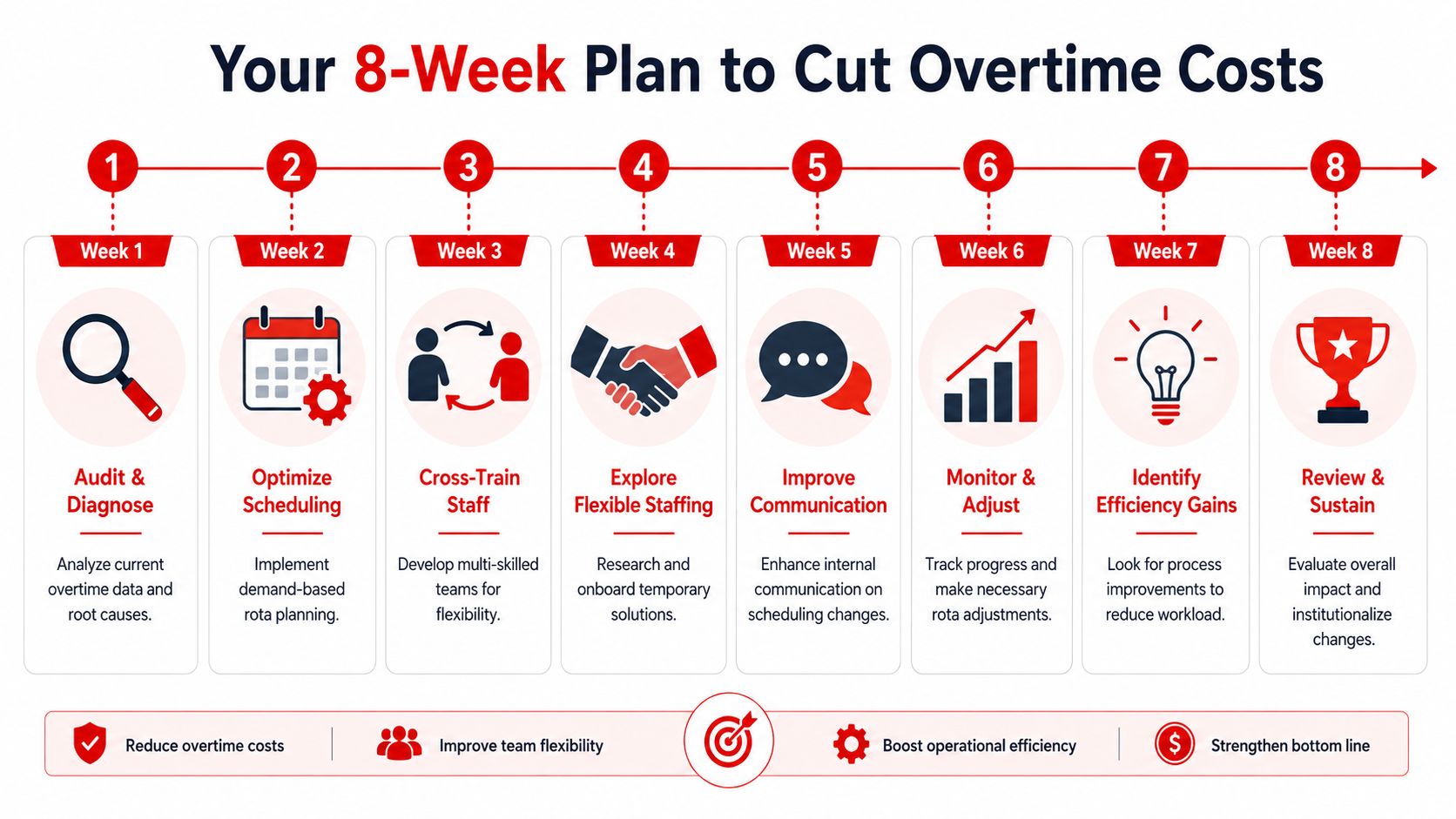
You don't need a grand transformation programme. You need a disciplined eight weeks and a manager who will review what's happening.
Weeks 1 to 2
Audit every overtime hour. Match rota to actuals. Split the problem by role, shift and trigger. Don't argue about solutions yet. Just get the patterns on paper.
Weeks 3 to 4
Rebuild the rota around real demand. Adjust start times, prep allocation and close-down structure. Identify where cross-training would remove the worst bottlenecks.
Weeks 5 to 6
Put the overtime policy into use. Set approval rules. Create a clear process for short-notice absence cover. If outside support is part of the answer, line that up now instead of waiting for the next emergency.
Weeks 7 to 8
Review the first results and tighten the weak spots. Keep the changes that reduced overrun without harming service. Fix the ones that looked tidy on paper but failed in live trade.
Review overtime every week, not every month. Monthly reporting is too slow for a kitchen problem.
Keep the score simple
Track a handful of measures that managers can use:
- Overtime by shift
- Overtime by employee
- Overtime by reason
- Rota versus actual hours
- Late finishes by section
- Sickness cover incidents
- Use of relief or temporary cover
- Service impact notes from the head chef or duty manager
That's enough to show whether you're reducing overtime costs or just moving the pressure elsewhere.
Frequently Asked Questions about Overtime Management
Is all overtime bad
No. Planned overtime for a one-off event, major function or seasonal push can make commercial sense. The problem is chronic unplanned overtime. That's the version that points to weak scheduling, staffing gaps or poor kitchen discipline.
What if my team relies on overtime pay
Handle that transparently. Don't pretend people won't feel the change. Explain that repeated overtime usually comes with unstable rotas, fatigue and more pressure on the same people. Better planning gives the team more predictable work and protects the business that pays them.
Should I ban overtime outright
Usually not. A blanket ban sounds tough and often backfires. Managers either break the rule, service quality drops, or the team starts hiding hours. Approval control works better than absolute bans.
What's the difference between a generic temp agency and a chef staffing specialist
Kitchen cover is skill-sensitive. A generic temp agency may fill a slot. A chef specialist is more likely to understand section fit, service pace, kitchen standards and the difference between emergency cover and proper brigade support. That matters when you're trying to protect service, not just fill a gap.
When should I use relief chefs instead of pushing my permanent team harder
Use relief support when the same gaps keep repeating, when vacancies drag on, when sickness is hurting service, or when seasonal trade is predictable enough to plan for but too volatile to carry in permanent headcount. That's especially relevant for independent pubs, boutique hotels, private households, yachts and villas where standards can't dip just because staffing has.
Can overtime reduction hurt service
Yes, if you do it badly. Cutting hours without fixing skill coverage, prep flow or absence cover will damage service quickly. The right approach reduces waste and protects the guest experience at the same time.
If overtime is showing up week after week, the issue usually isn't effort. It's structure. Relief Chefs UK has supported hospitality businesses nationwide since 2013 with relief chefs, temporary chefs, permanent chef recruitment, yacht chefs, villa chefs and wider staffing support for pubs, restaurants, hotels and private clients. If you need to stabilise a kitchen, cover short-notice gaps or build a more resilient staffing plan, get in touch and discuss what cover looks like for your site.