
Friday lunch is fully booked. A wedding tasting is due in the afternoon. Then your sous chef rings in sick, a breakfast chef has already handed in notice, and the KP is covering jobs they shouldn't be covering. At that point, the skills shortage stops being a labour-market headline and becomes a service risk.
Most operators don't need another generic article telling them to “invest in people”. They need skills shortage solutions that work at three levels. First, keep service running today. Second, stop the same staffing gap from repeating next month. Third, build a team structure that doesn't fall apart every time one chef drops out.
That's the playbook that works in pubs, hotels, restaurants, private households, yachts, and seasonal sites across the UK.
Confronting the Reality of the UK Chef Shortage
The chef shortage isn't a temporary blip. It's a trading condition. Research cited by the Open University found that over 90% of British organisations had struggled to find workers with the necessary skills in the past year, as noted in this summary of UK skills gap data. If nearly every organisation is struggling, hospitality operators can't keep planning as if the right chef will appear next week.
In real kitchens, the damage shows up fast. Menus get cut badly instead of intelligently. Head chefs start covering prep, ordering, and service at the same time. Standards slip because the team is running on fatigue rather than structure. One absence becomes three problems. Production falls behind, service gets slower, and the team starts looking elsewhere.
Why the old hiring mindset fails
A lot of venues still treat chef shortages as a straight recruitment problem. Write a job ad. Wait for CVs. Interview for pedigree. Hope the person starts. Hope they stay.
That approach breaks down in a tight market because it assumes time is on your side.
It usually isn't.
If you're running a boutique hotel in Devon, a gastropub in Berkshire, or a high-volume kitchen in Bristol, you already know the issue isn't just “finding a chef”. It's finding someone who can hold a section, fit the pace of the kitchen, handle your standards, and turn up consistently enough to give the rest of the team confidence.
Practical reality: waiting for the perfect candidate often costs more than using a workable stop-gap and building from there.
The only sensible response is layered
Operators who cope best don't rely on one fix. They use three tiers.
| Phase | What it solves | Typical time horizon |
|---|---|---|
| Triage | Emergency gaps that threaten service | Today to next 48 hours |
| Stabilisation | Repeat staffing pressure and weak hiring processes | Next few weeks to months |
| Resilience | Long-term talent supply and retention | Ongoing |
Emergency cover is not a failure. Used properly, it buys you the breathing room to make better decisions. A kitchen that survives this weekend has a chance to improve next month. A kitchen that collapses under rota pressure usually starts making expensive decisions under stress.
What good operators do differently
They separate urgent cover from strategic hiring.
They don't ask one exhausted head chef to fix all three problems at once.
And they treat kitchen stability as an operating discipline, not a staffing afterthought. That means using relief support when service is exposed, improving hiring around real kitchen skills rather than hopeful CV reading, and building a deeper bench over time through training, better scheduling, and wider talent routes.
The Triage Phase Immediate Solutions for Kitchen Staffing Gaps
When a chef drops out at short notice, the first job isn't recruitment. It's service protection.
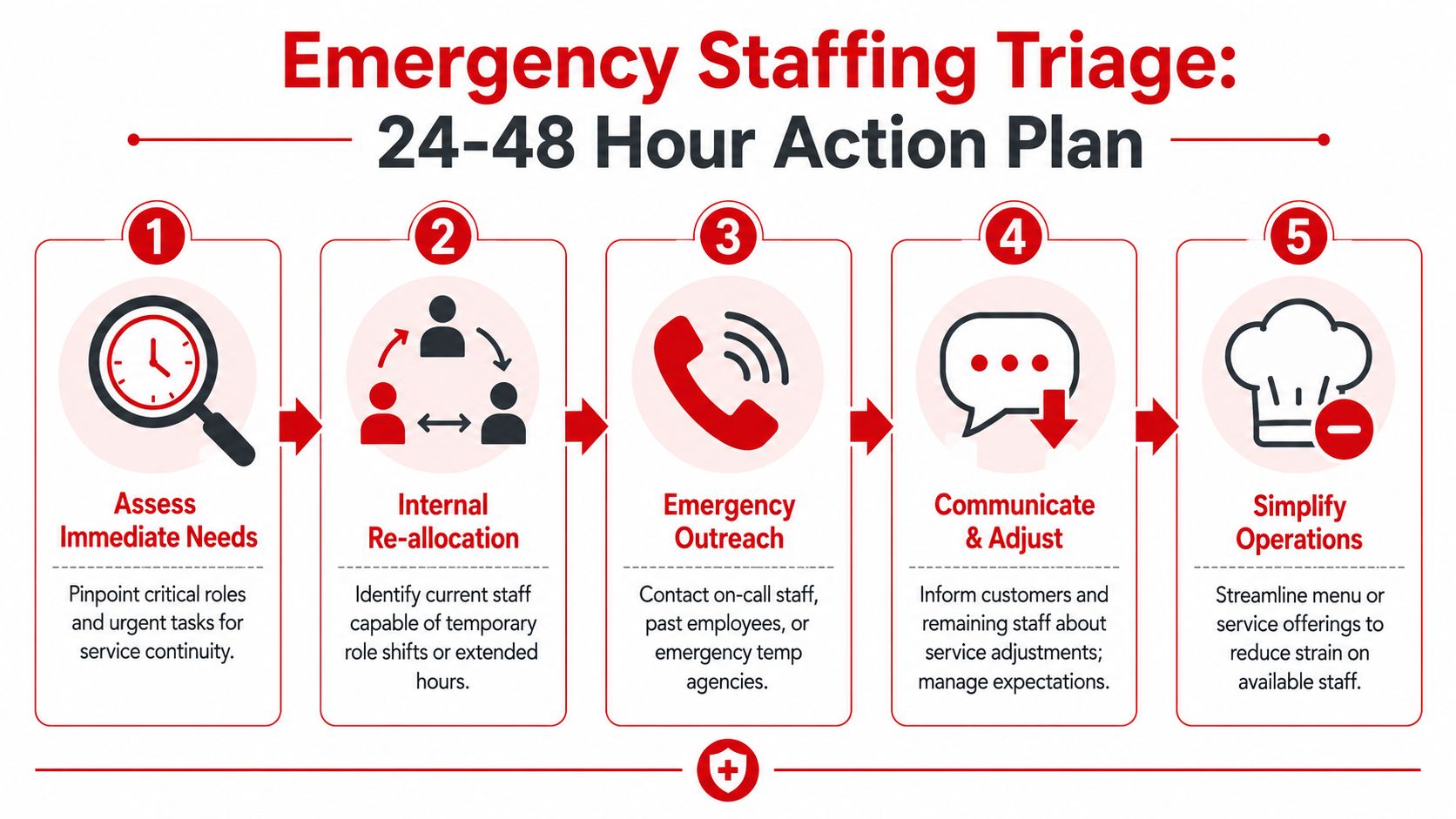
You need to decide, calmly and quickly, what absolutely has to be covered to get through the next shift or two without wrecking standards, burning out the team, or damaging guest experience. In Bristol, Dorset, Reading, or anywhere else, the sequence is the same. Assess the gap. Protect the core service. Bring in reliable cover fast.
What to do in the first hour
Start with the section, not the person.
If the missing chef was on grill, sauce, breakfast, pastry, or banqueting prep, ask what output that section is responsible for in the next service window. Then decide what can be covered internally and what cannot.
Use this order of action:
- Identify the critical station. Don't spread panic across the kitchen. Name the station that will break service if left uncovered.
- Reallocate only where it's safe. A strong CDP may stretch into another section for one service. Don't create two weak sections to patch one absence.
- Reduce complexity early. Cut dishes that create bottlenecks. Trim specials if they add pressure without enough margin.
- Call for experienced emergency cover. Speed matters, but so does fit.
- Reset expectations front of house. If ticket times may move, tell the team before guests tell you.
Relief chefs are not just temps
A good relief chef isn't just someone available. They're someone who can enter an unfamiliar kitchen, read the setup fast, adapt to the menu, and take pressure off the core team rather than add to it.
That's the difference between random temp supply and proper operational cover.
If you need a quick benchmark for what professional chef staffing should look like, review specialist employment agencies for chefs against a simple standard: right-to-work checks, experience relevant to your site, short-notice reliability, and clear communication on who is arriving.
A poor emergency booking creates a second emergency. A good one gives the kitchen its shape back.
Protect revenue, not just the rota
Operators often make the mistake of trying to preserve the original plan at all costs. That's how teams get crushed. If one key chef is out, the smarter move may be a controlled reduction in menu width, prep scope, or service pace.
That is not weakness. It is management.
Consider the practical trade-offs:
- Keep the bestsellers on if they are repeatable and profitable.
- Pull dishes with fiddly garnish or split prep dependencies if they slow the pass.
- Use senior chefs where mistakes are most expensive rather than where habit says they should stand.
- Preserve tomorrow. Don't run today's team so hard that you create another sickness call tomorrow.
The real aim of triage
The aim isn't to pretend nothing happened. It's to get through the immediate pressure without damaging standards, team trust, or the guest journey more than necessary.
If you handle this phase well, you buy time for the next one. That's where proper improvement starts.
The Stabilisation Phase Smarter Hiring and Training
Once the immediate crisis is under control, the next job is to stop solving the same problem every week.
Most kitchens don't have a universal capability issue. They have a few weak points that keep causing operational pain. OECD guidance suggests many firms face localised gaps in specific roles, rather than a whole workforce lacking the necessary skills, as outlined in the OECD's analysis of skill gaps in firms. That's why blanket hiring rarely works. You need to identify the exact pressure points.
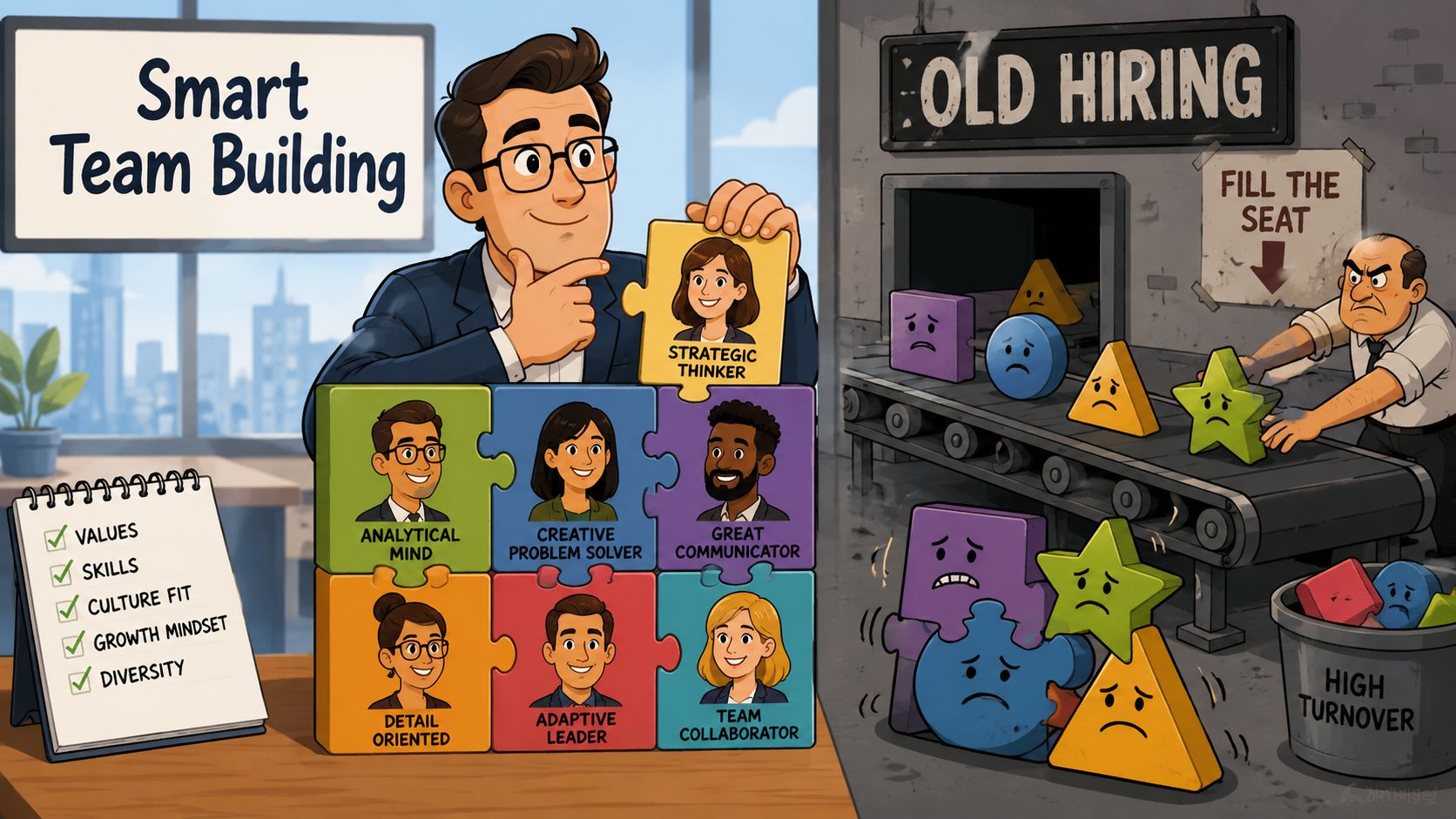
Hire for station competence, not CV theatre
A polished CV can hide a weak service chef. A modest CV can hide someone very solid on the line.
The better approach is skills-based hiring. That means breaking the role down into the tasks that matter in your kitchen and testing for those.
For example, if you need a chef for a busy hotel in Windsor or Slough, ask:
| Role need | What to test for |
|---|---|
| Breakfast cover | Can they organise prep and maintain pace across the service window? |
| Grill section | Can they control timing, consistency, and communication under pressure? |
| Sous-level support | Can they run service, support juniors, and spot issues before the pass backs up? |
A practical hiring process is often simple:
- Define the section clearly. Don't advertise for a vague “strong chef”. Specify the shift pattern, menu style, station, and pressure points.
- Ask task-based questions. Better than “tell me about yourself” is “what do you prep first for a busy Sunday roast service?”
- Use a short trade trial properly. Watch mise en place, pace, hygiene, communication, and recovery from interruption.
- Check adaptability. A chef who has worked across pubs, hotels, events, or private settings may give you more resilience than a narrower profile.
For longer-term recruitment, it helps to work with a specialist partner focused on recruitment in hospitality rather than broad-brush staffing.
Cross-train the team you already have
Most operators underuse the team they've already got. Not because the team lacks potential, but because no one has mapped where the gaps really are.
A sensible stabilisation plan looks like this:
- List your vulnerable sections. Breakfast, banqueting, pastry, and grill are common pressure points.
- Score current chefs against real tasks. Can your strong commis plate desserts cleanly, run basic garnish, or cover fryer during peak?
- Train the nearest move, not the biggest leap. Don't try to turn a junior into a sous in one jump. Train them to take one pressure task off a senior chef first.
- Document the section basics. Prep lists, service setup, ordering notes, and close-down routines shouldn't live only in one person's head.
Operational test: if one chef leaves and a whole section becomes un-runnable, your process is too person-dependent.
What doesn't work
Throwing generic training at the team rarely solves kitchen pressure. Neither does hiring on reputation alone. And replacing every weak point externally is expensive, slow, and often unnecessary.
The teams that become more stable are usually the ones that get specific. They know which station is exposed, which chef can step up with support, and which hire will remove the most pressure from the rota.
The Resilience Phase Building a Long-Term Chef Pipeline
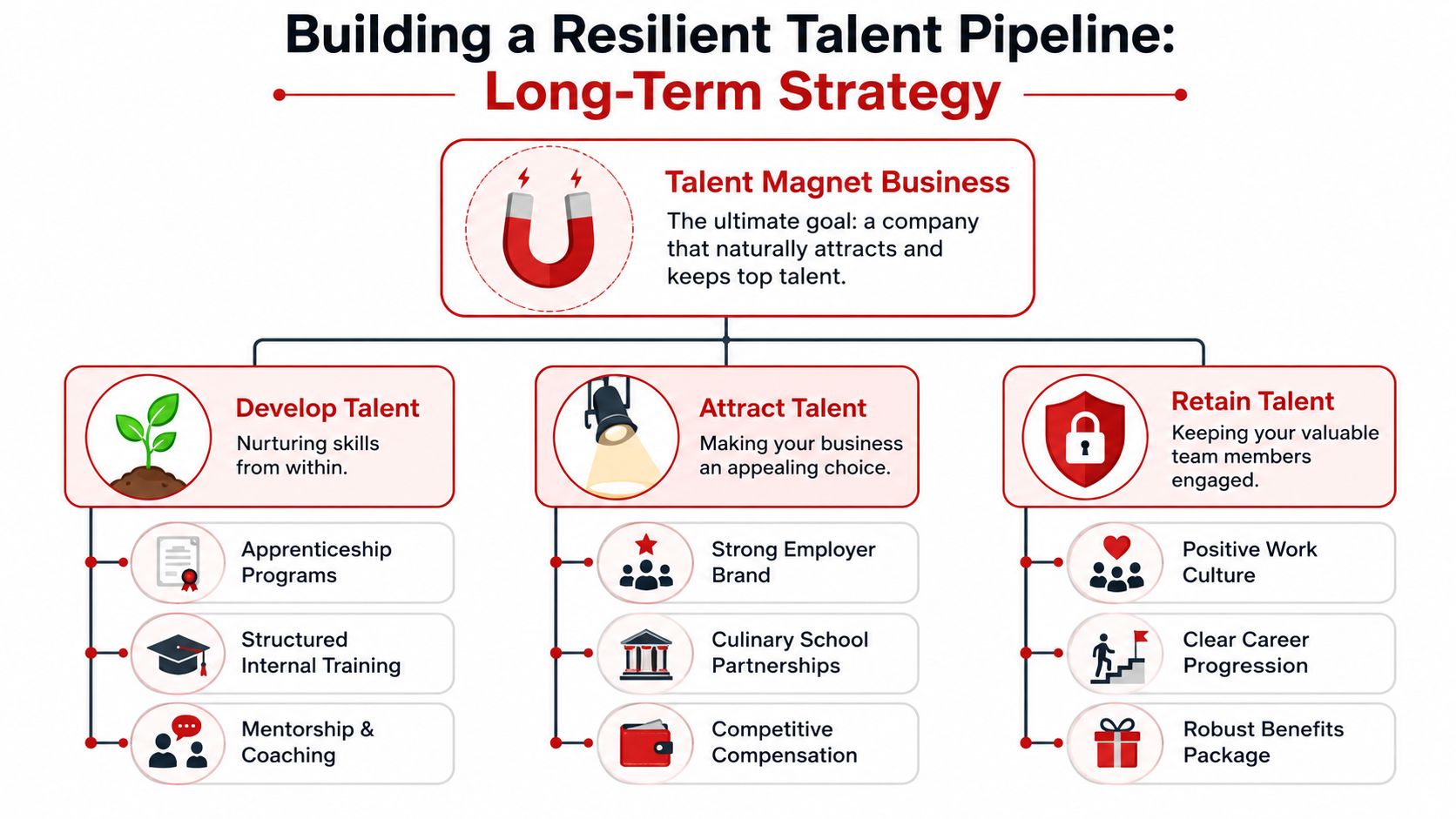
Short-term cover and better hiring help, but they won't fully protect the business if you keep relying on the open market every time a role comes up. Long-term resilience comes from building your own supply of future chefs.
UK employers are consistently advised to use training partnerships and apprenticeships to expand talent supply, and targeted pipeline-building gives operators an edge over businesses that only recruit reactively, as discussed in this workforce strategy analysis.
Start with the structure below, then adapt it to your site, region, and trading pattern.
Build local routes into the kitchen
If you run venues in Berkshire, Wales, Devon, or Dorset, look at local colleges, training providers, and hospitality courses as supply channels, not goodwill projects. The best partnerships are practical.
They usually include:
- A named role target such as breakfast chef, commis, or junior CDP
- A simple competency plan for the first few months
- A supervisor in the kitchen who owns the development, not just HR
- A realistic productivity ramp so the business doesn't expect too much too early
Don't make the mistake of treating apprenticeships as cheap labour. They only work when the job, training, and support are aligned.
A useful example is a hotel group that knows breakfast and prep are recurring pain points. Instead of waiting for those vacancies, it builds an entry route into those stations and develops from there.
Here's a useful visual summary of how hospitality teams can think about building longer-term staffing strength:
Open the door to hidden talent
A lot of hospitality businesses still fish in the same small pool. That's a mistake.
There is a wider labour pool in the UK that many operators underuse. Recent UK policy reporting highlighted about 9 million economically inactive people and around 600,000 people on long-term sick leave who wanted a job, as covered in this discussion of UK labour market inactivity. In practice, that means there are potential workers who may be capable, motivated, and available if the role is designed properly.
That could include:
- Parents returning to work who need school-hours structure
- Older workers who don't want brutal close-open patterns
- Career changers who can handle discipline and pace but need kitchen training
- People returning after illness who may need phased hours and clear boundaries
The hidden labour pool doesn't unlock itself. Operators unlock it by changing shift design, onboarding, and support.
Make flexibility operational, not cosmetic
If a venue says it offers flexibility but still posts clashing rotas, late notice shifts, and no progression, candidates won't stay.
Practical resilience means designing jobs that real people can do consistently. Split shifts, unpredictable closes, and poor handovers shrink your labour pool. Cleaner rota patterns, stronger induction, and visible development routes expand it.
Long-term chef pipeline work is slower than emergency cover. But it's also what stops every summer rush, Christmas push, or wedding season from feeling like the first time you've ever been short.
Practical Retention Incentives to Keep Your Best Chefs
The fastest way to reduce staffing pressure is to stop losing solid people.
That sounds obvious, but many operators still treat retention as secondary to recruitment. In practice, a kitchen with one dependable senior chef and two growing juniors is in a stronger position than a kitchen that keeps replacing leavers with unknowns.
The hidden cost sits in the rota. UK labour market analysis referenced 2.7 vacancies per 100 employee jobs and an unemployment rate of 4.6% in May 2026, with the sharper operational point being that rota instability and burnout often hurt hospitality businesses more than the vacancy headline itself, as discussed in this labour-market commentary on shortages and workforce pressure.
Burnout starts before the resignation
Chefs rarely leave because of one bad shift. They leave because the pattern becomes unsustainable.
The warning signs are usually easy to spot:
- Repeated emergency doubles that become normal
- Last-minute rota changes that make personal life impossible
- No development conversations beyond “can you cover this weekend?”
- Good people carrying weak systems for too long
If one sickness call regularly forces menu cuts, longer ticket times, and management panic, the problem isn't only headcount. It's resilience.
Retention incentives that actually matter
Money matters. So does the daily experience of working in the kitchen.
The most effective retention moves are often practical rather than flashy:
| Incentive | Why chefs value it |
|---|---|
| Predictable rotas | They can plan their life and recover properly |
| Visible progression | They know what good performance leads to |
| Skills development | Training feels worthwhile when it improves their station or next role |
| Public recognition | Strong work gets noticed, not taken for granted |
| Fair cover systems | The same reliable people aren't punished for being reliable |
Try simple habits that managers can keep up:
- Publish rotas earlier wherever possible.
- Name the path to the next level. Don't leave promotion criteria vague.
- Back your best people during pressure. If a chef saves service repeatedly, treat that as leadership.
- Use relief support before the team breaks. Cover is cheaper than losing trusted staff.
A retained chef protects standards, training continuity, and team confidence all at once.
What good retention looks like on the floor
A stable kitchen usually feels calmer before service starts. Prep is organised. Handovers are cleaner. Junior chefs ask better questions because they trust who they're learning from. The head chef isn't spending half the week interviewing and the other half firefighting.
That's why retention belongs inside any serious list of skills shortage solutions. If your best chefs stay, every other staffing decision gets easier.
How to Measure Your Workforce Strategy Success
If you don't track the right signals, staffing still feels like chaos even when it's improving. You don't need a complicated HR dashboard. You need a few measures that tell you whether the kitchen is becoming easier to run.
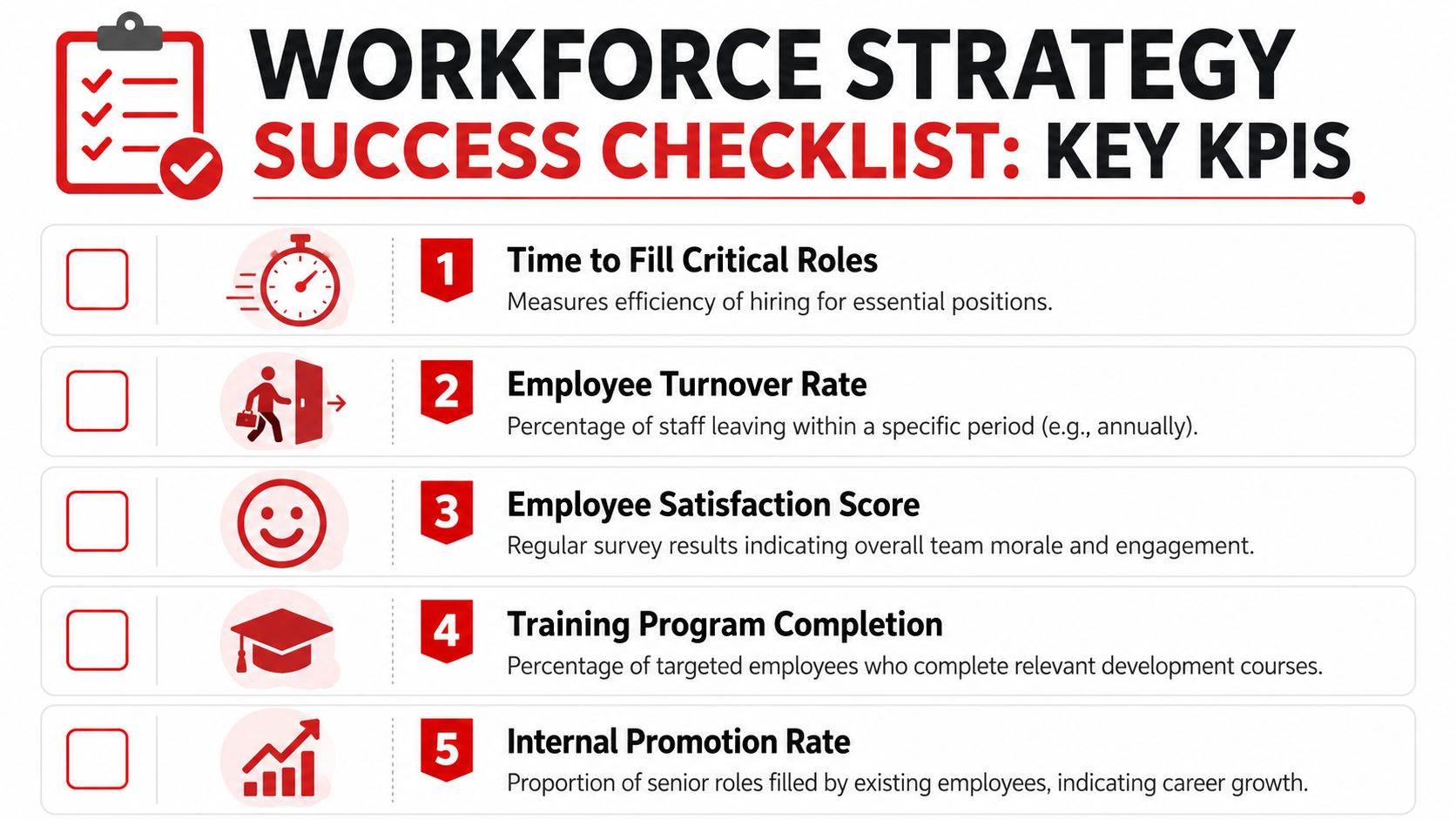
The numbers worth watching
Track these consistently:
- Time to fill critical roles. How long does it take to replace a chef in a role that affects service?
- Staff turnover. Are people leaving faster than the kitchen can absorb?
- Temporary cover spend. Is relief staffing a short-term support tool or a permanent crutch?
- Training completion. Was the cross-training plan completed?
- Internal promotion rate. Are stronger roles being filled from within?
A helpful commercial check is to compare emergency staffing spend against the cost of disruption. Cancelled bookings, shortened menus, management overtime, and poor guest feedback usually cost more than operators first admit.
Keep the dashboard simple
Use one sheet. Review it monthly. Discuss it with the head chef and general manager together, not in separate conversations.
For pay planning and role benchmarking, tools like a hospitality salary calculator can help anchor discussions before a vacancy becomes urgent.
Manager's rule: if a metric doesn't change a staffing decision, don't clutter the dashboard with it.
What improvement should feel like
You should notice fewer panic calls, cleaner rotas, more successful internal step-ups, and less dependency on last-minute fixes. That's a clear sign your workforce strategy is working. The kitchen starts feeling managed again.
Frequently Asked Questions on Chef Staffing
How quickly can chef cover be arranged?
That depends on role, location, and timing, but the best results come when the brief is clear. If you need emergency help in Windsor, Reading, Bristol, or a rural hotel in Devon, speed improves when you can state the station, shift times, accommodation position, menu style, and length of booking straight away.
The biggest delay is usually poor information, not lack of need.
Are agency or relief chefs as good as permanent staff?
Some are excellent. Some are not. The difference comes down to vetting, fit, and whether the chef is used to walking into live kitchens under pressure.
A proper relief chef should stabilise service, respect your systems, and reduce pressure on the permanent team. If they need spoon-feeding all shift, they were the wrong booking.
What's the real cost to think about?
Don't judge cost only by the day rate. Compare it against the cost of a damaged service, burnt-out team, refunded covers, management time, and reputational fallout.
Transparent pricing matters because hidden extras create mistrust fast. So does understanding what you are paying for, such as experience level, short-notice availability, and reliability.
What makes a flexible staffing model useful in hospitality?
It gives you room to absorb pressure without redesigning the whole business every time someone is off. That matters because the labour pool isn't limited to the people currently applying for your advert. As noted earlier in the article, there is a large potential workforce in the UK that includes people outside the active market, and flexibility is often what makes hospitality roles workable for them.
Should we focus on temporary chefs or permanent recruitment?
Usually both, but for different jobs.
Use temporary cover to protect service, seasonal peaks, events, private dining, and sickness gaps. Use permanent recruitment when the role is central to consistency, culture, ordering, and team development. The best operators don't confuse the two.
Can specialist support cover more than pubs and restaurants?
Yes. The same staffing pressures show up in boutique hotels, private households, yachts, villas, events, and multi-site hospitality groups. The requirement changes, but the principle stays the same. You need chefs who can slot into the environment, hold standards, and reduce operational stress quickly.
If you need chef cover fast, or you want a more reliable staffing plan for the months ahead, speak to Relief Chefs UK. Established in 2013 and run by chefs, not recruiters, they support venues across the UK with relief chefs, temporary chefs, permanent chef recruitment, yacht chefs, villa chefs, and wider hospitality staffing support. With response within two hours, vetted chefs who can start within 48 hours, transparent pricing, and nationwide reach from Bristol and Devon to Berkshire, Wales, Dorset, Windsor, Reading, and beyond, they help keep kitchens open and standards intact.