
Premier Agency Chefs Bristol for Hire
21 April 2026

A Bristol kitchen can go sideways fast. One call comes in. Your chef de partie is down sick. A function has added covers. Deliveries are late. Service is still happening, whether the rota likes it or not.
That’s why agency chefs Bristol searches spike when managers are already under pressure. The mistake is treating temporary cover as a panic buy. Smart operators build it into the staffing plan before the phone starts ringing.
Why Your Bristol Kitchen Needs a Relief Chef Strategy Now
It’s a Saturday afternoon. The city is busy. Your bookings are strong, walk-ins are likely, and one absence has just put your whole service at risk. That’s normal Bristol trading pressure. It hits pubs in Clifton, restaurants on the Harbourside, hotels near the centre, and contract catering sites across the city.

The problem usually isn’t one absence. It’s what follows. Your sous chef stretches to cover a section. Prep gets rushed. Breaks disappear. Standards slip in small ways first. Garnish gets sloppy. Allergen communication gets loose. Then tickets slow down, complaints rise, and your regular team burns out.
That’s why a relief chef strategy matters. It protects service, margin, and morale.
The real issue is kitchen instability
Most Bristol operators already know permanent recruitment is hard work. What hurts day to day is instability. Sickness. Holiday clashes. Event spikes. Last-minute resignations. A new starter who looked good on paper and folds under pressure on their first busy shift.
A proper temporary staffing plan gives you room to breathe. It lets you keep covers on the books instead of cutting them. It helps the head chef focus on food, not emergency rota surgery. It also stops good permanent staff from being crushed by repeated doubles and six-day weeks.
Practical rule: If one absence can break service, the kitchen is under-resourced. It doesn’t matter how strong your menu is.
Bristol isn’t a market where you can wing it
Bristol’s hospitality mix makes the pressure sharper. You’re not only competing with nearby pubs and restaurants. You’re also competing with hotels, events, schools, care homes, contract caterers, and private placements for chef availability. The market covers everything from commis chef through to chef manager and head chef work, with agency opportunities across schools, care homes, events, restaurants, and contract catering sites, while private chef placements can command higher day and monthly rates, as shown in the Bristol agency chef market overview from Berkeley Scott.
That variety creates opportunity for chefs. It creates risk for operators who leave staffing too late.
Treat flexible cover as part of the operating model
The strongest businesses don’t wait for disaster. They pre-agree who they call for breakfast cover, who they call for banqueting support, and who they call when the head chef needs a proper second pair of hands for a week, not a body for a night.
Relief cover also works beyond emergency shifts. It helps during menu changes, refurb periods, summer peaks, Christmas build-up, and recruitment gaps while you hire properly. Relief Chefs UK has been operating since 2013, and that chef-led model exists for one reason. Kitchens need support that understands service pressure from the inside.
Use agency chefs Bristol support as a resilience tool, not an act of desperation. That shift in mindset changes how you buy, brief, and manage temporary labour.
The Unskippable Vetting Checklist for Every Agency Chef
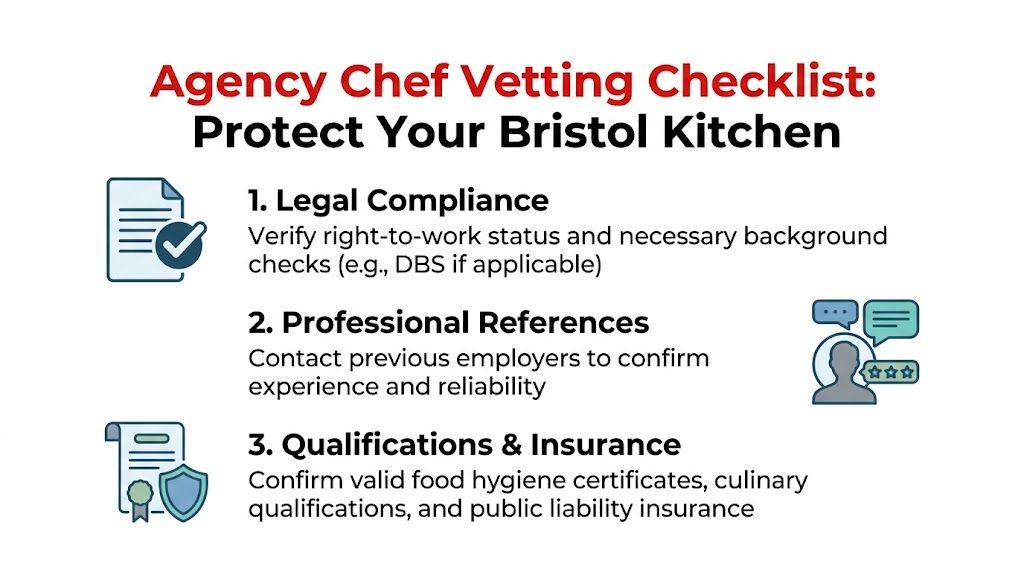
If an agency can’t answer basic compliance questions quickly, stop there. Skill matters. Reliability matters. But legal and operational protection comes first. One unchecked chef can expose your business to immigration issues, food safety failures, insurance problems, and guest risk.
For Bristol-based pubs and restaurants, regional deployment models with dedicated chef desks have been reported to achieve 95% on-time placement rates within 48 hours, and that process includes right-to-work, DBS, and competency audits, plus 100% insurance coverage and trial shifts, according to this hospitality recruiter analysis covering Bristol placements.
Start with legal clearance
It is essential to ask the agency to confirm right to work has been checked and recorded. If the assignment is in a regulated environment, ask whether a DBS check is required and already in place.
Don’t accept vague reassurance. Ask what was checked, when it was checked, and whether the chef is cleared for the exact environment you operate in.
Use this minimum list:
- Right to work verified: The agency should confirm the chef is legally allowed to work in the UK and that the record is current.
- DBS status confirmed where relevant: If you supply schools, care homes, or other regulated settings, this matters immediately.
- Identity matched to booking: The person arriving should be the person vetted. No substitutions without approval.
Check practical food safety competence
A chef can have years on the CV and still be wrong for your kitchen. What matters is whether they can work cleanly, safely, and at pace under your standards.
The basic line is food hygiene. The stronger line is operational competence. The agency should be able to tell you whether the chef has been assessed on HACCP compliance, allergy management, and core kitchen skills such as knife work and section discipline.
A chef who can cook but can’t control allergens is a risk, not a solution.
If you’re booking for a gastro pub, hotel breakfast service, volume events, or care catering, the fit changes. Ask for specifics. Can they hold a section alone? Can they follow your specs without freelancing? Can they produce soft-food prep or dietary meals exactly as briefed?
Demand insurance confirmation
You need clarity on public liability insurance and any wider cover the agency carries for temporary placements. If an accident happens, you don’t want confusion over who is responsible for what.
Ask for this in writing before shift start. Good agencies don’t treat insurance as a hidden admin detail. They raise it early because serious operators ask early.
A quick comparison helps:
| Check | Why it matters | What to ask |
|---|---|---|
| Right to work | Protects against legal exposure | “Has right to work been verified and recorded?” |
| DBS if applicable | Required for some sites | “Is this chef cleared for regulated environments?” |
| Food safety competence | Protects guests and standards | “What have you assessed beyond basic hygiene?” |
| Insurance | Protects the business during incidents | “What cover applies to this booking?” |
| References | Filters out unreliable hires | “Who has actually worked with this chef recently?” |
References still matter
Some agencies hide behind speed and stop doing the basics. Don’t let them. A reference doesn’t need to be theatrical. It needs to confirm the chef turned up, handled pressure, and worked to the stated level.
Ask whether the reference came from a head chef, general manager, or operations lead. That tells you more than a polished CV ever will.
Trial shifts and live suitability
For longer bookings, trial shifts are worth it. They show whether the chef can slot into the brigade, take direction, and maintain standards during a live service. That matters more than charm on the phone.
If you’re reviewing suppliers, compare their process against a proper agency chef recruitment process built around vetted hospitality cover. The benchmark should be practical screening, not sales language.
What doesn’t work
Managers get caught out when they skip checks because the shift is urgent. That’s understandable. It still costs.
Avoid these shortcuts:
- Taking “available now” as proof of quality: Fast response is useful. It isn’t vetting.
- Accepting broad role labels: “Sous chef” can mean very different things in different kitchens.
- Ignoring site type: A chef who is fine in a pub may be wrong for a school or care home.
- Assuming the agency handles everything: Ask the questions anyway. It’s your kitchen and your liability.
A relief chef should lower operational risk. If the vetting is weak, the booking does the opposite.
Finding and Evaluating Bristol Chef Agencies
The Bristol market is active. Caterer.com shows around 35 agency chef positions within a 5-mile radius of the city centre, which tells you two things at once. Demand is real, and agencies are under pressure to fill it. You can review that Bristol market snapshot on Caterer’s agency chef listings for Bristol.
That environment produces very different kinds of suppliers. Some know kitchens. Some know only sales. When managers lump them all together, they end up paying premium rates for weak support.
Ask questions that expose the operating model
A polished account manager can sound convincing in five minutes. You need answers that reveal how the desk works when a chef drops out at short notice.
Use questions like these in the first call:
- Emergency response: “If I need cover in BS1 today, what happens from the moment I call?”
- Replacement process: “If the chef is late or wrong for the section, who picks up the phone and what do you do next?”
- Local knowledge: “Which Bristol postcodes do you cover regularly, and which kinds of sites do you place into most often?”
- Chef vetting: “Who checks references and how do you test competence?”
- Out-of-hours support: “Who answers after office hours when breakfast prep has already started going wrong?”
A serious agency answers directly. A weak one drifts into generic promises.
What chef-led support looks like
There’s a practical difference between recruiters who have worked service and recruiters who haven’t. Chef-led desks tend to ask better questions up front. They’ll ask about menu style, section pressure, ordering state, prep level, allergens, and whether the kitchen needs a pair of hands or someone who can lead.
That matters because the wrong booking hurts twice. You still pay the invoice, and your brigade still carries the problem.
If the agency doesn’t ask how your kitchen actually runs, they’re matching availability, not suitability.
Judge reliability by specifics, not branding
A big name doesn’t protect you from a no-show. Nor does a glossy website. Look for operational specifics.
Here’s a practical scorecard you can use when comparing agencies:
| Area | Strong answer | Weak answer |
|---|---|---|
| Response handling | Clear process, named contacts, out-of-hours cover | “We’ll do our best” |
| Vetting | Compliance checks plus skill screening | CVs and availability only |
| Replacement | Defined escalation route | Unclear or reactive |
| Local fit | Understands Bristol venues and service patterns | Talks in broad national terms |
| Contract clarity | Rates, cancellation, liabilities are easy to read | Hidden conditions and vague extras |
The warning signs are usually obvious
Most bad agency experiences aren’t bad luck. The signs were there.
Watch for this:
- They oversell every chef: If every available candidate is “brilliant”, the screening is shallow.
- They dodge practical details: If they can’t explain who covers nights and weekends, that becomes your problem later.
- They rush commitment: Pressure to agree before seeing terms usually means the terms won’t suit you.
- They don’t understand your venue type: A hotel breakfast shift, a care setting, and a Saturday pub service are not the same assignment.
Bristol support should also scale beyond Bristol
Many operators don’t trade in one place only. You may have a sister site in Devon, a seasonal need in Dorset, or a property group with kitchens across Wales and Berkshire. The right agency should handle local urgency without losing sight of wider coverage.
That’s where some specialist providers stand apart. Relief Chefs UK operates nationally and supports temporary chefs, relief chefs, permanent chef recruitment, yacht chefs, villa chefs, and wider hospitality staffing support. That matters if your business has mixed sites or if your staffing pressure moves between regions over the year.
Don’t buy on price alone
Cheap cover can become expensive quickly. If the chef can’t hold the section, your head chef steps in, prep slips elsewhere, and the whole shift loses rhythm. The invoice may be lower, but the service cost is higher.
Buy on fitness for purpose. Buy on clarity. Buy on whether the agency can still help when things stop being tidy.
That’s the true test in agency chefs Bristol hiring. Not whether someone can send a CV. Whether they can keep your kitchen stable when the day gets ugly.
Decoding Agency Chef Pricing and Contracts in Bristol
Friday, 3:30pm. Your sous chef calls in sick. You need cover for dinner and weekend prep, and an agency sends a rate within ten minutes. That number is only the first decision. The full cost sits in the terms attached to it.
Bristol rates are rarely the issue on their own. The problem is buying fast without checking what the rate includes, what triggers extra charges, and what protection you have if the chef is late, unsuitable, or pulled onto another job.
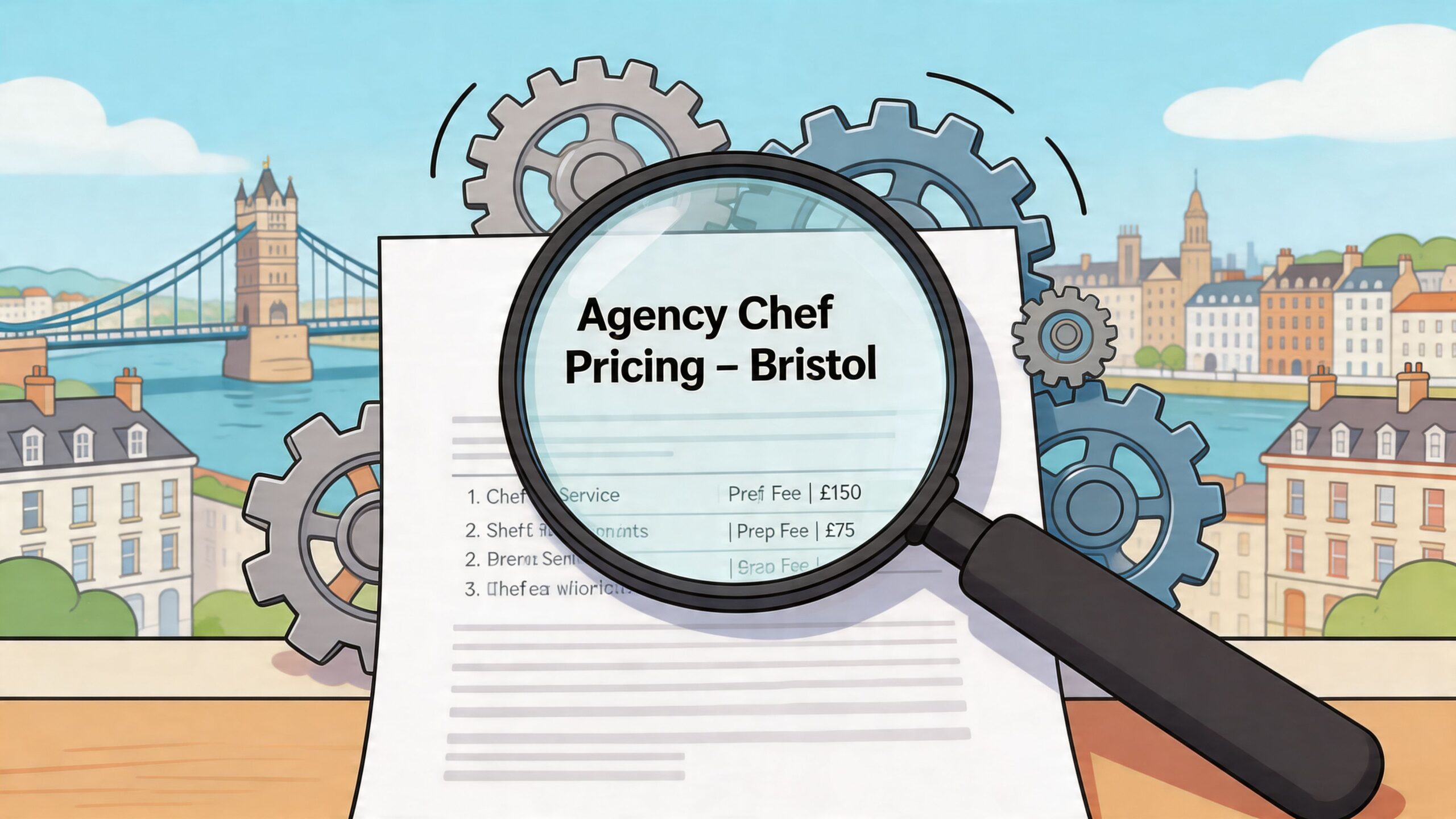
A current Berkeley Scott Bristol agency chef listing gives you a rough market reference point. Use that as a sense check, not a buying decision. A lower hourly figure can still cost more if the contract is loose.
What the quoted rate must cover
Ask for the charge basis in writing before you confirm anything. Hourly, day rate, shift block, and flat weekend pricing all behave differently once service overruns or plans change.
Check these points line by line:
- Holiday pay and payroll costs: Included, or added later.
- Employer insurance cover: Confirm who carries it.
- Travel and accommodation: Especially relevant for early starts, split shifts, and sites outside central Bristol.
- Premium periods: Nights, weekends, bank holidays, and short-notice bookings often carry uplifts.
- Minimum billable hours: A six-hour minimum on a quiet day changes the maths quickly.
Good agencies answer these questions cleanly. Weak ones stay vague and rely on the invoice arriving after the pressure has passed.
Bristol buyers usually see three pricing structures
None of these models is wrong. Each suits a different operating pattern.
| Model | How it works | Where it helps | Where it hurts |
|---|---|---|---|
| Hourly temp rate | You pay for hours worked, usually with a minimum shift length | Useful for sudden gaps and single services | Repeated use gets expensive fast |
| Cost-plus pricing | Labour cost sits underneath an agency margin and extras | Gives detail if the breakdown is transparent | Hard to compare if every fee sits in a different place |
| Monthly support plan | Regular fee tied to ongoing cover or priority access | Better for groups, busy event sites, and kitchens with recurring gaps | Poor fit if you only need very occasional cover |
If agency cover is becoming routine, review the wider cost of employing kitchen staff and temporary support instead of judging one urgent booking in isolation.
The contract points that protect your kitchen
Bristol operators face a common pitfall. They agree the rate over the phone, skim the terms later, and find their actual exposure after the shift goes wrong.
Required clauses are straightforward:
Clear replacement terms
If the chef no-shows or cannot hold the section, the contract should say how quickly the agency replaces them and who approves the substitute.Cancellation terms that reflect hospitality reality
Weather changes. Functions drop. Covers collapse. You still need fair notice rules, but they must be realistic for live trading.Temp-to-perm transfer fee detail
If a strong relief chef fits your team, you need to know the release terms before you make the booking, not after three successful weekends.Billing trigger and timesheet approval
The contract should say who signs off hours, when disputes must be raised, and what happens if your manager is in service and misses the admin window.Liability and insurance wording
Keep this plain. If there is an accident, allergy issue, or equipment damage question, your ops team needs clarity immediately.
Relief Chefs UK sets a useful benchmark here. Fast supply matters, but speed without clear terms is just risk delivered quickly.
Hidden costs that deserve a direct challenge
Some extras are fair. Surprise extras are not.
Challenge these before the first shift:
- Travel charges for chefs coming into Bristol from outside the city
- Unsocial hours premiums for late finishes and early breakfast starts
- Agency admin fees buried outside the headline rate
- Minimum weekly commitments disguised as flexible support
- Short-notice booking uplifts that only appear on the confirmation
I have seen operators save £2 an hour on paper and lose far more through overtime knock-on, disputed invoices, and weak replacement terms. Cheap cover stops being cheap when the head chef has to rescue service.
Ad hoc buying versus planned support
Ad hoc buying suits genuine emergencies. It is rarely the cheapest long-term model for busy Bristol kitchens with repeat pressure points.
Planned support gives you better control over cost and availability. Relief Chefs UK provides relief chef cover, temporary chef support, permanent recruitment, and wider hospitality staffing, quoted based on the role, location and dates. That structure is practical for businesses that already know relief labour is part of the operating plan, not a one-off event.
This short explainer is useful if you’re comparing staffing models in practical terms.
Buy on risk control, not headline rate
A fair contract does one job. It keeps a staffing problem from becoming a service problem, a payroll dispute, or a margin leak.
That is how smart Bristol managers assess agency chef pricing. They check the rate. Then they check what protects the business when the shift gets messy.
Onboarding Your Agency Chef for a Seamless Service
A relief chef can walk into a clean kitchen and still struggle if nobody briefs them properly. That’s not on the chef. That’s on the handover.
Most failed temporary shifts come from poor onboarding, not poor cooking. The chef arrives blind, gets told “you’ll be fine”, and then spends the first hour hunting for equipment, deciphering prep labels, and trying not to trip over a brigade that doesn’t know why they’re there.
Send the brief before arrival
A short pre-arrival message saves time immediately. It doesn’t need to be polished. It needs to be useful.
Include:
- Site basics: Address, parking, entry point, dress code, arrival contact.
- Shift reality: Start time, expected finish, service type, likely pressure points.
- Section assignment: Grill, garnish, pastry support, breakfast, prep, banqueting, whatever applies.
- Menu notes: Core dishes, specials, dietary risk points, anything non-standard.
- Kitchen setup: Equipment quirks, prep locations, storage layout, ticket flow.
If the chef knows the assignment before they walk in, they start useful. If they don’t, they spend your busiest hour catching up.
Run a five-minute handover on arrival
Keep it sharp. Don’t bury them in history. Give them what they need to get through the shift safely and properly.
Use this order:
- Who is leading service
- What section they own
- What absolutely can’t go wrong
- Where key equipment and backup stock sit
- How allergens and special requests are flagged
- Who to ask when they need a fast decision
That last point matters. Temporary chefs fail when everyone assumes someone else is helping them.
Give agency chefs one decision-maker, one section, and one clear standard. Confusion kills speed.
Set the brigade up properly as well
The resident team also needs a reset. Some kitchens create an instant us-and-them divide with agency labour. That’s counterproductive and usually comes from poor leadership, not from the temporary chef.
Tell the team what the booking is for. Explain which section is being covered. Make it clear the relief chef is there to stabilise service, not threaten anyone’s job or absorb everyone’s blame.
A few practical rules help:
- Assign one buddy for the first part of the shift: Not to babysit, just to answer location questions fast.
- Keep specs visible: If your kitchen relies on unwritten knowledge, temporary support will always be harder.
- Don’t move the goalposts mid-service: If you briefed one section, don’t suddenly stretch the chef across three unless they can handle it.
Debrief before they leave
A two-minute check-out improves repeat quality. Ask what they walked into, what slowed them down, and whether anything in the brief missed the mark. If you’d book them again, say so. Good temporary chefs remember the sites that run properly.
That’s how you turn one shift into a reliable staffing option. Not by hoping for chemistry. By making the kitchen easy to join, even at speed.
Relief Chefs in Action A Bristol Case Study and FAQ
Friday, 4:15pm. A Harbourside restaurant is fully committed for two nights. One chef has resigned. Another has called in sick. The head chef can drag the kitchen through one push, but not a full weekend without standards slipping, tickets slowing, and labour costs rising elsewhere.
At that point, Bristol operators need a staffing process they can trust. Relief Chefs UK sets a useful benchmark here. Its South West temporary chef staffing process outlines a 99% fulfilment rate and short-notice deployment, subject to availability, for temporary chef cover in the region. Those numbers only matter if the chef arriving can hold a section, follow the brief, and protect service from turning messy.

A Bristol weekend that holds together
The better sites move fast and stay specific. They send the section, menu style, covers, start time, finish time, and any dietary pressure points. The agency then checks live availability against chefs already cleared for right to work and practical kitchen ability, and sends over a proper handover before the shift starts.
That is the difference between buying labour and buying cover.
A capable relief chef does not need a grand induction. They need a clear station, working kit, correct specs, and one person who can answer questions fast. When that happens, the core brigade stays focused, the pass stays under control, and the weekend trades as planned.
What operators usually ask
How quickly can I really get a chef in Bristol
It depends on the section, the day, and how usable your brief is. A Saturday night pastry request at short notice is a different job from daytime prep cover. Good agencies can react quickly if they already have vetted chefs in Bristol and the manager is decisive.
What’s the difference between a temp chef and a relief chef
In practice, the terms overlap. A temp chef is any short-term booking. A relief chef is usually booked to solve an immediate operational problem, cover a section, steady the brigade, and keep standards from dropping during a gap.
Can I book a chef for one shift only
Yes. Bristol venues do this all the time for sickness, events, student-city peaks, race days, bank holidays, and short notice rota holes. Single-shift bookings cost more per hour in real terms, but they are still cheaper than a broken service.
Can temporary cover lead to a permanent hire
Yes, if the contract allows it and the transfer terms are clear before the first shift. Sensible operators check the temp-to-perm fee, rebate position, and qualifying period in advance. That avoids an argument later if the chef lands well with the team.
Do agencies only cover pubs and restaurants
No. Demand in Bristol comes from hotels, care homes, schools, event caterers, contract catering sites, and private households. The vetting standard should rise with the risk profile of the site. A care setting, for example, needs more than basic availability.
Where do I start if I need Bristol-specific cover
Start with a supplier that already understands the city’s trading patterns, parking issues, venue spread, and short-notice pressure points. If you need local cover now, use a page built for relief chefs in Bristol.
The right relief chef arrives legal, briefed, and ready to run a section. Speed matters. Usability matters more.
Your Next Step Towards a More Resilient Kitchen
Agency chefs Bristol hiring shouldn’t feel like a gamble. It only becomes one when managers buy in a rush, skip vetting, and sign vague terms because service is looming.
The fix is straightforward. Build a staffing process before the next crisis. Check legal compliance properly. Challenge agencies on response, replacement, and local understanding. Read pricing beyond the headline rate. Brief temporary chefs like you want them to succeed. Most do better when the site does better.
That approach gives you options. It protects the brigade from burnout. It gives your head chef room to lead. It stops one sickness call from turning into three days of operational damage.
This is also bigger than one Bristol shift. Many operators now need a staffing partner that can help with relief chefs, temporary chefs, permanent chef recruitment, yacht chefs, villa chefs, and broader hospitality support across multiple regions. If your labour problem moves between Bristol, Devon, Wales, Berkshire, Windsor, Reading, Slough, or Dorset through the year, your solution has to travel with you.
The kitchens that cope best aren’t always the biggest. They’re the ones with a plan. They know who they call. They know what they require. They don’t leave service to chance.
If your kitchen needs dependable cover, permanent recruitment support, or specialist chef staffing for private households, yachts, villas, pubs, restaurants, or hotels, contact Relief Chefs UK. Run by chefs and built for real hospitality pressure, the team can help you secure the right support quickly and keep service moving.
Call the team.
Office 01392 715474 · info@reliefchefs.co.uk