
Hire Chef Bristol Restaurants A Complete Hiring Guide 2026
22 April 2026
It’s Tuesday afternoon. Your Sous Chef has gone off sick, the weekend diary is full, deliveries are booked, and the rota already looks thin. You ring round, send a few messages, refresh the job board, and get the same result most Bristol operators know too well. Plenty of noise, not much usable cover.
That’s why hire chef Bristol restaurants has become a different conversation from the one you see online. Most search results push private chefs for dinner parties, tasting menus at home, or event bookings. That’s fine for households. It doesn’t help when you need someone who can walk into a live commercial kitchen, pick up a section, follow your systems, and protect service.
Bristol restaurants, pubs, hotels, and groups need a more practical hiring approach. Not theory. Not wishful thinking. A working plan for permanent recruitment, short-term relief, emergency cover, and seasonal pressure. If you run service for long enough, you stop asking for the perfect labour market and start building a staffing model that can survive reality.
Introduction Why Hiring Chefs in Bristol is a Strategic Challenge
Chef hiring in Bristol becomes a strategic problem the moment staffing stops being theoretical and starts affecting service. A vacancy on paper is one thing. A section uncovered on a Friday night, a Head Chef dragged back onto prep, or a Sous Chef spending the shift firefighting instead of leading service is something else entirely.
That is the gap many online articles miss. They talk about booking a private chef for a dinner party. Restaurant and pub managers need chefs who can step into a commercial kitchen, handle pace, follow systems, and keep standards intact under pressure.
The wider market explains this trend. Analysts in this restaurant hiring analysis covering the post-pandemic labour market reported a sharp gap between restaurant job openings and actual hires, with widespread staffing shortages across operators after the pandemic disrupted labour supply. In practice, that means fewer dependable applicants, slower hiring, and more kitchens relying on whoever is available rather than whoever is right for the job.
That pressure lands on your kitchen floor in very practical ways.
What the shortage looks like in service
- Short-notice absence: One sick call can push your Sous Chef onto garnish, your Head Chef onto pass, and your KP into work outside their role.
- Seasonal spikes: Summer trade, bank holidays, Christmas bookings, and local events often need more hands than a core rota can carry without help.
- Bad hiring decisions: The wrong chef costs more than an empty section. They slow prep, unsettle the brigade, and pile extra pressure onto the people already holding the kitchen together.
- Agency fatigue: Generic staffing suppliers often send cooks, not chefs who can function in a live service environment.
Practical rule: Treat chef hiring as part of operations, not a one-off recruitment task.
The operators who cope best usually have three things in place. A realistic process for permanent hires, a fast route to emergency cover, and a small group of trusted chefs who can step in when trade jumps or the rota falls apart. Relief Chefs UK exists to solve that second and third problem properly, which is why good operators use specialist support before the kitchen reaches breaking point.
Understanding the Bristol Chef Hiring Landscape
Friday lunch has run over, two bookings have turned into six walk-ins, and a chef who promised they could handle service turns out to be more comfortable plating canapés in a private home than running a section in a busy restaurant. Bristol creates that problem more often than it should. The city has plenty of chef-related search results, but much of that visibility is aimed at private dining, not commercial kitchens.
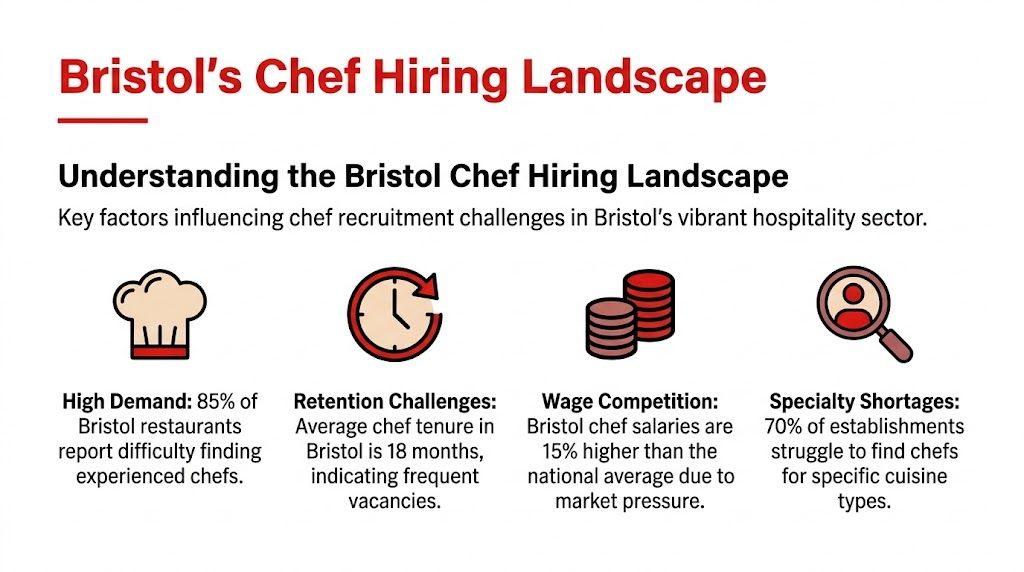
A busy private chef market does not fix a restaurant staffing gap
That distinction matters. A chef who is excellent at bespoke dinner parties may still be the wrong fit for a pub kitchen, a hotel breakfast operation, or a high-volume Saturday night service. Different pace, different pressure, different discipline.
Take a Chef’s Bristol private chef page shows strong activity on the private side of the city’s chef market, with hundreds of chefs listed, long-term platform growth since 2016, and pricing built around per-head home dining bookings, according to Bristol private chef market data from Take a Chef. Useful context, but it does not solve the actual hiring problem for operators. Restaurant managers need chefs who can step into prep, service, stock control, HACCP routines, and brigade structure without slowing the pass down.
That is the gap many online guides miss. They talk about hiring a chef in Bristol as if every chef role means a private event in Clifton or a dinner party in Redland. If you run a restaurant, pub, hotel, or contract catering site, you are dealing with something much more operational. You are not buying an experience for one table. You are covering a rota, protecting standards, and keeping service stable.
For that reason, many operators end up using a specialist route such as chef staffing support for Bristol restaurants and pubs rather than relying on platforms built for home dining.
The real pressure sits in suitability and availability
The hard part in Bristol is not finding people who can cook. It is finding people who can cook in your environment, on your shift pattern, at the level you need, with enough reliability that the rest of the brigade is not left carrying them.
Private chef platforms can create the impression that chef supply is plentiful. In practice, restaurant hiring still gets squeezed by short notice gaps, seasonal demand, transport issues, wage competition between operators, and the simple fact that good chefs usually have options. A CV can look fine and still fall apart in live service.
Bristol is not short of chefs on paper. It is short of chefs who are available, properly vetted, and ready for commercial kitchen work.
What this means for your hiring decisions
The route you choose changes the quality of applicant you get.
| Hiring route | What usually happens |
|---|---|
| Generic job boards | High response, heavy filtering, mixed kitchen experience |
| Private chef platforms | Better suited to home events than restaurant sections and rota cover |
| Personal networks only | Can produce strong hires, but often too narrow when the gap is urgent |
The practical lesson is simple. Treat Bristol chef hiring as a role-matching problem, not a numbers problem. The kitchens that hire better are usually the ones that separate private dining talent from commercial kitchen talent early, then recruit against the reality of service rather than the promise of a polished profile.
Where to Find Your Next Chef Beyond the Usual Job Boards
A handwritten sign in the window and a rushed advert on a big job site can still produce applicants. The problem is fit. Restaurant managers don’t need more CVs to sift through. They need chefs who can do the job on the rota they’re offering.
The best hiring results usually come from mixing old-school local sourcing with more targeted industry routes.

What still works
Local reputation matters in Bristol. Good chefs talk to each other. Suppliers hear things. Former team members know who’s moving. If your kitchen has a reputation for clean systems, decent leadership, and wages paid properly, word gets around.
Useful routes include:
- Former employees: Some of your best future hires are people who left on good terms and are ready for a better setup.
- Trade contacts: Butchers, fish suppliers, brewery reps, and other operators often hear about chefs before the market does.
- Local colleges: Better for junior pipeline roles than urgent senior cover, but still worth maintaining.
- Social posting from your own account: Short, honest posts often work better than polished corporate adverts.
What usually wastes time
Generic job boards tend to create admin. You get broad interest, but not always from chefs with the right section experience, pace, or reliability.
Private chef platforms are even less useful for most restaurant managers. They’re built around event-style bookings, not brigade structure, EHO discipline, stock systems, prep management, and service under pressure.
If the advert brings in people who like cooking but don’t like kitchen structure, you haven’t solved the problem. You’ve delayed it.
Write the advert chefs actually respond to
Most weak chef adverts all look the same. Competitive salary. Fast-paced environment. Great team. That copy says nothing.
A stronger advert includes:
Shift pattern
Say whether the role is straight shifts, splits, weekends, breakfast-heavy, or late-finish heavy.What section they’ll own
Grill, larder, pastry support, banqueting, breakfast, prep-heavy production. Be specific.What level of chef will fail here
That sounds blunt, but it helps. A busy fresh-food pub doesn’t need someone whose only background is low-volume contract catering.What support exists in the kitchen
Mention whether there’s a stable Head Chef, a proper prep system, or room to progress. Serious candidates look for operating conditions, not slogans.
Why specialist chef recruiters matter
A focused hospitality partner saves time. A specialist route such as employment agencies for chefs gives you access to chefs who already work within hospitality staffing networks rather than waiting on public adverts.
Relief Chefs UK has operated since 2013 and works across temporary chef cover, permanent chef recruitment, yacht chefs, villa chefs, and broader hospitality staffing support. For Bristol operators, that matters because the network isn’t limited to one local ad campaign. It gives access to chefs who are already accustomed to moving between venues, stepping into pressure, and working with clear expectations.
That doesn’t remove the need for screening. It does cut wasted time at the top of the funnel.
The Vetting and Interview Process That Actually Works
A polished CV can hide a lot. So can a confident trialist. If you want to hire well, you need a process that tests attitude, standards, and service behaviour, not just whether someone can talk through a menu.
The strongest vetting process is usually short, structured, and consistent.
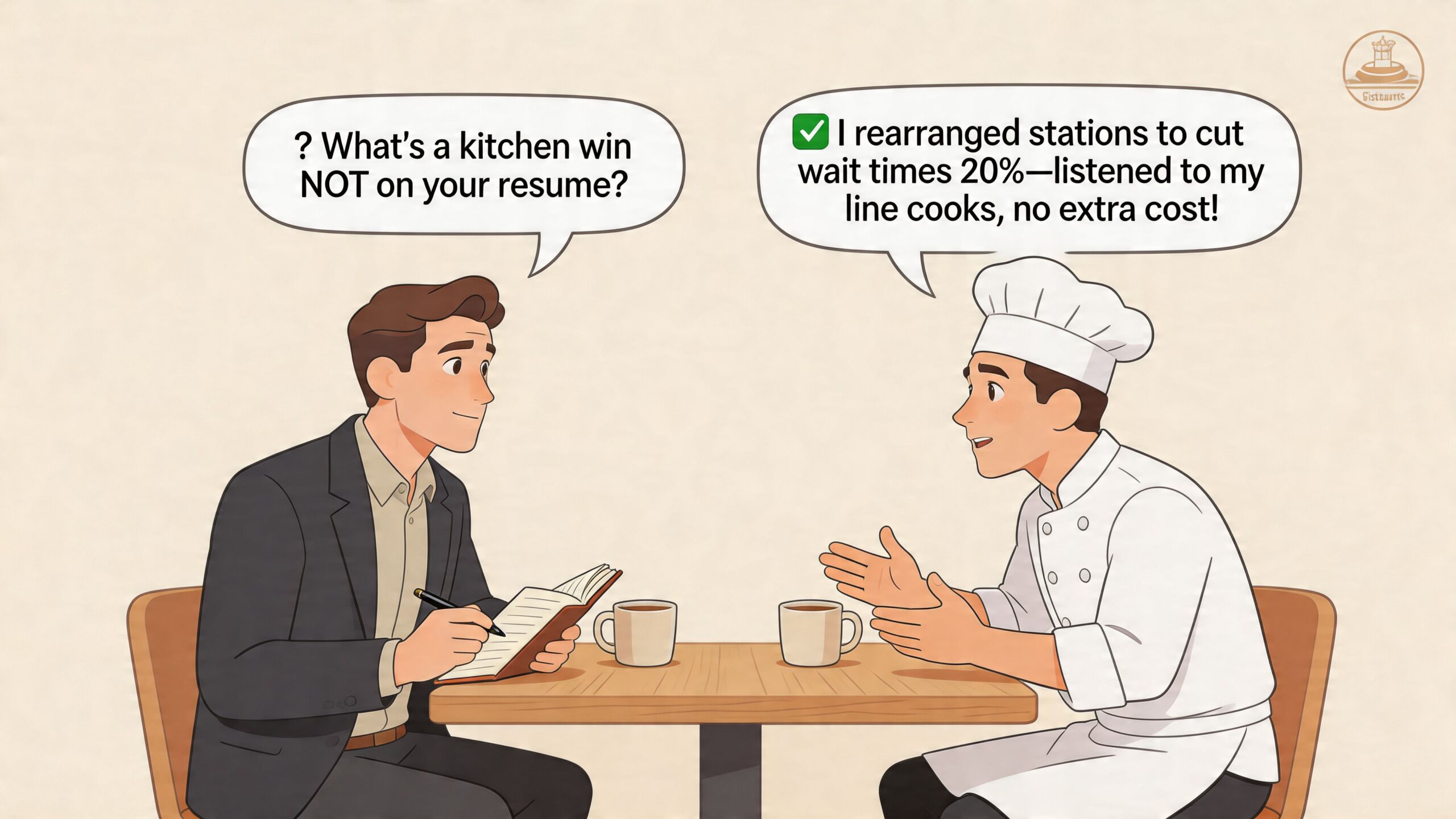
Start with questions that expose real habits
Skip the lazy interview questions. “What are your strengths?” tells you very little. Ask things that force the candidate to describe decisions they’ve really made.
Good examples:
- Tell me about a service that went wrong. What did you do first?
- Which section have you held most consistently, and what prep standards do you keep on it?
- How do you organise your fridge and prep list before a busy weekend?
- What does a good handover look like at the end of a shift?
- When have you had to adapt to a new menu quickly?
- How do you react when a Head Chef changes the plan mid-service?
Listen for specifics. Serious chefs answer with detail. Weak candidates stay vague, blame old teams, or lean too hard on personality.
Watch for the red flags early
Some signs turn up before a pan even hits the stove.
| Red flag | Why it matters |
|---|---|
| Vague dates on CV | Can indicate patchy history or avoidable instability |
| Badmouthing every previous kitchen | Usually means they’ll bring the same energy into yours |
| Can’t explain margins, prep flow, or section organisation | Suggests they’ve followed, not managed |
| Over-selling “passion” but under-describing systems | Commercial kitchens run on habits, not speeches |
Kitchen check: Ask how they set themselves up for a busy Saturday. Their answer will tell you more than a polished Instagram portfolio ever will.
Run a paid trial shift properly
A trial shift isn’t free labour. It’s a controlled assessment. Pay for the time, keep the scope sensible, and test the things that matter.
A useful trial should look at:
- Knife skills: Not tricks. Just safe, consistent speed.
- Section discipline: Clean bench, labels, storage, and basic order.
- Palate: Can they season properly and adjust when asked?
- Response to pressure: Do they stay calm when tickets start moving?
- Communication: Do they ask the right questions or go silent?
Don’t make the mistake of judging only speed. Some chefs move fast and create a mess behind them. Others start calmly, stay organised, and become much more valuable by the second hour of service.
Verify what must be verified
This part isn’t optional. Every hire needs proper right-to-work checks in the UK. References matter too, but ask useful questions when you take them. Was the chef reliable? Did they turn up? Could they hold the section claimed on the CV? Were they manageable in a team?
For temp or relief support, the same standards still apply. The whole point is to reduce operational risk, not move it around.
A chef who can cook but can’t slot into your systems will still cost you service.
Managing Contracts Pricing and Onboarding
Friday lunch is booked solid, one sous chef has handed in notice, and the candidate you liked at trial suddenly wants different money, different hours, and a later start date. That is where plenty of hires start to come apart. The interview went well, but the actual offer was loose, the terms were never pinned down, and nobody mapped out what the first few shifts should look like.
Bristol managers deal with this all the time. A lot of online advice talks about hiring chefs for dinner parties or home events. That is a different job entirely. Restaurant and pub operators need to fill sections, protect service, control labour cost, and get someone useful on the rota fast.
Price the role properly before you make an offer
If the pay is off, the rest of the process does not matter much.
Use local market awareness as a starting point, then price the role against the actual job in your kitchen. A breakfast chef working a stable hotel pattern is one offer. A senior CDP expected to cover grill, write prep lists, train juniors, and close five nights a week is another. Bristol candidates know the difference, and good ones will spot an underpriced role in minutes.
Three things usually shift the number up or down:
- Shift pattern: Late finishes, split shifts, and heavy weekends narrow your pool.
- Operational pressure: High-volume service or a weak brigade means the chef is carrying more risk.
- Clarity of scope: If the role mixes chef work with ordering, paperwork, and team supervision, pay it as a broader job.
This is also where managers get caught trying to save money on paper and lose more in service. A cheaper hire who cannot hold the section will cost you in wastage, overtime, refunds, and team fatigue.
Permanent hire versus relief cover
Permanent recruitment and relief cover solve different operational problems.
A permanent chef makes sense when you need consistency, training, and someone to own a section over time. Relief cover makes sense when the immediate problem is service risk. Holiday gaps, sickness, notice periods, event spikes, and sudden departures rarely wait for a four-week hiring cycle.
Here is the practical comparison.
Permanent Hire vs. Relief Chef The True Cost Comparison
| Cost Component | Permanent Hire (Monthly Est.) | Relief Chef (All-Inclusive Rate) |
|---|---|---|
| Base pay | Salary divided monthly | Agreed day or shift rate |
| National Insurance | Additional employer cost | Included in agreed rate where applicable |
| Pension | Employer contribution | Not handled as your permanent payroll obligation |
| Holiday pay | Ongoing accrued cost | Typically built into the staffing arrangement |
| Sick pay exposure | Employer risk | Limited compared with direct employment |
| Recruitment admin | Advert, screening, interviews, references, onboarding | Reduced admin if sourced through a specialist staffing partner |
| Flexibility | Lower once contracted | Higher for cover, peaks, and short-term gaps |
The trade-off is simple. Permanent hires give continuity if they stay and perform. Relief chefs cost more per shift, but they can protect revenue straight away and buy you time to recruit properly.
I have seen operators delay relief cover because the day rate looked high. Two weeks later they had a wrecked team, reduced menus, and managers back on sections they should have stepped away from years ago. In those situations, the expensive option was in fact the cheaper one.
Relief Chefs UK is useful here because it gives kitchens a professional route to short-term cover without dropping standards just to fill a gap.
Put the contract in writing early
Verbal agreements create arguments.
Confirm the pay, hours, section, start date, probation terms, tronc position, holiday arrangement, and who approves overtime before the chef walks through the door. For relief bookings, confirm the rate, shift length, break policy, uniform expectations, and whether accommodation or travel is part of the agreement.
Keep it plain. Chefs do not need a legal essay to understand the job. They need clear terms they can trust.
Onboarding should make the first shift easier
Even strong chefs lose time in kitchens that explain nothing. They spend the first hour asking where equipment lives, how prep is labelled, which spec is current, and who calls service. That is not a talent problem. It is an onboarding problem.
A useful onboarding pack covers:
- Menu specs: Current dishes, portioning, allergens, and plating points
- Section setup: Fridges, dry stores, key equipment, and what must be prepped before service
- Standards: Start times, cleaning routines, wastage control, and close-down expectations
- Team structure: Who runs the pass, who signs off orders, and who to go to when something breaks or a delivery is wrong
For relief chefs, shorten it to the essentials and send it before the shift where possible. A one-page brief is often enough to save 30 minutes of confusion at clock-in.
Good onboarding is not about making a new chef feel welcome. It is about getting them productive without dragging your senior team off the line.
Building Kitchen Resilience with Emergency and Seasonal Cover
Friday, 4:30pm. A sous chef phones in sick, the prep list is only half done, and covers are stacked from 6pm. That is the moment many Bristol operators realise recruitment is only part of the staffing problem. The harder job is keeping service steady when the rota breaks.
Managers who run busy pubs and restaurants already know this. Gaps happen. Sickness, walkouts, delayed starts, student turnover, holiday clashes, festival weekends, and Christmas trade all hit at once if you let them. Home-chef platforms do not solve that problem. A restaurant needs someone who can walk into a live kitchen, take a section, and protect service without turning the shift into a training exercise.
Emergency cover protects service, margin, and your team
Temporary cover is not just there to fill a body-shaped hole on the rota. It protects the parts of the business that suffer first when a kitchen runs short.
The pressure usually shows up in the same places:
- Service slips: Ticket times stretch, specs drift, and the pass gets noisier by the minute
- Labour costs rise in the wrong way: Senior chefs stay late, doubles pile up, and overtime gets approved out of desperation
- Team morale drops: Good people get tired of carrying weak rotas and start looking elsewhere
- Revenue gets cut: You reduce bookings, trim the menu, or stop taking functions because the kitchen cannot hold pace
That is why relief cover works best as an operations tool, not a last-minute gamble. If one chef going off sick can force menu changes, your kitchen needs cover options already lined up.
Good emergency cover should reduce supervision, not create more of it
A relief chef only helps if they can become useful quickly. Availability on its own is not enough.
The standard should be simple. You need a chef who has been checked, briefed properly, and sent into the right level of kitchen. If your head chef spends the first hour explaining basic setup, allergen handling, and who runs the pass, the kitchen has gained a pair of hands but lost control of the shift.
That is why many operators keep a specialist route ready for emergency relief chef cover across the UK. It gives managers a way to get short-notice support without going back to public adverts, callbacks, and guesswork while service is getting closer.
Seasonal pressure needs planning, not optimism
Bristol has its own pressure points. Bank holidays, school breaks, harbour events, university term shifts, wedding weekends, and the long run into December can all hit staffing at the same time. Pubs and restaurants that wait until trade is already up usually end up paying more for worse choices.
A better approach is to map pressure before it arrives.
Start with the weeks where sales are likely to rise or holiday requests always bunch together. Then decide which parts of the operation must stay strong. In one site that might be grill and fryers. In another it is breakfast, banqueting, or pastry. Covering every gap is ideal, but protecting the sections that keep service moving is often the smarter call.
There is a trade-off here. Booking relief support too early can feel cautious. Booking too late usually means fewer options, more stress, and a higher chance of handing a section to the wrong person.
Build resilience before you need it
The kitchens that cope best under pressure tend to follow a few habits:
Track known risk dates early
Mark out local events, holiday periods, weddings, staff leave, and any weeks where notice periods or student moves could hit the rota.Decide your priority sections
Work out which stations protect revenue and standards first, then cover those before trying to blanket the whole kitchen.Keep one trusted staffing route active
Do the checking before the crisis. Waiting until a chef drops out on the day is how bad hires happen.Brief relief chefs like operators, not visitors
A short prep sheet, current menu, section expectations, and key contacts can save a service.
Kitchen resilience is not about pretending staffing problems will disappear. It is about making sure one absence does not wreck a whole week. In Bristol restaurants and pubs, that level of planning is what separates a hard shift from a lost service.
Frequently Asked Questions About Hiring Chefs in Bristol
What’s the real difference between a temp agency and a relief chef service
A standard temp agency often works as an intermediary. They fill gaps. A specialist relief chef service is usually built around kitchen operations, so the focus is on chefs who can stabilise service, slot into existing systems, and handle pressure with less hand-holding.
That difference matters when the problem isn’t just an empty shift. It’s protecting standards during a rough week.
How quickly can I get a chef for my Bristol restaurant in an emergency
Speed depends on the brief, the level required, and the dates. In practice, the faster you provide clear information, the faster the match can happen. The key details are shift pattern, section, start time, menu style, and whether accommodation is available if needed.
For emergency cover, a specialist staffing route is usually much faster than reopening a public advert and waiting for callbacks.
Do you only need temp chefs when someone is off sick
No. Short-notice sickness is only one use case.
Temporary support is also useful for holidays, launch periods, seasonal peaks, weddings, event weekends, menu changes, and the gap between a resignation and a permanent replacement starting. Some kitchens also use relief chefs to stop their senior team from burning out after repeated overtime.
Should I hire permanent or use relief cover first
If the role is core to your operation, permanent recruitment is the long-term answer. If the immediate risk is service failure, use relief cover first and recruit properly once the kitchen is stable.
That order saves a lot of bad decisions. Rushed permanent hires usually create a second problem a few weeks later.
If your rota is stretched, your weekend is exposed, or you need a more reliable route for chef hiring in Bristol and across the UK, contact Relief Chefs UK. They support restaurants, pubs, hotels, private households, yachts, and villas with temporary chefs, relief chefs, permanent recruitment, and wider hospitality staffing support, so you can keep service running without gambling on the next shift.
Call the team.
Office 01392 715474 · info@reliefchefs.co.uk