
Find Top Relief Chefs Bristol for Your Kitchen Now
20 April 2026

Friday, 4.30pm. Your sous chef has phoned in sick. Bookings are full. Deliveries are half checked. One section is already under pressure, and the KP is asking who’s covering prep. This is the point where most Bristol operators either make a smart call or make an expensive one.
A kitchen gap isn’t an admin problem. It’s a service problem, a wage problem, a guest problem, and if you fill it badly, a legal problem as well. If you run a pub in Clifton, a hotel near the centre, a restaurant on the harbourside, or a multi-site group across Bristol and South Wales, you already know the truth. One weak emergency hire can wreck a whole weekend.
If you’re searching for Relief chefs Bristol, stop treating it like a quick temp booking. Treat it like operational cover for a critical revenue line. That means speed, yes, but it also means proper vetting, proper compliance, and chefs who can walk into a live service without needing babysitting.
The Real Cost of a Kitchen Gap in Bristol
A missing chef on a quiet Tuesday is awkward. A missing chef before a Friday dinner service in Bristol is commercial damage.

The problem isn’t just the empty rota line. It’s what follows. Your head chef starts covering two roles. Prep gets rushed. Allergens become harder to control because communication gets sloppy. FOH starts apologising for delays. The team that was already stretched now goes into survival mode.
Bristol is especially unforgiving when staffing falls apart. The city has strong independents, busy pubs, hotels, events, and seasonal spikes that put pressure on every decent chef in the local market. On top of that, Bristol’s hospitality sector faced 25% staffing shortages in 2025, with 40% of independents reporting last-minute gaps unresolved by agencies, and some agencies showing response times of 72+ hours. That’s useless when service starts tonight.
What the gap actually costs
Most operators still think first about wage cost. That’s the wrong lens.
The underlying losses usually show up somewhere else:
- Service breakdown: Tickets slow down, tables wait longer, and standards drop on the pass.
- Manager time: Instead of running the floor or the kitchen, you’re calling around, checking messages, and chasing people who may never arrive.
- Team burnout: Your strong people carry the weak point. They remember it, and they resent it.
- Guest damage: One poor shift creates complaints, refunds, and the sort of online feedback that lingers longer than the problem that caused it.
- Margin erosion: Waste rises when prep gets disorganised and sections aren’t run properly.
If you want a realistic commercial view, compare the panic cost with the wider cost of employing hospitality staff properly. The hourly figure is only one line on the sheet. Poor cover affects everything else.
Practical rule: If a staffing decision affects service tonight, it belongs in operations, not just recruitment.
Bristol operators don’t need more CVs
They need cover that lands fast and works first time.
That’s the difference. In a kitchen crisis, the wrong person is often worse than no one for the first hour. An unprepared chef slows your senior team, asks basic questions during service, and turns one staffing problem into three. A proper relief chef should reduce pressure, not add to it.
This is why experienced GMs and head chefs stop gambling once they’ve been burned a few times. They don’t look for the cheapest body. They look for reliable cover that protects service, team morale, and compliance in one move.
Why Your First Call Shouldn't Be a Job Board
The usual reaction is predictable. Put a post on a job board. Drop a message in a local Facebook group. Ring a generic recruiter. Hope someone decent picks up the shift.
That feels fast. It usually isn’t.
A Bristol manager I know took that route before a packed weekend. They got replies quickly, which looked promising. By the time they had sifted through availability messages, vague experience claims, and one chef who sounded right but hadn’t worked that style of kitchen, they’d lost half the day. The chef who finally arrived wasn’t comfortable on the section and needed constant direction. The shift got covered on paper, but not in practice.
Why ad hoc hiring fails under pressure
Job boards are built for broad reach. Kitchen crises need precise matching.
The gap with job boards and general social posts is simple. They don’t screen for the things that matter most in a live service: section strength, pace, reliability, communication, and whether the chef can adapt to your operation without hand-holding. You end up doing the vetting yourself, badly and in a rush.
A generic recruiter creates a different problem. They may be good at filling vacancies broadly, but an urgent kitchen cover request is not a standard office placement. It needs someone who understands menu style, brigade pressure, dietary controls, and the experience of a slammed pass at 7.45pm.
The warning signs to watch for
If your current route to emergency cover depends on any of these, it’s fragile:
- Open-call adverts: You’ll get responses, but you’ll also get noise, delays, and a pile of candidates you still need to assess.
- Availability-first matching: A chef being free doesn’t mean they’re right for your kitchen.
- No clear vetting trail: If you can’t see what checks were done, you’re taking the risk yourself.
- Vague promises: “We’ll see who we can find” is not a staffing plan.
- No replacement process: If the booking fails, you need an answer immediately, not another apology.
A kitchen under pressure doesn’t need options. It needs the right chef, confirmed properly.
That’s why smart operators move away from broad recruitment channels for urgent cover. They use specialist routes built for hospitality operations, not generic candidate flow. If you’re comparing routes, this guide to employment agencies for chefs lays out the difference clearly.
The hidden cost nobody prices in
The damage from job boards is management distraction.
You think you’re saving money by hiring directly. In reality, your most valuable people start doing emergency recruitment instead of running the business. Head chefs chase references. GMs field calls. Operations managers approve rushed decisions because there isn’t time to do it properly.
That isn’t lean. It’s expensive chaos.
Vetting Relief Chefs Your Guide to Legal Compliance
If you remember one thing, remember this. A relief chef must be legal, insurable, competent, and suitable before they ever walk into your kitchen.
Too many venues still ask only two questions: can they cook, and can they start? That’s not enough. If you’re bringing temporary labour into a Bristol kitchen, you need a proper vetting standard. Anything less leaves you exposed.
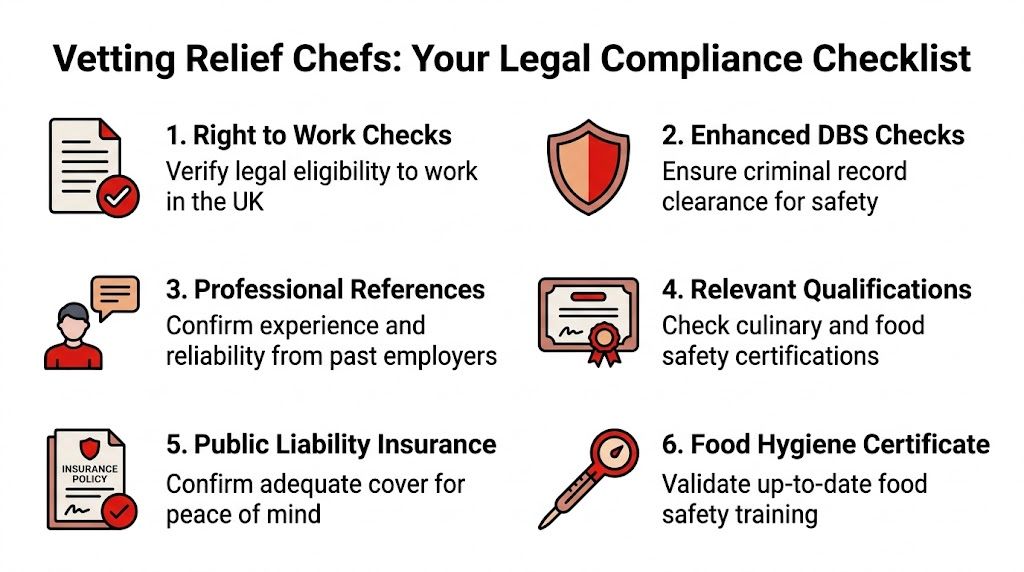
The legal side matters because enforcement is not theoretical. Home Office raids were up 35% in South West England in 2025, and fines for hiring workers without the correct right-to-work status have hit hospitality businesses hard. If your “quick fix” chef turns out not to be compliant, that problem belongs to you.
The six checks that aren’t optional
Use this as your baseline standard for any relief chef booking:
Right to work
Ask for proper confirmation of legal eligibility to work in the UK. Don’t rely on verbal assurance or a forwarded message from someone else.
DBS where relevant
If your venue serves regulated environments or vulnerable guests, this matters. Care settings and certain hospitality operations can’t afford loose standards here.
Professional references
A chef’s CV tells you what they claim. References tell you whether they turn up, cope under pressure, and leave a station in good order.
Relevant qualifications
Look for evidence of real food handling competence and practical kitchen experience. A decent agency should already know whether the chef is suitable for your level of operation.
Insurance cover
If there’s no proper insurance in place, you’re taking unnecessary risk before service has even started.
Food hygiene and allergen awareness
In a modern kitchen, this is basic professional discipline. It isn’t an optional extra.
What proper vetting looks like in practice
A good vetting process should answer these questions before the chef is offered to you:
| Check area | What you need to know |
|---|---|
| Legal status | Has right-to-work been verified properly? |
| Background | Are references current and relevant to kitchen work? |
| Safety | Does the chef hold suitable food hygiene knowledge? |
| Suitability | Can they handle your service style and menu level? |
| Protection | Is there insurance behind the booking? |
That’s the minimum. A chef-led staffing process usually goes further because chefs assess chefs differently from recruiters. They ask whether someone can step into your setup and function, not just whether they’re available.
Non-negotiable: If the agency can’t explain its vetting process clearly, don’t book through it.
Skill fit matters as much as legal fit
Compliance keeps you safe. Skill fit keeps your service intact.
A chef can be perfectly legal and still be wrong for the job. A banqueting chef dropped into a tight gastropub line may struggle. A fine dining background doesn’t automatically mean someone can cope with fast casual volume. A breakfast-heavy hotel operation needs a different rhythm from an evening-led restaurant.
That’s why the best operators ask practical questions, not fluffy ones:
- What style of kitchen has this chef worked in recently?
- Which section can they hold confidently?
- Can they manage allergens and special dietary requests properly?
- Are they used to solo cover, brigade work, or management-level support?
Don’t outsource risk blindly
A lot of venues say they use an agency, then assume the agency has handled everything. That assumption gets businesses into trouble.
Ask for clarity. Ask what checks are standard. Ask who has seen the documents. Ask whether the chef is insured. Ask whether there’s a fallback if the fit is wrong. A serious agency will answer quickly and cleanly. A weak one will waffle.
In Bristol, where competition for capable chefs is tight and kitchens can’t afford disruption, vetting is not paperwork. It’s operational protection.
How to Book a Vetted Relief Chef in Bristol Today
When the kitchen is short, you don’t need a long hiring process. You need a booking process that’s tight, fast, and controlled.
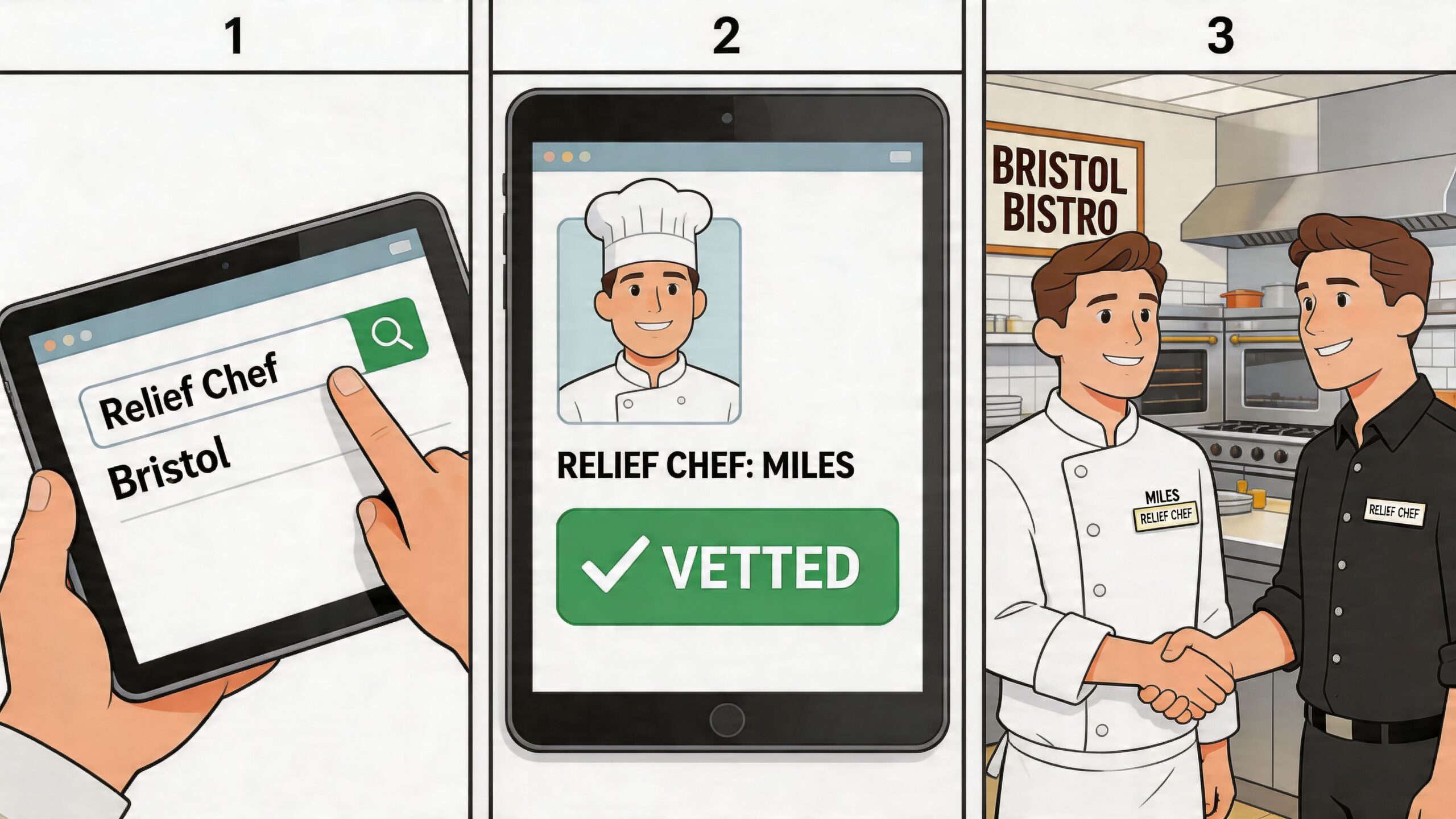
The best model is simple. You give a clear brief. A specialist matches the right chef. The chef arrives vetted and ready. No drama, no endless back-and-forth, no guesswork. That’s why chef-led staffing works better than ad hoc scrambling.
One strong benchmark in the market comes from a chef-run process used across the UK. Using a 4-step system, Relief Chefs UK reports success rates over 98% for short-notice covers across 400+ venues, supplying fully vetted chefs subject to availability. That’s the sort of structure Bristol venues should expect.
What a proper booking process looks like
Here’s the professional playbook.
Step one gets the brief right
Don’t just ask for “a chef”. That wastes time.
Be specific about the section, service style, shift pattern, start time, menu complexity, and whether the role is pure cover or leadership support. A pub needing a strong CDP for a busy Sunday is not the same brief as a hotel needing a breakfast chef for five days or a site needing head chef-level oversight.
Step two matches skill to operation
Generic recruiters usually fall short in these situations.
A good match is based on kitchen reality. Can this chef work your pace? Can they handle your menu style? Are they comfortable in a brigade, or do they need more structure? If the person matching chefs doesn’t understand service pressure, they won’t make the right call.
Book by capability, not by job title. “Sous chef” on a CV means nothing if they can’t run your service.
Step three confirms compliance before arrival
The legal checks should already be done. You shouldn’t be chasing documents an hour before shift start.
That includes right to work, insurance, and the practical checks covered earlier. If you need a Bristol-specific route for urgent support, use a specialist chef agency in Bristol rather than starting from scratch with broad recruitment channels.
Step four keeps support live after placement
A proper booking doesn’t end when the chef walks in.
If timings change, if the brief shifts, or if you need extended cover because the original absence becomes a longer issue, there should be someone available to deal with it. That’s the operational difference between a transactional booking and a real staffing partner.
What to prepare before you make the call
You’ll get faster, better cover if you have these details ready:
- Service type: Pub, restaurant, hotel, event, private household, yacht, villa, contract catering.
- Shift demand: Single service, split shift, multi-day booking, rolling cover.
- Kitchen pressure points: Grill, sauce, pastry, breakfast, banqueting, prep-heavy section.
- Site rules: Uniform, parking, start point, reporting line, allergen process.
- Commercial intent: Emergency patch, seasonal reinforcement, or route to permanent hire.
The point is control. A kitchen crisis feels chaotic, but the booking process shouldn’t be.
Understanding Relief Chef Pricing and Service Guarantees
Bad staffing decisions usually start with the wrong question. Operators ask, “What’s the cheapest rate?” They should ask, “What protects service with the least commercial risk?”
Bristol is a competitive market. Entry-level relief chef positions offer rates up to £20.00 per hour, while specialised roles such as Relief Chef Manager can reach up to £33,418 plus benefits. That tells you something important. This isn’t a casual side market. Relief chef staffing in Bristol is established, competitive, and priced according to skill and responsibility.
What you’re actually paying for
A relief chef rate should reflect more than the time on site.
You are paying for availability, kitchen readiness, flexibility, and the reduced risk that comes from using someone who can hit service without slowing everyone else down. At management level, you’re also paying for judgement, labour control, standards, and the ability to steady a kitchen that’s wobbling.
Here’s the clean way to think about value:
| Pricing factor | Why it matters |
|---|---|
| Level of chef | A CDP cover shift is not the same as a chef manager placement |
| Urgency | Short-notice cover needs a ready-to-deploy pool |
| Length of booking | One-off cover and rolling support often work differently |
| Guarantee level | Replacement support and priority handling reduce disruption |
| Vetting depth | Proper compliance and screening remove risk from the venue |
Ad hoc bookings versus planned cover
Ad hoc cover has its place. If one chef is off sick for a day, you need speed.
But many Bristol venues don’t just have one-off gaps. They have repeating pressure points. Summer trade lifts. Holiday periods hit. Key chefs leave. Managers spend the same energy solving the same staffing issue over and over again. In those cases, a structured service plan makes more sense than constant one-off panic buying.
Cheap cover becomes expensive the moment the wrong chef walks in and your best people have to carry them.
A proper service guarantee matters because it changes the risk profile. Replacement support, priority access, and clear terms aren’t sales fluff. They’re what stop one failed booking becoming two failed shifts.
The commercial decision is simple
If the rate looks higher than a job board lead, ask a better question. Which option gives you the best chance of protecting service, team stability, and guest spend?
For independent pubs, boutique hotels, restaurants, and multi-site groups, the right answer is usually the one with transparent pricing, clean vetting, and a genuine guarantee behind it. The cheapest option on paper often carries the biggest hidden cost in practice.
Your First Day with a Relief Chef Onboarding Tips
A good relief chef can rescue a shift. A good onboarding process makes that rescue look effortless.
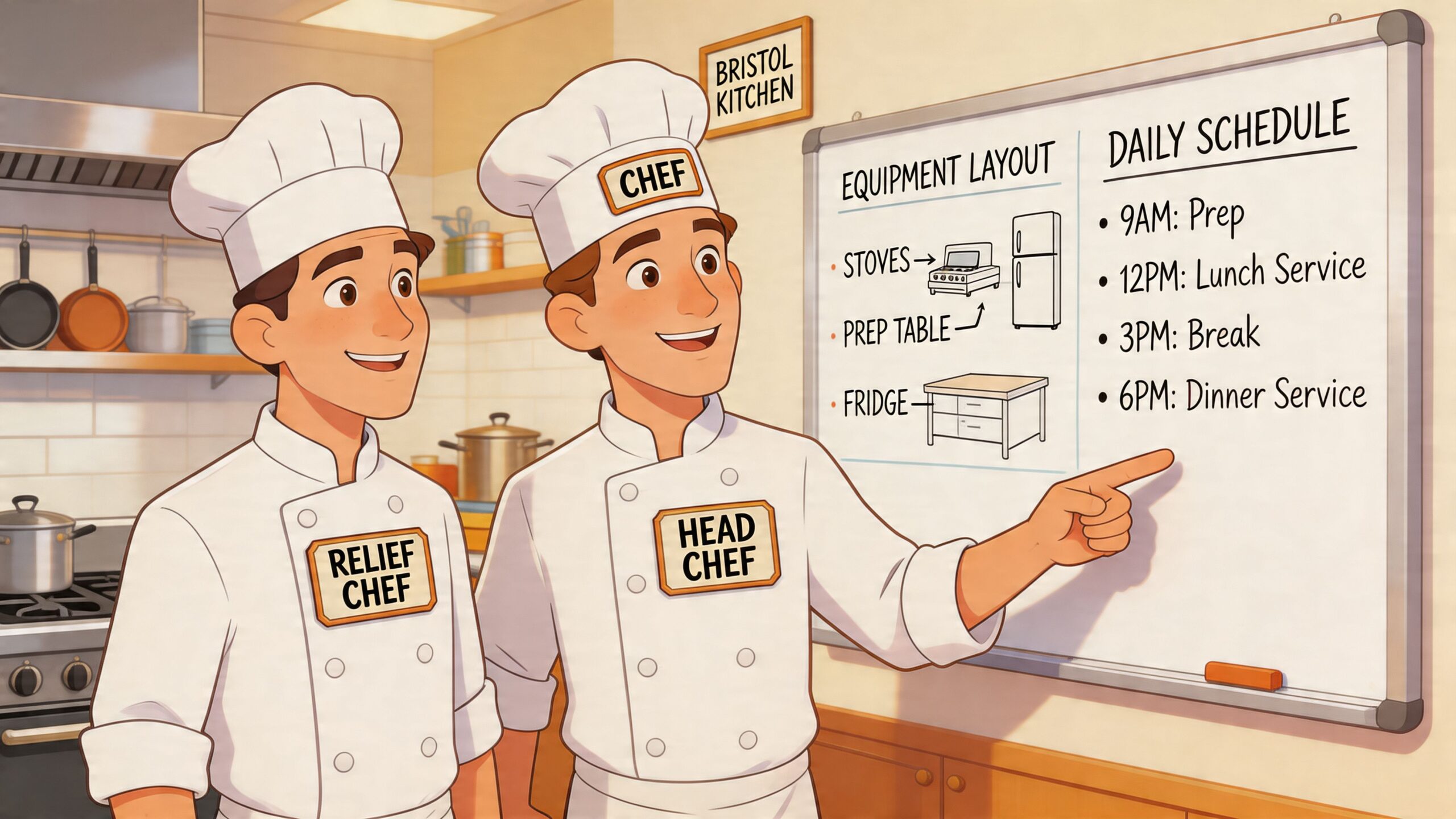
Too many venues make the same mistake. They book cover, then throw the chef into service with almost no briefing. That’s lazy management. Even an excellent chef needs the basics to work cleanly in your kitchen.
Give them a fast operational brief
Keep it short. Keep it useful. Do it before the pressure starts.
A one-page welcome sheet works well. Include key contacts, start and finish expectations, break policy, allergen rules, stock locations, cleaning standards, and any house-specific quirks that matter on shift. If you use prep lists or section sheets, have them ready.
Then walk the chef through the essentials:
- Menu priorities: What sells hardest, what’s off, what needs pushing.
- Allergen controls: What must never be assumed.
- Section expectations: What “good” looks like in your kitchen.
- Service format: Ticket flow, calling style, and how your pass runs.
- Escalation route: Who they go to if they need a decision quickly.
Introduce the right people early
Don’t do a grand tour. Just connect the people who matter.
Show them the head chef or shift lead, the key FOH contact, and the person handling ordering or stock if relevant. A relief chef works best when they know who makes the calls and who holds the line during service.
A five-minute briefing before prep saves thirty minutes of confusion during service.
Set them up to win in the first hour
The first hour tells you whether the shift will be smooth.
Give the chef a clear section, clean kit, and direct instructions. Don’t drip-feed information while they’re trying to prep. If there’s a known pain point, say it early. For example, tell them if Sunday lunch always spikes at a certain time, if your fryer section bottlenecks, or if one dish creates repeated allergen questions from FOH.
A strong relief chef will adapt quickly. Your job is to remove avoidable friction.
Keep standards tight without micromanaging
There’s a balance here. You want to check fit, but you don’t want to hover over someone who’s there to help.
Use a quick midpoint check instead. Ask three things:
- Do they have what they need?
- Is the section flowing properly?
- Are there any menu or stock issues likely to hit later?
If the answer is yes, yes, and no, leave them to do the job.
After service, review properly
If the chef did well, make a note. If they’d suit future bookings, record the type of shift and section they handled best. Operators who do this build a better repeat-cover system over time.
That matters whether you run one site in Bristol or multiple properties across Bristol, Devon, Dorset, Berkshire, Windsor, Reading, Slough, Wales, or further afield. Reliable temporary cover gets stronger when you treat it as part of your operation, not a one-off emergency.
Bristol Relief Chef FAQs
What’s the difference between a temp chef and a relief chef
A temp chef is a broad label. A relief chef should be ready to step into a working kitchen fast, cover a genuine operational gap, and contribute from the first shift. The difference is readiness, not just availability.
How quickly should a Bristol venue expect cover
For urgent kitchen gaps, speed matters, but reliability matters more. A strong specialist model should be able to respond quickly and give you a realistic start time, not just vague reassurance.
Why are chef-led agencies usually more reliable
Because they assess chefs like operators, not like general recruiters. That shows up in fulfilment. Leading chef-run agencies report a 99% fulfilment rate for relief chef placements, compared with the 70-85% rates often seen with generalist agencies during peak seasons. If you run busy services, that gap matters.
Can I book relief chefs for more than emergency sickness cover
Yes. Good operators use relief support for holidays, seasonal demand, menu launches, management cover, pre-opening support, events, and longer stabilisation periods after a resignation.
Should I use the same provider for temporary and permanent chef recruitment
Usually, yes. If a provider understands your standards during temporary cover, they’re in a better position to help with permanent chef recruitment as well. The same logic often applies to specialist staffing for yacht chefs, villa chefs, boutique hotels, and private households.
What should I ask before confirming a booking
Ask who vetted the chef, what checks were done, whether insurance is in place, what section they’re strongest on, and what happens if the fit isn’t right. If those answers aren’t clear, keep looking.
If your Bristol kitchen needs fast, compliant cover without the usual agency chaos, speak to Relief Chefs UK. They’re a chef-led staffing partner established in 2013, supporting pubs, restaurants, hotels, yachts, villas, and hospitality operators across Bristol and the wider UK with relief chefs, temporary chefs, permanent chef recruitment, and wider hospitality staffing support. If you need a chef who can arrive vetted, work to standard, and protect service, get in touch now.
Call the team.
Office 01392 715474 · info@reliefchefs.co.uk