
Chef Jobs Monday to Friday: A Practical UK Guide
7 August 2026

It's a Tuesday breakfast rush, the prep list is already running late, and the head chef who promised to come in for a few weekday shifts has just called in sick. That's the reason so many businesses search for chef jobs Monday to Friday, and why so many chefs search for them too. They want a rota that fits life, and operators want a kitchen that still opens cleanly at lunch.
In the UK, weekday-only chef work isn't a fantasy rota, it's a real working pattern used in kitchens that don't live on late dinners and weekend peaks. Monday to Friday 07:00–16:00 is a common pattern in one UK hospitality careers source, and it notes the average chef works about 9 hours per day with 8–9 working hours common in many kitchens (Becoming a Chef). That matters because it shows these roles are structured around daytime service, not just posted as a search filter.
For employers, the pull is obvious. Weekday staffing is often easier to schedule around business dining, contract catering, schools, healthcare, and venues with lower evening trade, and it can reduce the pressure that comes from unsociable hours. For chefs, the appeal is just as clear, fewer late finishes, more predictable planning, and a rota that doesn't eat the whole week.
Practical rule: treat every weekday advert as a rota decision, not a promise. The wording matters, but the real test is what the kitchen does on holidays, during sickness, and when the diary gets busy.
Why Chefs Want Monday to Friday Work in 2026
A lot of chefs do not start the week looking for a new job, they start it looking for a better life. By Tuesday afternoon, the trade-offs are already obvious, late finishes, missed family time, and another weekend lost to a rota that never quite settles. That is why chef jobs Monday to Friday keep pulling serious interest, not from job-board browsers, but from people who want stability without leaving hospitality.
The market supports that shift. UK labour market reporting still treats chefs as a tracked occupation, and that matters because weekday-only cover is part of a real staffing pattern, not a niche side request. ONS vacancy data, July 2024 showed accommodation and food service activities still carrying a large vacancy count, which is the background behind the adverts. Kitchens are trying to lock in weekday stability while the labour market still makes consistency hard to guarantee.
Why the rota keeps changing
Operators need weekday chefs for different reasons. Some kitchens are built around corporate lunch trade, others serve schools, healthcare, or contract catering, and many private households and premium venues want reliable daytime cover rather than a classic restaurant service. The opportunity for chefs is real, but so is the pressure on employers, because the wider sector is still short of people.
That shortage shows up in the way weekday work is advertised and filled. A kitchen might start with a clean Monday-to-Friday brief, then add holiday cover, occasional events, or an early breakfast service if the site needs it. The wording matters, but the actual test is what the kitchen does on holidays, during sickness, and when the diary gets busy. For a UK-specific picture of where chefs sit in the labour market, the UK occupation profile for chefs is best read alongside live vacancy data, because occupation profiles and rota reality are not the same thing.
What this guide actually helps with
Most pages stop at “look for weekday jobs.” That is not enough. The question is how to spot a genuine Monday-to-Friday rota, how to tell salaried work from relief cover, and how to avoid adverts that say weekday only but still sneak in holiday or weekend exceptions. The practical test is simple, if the rota is not written clearly, it is not stable yet.
A chef who knows the service pattern can move faster than someone chasing every advert. So can an employer who understands which channel produces weekday cover. Relief Chefs UK uses that reality every day, and you can see the practical side of it on our work in hospitality page. That is where weekday roles become a staffing strategy, not just a lifestyle perk.
Where Monday to Friday Chef Jobs Are Found
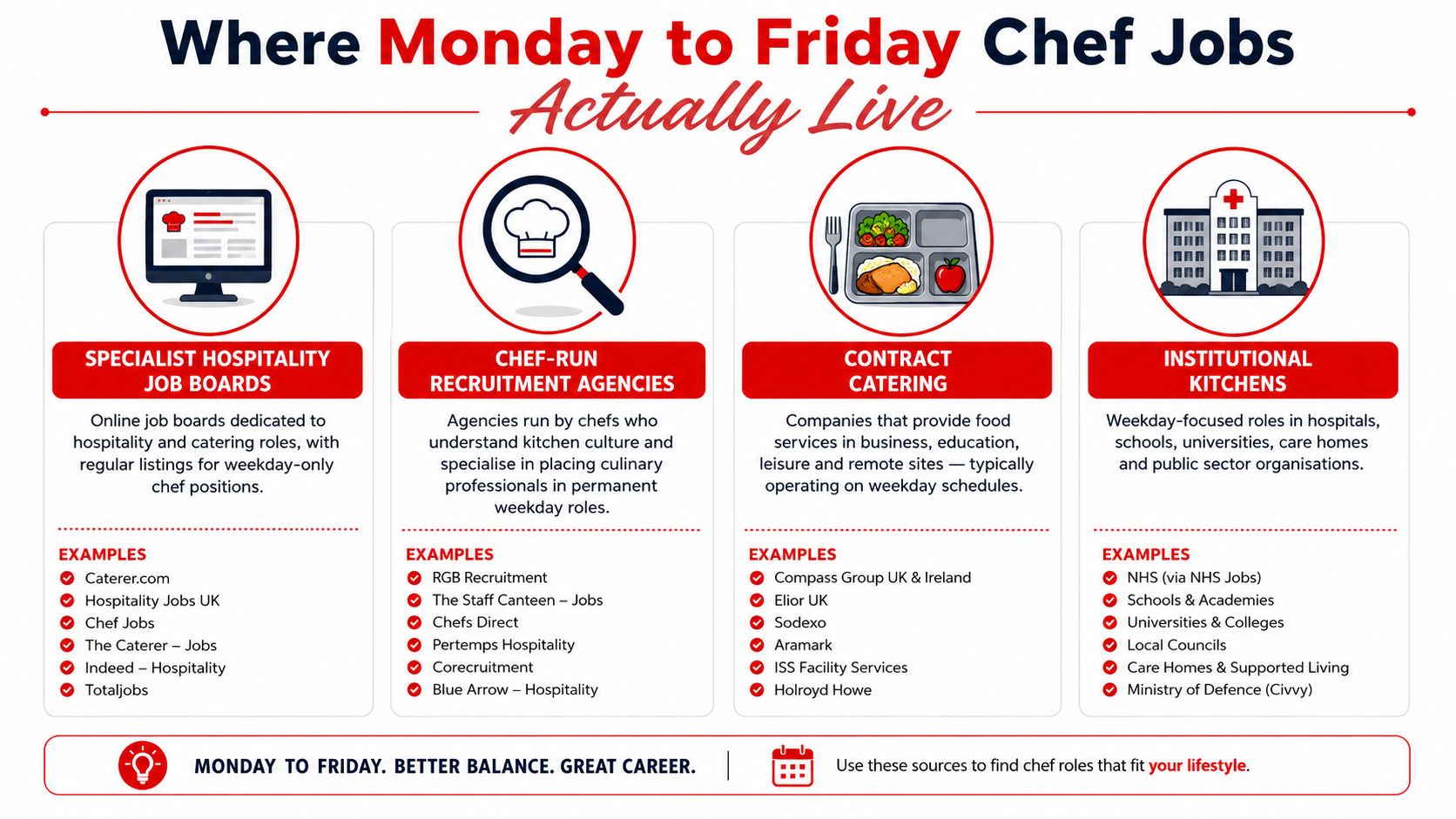
The quickest way to waste time is to treat every weekday chef vacancy as if it sits in the same place. It doesn't. Some are on broad job boards, some come through specialist hospitality recruiters, some come from contract catering and institutional kitchens, and some are found in private settings where the rota is less public but often more stable.
| Channel | Typical pay | Rota reliability | Best for |
|---|---|---|---|
| Specialist hospitality job boards | Often hourly in the £13–£15 range for lower-seniority roles, with salaried London roles around £37,000–£39,000 | Mixed, read the small print carefully | Chefs comparing live market rates quickly |
| Chef-run recruitment agencies | Pay depends on venue and assignment, but weekday stability is often clearer | Higher, because rota terms are screened before placement | Chefs who want cleaner handovers and less guesswork |
| Contract catering | Varies by site, often structured around daytime service | Usually strong | Chefs who prefer prep, lunch service, and set hours |
| Institutional kitchens | Depends on employer and seniority | Often strong when the site is built around weekday occupancy | Chefs who value routine and predictable demand |
The four channels that matter
Specialist hospitality job boards still have value, especially for live adverts in cities like Bristol, Reading, Slough, Windsor, Berkshire, Dorset, Devon, and Wales. The speed is useful, but the trade-off is clear. Many listings mix genuine weekday work with vague “flexible” language, so the rota terms should be checked before the salary line gets any attention.
Chef-run recruitment agencies work differently. A chef-first agency understands service pressure, so it tends to screen out jobs that will not hold up once the kitchen gets busy. That matters for chefs who want weekday cover without being pulled into late finishes every time the venue is under strain.
Contract catering is one of the clearest homes for weekday work because the service pattern already follows breakfast, lunch, prep, and daytime delivery. Schools, healthcare, and corporate dining are where many weekday chefs settle, because the rota model is already built in rather than improvised around trade.
Institutional kitchens cover sites where the operation depends on routine rather than nightly trade. Private households, yachts, and villas can also sit in this group when the family schedule or guest pattern is daytime-led. Chefs who prefer order, clean prep windows, and a defined handover usually find the search becomes more productive here.
Read the rota first. If the job advert will not state start times, weekend exceptions, or holiday cover, the phrase “Monday to Friday” may be carrying more weight than the contract.
For a broader look at the kinds of hospitality roles behind these searches, the relevant service page is Work in Hospitality.
Tailoring Your CV for Weekday Chef Roles
A weekday CV should read like someone who understands service rhythm, not someone who only has kitchen experience. The strongest applications lead with the work that fits a Monday-to-Friday rota, breakfast, lunch, prep, batch production, and reliable handover. Weekend-heavy fine dining experience can still matter, but it should not sit at the top if the role is clearly daytime-led.
Lead with the shift pattern you can do
Start your summary with the rota match. If you have worked split prep and daytime service, say that plainly. If you have handled corporate lunch covers, school meals, or daytime banqueting, put that near the top so the manager sees it before they get lost in an old list of late-night restaurant roles.
A before-and-after example makes the difference obvious:
- Before: Worked across larder, grill, and prep in busy restaurants.
- After: Managed weekday breakfast and lunch prep, maintained clean handovers, and kept batch production on time in high-volume daytime service.
That second line tells the reader you can work inside the reality of weekday kitchens. It also shows you understand timing, not just cooking.
Keep the application text tight and specific
A short note to the venue does more than a long generic cover message. Mention the rota, reference the job title, and show you have understood the operational shape of the kitchen. If the advert hints at rare weekend cover, address it once rather than pretending it does not exist.
Line that gets weekday CVs shortlisted: “I'm available for weekday daytime service and I'm comfortable discussing occasional holiday cover if the rota requires it.”
That sentence does two things at once. It protects your preferred pattern and tells the employer you are realistic.
For a practical template and further advice on how to present chef experience cleanly, use CV for a Chef.
Permanent Weekday Roles Versus Relief Cover
A chef can chase weekday work for very different reasons. A permanent Monday-to-Friday post inside one venue gives you one rota, one team, and one set of standards to live with every day. Relief cover through an agency or staffing partner gives you more variety, more movement between sites, and a different way to build income around daytime hours.
Compare the two models before you commit
| Factor | Permanent weekday role | Relief or agency cover |
|---|---|---|
| Income predictability | Usually steadier because you're on one rota | Depends on bookings, unless the partner has regular demand |
| Work-life balance | Strong if the rota is truly fixed | Strong if you choose assignments carefully |
| Exposure to new menus | Lower, because you stay in one kitchen | Higher, because each site teaches something different |
| Holiday cover | The venue still needs a plan when you're off | Built into the model, which helps with life events |
| “No weekends ever” promise | Sometimes real, sometimes soft wording | More controllable, because the assignment can be selected |
Some adverts in the UK market say “Monday to Friday” and then add holiday cover or weekend availability. That is why the job title alone is not enough. One London listing states lunch and dinner run Monday to Friday only, with shifts from 10.30am to about 3pm and again from 6pm to about 10/10.30pm, plus every weekend off, Bank Holidays, and scheduled Christmas and August closures (Job Today London listing). Another advert style promises weekday work but still leaves room for exceptions, so the rota has to be checked before you sign anything.
The salary language also gives you a clue about the kitchen. Current UK listings commonly show 40-hour weeks with starts around 6:30am–7:00am and finishes around 3:00pm–5:30pm, which points to prep-heavy daytime service rather than a dinner-service pass (Indeed UK listings). If a business does not describe that structure clearly, ask where the pressure sits, because that is usually where the hidden workload shows up.
Decision rule: choose permanent weekday work when you want depth in one kitchen. Choose relief when you want variety, daytime hours, and a cleaner way to absorb sickness, seasonal spikes, and life events.
For employers comparing staffing routes, one practical option is Relief Chefs UK, which sits in the relief and temporary market and also supports permanent chef recruitment, yacht chefs, villa chefs, and wider hospitality staffing support.
Working With a Chef-First Staffing Partner
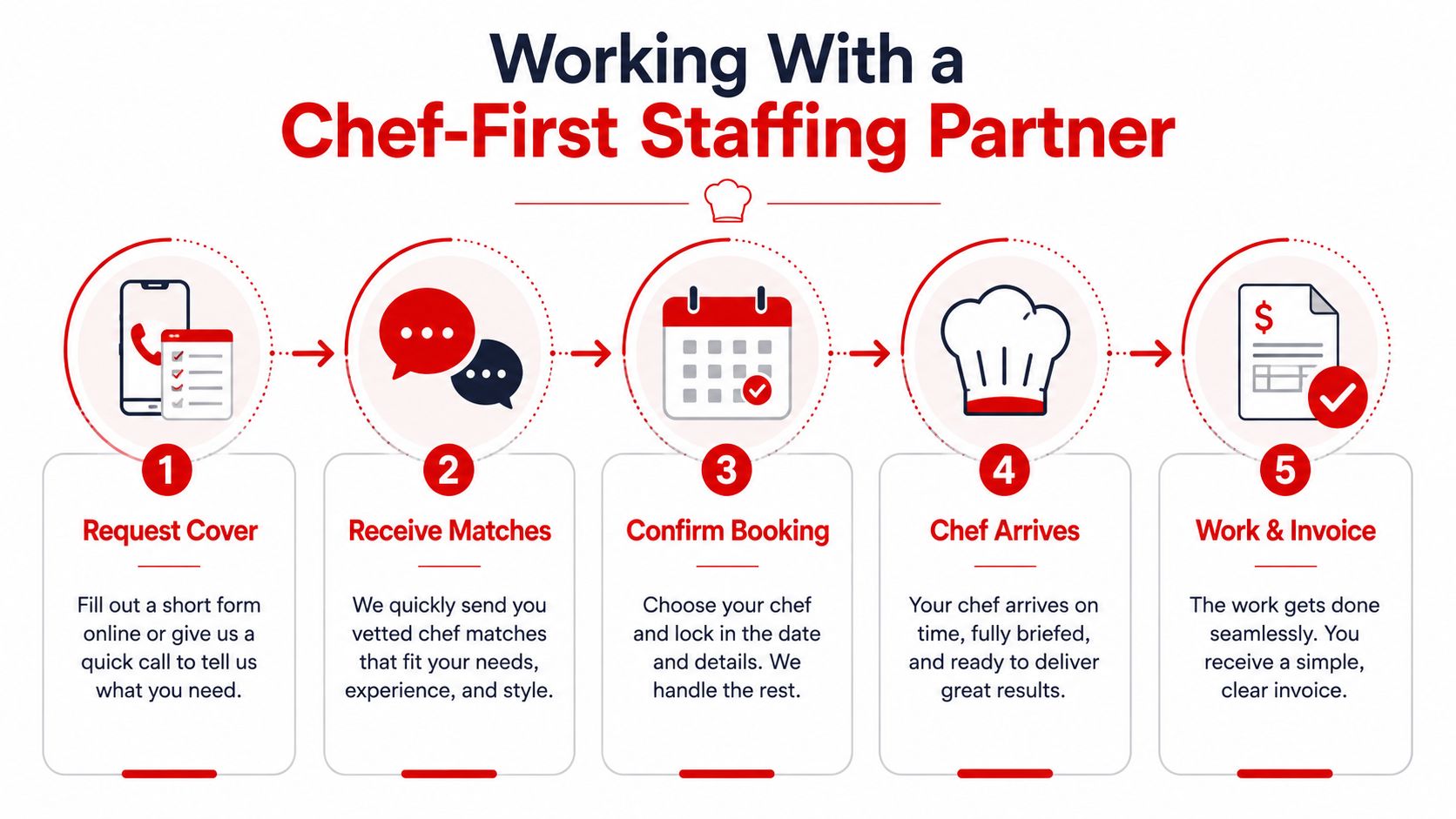
A chef-run staffing partner reads the brief the way a kitchen does. It checks whether the venue can take the chef, whether the menu fits the service, and whether the cover still holds when the first shift starts early and the prep list is already stacked. Weekday staffing either works fast or falls apart at that point.
What the booking flow looks like
The working flow is simple enough to trust. A venue sends a cover request by short form or phone, the recruitment team (available 24/7) matches it with a vetted chef, subject to availability, the venue confirms the booking, and then the chef arrives ready to work. Relief Chefs UK says it is run by chefs rather than recruiters, was established in 2013, has 60+ years of combined hospitality experience, is trusted by 400+ venues, and provides professional, vetted chefs for temporary, emergency and permanent placements across the UK (Relief Chefs UK).
That speed matters when the problem is sickness at short notice or a seasonal spike. Generic agencies often lead with who is free, then deal with kitchen fit later. A chef-first partner usually starts with the service itself, and that difference shows up when the cover has to hold breakfast service, a lunch prep window, or private household work without friction.
Why businesses use this route
Flexible cover, quoted to the role, location and dates, suits different levels of demand, from smaller pubs and cafés to multi-site groups. The useful part is the structure, with vetted chefs, 24/7 help, and transparent pricing that give operators a way to plan around staffing gaps instead of firefighting each week.
For businesses that need flexible cover, the relevant pages are relief chefs and temporary chef services. If you are comparing what weekday cover should cost against a permanent hire, the pay guide at how much chefs make is the cleaner place to start. That matters most when the rota needs to stay steady without committing to a long recruitment cycle.
Interview Prep and Pay Negotiation for Weekday Roles
A weekday chef interview should feel like a rota check, because that is really what it is. The advert might sound tidy, but the interview tells you whether the kitchen runs on the pattern you want. Ask about start times, finish times, overtime, holiday cover, Bank Holidays, and whether “every weekend off” really means every weekend off.
If you want the conversation to stay useful, keep it tied to service. A manager can talk about culture for five minutes and still leave the rota unclear, so bring it back to the working week and the shape of the shifts.
Questions that cut through vague adverts
- Rota structure: Ask who writes the rota and how far ahead it is published.
- Weekend exceptions: Ask whether the kitchen ever expects weekend cover for events, stock work, or holiday gaps.
- Early starts: If the advert mentions 40 hours with 6:30am–7:00am starts, confirm how prep is shared before service.
- Pay model: Compare hourly and salaried wording carefully, because current UK listings show hourly roles around £13–£15 and salaried London roles around £37,000–£39,000.
- Holiday cover: Ask who covers you when you are away and whether the kitchen expects reciprocal flexibility.
A good pay conversation starts with rota value, not a headline figure. Say plainly that weekday daytime service is your strength, then ask how the rota protects that pattern before you move to money. That keeps the discussion on the job itself, which is where the trade-offs sit.
Trial shifts help, but treat them as a practical audit of the kitchen. Watch the pass, the ordering habits, the storage labels, and how the team handles prep carry-over from the previous day. If the kitchen is already disorganised before service starts, weekday stability can fall apart later, no matter how good the advert sounded.
For a clearer pay benchmark, see How Much Do Chefs Make. Use that guide to compare weekday pay with the level of responsibility the role carries.
Your Weekday Chef Job Action Plan and FAQs
A weekday chef search works better when it follows the rota, not the other way around. Start with a clear plan for one week, then use it to separate genuine Monday to Friday roles from adverts that only look tidy on the surface. Day 1 and 2, trim your CV so it leads with daytime service, section strengths, and rota fit. Day 3, shortlist three routes, a specialist job board, a recruiter, and a direct employer route. Day 4, register with a vetted partner such as Relief Chefs UK. Day 5, send three applications built around the role. Day 6, prepare your interview questions. Day 7, follow up and book a relief shift as a back-up so you keep momentum even if one role stalls.
FAQs
Do Monday-to-Friday chef jobs really mean no weekends?
Sometimes they do, especially in contract catering and some private settings. Other roles still carry holiday cover, event work, or the occasional weekend request, so read the rota wording before you assume the pattern is fixed.
What pay is realistic?
UK listings commonly show hourly pay in the £13–£15 range for lower-seniority roles and around £37,000–£39,000 for salaried London roles. Treat the figure as one part of the offer, because rota stability, prep load, and service pace change the value of the job.
What if the rota changes after I start?
Ask for the rota terms in writing, then raise it straight away if weekend cover starts creeping in. Good kitchens are direct about change. Poor ones rely on vague expectations and hope you will absorb the extra shifts.
If you want weekday chef cover or a Monday-to-Friday role that matches the rota, speak to Relief Chefs UK. They place relief chefs, temporary chefs, permanent chef recruitment, yacht chefs, villa chefs, and wider hospitality staffing support across the UK, so the conversation stays on the actual cover you need rather than another vague advert.
Call the team.
Office 01392 715474 · info@reliefchefs.co.uk