
Ace Chef Recruitment Devon: Find Your Next Culinary Star
16 April 2026

Friday night. Full bookings. Two functions on. Weather good, walk-ins likely. Then your sous chef calls in sick, the CDP has already handed in notice, and your head chef is staring at a prep list that won’t prep itself.
That’s chef recruitment in Devon. It isn’t a tidy HR exercise. It’s a business continuity problem.
If you run a pub, hotel, restaurant, yacht kitchen, holiday venue, or private household operation in Devon, you already know the pattern. Demand arrives fast. Staffing gaps arrive faster. The venues that cope are the ones that stop treating recruitment like an ad-posting task and start treating it like operational risk management.
The Real Challenge of Hiring Chefs in Devon
A lot of operators blame themselves when recruitment drags on. They think the advert was weak, the salary was off, or the interview process needs tweaking.
Sometimes that’s true. Often, it isn’t.
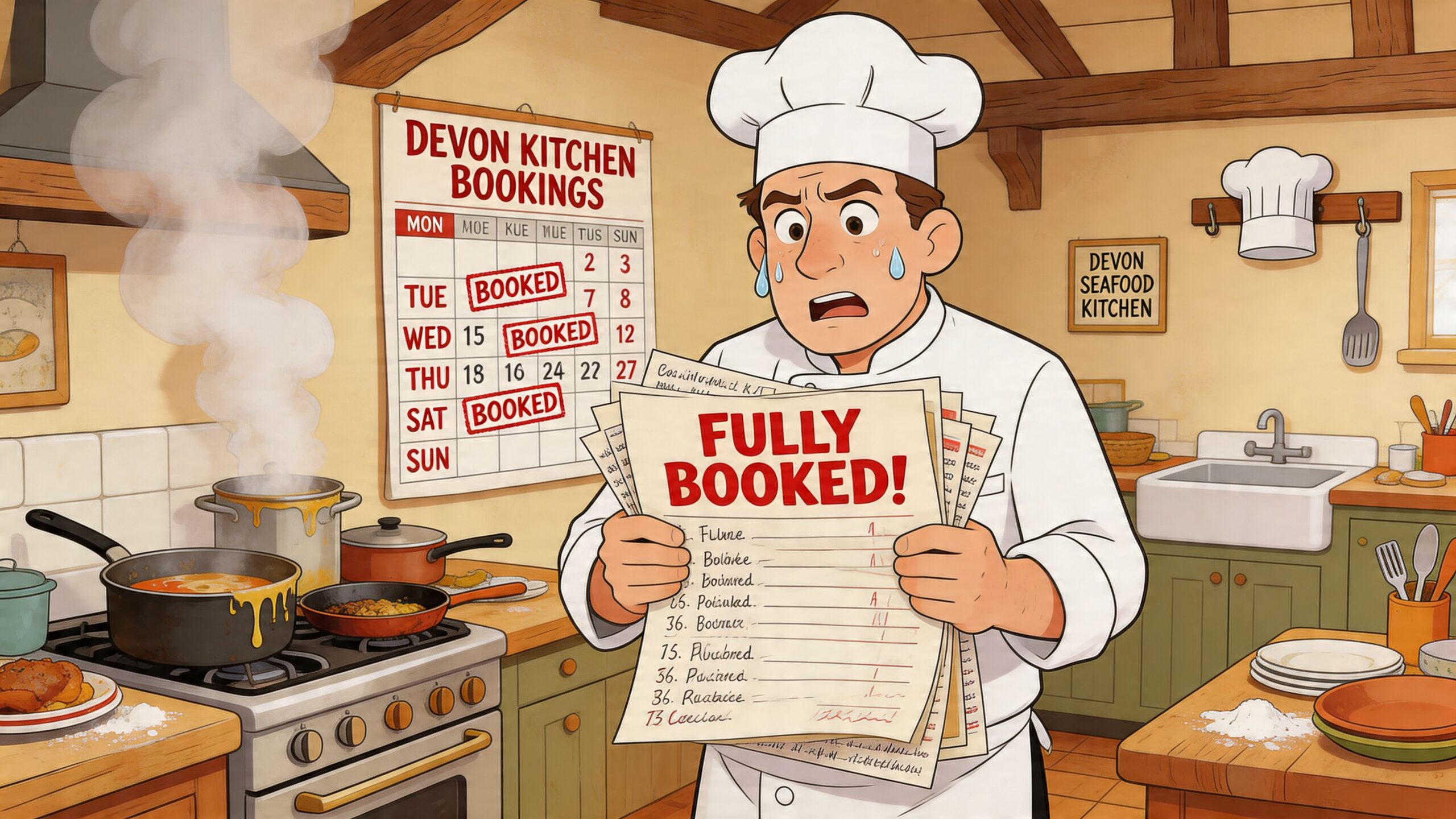
Devon is a hard market because the pressure is structural. The South West accommodation and food services sector reports an 11.5% vacancy rate, which is 25% higher than in London, driven largely by seasonal tourism peaks and the staffing pressure that comes with them, according to the ONS vacancy data for UK jobs and vacancies.
Why Devon gets hit harder
Devon isn’t dealing with one simple labour shortage. It’s dealing with several stacked on top of each other.
- Seasonal surges: Coastal and tourism-led trade can turn a manageable rota into a crisis in days.
- Spread-out demand: Staffing pressure isn’t confined to one town. Exeter, Kingsbridge and wider Devon all compete for the same kitchen talent.
- Small team exposure: Many independent venues don’t have depth on the bench. Lose one chef and the whole service model changes.
That’s why Chef recruitment Devon searches usually come from people under pressure, not people planning six months ahead.
Practical rule: If one chef absence forces menu cuts, owner cover, or double shifts, you haven’t got a recruitment issue. You’ve got a resilience issue.
What this looks like in real life
A boutique hotel near the coast doesn’t just lose a chef. It loses breakfast consistency, wedding prep capacity, and management time. A village pub doesn’t just miss one service. It burns out the remaining team, lets standards slip, and risks bad reviews the week trade is strongest.
That’s the part many agencies don’t understand. A chef vacancy in Devon isn’t abstract. It hits revenue, guest experience, team morale, and retention all at once.
So be honest about the problem. If your current hiring method depends on waiting for the right applicant to appear, you’re already behind. Devon kitchens need faster decision-making, tighter vetting, and cover options that keep the pass moving while permanent recruitment catches up.
Sourcing Chefs Where Your Competitors Are Not Looking
Posting on a public job board is fine. Relying on it is lazy.
In Devon, public ads put you in a shouting match with every other pub, hotel, and restaurant looking for the same people. At any given time, there are over 110 chef positions advertised within a 5-mile radius of Devon’s key hubs, which creates serious competition and noise on public job boards, as shown in these chef jobs in Devon listings on Caterer.com.
Stop fishing in the busiest pond
The best chefs often aren’t refreshing job boards. They’re working. They’re picking up private work. They’re covering seasonal contracts. They’re open to the right move, but they won’t chase a vague advert with no rota clarity and no sign of kitchen standards.
That means your sourcing has to get sharper.
Use channels your competitors neglect:
- Local training routes: Build relationships with catering tutors and placement leads at Devon and South West colleges. Don’t ask for miracles. Ask who shows up on time, who keeps standards, and who wants progression.
- Former staff networks: Good ex-employees know good chefs. Reconnect with people who left on decent terms.
- Private chef circles: Devon has a strong private dining and event scene. Some chefs want mixed portfolios, not one fixed role.
- Supplier referrals: Butchers, fish suppliers and produce reps know which kitchens are stable and which chefs are respected.
- Chef-to-chef outreach: Your head chef should be part of sourcing. Strong candidates respond better to kitchen people than generic recruiters.
What to say when you reach out
Most outreach fails because it sounds desperate or bland.
Don’t send, “We have a great opportunity in a fast-paced environment.”
Send something useful:
- what the team looks like
- whether the role is live-in or local
- the style of food
- the rota reality
- who leads the kitchen
- what’s broken and what’s being fixed
That kind of honesty gets replies.
Good chefs don’t expect perfection. They do expect the truth.
Build a live bench, not a wish list
If you only recruit when someone quits, you’ll keep overpaying in stress and downtime. Keep an active list of chefs you’d call for:
- holiday cover
- weekend reinforcement
- seasonal uplifts
- temp-to-perm options
- event spikes
For South West operators who need a quicker route into pre-qualified cover, it also makes sense to look at specialist options such as agency chefs in the South West, especially when your own network is thin.
The point is simple. Chef recruitment Devon works better when you stop waiting for applications and start building access to people before the emergency lands.
Crafting a Job Offer That Attracts Top Talent
Salary matters. But in Devon, salary is only the starting line.
The average chef salary in Devon is approximately £22,999, with a typical range between £20,999 and £28,499, according to Totaljobs chef salary data for Devon. If your pay sits below that range, don’t act surprised when applicants disappear. If your pay sits inside that range, don’t assume that’s enough.

Why money alone won’t win
Most decent chefs have worked in kitchens that promised a “great opportunity” and delivered chaos, clopen shifts, weak leadership, and no breathing room. They read between the lines now.
Your offer has to answer the key questions:
| What the chef wants to know | What you should make clear |
|---|---|
| Will the rota change every week? | State how rotas are built and how much notice staff get |
| Am I joining a stable kitchen? | Explain team structure and who leads service |
| Is there any work-life balance? | Spell out consecutive days off or realistic scheduling |
| Will I be set up to succeed? | Describe equipment, menu style, and prep support |
Sell the role like an operator, not a marketer
Write job descriptions that reflect the actual kitchen.
If the menu is produce-led and changes with the season, say that. If the business is rebuilding after turnover, say that too. If the owner backs the kitchen and invests in equipment, mention it. Serious candidates want clarity, not spin.
A useful benchmark for role planning sits in this sous chef job description guide. It helps managers define what the role owns before they start interviewing the wrong people.
The benefits that move the needle
Chefs rarely leave one role for salary alone. They leave because the overall deal is better.
What improves your offer in Devon?
- Consecutive days off: This matters more than a vague promise of balance.
- Predictable rotas: Last-minute scheduling pushes good people away.
- Staff food done properly: If your team meal is poor, chefs notice.
- Menu input: Strong chefs want room to contribute.
- Accommodation support where relevant: Especially for remote or seasonal sites.
- Clear progression: Tell them what the next step looks like.
Here’s a useful reminder on what chefs are weighing up before they say yes:
A weak offer creates expensive churn
If your role asks for flexibility, speed, leadership and calm under pressure, then your offer has to reflect that. You can’t demand senior behaviours and package the job like an afterthought.
If a candidate likes the food but doubts the rota, they’ll decline. If they like the salary but distrust the culture, they’ll leave.
The venues hiring well in Devon are usually doing one thing better than everyone else. They’ve made the job feel sustainable.
A Vetting Process That Exposes Red Flags Early
A polished CV means very little in a busy service.
In Devon’s hospitality sector, 45% of hard-to-fill vacancies are due to applicants lacking the required job-specific skills, according to the Devon workforce skills report. That should change how you interview immediately.
Stop hiring on confidence, personality, or a list of venues on a CV. Vet for skill, judgement, and behaviour under pressure.
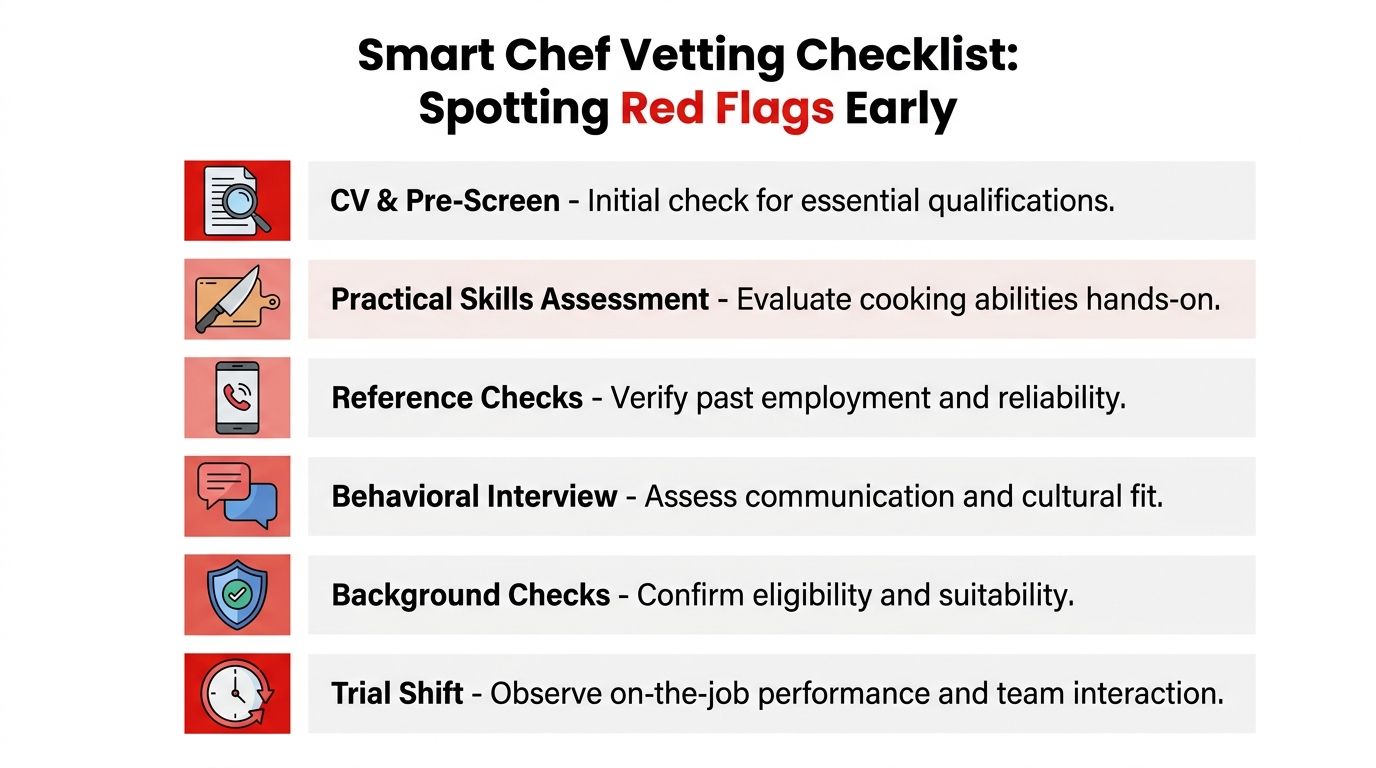
Use a three-stage process every time
You don’t need a corporate HR department. You need discipline.
Phone screen
Keep it short. Confirm availability, recent role history, station strength, right to work status, and why they’re moving.
Structured interview
Ask the same core questions every time so you can compare candidates properly.
Paid trial shift
Watch how they prep, communicate, organise, and recover when things don’t go to plan.
Questions that actually reveal something
Most interviews are too vague. “Tell me about yourself” won’t protect your kitchen.
Ask questions like these instead:
- Service pressure: “Tell me about a service that went wrong. What did you do first?”
- Standards: “How do you keep consistency when the ticket machine doesn’t stop?”
- Team fit: “What kind of head chef gets the best from you?”
- Adaptability: “What do you do when prep levels don’t match bookings?”
- Accountability: “What feedback have you been given that changed how you work?”
Look for specifics. If they answer in slogans, keep digging.
What to watch on the trial shift
A trial isn’t a box-ticking exercise. It’s where the truth shows up.
Use this quick view:
| Watch for | Good sign | Red flag |
|---|---|---|
| Prep habits | Organised, clean, asks sensible questions | Scrappy, wasteful, disorganised |
| Communication | Clear, calm, respectful | Silent, defensive, blames others |
| Pace | Steady and efficient | Fast but messy, or slow and flustered |
| Standards | Checks seasoning, presentation, timing | Assumes, rushes, cuts corners |
A chef who talks brilliantly but can’t stay organised on a trial shift will cost you more than an empty section ever did.
Vet temperament, not just knife skills
Kitchens fail from attitude as often as ability. One volatile hire can unsettle the entire brigade.
That’s why your checks need to cover:
- reliability
- communication style
- response to pressure
- willingness to follow systems
- respect for cleaners, KP staff and front of house
A proper process takes time. That’s the trade-off. You either invest the time upfront or pay for the mistake through turnover, guest complaints and exhausted managers.
The Strategic Role of Relief Chefs for Immediate Cover
Permanent hiring solves one problem. Immediate cover solves another. Smart operators use both.
Devon’s hospitality sector saw 22% growth in temporary chef bookings last year, yet 50% of short-notice needs still go unmet due to slow vetting, while chef-led models can cut costs by 15% and deliver vetted cover quickly, based on the operational data published by Relief Chefs UK.

Temporary cover isn’t a last resort
Too many managers still think relief chefs are only for disasters. That’s outdated thinking.
Use temporary chefs when:
- a key chef resigns without proper notice
- sickness lands before a fully booked weekend
- weddings, functions or tourist trade stretch the core team
- a new opening needs breathing room
- you want to trial a chef before a permanent offer
That isn’t panic buying. It’s operational protection.
Why traditional recruitment often loses on speed
Standard recruitment struggles in Devon because it’s too linear. Write advert. Wait. Screen. Interview. Trial. Offer. Notice period. Start date.
That sequence makes sense for permanent hiring. It’s useless when Saturday service is at risk on Wednesday.
A chef-led staffing model closes that gap. It prioritises real kitchen readiness, practical vetting and speed of deployment. For businesses needing immediate local support, relief chefs in Devon gives one route into short-notice cover while a permanent search runs in parallel.
What good relief cover should do
Not all temporary staffing is equal. You want someone who can walk in, read the kitchen quickly, respect the systems in place, and stop the team from spiralling.
The right temporary chef should help you:
- hold service standards
- protect your permanent team from burnout
- avoid menu cuts where possible
- maintain guest confidence
- buy time to hire properly instead of rushing a bad permanent decision
The most expensive choice is often refusing temporary cover, then losing revenue, standards and staff goodwill in the same week.
The best operators in Devon don’t ask whether they should use relief support. They ask when it makes commercial sense. Usually, the answer is earlier than they think.
Your Devon Chef Recruitment Questions Answered
How quickly should we move when we find a good chef
Fast. Not reckless, but fast.
Good chefs don’t stay available for long in Devon. If you like the candidate, line up the trial shift immediately, decide quickly, and present the offer clearly. Delay usually means one of two things. You lose them to another venue, or you force your team to keep covering while management hesitates.
A simple rule works well. If the candidate has passed the phone screen, interview and trial, make the decision while the shift is still fresh in your head.
Is using a relief chef worth the cost
Usually, yes.
Managers often compare the day rate to payroll and stop there. That’s the wrong comparison. Compare it to the cost of running short. A missing chef means management gets dragged into service, prep slips, standards wobble, and the permanent team gets hammered. If that continues, the true cost shows up in mistakes, poor retention and weaker guest experience.
Relief cover makes the most sense when the gap threatens service, team stability, or revenue. That includes pubs, boutique hotels, restaurants, yachts, villas and private households that can’t afford kitchen disruption.
What checks should happen before any chef starts
At minimum, you need right to work checks, reference checking, role-fit assessment and a proper skills review. For permanent hires, a paid trial is sensible. For temporary cover, practical vetting before deployment matters even more because the chef needs to arrive ready to function.
Use this pre-start checklist:
- Right to work confirmed: Don’t leave this until after the first shift.
- References checked: Focus on reliability, station strength and conduct.
- Role expectations agreed: Hours, section, reporting line and start date should be clear.
- Kitchen brief prepared: Don’t make a new chef guess allergens, specs or service flow.
If you skip these basics, you invite avoidable problems.
What makes a chef-led staffing partner different from a generic agency
A generic agency often recruits for volume. A chef-led partner understands kitchen reality.
That changes the quality of the match. The brief is sharper. The vetting is more practical. The conversation is about section strength, service pace, team fit, and whether the chef can hold the line in your type of operation.
That matters in Devon because venues vary so much. A country pub, a boutique hotel, a private villa and a yacht galley all need different things. If the person taking the brief doesn’t understand that, you waste time.
How do we help a temporary chef settle in quickly
Don’t overcomplicate it. Most short-term placements fail because the venue gives too little information, not too much.
Do these four things on day one:
- Assign one decision-maker: The chef needs one clear point of contact.
- Brief the menu and essential requirements: Focus on specs, allergens, and section priorities.
- Show the kitchen flow: Storage, ordering system, prep labels, and service setup.
- Introduce the team properly: A cold handover creates friction immediately.
A temporary chef doesn’t need a grand induction. They need clarity, access and leadership.
Chef recruitment Devon gets easier when you separate the two jobs in front of you. Hire permanent staff carefully. Protect service immediately when there’s a gap. The venues that do both well stay open, stay calmer, and keep hold of the good people they already have.
If you need practical help with chef recruitment, temporary kitchen cover, permanent placements, yacht chefs, villa chefs, or wider hospitality staffing support, contact Relief Chefs UK. They’ve been operating since 2013 and work with independent pubs, restaurants, boutique hotels and private clients across the UK.
Call the team.
Office 01392 715474 · info@reliefchefs.co.uk