
Hire Chef Devon Hotels: Find Your Next Culinary Star
15 April 2026

Friday afternoon. Two chefs already off. One has phoned in sick. The other has stopped answering. You’re staring at a full restaurant book, resident dinner, room service, breakfast prep for tomorrow, and a team that’s one bad service away from walking.
That’s the actual search behind hire chef Devon hotels. Not a lifestyle booking. Not a private dining gimmick. Not a glossy “chef for an experience” page. You need someone who can walk into a live hotel kitchen, read the setup fast, work cleanly, respect your standards, and keep service moving.
In Devon, that pressure gets sharper in peak periods. Independent and boutique hotels don’t just compete on food quality. They survive on consistency. When the kitchen slips, the whole business feels it. Guest complaints rise. Front of house absorbs the pain. The duty manager gets pulled into service. Owners end up covering operational gaps they should never be near.
The Real Challenge of Staffing Kitchens in Devon Hotels
The usual breaking point is simple. You don’t lose a chef in January on a quiet midweek and panic. You lose one before a packed Saturday, a wedding prep day, or a local event weekend. That’s when the problem becomes commercial, not just operational.

Devon gives hotels huge opportunity, but it also punishes weak staffing plans. In summer short-term rental occupancy reached over 78%, and August alone generated £86.2 million in revenue, according to this Devon tourism report. The same report notes that the Sidmouth Folk Festival drew 175,000 visitors.
That level of demand spills across the wider hospitality market. Hotels get fuller. Restaurants get busier. Last-minute bookings increase. Kitchens don’t get more forgiving.
Why good hotels still get caught short
This isn’t usually caused by poor management. It’s caused by thin kitchen structures.
Many independent hotels run with lean brigades because that’s what the numbers allow. One head chef. One sous. A couple of capable chefs de partie. Some mixed support underneath. It works until one person disappears, one event overbooks the kitchen, or one senior chef burns out and hands in notice with no real handover.
A few common Devon hotel scenarios:
- Sudden sickness cover. Breakfast still has to go out. So does lunch, functions, and dinner.
- Peak-season overflow. Occupancy is strong, but your kitchen rota was built for a normal week.
- Long notice periods. You’ve hired well on paper, but the new chef can’t start soon enough.
- Skill imbalance. You’ve got bodies in the kitchen, but not the level needed to run the pass or lead a section.
A full hotel with a weak kitchen isn’t fully operational. It’s exposed.
The cost isn’t just a missing shift
Managers often look at chef cover as a wage problem. It isn’t. It’s a service protection problem.
If the kitchen can’t cope, you cut the menu. If you cut the menu, spend drops and complaints go up. If standards slip during a busy period, the damage spreads into reviews, repeat business, staff morale, and owner confidence.
That’s why hotel staffing in Devon needs a different mindset. You’re not trying to “find any chef”. You’re trying to secure dependable cover that protects the trading day, the guest experience, and the team that’s still standing.
Sourcing Chefs Where to Look and What to Avoid
Most hotel operators try the same routes first. That’s understandable. They’re familiar. They feel cheaper. They also waste the most time when the pressure is on.
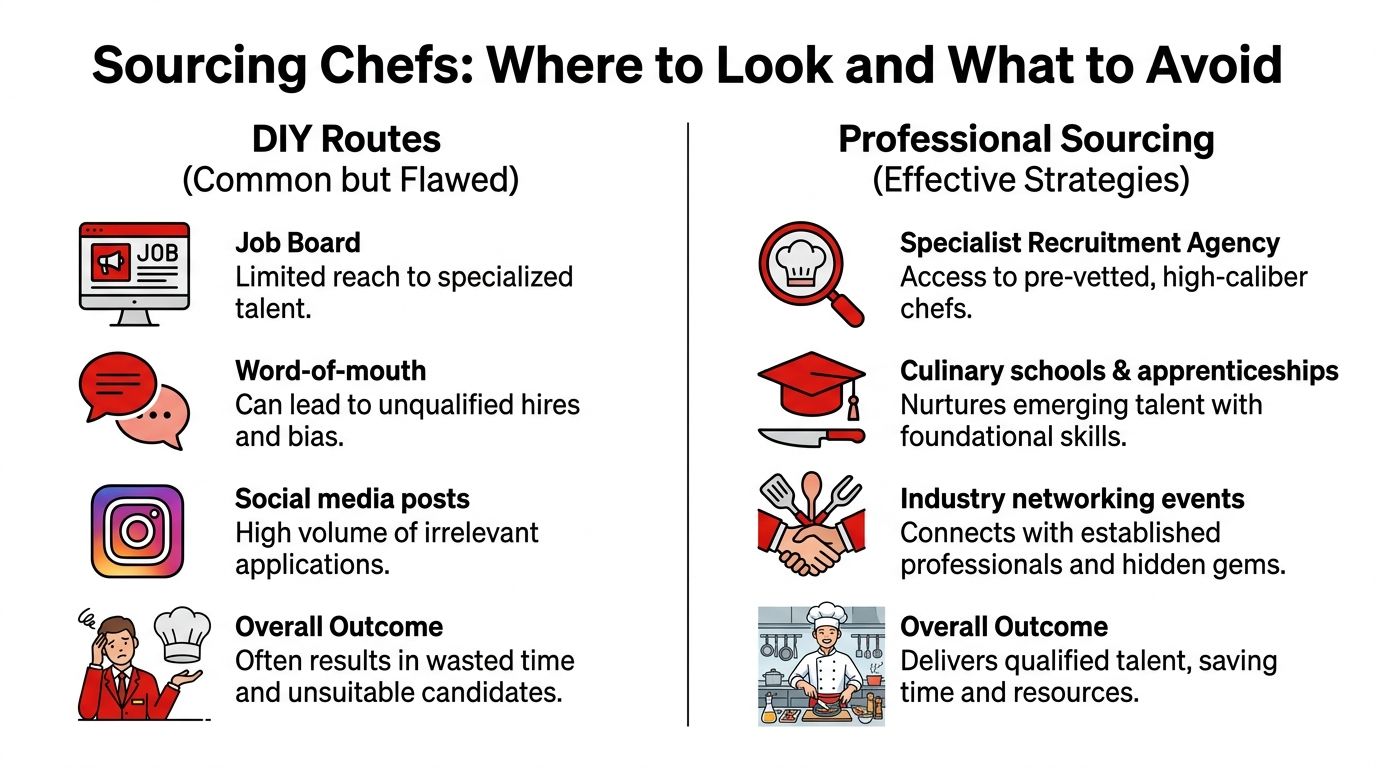
DIY routes often fail when you need speed
Job boards can work for planned permanent recruitment. They rarely solve a live kitchen crisis. By the time the advert is written, approved, posted, answered, screened, and trialled, the weekend has already happened.
Word of mouth sounds attractive because hospitality is a small world. But referrals are inconsistent. One chef’s “good lad” is another chef’s disciplinary issue in waiting. Social posts create noise, not certainty. You can get flooded with messages from people who’ve never worked hotel service, never handled volume, or aren’t available when you need them.
Here’s the practical trade-off.
| Route | What works | What usually goes wrong |
|---|---|---|
| Job boards | Useful for planned hiring | Slow response, poor fit for urgent cover |
| Word of mouth | Can uncover solid local people | No process, no proper vetting, unreliable follow-through |
| Social media posts | Fast visibility | Too many irrelevant applicants, weak filtering |
| General recruiters | Admin support | Often don’t understand kitchen hierarchy or service pressure |
| Specialist chef agencies | Faster shortlisting and pre-vetted cover | Best option when reliability matters most |
Generalist agencies miss kitchen reality
A non-specialist recruiter may understand recruitment. That doesn’t mean they understand service.
They may not know the difference between a chef who can hold a hotel breakfast and banqueting operation, and one who’s only worked a small café line. They may treat “chef” as one category. You know it isn’t. A breakfast chef, strong sous, senior CDP, and relief head chef solve very different problems.
That gap matters most when you’re under pressure.
If the person placing chefs can’t read a kitchen, they can’t judge whether a candidate will hold one together.
The only route that holds up under pressure
A specialist, chef-led staffing partner is usually the only route that makes sense for serious operators. Not because it sounds better. Because the process is built for live hospitality.
You need a supplier that can speak your language, ask the right questions fast, and understand the consequences of getting it wrong. You also need reach beyond Devon. Good operators often need support across other trading areas too, including Bristol, Wales, Berkshire, Reading, Slough, Windsor, Dorset, and wider UK hospitality hotspots.
That matters if you run more than one venue, move chefs between sites, or need cover across seasonal locations.
A specialist partner should be able to help with:
- Relief chefs for sickness, holidays, seasonal pressure, and emergency cover
- Temporary chefs for short-term gaps and project periods
- Permanent chef recruitment when you need a long-term solution
- Yacht chefs and villa chefs where high standards and discretion matter
- Wider hospitality staffing support when the kitchen issue affects broader operations
If you’re comparing options, it helps to review how employment agencies for chefs differ before committing time and budget.
Crafting Job Specs and Screening Candidates Effectively
A weak job spec attracts the wrong people. A vague screening process lets the wrong people through. That’s why so many chef hires feel rushed, expensive, and disappointing.
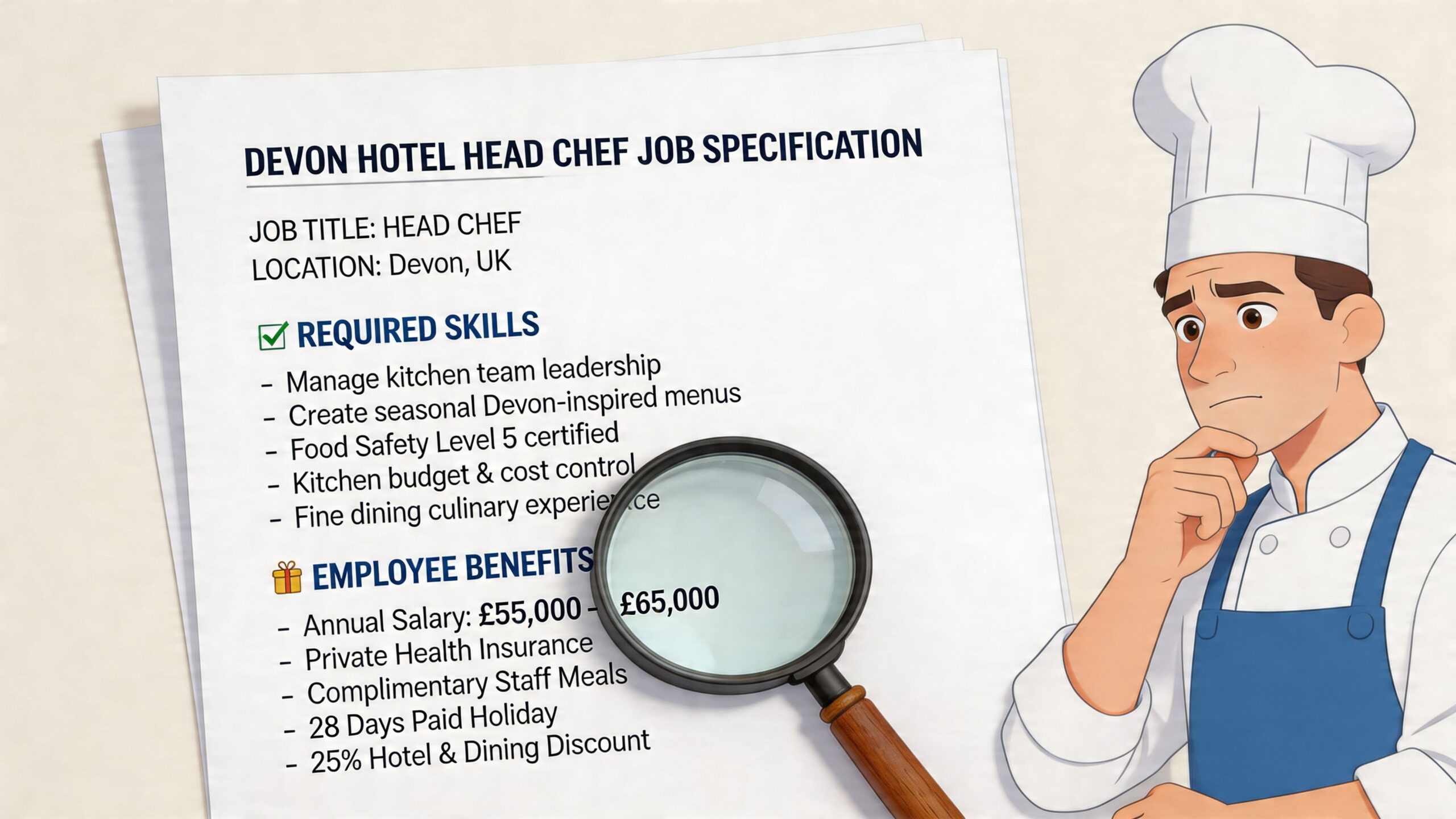
The pressure is highest around sous chefs and general chefs. The Caterer’s hospitality analysis notes these are the top skill shortages, with 25-30% turnover rates in mid-sized hotels in 2023. That’s exactly why structure matters.
Write the job the way the kitchen actually runs
Most poor chef adverts say things like “must be passionate”, “work well under pressure”, and “join our dynamic team”. That tells a serious chef almost nothing.
A better hotel chef brief answers real operational questions:
- What service mix are they covering. Breakfast, lounge, weddings, rosettes, events, room service, all-day dining?
- What level do they need to hold. Can they run a section, support the pass, or lead service?
- What shift pattern matters most. Early starts, split shifts, live-in need, weekend weight?
- What standards must not drop. GP discipline, allergen control, prep culture, paperwork, cleanliness?
Bad version:
- Head Chef wanted for busy hotel
- Must be reliable
- Competitive pay
- Start immediately
Better version:
- Sous chef needed for independent Devon hotel
- Must be confident covering breakfast through dinner, supporting banqueting prep, maintaining allergen discipline, and stepping onto the pass when required
- Best suited to chefs with hotel or premium pub background who can join an established brigade without drama
That second version filters people before you waste a call.
Screening should test risk, not charm
A polished CV can still hide chaos. Strong screening checks whether the chef can fit your operation.
Use this shortlist before any trial:
- Right to work. Non-negotiable.
- Recent experience. Look at recency, not just old prestige names.
- Reason for movement. A sensible explanation is fine. A trail of conflict isn’t.
- Availability and transport. Devon logistics matter. A good chef who can’t reliably get to site is still the wrong hire.
- References that mean something. Speak to people who saw them in service, not just someone in payroll.
Practical rule: Screen for stability first, skill second, personality third. If the first two fail, the third won’t save the hire.
Ask better interview questions
Don’t ask generic questions the chef has answered ten times already. Ask questions that expose how they think under pressure.
Try these:
- Talk me through your first hour in a new kitchen
- What do you check before service if you’re dropped into a hotel brigade
- Tell me about a service that went wrong and what you did next
- How do you manage allergens when the pass is under pressure
- When a junior chef starts to fold in service, what do you do
- What’s the hardest part of breakfast-to-dinner hotel service
The strongest chefs answer in specifics. They’ll talk about mise en place, handover, fridges, dockets, prep levels, function crossover, cleaning standards, and communication with front of house. Weak candidates stay vague and perform confidence instead of competence.
The True Cost and Logistics of Hiring a Chef
The cheapest option on paper often becomes the most expensive one in operation.
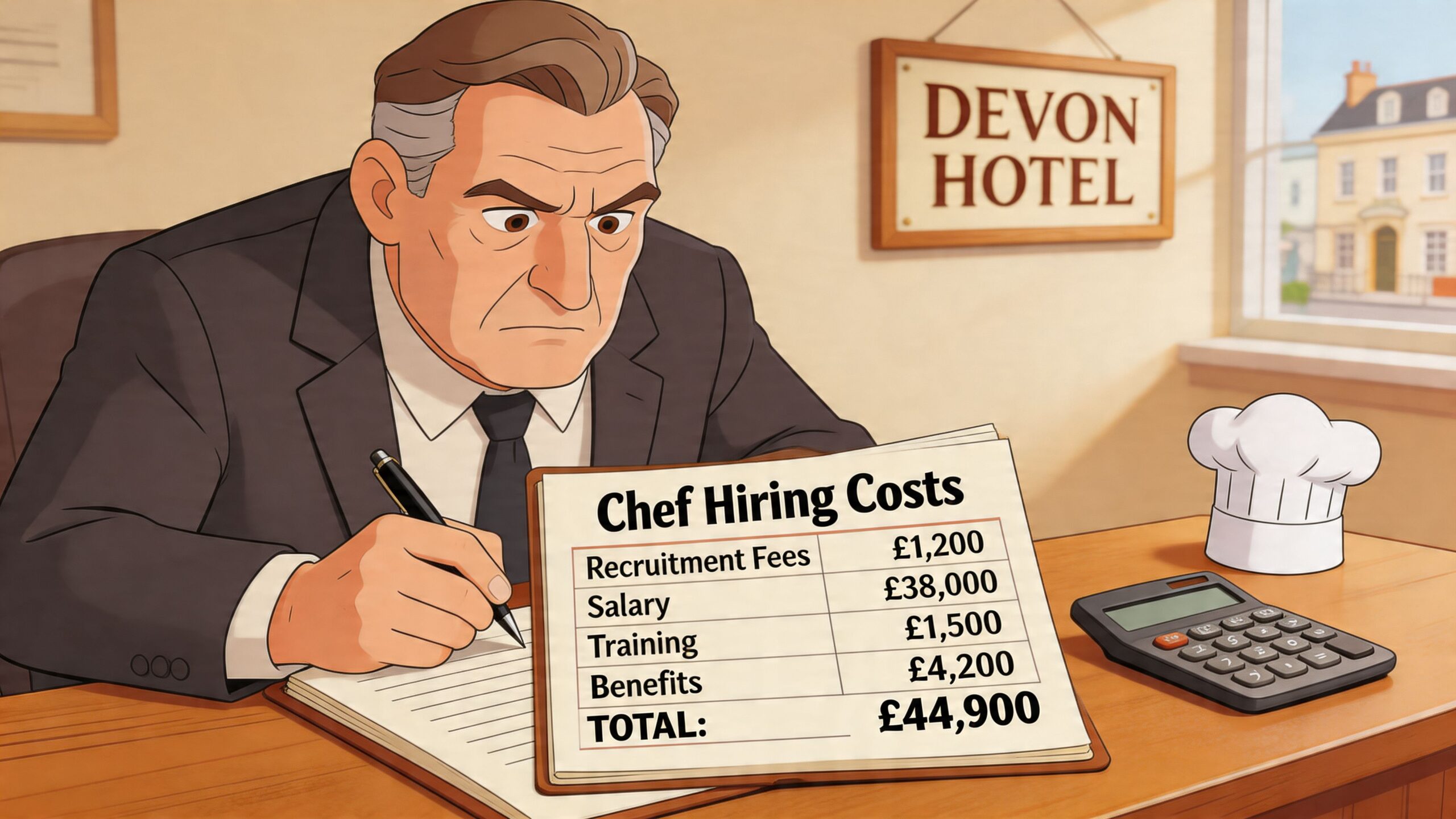
A permanent hire looks clean when you only compare salary. Real cost sits elsewhere too. Recruitment time. Management time. Trial shifts. Payroll setup. Holiday cover. Sick pay exposure. Training drag. The risk of a bad hire leaving you to restart the whole process.
Agency use gets criticised because managers focus on the hourly line. Fair enough. Some agencies have earned that scepticism.
Where operators get stung
Many Devon hotel operators report opaque agency markups of 20-30% on chef rates, while some also report 30% higher peak-season premiums from other sources, according to this Devon pricing discussion. That’s why pricing transparency matters so much.
The issue isn’t paying properly for a good chef. The issue is not knowing what you’re paying for.
Ask these questions before agreeing terms:
- Is there a hidden uplift on the chef rate
- Who covers insurance
- What happens if the chef is wrong for the site
- Is replacement cover available
- Are there extra charges for urgent booking windows
- What admin sits with the hotel and what sits with the supplier
Compare the real operational model
This is the difference most managers care about once service starts.
| Model | Main strength | Main weakness |
|---|---|---|
| Permanent hire | Good for long-term brigade building | Slow to secure, harder to reverse if wrong |
| Casual local freelancer | Can work if already known to you | Availability swings, vetting often light |
| Opaque agency | Fast access in theory | Cost uncertainty and uneven chef quality |
| Transparent specialist cover | Predictable process and lower admin burden | Requires choosing the right partner upfront |
The right temporary cover doesn’t just fill a gap. It protects revenue while you decide whether the longer-term answer is relief, temp-to-perm, or direct permanent recruitment.
A lot of operators only do this maths after the damage. That’s backwards.
One failed Saturday service can cost more than getting proper chef cover in place before the week breaks.
Build flexibility into the labour model
Devon hotels rarely trade on a flat line. Demand moves with weather, events, school breaks, local functions, and last-minute travel patterns. Your staffing model has to bend with that reality.
For many hotels, the strongest setup looks like this:
- Core brigade for standards
- Reliable relief cover for shocks
- A permanent recruitment pipeline for planned gaps
- Clear cost visibility before the booking is confirmed
If you’re weighing direct employment against flexible staffing, this guide to the cost of employing is worth reviewing alongside your rota and occupancy pressures.
From Contract to Kitchen Onboarding Your New Chef
Getting a chef booked is only half the job. Day one is where placements succeed or unravel.
Hotels often lose value here because the incoming chef arrives with too little context, too little access, and too little direction. Then the site blames the chef. The chef blames the site. Service suffers anyway.
Keep the first briefing tight and useful
A chef joining for relief cover doesn’t need a corporate induction pack. They need the right operational brief, quickly.
Give them the essentials before they walk in if you can. If not, do it the moment they arrive.
Include:
- Service overview. Covers, functions, timings, and pressure points.
- Kitchen structure. Who leads, who they report to, who’s strong, who needs support.
- Menu boundaries. What can flex and what absolutely can’t.
- Site rules. Allergens, labelling, ordering, wastage, cleaning close-downs.
- Practical access. Parking, changing area, clock-in process, security, keys if relevant.
The first 48 hours decide everything
A solid onboarding flow keeps disruption low. It also shows your existing brigade that this chef has been brought in properly, not dumped on them.
Use a simple first-48-hour checklist:
- Walk the kitchen. Fridges, dry store, pass, sections, dish area, delivery flow.
- Show the paperwork. Allergens, HACCP logs, prep sheets, service notes.
- Clarify the chain of command. Relief chefs still need one clear operational lead.
- Define the win. Do you need section strength, pass support, breakfast leadership, or event prep stability?
- Review after first service. Ten minutes is enough. What worked, what didn’t, what needs changing tomorrow.
A chef can adapt to a new menu quickly. They struggle when no one explains the standards, the team dynamic, or the non-negotiables.
Contracts and admin should not slow service
Many hotels create their own stress. They get bogged down in back-and-forth on paperwork while the rota is still exposed.
For temporary chef solutions, the cleaner setup is always better. Clear terms. Proper insurance. Defined responsibilities. Fast confirmation. No confusion over who handles what.
For permanent hires, the burden is heavier. Contracts, probation periods, payroll setup, and notice clauses all need tighter handling because the risk lasts longer if the hire is poor.
The operational lesson is simple. Onboarding isn’t hospitality fluff. It’s service protection. If the chef is briefed properly, your brigade settles faster, standards hold, and the manager gets time back.
Your Devon Chef Staffing Partner
If you’re searching hire chef Devon hotels, you’re probably not browsing. You’re solving a problem that’s already hurting service, rota stability, or sleep.
The pattern is familiar. A chef leaves. Another goes sick. Occupancy is strong. Events stack up. The kitchen gets stretched. You try the usual channels. They’re slow, vague, or full of the wrong people. Meanwhile the risk sits with you.
Relief Chefs UK was built for exactly this problem.
Established in 2013, Relief Chefs UK supports independent hotels, pubs, restaurants, private households, yachts and villas across the UK. The business is run by chefs, not recruiters, with 60+ years of combined hospitality experience and support trusted by 400+ venues. Venues can request cover by phone or short form and get fully vetted, right-to-work-checked chefs, subject to availability. There’s 24/7 support, every chef must hold valid public liability insurance with cover of up to £10 million before attending any client assignment, transparent pricing with no hidden agency fees, and flexible options for relief chefs, temporary chefs, permanent chef recruitment, yacht chefs, villa chefs, and wider hospitality staffing support.
If your hotel needs dependable cover in the South West, start with the dedicated Devon relief chef support page.
You don’t need more CVs. You need a chef who turns up, fits the brief, and keeps the kitchen open.
Frequently Asked Questions
How quickly can a hotel in Devon get chef cover?
For specialist chef cover, the fastest operators work to a short-form or phone request, rapid response, and deployment inside a tight booking window. Relief Chefs UK's experienced recruitment team is available 24/7 to help place vetted chefs, subject to availability.
What’s the difference between a temp chef and a relief chef?
In practice, a relief chef is brought in to protect service during absence, holidays, pressure periods, or unexpected gaps. A temporary chef can cover that too, but may also be used for a defined short-term assignment while a longer-term recruitment plan runs in parallel.
Do you only cover Devon?
No. Devon is a key area, but serious chef staffing support should cover wider UK hospitality markets too, including places such as Bristol, Wales, Berkshire, Windsor, Reading, Slough and Dorset.
Are chefs vetted and insured?
They should be. At minimum, you want right-to-work checks, experience verification, and clear insurance arrangements. If a supplier can’t explain that process clearly, keep looking.
Can you help with permanent recruitment as well as emergency cover?
Yes. The strongest staffing partners usually handle both. That gives hotels one route for immediate relief and another for long-term brigade building.
If your hotel kitchen in Devon needs urgent cover, seasonal support, or a permanent chef hiring plan that works, contact Relief Chefs UK. Call the team or send a short enquiry online and get a fast response from people who understand live hospitality, not just recruitment paperwork.
Call the team.
Office 01392 715474 · info@reliefchefs.co.uk