
Festival Jobs UK: A Chef’s Pro Guide for 2026
25 May 2026
If you're a chef who's had enough of the same pass, the same rota gaps, and the same last-minute scramble because someone's called in sick again, festival work starts to look less like a novelty and more like a sensible move. It gives you a different pace, a different setting, and a sharper test of your standards.
That matters whether you're a sous chef looking to broaden your experience or a head chef weighing up flexible work between contracts. It also matters to operators in places like Bristol, Devon, Dorset, Berkshire, Windsor, Reading and Wales, where seasonal demand can hit hard and stable kitchen cover is never guaranteed.
Your Guide to Professional Festival Chef Jobs
A lot of people hear festival jobs in the UK and think of wristbands, volunteer shifts and free entry. That's not the end of the market a serious chef should focus on. Professional festival catering is paid work, done at speed, under pressure, with tight mise en place, tight service windows and no room for passengers.

A good festival kitchen isn't a soft option. It's often a temporary site with restricted storage, limited prep space, weather problems, patchy access routes and relentless demand peaks. If you can cook cleanly and keep your head there, you're useful almost anywhere in hospitality after that.
What separates proper festival chef work
The trade-off is simple. You lose some of the comfort and routine of a permanent kitchen, but you gain exposure to high-volume service, event logistics and sharper operational discipline.
That's why this work suits chefs who already understand:
- Pace under pressure: You can't fall apart when the queue builds.
- Tight teamwork: Temporary brigades only work when everyone communicates clearly.
- Standards in imperfect conditions: Outdoor catering still needs proper food safety, consistency and control.
- Self-management: Nobody has time to babysit a chef who turns up late, underprepared or disorganised.
Practical rule: If you're chasing festival work for the atmosphere alone, you're looking at the wrong roles. If you're chasing it to build range, resilience and paid experience, you're on the right track.
Why chefs treat it seriously
For ambitious chefs, festival work can break the monotony of static roles without dragging you into low-grade casual work. It can sit between permanent jobs, supplement income during busy event periods, or open doors into broader temporary chef work, private events, villas, yachts and seasonal hospitality contracts.
For businesses, the same logic applies. Event periods create the kind of sudden labour pressure that also hits pubs, hotels and restaurants during race days, weddings, bank holidays and summer peaks. The kitchens that cope are the ones that can bring in reliable, vetted cover fast and keep service stable.
Why Festival Work is a Smart Move for Your Chef Career
Festival work isn't just a summer sideline. For the right chef, it's a pressure test that improves judgement, pace and adaptability faster than another stretch in a predictable kitchen ever will.
The sector is also large enough to take seriously as employment, not as a fringe opportunity. In 2022, music tourism in the UK generated £6.6 billion in spending, sustained 56,000 jobs, and included 6.5 million festival attendees, according to UK Music's Here, There and Everywhere report. That scale tells you something important. Festivals sit inside a wider hospitality and events economy with real staffing demand.
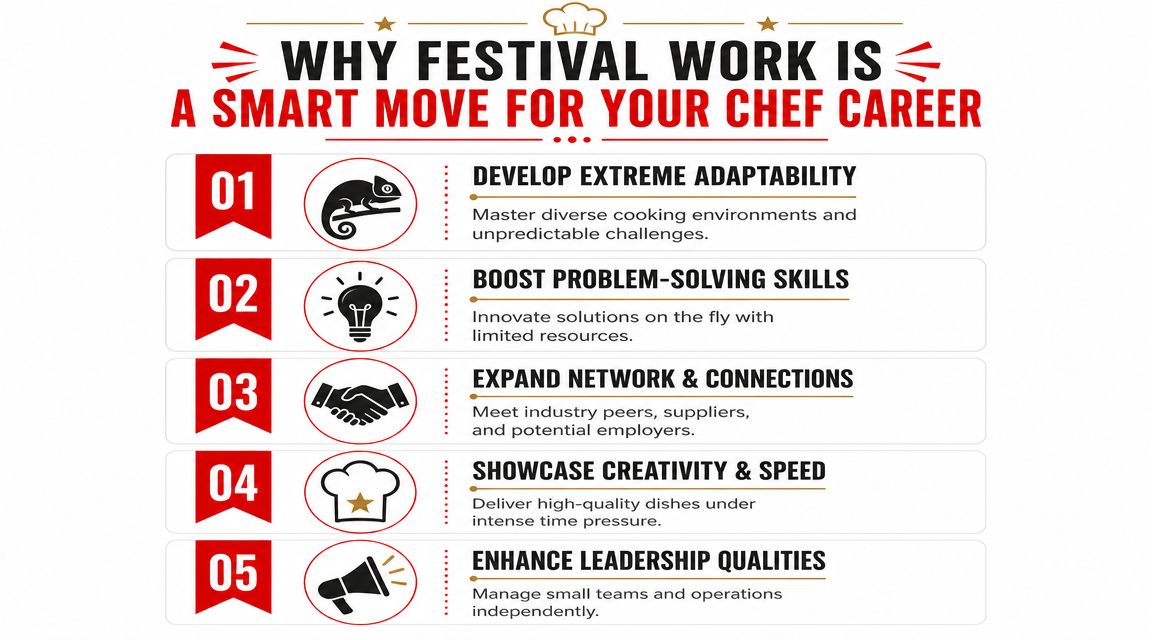
Skills you build faster on festival sites
A festival kitchen forces you to sharpen habits that matter everywhere else.
| Career benefit | What it looks like on site |
|---|---|
| Adaptability | Changing menus, supply issues, awkward layouts, weather disruption |
| Service discipline | Delivering volume without letting quality collapse |
| Decision-making | Fixing problems quickly when you don't have ideal kit or space |
| Leadership | Holding a small team together during busy service periods |
| Commercial awareness | Understanding throughput, waste control and event timing |
These aren't abstract benefits. They're the skills operators look for when hiring for senior temporary roles, private households and high-expectation hospitality contracts.
A short look at the pace and environment helps make the point:
Why it can strengthen your longer-term career
A chef who's only worked one style of kitchen can become narrow without noticing. Festival work widens you out. You learn to cook in unfamiliar conditions, work with new teams quickly, and deliver when the set-up is less forgiving than a hotel or restaurant kitchen.
That has value if you want to move into:
- Event catering
- Premium temporary chef contracts
- Seasonal coastal work in places such as Devon and Dorset
- High-pressure city operations in Bristol, Reading and Windsor
- Private household, yacht chef and villa chef roles
You don't go into festivals because they're easy. You go because they show other employers you can operate when conditions are hard and standards still matter.
Finding and Securing the Best Festival Catering Roles
Chefs waste a lot of time chasing the wrong listings. The broad term festival jobs UK covers everything from unpaid volunteer stewarding to proper paid catering roles. If you're a professional, treat the search like any other serious move. Start with role quality, not noise.
Where strong roles usually come from
Not every route gives you the same level of clarity or support.
Specialist chef staffing agencies
These are usually the cleanest route if you want paid catering work, proper vetting and a clearer line on expectations. They're also useful if you want festival work to connect into wider temporary chef bookings afterwards.Event caterers and hospitality contractors
Good option if you already know the brand or have worked similar service styles before. You'll need to judge the professionalism of the operation yourself.General job boards
Useful for market visibility, but mixed in quality. You'll often find vague adverts, weak information on hours, and a blur between volunteer and paid roles.
Timing matters more than most chefs think
Application timing in festival work is tight. This UK festival jobs guide notes that most applications open between January and March, with peak hiring running until May. If you wait until summer, a lot of the better-paid and better-organised work has already gone.
Miss the email, miss the document deadline, miss the deposit cut-off where relevant, and the role can disappear even if the job itself is entry level.
That same discipline applies if you're targeting festival chef work around Reading. Apply early, answer quickly, and have your documents ready before anyone asks.
What to change on your CV
A restaurant CV isn't always enough on its own. Event hiring managers want signs that you can function in a temporary, high-output environment.
Focus on evidence such as:
- Volume service: banqueting, large breakfast covers, stadiums, events, weddings
- Set-up flexibility: pop-ups, outdoor catering, mobile kitchens, seasonal sites
- Operational calm: stock control, prep planning, rapid reset between services
- Team reliability: turning up prepared, following briefs, slotting into unfamiliar brigades
- Food safety: current certificates and clean working habits
Don't over-write it. A tight CV with relevant service experience beats a long one full of generic claims.
The Essential Paperwork and On-Site Realities
Once you've got the role, the easy part is over. Festival kitchens expose disorganisation quickly. If your paperwork is scattered, your kit is half-packed, or you've made assumptions about pay, accommodation or transport, the week gets harder than it needs to be.
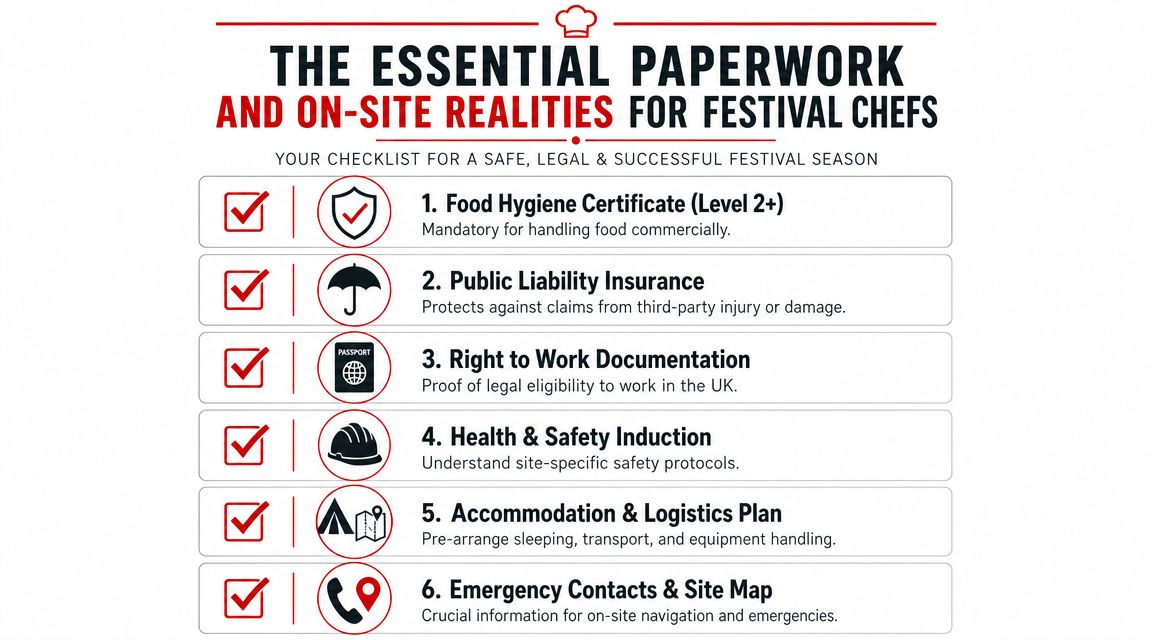
What you need ready before arrival
Treat this as mandatory:
- Right to work documents: Have them current, accessible and legible.
- Bank details and ID: Onboarding often moves quickly.
- Food hygiene certification: Keep digital and printed copies if possible.
- Travel plan: Know how you're getting in, out and on site.
- Emergency contacts: Basic, but often forgotten.
- Workwear and essentials: Don't assume the site will fill your gaps.
One practical resource worth reviewing before you commit is working at festivals as a chef, because it helps frame the operational side of the job rather than the glamorous version people imagine.
Understand the pay before you say yes
Many applicants overlook a key point: while paid festival work is available, its rates, hours, and conditions vary. Indeed listings for UK music festival and event jobs show some casual event roles advertised at £12.66 to £13.68 per hour, and that variation is exactly why you need to ask direct questions before accepting anything.
Ask these in plain terms:
| Question | Why it matters |
|---|---|
| Is this paid or volunteer? | The word “festival” covers both |
| What is the actual hourly rate or day rate? | You need a real earnings picture |
| How many hours are expected? | A decent rate on thin hours may not suit you |
| Are meals included? | Site costs add up quickly |
| Is accommodation provided or arranged? | Don't leave this vague |
| When and how are wages paid? | Cash flow matters |
If the answers are vague, move on. Serious operators know their pay structure.
Turn down unclear work. Badly explained festival jobs usually stay badly organised once you're on site.
What site life is really like
Expect long days, uneven ground, queue spikes, limited personal space and weather that changes service conditions fast. A field kitchen in rain doesn't care that your last place had ideal extraction and endless storage.
Pack like a working chef, not a festivalgoer:
- Non-slip footwear: Broken-in, not brand new.
- Weather layers: Waterproofs, warm kit, spare socks.
- Power bank and charging lead: You'll need your phone.
- Small personal first-aid basics: Blisters can ruin a week.
- Knife roll if required: Only bring what's appropriate and permitted.
- Refillable water bottle: Hydration slips under pressure.
The chefs who do well usually have one habit in common. They reduce avoidable problems before they travel.
Partnering with a Specialist Agency like Relief Chefs UK
The festival labour market is big enough that quality control matters. Prospects notes that in 2025, more than 1,000 UK festivals generated 85,000 temporary roles, which tells you two things. First, there's real opportunity. Second, there's plenty of room for inconsistent hiring, weak screening and poor communication if you choose the wrong route.
Why chefs use specialist agencies
A specialist agency can make sense when you want event work without the guesswork. The useful difference isn't hype. It's process.
Good agency support should mean:
- Vetted roles: Fewer surprises about the job itself
- Faster matching: Less time chasing vague adverts
- Clearer expectations: Pay, location, dates, kitchen type
- A wider pipeline: Festival work that can lead into other temporary contracts
For chefs looking at broader flexible work, chef employment agency support is one route into temporary placements, permanent chef recruitment, yacht chefs, villa chefs and general hospitality staffing support.
Relief Chefs UK has been established since 2013 and works nationally across the sort of pressure points operators know well: short-notice sickness, peak-season demand, unreliable agency cover, chef shortages and the constant need to keep kitchens stable. That matters in hospitality hotspots where demand swings quickly and service doesn't wait.
Why operators care about the same thing
Business owners and hotel managers want exactly what chefs want from a staffing process. Clarity, speed and reliability.
If you're running a hotel in Berkshire, a pub in Devon, a restaurant in Bristol or a coastal operation in Wales, the staffing pain points are familiar:
- Late call-offs
- Holiday gaps
- Festival and event spikes
- Difficulty finding chefs who can walk into service and cope
That's why specialist staffing has value beyond the individual booking. It helps protect standards when permanent teams are stretched and guests still expect consistency.
Frequently Asked Questions for Aspiring Festival Chefs
Do I need loads of festival experience to get paid chef work
No. You need relevant kitchen experience and the right attitude. A useful point from this UK festival crew guide is that practical skills, reliability and strong work ethic often matter more than formal qualifications for many event roles. For chefs, that means service discipline and dependability count heavily.
If you've handled banqueting, weddings, high-cover pub service, outdoor catering or fast-paced prep and service, you've already got transferable value.
Can I work multiple festivals in one season
Yes, but only if you organise yourself properly. Don't overcommit, don't accept clashing dates, and don't say yes to jobs you can't fully cover. In event work, your reputation follows you faster than in a static kitchen.
A chef who turns up ready and finishes the contract cleanly gets remembered. A chef who drops out late gets remembered as well, for the wrong reason.
Does festival work actually help me move into better roles
It can. Festival work shows you can adapt, travel, slot into new teams and perform without ideal conditions. That's useful if you want more varied temporary chef work later, including private events, seasonal hotels, villa placements and yacht chef roles.
It's not a magic shortcut. It's evidence. Employers use that evidence when they decide whether to trust you in tougher or more independent jobs.
What mistakes ruin good festival opportunities
The common ones are boring and avoidable:
- Applying too late
- Ignoring onboarding emails
- Not checking whether the role is paid
- Turning up with poor kit
- Assuming the site will be easy
- Taking work you're not available for
Reliability is a skill. In festival work, it's often the skill that gets you booked again.
If you need dependable chef cover for events, seasonal peaks, private households, yachts, villas or day-to-day kitchen gaps, contact Relief Chefs UK. They support hospitality businesses across the UK with relief chefs, temporary chefs, permanent chef recruitment and wider staffing help, so you can keep service running when the pressure lands.
Call the team.
Office 01392 715474 · info@reliefchefs.co.uk