

You're in Plymouth, it's a busy Saturday, and a chef has called in sick just before service. At the same time, a job seeker is refreshing listings, wondering why some roles disappear quickly while others keep appearing. Hospitality jobs in Plymouth aren't one single market. A seasonal hotel, a Barbican restaurant, a pub outside the city and a large event kitchen all hire differently.
The practical route is to understand where demand sits, remove avoidable barriers such as transport and unclear availability, then apply through the channel that matches the work. That matters whether you're looking for a permanent chef position, front-of-house work, kitchen porter shifts or flexible relief work across Devon.
Why Plymouth Hospitality Hiring Feels Different Right Now
A candidate can have solid kitchen experience and still waste time applying for the wrong roles. A small café may need someone who can cover breakfast and prep with little notice. A hotel may want a chef who can move between sections during a busy weekend. A rural catering site may reject an otherwise suitable applicant because the candidate can't reach it for an early shift.
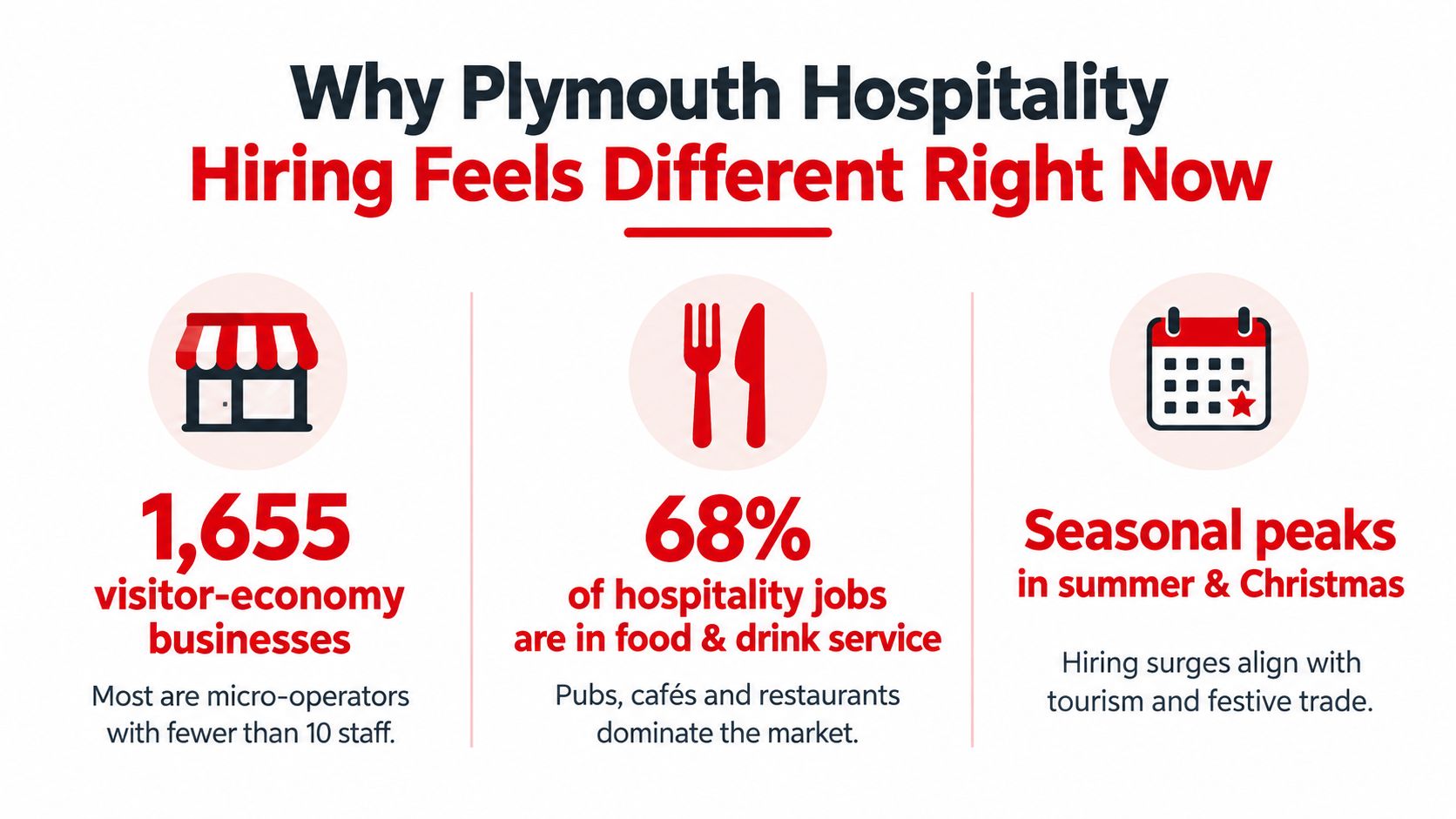
Plymouth's visitor economy creates plenty of opportunity, but its structure makes hiring unusually sensitive to availability and timing. Local planning material identified about 1,655 visitor-economy businesses, with 78% operating as micro-businesses with fewer than nine employees. That concentration means many employers don't have spare staff to absorb sickness, annual leave or a sudden increase in bookings. The same material records 5.2 million visitors in 2019, visitor spending of more than £327 million annually, and nearly 8,000 jobs, representing over 7% of city employment. These figures are set out in Plymouth's visitor economy planning material.
Why lower national vacancies don't remove local pressure
National vacancy figures can create a misleading impression. The accommodation and food services series fell from a 2022 peak of about 177,000 vacancies to roughly 71,000 in the three months to May 2026, while the sector still had around 2.8 vacancies per 100 employee jobs, above the all-industry rate, according to this hospitality staffing costs analysis.
For someone searching hospitality jobs Plymouth, the lesson is simple. Don't assume fewer national vacancies mean an easier local search. Coastal demand can still concentrate around summer, weekends, events and festive trade, while small operators compete for the same reliable people.
Where opportunities tend to cluster
Food-led businesses, hotels, pubs, cafés, event caterers and visitor attractions all need different types of cover. Employers with small teams often value immediate availability, dependable transport, clear communication and the ability to start without extensive hand-holding more than a beautifully designed CV.
Apply before the busiest period rather than waiting for every vacancy to appear. Keep a separate version of your availability for weekday work, weekends, evenings and short-notice cover. If you can only work in central Plymouth because you rely on public transport, say so early and target venues you can reach consistently.
Practical rule: In a micro-business, one missed shift can affect the whole service. Show the manager exactly how you'll make their rota safer.
Where to Find Hospitality Jobs in Plymouth That Actually Hire
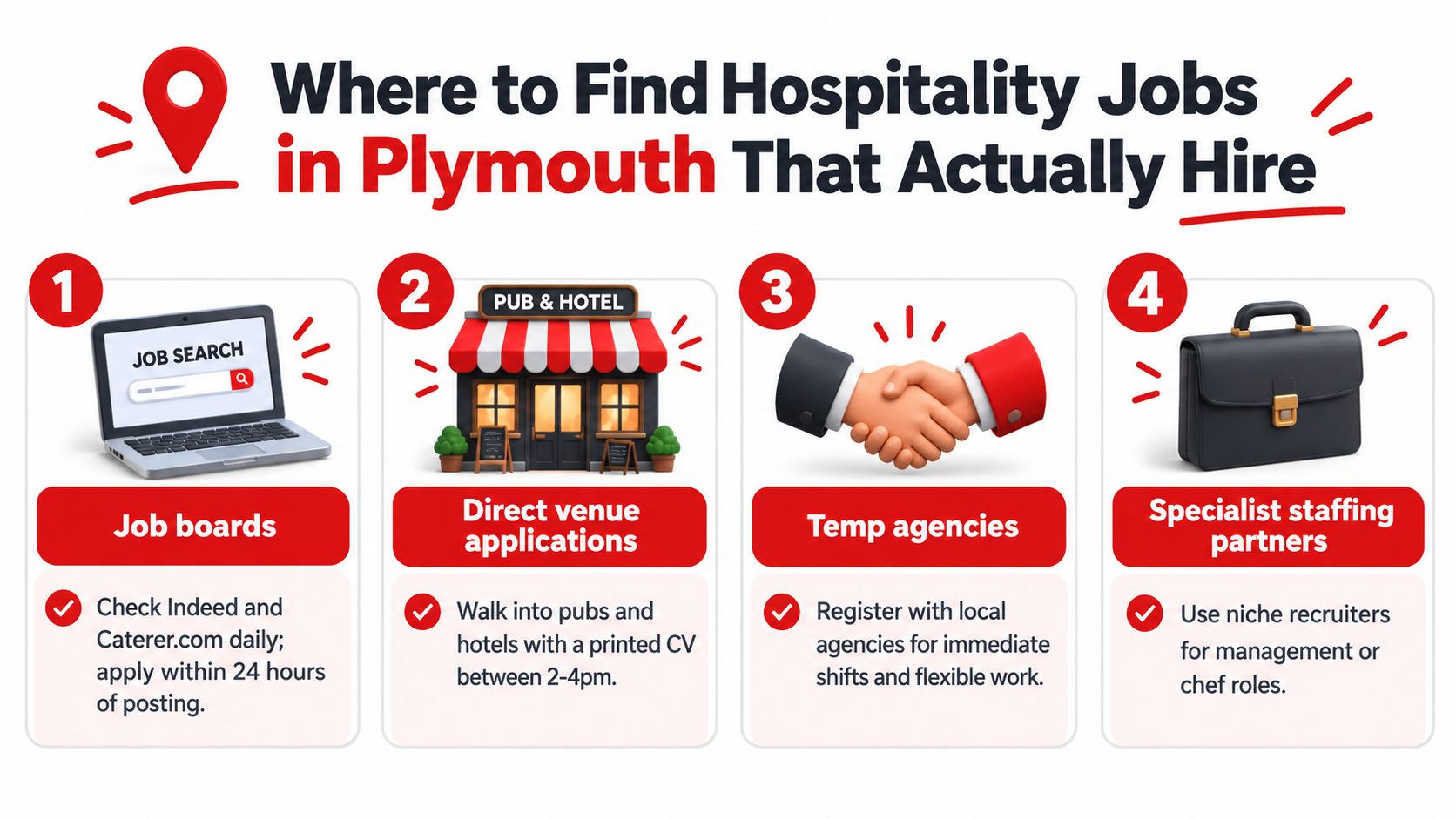
Use several channels, but don't use them all in the same way. Job boards give you volume, direct applications work well with independent venues, and specialist staffing partners make more sense when you need rapid chef cover or a role matched to a particular skill set.
Start with live listings
Search Indeed and Caterer.com for Plymouth, Devon and nearby areas. Filter by role rather than relying only on broad searches. Try chef de partie, sous chef, kitchen assistant, kitchen porter, breakfast chef, catering assistant, restaurant supervisor and hotel chef.
Apply promptly when a role fits. A listing can attract applicants quickly, especially where the employer needs cover for an immediate rota gap. Your first message should state your role, current location, availability, transport position and most relevant section experience.
Caterer listings also show why location needs checking carefully. One Plymouth catering listing stated that candidates needed transport because of the site's location, as shown on Plymouth catering vacancies at Caterer.com. Don't spend time applying for a dawn shift you can't reach. Ask whether staff transport, parking or a realistic public transport route exists before accepting an interview.
Approach independent venues directly
For smaller pubs, restaurants and hotels, a concise printed CV can still work. Walk through the Barbican, the Hoe and the city centre during a quiet period, not during lunch or dinner service. A brief introduction to a duty manager can put a face to your application and reveal vacancies that haven't reached a job board.
Say what you can cover. “I'm an experienced commis chef available for evenings and weekends” gives a manager something useful. “I'm looking for any work” doesn't.
Choose agencies according to the job
Local temporary agencies can help with immediate shifts, front-of-house work, kitchen porter duties and general hospitality staffing. A specialist chef recruiter is more suitable for section chefs, sous chefs, head chefs, yacht chefs, villa chefs or a business that needs someone able to take control of a kitchen quickly.
If you want to understand the range of hospitality roles available, review hospitality work opportunities. Registering with more than one channel can improve your reach, but keep your availability accurate. Agencies lose confidence when a candidate accepts a shift and then becomes unreachable.
How to Prepare a CV and Cover Letter Managers Will Shortlist
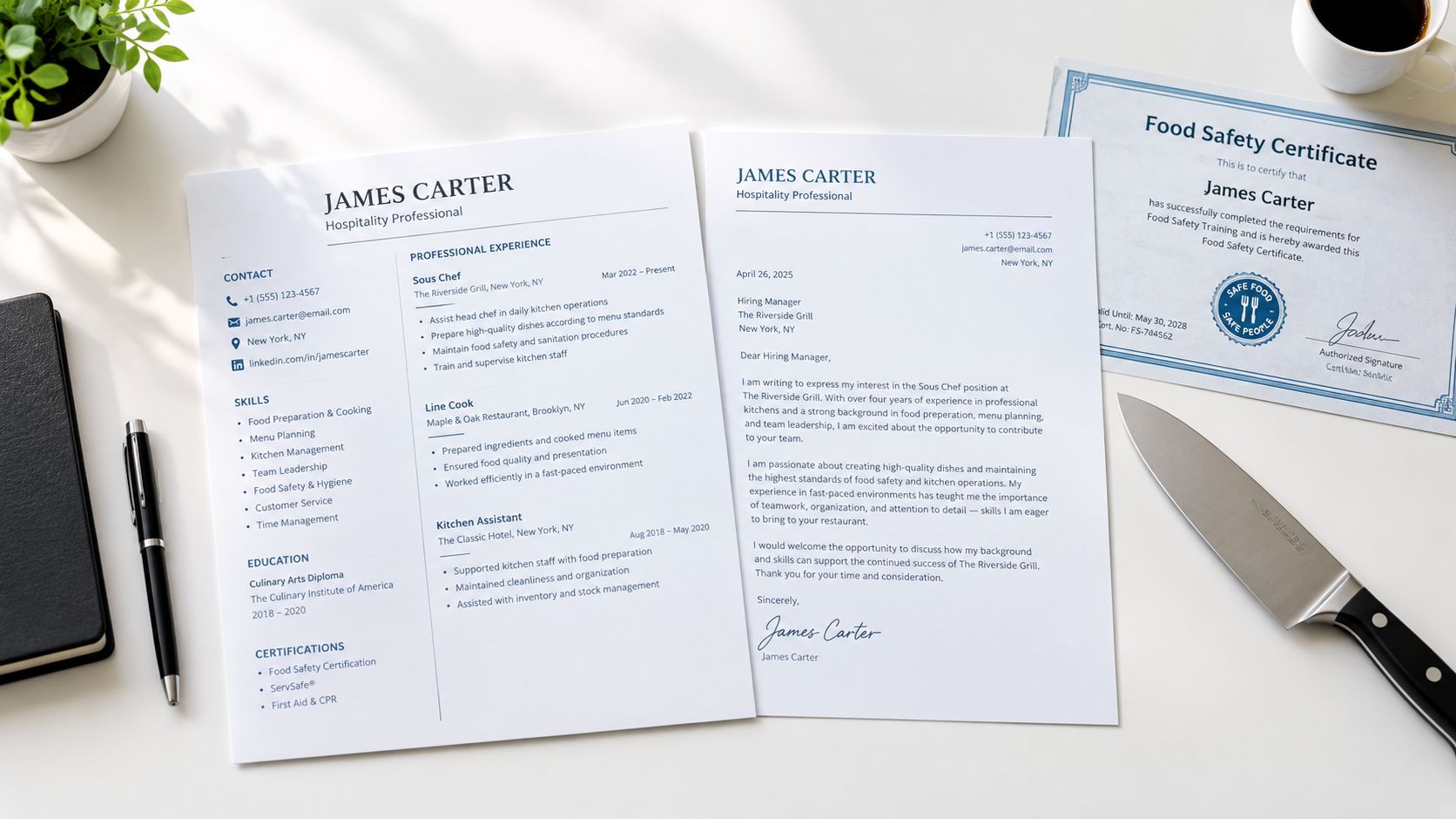
A hospitality CV has to answer a manager's first question quickly: can this person work the shift, handle the section and arrive prepared? Put your current location, phone number, right-to-work status and availability near the top. Don't bury the information under a long personal statement.
For chefs, list sections and responsibilities rather than only job titles. “Chef de partie” tells a manager your level. “Ran sauces, fish and service prep in a high-volume hotel kitchen” tells them what you can do.
Build the first page for a fast scan
Use a clean layout with clear dates, employer names and concise bullet points. Include:
- Availability: State whether you can work mornings, evenings, weekends, seasonal periods or short-notice shifts.
- Kitchen experience: Name the sections you've covered, such as larder, pastry, grill, fish, prep or banqueting.
- Compliance: List Food Hygiene Level 2, allergen awareness training and any relevant licence or supervisory awareness.
- Practical access: Explain whether you drive, use public transport or need roles within a particular part of Plymouth.
- References: Say whether references are available and provide them promptly when requested.
Tailor the emphasis to the venue. A pub manager may care about grill work, stock control and staying composed during a concentrated service. A hotel may prioritise breakfast, banqueting and flexibility across rotas. Event catering requires evidence that you can follow a production plan, communicate clearly and maintain standards while service changes.
Write a cover note that closes the rota gap
Keep it short. Mention the role, the experience that matches it and the dates or shifts you can cover. A useful message might explain that you've worked on a busy grill section, can reach the venue reliably and are available for the advertised weekend rota.
Avoid generic claims such as “I'm passionate about hospitality” unless you support them with evidence. Don't send a CV with unexplained gaps, inconsistent dates, spelling errors or a file name such as “new CV final final”. Save it professionally and check the phone number before sending.
Use this chef CV guidance to check whether your experience is presented in a way a busy kitchen manager can assess quickly.
What Plymouth Hospitality Jobs Pay and Which Certifications Help
Live listings show a clear split between entry and experienced work. Many frontline roles sit around £10.85 to £13.50 an hour, while more skilled or flexible positions can reach £17 to £22 an hour for temporary chefs, with a Head Chef listing around £31,941. These figures come from live Plymouth hospitality job listings.
The premium isn't a reward for having a chef title. It usually reflects section competence, speed, flexibility, unsocial hours, transport, leadership and the cost of leaving a service uncovered. A temporary chef who can enter an unfamiliar kitchen, read the prep list and run a section without constant supervision solves a more urgent problem than someone who needs extensive training.
| Role Type | Typical Pay Seen | When Premium Applies |
|---|---|---|
| Frontline hospitality roles | £10.85 to £13.50 per hour | Basic service duties, customer contact, routine kitchen or floor work |
| Temporary chef roles | £17 to £22 per hour | Relevant section experience, flexibility, short-notice cover and reliable service delivery |
| Head Chef | Around £31,941 | Kitchen leadership, menu execution, ordering, team management and operational responsibility |
Complete the certificates employers recognise
Food Hygiene Level 2 is a sensible foundation for most food-handling roles. Allergen awareness matters because kitchen teams must understand ingredients, cross-contact risks and accurate communication with front-of-house staff. Personal licence awareness can help candidates understand the environment in licensed venues, although it doesn't replace the requirements for holding a personal licence.
Don't collect certificates without building usable experience. A manager hiring for a busy service needs to know that you can apply safe systems while producing food, not just that you've completed an online module.
Track the role economics, not just the hourly rate
Hospitality turnover is high, but published estimates vary. A CIPD-based hospitality turnover analysis places annual turnover at about 52%, while some employer-reported datasets are nearer 38.7%. The difference shows why a single broad average can't predict the pressure on a particular kitchen.
For employers, track time-to-fill, first-60-day attrition and peak-shift coverage separately. For candidates, ask why the role is vacant, how the rota is built and whether the business needs permanent stability or short-term reinforcement. The highest rate may come with difficult travel, split shifts or immediate responsibility, so compare the whole arrangement.
How to Ace Interviews and Trial Shifts in Plymouth Venues
A short interview often tests reliability before technical ability. Managers want to know whether you understand the role, can reach the site and will communicate if something goes wrong. Answer directly, give examples from real services and don't claim experience you haven't got.
Arrive ready to work if a trial shift has been agreed. Bring clean chef whites or suitable uniform, non-slip footwear, basic knives if requested and any required certificates. Ask whether the trial is paid, how long it will last and which section you'll be working on.

Treat the trial as a working service
The head chef may watch how you set up, label food, organise your bench and respond to instructions. They'll notice whether you ask sensible questions before starting, keep your board clean and tell the pass when you're running behind.
If you're covering a sickness gap, don't try to prove yourself by changing the kitchen's system. Learn the menu, follow the chef's method and make your section predictable. During a seasonal rush, calm communication is more valuable than dramatic speed followed by avoidable mistakes.
Ask practical questions before the shift begins:
- What time does prep start and when does service finish?
- Which section needs the most support?
- How are breaks, tips and overtime handled?
- Is the rota fixed, seasonal or short notice?
- What would success look like by the end of the trial?
Use the first minutes to identify storage, fridges, sinks, waste points, fire exits and the pass. Then prepare the items that control service. A well-organised bench gives the sous chef confidence before you've plated anything.
A trial shouldn't be a performance of ego. Take correction without argument, repeat instructions back when necessary and keep your communication brief. If you finish your section, ask where the pressure is next rather than standing idle.
Here's a useful visual reminder of the standards expected in a professional kitchen:
Leave the kitchen as you found it, thank the manager and confirm your availability before you go. If you're offered further work, agree the rate, location, start time, uniform and contact person in writing.
How to Register for Flexible Relief Work with Relief Chefs UK
A Plymouth chef may need work that fits around another job, family commitments or an uncertain rota. A hotel, pub or restaurant may need cover for sickness, holidays, seasonal demand or an unfilled vacancy. Relief work connects those needs without forcing either side into a poor permanent arrangement.
Relief Chefs UK is a nationwide chef recruitment agency established in 2013, supporting venues and chefs across the UK. Its service includes relief chefs, temporary chefs, permanent chef recruitment, yacht chefs, villa chefs and wider hospitality staffing support, so a Plymouth candidate can be considered for local work as well as opportunities across Devon and the wider South West.
What registration should establish
A useful registration conversation covers your experience, preferred role, travel range, availability, rates, right-to-work documents and the kitchens you can enter with confidence. Be precise about transport. Central Plymouth shifts may be realistic without a car, while an early start at a rural Devon venue may not be. Clear limits lead to better matching than promises you cannot keep.
Vetting and right-to-work checks give both sides a clearer picture before service begins. This matters in independent Plymouth businesses with small teams, where an unsuitable placement can put immediate pressure on prep and service.
Match work to your real availability
Tell the agency whether you want one-off shifts, regular weekly work, seasonal reinforcement or a route into permanent recruitment. Limited availability is workable when the days and times are dependable. Vague availability creates avoidable problems for the agency and the venue.
Relief Chefs UK provides a route into relief chef work in Devon for chefs seeking flexible placements and businesses that need kitchen cover. Registration can help a Plymouth candidate access local shifts and suitable work across the wider South West, without repeating unsuitable emergency searches.
For employers, start with the exact gap. State the section, shift pattern, start date, required experience, location, transport considerations and whether the need is temporary or may become permanent. A staffing partner can then propose a realistic match instead of sending unsuitable CVs.
Relief Chefs UK connects Plymouth and Devon businesses with vetted relief and temporary chefs, while also supporting permanent chef recruitment, yacht chefs, villa chefs and wider hospitality staffing needs across the UK. If sickness, seasonal demand or an unfilled kitchen role is putting service at risk, visit Relief Chefs UK and provide the dates, location and staffing requirement.