
How Much Does a Private Chef Cost in the UK? (2026 Guide)
21 May 2026

You're usually asking the wrong question.
When operators search how much does a private chef cost, they often mean one of two very different things. A household wants a polished dining experience without the hassle. A hotel, pub, villa, yacht or private estate wants kitchen cover that keeps service stable when a chef goes off sick, walks out, takes holiday, or can't be replaced fast enough.
Those are not the same buying decisions.
If you run hospitality in Devon, Bristol, Berkshire, Windsor, Reading, Slough, Wales or Dorset, the actual cost isn't just the chef's rate. It's the cost of losing breakfast service, shrinking the menu, burning out the team you've still got, and handing regulars a poor experience because the kitchen is one person short.
That's why smart operators stop treating chef cover like a consumer purchase and start treating it like continuity planning.
Beyond Price What is the True Cost of Chef Staffing
A GM in Berkshire doesn't panic because a line on the rota is empty. They panic because Saturday is full, the wedding tasting is booked, two chefs are already stretched, and one more absence turns a manageable week into a service failure.
That's the essential frame.
The private chef market isn't some casual side category anymore. Grand View Research projects the global personal chef services market at USD 17.48 billion in 2025, rising to USD 24.20 billion by 2030, with a 6.7% CAGR from 2025 to 2030. For UK operators, that means you're buying specialist labour in a professionalised market, not asking a handy cook to fill in.
The cost of failure is higher than the shift rate
A missing chef creates problems fast:
- Service risk means longer tickets, reduced quality, and avoidable complaints.
- Revenue risk means fewer covers, fewer upsells, and cancelled private dining.
- Team risk means your remaining chefs absorb the pressure and start looking elsewhere.
- Management drag means senior people spend hours firefighting instead of running the business.
A boutique hotel in Devon doesn't lose money because a chef costs too much. It loses money because breakfast becomes inconsistent, lunch prep slips, and the evening service starts on the back foot.
Practical rule: If one chef absence changes your menu, opening hours, or guest promise, chef cover is an operational necessity, not an optional expense.
Budget for continuity, not just labour
Most online advice falls short in this regard. Consumer guides talk about dinner parties. Operators need a clearer model. They need to know what stable cover costs over a week, a month, or a season, and how that compares with direct employment risk.
A proper budget starts with one question. What does it cost your business when the kitchen isn't properly staffed?
That number is usually far higher than the quote for a vetted chef.
If you need a clearer employer-side view, use a realistic cost of employing a chef framework rather than relying on per-head dinner pricing. That's how serious operators budget.
Understanding the Pricing Models for UK Chefs
Chef pricing only looks confusing when people mix private dining, freelance meal prep, and operational kitchen cover into one bucket. Strip that out and the models are simple.
The right structure depends on whether you need a short shift extension, a full day's relief cover, event support, or rolling continuity across a season.
The four pricing models that matter
Hourly rates
Hourly pricing suits narrow problems. A late finish. A prep-heavy day. A breakfast gap. A few hours to support a stretched brigade.
It can work, but it often creates sloppy buying decisions. If the brief is vague, the hours creep. If the job expands during service, your budget moves with it.
Daily rates
This is usually the cleanest option for hospitality cover. It gives you a known cost for a proper day's contribution and reflects the reality that chefs don't work in neat little one-hour blocks.
UK platform data puts a typical daily range for a personal chef at £150 to £400, with a weekly benchmark around £1,339. For operators, the exact number matters less than the logic. Daily pricing is better for planning because it matches how kitchens run.
Project-based fees
This model suits contained pieces of work. A run of private dining events. Holiday cover with a fixed start and end date. A menu reset before peak season. A villa chef booking. Yacht season planning.
It works well when the scope is clear and the output matters more than the clock.
Retainer or ongoing support
If you know your business has regular staffing pressure, a retainer or planned support arrangement is usually the smartest route. It's built for operators who'd rather prevent chaos than react to it.
That's particularly useful for hotels, multi-site groups, event venues, and private estates where cover needs are recurring rather than exceptional.
Chef Pricing Models Compared
| Pricing Model | Best For | Pros | Cons |
|---|---|---|---|
| Hourly | Short gaps, prep support, shift extensions | Flexible for small needs, useful for targeted cover | Harder to control if scope changes |
| Daily | Relief cover, sick leave, rota gaps, holiday cover | Clear budgeting, matches kitchen operations, easier to compare quotes | Can look higher than hourly at first glance |
| Project-based | Events, villa stays, yacht trips, menu development, fixed holiday periods | Defined scope, easier to plan around outcomes | Brief needs to be precise |
| Retainer | Ongoing support, seasonal operations, groups with recurring gaps | Better continuity, priority access, less firefighting | Needs forward planning |
What to ask before accepting a quote
Don't just ask for the rate. Ask what the rate covers.
- Role level. Are you paying for a Head Chef, Sous Chef, or strong CDP level operator?
- Service scope. Is this prep only, full service, menu ownership, or guest-facing work?
- Travel and logistics. Rural Wales and coastal Dorset create different practical issues than central Bristol.
- Length of engagement. One day, one week, or one month changes the sensible model.
Cheap hourly quotes often become expensive operationally. A clear daily or project rate usually gives a better buying decision.
Key Factors That Determine Chef Costs
Two chefs can stand in the same kitchen and command very different rates. That's not inconsistency. That's the market pricing skill, pressure tolerance, reliability, and fit for the brief.
The cleanest benchmark for UK pay comes from official occupational data. The UK Office for National Statistics lists Cooks, Private Household at a median annual salary of £34,120, with a full-time hourly median of £16.41. The hourly range runs from £13.05 to £27.58. That spread tells you something important straight away. There is no single flat price for a private chef in the UK.
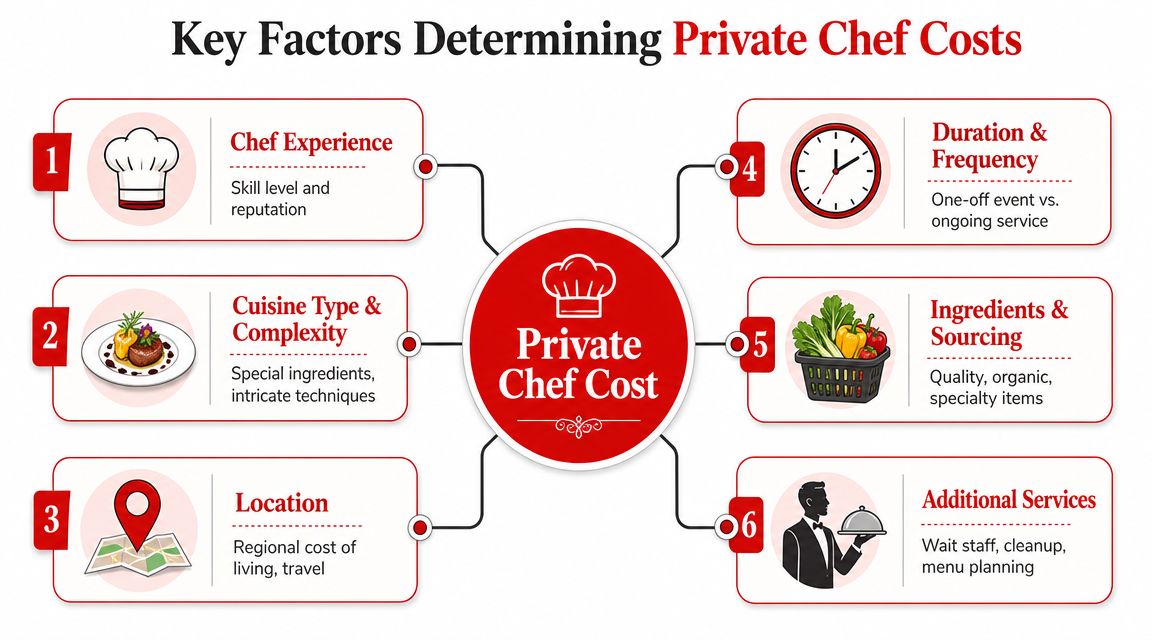
Experience changes the equation
A chef who can hold a section isn't the same as a chef who can run a pass, manage suppliers, write menus, deal with owners, and keep standards stable under pressure.
You shouldn't pay Head Chef money for basic cover. You also shouldn't try to solve a senior operational problem with a junior hire.
A good brief starts with the question: what level of decision-making does this chef need to handle without supervision?
Location always matters
A chef in central London, Windsor or a premium Berkshire market won't be priced the same as someone working in a quieter patch of Wales. Travel time, accommodation needs, local pay pressure, and candidate supply all affect the final number.
Remote coastal and rural sites often create a second challenge. The rate might be reasonable, but the pool is tighter and logistics become part of the cost.
Complexity drives cost more than people admit
A chef making straightforward, high-volume pub classics is a different brief from a chef delivering:
- Dietary-heavy household cooking for multiple preferences
- High-end private dining with plated service
- Yacht or villa work where flexibility and self-sufficiency matter
- Menu rescue work in a struggling kitchen
The more judgment, prep depth, sourcing discipline, and guest sensitivity required, the more expensive the right chef becomes.
A quick visual breakdown helps if you're briefing owners or department heads:
Other cost drivers operators forget
These usually get missed until the invoice lands or the shift becomes difficult.
- Duration and frequency. One-off jobs are priced differently from repeat work.
- Ingredients and sourcing. Premium ingredients and specialist shopping increase labour pressure even before cooking starts.
- Additional services. Service staff, cleanup expectations, menu planning, or guest interaction all change the brief.
The cheapest chef on paper often becomes the most expensive option if they need hand-holding, can't adapt, or unsettle the kitchen.
Real World UK Cost Examples for Hospitality
Theory is useful. Real budgeting happens with actual scenarios.
If you're trying to work out how much does a private chef cost in a business context, stop thinking like a dinner guest and start thinking like an operator protecting service.

A boutique hotel in Reading with sudden leave
Your Head Chef needs unexpected time off for two weeks. You don't need a bargain. You need someone who can keep breakfast organised, support ordering, steady the brigade, and stop the standards slipping.
In that situation, daily cover is usually the sensible buying model because it mirrors the operational reality. The wrong move is trying to patch it with fragmented hourly help from multiple people. That creates inconsistency, extra supervision, and more pressure on your FOH and management team.
A Dorset gastropub preparing for summer
Seasonal trade creates a familiar trap. You know demand is coming, but you don't want to overload the permanent wage bill before the revenue arrives.
Planned temporary cover proves advantageous. Build around your core team, then add chef support for the pressure points. That gives you enough labour to cope with volume without locking yourself into the wrong permanent structure.
If your summer plan relies on the existing team “digging deep”, you don't have a staffing plan. You have wishful thinking.
A Berkshire household hosting private dinners
For events, per-person pricing is common. A practical UK benchmark for private events is £51 to £102 per person. That's useful if you're running a one-off private dinner for a fixed guest count.
But for repeated household support, that consumer-style benchmark becomes less useful. Once shopping, prep, service expectations, cleanup, and repeat dietary planning enter the picture, buyers are better off thinking in chef-day capacity rather than headline meal price.
A Bristol restaurant covering a recruitment gap
You've lost a Sous Chef. Recruitment is live, but the kitchen still has to function now. In such circumstances, interim chef cover protects standards while you hire properly.
That temporary chef isn't just “filling a shift”. They're preserving rota sanity, helping retain the remaining brigade, and giving you room to recruit without taking the first available CV out of desperation.
Yacht and villa work need a different lens
Yacht chefs and villa chefs aren't just cooks in nicer settings. They often need broader self-management, discretion, provisioning discipline, and the ability to deliver polished food with less infrastructure.
That means operators should stop comparing these briefs with standard local kitchen cover. The environment is different, the expectation is different, and the talent pool is narrower.
Agency Solutions vs The True Cost of Direct Hiring
A lot of operators still say the same thing. “We'll save money if we hire direct.”
Sometimes they do. Often they don't.
The mistake is comparing a visible agency fee with only the visible part of direct employment. That's not a fair comparison. Actual employer cost includes wages, National Insurance, pension, holiday pay, recruitment effort, vetting, payroll administration, and the risk that the person isn't right.
Most public-facing cost guides miss that completely. A useful employer-side summary is that the real issue is labour capacity and cover risk, including wages, NI, pension, and recruitment, not just a meal price or day rate.
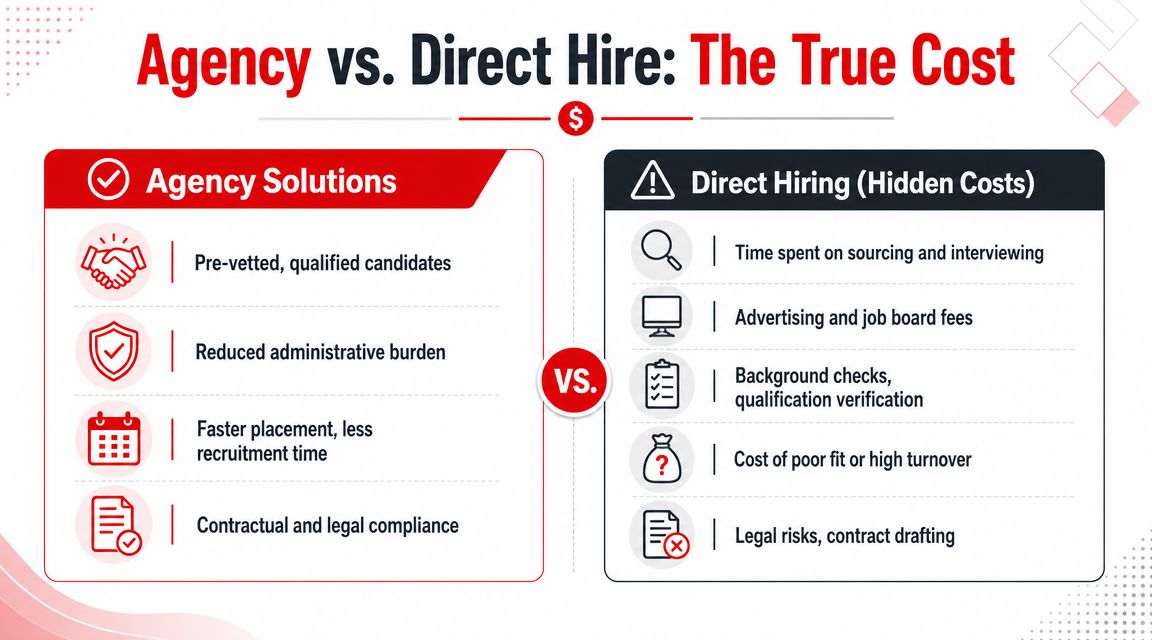
What direct hiring really asks from you
When you hire direct, you take on every moving part:
- Sourcing candidates through ads, job boards, referrals, and calls
- Interview time from owners, GMs, Head Chefs, or ops teams
- Compliance checks including right to work and reference confidence
- Employment overhead including payroll and statutory costs
- Replacement risk if the hire fails or leaves quickly
If you've ever had to restart chef recruitment after a poor appointment, you already know the damage. It isn't just admin. It destabilises the kitchen.
Why agency support is usually the more commercial decision
For a serious operator, the value of a staffing partner is simple. It turns a messy, risky process into a cleaner operating cost.
That matters most when you need any of the following:
- Short-notice sickness cover
- Seasonal reinforcement
- Permanent chef recruitment
- Private household, yacht, or villa chef placement
- Reliable backup when agency quality has let you down before
A specialist chef recruitment agency should reduce hiring friction, tighten vetting, and protect continuity. That's the commercial reason to use one. Not convenience for its own sake.
Direct hire can be right for long-term structure. It's the wrong tool for urgent cover, uncertain demand, or unstable kitchens.
How to Budget Smartly for Chef Staffing
The best staffing budgets aren't built in crisis mode. They're built before the pressure arrives.
If you run a pub, boutique hotel, event venue, estate, or group operation, your goal isn't to find the cheapest chef. Your goal is to pay for the right level of continuity with the least waste.
Use a core and flex model
Keep a stable permanent team for your baseline trade. Add flexible cover where demand becomes uneven.
That approach usually beats overstaffing year-round. It also stops your permanent brigade carrying the full load every time holidays, sickness, weddings, Christmas trade, or summer peaks arrive.
Brief properly or you'll overspend
Bad briefs create expensive mismatches.
Before you request cover, decide:
- What station or responsibility needs covering
- What level the chef must operate at without support
- Whether this is service stability, menu development, or event delivery
- What logistical constraints apply, especially in remote locations
If you need a capable pair of hands to run a section, don't brief for senior leadership. If you need someone to steady the whole kitchen, don't underbuy and hope.
Budget monthly, not emotionally
Operators often accept bad costs because the problem lands on a Friday afternoon and someone has to fix it. The smarter route is to forecast staffing pressure across the year and hold budget for known weak points.
A proper chef salary calculator helps put structure around that thinking. It gives you a better starting point for comparing payroll, temporary cover, and recruitment decisions without guessing.
The practical budgeting rule
Treat chef staffing the way you treat maintenance, stock control, or insurance. It protects the operation.
If your kitchen is central to the guest experience, staffing resilience belongs in the budget from day one.
Your Private Chef Cost Questions Answered
Is a private chef priced the same as a relief chef for hospitality cover
No. Private dining, domestic meal prep, yacht work, villa work, and commercial relief cover are different briefs. The right pricing model depends on the job, not the job title.
Should I compare per-person dining prices with shift cover quotes
No. Per-person pricing is useful for one-off events. It's a poor way to budget operational kitchen continuity.
Is direct hiring always cheaper
No. Direct hiring can look cheaper until you add employer on-costs, recruitment time, admin, and the risk of getting the wrong person.
What's the most practical way to budget chef cover
Use a shift, week, or month view based on the service you need protected. That's far more useful than chasing isolated hourly figures.
When should I arrange chef support
As early as possible for planned holidays, events, and seasonal trade. For sickness and emergencies, move fast and prioritise reliability over headline rate.
If your kitchen can't afford disruption, speak to Relief Chefs UK. Established in 2013, they support pubs, restaurants, boutique hotels, private households, yachts and villas across the UK with relief chefs, temporary chefs, permanent chef recruitment and wider hospitality staffing support. If you need dependable cover in Devon, Bristol, Wales, Berkshire, Windsor, Reading, Slough, Dorset or further afield, contact the team and get a practical staffing solution that keeps service on track.
Call the team.
Office 01392 715474 · info@reliefchefs.co.uk