
Reading Festival Jobs: A Pro Guide to Getting Hired
20 May 2026
If you're looking at reading festival jobs right now, you're probably in one of two camps. You either want a fast route into paid event work before summer peaks hit, or you're running a venue and wondering why every decent casual worker disappears into festival season just as your own rotas start to wobble.
Both problems come from the same reality. Reading Festival isn't a loose collection of summer gigs. It's a large, repeat operation in Berkshire that pulls in labour across bars, catering, logistics, stewarding, transport, accreditation, site crew and support teams. If you treat it casually, you'll miss the better roles. If you understand how the staffing machine works, you can use it properly, either as a way in or as a benchmark for how peak-demand staffing really operates in UK hospitality.
The Staffing Machine Behind the Music
For one weekend, Reading becomes a temporary working city. People see the stages, the crowds and the headline acts. Operators see access routes, crew movements, bars that need restocking, campsites that need managing, gates that can't fail and service points that have to keep moving under pressure.
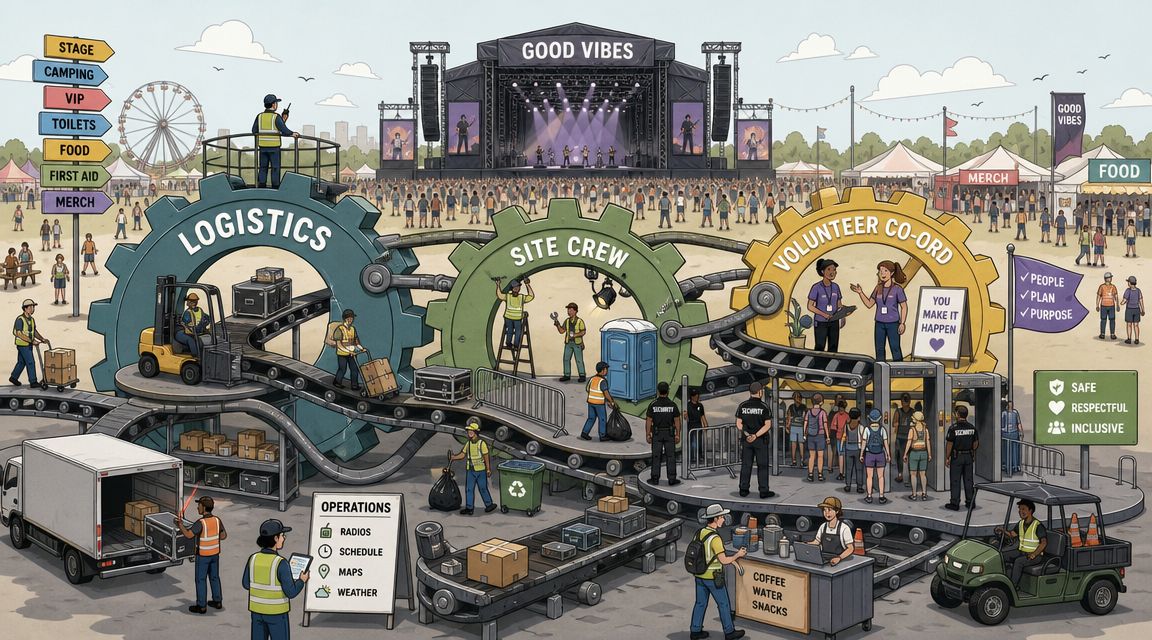
That scale isn't new. It's built on an established UK events system. Gallowglass says it has supported the Reading Festival build and derig every year since 2004, and had provided 1,168 crew members for a single festival operation in its Reading Festival project summary. That matters because repeat infrastructure creates repeat hiring. Reading festival jobs come back because the operation itself comes back, with the same pressure points every season.
Why that matters to applicants
A lot of people still approach festival work as if they're applying for a generic summer side job. That usually fails.
Hiring managers in this space don't think in vague terms like "festival staff". They think in functions. They need reliable bar teams, competent drivers, disciplined gate staff, site crew who can cope with rough conditions, and food service workers who won't fold halfway through a long shift.
Practical rule: Apply for the workstream, not the vibe.
That same logic applies across hospitality. A busy hotel in Bristol, a pub in Devon on a bank holiday, or a festival field in Berkshire all have the same core staffing problem. They need people who can arrive on time, stay calm, and keep standards up when the pace turns ugly.
If you're serious about event work, start with a grounded view of working at festivals in the UK hospitality trade. The best candidates treat reading festival jobs as operational roles with clear expectations, not as backstage access with a wristband attached.
Understanding the Reading Festival Job Landscape
A wet Sunday night on site sorts applicants faster than any interview. The people who hold up are usually the ones who applied for a specific job they understood, not people chasing a festival badge and hoping it turns into paid work.
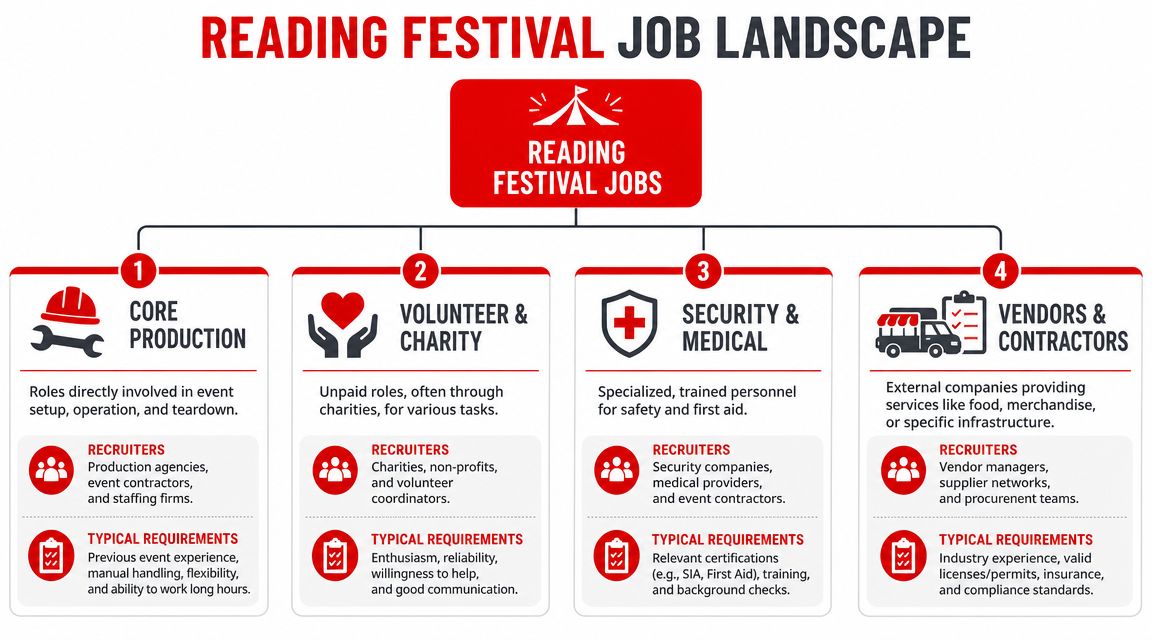
Reading runs on separate hiring channels with different standards, shift patterns and expectations. The festival's own Reading Festival information pages show dedicated operational areas such as campsites, gates and accreditation. Alongside that, outside recruiters and contractors fill paid stewarding, driver, control-room and supervisory posts. If you treat all of that as one job market, you make poor applications and miss the roles that properly fit your experience.
The main workstreams
| Workstream | What it usually involves | Best fit for |
|---|---|---|
| Hospitality and bars | Bartending, bar backs, catering support, food service | People with customer service experience, pace and confidence handling cash or tills |
| Operational staffing | Gates, campsites, accreditation, stewarding | Applicants who stay alert, follow process and turn up ready for long shifts |
| Specialist site roles | Drivers, comms-control, zone supervision | Workers with previous event experience, licences or clear role-specific skills |
| Volunteer roles | Support tasks through charity or volunteer programmes | People who want event access and experience more than immediate pay |
Paid work and volunteer work serve different goals
Applicants often blur these together. Employers should not.
Volunteer roles can make sense for someone who mainly wants to attend the event and is comfortable trading time and comfort for access. Paid roles are different. They carry tighter accountability, clearer performance expectations and better value if your aim is to build a track record that helps you get work in pubs, hotels, contract catering, stadiums or event kitchens later.
That distinction matters for career progression. A paid bar shift at a major festival can sit well on a hospitality CV because it shows volume service, pressure handling, stock awareness and shift discipline. Volunteer experience can still help, but it usually needs more explanation when a hiring manager is scanning for evidence that you can work commercially.
What improves your chances
Specific applicants get shortlisted faster because they make the recruiter's decision easier.
- Match the role to the work you've done. Weddings, stadium kiosks, late-night bars, banqueting and quick-service food all transfer well into festival hospitality.
- Be honest about specialist posts. Driver and control roles usually go to applicants who can prove competence, not people who sound enthusiastic in a cover note.
- Apply through the right channel. Some jobs sit with the festival team. Others sit with contractors, charities or temporary work agencies that place event and hospitality staff.
- Show that you can handle shift reality. Early starts, late finishes, weather, queues and tired customers are part of the job.
For venue owners, the lesson is the same one that applies on any busy weekend service. Clear role design gets better staff. Vague hiring briefs get people who turn up looking for a different job.
Your Application Timeline and Strategy
At 8:30 on a Tuesday morning, a staffing coordinator has 200 bar applications open and a service gap to fill before the week is out. The people who get called first are not always the most experienced. They are the ones who applied early, matched the brief, uploaded the right documents, and replied fast.
That is how festival recruitment works in practice. Good roles do not usually disappear because nobody wants them. They go to applicants who make the hiring decision easy.
Apply on a staffing schedule, not a fan's schedule
Reading recruitment runs in waves. Early on, teams can shortlist carefully and match people to the right posts. Closer to the event, the pressure changes. At that point, coordinators are filling gaps, replacing dropouts, and checking who can turn up.
Treat your application like seasonal operations hiring.
- Pick the role type first. Bar, catering, stewarding, logistics, accreditation, driver support and site crew all have different checks, start dates and expectations.
- Send a CV that matches that role. A bar manager does not need a paragraph about warehouse packing. A logistics lead does not care that you love live music.
- Get your documents ready before you apply. Right to work proof, photo ID, licences and basic contact details should be easy to send on the same day.
- Watch your phone and email. Recruiters move fast. Slow replies cost people shifts every season.
- Keep a simple application tracker. Note who you applied to, when, for what role, and whether you completed onboarding.
One missed admin step can knock out an otherwise strong applicant.
Build a CV for high-volume service
A festival CV needs to answer one question quickly. Can this person work safely, stay steady under pressure, and finish the shift without drama?
Keep it tight. Use recent roles first, include dates, and describe the work in plain operational terms.
Include:
- Shift-based hospitality work with clear duties
- Customer-facing roles in pubs, bars, hotels, cafés, stadiums or events
- EPOS, cash handling or drinks service for bar applications
- Stock, cellar, prep, runners or back-of-house support for catering and support roles
- Manual handling, driving, radio use or site support experience for logistics posts
- Full availability across the event window if you can offer it
Shortlisting teams scan for evidence, not personality. "Worked a 500-cover banqueting shift" says more than "hard-working team player."
Use the route that fits the career you want
Paid festival work carries more weight on a hospitality CV because it shows commercial service, timekeeping, and accountability in a live trading environment. That matters if you want the job after the festival as much as the job during it.
Volunteering can still help, especially for first-time entrants, but it often needs more explanation later. A hiring manager in a hotel, pub group or contract catering business can place paid shift work faster because the standards are familiar.
If you want repeat event work, study how experienced operators use temporary hospitality staffing agencies for short-term placements. The same rules apply at festivals. Clear availability, clean paperwork, relevant experience and fast responses get remembered.
For venue owners hiring around festival periods, the lesson is simple. If you wait until your rota is already broken, your applicant pool gets weaker and your checks get rushed. Good temporary staff are usually organised before the panic starts.
Pay Shifts and What to Realistically Expect
For those interested in reading festival jobs, here's the honest version. The work can be worthwhile, but nobody should go in thinking it's an easy weekend with a staff wristband.

Reading Festival attracts over 90,000 festivalgoers each year, according to Movement Strategies' Reading Festival case study. At that scale, shifts are built around output, not comfort. A bar vacancy listing referenced there says paid bar staff shifts are typically 6 to 12 hours and pay £11.09 per hour, made up of £9.90 per hour plus £1.19 holiday pay. The same source notes volunteers are generally expected to work 3 x 8-hour shifts.
What those numbers feel like on the ground
A 6-hour festival shift can feel long if the weather turns, the queues don't break and you are on your feet the whole time. A 12-hour one needs proper pacing. You need to eat before you start, carry the right kit, and assume you'll be working in mud, heat, rain, noise or all four.
The glamorous version of festival work usually misses the boring bits that decide whether you cope:
- Waiting and access delays
- Basic staff facilities
- Long walks across site
- Patchy sleep if you're camping
- Queue pressure and impatient customers
- Last-minute changes to deployment
Know what your hourly rate actually means
For paid roles, don't just look at the headline number. Work out what the shift is worth to you after travel, kit, food and any time spent getting in and out of site. The hourly rate may still suit you, but you should make the decision with your eyes open.
If you want to compare shift income against other hospitality work, a monthly salary calculator for hospitality pay planning can help you frame what casual event work means beside pub, hotel or kitchen shifts.
This short clip gives useful visual context on the pace and feel of the environment:
Festival work rewards people who can stay steady when everyone else gets scrappy.
If that sounds like you, the conditions won't put you off. If you already struggle with long service, uneven breaks or outdoor work, it's better to realise that before you commit.
How to Turn a Festival Gig into a Hospitality Career
A Reading shift becomes useful career capital only if you know how to explain it. That's where many people waste the opportunity. They write "worked at festival" on a CV and leave out the part that employers value.
Translate the job into hospitality language
Hospitality managers don't hire from buzzwords. They hire from evidence.
If you worked bars, say you handled high-volume service, customer interaction, queue pressure and fast restocking. If you worked stewarding or gates, talk about public-facing communication, conflict management, incident reporting and staying accurate during long shifts. If you supported food operations, show that you kept pace, followed instructions and worked cleanly in a pressured service environment.
Those points matter because they transfer directly into real businesses in Reading, Slough, Windsor, Bristol, Wales, Devon and Dorset where service peaks hit hard and managers need staff who don't wobble.
The financial question matters too
The volunteer versus paid decision becomes a practical, not philosophical, matter. Many festival pages push perks and free entry first, but don't properly deal with personal costs or compare the role with paid alternatives.
The bigger market context is clear. The UK hospitality sector had 333,000 vacancies in the three months to March 2026, as noted on the Oxfam Festivals Reading page. For a lot of jobseekers, that changes the calculation. If you're short on money, need immediate income or want a cleaner path into ongoing work, paid temporary hospitality shifts may be the smarter move.
A festival role is most valuable when it leads somewhere. If it doesn't strengthen your next application, treat it as experience, not as strategy.
How to present it in interviews
Don't oversell the glamour. Sell the pressure handling.
Good answers sound like this:
- You stayed effective during long, busy shifts.
- You worked with a mixed team and took instructions quickly.
- You dealt with customers when conditions weren't ideal.
- You kept standards up even when the environment was noisy, messy or unpredictable.
- You turned up, finished properly and were trusted to do it again.
That is exactly what operators want from staff in pubs, restaurants, hotels, event catering and seasonal kitchen teams. A strong festival stint can open doors, but only if you frame it as evidence of work ethic, pace and reliability.
A Note for Venues Sourcing Temporary Staff
Reading Festival is a large example of a familiar hospitality problem. Demand spikes fast, rotas crack, your permanent team starts covering too much, and standards slip if you haven't planned properly.
Venue owners in Berkshire, Bristol, Devon, Wales and Dorset deal with versions of this all year. Summer terraces fill. Weddings stack up. Head chefs go sick. Agency bookings fall through. Someone promising "I'll definitely be there" stops answering the phone. Then service starts in two hours.
What usually goes wrong
Operators get into trouble when they rely on vague promises instead of role-fit and availability checks.
Common failures include:
- Booking too late
- Using unvetted casual workers
- Stretching the core team until burnout shows
- Assuming any chef or front-of-house temp can slot anywhere
- Treating peak demand as a surprise when it is seasonal
The lesson from festival staffing is simple. Pressure exposes weak systems. It also rewards businesses that plan cover properly, use trusted people and separate urgent staffing from desperate staffing.
If your kitchen stability depends on luck, you don't have a staffing plan. You have a gamble.
Frequently Asked Questions About Reading Festival Jobs
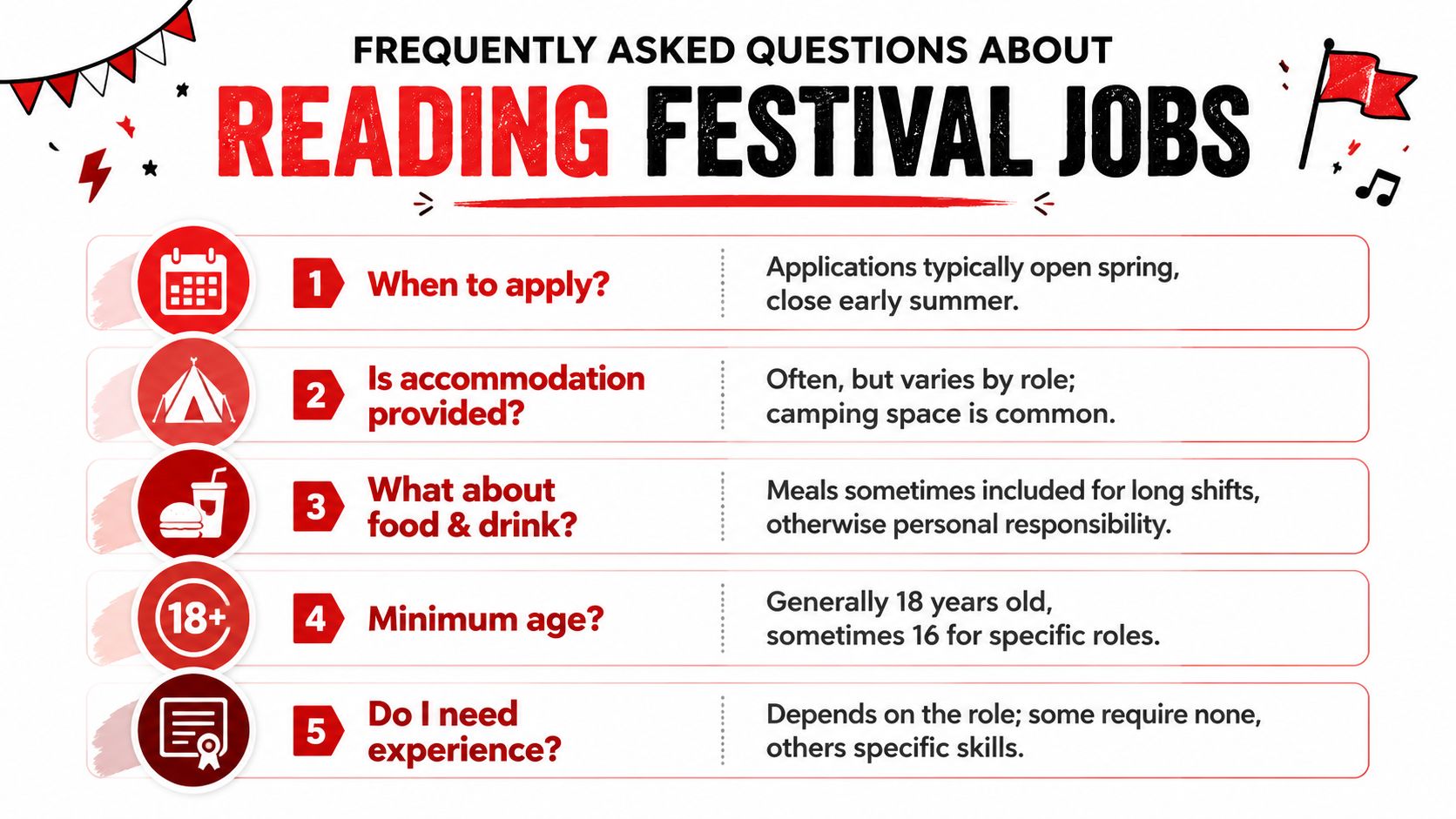
When should I apply for reading festival jobs
As early as you can once roles open. Better paid jobs and better organised teams usually fill before last-minute panic recruitment begins. If you wait until everyone else starts scrambling, your choices narrow.
Do I need experience
It depends on the role. Stewarding and entry-level hospitality work may suit people with solid customer service or shift-based experience. Specialist jobs such as driving, comms-control or supervisory roles usually need direct evidence that you can do the work safely and properly.
Are volunteer roles worth it
Sometimes, yes. But it depends on what you need. If your priority is event access and experience, volunteering can suit you. If your priority is income and a clearer hospitality career route, paid work is often the better decision.
What should I bring
Bring the boring essentials, not just festival gear. Think waterproofs, decent footwear, charged phone, ID, any work documents you've been asked for, toiletries, spare socks, basic food backup and whatever helps you stay functional over long shifts. Comfort matters because fatigue makes simple jobs harder.
Is there an age requirement and do I need Right to Work documents
Yes, both issues matter. Some festival information around volunteer opportunities states an age floor of 18 and mentions work-rights checks, so don't assume you can sort documents out later. Have your identification and work eligibility ready before you apply. Delays here cost people jobs every year.
If you need dependable kitchen cover or you're a chef looking to turn hard-earned event experience into proper paid work, Relief Chefs UK is worth speaking to. Established in 2013, Relief Chefs UK supports independent pubs, restaurants, boutique hotels, private households, yachts and villas with relief chefs, temporary chefs, permanent chef recruitment, yacht chefs, villa chefs and wider hospitality staffing support across the UK. When short notice sickness, seasonal demand, chef shortages or agency reliability issues put service at risk, they help keep kitchens stable and standards high. Contact the team to discuss staffing support or your next role.
Call the team.
Office 01392 715474 · info@reliefchefs.co.uk