
Head Chef Jobs Manchester: 2026 Career Guide
19 May 2026

If you're looking at head chef jobs manchester right now, you're probably balancing more than a title and a salary. You're weighing brigade size, covers, rota pressure, ownership style, menu freedom, and one blunt question. Is this move better, or just different?
That matters in Manchester more than most job boards admit. Plenty of listings tell you where the job is and what the title is. Far fewer tell you why one role pays at the lower end of the market while another pushes much higher, or why some chefs are choosing flexible relief work over a permanent pass.
Manchester is busy, ambitious, and unforgiving of weak hiring on both sides. Good operators need people who can run a kitchen, not just plate well. Good chefs need enough market intelligence to spot the difference between a genuine head chef role and a dressed-up sous chef job with extra admin and no support.
Navigating Manchester's Dynamic Hospitality Scene
Manchester gives ambitious chefs real range. You can move between premium pubs, hotels, restaurants, event venues, and larger food-led operations without leaving the city. That's a plus if you want progression, but it also means role titles can blur fast.
A head chef post in one venue might mean full P&L awareness, menu development, ordering, training, compliance, and kitchen culture. In another, it means covering a weak structure, firefighting staffing issues, and carrying responsibility that ownership hasn't defined properly.
Why the usual search falls short
Most job sites show vacancies. They don't do much to explain the pay logic behind them, or why some chefs now compare permanent jobs with flexible relief work where pay and expectations can be clearer. The wider UK hospitality sector has faced persistent staffing shortages, and that pressure still shapes how roles are written, sold, and accepted, as noted in this hospitality job market context.
That creates two common mistakes.
- Chasing title over substance. A head chef title sounds right, but the support structure, staffing budget, and kitchen condition may be wrong.
- Ignoring the flexible market. Some strong chefs dismiss temporary work too early, even when it offers better control and cleaner commercial terms.
Practical rule: Judge the job by responsibility, support, and service model first. Judge the title second.
What serious chefs and operators need to know
The strongest moves in Manchester usually come down to fit. Not prestige. A chef with solid high-volume discipline may outperform a fine dining CV in a busy premium pub. A hotel operator may need someone stronger on systems and consistency than on ego and flair.
For employers, the same principle applies. Hiring the wrong head chef is expensive in ways that don't show on the advert. Service dips. Team morale drops. GP gets messy. Sickness cover becomes chaos.
The chefs who do well here understand the commercial side of the kitchen and choose roles accordingly.
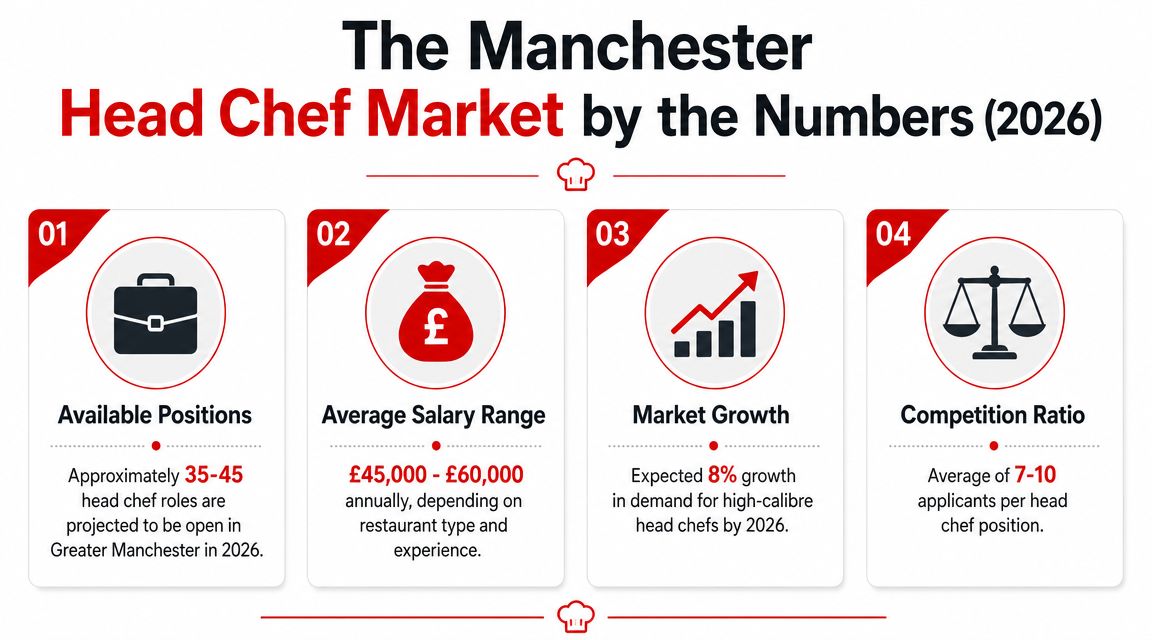
The Manchester Head Chef Market by the Numbers
The local salary benchmark matters because it gives you a starting point before you get drawn in by inflated job titles. In Manchester, Jobsite's head chef salary data shows an average salary of £28,999, with a typical advertised range of £22,999 to £32,499.
That's the baseline. It is not the ceiling.
What those salary bands actually mean
A chef looking at that range might think Manchester is underpaying senior kitchen talent. That isn't the full picture. The average reflects a broad mix of roles, including smaller sites, more standardised operations, and jobs where the title carries less strategic weight.
At the sharper end of the market, the money moves quickly when the kitchen is harder to run.
JOB TODAY's Manchester head chef listings show 105 active head chef jobs with new vacancies added daily. The same feed includes examples of a £40,000 Head Chef role and an independent gastro pub package up to £60,000. That spread tells you something useful. Manchester rewards chefs who can handle complexity, volume, and standards, not just cooking ability.
Why some roles pay far more than others
Higher-paid head chef jobs usually come with one or more of these realities:
| Venue factor | What it usually means in practice |
|---|---|
| Premium dining | More pressure on consistency, supplier standards, and margin control |
| High-volume service | Bigger teams, harder prep planning, stronger pass leadership |
| Operational leadership | More involvement in rotas, ordering, stock, recruitment, and reporting |
| Weak existing structure | Better pay, but often because the job is tougher than the advert suggests |
That's why a lower-mid salary role may still be a good move if it offers a clean structure, strong owners, and real progression. It's also why a bigger package can be poor value if you're inheriting staffing gaps, deferred maintenance, and no support from the front.
Manchester isn't one head chef market. It's several overlapping ones, with pay tied closely to venue type and operational strain.
Demand is strong, but speed matters
Open roles tell you opportunity exists. They don't guarantee a simple process. Active demand also means chefs compare options fast, and employers lose good candidates when they drag their feet.
For jobseekers, that means staying selective without moving slowly. For operators, it means being clear on what the role is before it goes live.
Finding Your Next Role Beyond the Job Boards
A lot of chefs still run the same search pattern. They refresh the big boards, fire off a generic CV, and wait. In Manchester, that approach usually gives you volume, not quality.
The better roles often move through specialist hospitality networks, referrals, and direct approaches before they become stale public listings.
Use recruiters who understand kitchen reality
A generalist recruiter can read a job spec. That's not the same as understanding whether the venue needs a proper head chef, a stabiliser, or a kitchen manager with better plating. In hospitality, that difference matters.
Good specialist recruiters can usually tell you:
- What the kitchen is really like. Brigade strength, service pressure, owner involvement, and whether the brief is realistic.
- Why the last chef left. Sometimes it was progression. Sometimes it was chaos.
- What the operator will be flexible on. Money, start date, autonomy, menu input, or live-in.
That saves time on both sides.
If you're looking around seasonal peaks or festive recruitment pressure, it also helps to track role patterns through specialist market pages such as Christmas job opportunities in Manchester, because they often reflect where labour pressure is building first.
Build a targeted shortlist
Don't apply everywhere. Build a shortlist of venues that match how you work.
A practical shortlist usually includes:
- Service style fit. Are you strongest in premium pub, hotel, brasserie, events, or branded operations?
- Scale fit. Small brigade autonomy suits some chefs. Others need larger structures and stronger support.
- Lifestyle fit. Late trade, weekend intensity, commute, and ownership culture all matter more than the title once service starts.
Direct applications still work
Manchester operators will still respond to a smart direct approach if it shows judgement. A short note, a strong CV, and a clear explanation of the environments you've led can open conversations that never appear on a public board.
Good chefs often miss good venues because they only apply to advertised jobs. Strong operators still hire people who approach them well.
Networking matters too. Former GMs, group chefs, suppliers, and old colleagues regularly know where pressure points are building before an advert appears.
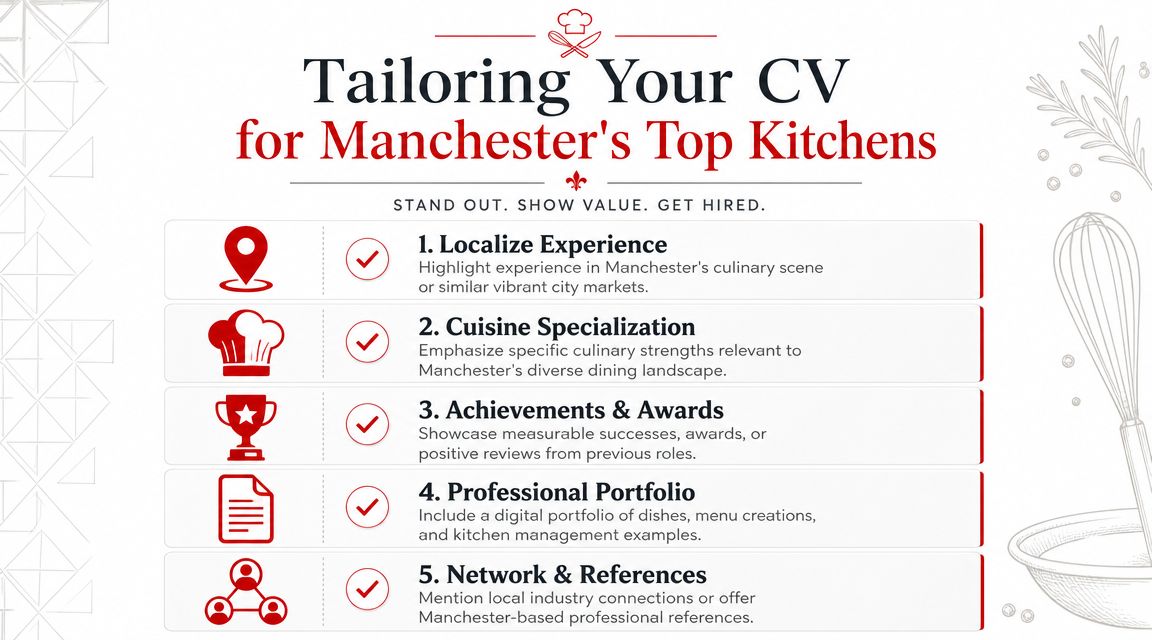
Tailoring Your CV for Manchester's Top Kitchens
Most head chef CVs undersell the job itself. They list kitchens, cuisines, and dates. They don't show how the chef improved service, managed people, or held standards when the operation was under strain.
That's a problem because stronger Manchester venues don't benchmark on cooking alone. Caterer's Manchester head chef adverts regularly ask for experience in upscaling operations from around 100 covers to 400+ covers, plus menu engineering, stock control, and full COSHH and Health and Safety compliance.
Lead with operational evidence
If your CV opens with a soft profile and a list of dishes, it won't do enough. A head chef CV needs to show that you can run a commercial kitchen.
Make sure your recent roles clearly cover:
- Team leadership. Brigade size, recruitment involvement, training, retention, and how service was organised.
- Menu ownership. Development, seasonality, supplier use, allergen control, and menu changes.
- Cost discipline. Stock control, ordering routines, waste awareness, and purchasing judgement.
- Compliance. COSHH, Food Safety, cleaning systems, due diligence, and audit readiness.
A hiring manager should know within a minute whether you've led an operation or only cooked within one.
Show scale, not just style
Many chefs write “busy fresh-food kitchen” and think that says enough. It doesn't. Busy means different things to different operators.
Be more concrete in how you describe scope:
| Weak CV line | Stronger version |
|---|---|
| Led service in a busy restaurant | Led kitchen service across high-volume trading periods, managing prep, pass control, staffing deployment, and consistency under pressure |
| Responsible for menus | Developed and updated menus alongside ordering, stock management, and gross margin awareness |
| Managed kitchen team | Trained and supervised brigade, set standards, delegated sections, and maintained service discipline |
You don't need inflated language. You need evidence that you understand what ownership and GMs care about.
A CV that only proves you can cook gets filed with every other chef CV. A CV that proves you can run a kitchen gets interviews.
Keep the document commercially useful
A practical head chef CV should be easy to scan. Use clean sections, recent roles first, and concise bullets under each post. Include a short profile, but make it operational, not theatrical.
A supporting portfolio can help if it includes menus, opening work, event examples, or kitchen development work. Keep it relevant. A gallery of plated dishes on its own won't answer the key hiring question.
Mastering the Interview and Trial Shift
Interviews for head chef jobs manchester rarely fail on food alone. They fail when the chef sounds strong until the conversation turns to people, systems, or pressure.
Employers want to know whether you can hold service together when the plan breaks. That's the real interview.

What operators are actually testing
Most serious interviews circle the same issues, even when they're asked differently.
They want to hear how you deal with:
- Short-notice staffing problems. A KP calls in sick. A CDP walks. The weekend is full.
- Supply disruption. A key delivery doesn't land and the booking sheet is still heavy.
- Standards drift. A team that cooks inconsistently, cleans poorly, or cuts corners when busy.
- Communication pressure. Front of house conflict, owner interference, or unclear daily priorities.
Use real examples from your own background. Keep them structured. What happened, what you changed, and what the outcome was operationally.
A lot of candidates talk in vague leadership language. Stronger candidates explain decisions.
Treat the trial shift as a management test
A trial shift isn't just a cook-off. It shows whether you can enter a new kitchen, read it quickly, and behave like someone people would follow.
The basics matter. Punctuality, uniform, kit, station cleanliness, communication, and pace all get noticed. So does how you speak to the KP, how you react to prep that isn't to your standard, and whether you ask sensible questions.
For a useful overview of what sits inside the role at a practical level, this guide to the responsibilities of a head chef is worth reviewing before interview stage.
A short briefing video can help sharpen that mindset before you go in:
Questions you should ask them
The best candidates assess the venue as hard as the venue assesses them.
Ask direct questions such as:
- Why is the role open
- Who controls ordering and supplier relationships
- What support sits under the head chef
- How much autonomy exists on menu and staffing
- What does success look like after the first few months
If an operator can't explain support, structure, or expectations clearly, the problem won't become clearer after you accept the job.
That applies to trial shifts as well. If the kitchen is disorganised, if no one can brief you properly, or if standards are obviously slipping, believe what you see.
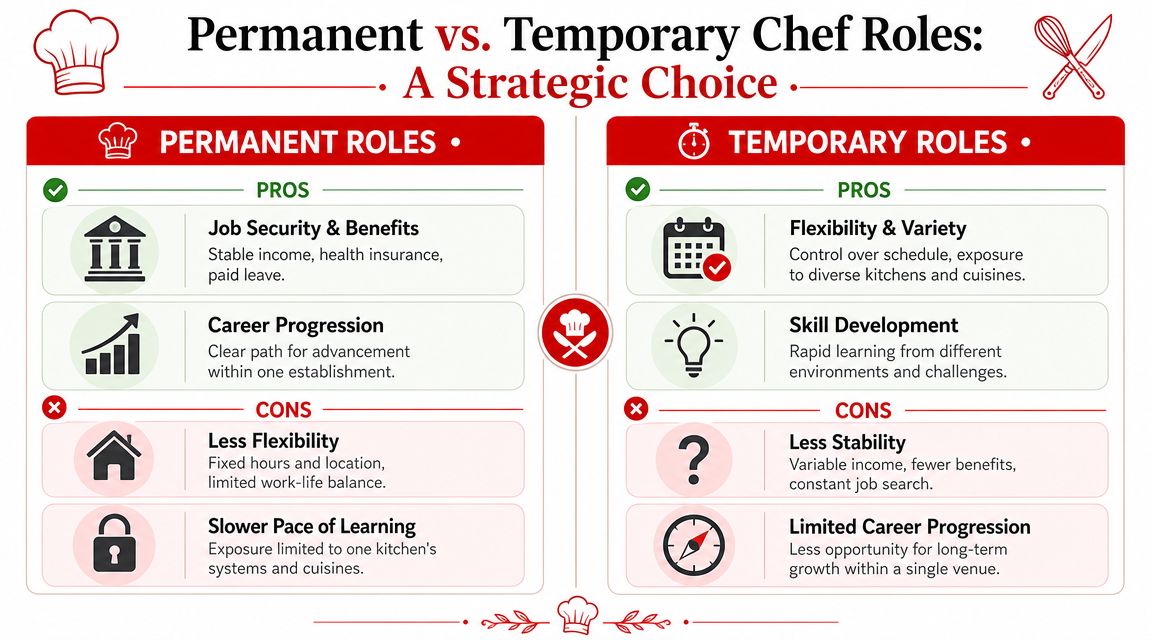
Permanent vs Temporary Chef Roles A Strategic Choice
A lot of chefs still treat temporary work as a stopgap. In Manchester, that view is outdated. Flexible chef labour now sits much closer to the centre of the market because operators often need dependable cover faster than they can complete a permanent hire.
That shift matters for both chefs and employers. Temporary chef listings across Manchester shifts show demand across mornings, evenings, and weekends. In practice, venues aren't just buying seniority. They're buying continuity when sickness, holidays, events, and recruitment delays threaten service.
When permanent makes more sense
Permanent head chef roles suit chefs who want a kitchen to shape over time. You can build the team, influence the menu, tighten systems, and create culture that lasts.
That route tends to suit people who want:
- Long-term ownership of standards
- A stable base with clearer internal progression
- Deeper involvement in supplier, staffing, and menu decisions
The risk is obvious too. If the ownership group is vague, the salary progression is unclear, or the kitchen has been neglected, you inherit every problem on day one.
When temporary or relief is the better move
Temporary and relief work can be the smarter commercial choice when you want flexibility, cleaner boundaries, or exposure to different operations. It also lets strong chefs avoid getting trapped in the wrong permanent role just because the title looked good.
For some chefs, relief work offers better professional value because it gives them:
| Better fit for relief work | Why it appeals |
|---|---|
| Variety | Exposure to different kitchens, service styles, and teams |
| Control | More choice over when and where to work |
| Fast-moving opportunities | Quicker starts when a venue needs support immediately |
| Reduced long-term politics | Focus on delivery rather than internal drama |
For operators, flexible cover is often better value than a slow direct hire because it reduces service disruption and lowers onboarding risk when the immediate problem is keeping the kitchen open.
If you're weighing that route in Manchester, it helps to understand how specialist temping agencies in Manchester support short-notice cover and where the stronger opportunities tend to sit.
The real decision is about risk
Permanent work carries commitment risk. Temporary work carries continuity risk. The right answer depends on your priorities and the quality of the operator in front of you.
A chef who wants to build a flagship kitchen may be right to hold out for the right permanent post. A chef who values flexibility, broad exposure, or immediate earning opportunities may be better served by relief work for a period, especially in a market where kitchens regularly need agile support.
Neither path is second best when chosen deliberately.
If you need dependable chef support, whether that's relief chefs, temporary chefs, permanent chef recruitment, or specialist placements such as yacht chefs, villa chefs, and wider hospitality staffing support, Relief Chefs UK is a trusted nationwide chef staffing partner established in 2013. Run by hospitality people who understand service pressure, the business helps independent pubs, restaurants, hotels, private households, and multi-site operators keep kitchens stable when it matters. If your venue is facing sickness, seasonal demand, chef shortages, or a critical hiring gap, get in touch and speak to a team that knows how to move quickly and place the right chef.
Call the team.
Office 01392 715474 · info@reliefchefs.co.uk