
Relief Chefs Dorset: Expert Kitchen Cover for 2026
2 May 2026

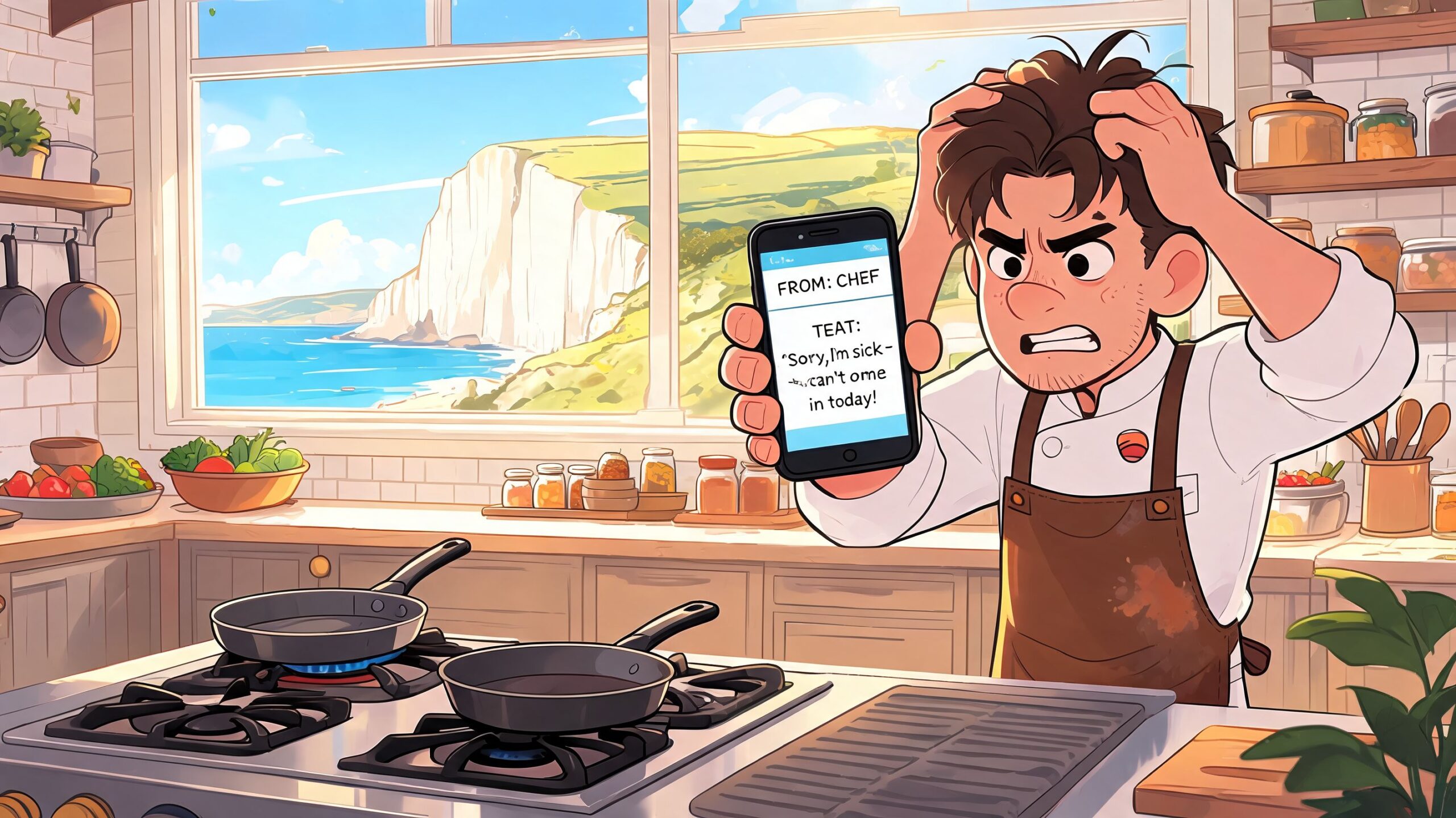
A sunny Saturday in Dorset should feel profitable. The terrace is full, lunch bookings are stacked, dinner looks strong, and the bar team is ready. Then a chef texts in sick, a commis is already covering prep, and your head chef starts rewriting service in real time.
That’s not a staffing hiccup. It’s a margin problem.
In Dorset, one empty station can wreck a whole shift. Standards slip first. Ticket times follow. Then your strongest people get dragged into firefighting, your customers feel it, and the week’s best trading day turns into damage control. If you’re searching for Relief chefs Dorset, you’re not looking for convenience. You’re looking for a way to keep the kitchen stable when the rota fails.
The Real Cost of an Empty Station in Your Dorset Kitchen
A kitchen rarely breaks because one person is absent. It breaks because nobody had dependable cover lined up.
Take a bank holiday weekend in Weymouth or a hot-weather Saturday in Lyme Regis. You’ve bought stock, staffed the floor, confirmed bookings, and built the day around volume. At 9.12am, a key chef drops out. Suddenly the issue isn’t wages. It’s whether you can serve the menu you advertised, protect spend per head, and get through service without burning out the rest of the brigade.
What the gap really costs
Most operators make the same mistake. They only look at the day rate for cover and ignore the wider cost of not getting it right.
Actual damage usually shows up in several places at once:
- Reduced menu output means you start cutting dishes that are profitable or operationally easy to execute.
- Longer ticket times put pressure on front of house, which then creates complaints at tables and on review platforms.
- Exhausted core staff make more mistakes, call in sick later, or start looking elsewhere.
- Management distraction pulls owners and GMs away from ordering, planning, and guest experience.
That’s why emergency staffing should be treated as business continuity, not a last-minute gamble.
Practical rule: If one absence forces you to change service, your kitchen is understaffed for risk, even if it looks staffed on paper.
Why ad hoc fixes usually fail
The usual panic responses are familiar. You ask your current team to stretch. You message old contacts. You put a post on social media. You call whichever agency answers first. None of those options gives you much control over fit, standards, or reliability.
What Dorset operators need is a proper cover plan, with transparent budgeting and a clear understanding of the cost of employing kitchen staff. If you don’t know the cost of vacancy, the cost of overtime, and the cost of service disruption, you’ll keep making expensive decisions under pressure.
A strong relief arrangement protects more than one shift. It protects your team’s energy, your menu consistency, and the reputation you’ve spent years building.
The smarter approach
Treat temporary chef cover like insurance for trading days you can’t afford to lose.
For independent pubs, restaurants, cafés, boutique hotels, yachts, and private households, the right relief partner gives you a cleaner option. You keep standards up, avoid frantic recruitment decisions, and stop asking already-stretched chefs to carry an impossible service. That’s what professional kitchen stability looks like.
Why Finding Reliable Chefs in Dorset Has Become a Crisis
If hiring feels harder than it used to, that’s because it is.
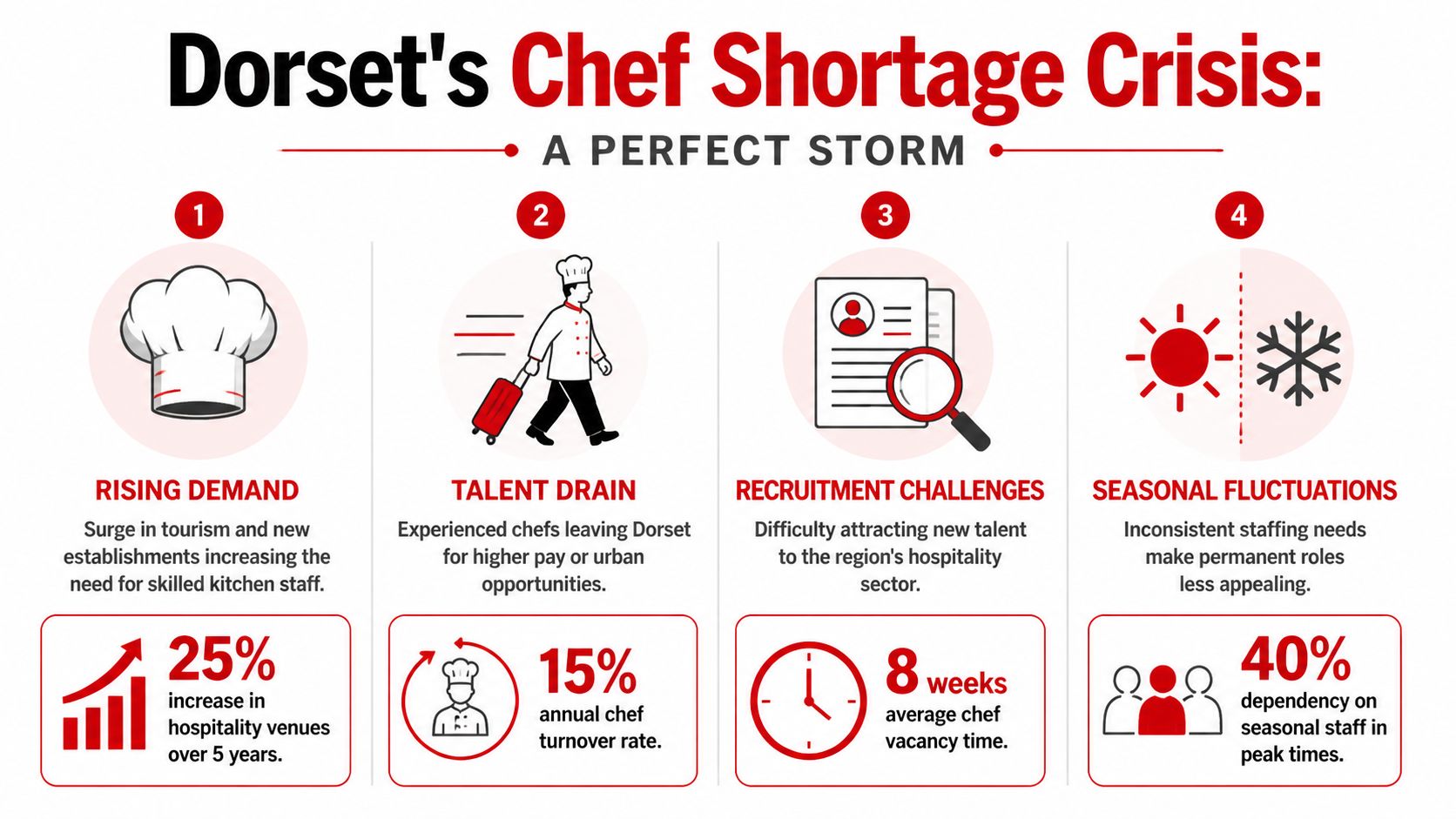
Dorset isn’t dealing with a minor recruitment wobble. It’s dealing with a supply problem in a region that still depends heavily on hospitality performance. The local labour pool is tight, competition is fierce, and seasonal pressure makes the shortage worse for everyone from coastal pubs to boutique hotels.
The numbers explain the pressure
The Dorset LEP area had 2.8% unemployment in Q1 2024, with only 1.6 unemployed people per vacancy, while national food service vacancies reached 29,000. That’s not a comfortable hiring market. It’s a tight one, and local hospitality operators are competing in it every day, as shown in the Dorset business impact findings.
Those figures matter because they explain why your advert sits live, why interviews fall through, and why a chef who seemed interested disappears after another offer lands.
Tourism demand makes the shortage sharper
Dorset’s hospitality trade isn’t flat and predictable. It surges.
A village pub can look manageable in midweek and then get slammed when the weather turns, local events kick in, or the coast fills up. That creates a staffing pattern many permanent hires don’t want and many operators can’t cover internally. You don’t just need good chefs. You need chefs available when Dorset suddenly gets busy.
The local market doesn’t reward slow hiring. It punishes it.
That’s why relying only on local applicants is too narrow a strategy. In a compressed labour market, the practical answer is broader reach and faster deployment. Businesses that use a specialist network for Dorset chef cover and recruitment support put themselves in a stronger position than venues still trying to solve every gap with local adverts and favours.
Why “reliable” is the key word
The problem isn’t only finding chefs. It’s finding chefs who turn up, fit the section, and protect standards from the first shift.
That’s where many agencies fall down. They can send a body. They can’t always send the right person. Dorset businesses don’t need another CV-forwarding service. They need access to chefs who can walk into a pub kitchen in Bridport, a restaurant in Bournemouth, or a hotel in Poole and work properly under pressure.
If you’re still treating chef shortages as a short-term inconvenience, you’re underestimating the risk. In Dorset, staffing instability is operational. It affects rotas, quality, morale, and revenue at the same time.
How Our Fast and Vetted Booking Process Works
A chef calls in sick at 9am. Lunch bookings are on the board. Prep is half done. If your booking process depends on voicemail, vague promises, or a pile of CVs, you lose money before service even starts.
A relief chef partner should reduce exposure fast. The point is not admin. The point is protecting service, payroll efficiency, stock control, and customer spend on the day that matters.
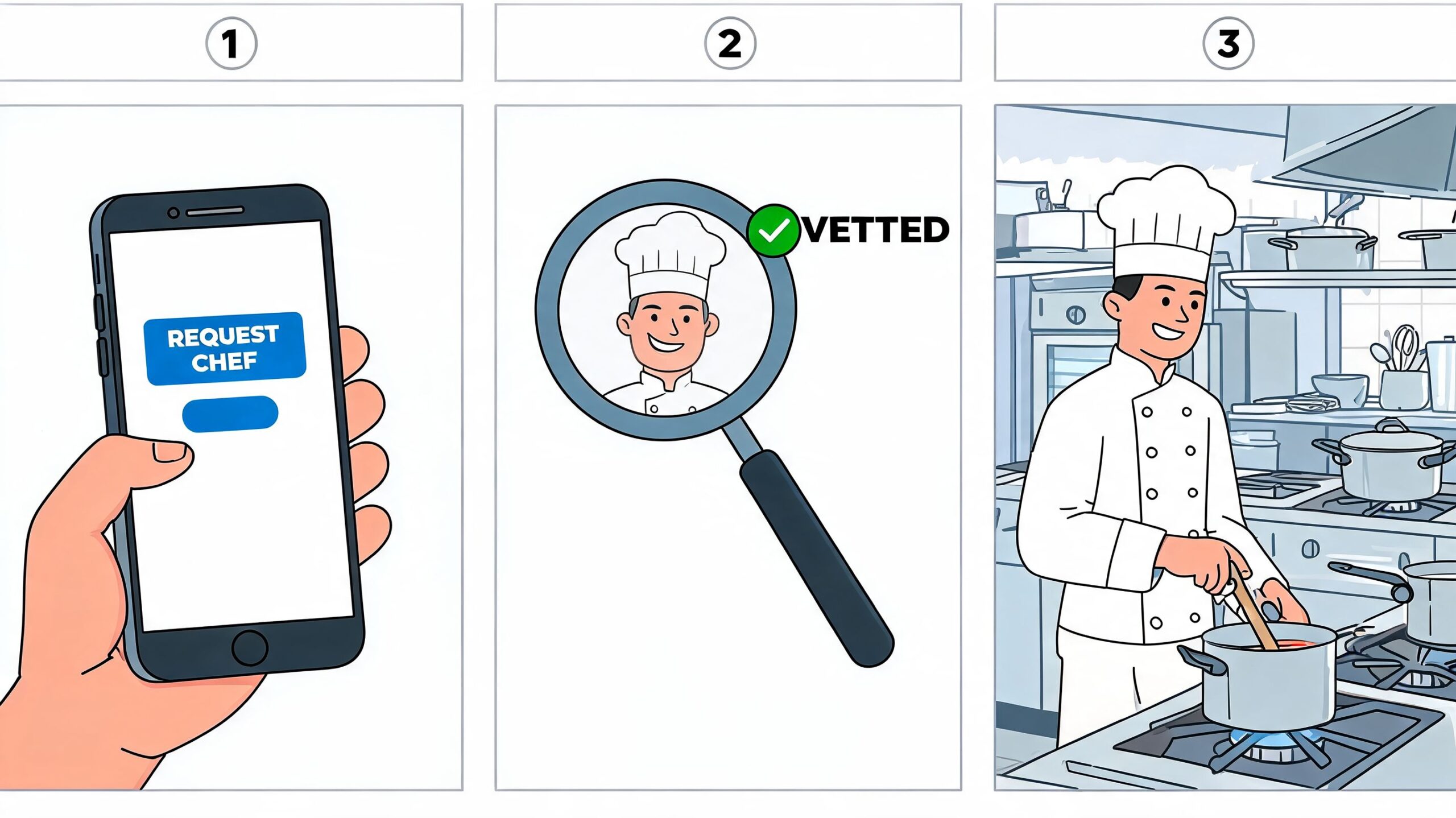
Step one, request cover properly
Bad briefs create bad bookings. Give the facts clearly and you get a chef who can effectively hold the section.
Your request should cover:
- The gap. CDP, sous, breakfast chef, head chef cover, yacht chef, or event support.
- The kitchen reality. Covers, menu style, brigade size, equipment, and whether the chef is leading service or supporting it.
- The timing. Short-notice emergency, weekend pressure, holiday cover, or a planned block booking.
Be honest about the site. A hard, high-volume coastal venue in peak trade needs a different chef from a quiet midweek country pub. Accurate detail cuts misfires, shortens booking time, and protects margin.
Step two, expect speed with accountability
Speed matters. Accountability matters more.
Our experienced recruitment team is available 24/7 to help you find a fully vetted, insured chef, subject to availability. We support over 400 UK venues, so the system is built for operators who cannot afford delay, ghosting, or endless chasing.
That speed only matters if the booking holds up in service. A fast reply that sends the wrong chef still costs you money.
Step three, check the vetting standard
Plenty of agencies say a chef is vetted. Ask what that means.
Proper vetting includes right-to-work checks, suitability screening, insurance, and a real assessment of whether that chef can cope with your level of pressure, pace, and food style. Generic temp recruitment misses this because it is built around availability first. Kitchen performance comes second. That is backwards.
A specialist chef agency in Dorset for vetted relief cover matches by section, service level, and venue type. That gives you a stronger chance of stable service and fewer expensive surprises.
| Booking route | What usually happens | Operational result |
|---|---|---|
| Social media shout-out | Fast replies, little filtering | Higher risk of no-shows and weak section control |
| General temp agency | Basic availability check | Inconsistent standards and more manager intervention |
| Specialist chef agency support in Dorset | Role-specific matching and proper checks | Better continuity, tighter service, less disruption |
What to ask before you confirm
Ask these three questions and get straight answers:
- Can this chef handle our service volume and section from the first shift?
- Have they worked in this type of venue before?
- If the chef is not right, how is replacement handled?
That is the booking process that makes commercial sense. Clear brief. Fast response. Proper vetting. Reliable fallback. Anything less leaves your kitchen exposed when trade is already hard enough.
Flexible Plans Built for Every Dorset Hospitality Venue
Most Dorset operators don’t need the same staffing model. A village pub in the Blackmore Vale doesn’t need what a busy Bournemouth restaurant needs. A hotel group doesn’t need what a café needs. That’s why fixed, one-size-fits-all staffing agreements usually disappoint.
The right cover should match the shape of the business and the level of risk the business carries.
Starter works for occasional but costly gaps
Starter makes sense for independents that don’t need constant cover but can’t afford a service collapse when someone goes off sick or takes leave.
That usually fits:
- Village pubs with a small brigade and no spare bench
- Cafés that rely on one or two capable kitchen staff
- Seasonal coastal operators who need support when trade spikes without warning
For this type of business, the key issue is budget control. You need access to support without feeling trapped by hidden extras or unpredictable billing.
Growth suits operators with recurring pressure
Growth is the sensible option for venues that need regular support and want a stronger safety net around it.
That typically fits a busy restaurant in Bournemouth, a boutique hotel near Studland, or a gastro pub that can’t keep rewriting rotas every other week. These businesses often need repeat cover, stronger continuity, and a dependable route to replacement cover that keeps service protected.
A more structured arrangement helps managers plan ahead instead of re-buying staffing under pressure every time a gap appears.
If you’re booking cover more than occasionally, treat it as a system, not an emergency purchase.
Premium is for businesses that need continuity at scale
Premium is the right fit when staffing isn’t just a kitchen issue. It’s an operations issue.
Think multi-site groups, independent hotels, luxury venues, private households with demanding standards, or businesses that need a pipeline for both relief chefs and permanent chef recruitment. In those environments, account management matters because the goal isn’t just to fill the next shift. It’s to keep the whole operation stable.
Compare the plans by risk, not by label
| Plan type | Best for | Main benefit | Commercial value |
|---|---|---|---|
| Starter | Small independents | Emergency access without complexity | Protects service on vulnerable shifts |
| Growth | Busy single-site venues | Ongoing support and stronger continuity | Reduces repeat disruption |
| Premium | Hotels, groups, high-end operations | Dedicated oversight and strategic staffing support | Supports long-term stability |
The biggest advantage is transparent budgeting. For venues running on tight margins, that matters more than clever sales language. Relief cover should help you avoid the hidden costs of service disruption, emergency hiring, and cancelled trading. That’s exactly the point behind the transparent hospitality staffing plans.
Who We Serve From Coastal Pubs to Private Yachts
Friday, 6:30pm. Your grill chef calls in sick, bookings are full, and the head chef is already covering prep. In Dorset, that kind of gap hits revenue fast. Service slows, tables wait, refunds creep up, and regulars notice. The venue type changes the pressure, but the cost of weak cover is always real.
Independent pubs and restaurants
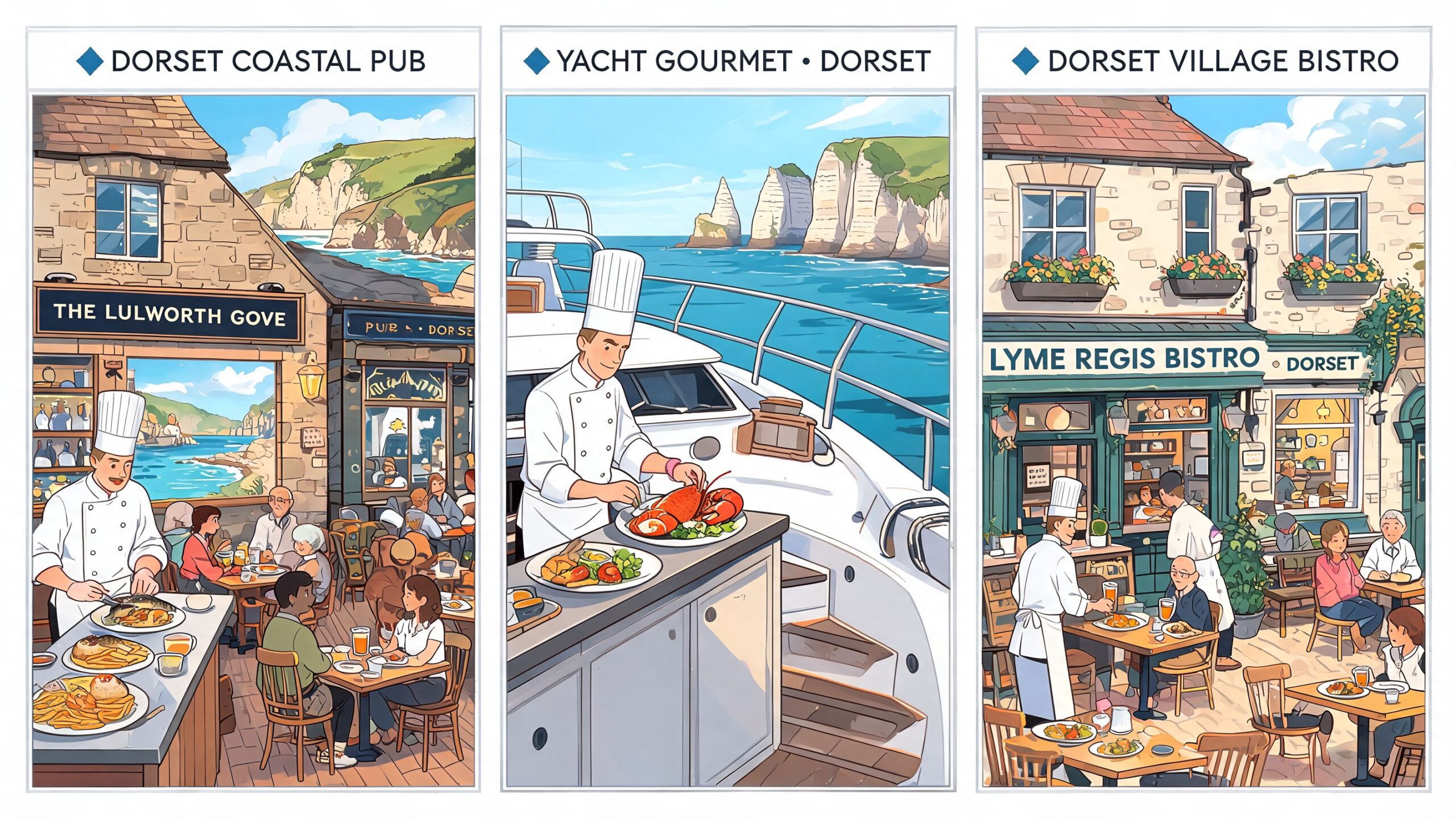
A busy pub in Swanage or a bistro near Bridport needs a chef who can arrive ready to work, read the section quickly, and hold the pass together under pressure.
That matters because independents in Dorset do not have much slack in the numbers. One bad service can wipe out the profit from a strong lunch trade. One cancelled sitting can hurt the whole week. Relief cover only pays for itself if it protects sales, keeps labour under control, and stops your core team burning out.
Generic agency matching usually fails here. A CV is not enough. You need someone who has worked high-volume service, coped with tight teams, and understands that speed without consistency is expensive.
Boutique hotels and higher-standard dining rooms
Hotels, destination dining rooms, and premium coastal venues carry a different risk. A weak chef does not just affect one service. The problem spreads into breakfast, room service, events, guest reviews, and the reputation of the whole property.
Dorset employers are already competing hard for capable chefs, and stronger roles in the county are attracting serious pay. As noted earlier, that makes direct hiring slower and replacement pressure higher. Relief support has to close that gap without lowering standards.
In these kitchens, technical ability is only part of the brief. The chef also needs pace, discipline, and the judgement to fit into an established brigade without dragging the standard down.
Yachts, villas, private households, and specialist hospitality support
Private hospitality is less forgiving.
A yacht chef in Poole Harbour needs discretion, planning discipline, and the confidence to work in a compact galley with changing guest demands. A villa or private household often needs a chef who can handle dietary requirements, menu planning, procurement, and polished presentation without constant direction.
This work punishes poor matching quickly. There is no buffer, no big brigade, and no room for someone who needs hand-holding.
Multi-site groups and operators with recurring cover needs
Operators with several sites have a bigger problem than one vacant rota line. They face repeated disruption across different kitchens, standards, and trading patterns.
A small group covering Dorset and nearby counties may need a breakfast chef for a hotel, a sous chef for a food-led pub, and event support for a private booking, all in the same month. Re-briefing a new agency every time wastes management hours and usually leads to poor fit. A reliable relief chef partner gives ops teams a faster route to safe cover, better continuity, and fewer costly surprises.
That is who this service is built for. Independent operators who need staffing support to protect margin, protect standards, and keep trading with confidence.
Your Questions Answered About Dorset Relief Chef Cover
Managers usually ask the same questions before they commit. They should. A bad staffing decision is expensive and visible.
Are rates clear or do extras appear later
They need to be clear from the outset. If pricing is vague, assume the final bill won’t be in your favour.
Transparent pricing matters because independent venues already deal with enough uncertainty in payroll, stock, and trading patterns. Relief cover should help you control risk, not create a new one.
How much notice do you need
Less is better, but more is smarter.
Emergency cover is there for sickness, no-shows, and sudden demand. Planned leave, events, and peak trading periods should be booked early. The earlier you flag the requirement, the better the match is likely to be.
What if the chef isn’t the right fit
A serious provider should have a replacement process and a chef-led matching system behind the booking.
That matters because “available” and “suitable” aren’t the same thing. Dorset venues need people who can protect standards quickly, not just fill whites.
Do you only cover the main towns
No. Good relief support should cover the full spread of Dorset, not just the obvious hotspots.
That includes coastal sites, rural pubs, boutique hotels, and harder-to-fill locations where local hiring can be slower. Many operators also need support across neighbouring regions, especially if they run more than one site.
Is relief cover only for emergencies
No. That’s a narrow way to use it.
Relief chefs are useful for sick cover, annual leave, seasonal reinforcement, menu transitions, pre-opening pressure, events, and periods when permanent chef recruitment is still in progress. The best operators use temporary support to keep the kitchen stable while they make better long-term hiring decisions.
Smart venues don’t wait for a crisis before they line up cover.
Why does this matter so much in Dorset
Because revenue loss in hospitality has already shown how exposed the sector can be. Dorset’s tourism sector saw a £99 million drop in turnover compared with 2019 levels during post-COVID recovery, and keeping kitchens operational is one of the few controls individual venues have when trading conditions are tough.
If your kitchen can’t deliver, the rest of the business can’t compensate for it.
Secure Your Kitchen and Stop Staffing Worries Today
If your kitchen depends on luck, it isn’t secure.
Dorset operators don’t need more stress, more chasing, or more weak agency cover that creates fresh problems on shift. They need dependable chef support that protects service, team morale, and the trading days that carry the business. That applies whether you run a pub in a village, a boutique hotel on the coast, a busy Bournemouth restaurant, or a yacht operation in Poole.
The smart move is simple. Stop treating staffing gaps as isolated incidents. Treat them as operational risk and put a professional cover plan behind the kitchen now.
If you need relief chefs, temporary chefs, permanent chef recruitment, yacht chefs, villa chefs, or broader hospitality staffing support across Dorset and beyond, act before the next absence forces your hand.
Relief Chefs UK has supported hospitality businesses since 2013 with chef-led staffing for pubs, restaurants, boutique hotels, yachts, private households, and multi-site groups across the UK. If you need reliable kitchen cover in Dorset, contact Relief Chefs UK now to discuss urgent relief chef support, temporary placements, or long-term recruitment.
Call the team.
Office 01392 715474 · info@reliefchefs.co.uk