
Relief Chefs Swansea: Expert Cover for Your Kitchen
29 April 2026

Friday morning. One chef rings in sick, another is already covering a split rota, and the weather forecast says Swansea Bay is going to be busy. Bookings are on the board, prep is half-done, and the front of house team is asking whether the full menu is still on.
That’s the point where kitchen staffing stops being a people issue and becomes a revenue issue.
For hospitality operators in Swansea, this isn’t an occasional annoyance. It’s a repeat commercial risk. If you run an independent pub in Mumbles, a boutique hotel near the bay, a restaurant in the city centre, or a venue serving weddings and functions, you already know the pattern. The problem isn’t only finding chefs. It’s finding the right chef, quickly enough, to keep service stable.
The Reality of Kitchen Staffing in Swansea
The kitchen crisis usually starts small. A chef de partie has family leave. Your sous chef is covering ordering and service because the head chef is off. Then a busy weekend lands on top of it. Suddenly, a manageable rota problem turns into a decision about cutting the menu, cancelling covers, or asking the remaining team to absorb another punishing shift.
In Swansea, that pressure has a local shape. You’re not staffing in a vacuum. Demand lifts hard around bank holidays, school breaks, event weekends, and good weather when footfall jumps across the bay and the Gower.
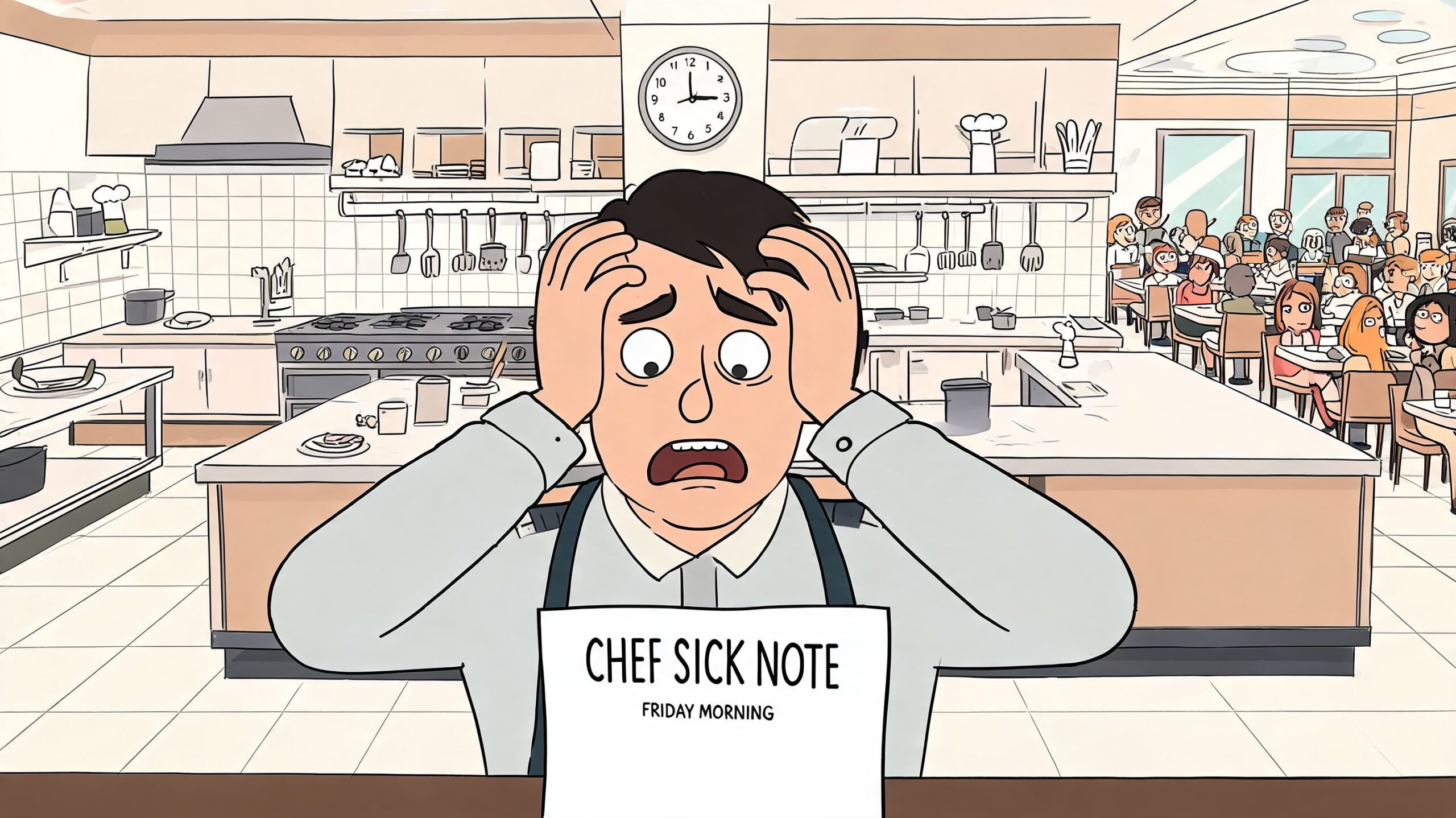
The local market reflects that strain. As of 2026, there is only 1 active relief chef position within a 5-mile radius of Swansea, and tourism-led venues in Swansea Bay can face up to 30% staffing gaps during summer peaks, according to relief chef hiring data in Swansea on Caterer.com.
What this looks like on the ground
A staffing gap in a kitchen rarely stays in the kitchen.
- Prep slips first. Basic mise en place gets rushed or cut.
- Standards go next. Portions drift, garnish disappears, consistency suffers.
- Service feels it immediately. Ticket times lengthen and front of house starts apologising.
- Reviews come after. Guests don’t write about your staffing issues. They write about a disappointing meal.
A quiet Tuesday can hide a weak rota. A warm Saturday in Swansea exposes it fast.
Why generic agency cover often fails
A lot of operators have already tried the obvious fix. Ring around. Text old contacts. Use whoever says yes first. That approach works only if the person arriving can slot in without creating more pressure.
What doesn’t work is sending a chef who needs hand-holding, doesn’t understand fresh food pace, or can’t read the room of a new brigade. When that happens, your strongest chef spends service managing the cover instead of running the pass or holding standards.
The Swansea market is too tight for that kind of gamble. In practical terms, relief chefs Swansea businesses rely on need to do one thing above all else. They must reduce friction from the minute they walk in.
Beyond the Temp What a Professional Relief Chef Actually Is
A proper relief chef isn’t just temporary labour. That’s the first misconception to drop.
The weak version of a temp chef is someone who fills a shift. The professional version is someone who stabilises a service. There’s a big difference between the two, and experienced operators spot it quickly.
The standard that matters
For serious cover, the baseline has to be high. Relief chefs are required to have at least 5 years of experience at sous chef level in fresh food kitchens, and many also hold current DBS checks for work in settings such as care homes or schools, where this is required for up to 40% of relief roles in Wales, as shown in relief chef job requirements across Wales on Indeed.
That tells you what level of chef can carry a shift in an unfamiliar kitchen.
They should be able to:
- Read a section quickly. They need to understand your setup without a long briefing.
- Work with fresh produce confidently. Not just follow prep lists, but make sound decisions during service.
- Support the brigade without ego. The best relief chefs don’t arrive trying to redesign your kitchen.
- Handle regulated environments. DBS compliance matters if you operate in schools, care homes, or other sensitive settings.
What separates a pro from a risk
There’s a simple test. If your head chef still has to babysit the cover after briefing them, you haven’t solved the problem.
A professional relief chef works more like an A&E doctor than a casual extra. They walk into an imperfect situation, assess it fast, and make sure the operation keeps moving. They don’t need everything to be ideal. They need enough structure to execute.
Practical rule: If a chef can’t jump onto any section with minimal drama, they’re not true relief cover.
That matters just as much in pubs and hotels as it does in care settings or function venues. Swansea kitchens often run lean, and lean brigades can’t absorb someone who needs constant direction.
Why operators should care about background, not just availability
Availability is seductive when you’re under pressure. But speed without standards is expensive.
A chef with the right background protects your existing team from overload. They also protect your guests from the inconsistency that comes when a kitchen starts making desperate compromises. If you’re weighing up agency options, that’s why it pays to compare specialist employment agencies for chefs rather than treating chef cover like generic temporary labour.
The point isn’t to get a body in whites. The point is to keep the kitchen credible.
How Relief Chefs Protect Revenue in Swansea's Hospitality Sector
The biggest mistake operators make is treating flexible chef cover as a cost line only. In reality, it’s a revenue protection tool.
When a kitchen loses capability, the damage starts before a service is cancelled. It shows up in reduced table turns, shorter menus, lower spend per head, tired staff, and guests who decide not to come back. That’s why relief chefs Swansea venues use properly aren’t just there to patch holes. They protect trading.
Short notice sickness without service collapse
The classic example is same-week sickness. A key chef drops out just before a fully booked Friday and Saturday. Staff typically react by stretching whoever is left.
That often leads to bad decisions:
- trimming the menu too late
- overloading the strongest section chef
- pulling managers into operational firefighting
- accepting lower standards to get through service
The better option is to bring in capable cover early enough to keep the structure of the kitchen intact. If the grill section stays covered, prep stays on track, and the pass isn’t dragged into section work, you’ve avoided the spiral.
Planned leave during peak trading
This one is less dramatic and often more costly because operators see it coming and still under-plan.
Summer rotas, wedding weekends, coastal tourism, local events, and private functions all create periods where one approved holiday can expose a thin brigade. Swansea businesses know this pattern well. The trouble is that good chefs also want time off during the same periods your venue is under the most pressure.
A relief chef gives you room to approve leave without punishing the rest of the team.
If you deny every holiday request to keep the rota standing, you don’t solve retention. You make it worse.
Sudden departures and notice period gaps
A resignation can leave a kitchen in limbo. You may have a permanent hire process running, but service still has to happen every day until that role is filled.
That gap is where many operators lose control. Menus get reduced, standards drift, and the remaining brigade starts questioning whether the business has a plan. Temporary chef cover can hold the line while permanent recruitment catches up.
This is especially important in businesses with mixed revenue streams, such as hotels with breakfast, lounge, events, and dinner service, or pubs balancing food with functions. One missing chef can affect several outlets at once.
Burnout prevention for the core team
This is the part many owners leave too late.
A short-staffed kitchen can survive one difficult week. It struggles through a month. Beyond that, fatigue starts making decisions for people. Senior chefs stop leading properly because they’re buried in production. Junior chefs stop learning because everyone is in survival mode. Standards flatten out.
A relief chef can ease pressure in ways that aren’t obvious on a spreadsheet:
- giving your sous chef a proper day off
- allowing prep to be done cleanly instead of reactively
- keeping senior people focused on leadership, ordering, training, and stock control
- stopping repeated doubles from becoming normal
In commercial terms, resilience comes from protecting your good people before they become your next vacancy.
Get Chef Cover in Swansea Fast The Relief Chefs UK Process
When a kitchen is under pressure, the process matters almost as much as the chef. If getting cover feels slow, vague, or full of back-and-forth, operators go back to texting old contacts and hoping for the best.
The better systems are simple. One message. Fast response. Clear match. Chef on site ready to work.
Step one, make contact early
The first move should be quick. Call or send the form as soon as the gap becomes real.
Don’t wait until the rota is already broken. The earlier you flag the problem, the better the match is likely to be. Good staffing decisions improve when you’re solving the issue at breakfast, not in the middle of lunch prep.
A proper chef staffing partner should ask the right questions straight away:
- venue type
- level of chef needed
- shift pattern
- food style
- start date
- any compliance requirements such as DBS
Step two, get matched properly
A strong process doesn’t throw random CVs at you. It matches the kitchen need to the chef’s background.
Relief Chefs UK is built around that practical speed. Venues can request support through the Relief Chefs Wales service page, speak to a team available 24/7, and access vetted chefs, subject to availability.
That speed only matters if the fit is right. A gastropub running fresh food all day needs a different chef from a hotel handling breakfast and banqueting, or a care setting needing DBS-cleared support.
Step three, onboard for a stable service
Once the chef is confirmed, your job is to set them up for a clean landing.
Keep the handover practical:
- Show the section clearly. Fridges, dry stores, prep lists, allergens, service flow.
- Name the essentials. Portioning, plating points, cleaning standards, who calls tickets.
- Give a short team briefing. Your brigade should know this chef is there to support, not disrupt.
A relief chef should need direction, not a rescue mission.
The reason this model works is simple. It removes the delay and uncertainty that usually make temporary staffing feel risky. Instead of chasing availability blindly, you’re using a system designed for kitchens that need competent support at pace.
Transparent Pricing for Relief Chef Cover
Pricing only becomes a problem when it’s unclear, badly structured, or judged against the wrong comparison.
A lot of operators look at relief chef costs and compare them to an ideal rota where every permanent role is filled, everyone turns up, and service runs exactly as planned. That isn’t the actual comparison. The actual comparison is the cost of a chef against the cost of reduced trading, weaker standards, management distraction, and a damaged team.
What the Swansea market is telling you
The local market is already pricing in scarcity. Relief chef roles in Swansea can command packages up to £45,000, and the vacancy rate is 12%, higher than the UK average, according to current relief chef market data for Swansea on Totaljobs.
That same market also reflects a 15-20% premium for flexibility, which is commercially understandable. Flexibility costs more because it solves urgent problems. The key point is whether that premium prevents a larger loss. In many kitchens, it does.
What good pricing should look like
You want pricing that is transparent, easy to budget, and free from nasty surprises.
A sensible structure usually includes:
- Clear labour cost visibility. You should know what you’re paying for.
- No hidden agency add-ons. Surprise extras kill trust quickly.
- Scalability. A small café doesn’t need the same support model as a multi-site group.
- Predictability. Monthly planning works better when costs are not bouncing around without explanation.
For many operators, flexible plans make more sense than ad hoc panic-buying. If your business has recurring pressure points, summer, weddings, school breaks, event weekends, then planned cover is normally cheaper operationally than repeated emergency cover.
The better way to judge value
Don’t ask only, “What does the chef cost?”
Ask:
- What does a lost dinner service cost?
- What happens if online reviews dip because your kitchen can’t cope?
- How much management time is being burned on rota firefighting?
- What’s the cost of exhausting your permanent team?
That’s where transparency matters. If you want to understand the wider numbers behind employment and staffing decisions, the cost of employing a chef is worth reviewing before you compare permanent and flexible options.
The cheapest staffing decision on paper is often the most expensive one in service.
For relief chefs Swansea operators, good pricing isn’t about finding the lowest day rate. It’s about buying continuity without losing control of your margin.
Why 400+ UK Venues Trust Relief Chefs UK
Trust in chef staffing isn’t built by branding. It’s built by what happens when service is at risk.
The businesses that keep using the same staffing partner usually do so for one reason. The chef turns up, fits the brief, and the kitchen settles down instead of becoming harder to manage.
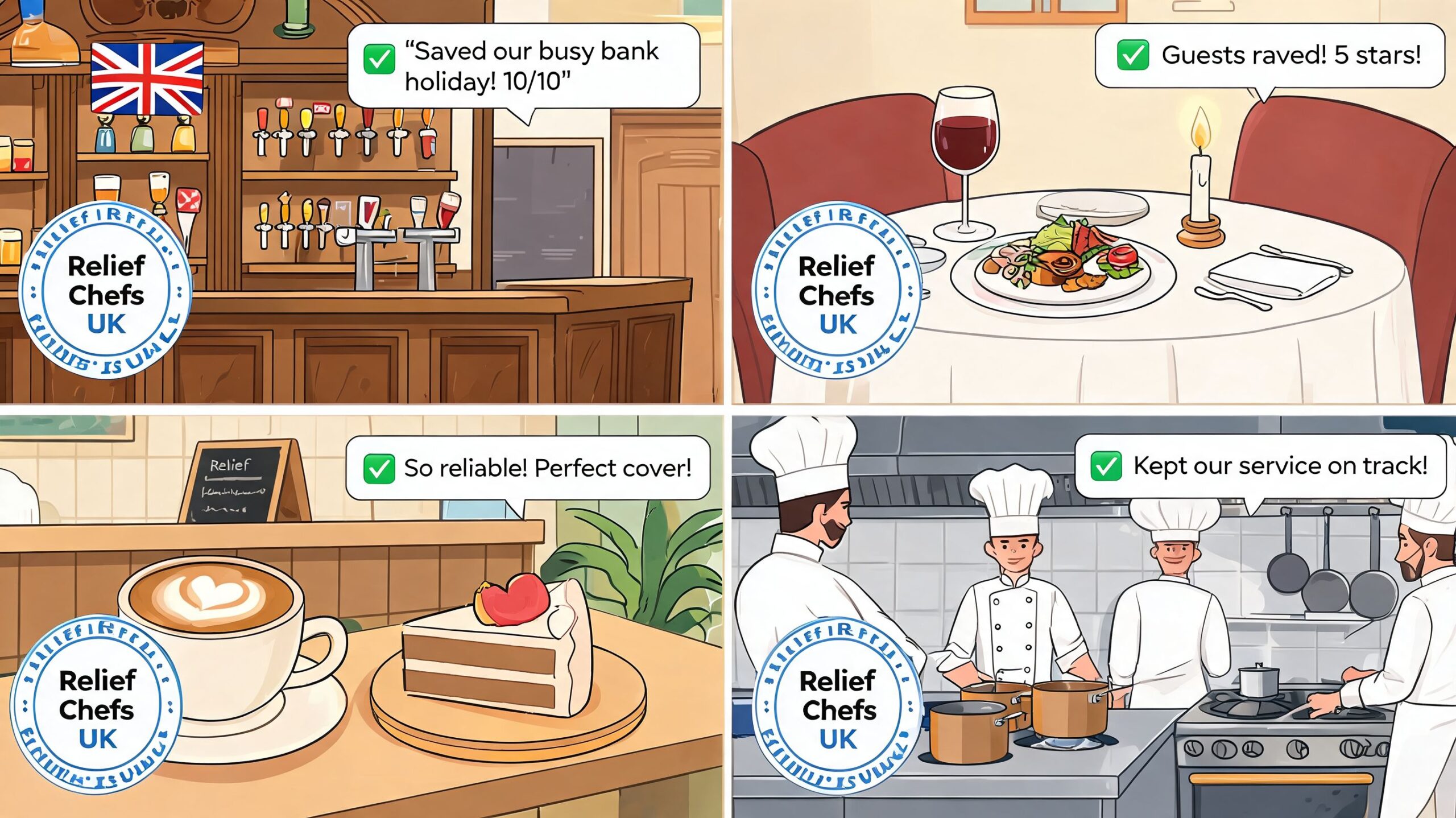
What credibility looks like in practice
Relief Chefs UK was established in 2013 and supports 400+ UK venues, with 24/7 support, right-to-work checks, and chefs supplied by a team run by chefs rather than recruiters, based on the publisher’s business profile.
That matters because kitchen problems aren’t generic. A pub in Devon, a hotel in Berkshire, a yacht placement, and a villa chef role all need different judgement. Operators want a staffing partner who understands the difference between sending a safe pair of hands and sending the wrong person in clean whites.
The venues that rely on this model
Across the UK, the same staffing problems show up in different forms.
| Venue type | Common pressure point | What reliable cover needs to do |
|---|---|---|
| Independent pub | Weekend sickness or holiday clash | Hold standards through busy food-led service |
| Boutique hotel | Breakfast, events, and dinner overlap | Protect multiple revenue streams in one property |
| Restaurant | Sudden chef departure | Keep menu execution consistent while recruitment continues |
| Yacht or villa | Specialist short-term placement | Bring discretion, adaptability, and self-sufficiency |
The point isn’t that every venue needs the same answer. It’s that each one needs a chef who can step into the actual problem.
Why repeat use is the real endorsement
Any agency can sound capable when the phone is quiet. The critical test is whether operators call again when another problem lands.
That’s where specialist chef staffing earns confidence. Businesses come back when:
- the cover chef understood the brief
- communication stayed clear
- paperwork and compliance weren’t a mess
- the kitchen didn’t have to lower standards to get through the shift
A multi-site group in Bristol may need continuity across several kitchens. A hotel in Windsor may need temporary support while replacing a senior chef. A pub in Swansea may need a reliable professional who can walk into a packed Saturday and get on with it.
The best staffing partnerships don’t create drama. They remove it.
That’s why trust tends to grow in this sector. Not through claims, but through services that keep happening when the rota says they shouldn’t.
Secure Your Kitchen's Future Today
Kitchen instability doesn’t stay contained. It reaches revenue, reviews, staff morale, and guest confidence fast.
If your operation depends on one or two key chefs never being ill, never taking leave, and never leaving, the business is exposed. A more resilient model uses flexible chef cover before the pressure becomes a crisis.
The strongest operators in 2026 aren’t only recruiting permanently. They’re building backup into the way they run the kitchen. That includes relief chefs, temporary chefs, permanent chef recruitment support, and specialist placements such as yacht chefs and villa chefs when the brief calls for it.
If your Swansea venue needs dependable cover, don’t wait for the next Friday morning sick call. Put a proper plan in place now.
Your Questions About Relief Chefs in Swansea Answered
| Question | Answer |
|---|---|
| How quickly can a relief chef usually start? | Start times depend on the brief, the level required, and current availability. In urgent cases, fast turnaround matters most when the venue gives a clear brief early. |
| What type of venues use relief chefs? | Independent pubs, restaurants, boutique hotels, cafés, care homes, schools, private households, yachts, and villas all use flexible chef cover when permanent staffing isn’t enough. |
| Are relief chefs suitable for fresh food kitchens? | Yes, if you’re using experienced chefs with proper fresh food backgrounds. That’s the difference between genuine support and someone who slows the brigade down. |
| Do relief chefs need DBS checks? | For some roles, yes. This is especially relevant in care homes, schools, and other sensitive environments where compliance can’t be left vague. |
| Is relief cover only for emergencies? | No. It also works well for holidays, seasonal peaks, notice period gaps, events, and planned support for stretched teams. |
| What should I prepare before a relief chef arrives? | Keep the briefing practical. Share menu style, section setup, shift times, allergen controls, key contacts, and the standards you won’t compromise on. |
| Is temporary cover better than permanent recruitment? | They solve different problems. Temporary cover protects immediate trading. Permanent recruitment solves longer-term structure. Most well-run businesses need both options available. |
| Can a staffing partner help outside Swansea? | Yes. Many hospitality operators need support across Wales and wider UK locations including Bristol, Devon, Dorset, Reading, Slough, Windsor, and Berkshire. |
If your kitchen needs dependable short-term cover, permanent chef recruitment, or specialist support for hotels, pubs, restaurants, yachts, villas, and private households, contact Relief Chefs UK. They’re run by chefs, support venues nationwide, and can help you secure experienced cover quickly before staffing issues turn into lost revenue.
Call the team.
Office 01392 715474 · info@reliefchefs.co.uk