
Agency Chefs Cardiff: Expert Relief Staff 2026
28 April 2026
A Cardiff kitchen usually doesn’t break because one chef calls in sick. It breaks because there was no backup plan before that call came in.
You know the shift. Saturday. Rugby in town. Covers stacked across lunch and dinner. Deliveries half checked, prep list still open, and then your sous or CDP drops out at short notice. At that point, most operators start ringing round in panic and hope somebody can send “a chef”. That’s not a staffing strategy. That’s damage limitation.
Agency chefs Cardiff searches often start in a crisis. The better operators use agency cover before the crisis lands. They build a repeatable system for cover, vetting, onboarding and cost control, so the kitchen keeps moving when the rota doesn’t.
The Real Reason Your Cardiff Kitchen Needs a Staffing Plan B
The mistake many venues make is treating agency chefs as a last resort. In Cardiff, that thinking is already outdated.
The pressure on kitchens across Wales isn’t just anecdotal. UK-wide hospitality vacancy rates reached 10.9% in Q4 2024, while Wales hit 12.2%, the highest regional rate, with an 18% chef shortfall projected for 2025 according to chef vacancy data covering Cardiff and Wales. If your rota feels harder to fill than it used to, that’s because it is.
That changes the conversation. A relief chef is more than emergency labour. It’s part of operational resilience.
What the problem looks like on the pass
In practice, the pain shows up in the same places every time:
- Short notice sickness means your prep structure collapses before service starts.
- Seasonal demand exposes how thin the permanent brigade already is.
- Holiday clashes leave senior staff covering sections they shouldn’t be tied to.
- Burnout follows when the same reliable chefs keep plugging every gap.
- Standards slip because rushed cover gets booked with no proper checks.
A lot of managers still think Plan B means “call an agency when things are desperate”. A stronger model is to line up cover before the busy period starts, know which roles are hardest to fill, and keep one specialist contact ready to move.
A staffing Plan B protects service, but it also protects your permanent team from becoming the fix for every failure in the rota.
Why Cardiff operators need a different mindset
Cardiff isn’t a static market. It has busy pubs, event-driven trade, independent restaurants, hotels, and constant variation in demand across the week. That means your labour model has to flex with reality.
The operators who handle this best don’t wait until they’re exposed. They keep a trusted temporary chef route available for CDP, sous and head chef support, and they use it when the numbers tell them to, not when the kitchen is already on fire.
For Welsh operators building a more reliable staffing pipeline, it helps to look at specialist chef cover across Wales rather than relying on ad hoc local scrambling.
Finding and Vetting Your Agency Chef Partner
Cardiff has choice. That’s the good news and the risk.
The market is crowded, and crowded markets create noise. Cardiff’s catering sector supports thousands of chefs, and over 56 recruitment agencies operate in the area. Specialist operators such as Relief Chefs UK also serve over 400 venues nationwide by focusing on vetted chef placements, as noted in the Cardiff catering labour market context.
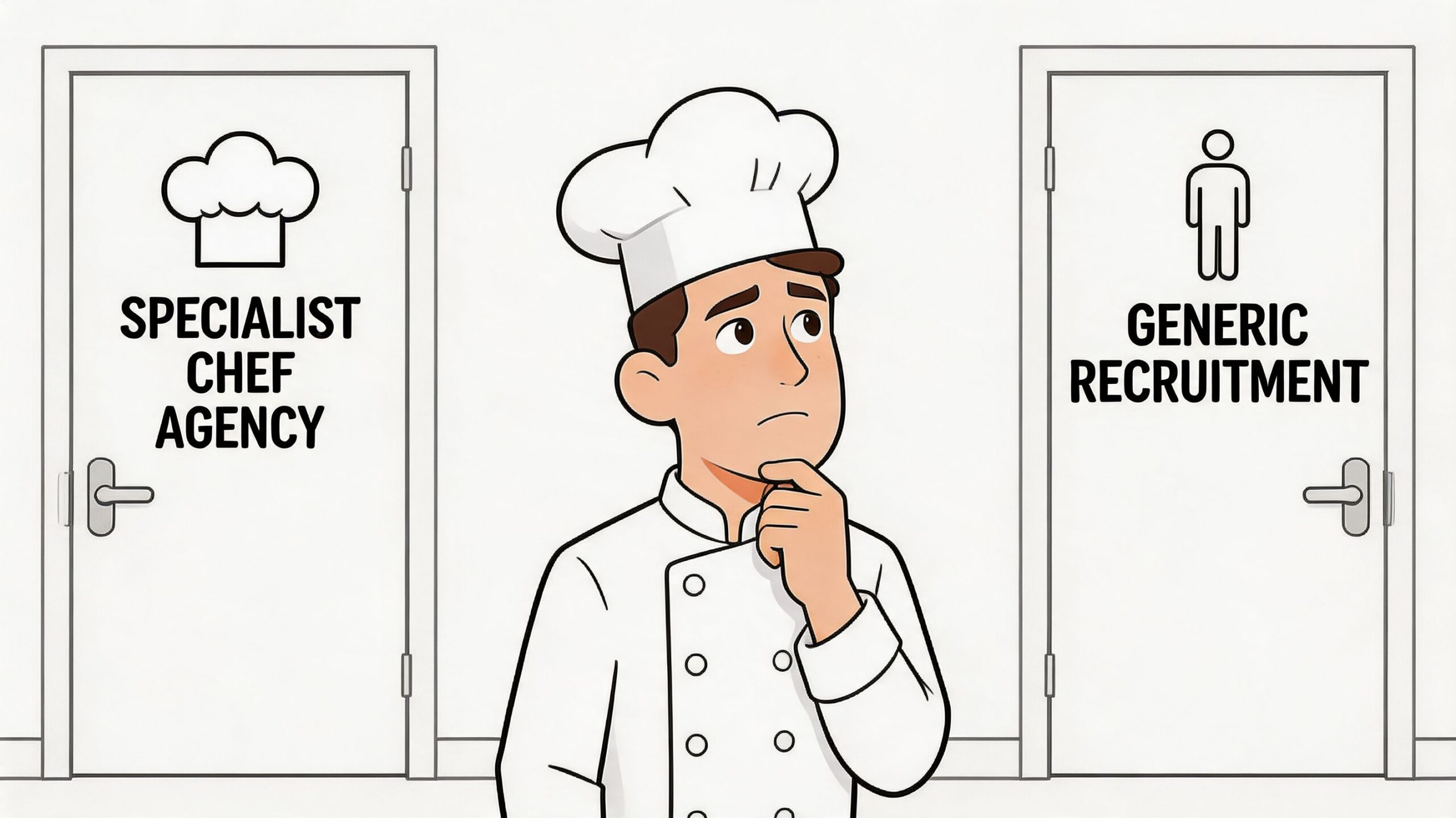
The problem is simple. Not every agency that says it can supply chefs understands kitchens. Some sell CVs. Some send bodies. Some have never run a service in their lives.
Specialist beats generalist
A generic recruiter often works from keywords and availability. A specialist chef agency should work from section pressure, service style, menu complexity and the actual pace of your kitchen.
That difference matters. A pub grill, a boutique hotel breakfast operation and a fresh-food city-centre restaurant all need different strengths. A CV that looks fine on paper can still fail on the stove if the person has been matched badly.
Here’s the practical divide:
| Agency type | What usually happens |
|---|---|
| General recruiter | Focuses on filling the vacancy fast, often with limited kitchen-specific screening |
| Chef-led specialist | Matches by level, section, venue style, and service demand |
| Low-cost middleman | Can look cheap at booking stage, then expensive when service suffers |
| Long-term staffing partner | Learns your site, standards and repeat pressure points over time |
For operators looking specifically for a specialist route, this kind of chef agency support in Wales is what you should benchmark against.
Questions worth asking before you book anyone
Don’t ask vague questions like “Do you have chefs available?” Ask the ones that expose process.
- How do you vet right to work status? If they answer vaguely, move on.
- Who checks skill level? You want to know whether someone kitchen-tested that chef, not just registered them.
- What venue types do they regularly cover? Gastro pubs, hotels, care, events and private households all require different instincts.
- How do they handle last-minute failure? A good agency has a replacement process, not an apology.
- Who supports the booking outside office hours? Kitchen problems rarely wait for Monday morning.
- What information do they need from you to match properly? If they don’t ask about menu, section or equipment, they’re guessing.
- Do they also support permanent recruitment and specialist placements? That matters if you want one partner for relief chefs, permanent chefs, yacht chefs, villa chefs and wider hospitality staffing support.
Practical rule: If an agency asks fewer questions than you do, they’re not vetting properly.
Signs you’re dealing with the wrong supplier
Some warning signs show up early:
- They push speed without detail. Fast is useful. Blind is expensive.
- They can’t describe the difference between a solid pub sous and a fine-dining CDP.
- They talk about “hospitality staff” as if chef cover is interchangeable with front of house temping.
- They dodge compliance questions.
- They don’t want feedback after the shift.
A dependable agency partner should feel like an extension of the kitchen office, not a call centre.
The Agency Chef Booking Process Demystified
Most bad bookings happen because the venue makes the request too late, too vaguely, or to too many agencies at once.
That creates chaos. Different rates. Mixed messages. Duplicate calls to the same chefs. No clarity on start time, section, kit, prep level or authority in the kitchen. Then service starts and everyone blames “agency chefs” when the actual problem was the booking process.
A professional booking process is straightforward.
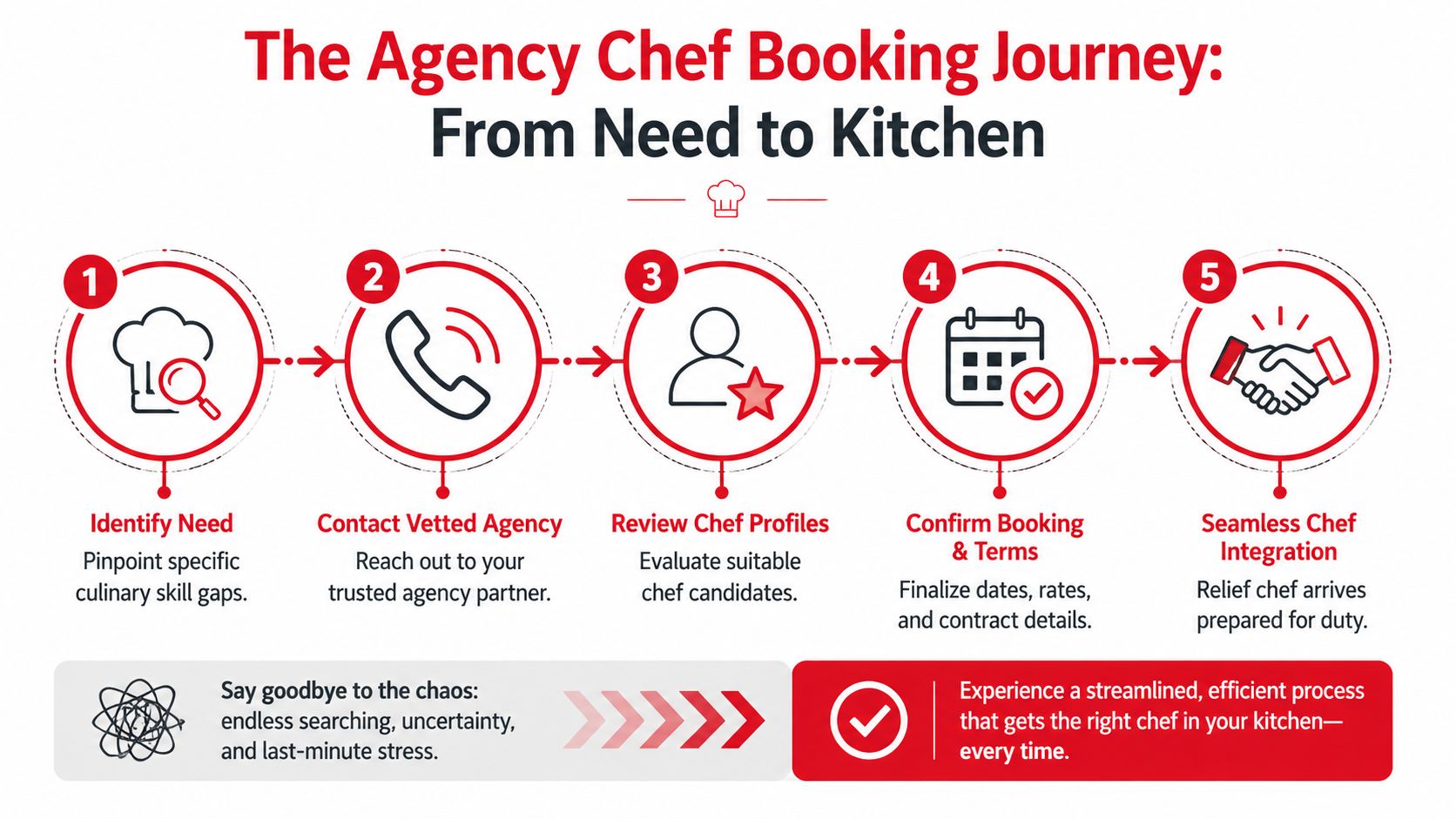
What a proper booking workflow looks like
A professional agency methodology includes rigorous vetting, AI-assisted matching and dispatch within 48 hours. Industry benchmarks show a 95% fulfilment rate within two hours and 85% faster onboarding than direct hires, based on agency chef workflow benchmarks.
In practical terms, the cleanest workflow looks like this:
Define the gap clearly
Don’t ask for “a chef”. Ask for a breakfast chef, pub sous, banqueting support, pastry cover, or a head chef who can steady a team.Give service-critical detail
Include shift times, menu style, expected covers, section ownership, allergens process and any awkward equipment issues.Review the proposed chef properly
Check whether the skill level matches the shift. A decent CV doesn’t automatically equal a good fit.Confirm terms early
Lock the rate, times, break arrangement, dress code and who signs off hours.Prepare the site before arrival
If your duty manager doesn’t know a relief chef is coming, the booking isn’t complete.
What 24 hour support should mean in practice
Plenty of agencies advertise support. The phrase only matters if somebody can act when the shift changes.
Good support means:
- You can amend details quickly
- Late arrivals get chased
- No-shows trigger action
- A live contact can speak to both chef and venue
- Shift extensions get approved properly
That’s the difference between support and voicemail.
The detail that improves outcomes
The best bookings are boring. Boring is good. It means everyone knows what’s happening.
Use this minimum handover every time:
| Booking detail | Why it matters |
|---|---|
| Role level | Stops under-qualified or over-qualified mismatches |
| Section | Gives the chef a clear lane from arrival |
| Menu style | Helps them judge pace and prep demands |
| Shift pattern | Reduces confusion around handover and close-down |
| Site contact | Prevents arrival delays and wandering around reception |
| Parking or access | Matters more than managers think in city-centre Cardiff sites |
If you ring three agencies and give each a different version of the brief, you haven’t created options. You’ve created confusion.
For venues that need this kind of structured cover regularly, dedicated relief chef support in Wales is far easier to manage than reinventing the process on every booking.
Understanding Agency Chef Rates and Contracts in Cardiff
The first question is always cost. Fair enough. Margin matters.
The wrong way to assess agency chefs is to compare the hourly rate to payroll in isolation. The right way is to compare the total cost of cover against the operational cost of being short, which usually includes lost sales, weaker reviews, staff fatigue, management time and avoidable waste.
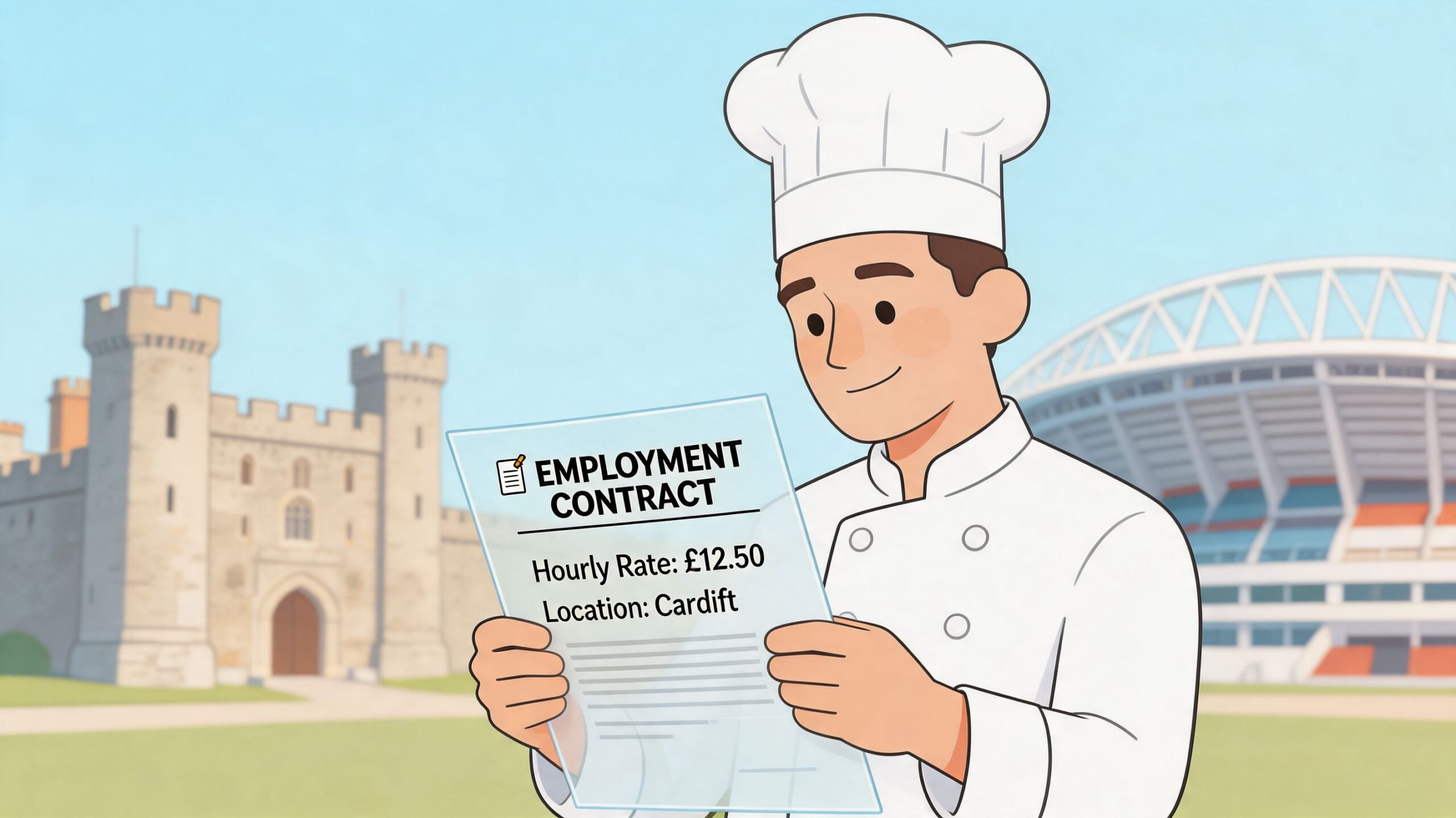
What Cardiff operators should expect to pay
Agency temp chef rates in Wales average £18 to £25 per hour, which can sit 20% above direct hire due to agency margins. General recruiters may add 15% to 20% markups, while transparent specialist models can offer better value, especially as the National Living Wage rise has made in-house labour harder to sustain, according to Cardiff catering recruitment cost benchmarks.
Role level also affects the number:
| Chef level | Typical benchmark rate |
|---|---|
| Commis | £10 to £12 per hour |
| CDP | £16 to £20 per hour |
| Sous Chef | £20 to £24 per hour |
| Head Chef | £24 to £30+ per hour |
Those role benchmarks come from the verified Cardiff agency chef market data provided for this article.
Where operators get stung
The cheapest quote often isn’t the cheapest shift.
Look for these issues before you agree terms:
- Hidden extras such as admin charges, travel uplifts or premium surcharges that weren’t clear at booking stage
- Loose cancellation wording that leaves you paying for a shift you no longer need
- Unclear replacement terms if the chef doesn’t fit or can’t complete the booking
- No distinction between ad hoc rates and longer bookings, even when you’re offering regular work
A good contract should tell you exactly what you’re buying and what happens if something goes wrong.
Ad hoc cover versus planned cover
Consequently, many kitchens leave money on the table.
Ad hoc day-rate booking has its place. If the head chef is off tomorrow and service must go ahead, you solve tomorrow first. But if you know weekends are exposed, holiday periods are coming, or one site in a group is always fragile, you need a repeatable agreement rather than panic buying labour every week.
That’s where flexible monthly support plans can make more sense for pubs, hotels and multi-site operators. They give you budget visibility, a known process, and a standing route for cover without tying you into old-school recruitment contracts that don’t suit modern trading patterns.
Cheap cover that damages service is expensive. Clear pricing with a reliable chef is usually the better commercial decision.
A second point worth remembering. Cost isn’t just hourly. It’s also whether the chef turns up prepared, fits the section, and needs minimal correction through service.
How to Onboard a Relief Chef for a Seamless Shift
A strong booking can still fail in the first thirty minutes if the site handover is poor.
Experienced managers distinguish themselves. They don’t throw a relief chef into service and hope they work it out. They give a tight briefing, show the section properly, and make clear decisions about who owns what.
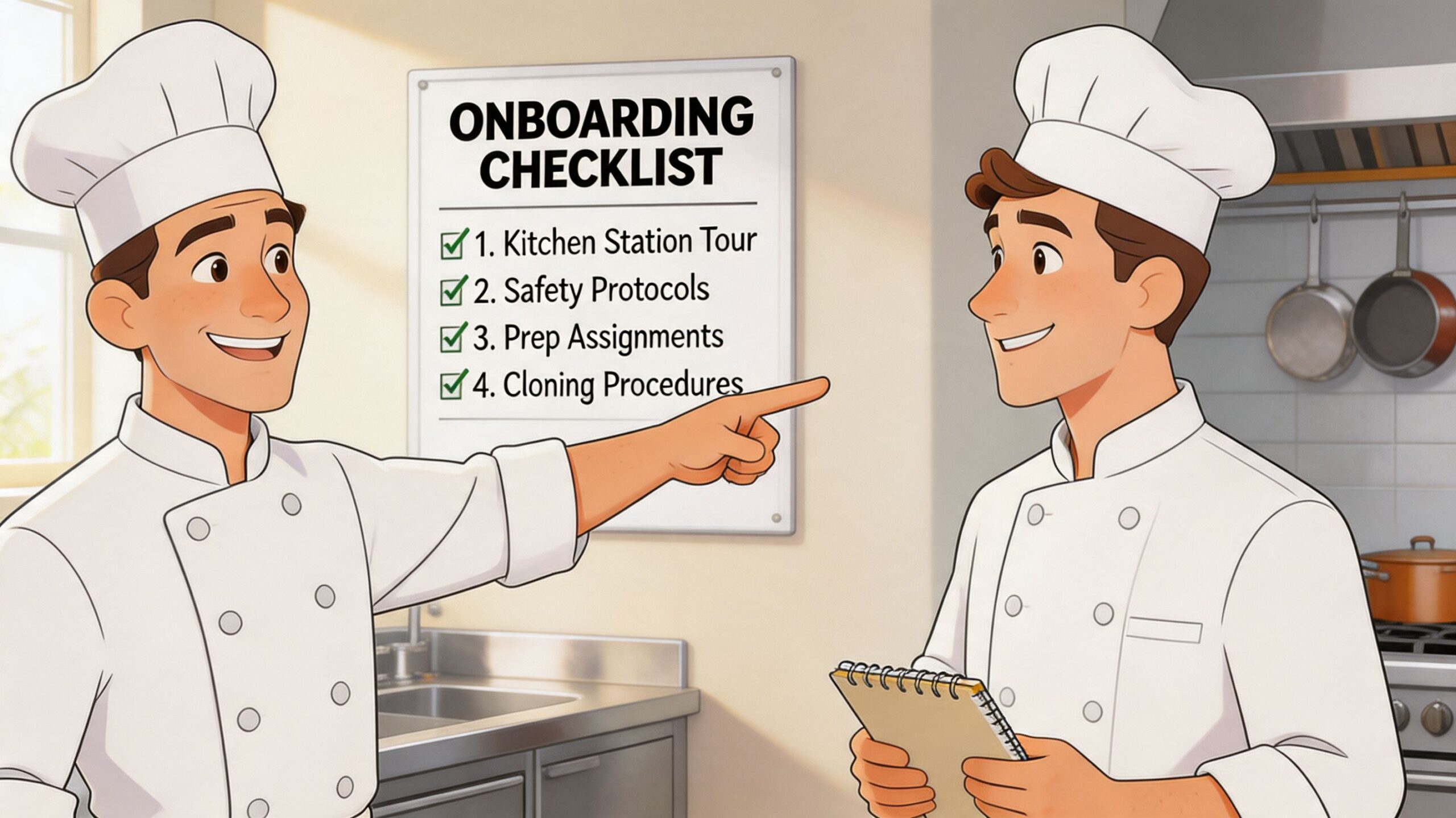
Structured pre-shift briefings covering kitchen layout and equipment deliver 90% first-day productivity, and post-shift debriefs help track standards such as order accuracy and waste, based on agency chef productivity benchmarks.
The first fifteen minutes
When the chef arrives, cover these points before they touch a pan:
Introduce the key people
Head chef, duty manager, KP contact, and the person calling tickets if that’s not obvious.Show the physical layout
Dry store, walk-in, freezer, pass, wash-up, allergen file, cleaning station, bins, and fire exits.Explain the section boundaries
Tell them exactly what they own and what sits with someone else.Cover critical equipment
Don’t assume your combi, extraction switches or fryer timers are self-explanatory.State service priorities
Fastest-selling dishes, known pressure points, any functions, and any menu items that are off.
The briefing that actually helps
The best pre-shift brief is short and specific. Not a lecture.
Use something like this:
| Topic | What to say |
|---|---|
| Service style | “Fresh food pub. Grill gets hit hard from seven.” |
| Prep status | “Most mise is done. Sauces need topping up.” |
| Allergens | “Allergen folder lives at pass. Manager signs off any query.” |
| Stock pressure | “We’re tight on salmon and one dessert.” |
| Standards | “Plate to spec. Ask if unsure. Don’t guess.” |
That takes minutes and saves a lot of noise later.
What not to do
Venues create avoidable problems when they:
- Leave the chef waiting in reception
- Assume they’ll “just figure it out”
- Change the brief once they arrive
- Dump them on the weakest section without context
- Fail to tell the brigade they’re coming
- Skip the close-down and handover expectations
A relief chef should walk into a kitchen with clarity, not suspicion.
Use the debrief to improve the next shift
A quick debrief after service sharpens the next booking. Keep it practical.
Ask:
- What section worked well?
- Where did they lose time?
- Was prep or labelling clear enough?
- Were there equipment or layout issues?
- Would you book that chef back for the same role?
That final point matters. Reliable temporary staffing gets easier when you build a shortlist of chefs who already know your site, your standards and your service rhythm.
From Crisis Cover to Strategic Growth Partner
The strongest use of agency chefs Cardiff isn’t emergency cover. It’s controlled flexibility.
Once you’ve sorted the basics properly, agency support stops being a distress purchase and becomes part of how the business runs. That changes more than the rota. It changes how you plan holidays, how you handle busy periods, and how much pressure your permanent team has to absorb.
What a good staffing partner lets you do
At operational level, proper chef cover helps you:
- Protect service during sickness and short-notice absence
- Take bookings with more confidence during peak trading
- Let permanent chefs take leave without guilt or chaos
- Test whether a venue needs another permanent hire
- Support openings, refurb periods, relaunches and menu changes
- Bridge into permanent recruitment when the right person appears
That matters across pubs, boutique hotels, restaurants and more specialist placements. The same principle applies whether you need temporary chefs for a city-centre kitchen, permanent chef recruitment for a new opening, or wider staffing support for yachts, villas and private households.
Stability is worth more than scramble
Most staffing problems are expensive because they spread. One uncovered shift becomes a weak weekend. One weak weekend becomes staff frustration. Then your best chef starts looking elsewhere because they’re tired of carrying the rota.
A smart agency relationship interrupts that cycle. It gives the business breathing room. It helps the head chef manage standards. It gives operations a way to stabilise labour without making permanent hires in a rush.
It also gives you an outside view of your kitchen. If the same role keeps needing cover, or every temporary chef struggles with the same section, that’s often a systems issue inside the site, not a staffing issue outside it.
The best time to build an agency relationship is before you need it urgently.
Cardiff operators who get this right don’t rely on luck. They use a trusted staffing partner to keep standards up, protect revenue and stop every absence turning into a management crisis.
If your kitchen needs dependable cover, permanent chef recruitment, or specialist support for pubs, hotels, restaurants, yachts and private households, speak to Relief Chefs UK. They’ve been established since 2013, are run by chefs rather than recruiters, and provide vetted relief chefs, temporary chefs and long-term staffing support across Cardiff, Wales, Bristol, Devon, Dorset, Berkshire, Windsor, Reading, Slough and the wider UK. If you want a staffing partner that understands service pressure, commercial reality and how to keep a kitchen stable, get in touch now.
Call the team.
Office 01392 715474 · info@reliefchefs.co.uk