
Seasonal and Temporary Jobs: The UK Hospitality Guide
1 September 2026
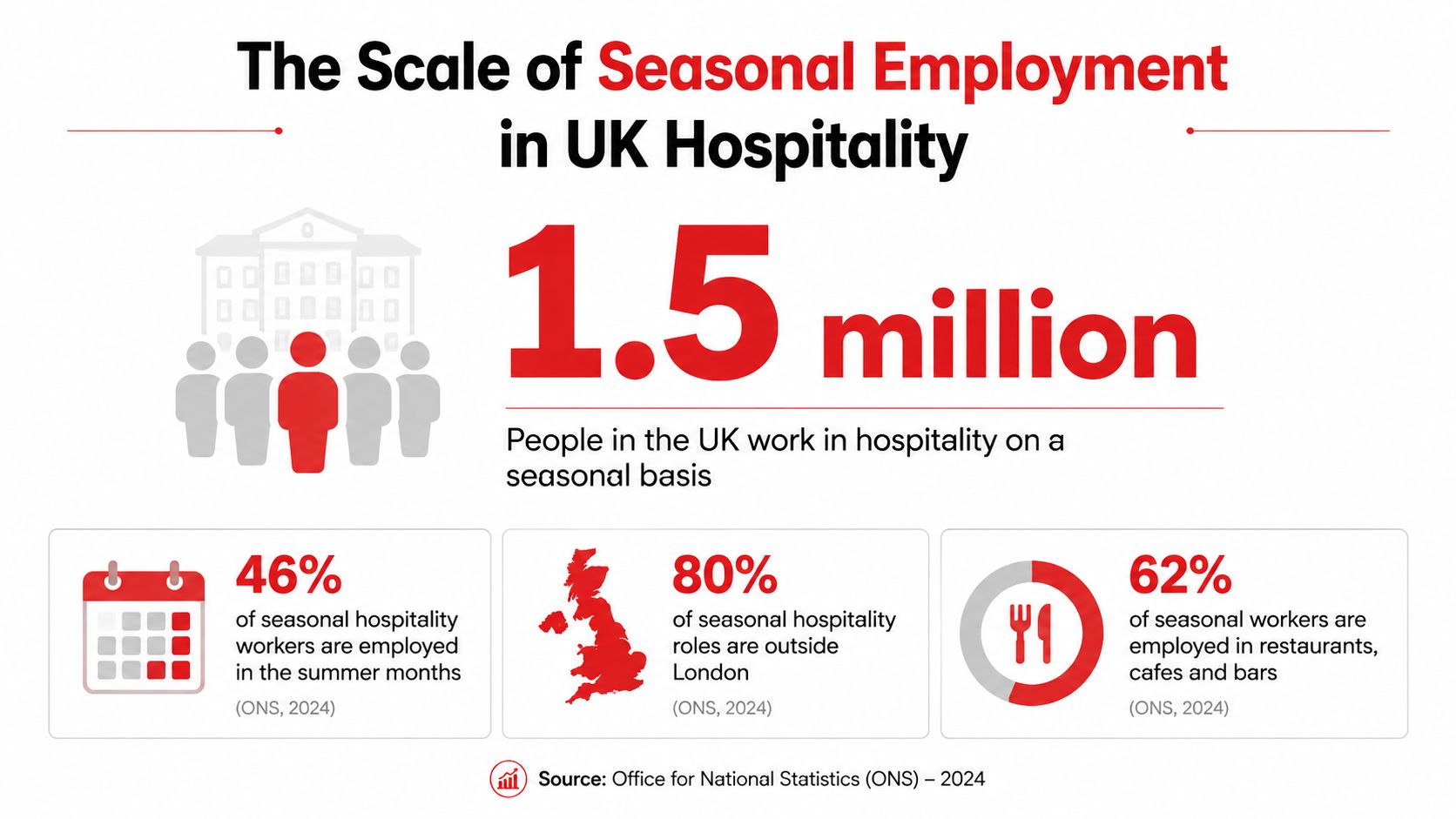
Temporary workers made up 5.2% of all UK employees in the July to September 2024 quarter, with about 1.50 million people working temporarily. That makes seasonal and temporary jobs a structural part of hospitality, not a niche solution reserved for emergencies.
The pressure is familiar. A chef calls in sick before Friday service, the booking sheet is full, and the permanent team is already tired from covering earlier gaps. In Devon, a summer surge can expose a thin kitchen rota within days. In Windsor, Berkshire, Bristol or Wales, weddings, events and visitor demand can create the same problem at different points in the calendar.
The wrong response is to accept the first casual worker who answers a message. Unchecked experience, unclear employment arrangements and unreliable attendance can cost more than the original staffing gap. The right approach treats temporary staffing as operational risk management, protecting food quality, service speed, compliance and the permanent team.
The Scale of Seasonal Employment in UK Hospitality
Temporary employment is already a mainstream feature of the UK labour market. In the July to September 2024 quarter, about 1.50 million temporary workers represented 5.2% of all employees, according to figures reported from the UK labour-market series. The same data identified 352,453 people who were temporary because they couldn't find a permanent job and 441,626 who didn't want a permanent job, showing that temporary work reflects both employer demand and worker preference. These figures are detailed in UK temporary workforce labour-market reporting.
Hospitality feels this structural demand sharply because kitchens can't store unused capacity for later. A vacant chef position affects prep, ordering, section coverage and the pace of every service. Even when total vacancies fall, the need for flexible cover remains when trading patterns change or permanent recruitment takes longer than expected.
Industry research using ONS Vacancy Survey data recorded 109,000 accommodation and food service vacancies between November 2023 and January 2024, down from 146,000 in the same period two years earlier. The sector still had 121,000 unfilled roles between July and September 2023, as shown in the Institute of Hospitality market intelligence report.
Why the numbers matter to operators
These figures don't mean every venue needs a permanent agency relationship. They do show why seasonal hiring shouldn't be treated as a sign of poor management. A well-planned relief rota can protect a core team from excessive hours, maintain menu consistency and give a general manager time to recruit properly.
For jobseekers, holiday chef opportunities can provide a route into short-term hospitality work. For businesses, the important question is whether each temporary chef arrives with the skills, references, right-to-work documentation and attitude needed for the specific kitchen.
Practical rule: Use temporary cover to protect your operating model, not to postpone every recruitment decision.
Defining the Difference Between Seasonal and Temporary Roles
The terms often overlap, but they describe different planning problems. A seasonal role follows a predictable trading period, such as summer tourism in Dorset, Christmas events in Windsor or holiday demand in Wales. A temporary role usually responds to a defined short-term gap, including sickness, a resignation, refurbishment cover or a sudden increase in bookings.
The distinction affects how far ahead you recruit, what induction you provide and how you measure success. A seasonal chef may need to commit across a known busy period, while a temporary relief chef might need to step into a kitchen with very little notice.
| Feature | Seasonal Jobs | Temporary Jobs |
|---|---|---|
| Duration | Usually linked to a recurring trading period or event calendar | Usually linked to a specific short-term vacancy or operational gap |
| Predictability | Often forecastable through previous demand patterns, bookings and local events | May be planned, but can also follow sickness, resignation or unexpected demand |
| Typical hospitality use | Summer resorts, Christmas functions, wedding seasons and festival trading | Short-notice sickness, chef shortages, holiday cover and recruitment transitions |
| Best planning method | Build a forward rota and recruit before the peak | Keep access to a reliable relief bench and confirm skills quickly |
Vacancy pressure makes the choice more important. Accommodation and food service vacancies were reported at 109,000 between November 2023 and January 2024, compared with 146,000 in the same period two years earlier, while 121,000 roles remained unfilled between July and September 2023. The sector vacancy analysis from the Institute of Hospitality shows why a venue can face a serious staffing problem even when the wider market appears to be cooling.
Match the solution to the failure point
If you know your restaurant will trade heavily through summer, seasonal recruitment gives you time to assess availability, plan accommodation where relevant and train staff before the first major weekend. If your sous chef has just gone off sick, advertising a seasonal role isn't a solution. You need a temporary chef who can work the required section and integrate immediately.
A hotel in Reading may need seasonal reinforcement for a wedding programme, while a pub near Slough may need temporary cover for a single difficult week. A boutique hotel in Bristol could need both, but the two requirements should still be managed separately.
Legal Frameworks and Pay Considerations for UK Venues
A chef calling in sick during a packed service exposes more than a rota gap. The venue still has to protect food quality, service speed, employment compliance and the permanent team. Unvetted casual labour can create legal exposure and unexpected cost, so establish who employs the chef, who supervises the work and which business handles checks, records and workplace arrangements.
The Agency Workers Regulations 2010 define a temporary work agency as a person or business supplying individuals to work temporarily under a hirer's supervision and direction. The regulations came into force on 1 October 2011 in England, Wales and Scotland. That distinction matters when an agency-supplied chef follows the venue's day-to-day instructions rather than working as an independent contractor. The framework is summarised in this UK hospitality staffing and employment-law guide.
The word “casual” does not remove employer responsibilities. Before a chef enters the kitchen, confirm the engagement route, required documentation and the practical working relationship. Put pay, working time, rest arrangements, health and safety, payroll treatment and insurance in writing. A rushed verbal agreement can become expensive when a shift runs over, an injury occurs or the worker's status is later questioned.
Right to work and immigration changes
Right-to-work checks require particular care during a staffing emergency. Immigration changes have also narrowed some recruitment routes. From 22 July 2025, most hospitality roles could no longer be sponsored for new Skilled Worker recruits where the Certificate of Sponsorship was assigned for the first time on or after that date. This affects part of the temporary-to-permanent kitchen recruitment pipeline, as explained in the hospitality sponsorship update.
Domestic talent, properly checked agency workers and permanent recruitment pipelines each have a place. For chefs, sous chefs and kitchen managers, the practical test is whether the person can meet UK service expectations quickly and work safely within the venue's systems.
What compliant hiring looks like
A sensible venue process includes:
- Role clarity: State the section, menu style, shift pattern, start date and responsibilities.
- Document checks: Confirm right-to-work status before the assignment begins, not after the first service.
- Pay transparency: Agree the rate and relevant expenses in writing, without last-minute assumptions.
- Supervision: Name the service manager and the person handling concerns or incidents.
- Records: Organise assignment details, timesheets and required employment documentation.
A specialist staffing partner can reduce administrative risk by supplying workers with established checks, records and assignment processes. The venue still needs to brief the chef properly, supervise the shift and provide a safe, workable kitchen.
For a practical review of responsibilities, see employment law for temporary staff.
Practical Rostering and Planning for Peak Seasons
The strongest seasonal staffing plans start before the rota becomes a crisis. Review last year's bookings, event dates, opening hours, menu complexity and known leave periods. Then identify where the kitchen becomes fragile. That might be breakfast at a hotel in Wales, a grill section in a Devon restaurant or a pastry function supporting weddings across Berkshire.
Don't plan only for the average shift. Plan for the shift that fails.

Build a cover plan in practical layers
Start with demand. Mark known peaks, event dates, school-holiday pressure and periods when local accommodation fills. A coastal venue in Dorset may need a different plan from a city-centre restaurant in Bristol, where demand can be less seasonal but more continuous.
Map the kitchen. List the minimum safe staffing for each service, then separate essential roles from desirable ones. If the operation can run with one fewer commis but not without a competent grill chef, your relief budget should reflect that reality.
Create a relief bench. Keep a current list of chefs who match your food style, section requirements and location. A bench isn't just a collection of phone numbers. Record availability, transport constraints, previous feedback and the level of supervision each chef needs.
Protect rest and retention. Temporary cover should prevent permanent staff from carrying every gap. If the same chef repeatedly works extra shifts, fatigue will eventually affect pace, judgement and retention.
Use clear triggers
Set internal triggers for action. For example, a sickness call before breakfast, a confirmed large booking or an unexpected resignation should each have a named decision-maker and a defined escalation route. The head chef shouldn't be left trying to source a replacement while also running service.
A contingency plan works only when the person on duty knows who to call, what information to provide and what decision can be made without waiting for approval.
Send a concise brief with the menu, service style, kitchen equipment, dress expectations, parking or transport information and the shift objective. A temporary chef can work effectively much faster when the venue removes avoidable uncertainty.
When to Use a Staffing Partner vs. In-House Hiring
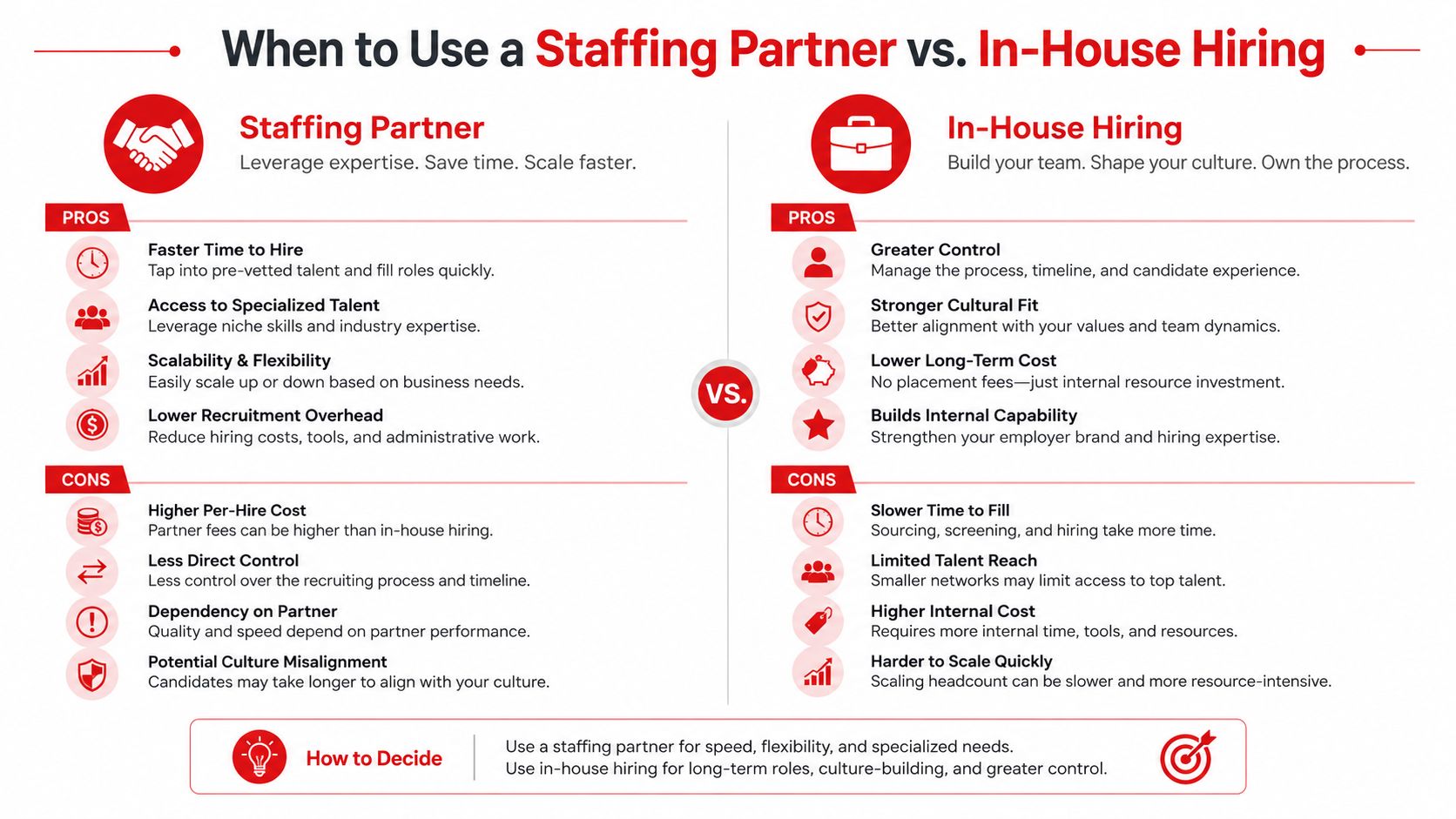
In-house hiring makes sense when the role is permanent, the venue has enough lead time and an experienced manager can handle advertising, interviews, references, right-to-work checks and onboarding. It also makes sense when the business is building a long-term kitchen culture and needs to assess how a candidate fits beyond immediate service ability.
It doesn't make sense as the only response to a chef calling in sick on the day of service. Recruitment takes time, and a rushed hire can create a second problem through poor performance, weak compliance or early departure.
| Situation | In-house hiring | Specialist staffing partner |
|---|---|---|
| Short-notice sickness | Usually too slow to protect service | Designed for rapid relief cover |
| Known seasonal peak | Useful for building a longer-term team | Useful for planned reinforcement |
| Permanent vacancy | Appropriate for culture and continuity | Helpful when the partner also provides permanent recruitment |
| Unfamiliar candidate | Venue carries the full checking burden | Partner can provide a structured vetting process |
| Multiple locations | Requires internal coordination | One partner can support a wider staffing pipeline |
The hidden cost of casual labour isn't only the hourly rate. It includes missed prep, remade dishes, delayed service, manager time spent firefighting and the damage caused when a guest receives inconsistent food. A specialist partner should be judged on reliability, clarity, vetting and how well the chef matches the actual brief, not on a headline price alone.
What a specialist partner should provide
Relief Chefs UK is a nationwide chef recruitment agency established in 2013. It uses 60+ years of combined hospitality experience, lets venues request cover through a short form or phone, and has an experienced recruitment team available 24/7 to help find the right cover, subject to availability. Its service includes relief chefs, temporary chefs, permanent chef recruitment, yacht chefs, villa chefs and wider hospitality staffing support.
That model is relevant to an independent pub in Devon, a hotel group in Berkshire or a private operation requiring a yacht chef. It gives the venue a route to planned cover and emergency support without treating every staffing issue as an isolated transaction.
A partner isn't automatically the right choice. Ask who checks the chef, how substitutions are handled, what happens if the match fails and whether pricing is transparent. For venues comparing options, temporary staffing agencies should be assessed against the cost of instability, not just the initial booking.
The practical decision is simple. Hire in-house when you're solving a permanent capability need. Use vetted temporary support when you're protecting a live rota, a peak period or a service that cannot safely absorb another gap.
Your Action Plan for a Stress-Free Peak Season
A Friday booking surge, a chef calling in sick and two uncovered sections can turn a manageable service into an expensive failure. The best protection is a staffing decision made before the rota is under pressure, with clear information, ownership and a dependable route to cover.
Start with the next pressure point
Review the next trading period and mark the shifts most likely to fail. Include holidays, events, planned leave, hard-to-cover sections and permanent vacancies already affecting the rota. A Windsor hotel hosting functions needs a different cover profile from a Reading restaurant running a regular evening service.
Write a short staffing brief covering the role, dates, hours, section, menu, expected covers, equipment and any accommodation or transport constraints. Clear detail reduces unsuitable matches, rushed substitutions and the cost of bringing someone into a service they cannot support.
Make the decision before the emergency
Use in-house recruitment for permanent roles that require long-term cultural and technical fit. Use temporary chefs for sickness, holiday cover, recruitment transitions and seasonal reinforcement. If the same temporary requirement keeps returning, review whether permanent chef recruitment should sit alongside relief support.
Check the legal basics before the assignment begins. Confirm the engagement route, right-to-work documentation, pay arrangements, supervision and safety responsibilities. Casual labour that has not been properly checked can create payroll, compliance and service risks at the same time.
Keep the kitchen stable during service
Give the incoming chef a practical handover. Explain the pass, prep priorities, allergens, ordering system, section boundaries and who makes final decisions. Assign one experienced team member as the point of contact, especially when the chef is working with an unfamiliar menu or equipment.
After service, record what worked and what did not. Notes on section performance, communication and reliability improve future matching and help managers decide whether temporary cover should become a longer placement.
A trusted staffing partner with vetted chefs can give venues a reliable route to cover during peak periods, reducing the risk of last-minute gaps and unsuitable placements. Relief Chefs UK provides staffing support for independent pubs, restaurants, private households, yachts and boutique hotels across the UK.
Contact the team early when a peak period is visible, and immediately when sickness or resignation threatens the rota. Good temporary staffing supports sound management, protects service standards and can prevent one missing chef from destabilising the whole kitchen.
Relief Chefs UK provides vetted relief chefs, temporary chefs, permanent recruitment, yacht chefs, villa chefs and hospitality staffing support for venues across the UK. If seasonal demand, short-notice sickness or a persistent chef shortage is putting service at risk, visit Relief Chefs UK to discuss the cover your operation needs.
Call the team.
Office 01392 715474 · info@reliefchefs.co.uk