
Hire Temporary chefs Devon: Secure Your Kitchen
13 April 2026

A chef rings in sick at 11am. Lunch prep is half done. The bookings board is full. You’re in Devon, so the problem isn’t just replacing a body. It’s replacing the right chef, fast enough to protect service, standards, and your team.
That’s why hiring temporary chefs in Devon has to be treated as an operations decision, not a last-minute panic buy. In this market, a weak temp hire can do as much damage as no hire at all. Rural travel, seasonal trade, accommodation pressure, mixed venue types, and sharp swings in demand make Devon harder than most counties to staff properly.
If you run a pub near Dartmoor, a boutique hotel on the coast, a restaurant in Exeter, or a private kitchen on a yacht, the brief is the same. You need someone who can walk in, understand the kitchen quickly, and keep the business moving without drama.
Your Guide to Finding Temporary Chefs in Devon
A chef drops out on a busy Saturday in Salcombe, Torquay, or Dartmouth and the problem spreads fast. Tickets back up. Front of house starts apologising. Your senior chef gets dragged off prep to firefight service, and standards slip within the hour.

Devon makes this harder than many operators expect. The county combines seasonal peaks, long travel times, expensive coastal accommodation, rural sites, city restaurants, wedding venues, hotels, pubs, and private kitchens. A temp chef who looks fine on a CV can still be the wrong booking if they cannot reach the site reliably, settle into the team quickly, or handle your service style.
That is why the true cost is never just the hourly rate.
A weak placement creates waste, slows the pass, increases walkouts, burns out your permanent team, and puts guest feedback at risk. A good placement protects service, keeps the brigade steady, and buys you time to fix the wider staffing gap properly. That is the standard you should hire against.
Why Devon is a tougher staffing market
Devon is a split market, and operators who treat it like one single labour pool usually get caught out.
An Exeter restaurant may need a polished service chef who can step into a fast, structured kitchen. A coastal hotel may need someone who can cover breakfast, banqueting, and dinner across a long weekend. A remote pub may need a chef who can produce consistently without much supervision and get to site for every shift.
The risk sits in the gaps between those jobs:
- Travel limits the candidate pool for rural and seasonal venues.
- Summer demand hits multiple towns at once, so decent cover gets booked early.
- Accommodation constraints rule out otherwise suitable chefs.
- Different kitchen standards mean experience in one venue type does not automatically transfer to another.
If your only hiring question is who can start tomorrow, you are already behind.
What sensible operators do differently
Good operators treat temporary chef cover as part of kitchen stability, not emergency admin. They know which shifts carry the most financial risk, which roles need leadership rather than labour, and what level of chef protects service.
They also use a supplier that understands Devon properly. Relief Chefs UK helps venues secure chefs who match the site, the standard, and the practical realities of getting the job done. That matters more than filling a name into a rota box.
The target is simple: keep service stable, protect the team, and stop one staffing gap turning into a week of operational damage.
First Step Define What You Need
Friday lunch is covered. Saturday dinner is not. Your Sous Chef is off, your junior team is already stretched, and the wrong temporary hire will cost you more than the shift fee. It will hit ticket times, food quality, team morale, and guest spend. That is why the brief comes first.
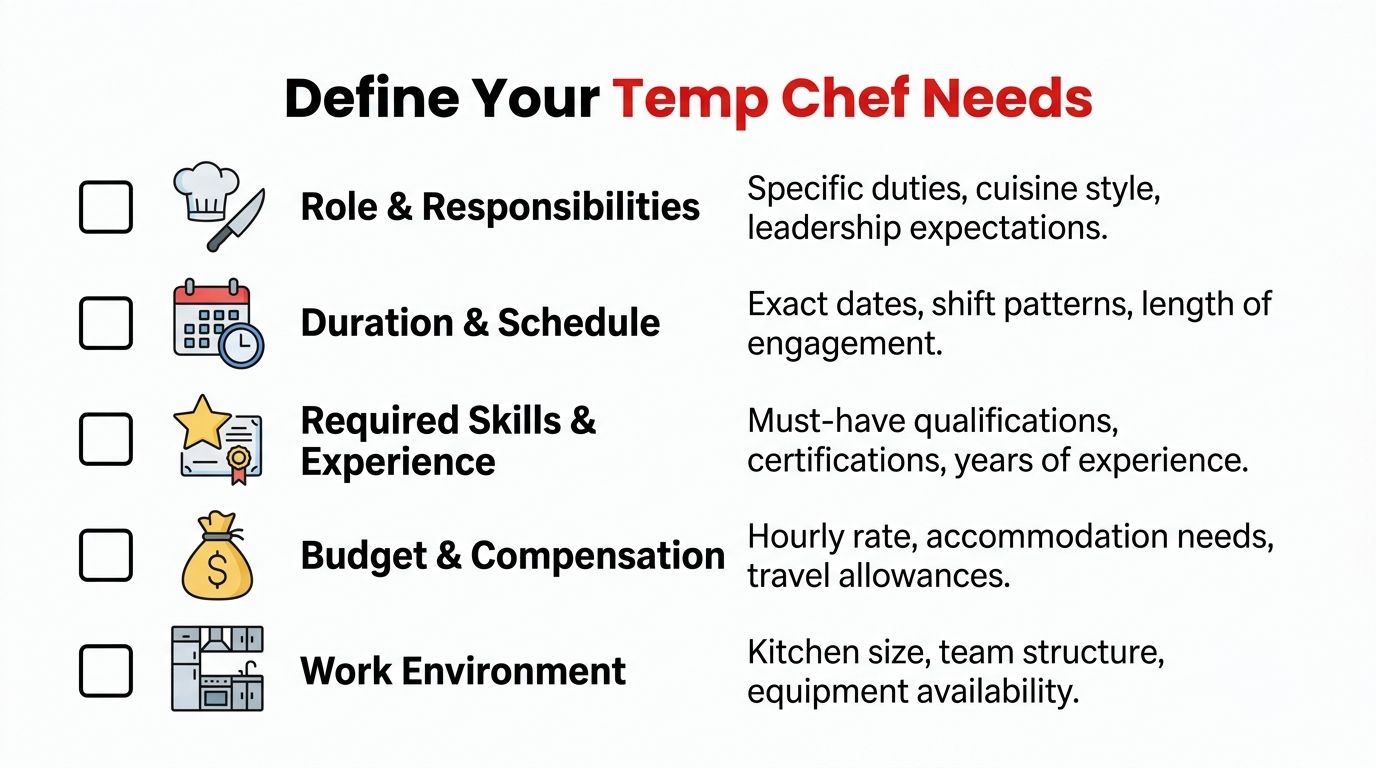
Most failed temporary placements start with lazy wording. “Need a temp chef urgently” is not a brief. It is a warning sign. You need to define the operational problem, the level of responsibility, and the conditions on site before you ask anyone to supply cover.
Start with the gap, not the title
Job titles blur the core issue. Service pressure does not.
Ask what the kitchen will lose if that shift is not covered properly. Do you need someone to hold a section and keep output clean, or someone senior enough to control prep, direct the team, and steady the pass? A Chef de Partie and a Sous Chef are priced differently because they protect different parts of the operation.
Get specific:
- Which part of service is at risk: Breakfast, prep, pastry, grill, sauce, banqueting, closing?
- What decisions will they need to make: Follow a list, run a section, lead service, support ordering?
- What standard must stay intact: Busy pub trade, hotel restaurant, functions, premium dining, private catering?
- How fast must they be effective: Brief handover, short-notice start, or full service from the moment they walk in?
Operators under pressure often get this wrong in two ways. They overbook seniority and pay for leadership they do not need. Or they book cheap cover for a role that needs judgement, pace, and authority.
Define constraints early
Devon punishes vague briefs because the practical barriers are harder than they look. Distance between towns, weak public transport, split shifts, and staff housing pressure all affect who can take the job and arrive fit to work.
If accommodation is available, put it in the first conversation. If it is not, be honest about travel time, parking, and finish times. A chef who can cook the menu is no use if the logistics make the job unworkable.
This matters just as much as pay rate. A lower hourly cost does not protect service if the chef turns the role down at the last minute, arrives late, or leaves after one punishing weekend because the site reality was badly explained.
Build a brief a specialist can act on
Good suppliers fill roles faster when the brief is sharp. A specialist hospitality recruiter can only match properly if you give them the operational facts. That is why many venues use specialist employment agencies for chefs rather than sending out a generic request and hoping for the best.
Write down the points that affect service, not just payroll:
- Dates and shift pattern: Start date, finish date, straights or splits, breakfast start, late close.
- Venue type and menu style: Fresh food pub, branded hotel, Rosette kitchen, events, private household.
- Required skills: Allergen control, ordering, stock management, pastry, banqueting, pass experience.
- Working conditions: Team size, covers, kit, prep support, whether they will work alone at any point.
- Site logistics: Parking, live-in room, staff food, uniform, clocking in, payroll method.
One rule is enough here. If the chef learns key details in the car park, you briefed badly.
Sample chef brief
Use plain language:
Role: Temporary Sous Chef
Venue: Coastal boutique hotel in Devon
Dates: Friday to Monday, immediate start
Shift pattern: Breakfast prep, lunch support, evening service
Main need: Run the pass during dinner and support a junior team
Food style: Fresh seasonal British menu, high-volume weekend trade
Must have: Confident with allergens, ordering support, calm under pressure, able to lead service
Useful extra: Experience in hotel kitchens and functions
Site details: Limited public transport, parking available, live-in room offered
Handover available: Yes, with Head Chef and FOH manager on arrival
That brief does two jobs. It helps the right chef say yes, and it helps the wrong chef rule themselves out. In Devon, that saves time, avoids expensive mismatches, and gives your kitchen a better chance of staying stable through the shifts that matter.
How to Source and Vet Temporary Chefs in Devon
Most venues use one of three routes. They ask around, they post in groups, or they call an agency. These are not equal options.

The freelancer gamble
The freelance route looks quick because it feels informal. A mate knows a chef. Someone messages saying they’re available. A CV lands in your inbox with a few nice venues on it.
The problem is that availability isn’t the same as reliability.
You still need to know:
- Right to work status
- Food hygiene and allergen awareness
- Recent references
- Whether they’ve done the level of work claimed
- Who carries the risk if they don’t turn up
That last point matters. UK hospitality data cited in this relief chef role overview indicates freelancer no-show rates can be significantly higher than those for professional agencies. If your kitchen is already under pressure, that gap is operationally serious.
A cheap hourly rate means nothing if lunch service collapses.
Why generalist agencies often miss the mark
A broad temp agency may be fine for basic labour supply. Kitchens are different.
A proper chef brief isn’t just about “experience in catering”. You need somebody who understands sections, can read a prep list properly, moves with service pace, respects allergen controls, and knows when to ask questions instead of bluffing.
A recruiter who’s never run a kitchen often can’t judge that. You end up with CV matching instead of kitchen matching.
What specialist vetting should look like
If you’re using an agency, this is the minimum standard.
Vetting essentials
- Right to work checked: Don’t leave compliance to chance.
- Food safety documents verified: Basic hygiene isn’t enough if the kitchen is complex.
- Allergen awareness confirmed: Especially in hotels, events, and mixed menus.
- References taken from relevant kitchens: Not generic character references.
- Role fit assessed properly: A breakfast chef isn’t automatically a dinner service chef.
A temp chef should reduce risk the moment they walk in. If they create new risk, the sourcing process failed.
One specialist option in this category is chef employment agency support, where the focus is chef-specific vetting rather than generic hospitality recruitment.
A simple comparison
| Route | Speed | Vetting control | Reliability | Best use |
|---|---|---|---|---|
| Personal network | Variable | Low unless you do it yourself | Unpredictable | Last resort if you know the chef well |
| Social posts and groups | Fast to post, slow to filter | Low | Mixed | Non-critical cover only |
| General temp agency | Moderate | Mixed | Mixed | Basic staffing gaps |
| Specialist chef agency | Faster once briefed | Higher | More dependable | Service-critical chef cover |
The point isn’t that freelancers are always poor. Some are excellent. The point is that your business carries more risk when the checks are loose and the fallback plan is weak.
Costs Timelines and Managing Devon's Peak Season
Friday lunch is full. Saturday dinner is booked out. Your Sous Chef has gone off sick, your agency option can only send a breakfast cook, and your Head Chef is already rewriting the menu to protect service.
That is how peak season staffing failure shows up in Devon. Not as a line on a rota. As slower tickets, reduced covers, stressed managers, and revenue you never get back.
What you are buying
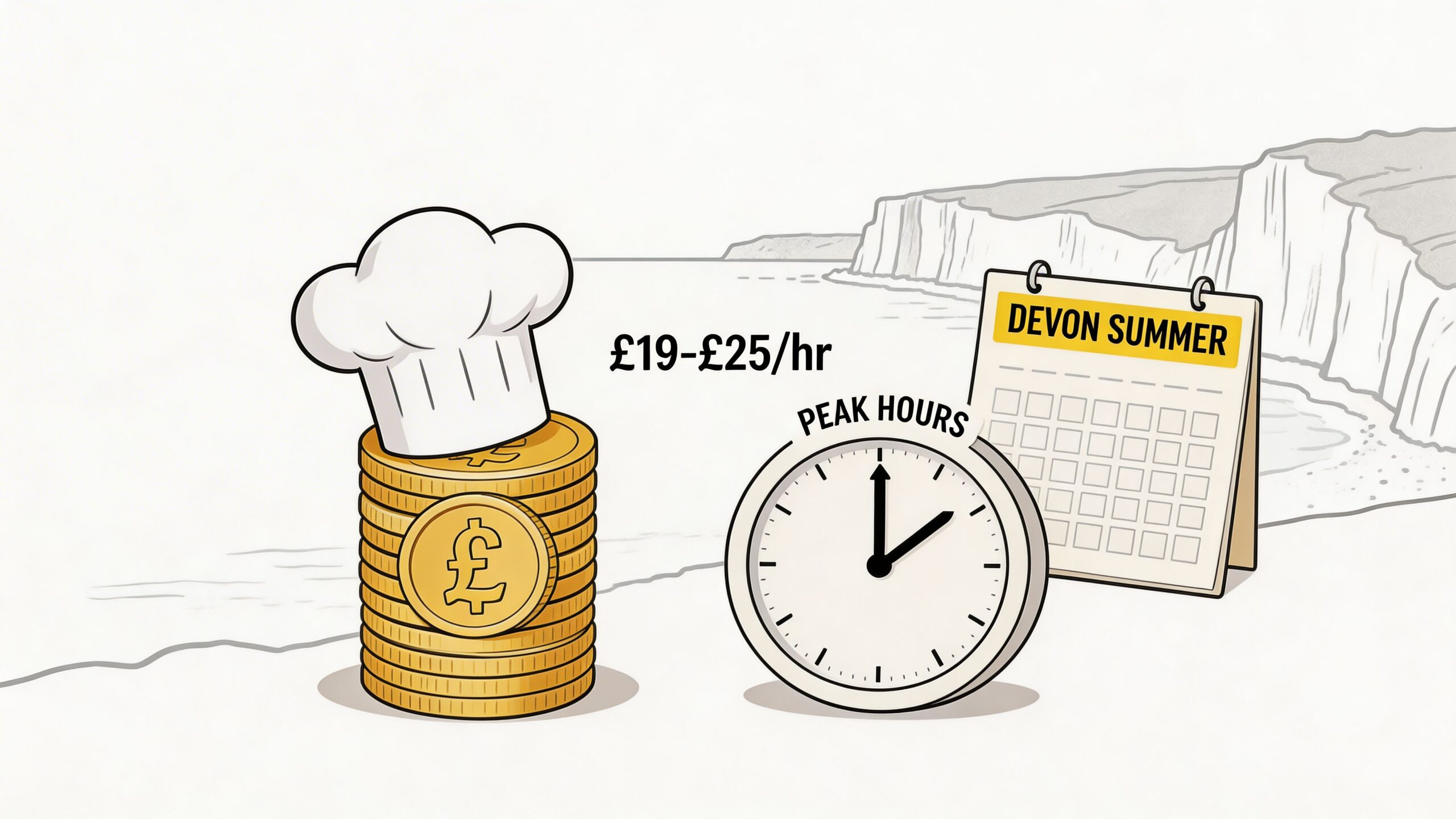
Hourly rate matters, but it is not the main number. The true cost sits in whether the chef arrives, fits the section, and holds service together under pressure.
A proper temporary chef booking usually covers:
- Role matching for the level you need
- Payroll administration
- Insurance cover
- Replacement support if the booking changes
- Less manager time wasted on chasing
- Lower risk of a no-show on a key trading day
If you want to compare shift cost against wider employment overhead, review this breakdown of the cost of employing staff in hospitality.
Ask the harder question: what does one failed Saturday in August cost your business once refunds, wasted stock, staff fatigue, and lost repeat trade are included?
Devon lead times tighten fast
Devon is not a simple hiring market. Coastal venues surge in school holidays. Rural pubs have a smaller local labour pool. Hotels, wedding venues, holiday parks, and destination restaurants often compete for the same chefs at the same time.
That means timing is operational, not administrative.
Leave cover too late and your choices narrow quickly. You are then paying for urgency, accepting weaker fit, or forcing your permanent team to carry an unsafe load.
Book early for predictable pressure
Advance booking is the smart move for:
- Bank holiday weekends
- School holidays and summer trade
- Wedding and event periods
- Christmas and New Year runs
- Known holiday gaps in your core team
- Long-term sickness or notice periods
- Menu changes that increase production pressure
If you already know August will be heavy, book the cover when you build the rota, not when the panic starts.
Emergency cover still needs discipline
Last-minute gaps happen. A chef walks out. A key team member gets injured. A sickness call lands two hours before prep starts.
Do not make that worse with a vague brief.
Have these details ready before you call:
- Section and level required
- Shift times and length of booking
- Menu style and service volume
- Accommodation availability, if relevant
- Site address and parking reality
- Named manager or chef leading the handover
Relief Chefs UK can move faster when the brief is clear. So can any serious chef supplier. Speed without detail usually creates a poor match.
Measure risk in trading terms
A weak temporary hire does not just add labour cost. It hits the whole operation.
The pattern is predictable:
- tickets slow down
- prep gets missed
- menu availability shrinks
- FOH absorbs guest complaints
- your permanent chefs stay late
- the next rota gets harder to fill
This is why temporary chef planning should sit with trading forecasts, event calendars, and labour control. In Devon, especially in peak season, stability is worth more than a slightly cheaper hourly rate.
How to Onboard a Temporary Chef for Instant Impact
A good temporary chef can still struggle if you dump them into a kitchen with no handover.
You don’t need a long induction. You need a sharp one.
Use a 15-minute handover
The first quarter of an hour decides how fast the chef settles.
Cover these points in order:
Kitchen layout
Show fridges, dry store, pass, fire exits, cleaning station, and where key kit lives.Who matters on shift
Introduce the KP, duty manager, senior FOH contact, and whoever controls bookings or specials.Menu pressure points
Flag the dishes that cause bottlenecks, the sections under strain, and any items that are off.Allergens and standards
Show allergen matrix, prep separation rules, service expectations, and plating references.Par levels and prep list
Don’t make them guess what “busy” looks like in your kitchen.
Give them the truth, not the brochure
If your extraction is temperamental, say so. If the fryer is playing up, say so. If the commis is green but keen, say so.
Relief chefs work best when they get the kitchen as it is, not as you wish it was.
Handovers fail when managers hide problems. A chef can adapt to a difficult kitchen. They can’t adapt to surprises they weren’t told about.
Match the brief to the station
Job clarity matters here. If the chef is stepping into a senior support role, a proper Sous Chef job description helps managers brief responsibilities cleanly and avoid the usual “we thought they’d handle that” confusion.
Keep the first service tight
Don’t flood a temporary chef with every side task in the building. Focus on output.
For the first shift:
- Set one service lead: Too many voices creates noise.
- Keep communication direct: Clear calls, no rambling.
- Trim avoidable complexity: If a special is causing chaos, drop it.
- Review after service: Five minutes is enough. What worked, what didn’t, what changes tomorrow?
If you do this properly, a temporary chef becomes productive quickly. If you don’t, you waste the very cover you fought to secure.
The Reliable Solution for Your Devon Kitchen
Devon punishes weak staffing systems. The county has rural sites, coastal peaks, private venues, boutique hotels, food-led pubs, yachts, villas, and restaurants all drawing from the same limited talent pool. When one chef disappears, the gap hits service immediately.
My advice is simple. Stop treating chef cover as an occasional inconvenience. Treat it as part of kitchen resilience.
The operators who stay steady usually do three things well:
- they define the brief properly
- they use vetted chef-specific supply routes
- they onboard fast and manage cover professionally
If your business needs temporary chefs in Devon, build a repeatable process now. Do the same if you need relief chefs for emergency shifts, permanent chef recruitment, or specialist support for yachts and villas. The same discipline applies whether you’re in Devon, Dorset, Bristol, Wales, Berkshire, Windsor, Reading, or Slough.
There’s one sensible standard to hold. Any staffing partner you use should understand kitchens, verify the basics properly, and help you protect service instead of adding admin and risk.
FAQs About Hiring Temporary Chefs in Devon
What’s the difference between a temporary chef and a relief chef
A temporary chef usually covers a planned gap. That could be holiday cover, seasonal trade, a notice period, or support during recruitment.
A relief chef is often used when the problem is urgent. Sickness, no-shows, same-week gaps, and service-critical emergencies tend to fall into that category.
Can I hire chefs for yachts villas or private events in Devon
Yes. Devon’s market isn’t just pubs and hotels. There’s regular need for yacht chefs, villa chefs, and private event support, especially in coastal and premium leisure locations.
The key is giving a precise brief. Private work often involves different expectations around discretion, guest interaction, provisioning, and flexibility.
Is PAYE cover easier than using a self-employed freelancer
For most operators, yes.
A PAYE route is usually simpler because the admin sits in one place and the compliance process is clearer. With self-employed freelancers, managers often end up checking documents, sorting practical details, and carrying more uncertainty if something goes wrong.
How quickly should I book chef cover in Devon
If the need is predictable, book as early as you can. Summer trade, bank holidays, event periods, and school holiday demand put pressure on the whole county.
If the need is urgent, speed matters, but clarity matters just as much. A rushed, vague brief often creates a bad match.
What should I send before a temporary chef arrives
Send the essentials only:
- dates and shift times
- menu style
- key responsibilities
- site address and parking details
- accommodation details if relevant
- dress code and who they report to
That’s enough to get the chef moving in the right direction before the handover starts.
If your kitchen needs dependable cover, planned support, or long-term chef recruitment, contact Relief Chefs UK. They’ve been operating since 2013 and provide relief chefs, temporary chefs, permanent chef recruitment, yacht chefs, villa chefs, and wider hospitality staffing support across the UK. Call the team or use the online booking form to secure cover before the next gap turns into a service problem.
Call the team.
Office 01392 715474 · info@reliefchefs.co.uk