
Expert Chef Recruitment Wales for Top Talent
27 April 2026

Friday lunch is booked solid. A coach party has added covers. The weather has turned in your favour, so the terrace is full as well. Then the phone goes. Your sous chef is off sick, your agency backup hasn’t answered, and your head chef is already rewriting prep lists before breakfast is even cleared.
If you run a pub in Pembrokeshire, a hotel in Snowdonia, or an independent restaurant in Cardiff, that scene isn’t dramatic. It’s ordinary. Welsh hospitality businesses are being asked to deliver better food, tighter consistency, safer kitchens and stronger margins while the labour market keeps pulling in the opposite direction.
That’s why chef recruitment Wales can’t be treated as a once-a-year hiring task. It’s an operations issue. It affects service, standards, rota stability, team morale, spend control and whether you stay open at full strength when the pressure lands.
The Unspoken Crisis in Welsh Kitchens
A lot of operators talk about the chef shortage as if it’s one big national headline. On the ground, it feels more personal than that. It’s the owner who cancels their day off because a chef has walked. It’s the general manager covering pass while trying to placate waiting staff. It’s the head chef cutting menu sections not because demand is weak, but because there aren’t enough skilled hands to execute safely.
Wales feels this pressure sharply because so many venues trade in peaks. Coastal pubs, country house hotels, boutique stays, destination dining rooms and event-led businesses can go from manageable to stretched in a day. You don’t get much warning, and guests don’t lower their expectations because your rota has collapsed.
That’s where temporary cover becomes the point of failure. According to Caterer’s Wales chef jobs market context, 92% of UK restaurants faced staffing shortages in 2025, and 40% were unable to fill temporary roles during peak seasons. In practice, that means the emergency isn’t the vacancy itself. The emergency is the gap between a chef dropping out and a competent replacement getting through your door.
What the problem looks like in real service
A Welsh venue usually feels the damage in stages:
- First shift pain: the team stretches, breaks get missed, prep gets rushed.
- Second shift pain: standards slip, stock control gets messy, your strongest chefs start resenting the weak points.
- Longer-term pain: managers burn time on firefighting instead of sales, training and guest experience.
Practical rule: If one chef absence forces menu cuts, delayed service or management into the kitchen, you don’t have a staffing issue. You have an operating model issue.
The hidden cost is rarely just wages. It’s lost covers, poorer reviews, team fatigue and the risk that one bad weekend turns into a month of instability. That’s why many operators end up learning the hard way that cheap, unvetted cover costs more than no cover at all. The hidden cost of bad chef cover and emergency chef booking usually shows up in service, not on the initial invoice.
Why this matters more in Wales
Some parts of Wales are brilliant trading locations and difficult hiring locations at the same time. Rural venues often need strong chefs willing to travel or stay locally. City venues compete hard on pay, progression and lifestyle. Seasonal destinations need people precisely when everybody else needs them too.
That leaves many businesses trying to solve a short-notice kitchen problem with a recruitment process built for a long-term office vacancy. It doesn’t work. Not when service starts in a few hours.
The Welsh Chef Market Decoded
Recruitment in Wales gets misread all the time. Operators assume a vacancy is a vacancy, then wonder why a normal advert, a standard interview process, and a modest pay rise fail to solve it. The problem is usually wider than the role itself.
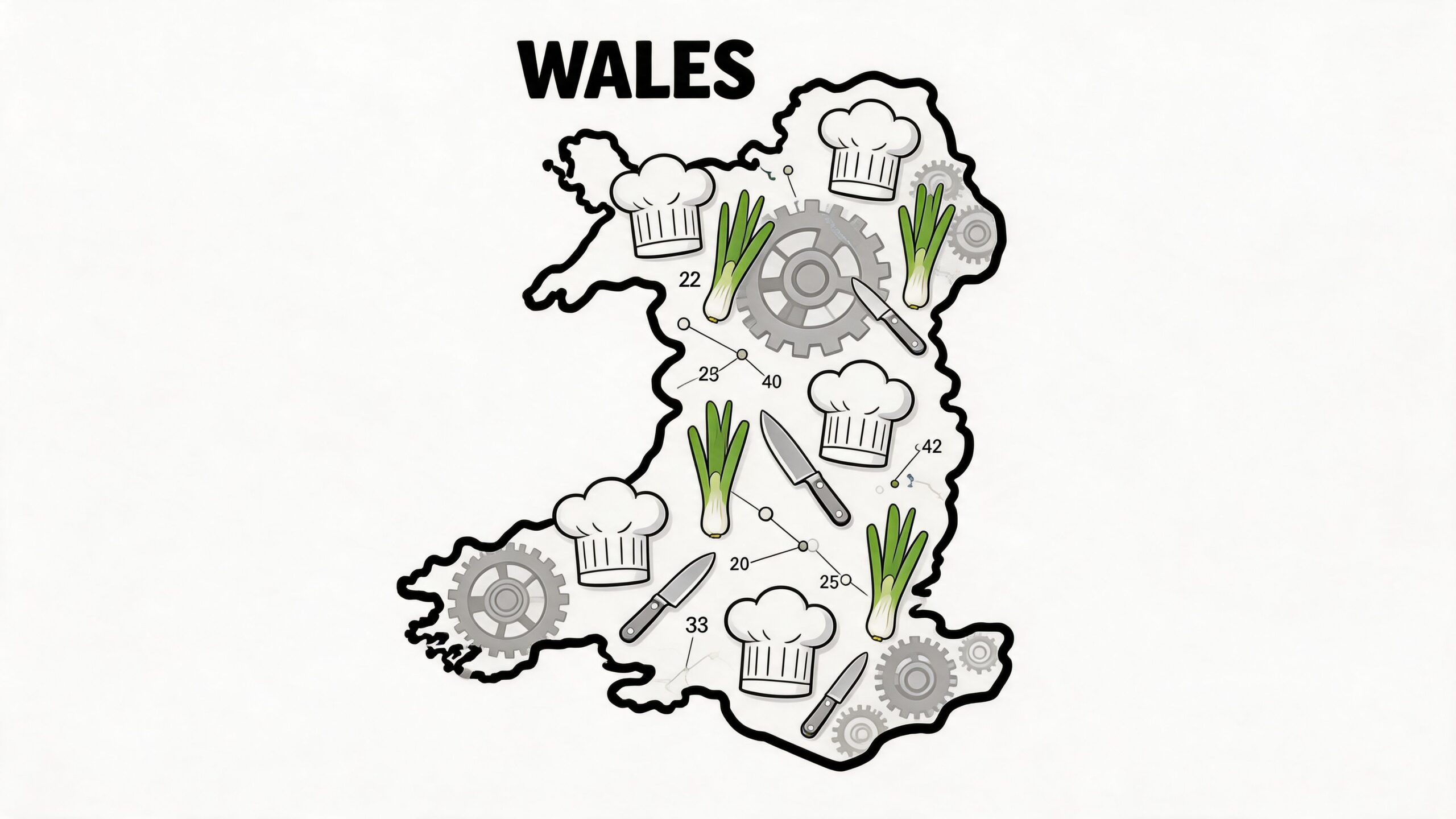
Data from People 1st International’s chef shortage report shows that chef vacancies posted in Wales increased by 17% between 2012 and 2016. The same report notes that the number of chefs and cooks in hospitality across Wales also grew during that period. More people entered the workforce, yet hiring pressure still rose. That is a warning sign for any manager relying on the open market to fix a kitchen gap quickly.
Why adverts struggle in Wales
Adverts work best where the local pool is broad, the role is easy to compare, and candidates can move fast.
Many Welsh hospitality roles fail on all three points. A chef looking at west or north Wales is not only weighing pay. They are looking at travel time, accommodation, transport, split shifts, season length, brigade size, and whether the food style matches their background. In Cardiff and Swansea, the issue is different. Good chefs usually have options, and weak offers get ignored.
The result is familiar to any operator who has hired here for more than one season. Applications come in, but too many are wrong on level, wrong on location, or wrong on availability. Then service pressure keeps building while the hiring process drags behind it.
Permanent demand dominates public hiring
The public hiring market in Wales is built around permanent demand. That matters because many businesses do not have a simple permanent vacancy. They have a kitchen that needs safe cover next week, stronger support for the summer, or breathing room while they recruit properly.
Public job boards still favour fixed roles, while flexible chef supply is harder to find and harder to assess quickly. For operators, that creates a clear risk. Direct hiring can still be the right route for a long-term leadership appointment, but it is a poor tool for urgent stability.
Geography changes the recruitment maths
A Cardiff vacancy behaves differently from one in Carmarthenshire, Gwynedd, or Anglesey. City venues compete with larger groups, better-known brands, and cross-border opportunities. Rural and destination venues often need chefs who will travel, stay locally, adapt to a smaller team, and still hold standards under pressure.
That is why chef recruitment Wales is really several hiring problems under one label:
- Cardiff and South Wales: larger visible pool, heavier competition for the better candidates.
- Rural pubs and inns: narrower local supply, more pressure on reliability and self-sufficiency.
- Boutique hotels and destination restaurants: higher guest expectation, less room for a weak trial or inconsistent cover.
- Private households, villas and yachts: technical fit and discretion matter as much as kitchen skill.
A vacancy in Wales is usually a mix of geography, standards, seasonality, and operational risk.
Good operators adjust the staffing model before they waste more time on the wrong recruitment channel. If the kitchen needs immediate cover, continuity through peak trading, or a safer route while a permanent search runs in the background, Welsh chef staffing support from Relief Chefs UK gives you faster access to chefs who are already known, checked, and ready to work.
Sourcing Strategies The Slow Way vs The Smart Way
Friday, 4pm. Your sous chef has called in sick, bookings are stacked, and the head chef is already covering prep, ordering, and service planning. At that point, the question is not whether you can write a decent advert. The question is how fast you can put a capable chef on the section without dragging the rest of the brigade into a bad shift.
That is where sourcing method stops being an HR choice and becomes an operations decision. In Wales, direct hiring still has a place. It is often the right route for a planned senior appointment. But for live gaps, peak periods, and unstable rotas, it is usually too slow and too exposed.
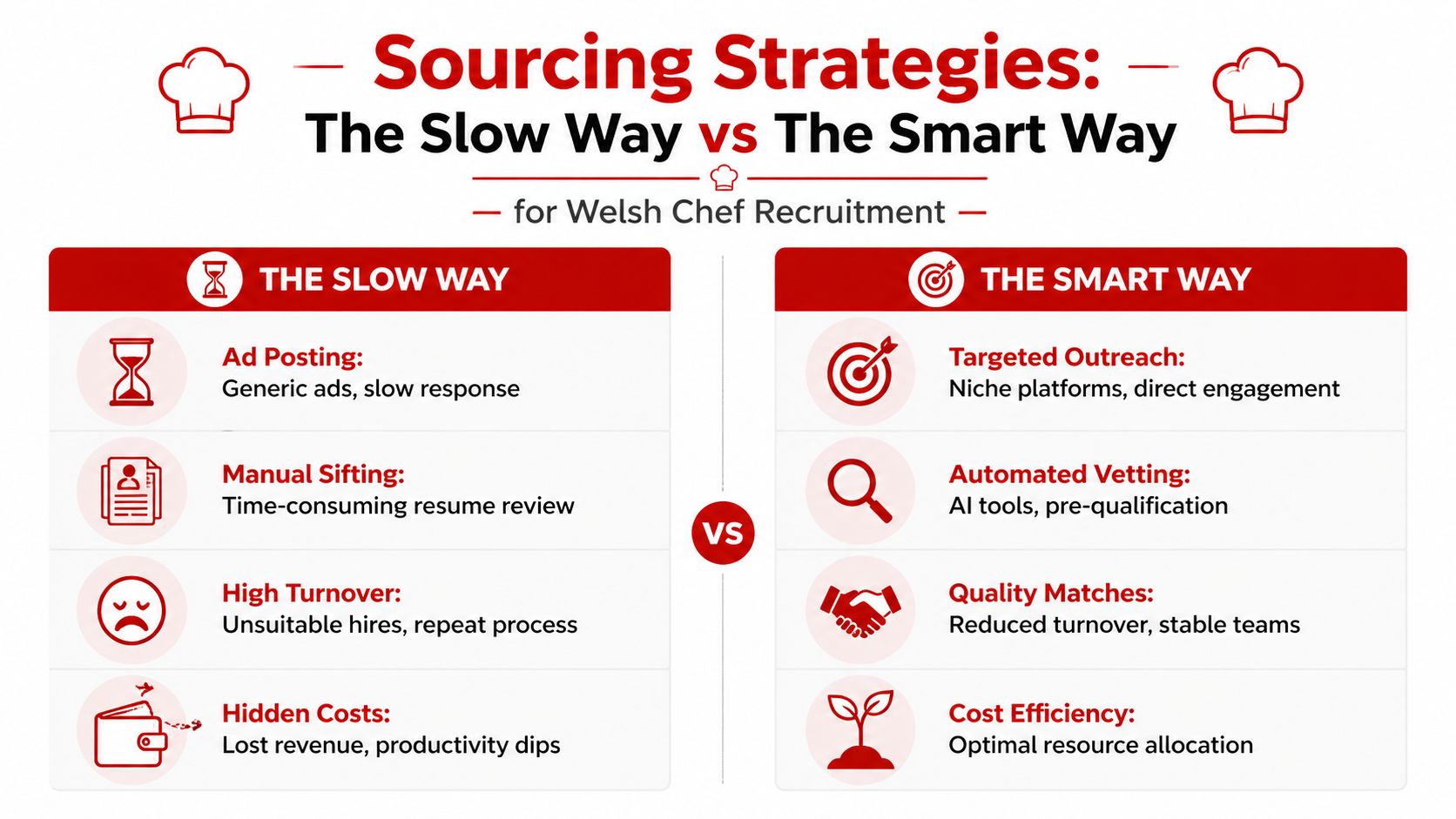
The slow way
The traditional process is familiar because most operators have had to use it. A chef leaves. The job goes live. CVs land from people who are too far away, not available, or wrong for the level. Interviews get pushed between lunch prep and evening briefing. Trial shifts fall through. Someone accepts, then disappears when another offer comes in.
None of that is unusual. It is how kitchens lose time.
In a tight Welsh labour market, direct recruitment works badly when the vacancy is immediate. The process asks the site to absorb delay at the exact moment it has the least capacity to do it. Every extra day without cover lands somewhere else. Usually on your head chef, your strongest CDP, or the standards your guests pay for.
What direct hiring really costs
| Direct hiring task | What it looks like in practice | Risk to the operation |
|---|---|---|
| Ad creation and posting | Rewriting the brief, adjusting pay, explaining hours, weekends and split shifts | Delay before any useful response |
| Manual CV filtering | Sorting through applicants who are unavailable, unsuitable or too far away | Management time disappears |
| Interviews and trials | Fitting assessment around service, prep and admin pressure | Good candidates go elsewhere |
| Checks and onboarding | Right to work, references, food safety confidence, start date planning | The gap stays open longer |
| If the hire fails | Reopening the search while the team is already stretched | Morale drops and consistency slips |
Direct hiring still makes sense when the departure is planned, the brigade has depth, and the role needs a careful culture fit. It is a weak option when the kitchen is already running hot.
The smart way
The better approach starts with service risk. If the pass is under pressure, the first job is to stabilise the kitchen. Permanent recruitment can continue, but it should continue in the background, not at the expense of tonight's service.
That means using a pre-vetted relief pool instead of treating every vacancy like a fresh campaign. Availability is already known. Core checks are already done. The match is based on level, kitchen style, and the pressure of the service, not just a polished CV and a good interview.
Good operators use both routes. They bring in relief support to protect revenue and standards, then run a proper permanent search once the rota has breathing room again.
You can recover recruitment process later. Recovering a blown Saturday night is harder, and your team usually pays for it first.
For sites that need flexible cover across pubs, hotels, restaurants and event operations, temporary hospitality staffing cover gives managers a practical way to keep service intact while permanent hiring runs in parallel.
When each route makes sense
Use direct recruitment when:
- You are replacing a planned departure: there is notice, a handover window, and enough cover on the rota.
- The role is senior and long-term: head chef and senior leadership hires need more careful assessment.
- The existing team is steady: the brigade can hold standards during a longer process.
Use specialist relief or temp sourcing when:
- Absence hits without warning: the section needs covering now.
- Trade jumps quickly: events, weather, tourism spikes, and local demand have changed staffing needs.
- You want to avoid a rushed permanent hire: temporary cover buys time to choose properly.
- You run more than one site: one vacancy should not destabilise the wider business.
The practical trade-off
The slow route looks cheaper at the start because the spend is less visible. The true cost shows up elsewhere. Overtime, management distraction, weaker prep, patchy service, tired teams, and rushed hiring decisions all carry a price.
The smart route costs money upfront, but it protects trading while you decide what the long-term answer should be. That is the trade-off experienced managers make. They do not ask only, "How do I fill this vacancy?" They ask, "How do I keep this kitchen stable while I fill it properly?"
In Wales, that distinction matters. A vacancy is rarely just a vacancy. It is a service risk, a team risk, and a revenue risk if you handle it too slowly.
Vetting and Compliance: Protecting Your Operation in Wales
A chef can have good hands and still put your business at risk. If they cannot work safely, follow allergen procedure, or clear right-to-work checks, you have not solved a staffing problem. You have imported a bigger one.
Desperate decisions usually hurt operators. Someone is free tonight. The CV looks passable. Service is looming. A manager says yes before the checks are finished, then spends the shift firefighting standards, paperwork, and team pushback.
Why weak vetting breaks down in service
A poor placement rarely goes unnoticed. If a relief chef does not understand your hygiene discipline, prep flow, or allergen controls, the head chef and sous get dragged off their real jobs to supervise basic practice. That slows service, weakens standards, and frustrates the permanent team.
The problem is not only skill. It is fit. A chef who can cope in a simple prep role may struggle in a hotel breakfast operation, a banqueting kitchen, or a fresh-food site with heavy allergen exposure. Wales has plenty of businesses where covers swing hard and teams run lean. In those kitchens, there is no spare capacity to carry the wrong person.
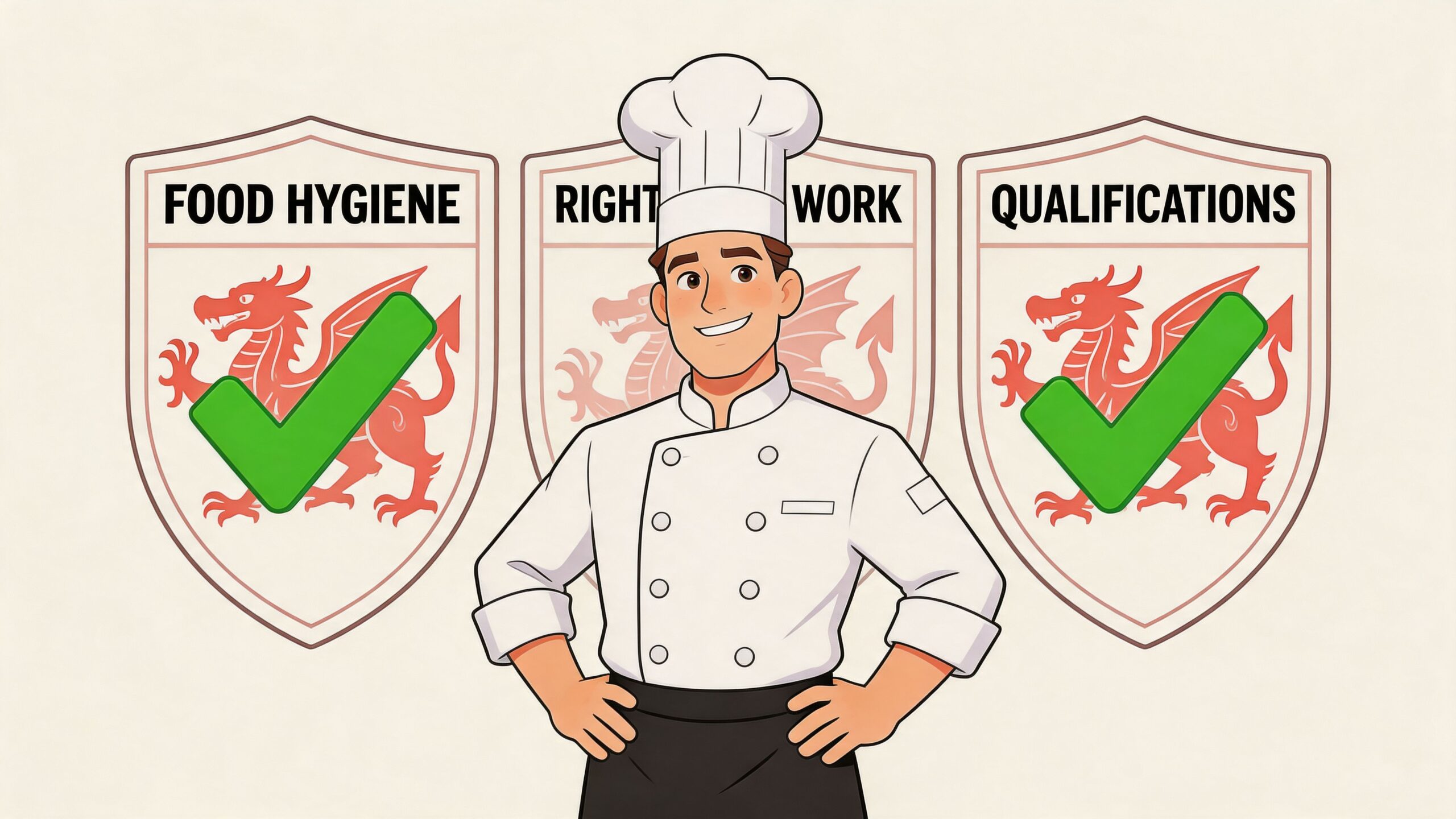
The checks that need to be done before shift one
Every site should set a minimum bar before any temporary or permanent chef is confirmed.
Legal eligibility
Right to Work checks must be complete and current. If that document trail is weak, the liability sits with the employer using the labour.
Food safety competence
Chefs need food hygiene knowledge that matches the role. Time spent in kitchens is not proof of safe practice. Standards vary widely between casual operations and disciplined, audit-ready sites.
Allergy awareness
Natasha’s Law changed the operating standard. You need chefs who understand process, labelling, cross-contamination, and how allergen information is handled during service under pressure.
Fit for your kitchen
A capable chef can still be wrong for the section. Fine dining prep, volume events, gastro pubs, breakfast-heavy hotels, private households, yachts, and villas all demand different habits, pace, and communication.
Operational warning: Availability is not the same as suitability. Fast cover only helps if the chef can walk in and hold the line.
A practical filter before you approve anyone
Before confirming a chef, ask six direct questions:
- Can they legally work right now? Ask who completed the check and whether documents are current.
- Have they worked in a similar operation? Similar service style matters more than a recognisable venue name.
- What food safety training or proof of practice do they have? Do not fill in the gaps with hope.
- Are they current on allergen procedure? This is a process question, not a memory test about ingredients.
- Who owns the vetting? One person or one supplier should be clearly accountable.
- What happens if the fit is wrong? You need a replacement route, fast.
What a specialist partner takes off your desk
Good staffing partners remove the highest-risk admin from an already stretched management team. Relief Chefs UK supplies chefs whose right-to-work status, baseline suitability, and availability have already been checked before they are put forward, and that matters when you need cover quickly without lowering standards.
The benefit is that compliance work done well is invisible. The chef arrives ready to slot into service, your paperwork stands up if questioned, and your managers stay focused on running the kitchen instead of chasing documents an hour before prep.
Strategic Staffing for Welsh Hospitality Peaks
The best operators don’t wait for a staffing problem before deciding how they’ll cover it. They map the pressure points ahead of time and build a labour plan that reflects how the business trades.
That matters in Wales because many sites don’t have flat demand. They have bursts. Summer on the coast, city event weekends, school holidays, wedding seasons, bank holidays, Christmas party trade, private bookings and weather-led surges all put pressure on the same limited kitchen resource.
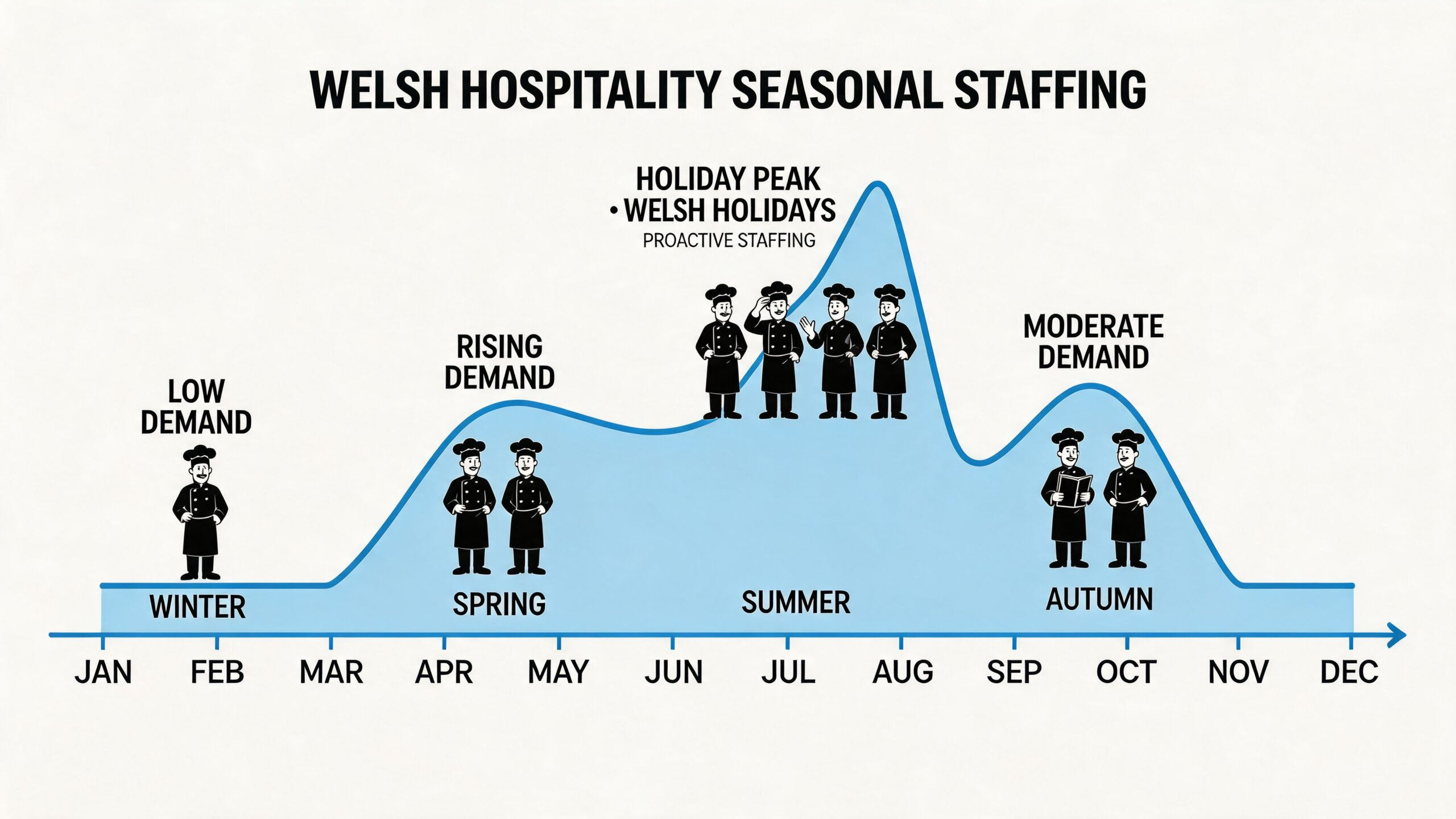
Build a core team, then flex around it
A stable kitchen usually has a permanent core that protects standards. Head chef. Strong sous. Reliable CDPs. Then it adds flexibility around the edge rather than carrying a bloated wage bill through quieter periods.
That flexible layer can cover:
- Annual leave
- Training days
- Sickness and compassionate leave
- Peak trading weeks
- Menu changes and relaunches
- Events, weddings and exclusive use bookings
For a boutique hotel, that might mean reinforcing breakfast and prep before a wedding run. For a pub near a holiday destination, it might mean adding experienced support through school breaks and summer weekends. For a multi-site group, it may mean moving permanent talent where possible and plugging the rest with trusted temporary chefs.
Stop using emergency cover only in emergencies
Many venues still treat relief chefs as a last resort. That’s too narrow. Used properly, flexible staffing protects margin and standards at the same time.
A few examples:
| Venue type | Better staffing move | Why it works |
|---|---|---|
| Independent pub | Book cover before a big local event weekend | Prevents burnout and menu reduction |
| Boutique hotel | Layer in short-term support around weddings and functions | Keeps breakfast, banqueting and à la carte aligned |
| Restaurant group | Maintain an external bench alongside permanent recruitment | One resignation doesn’t damage every site |
| Private household or yacht | Use specialist chefs for seasonal occupancy or owner stays | Skills and discretion matter as much as cooking |
Strong staffing plans aren’t built around average trade. They’re built around the days when the kitchen is under the most strain.
What usually works and what usually doesn’t
What works is simple, even if it takes discipline.
- Forecast from bookings, not hope: if you can see demand building, act before rotas break.
- Know your vulnerable stations: pastry, breakfast, sauce and banqueting prep often expose the weakest point first.
- Separate emergency cover from growth hiring: one is about continuity, the other is about long-term fit.
- Keep role profiles ready: when you need a senior sous, relief breakfast chef, yacht chef or villa chef, clarity speeds matching.
What doesn’t work is waiting until the team is already underwater. By then, everyone pays for the delay. Guests wait longer, kitchen leaders get dragged off higher-value work, and recruitment decisions become reactive.
For operators trading across Wales, Bristol, Devon, Berkshire, Windsor, Reading, Slough, Dorset and other pressure-heavy markets, the principle is the same. Build staffing elasticity before the calendar forces it on you.
Your Action Plan How Relief Chefs UK Solves Your Staffing Problem
Friday lunch is booked out, your sous is off sick, and the chef de partie who promised to step up is already stretched on prep. At that point, direct hiring is no help to you. You need a chef who can walk into service, hold a section, and stop one absence turning into a bad weekend.
That is the practical value of working with a specialist relief partner. Relief Chefs UK has operated since 2013 and is run by chefs, not generalist recruiters. The brief gets tighter, the questions are better, and the match is based on service reality rather than job-board wording.
Start with the gap you need to cover. Too many managers ask for a "good all-rounder" and lose time. A useful brief spells out what the chef must deliver on shift, what support they will have, and what could trip them up in your kitchen.
Give clear detail on:
- Role level: CDP, sous, head chef, breakfast chef or specialist support
- Dates and urgency: single shift, short run, holiday cover or open-ended need
- Kitchen type: pub, hotel, restaurant, care setting, yacht, villa or private household
- Service pressure: volume trade, banqueting, events, tasting menu or all-day dining
- Site constraints: driving requirement, live-in, allergen-heavy menus, lone working, small team structure
The process needs to be fast, but speed on its own is useless if the chef is wrong for the job. Relief Chefs UK offers contact by phone or short form, an experienced recruitment team available 24/7, and vetted chef details, subject to availability. It also provides clear pricing quoted to the role, location and dates, with every chef holding valid public liability insurance, suiting anything from a single-site pub to a multi-unit operation.
The stronger commercial model is usually mixed. Use relief cover to protect service now. Run permanent recruitment in parallel when the role needs a long-term appointment. That gives you room to hire properly instead of forcing a rushed decision because Saturday is coming.
This approach works especially well in four situations. First, short-notice absence, where the cost is lost service capacity and pressure on the rest of the brigade. Second, seasonal or event-led trading, where you need extra hands without loading the annual wage bill. Third, leadership gaps, where losing a sous or head chef can knock standards, ordering, prep organisation, and morale off course. Fourth, specialist placements, where private households, villas, and yachts need tighter matching than a standard agency send-out.
For Welsh operators, that distinction matters. Direct hiring can still be the right route for stable, permanent roles, but it is slow, exposed to drop-outs, and harder in rural or seasonal markets. A relief partner gives you immediate cover and a usable pipeline at the same time.
The right staffing partner should reduce operational risk, protect standards, and give management time back.
Relief Chefs UK also supports venues beyond Wales, which helps groups that trade across more than one region. You keep one process, one point of contact, and one standard for assessing cover, instead of rebuilding the solution site by site.
The commercial point is simple. Filling a vacancy is not the target. Protecting revenue, guest experience, kitchen discipline, and team retention is the target. Stable kitchens are built by treating staffing as an operational system, not a last-minute scramble.
Chef Recruitment Wales FAQ
How quickly can a chef be placed in Wales
For short-notice cover, a specialist relief model can respond fast enough to protect service. The Relief Chefs UK recruitment team is available 24/7 to help venues find a vetted chef, subject to availability, which is why this route suits sickness, walkouts and peak-period pressure better than a fresh direct hire process.
Is temporary chef cover only for emergencies
No. That’s one use, but not the only one. Good operators also use temporary chefs for holidays, event periods, pre-booked seasonal peaks, menu relaunches and while a permanent chef recruitment process is still running.
Can I use one partner for temporary and permanent chef recruitment
Yes. That’s often the cleanest setup because the partner already understands your site, standards and kitchen style. It also means a temporary solution can protect service while you take more time over a permanent appointment.
Do rural Welsh venues have fewer options
They often have a tighter local pool, but that doesn’t mean support is impossible. It means speed, travel readiness and proper matching matter more. Rural pubs, inns and boutique hotels should prioritise partners that understand destination trading and can source chefs willing to work outside the main city centres.
What should I ask before accepting any chef
Ask about right-to-work status, food safety level, allergen awareness, similar kitchen experience and replacement procedure if the fit is wrong. Those questions are just as important for one weekend of cover as they are for a permanent role.
Can cover extend beyond restaurants and pubs
Yes. Hospitality staffing needs aren’t limited to standard restaurant brigades. Some operators also need support for hotels, private households, villas and yachts, where discretion, adaptability and self-sufficiency are often as important as technical skill.
If your kitchen in Wales needs dependable chef cover, permanent hiring support, or a more resilient staffing pipeline, contact Relief Chefs UK. A fast brief now is usually cheaper than another disrupted service later.
Call the team.
Office 01392 715474 · info@reliefchefs.co.uk