

A Friday service is already building when the head chef rings in sick. In a busy Devon pub, two hours before the first covers arrive, the kitchen team is checking who can step up, whether the menu can be reduced, and whether the booking list can be handled safely. Guests won't see the phone calls and frantic rota changes. They'll only notice slower plates, unavailable dishes, or a dining room that feels less cared for.
Another venue has a relief chef briefed, compliant, and ready to take over the pass. The menu remains intact, the team knows who is leading, and the general manager can focus on guests rather than recruitment. That difference captures the meaning of at your service. It isn't a courteous phrase. It's an operational promise backed by people, preparation, and a dependable response when pressure arrives.
What 'At Your Service' Really Means for Your Venue
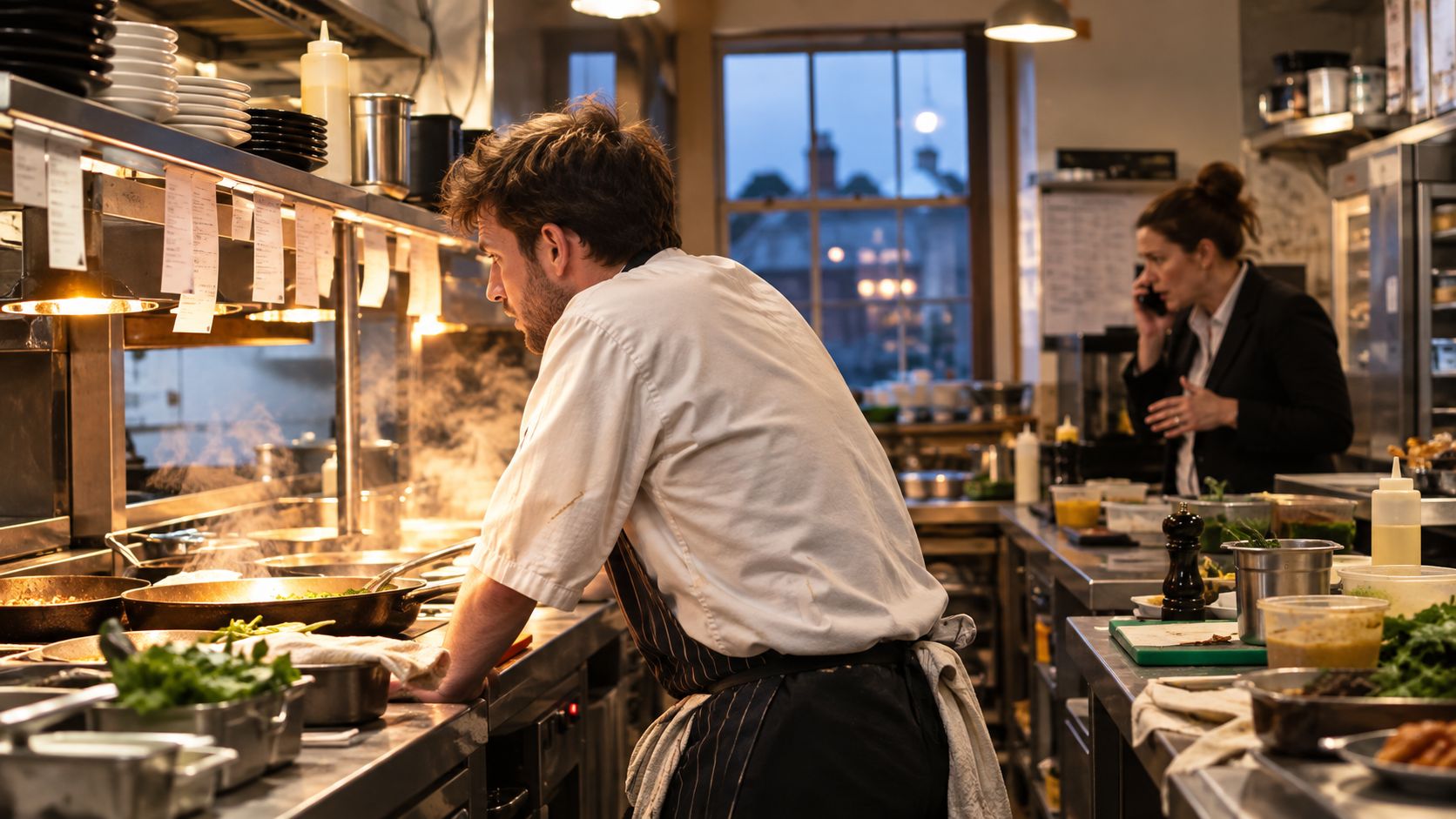
A venue that says “at your service” is promising more than a warm welcome. It is telling guests that someone is ready to respond, solve problems discreetly, and protect their experience when circumstances change. In practice, that means a functioning kitchen, an organised front-of-house team, and a manager who has prepared for absence rather than hoping it won't happen.
The expression has deep roots in British English. Etymological records for “service” show the noun in a religious context in the 1570s, while “at your service” is documented as a polite expression by around 1600. Its literary use includes an 1832 example in Washington Irving's Tales of the Alhambra, marking a shift from formal politeness towards a broader offer of availability.
Courtesy becomes a working standard
Modern reference material still identifies at your service as a formal self-introduction and an expression of immediate availability. Examples recorded in English reference usage include literary examples from 1934 and 1937. The phrase has remained current for more than 400 years because the expectation behind it remains recognisable.
For pubs, hotels, restaurants, and private household staffing teams, that expectation is practical. Guests expect staff to notice a problem before it becomes a complaint. Operators expect chefs to keep a service moving without needing every instruction repeated. A relief chef who arrives unfamiliar with the menu, food safety process, and pass communication may technically fill a shift while still weakening the promise.
Practical rule: Treat “at your service” as a test of readiness. If one absence can close the kitchen or force a major menu reduction, the promise isn't supported by the operation.
The strongest venues don't rely on goodwill alone. They keep a clear brief, a reliable contact route, and access to chefs who can work within established systems. That is the operational backbone behind a polished guest experience in Devon, Bristol, Wales, Berkshire, Windsor, Reading, Slough, Dorset, and every other hospitality hotspot where a busy service can't wait for a perfect hiring market.
The Staffing Crisis Behind Service Standards
UK hospitality staffing is not only a vacancy problem. It is a cost-and-availability problem. A venue may have fewer advertised roles while still lacking the skilled people needed to open every section, cover sickness, and maintain a full menu.
The UK Hospitality and Tourism Workforce Landscape records vacancy intensity of 6% in hospitality and tourism, compared with 4% across all UK industries. Within the sector, skilled trades such as chefs account for 39% of vacancies that are hard to fill because the required skills are difficult to source.
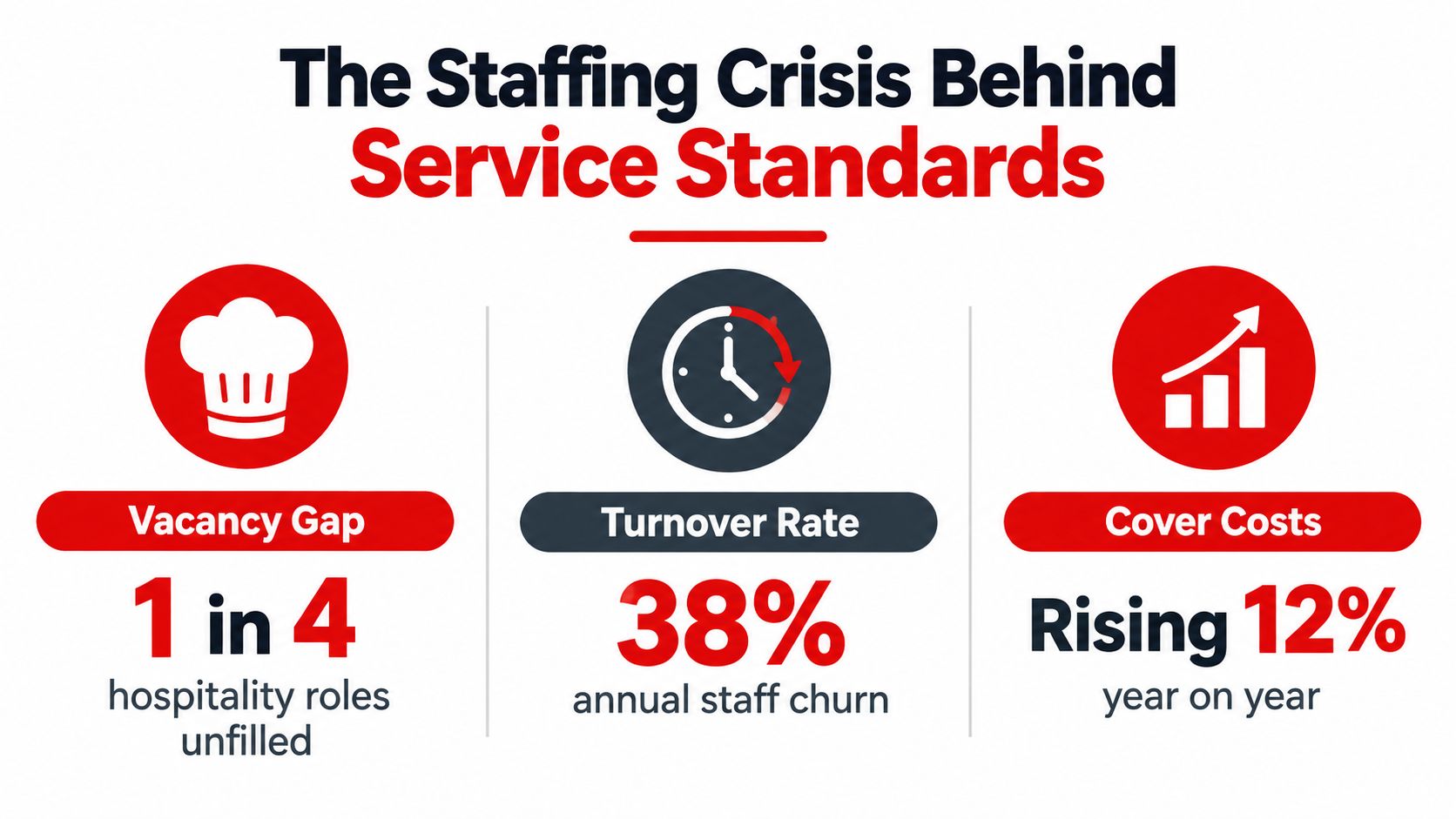
That constraint changes the manager's job. Waiting until a chef is absent means competing for a limited supply at the most difficult moment. Planning a relief relationship in advance gives the venue more control over service continuity, even when permanent recruitment is slow.
Compliance is part of speed
Fast staffing only helps if the chef can legally start work. UK employers must check a worker's right to work before employment using the Home Office online share-code service, original documents, or an approved identity service provider. They must also keep copies and record the date of the check, as set out in the official right-to-work checking guidance.
That process matters most when a restaurant needs cover at short notice. A candidate who cannot provide consistent identity and work-permission information isn't ready for the pass, regardless of their culinary experience. Document-ready candidates and a properly managed verification process reduce avoidable delays.
The market also needs careful interpretation. Industry reporting projects that UK hospitality vacancies could fall to about 69,000 by mid-2026, while reporting from the same period says around 170,000 hospitality jobs were lost in the thirteen months after the October 2024 Budget. The 2026 hospitality recruitment analysis argues that fewer vacancies can reflect reduced hours, closures, and lower operating capacity rather than a healthy return to staffing balance.
For an independent pub in Devon or a hotel in Wales, the operational question is therefore not just “Can we recruit?” It is, “Can we keep the kitchen open at the standard our guests expect when recruitment takes time?” Flexible chef coverage answers that question without forcing every temporary pressure into a permanent headcount decision.
Service Standards That Define Great Venues
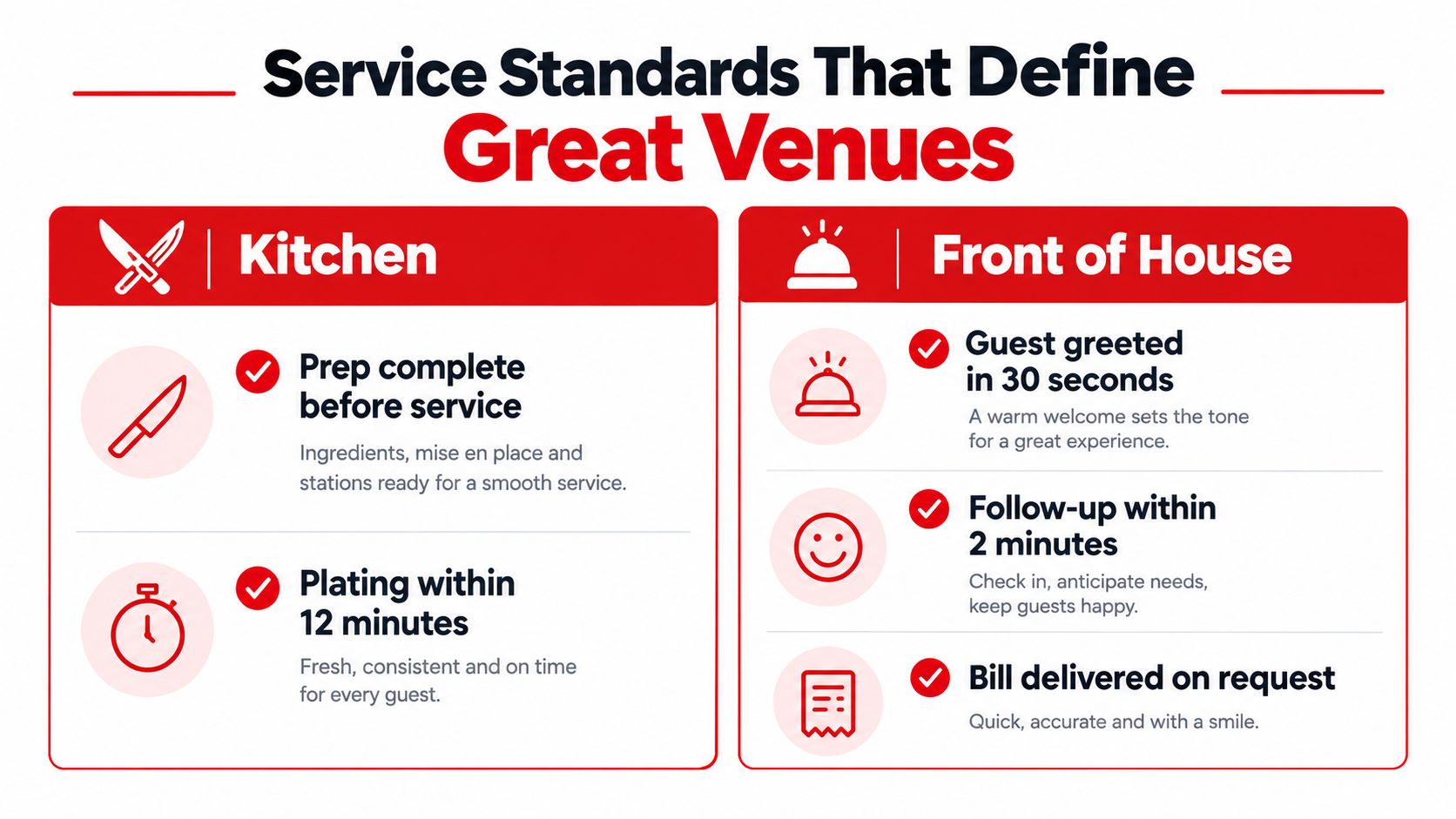
Excellent service is visible in small operational details. A guest may describe the result as friendly, smooth, or professional, but managers can trace it back to specific behaviours in the kitchen and front of house.
Kitchen standards
Start with preparation. The chef leading the shift should know which prep is complete, which ingredients are limited, and which dishes need a controlled release. A station that looks tidy but lacks portioned mise en place will fail as soon as orders arrive together.
Ticket flow also needs ownership. The pass should have one clear voice, with the kitchen and front-of-house team agreeing how modifications, delays, and unavailable dishes will be communicated. A relief chef doesn't need to copy the head chef's personality, but they do need to understand the venue's method.
Use this working checklist:
- Preparation: Confirm prep, deliveries, storage, allergens, and equipment before service.
- Consistency: Taste key components and check portioning before the first table leaves the kitchen.
- Cleanliness: Keep boards, cloths, utensils, and work surfaces under control throughout the shift.
- Communication: Make one person responsible for calling orders and escalating delays.
- Close-down: Record shortages, maintenance issues, and prep requirements for the next team.
Front-of-house standards
Front of house protects the guest relationship that the kitchen is working to support. Staff should acknowledge arrivals, explain realistic waits, communicate substitutions before an order is placed, and check that a corrected dish has solved the problem rather than only reached the table.
These standards depend on stability. A constantly changing team may be willing and experienced, yet still miss the venue's booking notes, service sequence, or escalation process. The answer isn't to reject temporary chefs. It's to give them a useful brief and use a staffing partner that takes matching and continuity seriously.
A practical customer service standards framework can help managers turn broad expectations into observable behaviours. Review it with the team before a busy weekend, then ask what a guest would see if the venue delivered each standard consistently.
The same principle applies to compliance. Right-to-work records, insurance arrangements, food safety expectations, and venue induction shouldn't be treated as paperwork separate from hospitality. They protect the operation that makes reliable service possible.
Why Ad-Hoc Cover Fails Where Partnerships Deliver
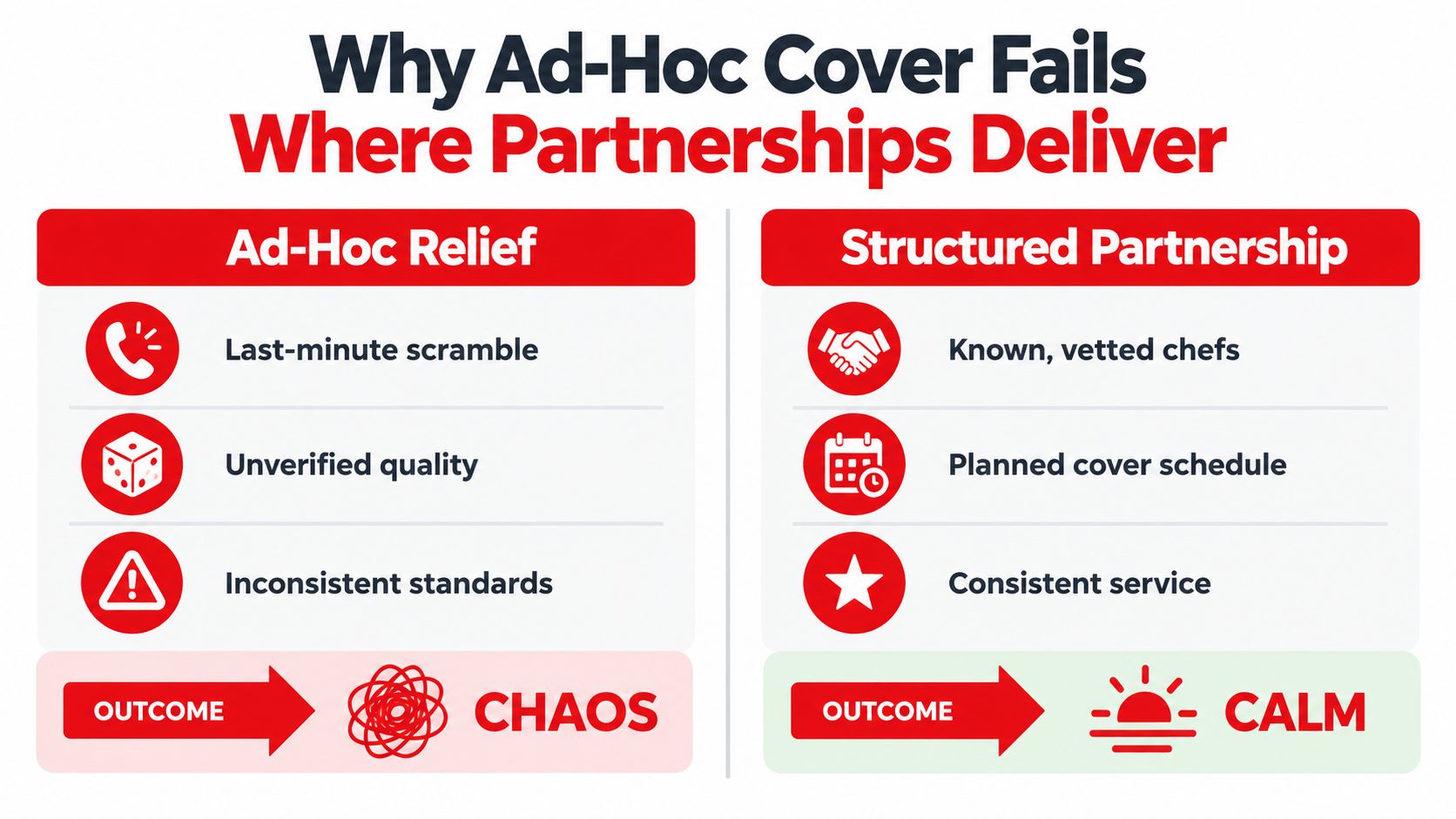
At 5pm, an emergency staffing search can consume the manager's attention before the first order is fired. One agency may not answer, another may offer a chef without enough information about the menu, and a third may send a candidate whose availability changes before arrival. The venue has technically started recruiting, but the kitchen is still exposed.
A structured relief partnership creates a different sequence. The venue shares its requirements, menu style, location, shift pattern, and standards before the emergency. When absence occurs, the request goes through a known process and the available chef is assessed against the actual job rather than a vague description of “kitchen cover”.
The hidden cost of improvisation
Ad-hoc hiring appears flexible because it avoids a commitment. In reality, the venue often pays with management time and operational uncertainty.
- Verification work: Someone must check identity, right-to-work status, references, availability, and insurance arrangements.
- Menu risk: A chef unfamiliar with the menu may need close supervision or may be unable to cover every section.
- Team strain: Permanent staff spend the shift explaining systems instead of serving guests.
- Inconsistent output: Different chefs may interpret portioning, plating, allergens, and close-down procedures differently.
- Recruitment fatigue: Managers repeatedly solve the same absence rather than building a dependable cover plan.
What a partnership changes
A planned arrangement doesn't remove every risk. A chef can still become unavailable, a booking can change, or a venue can face an unusually difficult weekend. The difference is that the response has been designed before the pressure arrives.
A monthly plan may include replacement arrangements, priority support, and a dedicated account manager. Those features matter because continuity is more valuable than a single successful booking. A restaurant in Reading may need occasional sickness cover, while a coastal Dorset hotel may need seasonal reinforcement. Both benefit from a system that remembers requirements and improves the brief over time.
The service-level agreement information is useful for operators comparing providers. Ask what happens if the proposed chef isn't suitable, who handles communication outside office hours, and what information the provider needs before matching someone. If the answers are unclear, the service isn't ready to support a demanding operation.
A reliable cover plan should reduce decisions during service, not create more of them.
Relief staffing can also become a route into permanent recruitment. A venue gets to observe how a chef communicates, handles pressure, and works with its team before discussing a longer placement. That makes temporary cover more than a stopgap. It becomes part of a measured workforce strategy.
How Relief Chefs UK Delivers on the Promise
“At your service” only works when a venue can turn a staffing problem into a controlled response. That requires more than a contact list. It requires a process that identifies the risk, checks the person, transfers the right information, and keeps responsibility clear while service is underway.
Relief Chefs UK explains its staffing approach and provides vetted relief chefs with a two-hour response time and 48-hour start window, with monthly plans that include replacement guarantees and dedicated account management, subject to the role and circumstances.
Matching the response to the risk
A same-day sickness issue calls for a different response from a hotel preparing for a sustained seasonal peak. Urgent relief cover may protect one service, while a temporary chef can reinforce a stretched brigade over several weeks. A recurring vacancy may require permanent recruitment instead. The matching process can also cover yacht chefs, villa chefs, and other hospitality roles where discretion and adaptability affect the result.
Managers should test the operation against practical standards:
- Vetting and right-to-work checks should be completed before the chef starts, reducing compliance risk at the point of need.
- Rapid response should give the venue enough time to assess the brief, confirm the shift, and prepare the kitchen.
- Clear ownership should identify who handles the booking, updates the venue, and manages changes.
- Recorded venue knowledge should preserve menus, locations, equipment, service patterns, and expectations for future requests.
- Replacement arrangements should explain what happens if the chef becomes unavailable or the match proves unsuitable.
- Out-of-hours support should give managers a defined route when an urgent issue appears outside normal planning time.
- Pricing and insurance information should be clear before the booking is confirmed.
The agency cannot replace a proper venue brief. The head chef or general manager still needs to provide the menu, allergens, equipment limits, dress expectations, reporting line, and service pattern. Those details determine whether a chef can contribute safely and quickly, rather than spend the first shift discovering how the operation works.
The operational advantage comes from making that information usable under pressure. A relief chef who arrives with the right checks, context, and contact point gives the venue a better chance of protecting its service standards. That is how a polite phrase becomes a structural promise, supported by response, compliance, matching, and continuity behind the scenes.
Your Pre-Service Readiness Checklist
Use this checklist before the next busy period. It takes less effort to prepare a cover system than to build one while the pass is already under pressure.
- Name the failure points: Record which shifts, sections, or locations become vulnerable when one chef is absent.
- Keep a backup relationship active: Agree how you request relief chefs, what details the provider needs, and who can authorise a booking.
- Prepare compliance information: Keep your venue details, booking contact, shift times, and site instructions ready. The staffing partner should provide the required right-to-work documentation before the chef starts.
- Build a short menu brief: Include signature dishes, allergens, plating notes, equipment limitations, and any items that should be paused during reduced cover.
- Create a first-hour plan: State who meets the chef, gives the kitchen tour, checks prep, and confirms the pass arrangement.
- Use one communication channel: Avoid sending key instructions across scattered texts, emails, and verbal messages. Give the relief chef one reliable contact.
- Review after service: Note what worked, what caused delay, and whether the chef could be requested again.
A written brief also makes quality assurance easier. The service quality assurance guidance can support a consistent review process across pubs, hotels, restaurants, and private hospitality settings.
The aim isn't to create unnecessary administration. It's to make the correct response repeatable when the team is tired, the bookings are full, and the kitchen has no spare capacity.
FAQs About Hospitality Service Standards
How can a relief chef learn our menu quickly?
Send a concise menu brief before the shift, including allergens, key preparation methods, equipment, portion expectations, and dishes that are difficult to substitute. A short induction on arrival should confirm the pass structure and the person responsible for decisions.
Can temporary cover match permanent staff quality?
It can, when the chef is properly matched, briefed, and supported. Temporary staffing fails when the venue treats arrival as the end of the process rather than giving the chef access to the information and systems that permanent employees already know.
How quickly can emergency support arrive?
The practical timeframe depends on location, shift requirements, chef availability, and the information supplied by the venue. Relief Chefs UK states that clients receive a response within two hours, with chefs who can start within 48 hours when the booking can be fulfilled.
What must be checked before a chef starts?
The employer must verify the chef's right to work using the Home Office online service, original documents, or an approved identity service provider. The employer must keep copies and record the check date, while the venue should also confirm site induction, insurance arrangements, food safety expectations, and shift details.
If short-notice sickness, seasonal demand, or recurring chef shortages are putting your service under pressure, contact Relief Chefs UK for relief chefs, temporary chefs, permanent recruitment, yacht chefs, villa chefs, or wider hospitality staffing support. Visit Relief Chefs UK to discuss your venue, your cover requirements, and a dependable plan for keeping guests at your service.