
In the UK’s brutal hospitality market, great customer service standards aren't just a nice-to-have—they're the difference between five-star reviews and an empty dining room. They are a powerful commercial asset, not just an operational cost, shaping how a guest feels from the moment they walk in to the second they pay the bill.
Why Your Service Standards Are Your Greatest Commercial Asset
For any hotel manager or head chef, from the tourist hotspots of Devon to the city centres of Bristol and Reading, keeping standards high is a constant battle. The reality of hospitality is chaos. A last-minute sick call from a key chef, a surprise rush of customers, or the ever-present chef shortage can flip a smooth service on its head in minutes.
This is exactly why you need defined customer service standards. They act as your blueprint for excellence, but that blueprint is useless without a stable, skilled team to follow it. A single chef calling in sick creates a domino effect:
- The Kitchen Crumbles: Ticket times stretch out. The quality and consistency of every dish drops.
- Front-of-House Gets Hammered: Waitstaff are left to face guest complaints about delays, putting them under enormous pressure.
- The Guest Experience Evaporates: A meal that should have been memorable turns into a frustrating wait, which almost always ends in a bad review.
Truly memorable guest experiences are never an accident. They are meticulously designed and depend entirely on a reliable and professional team, especially in the kitchen.
This highlights the core truth of our industry: your ability to deliver five-star service is directly linked to the strength of your team. Without a solid plan to cover staffing gaps, even the best service standards will fail when the pressure hits. This is where you have to understand the real financial impact of a staffing crisis. You can get a clear picture by exploring the real cost of employing staff in hospitality and how it eats into your bottom line.
Ultimately, investing in your staffing strategy is an investment in your service quality. When you ensure you have reliable cover for every role, you’re not just filling a gap—you're protecting your standards, your reputation, and your revenue. This guide will show you how to build and maintain those standards, even when facing the industry’s toughest challenges.
How to Define Your Hospitality Service Standards
Let's be blunt: "great service" means nothing. It's a vague promise that falls apart under the first sign of pressure. To build a reputation that lasts, you have to move beyond empty phrases and define specific, measurable actions for your team.
This isn't just a job for your front-of-house staff. Real service standards are a whole-business commitment. They are the clear set of expectations that transform service from a matter of opinion into a playbook for success, giving your team a clear path and your guests a consistently brilliant experience.
This commitment has two sides: what the guest sees, and what the kitchen delivers. For your customer-facing teams, this means tangible goals that leave no room for interpretation. These are the promises you make to every single guest, whether they're checking into your hotel in Windsor or sitting down for dinner in your restaurant in Wales.
But behind the scenes, the standards are just as critical. Your back-of-house is the engine room. When it runs smoothly, the entire operation thrives. When it fails, the whole ship sinks.
This is a clear commercial choice. Do you treat standards as an investment in your asset or a drain on your resources? The answer separates the businesses that grow from those that fail.
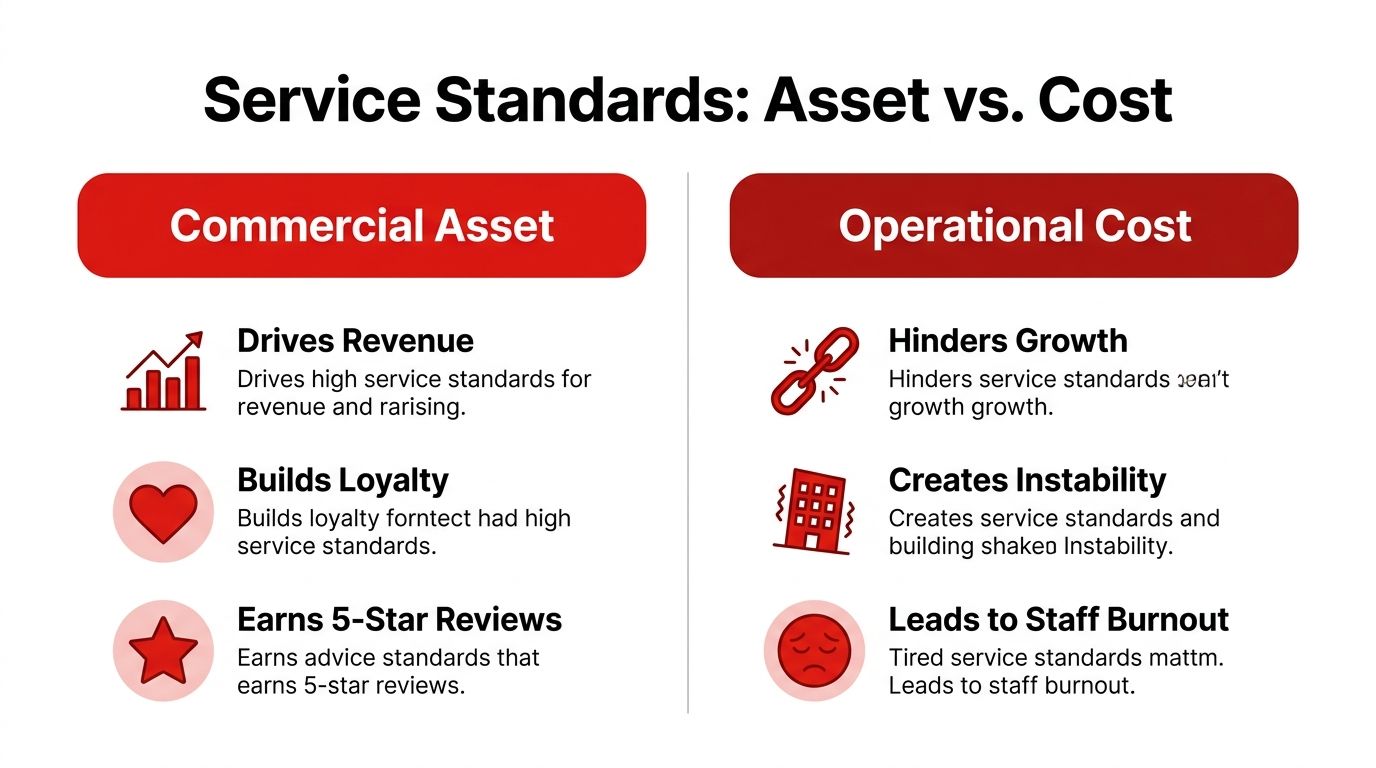
As you can see, investing in high standards is a direct path to revenue and loyalty. Viewing them as just another cost leads directly to instability and decline.
Front-of-House vs Back-of-House Standards
Let's break down what these standards look like in the real world. These aren't just targets; they are the building blocks of your reputation.
A well-defined set of standards provides a blueprint for every member of your team, ensuring that both the guest-facing experience and the kitchen's output are consistently excellent. The table below shows how this works in practice.
| Area of Operation | Service Standard Example | Impact on Guest |
|---|---|---|
| Guest Arrival | All guests are acknowledged with eye contact and a verbal greeting within 60 seconds of entering. | Feels seen and welcomed immediately, setting a positive tone for their visit. |
| Order Taking | A drinks order must be taken within three minutes of a table being seated. | Reduces waiting time and makes guests feel attended to from the start. |
| Complaint Handling | Any guest complaint is addressed by a manager immediately, with a solution offered on the spot. | Turns a negative experience into a positive one, often building stronger loyalty than if nothing had gone wrong. |
| Kitchen Ticket Times | Average ticket time for main courses must not exceed 15 minutes during peak service. | Ensures food arrives promptly, tables turn efficiently, and guests aren't left waiting. |
| Plating Consistency | Every dish must be plated exactly according to the spec sheet, with no exceptions. | Guarantees every guest receives the same high-quality, 'Instagrammable' dish you designed. |
| Stock Control | All stations must be fully prepped and stock levels checked before service to prevent 86'ing items. | Avoids the disappointment of telling a guest their first-choice menu item is unavailable. |
These two areas are completely codependent. A perfectly charming front-of-house team can't save a 45-minute ticket time. Likewise, a brilliant dish served cold by an inattentive server is a failure. One side cannot succeed without the other.
This is why having reliable hospitality staffing support is no longer a luxury—it's fundamental. By 2026, customer expectations have shifted dramatically. A recent study shows 71% of UK restaurants that excel at personalisation report improved customer loyalty, and 6 in 10 diners will spend more with a business that delivers a great experience. These customer service statistics paint a clear picture: the game has changed.
Upholding these new, higher standards is impossible if you're constantly fighting fires caused by a short-staffed, unstable kitchen brigade.
Setting Measurable KPIs for Your Service Goals
Having clear customer service standards is a good starting point, but let’s be honest—without a way to measure them, they’re just wishful thinking. They’re good intentions that won't help you run a tighter ship.
This is where Key Performance Indicators (KPIs) come in. They turn your abstract service goals into hard, cold data you can actually use. As the old saying goes, if you can’t measure it, you can’t manage it.
For any busy hospitality manager, this isn't about getting lost in complex spreadsheets. It's about tracking the numbers that directly link to guest satisfaction and your bottom line. So, instead of vaguely aiming for "fast service," you should be measuring your Average Table Turn Time. Instead of just hoping for "happy customers," you need to track the Number of Five-Star Reviews versus negative ones, week in, week out.
Key Metrics for Hospitality Excellence
Focusing on the right KPIs gives you an honest, objective look at the health of your operation. They show you exactly where the cracks are forming before they turn into a full-blown crisis.
Here are a few practical examples that really matter:
- Guest Complaint Resolution Time: How long does it take for a manager to get to a table, address an issue, and solve it? A low number here is a clear sign you have an empowered and efficient team.
- Food Quality Consistency Scores: Use simple feedback cards or QR codes to ask guests to rate their meal out of 10. A sudden drop in this score is often the first warning sign of kitchen strain or a standards slip.
- Average Ticket Time (by course): Don't just track the overall time. Knowing your average time for starters versus mains can reveal specific bottlenecks in your kitchen workflow that are costing you money.
These metrics give you irrefutable proof of performance. Imagine your data shows ticket times are ballooning every Saturday night. That’s no longer a vague feeling of being "under the pump"; it’s a clear signal that your kitchen is overwhelmed.
This data-driven approach removes all the guesswork. It makes a powerful commercial case for strategic staffing changes, proving exactly when and where you need support to protect your service standards and, ultimately, your revenue.
This is exactly where a flexible staffing solution becomes a strategic asset, not just a backup plan. When a key chef is on holiday or calls in sick just before a busy weekend, you can bet your KPIs will suffer.
Having a trusted partner like Relief Chefs UK allows you to bring in an experienced temporary chef at short notice. This isn't just about filling a gap in the rota; it’s about protecting your performance metrics. A professional relief chef steps in to maintain kitchen stability, ensuring your ticket times, food quality scores, and guest satisfaction all stay right where they need to be. Don’t let predictable staffing shortages destroy the reputation you’ve worked so hard to build.
The Single Point of Failure That Can Wreck Your Standards
You can have the most perfectly defined customer service standards and the most meticulously tracked KPIs in the world. But they’re fragile. They can be shattered in an instant, and the most common cause is something every hospitality manager dreads: staffing instability.
Picture this: it’s a bank holiday weekend in Bristol, and your head chef calls in sick. Or the summer rush in Dorset hits, and a key team member quits without any notice. All your hard-earned plans for delivering excellence just evaporate. These aren’t small problems. They are commercial disasters that dismantle your service standards on the spot.
The consequences are immediate, and they are severe:
- Longer Waits: Ticket times spiral out of control, leaving your front-of-house team to face a wave of frustrated guests.
- Inconsistent Food: The kitchen team left behind is stretched impossibly thin, leading to rushed, sloppy plating and a noticeable drop in quality.
- Damaging Reviews: It only takes one terrible service to trigger a string of negative online reviews that will put future customers off for good.
This direct link between a stable team and service quality is undeniable. Modern customer expectations have soared. Research shows that by 2026, a huge 82% of independent pubs and restaurants now see speed and personalisation as their core metrics. The same report found that 76% of British consumers expect any service issue to be resolved within 15 minutes. Venues that fail to hit this mark see a 34% drop in customer retention. The stakes have never been higher.
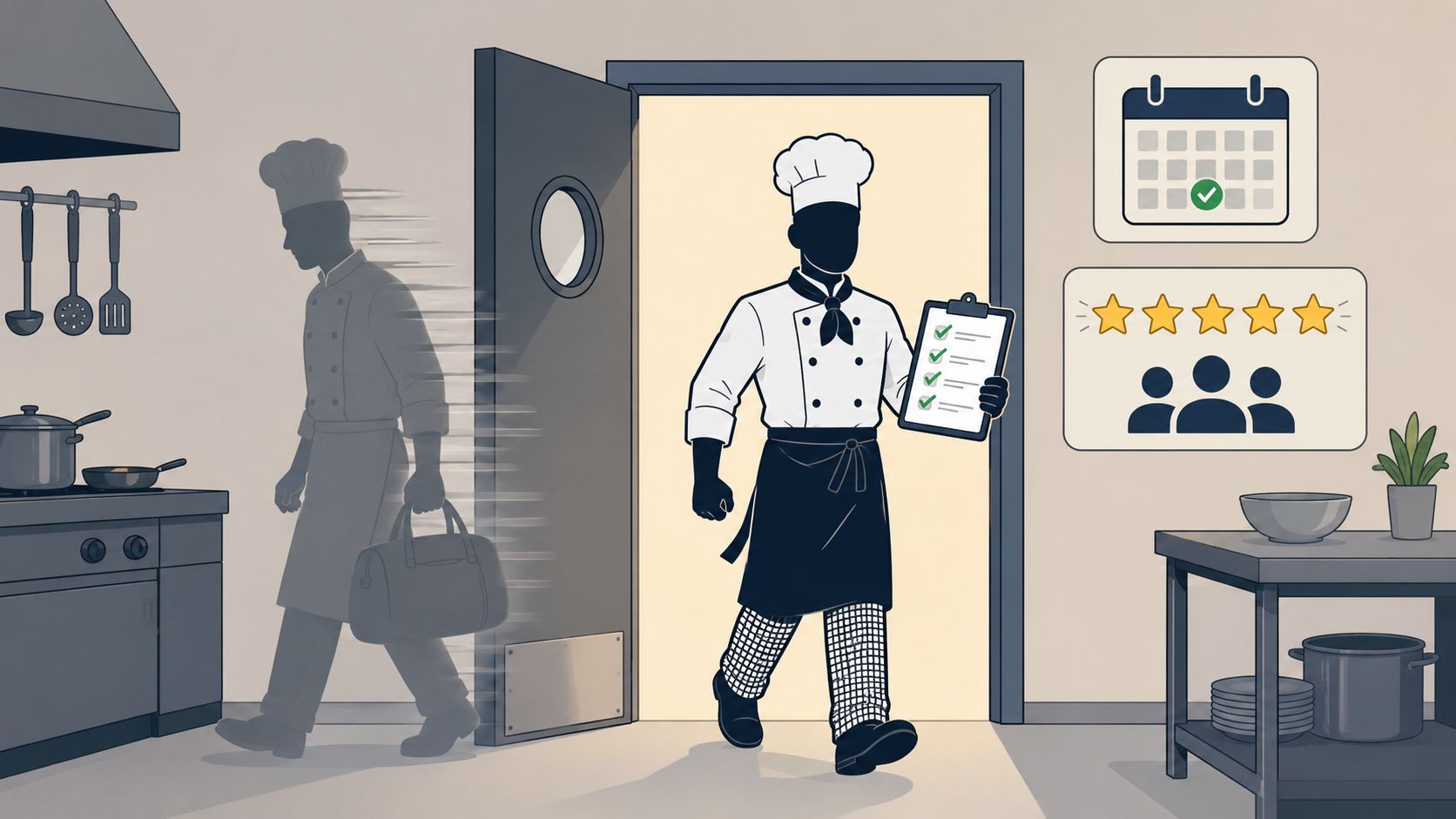
From Crisis Management to Strategic Stability
Trying to react to staffing gaps as they happen is a game you will always lose. You need a proactive strategy to protect your kitchen's stability and, by extension, your hard-won service standards. This is where having a reliable staffing partner becomes your most valuable asset, turning a critical weakness into a source of strength.
Relying on your existing team to just absorb the pressure of being short-staffed isn't a strategy. It's a direct route to burnout, falling standards, and ultimately, even higher staff turnover. Real stability comes from having a dependable solution ready to go before disaster strikes.
Since 2013, Relief Chefs UK has been that solution for venues nationwide. We’re run by chefs, for chefs, so we understand the immense pressure you’re under. We give you immediate access to a network of fully vetted, highly experienced temporary chefs and yacht chefs who can step straight into your kitchen and uphold your standards from the second they arrive.
Whether you're dealing with a sudden sickness in Berkshire, facing seasonal demand in Wales, or need to scale up your team for a big event, our professionals integrate seamlessly. This isn't just about finding a pair of hands to fill a gap. It's about deploying a skilled chef who can protect your reputation, maintain consistency, and ensure your service never misses a beat. This level of dependability is crucial across all hospitality staffing support, from the kitchen to the front-of-house.
Don't wait for a staffing crisis to derail your business. Secure your service standards by building a resilient, adaptable kitchen team.
Ready to protect your standards from staffing volatility? Contact Relief Chefs UK today for reliable, professional chef cover you can count on.
Training and Empowering Your Team to Deliver Excellence
You can have the most detailed customer service standards in the world, but they’re just ink on paper if your team can’t deliver them on a frantic Saturday night. Those standards are completely useless if your staff aren’t trained, confident, and empowered to bring them to life. This means having a clear, repeatable training process for everyone, from your permanent brigade to any last-minute support.
Effective training doesn’t have to be complicated. Simple Standard Operating Procedure (SOP) checklists for key tasks are your best friend. Think opening and closing duties, plating every single dish, or handling a guest complaint. They create clarity and, most importantly, consistency.
Combine these checklists with practical role-playing of common scenarios. This builds muscle memory, so your team reacts correctly under pressure instead of freezing up.
Onboarding Temporary Chefs with Speed and Precision
The real test of your training system comes when you need to bring in new staff fast, especially a temporary or relief chef. During a crisis, you don’t have days to get someone up to speed. They need to be effective from the second they walk through your kitchen door.
This is where the right staffing partner makes all the difference. An agency that properly vets its chefs for experience and professionalism ensures you get a professional who can adapt instantly, not a trainee who needs their hand held.
At Relief Chefs UK, our rigorous vetting process is designed for this exact problem. As we've been run by chefs since 2013, we know precisely what to look for. Our chefs are seasoned pros who understand kitchen dynamics and can integrate into a new brigade with zero friction. They arrive ready to work, capable of picking up your venue’s unique standards in minutes.
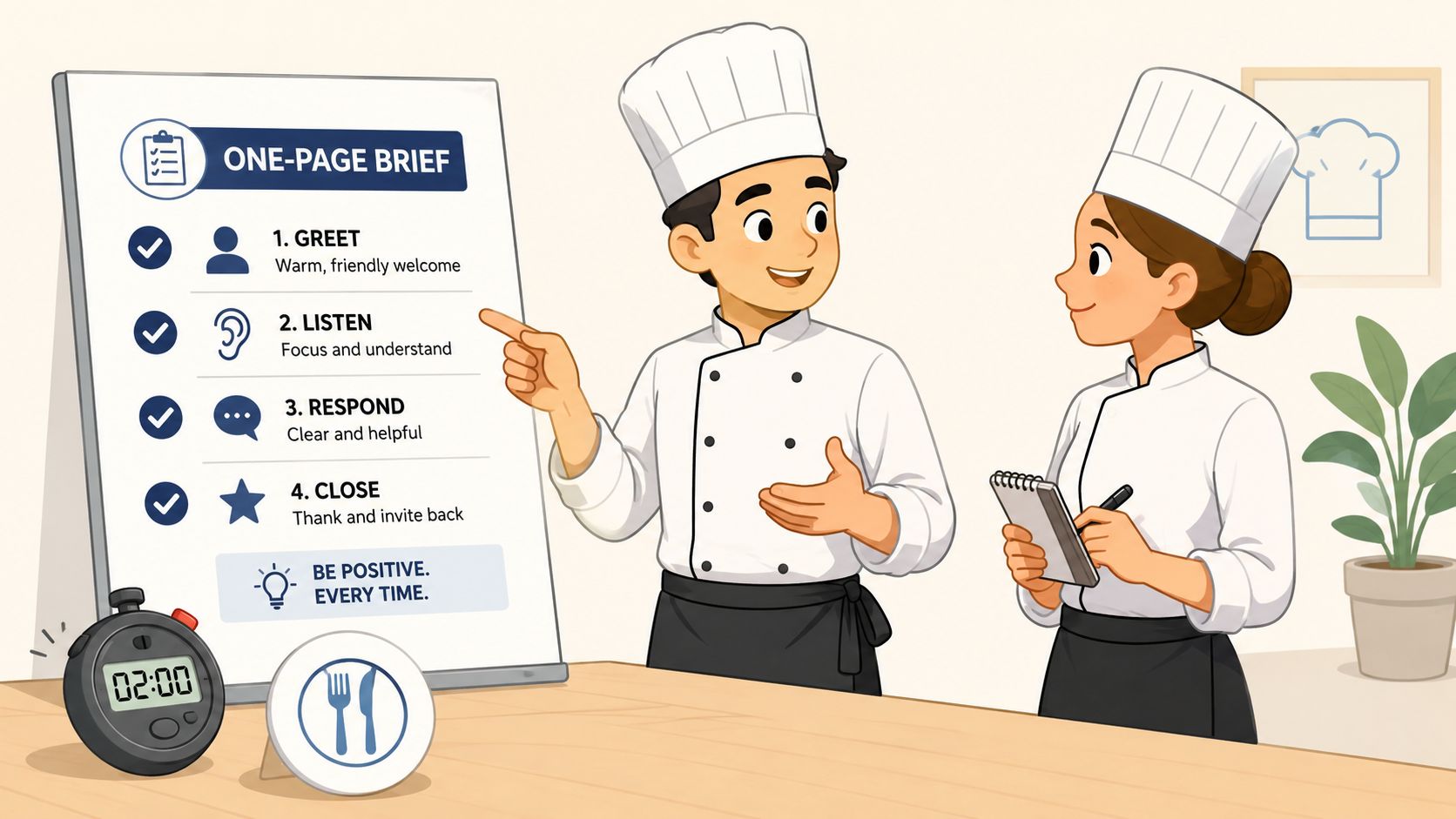
To make this handover seamless, create a simple, one-page briefing document. This document should be your secret weapon for onboarding any temporary kitchen staff, whether you're a boutique hotel in Windsor or a busy gastro-pub in Wales.
Your one-page relief chef brief should include:
- Key Menu Items: List your top 5 best-sellers with clear photos of the correct plating.
- Core Timings: Note your target ticket times for starters, mains, and desserts.
- Allergen Protocol: A clear, non-negotiable process for handling all allergies.
- Supplier & Spec Info: Where to find key ingredients and any specific brand requirements.
This small step ensures any incoming chef is immediately aligned with your expectations for quality and speed. For more guidance on creating documentation that works, you can explore our detailed advice on perfecting your handover documentation to guarantee a smooth transition every single time.
Your Action Plan to Elevate Customer Service Today
The gap between a thriving hospitality business and one that’s just about surviving often comes down to one thing: its customer service standards. Improving them doesn’t mean you need to launch a massive, complicated overhaul. It demands a focused, practical plan you can put into action right now.
Forget vague mission statements. Busy managers from Slough to Dorset need a clear roadmap to turn good intentions into real, measurable results. Your journey to five-star service starts with these four simple steps.
Define, Measure, Train, and Secure
1. Define Three Core Service Standards: Don't try to boil the ocean. Pinpoint the three most critical standards that will have the biggest, most immediate impact on your guest experience. This could be something as simple as ‘greet every guest within 60 seconds’ or as crucial as ‘maintain 15-minute ticket times during peak service’.
2. Assign a Measurable KPI: Put a hard number on each standard. Start tracking your average ticket times, measure how quickly guest complaints are resolved, or monitor your food quality scores. Data doesn't lie; it gives you undeniable proof of where you're succeeding and, more importantly, where you're falling short.
3. Create a One-Page Training Checklist: Give your team a simple, clear guide for your core standards. This ensures every single person, from your longest-serving veteran to a last-minute replacement, knows exactly what excellence looks like in your venue.
4. Secure Your Staffing Foundation: Let's be honest, all your efforts will collapse without a stable kitchen. Chef shortages, seasonal rushes, and last-minute sickness are the biggest threats to your service standards. You have to stop letting staffing chaos dictate your guest experience and damage your reputation.
This final step is the most critical. You cannot uphold high standards with an unstable team. The foundation of exceptional service is having the right people in place, every single service.
The expectation for speed and quality is non-negotiable. Recent research shows a staggering 80% of UK consumers now see fast service as a crucial part of a good experience, with many valuing it above price. You simply can't afford to slip. Discover more insights on evolving customer demands that highlight why this is so important.
Don't wait for a staffing crisis to completely undermine your hard work. Since 2013, Relief Chefs UK has been the trusted partner for venues nationwide, providing vetted, professional temporary chefs and permanent recruitment solutions.
Protect your standards. Contact Relief Chefs UK today for reliable chef cover and secure your kitchen’s stability.
Frequently Asked Questions
Even with the best plans, things go wrong. Here are some straight-talking answers to the tough questions we hear from hospitality managers trying to protect their service standards when the pressure is on.
How Can I Maintain Standards with Temporary Staff?
This is the number one worry, especially when you need cover at the last minute. It all comes down to working with a reliable agency that does the heavy lifting for you. A professional, chef-run agency won’t just send you a body; they have a tough vetting process to ensure any chef who walks through your door is experienced and can adapt fast.
To make the handover totally seamless, have a simple one-page briefing document ready. All it needs are your top menu items, a few plating guides, and the absolute must-knows of your kitchen. With that in hand, a genuine professional can get up to speed and protect your standards from the second they arrive.
What Should I Do When My Head Chef Quits Suddenly?
First, breathe. A sudden departure feels like a disaster, but it’s a manageable crisis if you have a plan. Your only priority in that first moment is to keep the service running smoothly without a single customer noticing a difference.
This is exactly what senior relief chefs are for. They step in to manage the kitchen, keep the team's morale from collapsing, and hold your standards high. This buys you the time you need to focus on the difficult job of permanent chef recruitment without rushing into a bad decision that you'll regret later.
Having a trusted staffing partner on speed dial turns a full-blown crisis into a controlled process. You get an experienced head in the kitchen immediately, preventing chaos and protecting your reputation.
How Do I Measure the ROI on Better Customer Service?
Tracking the return on investment for service improvements is simpler than it looks. You just need to watch a few key metrics before and after you bring in professional support or implement your new standards.
- Online Reviews: Look at the ratio of your 4- and 5-star reviews. Is it going up?
- Repeat Bookings: Is the percentage of returning customers climbing month-on-month?
- Table Turnover: Are you turning tables more efficiently during your busiest services?
When you see these numbers improve, and you also notice fewer food complaints and voids on the till, you have a direct financial link. It proves your investment in stable, professional staffing is paying for itself on the bottom line.
Don't let staff shortages destroy the very customer service standards that define your business. Relief Chefs UK provides immediate access to vetted, professional chefs for temporary, emergency, and permanent roles across the UK.
Secure your service standards today by contacting Relief Chefs UK for a no-obligation chat about your staffing needs.