
It's 5pm on a Saturday. The pass is about to light up, bookings are stacked, prep is mostly done, and then the message lands. Chef's sick. Can't come in.
That moment decides whether you run a controlled service or spend the next four hours firefighting. In hospitality, staff absence management isn't a paperwork exercise. It's rota protection, guest protection, margin protection, and in a lot of venues, survival.
Kitchen absence hits harder than absence in most office teams because there's no slack built into service. If a sous chef is missing in Bristol on a busy event weekend, or a breakfast chef drops out in Windsor when the hotel is full, the problem isn't abstract. It lands on covers, wait times, menu execution, waste, overtime, and reviews. The businesses that cope well don't just have a policy. They have a working system.
The True Cost of an Empty Chef Jacket
The most expensive absence is usually the one that arrives late and hits a key shift.
A head chef off on a quiet Tuesday is manageable. A section chef off just before Saturday dinner in Devon, a breakfast chef missing during a wedding weekend in Dorset, or a pastry chef absent during peak trade in Berkshire is a very different problem. You start cutting corners. Senior staff cover stations they shouldn't be covering. Prep slips. FOH starts making apologies before mains have even left the pass.
The wider cost is easy to underestimate. In the UK, the cost of sickness absence reached £15.1 billion annually in 2023, and hospitality and food services reported an average absence rate of 6.2%, against a national average of 4.1%, according to the CIPD absence factsheet. Kitchens feel that gap more sharply than most because service can't pause while you work out the admin.
What actually gets hit
When a chef drops out at short notice, the damage usually lands in four places:
- Revenue: You reduce covers, stop taking walk-ins, or pull dishes off the menu.
- Labour cost: Salaried managers stay late, hourly staff pick up overtime, and the next rota gets stretched.
- Standards: Food consistency drops when the wrong person is covering the wrong section.
- Team stability: Good people burn out when they're always rescuing service.
Practical rule: Treat every unplanned kitchen absence as a trading risk first and an HR issue second.
That's why serious operators track the true cost of cover decisions, not just wage line movement. If you're weighing permanent hires against flexible cover, it's worth reviewing the cost of employing kitchen staff in the round, including downtime, recruitment drag, training time, and the cost of getting a busy service wrong.
One missing chef rarely stays one problem
The first absence is one problem. The knock-on effect is the bigger one.
A tired team makes more mistakes. The next week's rota gets built around fatigue instead of strength. Holiday requests become harder to approve. Then another call-out lands and the whole operation is weaker than it should be. That's why good staff absence management sits inside operations, not in a forgotten HR folder.
Your Legal and Contractual Duties Explained
A busy Saturday does not excuse a sloppy process on Monday.
Repeated short-notice sickness is one of the hardest management issues in a kitchen because the operational pressure is real. You still need to get prep done, cover service, protect standards, and keep the rest of the brigade on side. But if a manager skips the process and goes straight to threats, warnings, or dismissal, the business can turn one absence problem into a tribunal problem.
The legal starting point is simple. Treat each case as a contract issue, a policy issue, and sometimes a health issue.
Start with what you can evidence
Before any formal action, check three things:
- The contract. Look at reporting rules, sick pay terms, evidence requirements, and what counts as unauthorised absence.
- Your policy. Confirm deadlines for contact, self-certification, fit notes, return-to-work meetings, and absence review triggers.
- The employee's circumstances. Repeated one-day absences can be misconduct, genuine illness, stress, medication-related, or linked to a longer-term condition.
Managers get exposed when they blur those lines. One head chef treats the issue as attendance management. Another treats the same pattern as gross disloyalty. If your managers are making different decisions site by site, you do not have control. You have risk.
A clear written process keeps decisions consistent and defendable. If your documents are loose or outdated, use a proper hospitality sickness absence policy guide and make sure managers follow the same steps every time.
Repeated short-term sickness needs a fair process
Micro-absence is where kitchens usually get caught out. A chef who calls in sick at 10:30am for an 11:00am shift can cause serious trading damage without ever triggering the same concern as a long absence. That does not mean you can deal with it informally or emotionally.
Use the return-to-work meeting properly. Confirm what happened, ask whether medical advice has been taken, check whether there is an underlying condition, and record the explanation in full. If the pattern keeps building, move into your formal absence procedure because the records justify it, not because the rota is under strain.
That distinction matters. Repeated absence can justify formal action. It still has to be handled fairly, consistently, and with proper evidence.
The manager's job is to separate frustration from fact.
Where managers usually make mistakes
The common failures are predictable:
- Treating all absence as misconduct. Sickness absence and unauthorised absence are not the same issue.
- Ignoring possible disability or mental health factors. Once an underlying condition may be involved, the case gets more sensitive.
- Skipping return-to-work meetings. That is where patterns, explanations, and warning signs usually become clear.
- Applying trigger points selectively. Teams notice inconsistency fast, and so do claimants' solicitors.
- Threatening dismissal too early. A rushed conversation after a bad service is not a fair procedure.
In hospitality, speed matters. Process matters more.
A quick reality check for hospitality managers
| Situation | Risky response | Better response |
|---|---|---|
| Chef calls in sick repeatedly at short notice | Threaten dismissal in the moment | Log every instance, hold return-to-work meetings, review against policy triggers |
| Employee gives a vague explanation | Assume they are swinging the lead | Ask follow-up questions, request the right evidence, document the answer |
| Pattern suggests a possible health issue | Push straight into discipline | Pause, check medical context, then decide the right procedure |
| Team complains that one person “gets away with it” | React to the noise in the kitchen | Apply the same standard to everyone and explain the process to managers |
Strong absence management protects service, but it also protects the business from avoidable legal mistakes. In a kitchen operation, that discipline matters most when the pressure is highest.
Diagnosing Your Absence Problem Causes and KPIs
If your rota always feels fragile, look at the pattern before you blame the people.
Some businesses have a duration problem. A few long absences remove skill from the kitchen for weeks. Others have a frequency problem. Constant one-day and two-day call-outs keep disrupting service, handovers, prep, and section ownership. In kitchens, frequency is usually the nastier issue because it wrecks planning.
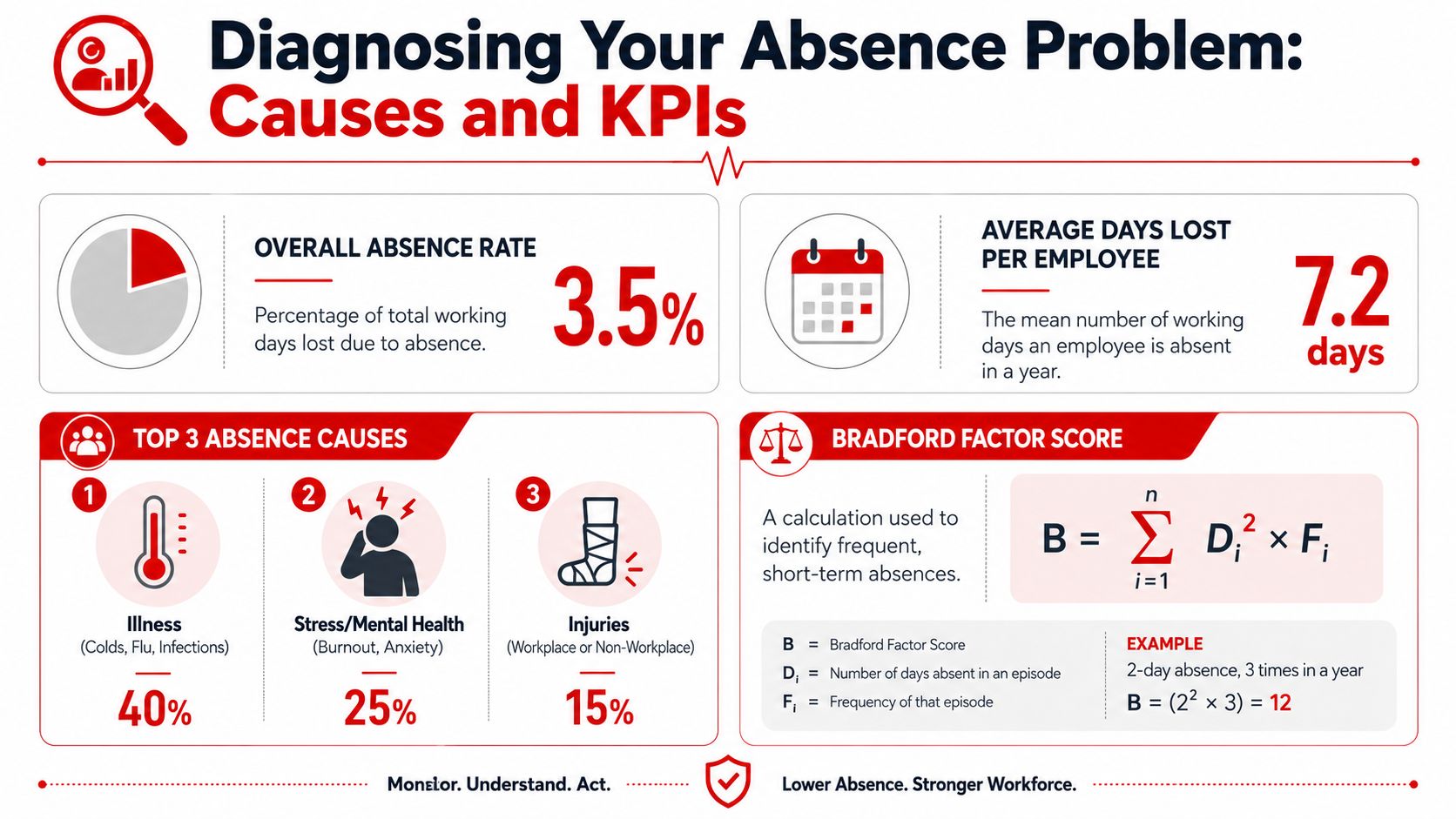
Mental health is a big part of that picture. Mental health conditions account for 39% of all sickness absence in UK hospitality workers, with chefs and kitchen staff averaging 12.7 absence days per year due to anxiety, depression, or stress-related conditions, according to the Mind at Work 2023 report.
The causes worth paying attention to
In most hotel and restaurant kitchens, absence tends to cluster around a few operational realities:
- Minor illness at the wrong time: Colds, stomach bugs, and infections still take chefs out of service fast.
- Burnout: Long weeks, split shifts, pressure, and understaffing wear people down.
- Poor recovery after busy periods: Teams pushed through Christmas, summer, event season, or race weeks often start dropping out afterwards.
- Unresolved personal or health issues: These often show up first as repeat short absences.
The mistake is treating every absence as random. It usually isn't. If one site in Wales has repeated call-outs after double-shift weekends, while another in Reading has stronger attendance under the same brand, the issue may be staffing design, not discipline.
The KPIs that matter in a kitchen
You don't need a complicated dashboard. You need a few measures that tell you whether the operation is stable.
Bradford Factor
The Bradford Factor is useful because it highlights repeated short absences. One employee taking six separate one-day absences is often more disruptive than one employee taking a single six-day absence. In kitchen operations, that's exactly why the score matters.
Absence Frequency Rate
The absence frequency rate is the metric I'd watch first in hospitality. It shows how often absences happen, not just how long they last. If you're repeatedly replacing people at short notice, your kitchen is unstable even if total days lost don't look disastrous.
Return-to-work completion
Track whether return-to-work conversations happen. If managers skip them when trade gets busy, you lose your best chance to spot trends early.
A useful side exercise is reviewing overtime alongside absences. If absence is driving hours up for your core team, you've got a profitability problem as well as an attendance one. This guide on reducing overtime costs in hospitality helps connect the labour picture properly.
A kitchen doesn't become unreliable in one dramatic moment. It becomes unreliable when small absences keep landing in the same weak spots and nobody measures them properly.
A simple diagnosis table
| What you see | What it usually means |
|---|---|
| Same chef absent once for a longer spell | A health issue that needs proper support and planning |
| Several chefs missing briefly across a month | Pressure, poor rota resilience, or weak reporting discipline |
| Lots of Monday or post-event absences | Fatigue, morale, or culture issue |
| Return-to-work meetings rarely happen | Managers are running reactive, not controlled, operations |
A Proactive Strategy to Prevent Absence
Most absence management fails because the business only gets interested once someone has already called in sick.
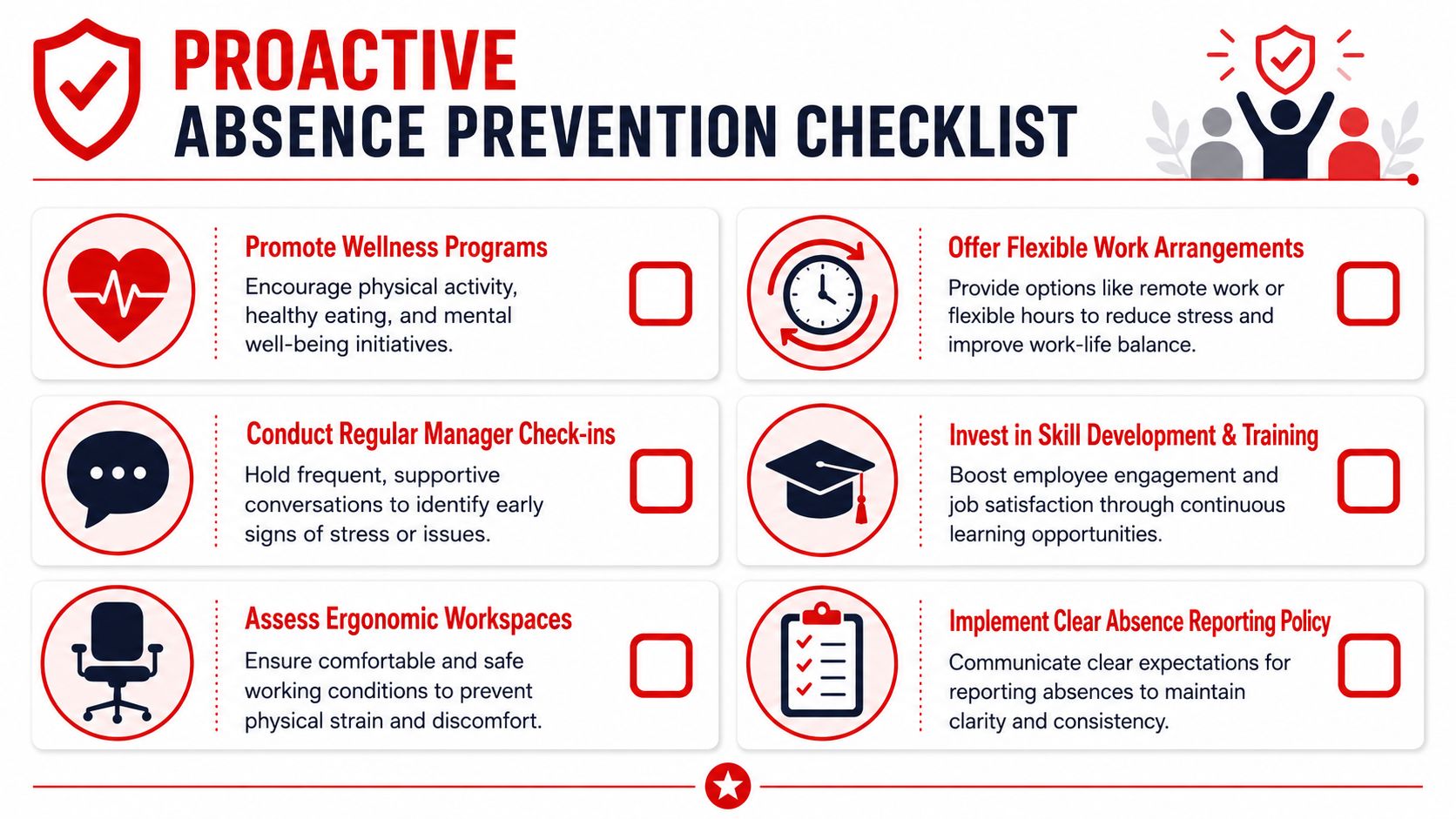
That's too late. By then, you're in damage-limitation mode. Significant gains come from building routines that lower the number of preventable absences and make genuine absence easier to handle fairly.
Write a policy people can actually use
A good absence policy isn't long. It's clear.
It should tell staff exactly who they contact, how they report sickness, by what time, what information they're expected to give, what evidence may be needed, and what happens when they return. In a hotel group, every site should use the same framework, even if local managers handle the conversation.
The policy also needs to reflect hospitality reality. Last-minute call-outs happen. So your reporting process must work at 6am for breakfast teams and at 3pm for evening prep, not just during office hours.
Return-to-work interviews are where the real management happens
Most managers either skip these or turn them into a box-ticking exercise. That's a mistake.
A good return-to-work conversation does three jobs at once. It confirms the facts, checks the employee is fit to return, and gives you a chance to spot patterns before they become expensive. Done properly, it also tells the team you take absence seriously without creating a culture of suspicion.
What to ask
Use a short structure:
- What happened: Keep it factual and brief.
- Is the issue fully resolved: Don't put someone straight back into a demanding section if they're not fit.
- Is there an underlying issue we need to know about: Often, stress, recurring pain, or personal issues surface.
- Do we need adjustments or support: Temporary changes can prevent another absence.
- Is there a pattern we need to discuss: Be calm, direct, and evidence-led.
Manager's note: If a return-to-work meeting feels awkward, that usually means it matters.
Prevention is operational, not just pastoral
Support matters, but prevention also comes from how you run the business.
A kitchen with permanent understaffing, weak prep planning, and too many back-to-back long shifts will produce more absence than a better organised one. That's not softness. It's basic operations. Staff who are exhausted, frustrated, or physically struggling will either leave or start dropping out.
The practical moves that help
- Fix the rota pressure points: If the same people always close late and open early, expect problems.
- Cross-train smartly: Give key team members enough range to protect service when one section is hit.
- Plan recovery after peak trade: Busy bank holidays, weddings, Christmas parties, and festival weeks need a recovery rota, not blind optimism.
- Deal with low-level issues early: Small grievances become attendance problems if ignored.
- Keep standards fair: Teams notice quickly when one person gets challenged and another gets waved through.
What doesn't work
A lot of managers still rely on guilt. They make the absent person feel they've let everybody down and hope that will improve attendance.
Sometimes it stops one doubtful absence. It doesn't build a stable kitchen.
What works better is consistency. Clear policy. Fast reporting. A proper return-to-work process. Early support where it's genuine. Formal action where it's needed. No drama, no mixed messages.
The Short Notice Sickness Response Plan
At 4:10pm, your sauce chef calls in sick for a 6pm service, bookings are strong, and the head chef is already covering a supplier issue. That is the moment this plan is for.
Short-notice absence is a kitchen risk first and an HR issue second. The cost shows up straight away in delayed tickets, cut menu items, tired senior chefs, and managers making rushed decisions that drag into the next shift. The businesses that handle it well do not waste the first 30 minutes debating options. They run a fixed response.
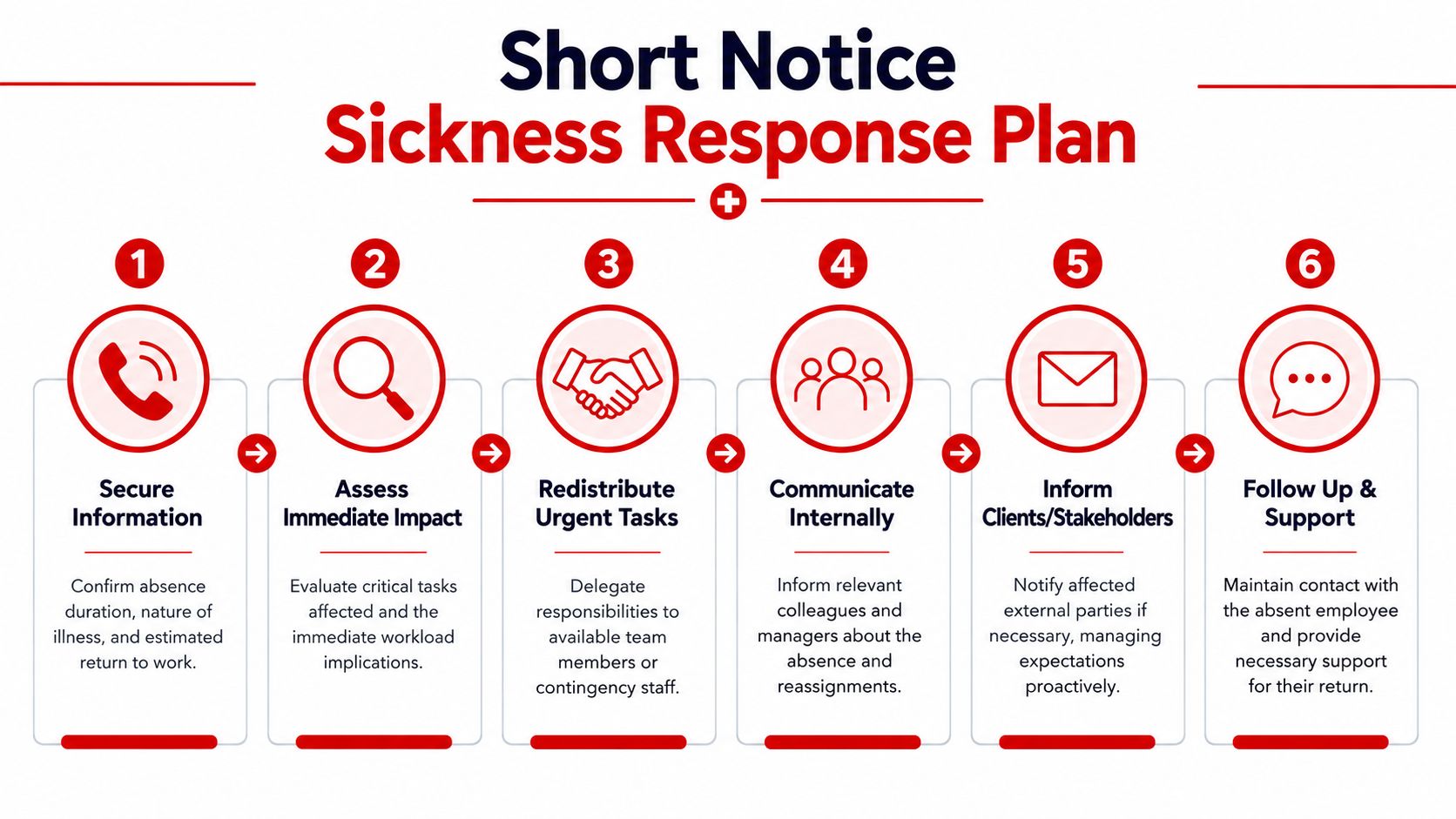
Start with the response flow below.
Step one to three
Secure the facts
Confirm who is off, which shift is affected, whether the absence is likely to run beyond today, and whether any prep, ordering, or handover now sits with somebody else. Keep it brief. Get facts, not a long story.Assess the service risk
Work out what breaks if nobody covers the gap. Which section is exposed. Whether prep can be merged. Whether a reduced menu protects standards better than forcing the full offer through a weakened brigade.Protect the core shift
Keep the strongest people on the parts of service that carry the most guest risk and margin. A busy pass, banqueting prep, breakfast in a hotel, or grill on a full Saturday night should not be weakened just to make the rota look balanced.
A practical walkthrough helps in high-pressure moments, especially for newer managers.
Step four to six
Brief BOH and FOH early
Tell the kitchen and front of house what has changed before service starts. FOH needs clear guidance on ticket times, dish availability, and where pressure will hit first. That stops overpromising to guests and protects the floor team from avoidable complaints.Activate contingency immediately
Weak absence systems commonly falter at this stage. Managers spend too long texting around for favours, hoping somebody can stay late or come in early, and only look externally once the window has gone. In a tight labour market, that delay is expensive. If the missing shift affects a key section or high-value service, trigger cover at once.Log and follow up after service
Once the shift is under control, record the absence properly and start the return-to-work process. The paperwork matters, but after service, not instead of service.
If external cover only starts after every internal option has been exhausted, the site does not have a contingency plan. It has a panic routine.
What this looks like in real venues
In smaller pubs and seasonal coastal hotels, the common mistake is trying to absorb every call-out internally. One sous chef stretches across two sections, KP helps with basic prep, the menu stays unchanged, and everybody tells themselves it is manageable. If trade lands hard, standards slip, waste rises, and the same tired team walks back into tomorrow already behind.
In city hotels and busy branded sites, the pressure is different. Good temporary cover gets booked fast, and waiting for perfect information costs you the shift. Managers need to decide early whether the kitchen can absorb the loss without damaging service, wage efficiency, or team fatigue.
Keep a written trigger
Use a short trigger list and make sure every duty manager knows it. If any of these are true, call for outside cover fast:
- Key station uncovered: grill, sauce, breakfast, banqueting, pastry, or senior supervision missing
- High-value service ahead: weddings, functions, peak breakfast, match day, or a full restaurant booking level
- Existing fatigue in the team: the brigade is already carrying overtime, doubles, or vacancy gaps
- More than one pressure point at once: one sickness combined with annual leave, a vacancy, or a supply issue
That discipline protects more than one service. It protects the week.
Building Your Ultimate Contingency Staffing Strategy
Friday, 4:30pm. A sauce chef calls in sick, occupancy is high, there is a function at 7, and the Head Chef is already covering a vacancy elsewhere in the rota. At that point, absence management stops being an HR process and becomes an operating risk. The question is simple. Can you protect service without burning margin, standards, or the rest of the brigade?
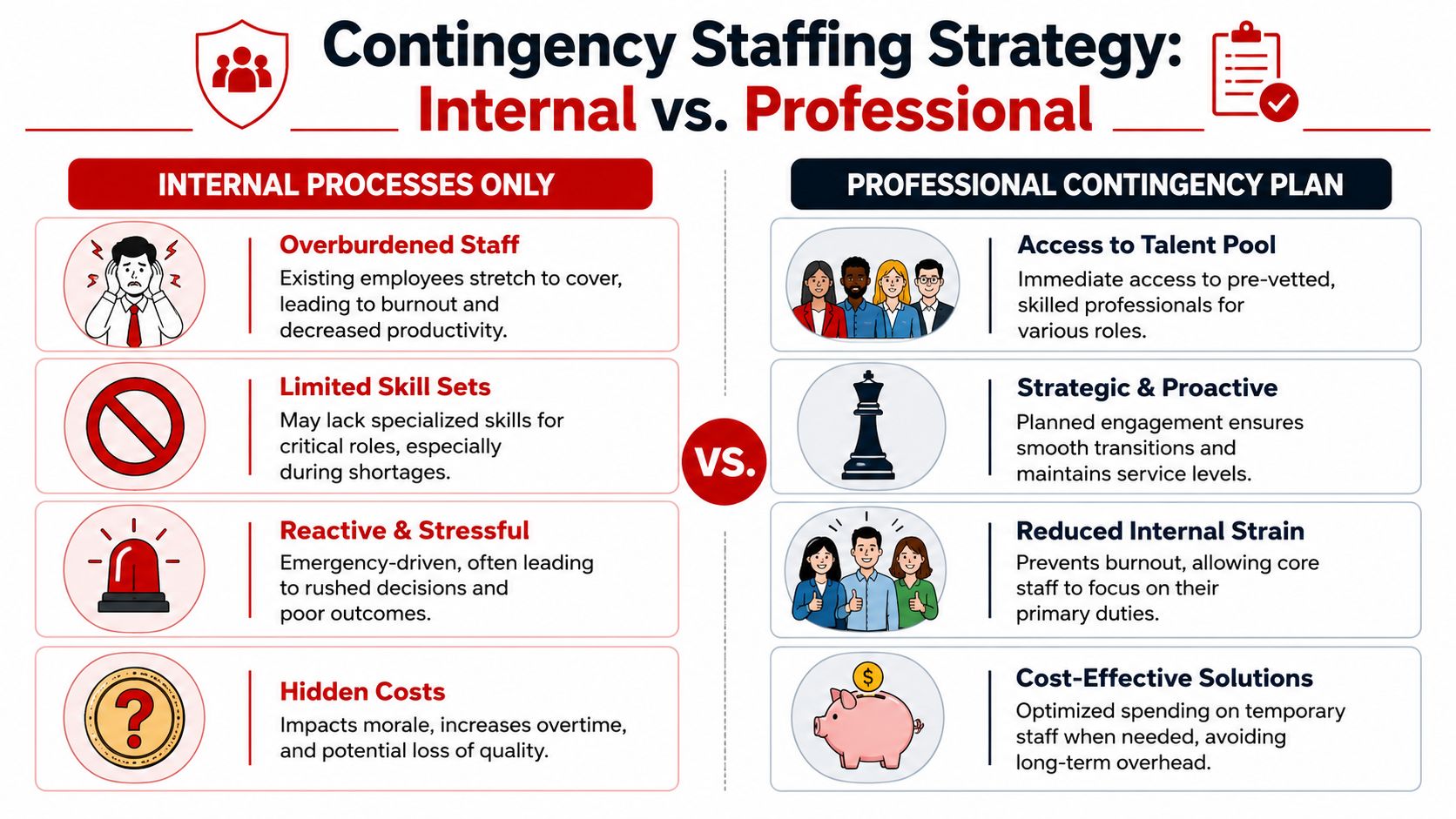
For kitchen operations, a contingency staffing strategy is not a nice extra. It is part of how you keep the business trading when the main problem is micro-absence. Those last-minute call-outs are what break service, force bad menu decisions, and push good chefs into more overtime than they can carry.
Why generic agency cover often falls short
A lot of agencies sell availability. Operators need usefulness.
Those are not the same thing. A chef who turns up late, cannot hold the section, needs constant direction, or has never worked at your pace still leaves the duty manager carrying the risk. You pay the invoice and keep the operational headache.
A workable contingency model is built around speed, role fit, checks, and clean communication before the shift starts. The aim is not just to put a body in whites. The aim is to protect output on a live service.
Build the plan before the phone rings
The strongest sites decide the rules in advance. They do not argue about spend, approval, or who to call while the breakfast prep is already slipping.
Set the basics now:
| Coverage need | What to decide now |
|---|---|
| Short-notice sickness | Who can approve external cover, spend limits, and cut-off times |
| Seasonal pressure | Which trading periods need extra bench strength booked ahead |
| Vacancy bridging | Which roles can be held temporarily while permanent recruitment continues |
| Specialist support | Which sites may need pastry, banqueting, breakfast, yacht, or villa experience |
This looks different across the sector. A boutique hotel may need someone who can switch between breakfast and evening service. A pub group may need weekend cover across multiple kitchens. A private household, yacht, or villa booking needs discretion as much as cooking ability.
Use external staffing as an operating tool
The mistake is treating temporary cover as panic buying.
Used properly, external chefs give you options. They cover sickness. They protect annual leave. They hold the line during recruitment gaps. They also let permanent teams recover instead of stacking another double on the same two reliable people.
That last point matters commercially. The cheapest shift is not always the one you absorb internally. If internal cover causes fatigue, waste, slower service, or another absence two days later, the actual cost lands elsewhere in the week.
Relief Chefs UK is one example of a specialist chef staffing provider used by hospitality operators that need vetted relief chefs, temporary chefs, permanent chef recruitment support, yacht chefs, villa chefs, and wider staffing support. For an operations team, the value is practical. Clear communication, right-to-work checks, and a model built for short-notice kitchen cover.
A contingency plan only works if a duty manager can activate it fast, with clear authority and no debate about the process.
What to put in your playbook
Keep the playbook short enough that managers will use it under pressure. It should answer five questions:
- Who approves the booking
- Which roles trigger immediate external cover
- Which supplier gets the first call
- What brief must be sent before arrival
- How the shift is reviewed afterwards
Add one more rule. Review supplier performance by section, not just attendance. A chef who arrived on time but could not hold garnish, breakfast, or banqueting properly has not solved the problem. Good contingency staffing should reduce operational risk, not rename it.
Take Control of Your Rota Today
Effective staff absence management comes down to three things. Handle absence lawfully. Prevent what you can through better policy, return-to-work discipline, and stronger rotas. Back that up with a real contingency staffing plan for the absences you can't prevent.
If one of those pieces is missing, your kitchen is exposed. If all three are working together, you give yourself a far better chance of protecting service, standards, and profit, even when a key chef drops out at the worst possible moment.
If your hotel, restaurant, pub, private household, or group operation needs dependable chef cover, contact Relief Chefs UK. We help hospitality businesses across the UK secure relief chefs, temporary chefs, permanent placements, yacht chefs, villa chefs, and practical staffing support when absence, vacancies, or seasonal pressure put the rota at risk.