

You're probably seeing the same mess everyone else sees when searching for event jobs in Liverpool. One advert wants “event staff” but doesn't say whether that means bar work, stewarding, kitchen prep, silver service, or twelve hours on your feet for basic pay. Another promises flexible shifts, then goes quiet after you apply. A third looks decent until you realise it's a generic agency blast with no proper detail on venue, rota, or who is running the job.
Such is the nature of Liverpool's event market. There's work, but there's also noise.
If you want the best roles, especially if you've got kitchen ability, you need to stop searching like everyone else. Generic event jobs are only one slice of the city's hospitality machine. The better move is to target the venues, formats, and skills that need dependable people at short notice. That's where the stronger shifts sit, and it's where experienced chefs and hospitality operators can separate themselves from the crowd.
Navigating the Liverpool Event Scene
Liverpool gives you volume. Match days, conference trade, private functions, waterfront venues, hotels, race days, music-led events, and constant hospitality turnover all create work. That's the good news.
The bad news is that plenty of jobseekers waste time chasing badly written listings, flaky agencies, and one-size-fits-all “event staff” ads that tell you nothing useful. If you've done this before, you already know the pattern. The ad is vague, the shift details are thin, and nobody tells you whether you're walking into a slick kitchen brigade or a complete shambles.

Know what Liverpool actually rewards
Liverpool rewards people who can cope with pressure, move fast, and slot into a team without drama. That applies whether you're front of house, back of house, or running operations. Venues don't need hand-holding on event day. They need people who arrive ready, read the room quickly, and keep standards up when the pace ramps up.
For chefs, that matters even more. Event kitchens are rarely forgiving. You may be stepping into an unfamiliar pass, temporary setup, festival prep line, hotel banqueting team, or a last-minute cover shift because a sous chef called in sick. If you can stabilise service without making a show of it, you're valuable.
Practical rule: Don't judge Liverpool event work by the quality of the advert. Judge it by the quality of the operation behind it.
Stop searching wide and start searching smart
A lot of people type “event jobs Liverpool” and click the first ten listings. That's lazy job hunting. Better results come from sorting roles into three buckets:
- General event support such as bar, waiting, stewarding, setup, and guest-facing shifts.
- Skilled hospitality roles such as supervisors, team leaders, hospitality runners, and experienced floor staff.
- Specialist culinary work such as event chefs, banqueting chefs, prep specialists, and short-notice kitchen cover.
That last bucket gets missed far too often. Liverpool's event trade doesn't just run on visible frontline labour. It runs on kitchens that can deliver.
Treat every application like a service brief
If a venue is hosting a large conference, football hospitality package, wedding, race-day function, or private dining event, they're not hiring for theory. They're hiring for service. So ask the questions that matter.
Before saying yes, find out:
- What's the venue format. Hotel, stadium, festival, arena, external caterer, private client?
- What's the shift pattern. Split shift, straight through, late finish, weekends?
- Who leads the team. In-house manager, agency supervisor, executive chef, event coordinator?
- What's the standard expected. Casual volume, premium hospitality, plated banqueting, or fast-turnaround catering?
That's how you cut through the noise and start finding work that suits your level.
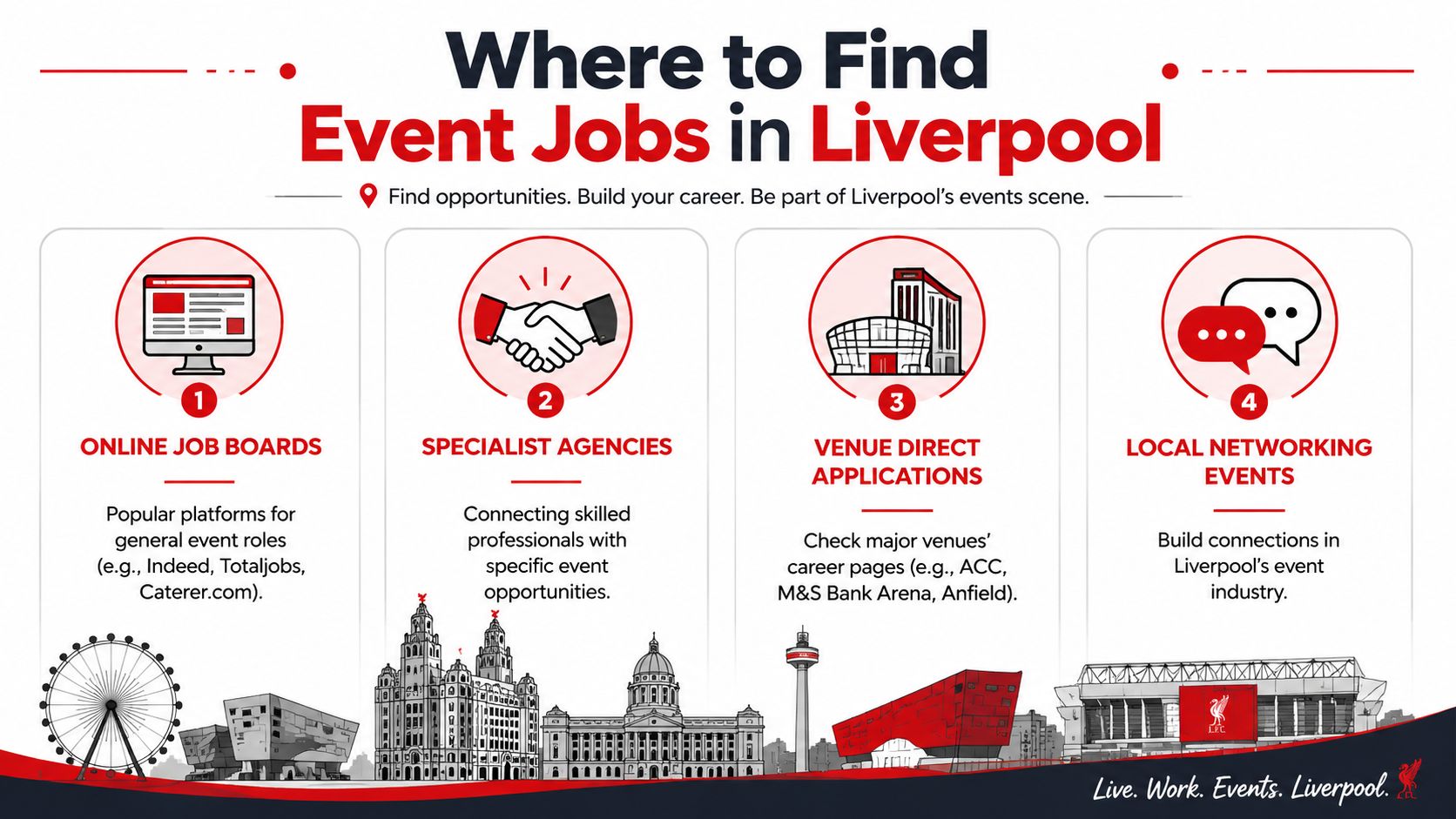
Where to Find Event Jobs in Liverpool
Liverpool has plenty of event work, but not all job sources are worth your time. Some are useful for volume. Others are better for quality. The trick is knowing which channel suits the kind of role you want.
The broadest snapshot comes from Totaljobs event roles in Liverpool, which shows 212 active Event jobs in Liverpool, with salaries ranging from £20,999 to £32,499 and an average annual salary of £24,999. The same listing shows 532 Event job openings within a 20-mile radius, including 162 temporary positions and 346 part-time roles. That tells you one thing clearly. Flexible event work isn't a side market in Liverpool. It's a core part of how the city staffs hospitality and events.
Start with job boards, then move on quickly
Job boards are useful for spotting activity levels and common job titles. They're not enough on their own.
Use them to track:
- Totaljobs for the bigger local picture and the spread of temporary and part-time demand.
- Indeed for fast-moving shift-based roles and hospitality support jobs.
- Caterer.com when you want to filter toward more hospitality-led employers.
- SimplyHired if you want a broader sweep of openings across employment types.
If you're looking for flexible kitchen cover or event-based hospitality work, temporary work in Liverpool through specialist chef support is usually a stronger route than spraying CVs across general adverts.
Watch venues directly
The better employers often recruit through their own sites first or fill known gaps before ads circulate widely. Keep an eye on major Liverpool venues and hospitality operators with steady event calendars.
Good targets include:
- ACC Liverpool and the M&S Bank Arena
- Aintree Racecourse
- Anfield hospitality operations
- City-centre hotels with conference and banqueting trade
- Boutique hotels and private event venues around the waterfront and Baltic Triangle
Direct venue applications usually tell you more about standards, departments, and expected experience. Generic listings, by contrast, seldom offer such specifics.
The strongest event workers don't wait for perfect adverts. They build a shortlist of venues and check them repeatedly.
Don't ignore local network routes
Liverpool still runs on reputation. Managers ask people they trust. Supervisors remember who turned up early and sorted problems without fuss. Head chefs remember who held the line on a rough shift.
If you want better event jobs, do this:
- Reconnect with old managers who've moved into hotels, stadiums, or events.
- Tell suppliers and agency contacts what you do well, not just that you're “available”.
- Stay visible in local hospitality circles, especially if you can cover weekends, race days, and busy city-centre dates.
General boards get you leads. Direct targeting and reputation get you better work.
How to Tailor Your CV for Event Work
Most CVs for event work are too passive. They list duties instead of proving value. That's why they get ignored.
An event manager, kitchen manager, or head chef doesn't care that you were “responsible for assisting in service”. They want to know whether you can walk into a busy operation, understand the brief, and perform without wasting anyone's time. Your CV should answer that in seconds.
Lead with pressure, pace, and relevance
Your opening profile needs to sound like someone who can work live service, not someone writing a school essay. Keep it tight. Name the environments you've worked in, the service styles you know, and the type of roles you're chasing.
Bad:
“Motivated hospitality professional with great people skills.”
Better:
“Chef with experience across banqueting, hotel breakfast, match-day hospitality, and short-notice kitchen cover. Used to fast-paced service, changing briefs, and joining new brigades quickly.”
That tells the reader something useful straight away.
If you need a sharper format, look at this chef CV advice for hospitality roles. The main point is simple. Build your CV around evidence, not filler.
Rewrite job history into service outcomes
A lot of applicants undersell themselves because they describe jobs too generally. Reframe your experience with specifics.
Use this approach:
- Replace vague wording: Don't write “worked in a busy restaurant”. Write “ran a 120-cover section during peak Saturday service”.
- Show adaptability: If you've moved between banqueting, pubs, hotels, and private events, say so clearly.
- Name practical skills: Stock control, prep for large numbers, allergen handling, breakfast volume, plated service, buffet execution, temp kitchen setup.
Here's a simple comparison:
| Weak CV line | Stronger CV line |
|---|---|
| Helped in the kitchen | Covered prep, service, and close-down in a high-volume event kitchen |
| Worked under pressure | Maintained pace and standards during peak banqueting and short-notice service |
| Good team player | Integrated quickly with new brigades and followed house systems without disrupting service |
Use the words employers actually scan for
Short-term event hiring moves fast. Whoever reads your CV is usually scanning, not studying. If relevant, use terms they're already looking for:
- Relief chef
- Temporary chef
- Event catering
- Banqueting
- Match-day hospitality
- Conference catering
- Weekend availability
- Right to Work checked
- Immediate start
Put your availability where people can see it. If you can work weekends, nights, or short notice, don't bury that at the bottom.
Match the CV to the job, not your ego
If you're going for event work, don't send the same CV you'd use for a permanent head chef role in Berkshire, a yacht chef post on the South Coast, or a villa chef job overseas. Event hiring is about speed, proof, and fit.
Keep it clean. Two pages. Clear contact details. No fluff. If the role is temporary, write like someone who's ready to start, not someone waiting to be persuaded.
The Hidden Market for Specialist Event Chefs
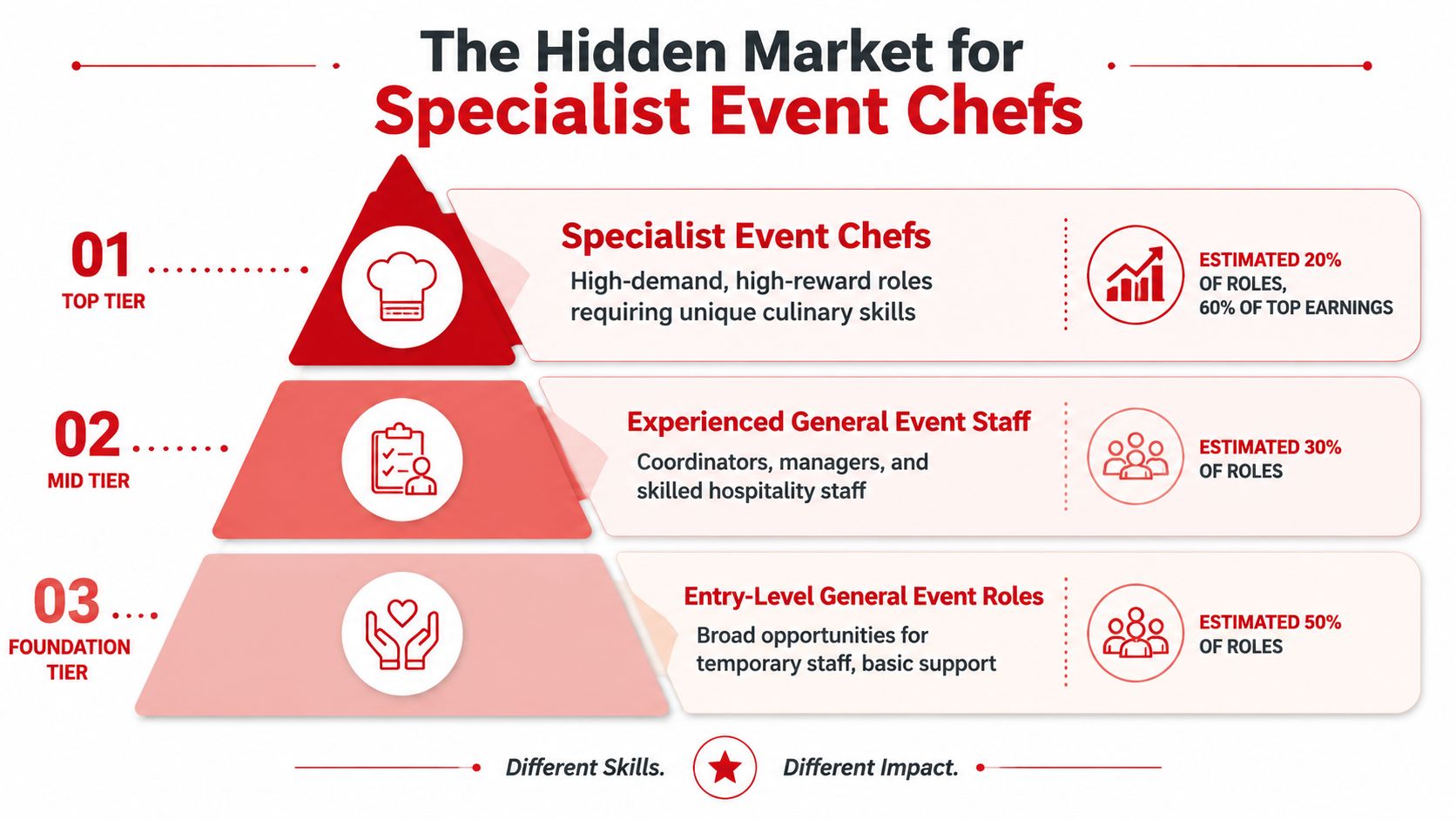
Liverpool's event scene has plenty of general roles. That's obvious. What often goes unnoticed is where the specific shortage lies.
The harder vacancy to fill isn't always the steward, runner, or waiter. It's the chef who can walk into a live event environment and keep the kitchen steady. That's where specialist culinary talent has an advantage, and too many chefs still market themselves like generic temps.
According to Caterer.com event roles in Liverpool, only 1 of 26 event jobs explicitly lists “Chef” compared with 25 non-culinary roles. That's a poor reflection of what venues need, especially when the same verified data notes a 38% increase in catering demand at Liverpool venues. The issue isn't that chefs aren't needed. The issue is that chef demand is underrepresented in generic event hiring channels.
Why specialist chefs stand out fast
A capable event chef solves problems that general staffing agencies struggle with. They don't just fill a rota gap. They protect service.
That could mean:
- stepping into banqueting prep for a hotel function
- covering a sick chef before a conference lunch
- running a section during race-day hospitality
- supporting a festival or external catering team with volume and pace
- helping an independent pub execute a private event menu without the head chef burning out
Liverpool venues don't need kitchen passengers. They need people who can prep cleanly, manage timing, and stay calm when service gets messy.
Position yourself as a culinary specialist
If you're a chef, stop describing yourself as “available for temp work” and start describing the specialist value you bring. That's how you move closer to better pay, better shifts, and better employers.
Focus on the parts of your background that make you useful in event settings:
- Large-scale prep experience for banqueting, buffets, and hospitality packages
- Service flexibility across breakfast, lunch events, dinners, and late finishes
- Cuisine strengths if you're trusted on premium or themed menus
- Temporary kitchen confidence if you've worked in pop-ups, outside catering, or unfamiliar sites
- Short-notice reliability because many venues are hiring under pressure, not in ideal conditions
If you can join a new brigade at short notice and keep standards intact, you're not spare labour. You're specialist cover.
Liverpool isn't the only market that values this skill
The same pattern plays out across the UK. Bristol hotels, Devon pubs, Wales resorts, Dorset coastal venues, and event-led hospitality businesses in Windsor, Reading, and Slough all run into the same staffing gap. They can usually find bodies. They struggle to find chefs who are competent from minute one.
That's the opportunity. If you've got proper event kitchen experience, market it directly and unapologetically.
Pay Rates Shifts and On-Shift Professionalism
Event work can be good money or bad money. The difference usually comes down to role type, timing, and how much trust the employer puts in you.
For baseline context, Ubeya's Liverpool event staff salary page states that the average hourly wage for event staff in Liverpool is £9.47, while part-time hospitality-based event roles can reach up to £12.90 per hour. That tells you what many already know from the floor. Basic event support pays less. Roles with more physical demand, customer responsibility, or operational pressure tend to pay more.
Understand what the shift is really asking of you
Don't accept a shift based on rate alone. Ask what the work involves.
A decent event shift brief should tell you:
| What to confirm | Why it matters |
|---|---|
| Start and finish time | Event work often overruns, especially at close-down |
| Dress code and kit | Black shirt means one thing. full chef whites mean another |
| Break policy | Long shifts without a proper break are a warning sign |
| Supervisor or kitchen lead | You need to know who you report to on arrival |
| Payment method and timing | Serious employers explain this clearly before the shift |
If the answer to every question is vague, walk away. Disorganised briefing usually means disorganised operations.
Expect awkward hours and fast changes
Liverpool event work often means early starts, late finishes, weekends, and sudden rota changes. That isn't exploitation by default. It's how events operate. But there's a difference between genuine operational pressure and poor management.
Look for signs of professionalism:
- Clear confirmation before shift
- Right to Work checks handled properly
- A written rate or contract detail
- A named contact on the day
- Prompt payment expectations
That applies whether you're doing hospitality support, relief chef cover, permanent chef recruitment interviews, or one-off event catering.
Professionalism on shift still decides future work
Plenty of workers lose repeat bookings because they treat one event like a disposable shift. That's amateur stuff. In hospitality, someone always remembers.
Do the basics properly:
- Arrive early enough to get briefed, changed, and settled.
- Read the team quickly. Don't try to impress people by talking too much.
- Follow house systems first. Your old venue did things differently. Nobody cares.
- Keep standards high at the end of the shift, not just during the busy middle.
- Leave the door open for repeat work by being reliable, not dramatic.
A strong event worker makes service easier. A weak one creates extra work for everyone else.
Why Smart Chefs Use a Specialist Agency
Most chefs who go it alone run into the same problems. Too many messages, not enough detail, unreliable clients, payment chasing, and stretches where the diary goes quiet at the worst possible time. Freelance freedom sounds good until you're spending your day plugging admin gaps instead of cooking.
That's why experienced chefs tend to move toward specialist support once they've had enough of the nonsense.
The shortage has changed the balance
The wider labour market is already telling you where the advantage lies. UKHospitality's workforce campaign page reports that in 2025 the sector faced chef vacancies ranging from 10% for head chefs up to 21% for production chefs. For independent pubs, boutique hotels, and event-led operators, that hits kitchen stability hard.
That shortage creates opportunity for chefs who are organised and commercially smart. If venues struggle to secure dependable cover, the chefs who can deliver consistently become far more selective about where they work and who represents them.
What a proper specialist agency actually fixes
A good chef-focused agency does more than pass over shifts. It removes the friction that wastes your time.
That usually means:
- Vetting venues properly so you're not walking into a bin fire
- Handling compliance and admin including right-to-work checks and placement detail
- Protecting payment processes so you're not chasing invoices endlessly
- Matching skill to brief so a banqueting chef goes to banqueting, not a random pub shift that doesn't fit
- Opening wider opportunities across pubs, hotels, private households, yachts, villas, and seasonal hospitality hotspots such as Bristol, Devon, Dorset, Wales, Windsor, Reading, and Slough
For chefs looking at event work specifically, specialist recruitment agencies for events are often a stronger route than generic temp agencies that don't understand kitchen realities.
A quick overview of how chef staffing works in practice helps:
Why the better chefs stop doing everything themselves
The strongest chefs I know don't want more admin. They want better placements, cleaner communication, and work that suits their level. Specialist agencies can provide relief chefs, temporary chefs, permanent chef recruitment support, yacht chefs, villa chefs, and wider hospitality staffing support without forcing chefs to fight through generic hiring chaos.
Relief Chefs UK has been established since 2013, and that matters. A chef staffing partner that understands service pressure, short notice sickness, seasonal demand, agency reliability issues, and kitchen stability will always be more useful than a generic recruiter who's never worked a Saturday night in a live kitchen.
Frequently Asked Questions
FAQ Event Work in Liverpool
| Question | Answer |
|---|---|
| Are event jobs in Liverpool only front-of-house roles? | No. A lot of listings lean that way, but Liverpool's event economy also needs kitchen cover, banqueting chefs, prep chefs, supervisors, and operational hospitality staff. The problem is that specialist culinary demand is often hidden behind broad event hiring language. |
| What makes a relief chef different from a basic temp? | A proper relief chef should be able to join a brigade quickly, understand the brief, protect service, and work to house standards without slowing the kitchen down. That's not the same as just being an extra pair of hands. |
| Should I use job boards or go direct to venues? | Use both, but don't rely on boards alone. Boards are fine for seeing what's active. Direct venue contact is often better if you want higher-standard hospitality employers or more relevant event kitchen work. |
| What should I ask before accepting an event shift? | Ask who you report to, what the service style is, what the finish time really looks like, what kit you need, and how payment works. If they can't answer clearly, the job may be more trouble than it's worth. |
| Are agency fees a real problem for small venues hiring chefs? | Yes. Verified Liverpool data shows 81% of independent Liverpool pubs cite cost of agency fees as their top barrier to hiring event kitchen staff. That's one reason transparent pricing matters when venues choose staffing support. |
| Can event work lead to permanent roles? | Absolutely. Hotels, pubs, and boutique venues regularly trial people through temporary shifts before offering longer-term work. If you turn up, perform well, and make the manager's life easier, you put yourself in a strong position. |
Straight answers that matter
One question comes up constantly from smaller operators. How can independent pubs and boutique hotels in Liverpool secure vetted, right-to-work-checked chefs for short-term event cover without getting stung on fees?
That's exactly where many general staffing routes fall down. They blur the difference between event staffing and chef staffing, then bury costs in the process. The result is frustration for operators and poor placements for chefs.
Transparent fee structures matter because hidden costs usually show up at the exact moment a venue is already under pressure.
For jobseekers, that matters too. Good agencies and serious venues are usually clearer, faster, and easier to work with. Poor ones waste your time.
The smart move for both chefs and venues
If you're a chef, target the specialist end of the market. If you're a venue, stop pretending any general event worker can fix a kitchen problem.
Liverpool's event scene has real opportunity, but only if you approach it properly. The best work goes to people who understand pressure, reliability, and service standards. That's true whether you're covering one race-day shift, stepping into hotel banqueting, or looking for a longer-term route into stronger hospitality operations.
If you need dependable chef cover or you're a chef looking for serious hospitality opportunities, speak to Relief Chefs UK. Established in 2013 and built by hospitality people, not box-ticking recruiters, they support independent pubs, restaurants, boutique hotels, private households, yachts, and villas across the UK with relief chefs, temporary chefs, permanent chef recruitment, yacht chefs, villa chefs, and wider hospitality staffing support. If short notice sickness, seasonal demand, agency reliability, or kitchen stability is hurting service, get in touch and sort it properly.