
Friday afternoon. The bookings sheet is full, a bank holiday weekend is about to start, and your sous chef rings in sick. The head chef is already covering sections, the duty manager is chasing agencies, and someone from payroll has just forwarded an email from a former employee threatening a claim.
That's the point where employment law compliance stops sounding like paperwork and starts looking like business survival.
In hospitality, legal risk rarely arrives on a quiet day. It turns up when you're short-staffed, trying to protect service, filling rotas in Devon, Bristol or Windsor, and making fast decisions with incomplete information. That's when operators cut corners. A rushed hire. A verbal agreement. A missing right-to-work recheck. No written particulars on day one because “they're only in for a few shifts”.
Those shortcuts cost more than the shift they save.
Your Nightmare Scenario Is a Compliance Failure Waiting to Happen
A pub in Berkshire loses a key chef before a major weekend. The general manager scrambles, pulls in a temporary chef at short notice, and tells the team they'll sort the paperwork later. Service goes ahead. Guests are fed. The immediate crisis feels solved.
It isn't.
A week later, someone asks where the written terms are. Payroll isn't clear on holiday pay. Nobody can confirm who checked right to work. Tips were shared informally, but there's no record. Then the former employee's complaint lands at exactly the wrong moment, when management time is already stretched.
That's how compliance failures happen in hospitality. Not because operators don't care, but because kitchens move fast and pressure rewards whoever can plug the gap first.
The labour market makes this worse. There are 132,000 vacancies across the UK hospitality sector, which is 48% above pre-pandemic levels, according to UKHospitality's workforce campaign. When that many roles are open, relying on an already thin permanent team is a risk in itself.
Why the kitchen crisis becomes a legal problem
Short-staffing pushes bad habits to the surface:
- Speed over process: Someone starts before checks are fully complete.
- Verbal over written: Terms get agreed in a corridor, not documented properly.
- Assumptions over evidence: The venue assumes the agency, payroll provider, or line manager has handled it.
Practical rule: If you can't prove what happened, work on the basis that you may struggle to defend it later.
In a hotel, pub, restaurant, yacht galley or private villa kitchen, compliance is part of operational resilience. If your staffing model only works when everything goes smoothly, it isn't a model. It's luck.
What Employment Law Compliance Means for Your Venue
Most hospitality operators hear “employment law compliance” and think HR files, staff handbooks and solicitor letters. In practice, it means something simpler. It's the system that makes sure every person working in your business is engaged, paid, managed and exited lawfully.
Employment law addresses the full employee lifecycle. Recruitment. Onboarding. Pay. Hours. Leave. Conduct. Grievances. Harassment prevention. Dismissal. The legal duty doesn't disappear because someone is seasonal, on agency cover, helping through Christmas in Dorset, or filling a busy stretch in Wales.
Compliance is a commercial control, not an admin burden
A compliant venue protects more than tribunal defence. It protects service standards, management time, cash flow and reputation.
When compliance is weak, small mistakes stack up:
| Area | What goes wrong in practice | Business effect |
|---|---|---|
| Recruitment | Checks are rushed | Unsafe or unlawful hires |
| Onboarding | Terms aren't issued properly | Disputes over pay, hours, duties |
| Rostering | Hours are unmanaged | Fatigue, errors, grievances |
| Pay | Holiday, tips or rates are mishandled | Claims, distrust, staff churn |
| Exit | Dismissals are badly documented | Harder to defend complaints |
Hospitality magnifies all of this because staffing models are mixed. You may have permanent chefs, relief chefs, temporary chefs, agency support, front-of-house teams, seasonal workers, yacht chefs for private placements, and permanent chef recruitment happening at the same time.
Good operators build compliance into daily routines
The venues that handle pressure best usually do three things well.
- They standardise the basics: Every starter gets the same onboarding discipline, whether they're joining for one weekend or one year.
- They keep records live: Rotas, pay, contracts, right-to-work evidence, training and policy acknowledgements are easy to retrieve.
- They treat temporary staffing as part of the system: They don't assume short-term cover sits outside normal obligations.
A stable kitchen usually sits on top of boring, repeatable management habits. That's a strength, not a weakness.
This matters in high-turnover areas such as Bristol and Reading, in seasonal destinations such as Devon and Dorset, and in event-heavy locations such as Windsor and Slough. When labour is tight, businesses that run clean processes usually keep teams longer and recover faster from absences.
Your Core Legal Obligations A Plain English Guide
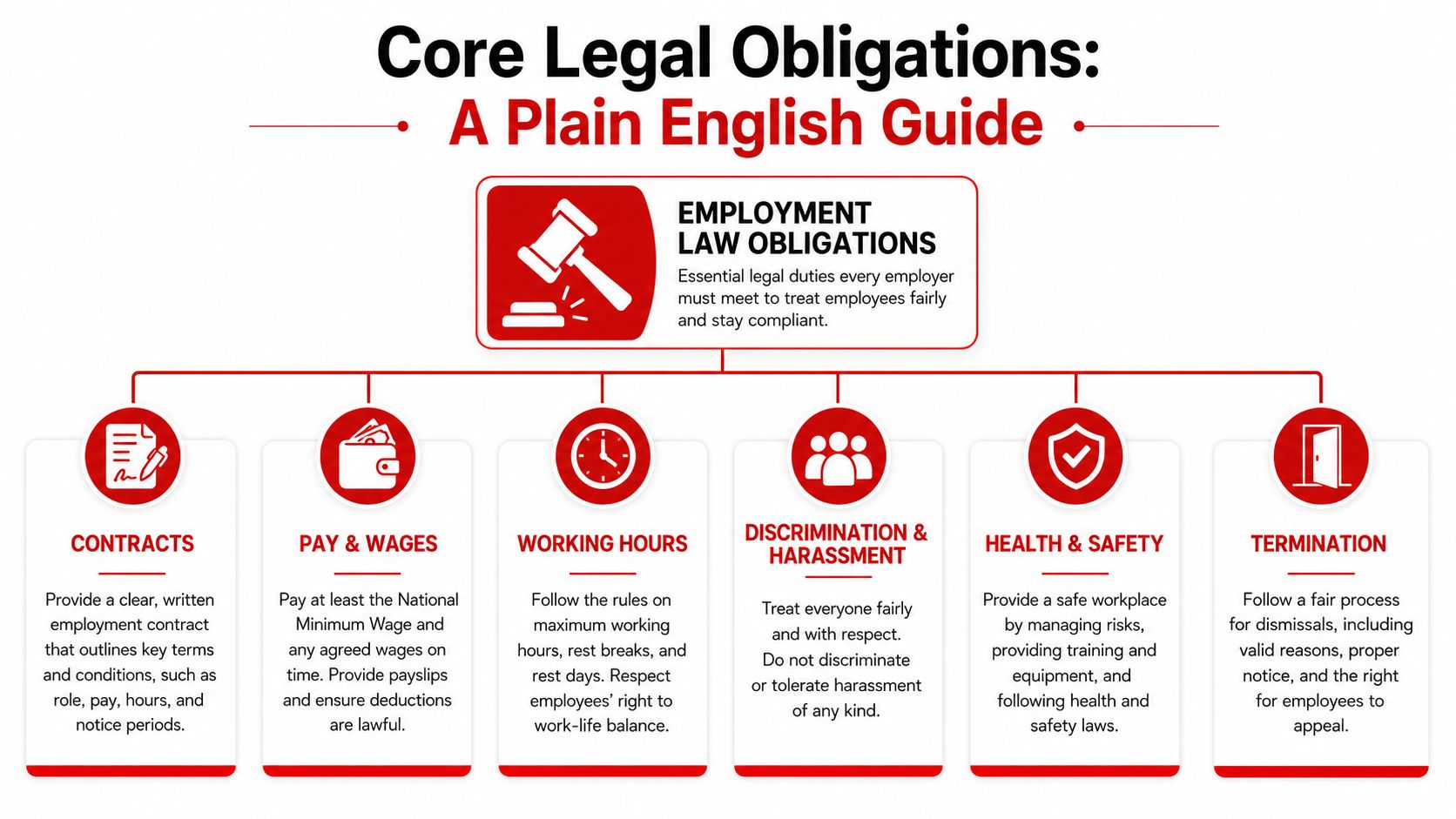
Employment law compliance becomes manageable when you break it into a few fundamental duties. In hospitality, the risks usually sit in the same places every time.
Written terms and day-one paperwork
Workers should know who they work for, what they'll be paid, how hours work, and what the main rules are. In kitchens, problems start when operators think a quick phone call and a rota slot are enough.
A relief chef covering a wedding weekend still needs clarity. So does a seasonal breakfast chef in a boutique hotel. If terms are vague, disputes about rates, breaks, duties and holiday pay follow quickly.
A good habit is simple. Before the first shift starts, the worker should have written particulars and the venue should know exactly what relationship is in place.
Pay, wages and tips
Pay errors are one of the fastest ways to create anger in hospitality. The law is moving in a stricter direction, and operators need to keep up.
As of April 2025, the UK National Living Wage for workers aged 21 and over is £12.21 per hour, up from £11.44 in April 2024 and £10.42 in 2023, as outlined in the Pinsent Masons UK workforce employment compliance guide. If your rates, deductions or unpaid time drag actual pay below the legal minimum, you're exposed.
Tips need the same discipline. The Employment (Allocation of Tips) Act 2023 came into force in July 2024, which means employers can't withhold tips and must keep clear records of tip allocation for three years, as summarised in The Shopworks guide to employment law changes. That matters in restaurants, pubs and hotels where tronc or pooled tips involve both front and back of house.
Agency workers and holiday pay
If you use temporary chef cover regularly, you need to track how long people stay in the same role. Under the 12-week Assignment Working Time rule, agency workers in the same role must receive pay and basic working conditions equivalent to permanent staff after that point. The Acorn by Synergie temporary staffing compliance checklist notes that getting this wrong can increase staffing costs by 15–20% for long-term placements.
The same source confirms that from April 2024, rolled-up holiday pay for irregular hours workers is legally permitted, provided it's clearly set out in contracts and payslips. For pubs and hotels using flexible relief cover, that can simplify payroll, but only if documented properly.
Right-to-work checks and record keeping
Many venues often become overconfident. Right-to-work checks are mandatory for direct hires and agency staff. The protection only exists if valid pre-employment checks are done correctly.
The position is blunt. The statutory civil penalty defence protects against liability of £20,000 per worker only if compliant checks were completed. If a visa expiry date isn't monitored and rechecked where required, the defence is lost and businesses can face fines of up to £60,000 per illegal worker, according to Home Office compliance guidance discussed in this industry briefing.
Two practical points matter.
- Own the process internally: The check must be carried out by an employee of the business, except where compliant digital verification is used for British and Irish citizens.
- Treat rechecks as diary-critical: A lawful initial hire can become an unlawful ongoing engagement if follow-up checks are missed.
For wider operational standards, your staffing and workplace processes should also align with strong health and safety compliance procedures, especially where temporary kitchen staff move between busy sites.
Operator's view: The dangerous phrase is “I thought someone else had done it.”
Harassment prevention and fair treatment
Since October 2024, employers have had to take proactive reasonable steps to prevent sexual harassment. That means policies, training and reporting routes must work in real life, not just exist in a file.
The same Pinsent Masons guidance notes that failure here can lead to a 25% uplift in tribunal compensation. In hospitality, where hierarchy, heat, alcohol service and late finishes can all create risk, passive management isn't enough.
The Most Common Compliance Traps for Pubs and Hotels
The usual compliance failures in hospitality aren't exotic. They're ordinary shortcuts dressed up as practical decisions.
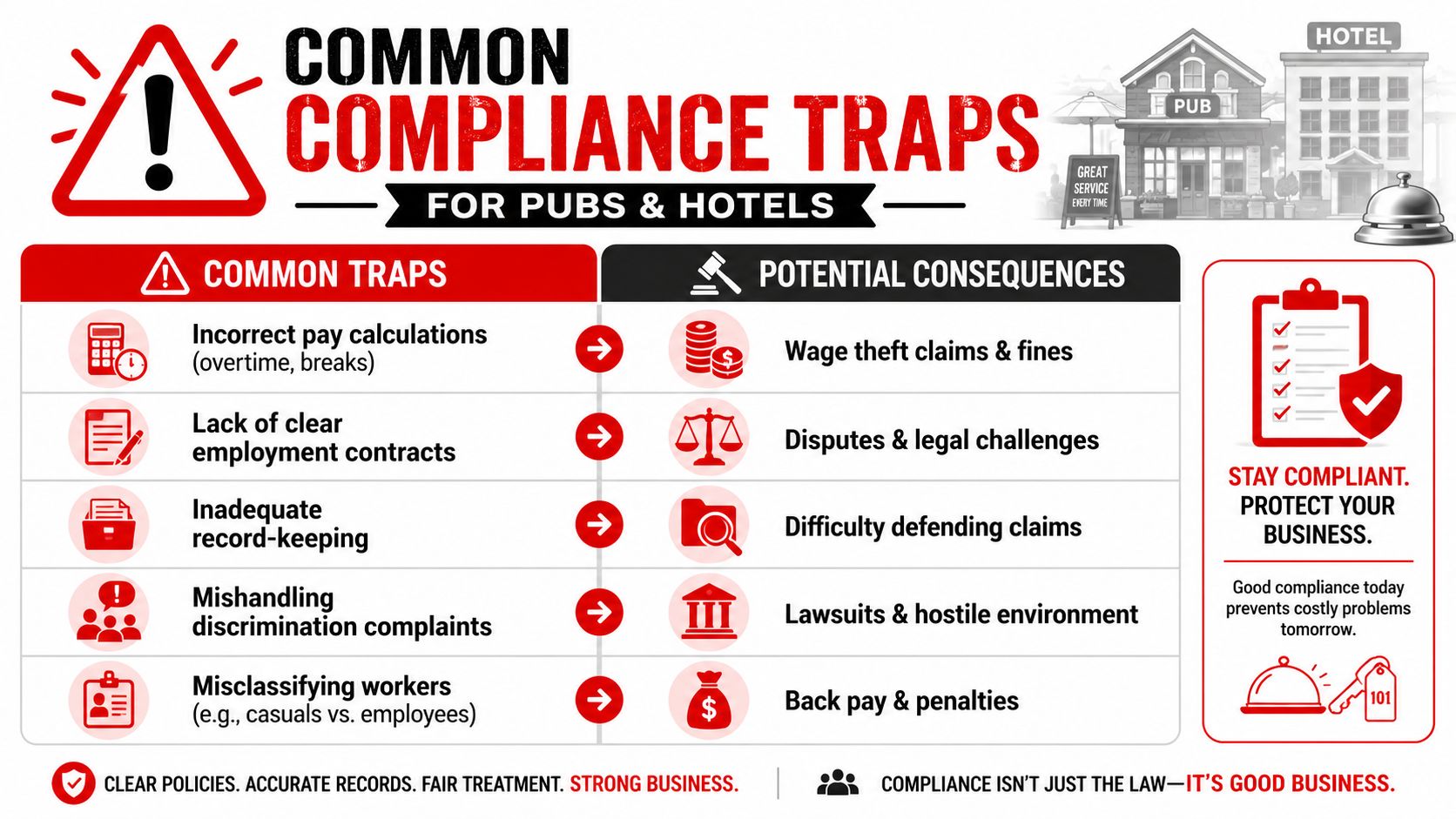
A common one is the “just get them in” shift. Someone covers a Saturday in a country pub in Berkshire or a hotel in Wales, but nobody issues proper written particulars because the booking was urgent. That feels harmless until there's a disagreement over rate, hours or conduct.
Another trap is assuming temporary staff sit outside normal process. They don't. If they're in your kitchen, on your rota and under your direction, the paperwork, checks and behaviour standards still matter.
Four shortcuts that repeatedly cause trouble
- Cash-in-hand thinking: If the arrangement is informal, operators often become sloppy about records. Informal pay creates formal problems later.
- Agency assumptions: Venues assume all checks are done merely because a worker arrived through a third party.
- Holiday pay guesswork: Irregular hours workers get paid inconsistently because no one has settled the method in writing.
- Loose tip handling: Managers rely on custom rather than transparent policy and records.
The scale of the day-one problem is bigger than many operators realise. Fourteen per cent of UK workers experience clear employment rights violations, including missing the statutory written statement of particulars required on their first day, according to UCL reporting on UK worker rights violations. For hospitality businesses using rapid cover, that failure alone can lead to tribunal claims capped at four weeks' pay.
This short video gives a useful overview of where employers often trip up in practice.
What doesn't work in the real world
A lot of pubs and hotels still run on trust plus memory. That's fine until a worker challenges the record.
What works is process discipline. If you bring in outside chef cover, know exactly what good practice looks like when working with temp agencies. Ask who employs the chef, who pays them, who checks right to work, how holiday pay is handled, and what happens if the assignment extends.
If the answer to any of those questions is vague, the risk probably sits with you more than you think.
A Practical Hospitality Compliance Checklist
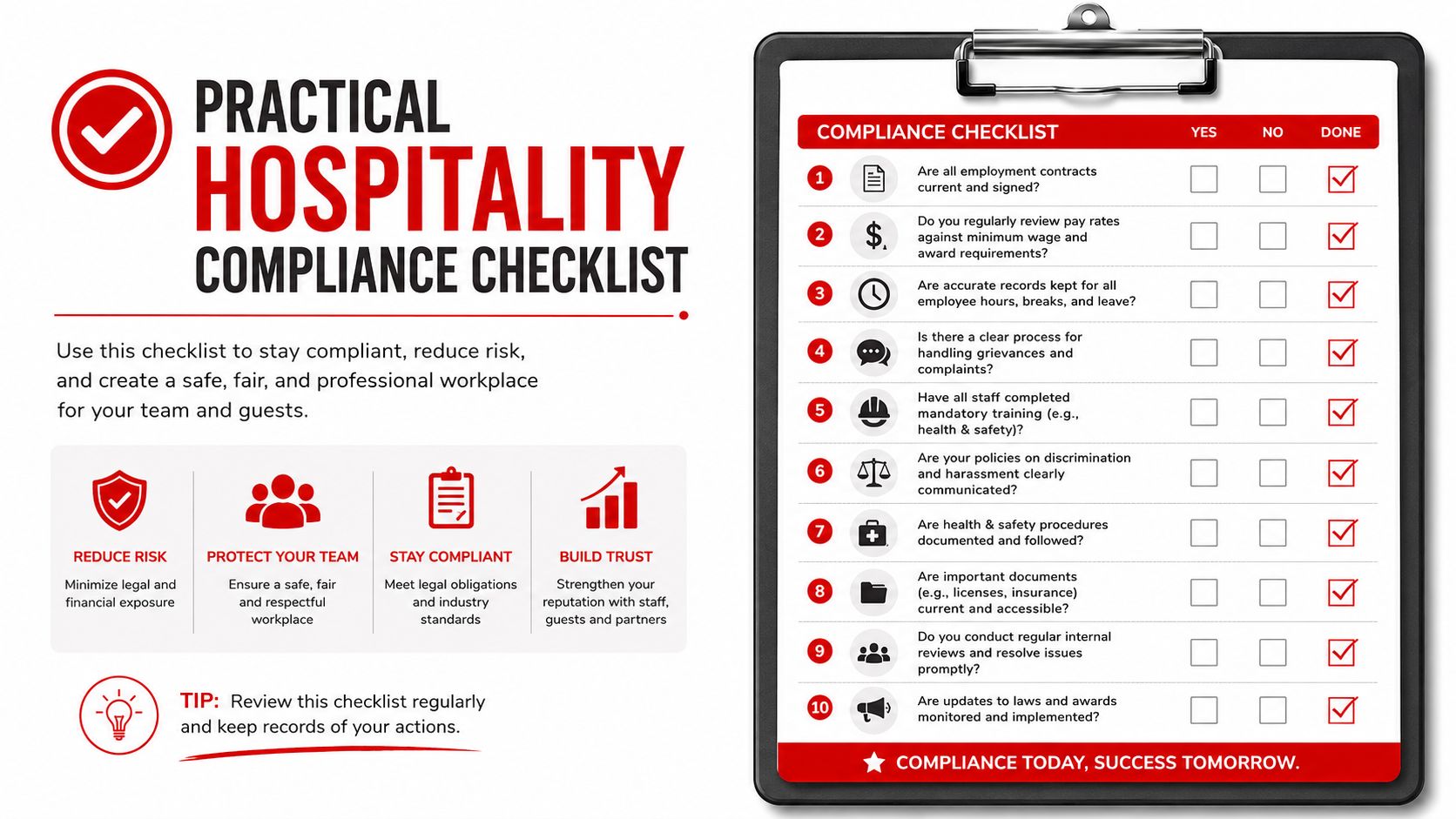
Most operators don't need another legal lecture. They need a working checklist they can run against tonight's rota, next week's payroll and this season's hiring plan.
Recruitment and onboarding
Start here, because most later disputes begin at the front end.
- Confirm status clearly: Is this person permanent, temporary, agency-supplied, seasonal, yacht-based, villa-based, or covering a defined short-term need?
- Complete checks before service pressure takes over: Identity, right to work, references where appropriate, and role details should be settled before they walk onto a section.
- Issue written particulars on day one: Don't leave terms to be “sorted Monday”.
- Set the behavioural baseline: Workers should know who they report to, how complaints are raised, and what standards apply.
Pay and records
If records are weak, defence is weak.
Ask yourself:
- Are all hourly rates current and aligned with the right category of worker?
- Is holiday pay handled consistently for irregular hours staff?
- Are payslips, time records, tip allocation records and assignment dates easy to retrieve?
- If someone challenged a week's pay, could you explain and evidence every line?
A practical manager should be able to pull the answer without digging through texts and rota screenshots.
Management test: If payroll depends on memory, it's already vulnerable.
Working conditions and ongoing management
Kitchens often drift. The first week may be tidy, then process slips as service gets busy.
Use this quick control list:
| Check | Why it matters |
|---|---|
| Hours and breaks are monitored | Prevents fatigue and disputes |
| Managers know the reporting route for harassment concerns | Supports safer workplaces |
| Assignment lengths are tracked | Prevents agency worker issues later |
| Temporary staff receive the same site briefing as permanent staff | Reduces confusion and risk |
Absence management deserves attention too. A short-notice sickness issue can create panic hiring, inconsistent treatment and poor records if there's no clear procedure. A written approach to sickness absence policies gives managers something solid to follow when the kitchen is under strain.
Ending employment or ending assignments
Problems at the end of a relationship are often caused by poor notes at the start.
Before you dismiss, cut shifts, end a trial or stop using a temporary worker, make sure the reason is clear, documented and communicated properly. Hospitality businesses get into trouble when they act quickly but record nothing.
The strongest venues don't rely on one experienced manager “just knowing how it's done”. They make the process repeatable, even when the head chef is off, the owner is away, or a site is deep into peak season.
How Relief Chefs UK Shields Your Business From Risk
When a venue brings in outside chef cover, the question isn't just “Can they cook?”. It's also “Who is carrying the legal and payroll burden properly?”
That's where a specialist staffing partner changes the risk profile.
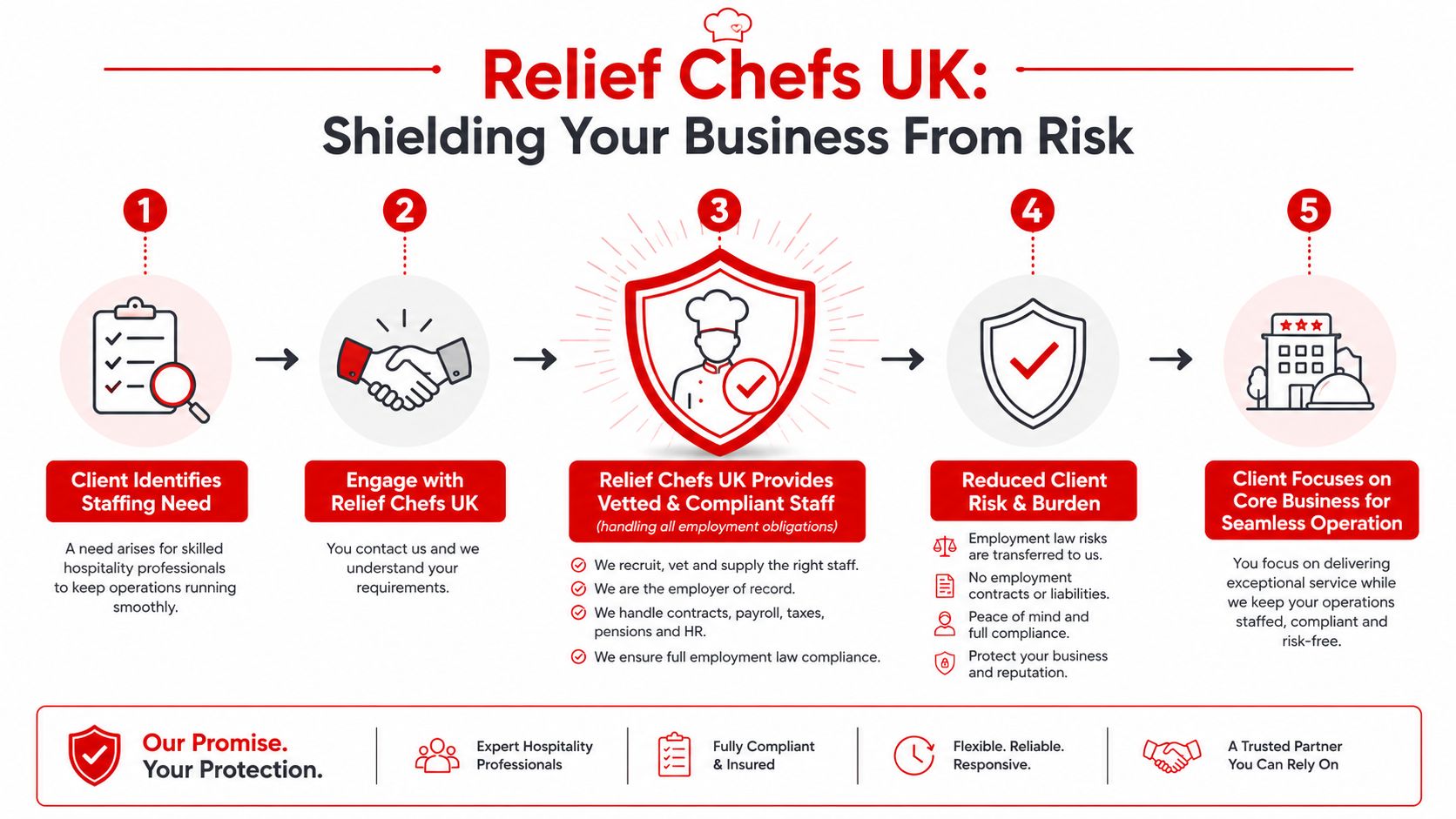
Relief Chefs UK was established in 2013 and operates nationwide for pubs, restaurants, boutique hotels, private households, yachts and villas. The difference is that it's run by chefs with hospitality experience, not by generalist recruiters trying to fill kitchen shifts from a desk with no operational context.
What proper staffing support should remove from your desk
For hospitality operators, a compliant staffing partner should reduce exposure in the areas that usually go wrong:
- Vetting and right-to-work discipline: Workers supplied should already be screened and documented properly.
- Clear engagement terms: Pay, status and assignment details should be settled before arrival.
- Payroll handling: PAYE, holiday pay and core administration should be managed cleanly.
- Operational responsiveness: If a chef drops out, replacement support should be practical, not theoretical.
That matters whether you need relief chefs for a weekend in Devon, temporary chefs for a hotel group in Bristol, permanent chef recruitment in Dorset, or yacht chefs and villa chefs for private hospitality settings.
Why this matters even more in 2026
The compliance environment is tightening around temporary labour models. For hospitality businesses using temporary chefs, the April 2026 Employment Rights Bill shifts PAYE liability from umbrella companies to the end-user business or supplying agency, as outlined in Skadden's UK employment law update. In plain terms, that means operators need to know exactly who is responsible and whether the supply chain is set up correctly.
A weak staffing arrangement can leave a venue exposed to tax liability, worker disputes and enforcement action from the new Fair Work Agency referenced in that update. A strong one acts as a compliance shield.
The practical benefit for operators
This doesn't mean outsourcing responsibility for how people are treated on site. It means delegating specialist employment administration to a partner built for it, while your managers focus on service, standards and guests.
Relief Chefs UK supports:
- Relief chefs for emergency cover
- Temporary chefs for seasonal pressure and sickness gaps
- Permanent chef recruitment when a site needs long-term stability
- Yacht chefs and villa chefs for private and mobile hospitality settings
- Wider hospitality staffing support across the UK
With support across hospitality hotspots including Wales, Reading, Slough, Windsor, Berkshire, Bristol, Devon and Dorset, that model gives operators a faster route to kitchen continuity without improvising employment risk every time a shift opens up.
From Compliance Risk to Kitchen Stability
Employment law compliance isn't separate from operations. In hospitality, it is operations. If pay is wrong, if onboarding is patchy, if right-to-work checks are incomplete, or if temporary staffing is handled casually, the legal issue quickly becomes a service issue.
That's why the best-run venues treat compliance as kitchen infrastructure. It keeps the rota dependable, protects the brand, and gives managers a framework when pressure is highest. It also reduces the temptation to make bad short-term decisions that create expensive long-term problems.
For operators balancing short notice sickness, chef shortages, seasonal demand, agency reliability concerns and the need for kitchen stability, trying to manage every staffing problem in-house is rarely the safest route. A specialist partner can take a large part of that burden off the business, especially where flexible cover, permanent hiring and high-turnover periods all overlap.
If your venue needs reliable chef cover without adding compliance risk, speak to Relief Chefs UK. Established in 2013, trusted by hospitality businesses across the UK, and run by chefs, not recruiters, Relief Chefs UK provides relief chefs, temporary chefs, permanent chef recruitment, yacht chefs, villa chefs and wider hospitality staffing support. If you need help in Devon, Bristol, Wales, Berkshire, Windsor, Reading, Slough, Dorset or anywhere nationwide, get in touch for a no-obligation conversation about protecting service, stabilising your kitchen and filling gaps properly.