
Exec Sous Chef Role: Duties, Skills and How to Hire One
24 October 2026
It's Friday at 6.45pm. Your head chef has called in sick, the function room is setting up for tomorrow's wedding, and the pass is already filling with checks. If nobody in that kitchen can step up, run service, control the sections and close down safely, you don't have a staffing gap. You've got an operations gap. That's exactly where a good exec sous chef earns their money.
What an Executive Sous Chef Owns on a Shift
An executive sous chef is the senior kitchen management role below the head chef and above the sous chefs. They deputise when the head chef is absent and run the kitchen day to day. Don't treat the title as a nicer badge for your best cook. Treat it as a shift-level operations manager who also cooks to a high standard.
Take that Friday scenario. It's 7pm, three sections are running, front of house are asking about a nut allergy, and a delivery shortfall means a starter needs changing. A strong section chef will keep their own station moving. An executive sous chef holds the whole picture, reallocates a chef to larder, calls the pass, speaks to the restaurant manager and makes sure the allergy plate never touches the wrong board.

The Work in Practical Terms
The daily work starts before service. They check mise en place, allocate sections, confirm covers and functions, and spot problems while there's still time to fix them. During service they run or supervise the pass, control timing and quality, and reset the line when tickets back up.
After service, the job doesn't stop at a clean down. They check stock, record waste, review what's needed for tomorrow and hand over clearly to the next shift. If your venue only judges this role on plate quality, you're missing most of its value. Continuity, cost control and team stability matter just as much.
What the exec sous chef owns and how to tell it is working
| Area | What the exec sous chef owns | Sign it is working |
|---|---|---|
| Service | Runs the pass, calls tickets and resets the line when behind | Tickets clear within the agreed time on a busy night |
| Brigade | Allocates sections, supervises staff and runs handovers | Every section has a named lead on every shift |
| Food safety | Daily HACCP verification covering receiving temperatures, chilled storage, allergens, cooling, cleaning records | Records completed each shift with no undocumented corrections |
| Prep and mise en place | Checks par levels and station readiness before service | Stations ready at the set time |
| Ordering and stock | Checks deliveries, stock variance and waste | Variance reviewed and explained each week |
| Rotas and hours | Builds rotas within working time rules | No shift pattern that leaves fewer than 11 hours between shifts |
| Cover | Runs the kitchen when the head chef is absent and briefs any temporary cover | Cover arrives with a written handover pack |
Food Safety Is Not a Paper Exercise
UK food businesses must run a written food safety management system based on HACCP principles, with hazards identified, critical control points defined, limits and monitoring set, corrective actions recorded and controls reviewed when processes or suppliers change, as set out in UK food safety and kitchen hygiene guidance. In a busy kitchen, somebody senior has to own that system on the shift. In most multi-section venues, that person is the executive sous chef.
Their daily verification routine should cover receiving temperatures, chilled storage, allergen separation, cooking and chilling controls, cleaning records and corrective actions. Clear control points and records written at the time reduce the chance of unsafe prep, cross-contamination or undocumented problems reaching the pass. For smaller restaurants, cafés and pubs, the Food Standards Agency's Safer Food, Better Business toolkit is a practical framework. Sous-vide, vacuum packing and other complex processes may need a more formal HACCP assessment.
Practical rule: If the records are only completed when the head chef is in, you don't have a system. You've got a single point of failure.
In the UK, this isn't a separately measured official occupation. The National Careers Service chef profile lists sous chef as an alternative title within the chef occupation, alongside head chef, commis chef and cook. That matters when you're writing adverts and comparing pay, because you'll need to define the seniority yourself rather than rely on the title alone.
You'll see the role most often in large hotels, multi-outlet restaurants, gastro pubs with function rooms and country inns with residents' dining. It's also relevant in care settings, event venues and seasonal operations where breakfast, lunch, functions and evening service overlap. The common thread isn't size for its own sake. It's complexity, multiple sections and a need for cover that doesn't collapse when one person is away.
Use this test. If your kitchen runs more than one section and nobody clearly owns service, safety, stock and cover when the head chef is absent, you already need this role. You may call it senior sous chef, kitchen manager or second chef. The name is less important than the accountability.
Executive Sous Chef, Executive Chef and Sous Chef Compared
The exec sous chef sits between the head chef and the sous chefs, runs daily operations and shares ownership of ordering and food cost, while the head chef owns the single kitchen's menu and budget. If you're unsure which senior role your venue needs, start by being clear on what an executive chef does compared with site-level leadership. Titles vary widely, so judge the job by responsibility, not by the words on a contract.
Executive chef, head chef, executive sous chef and sous chef compared
| Role | Main job | Reports to | Budget ownership | Typical setting |
|---|---|---|---|---|
| Executive chef | Sets menu, brand and standards across outlets | Owner or group operations director | Group-level budget | Hotel groups and multi-site restaurants |
| Head chef | Runs one kitchen, leads the menu and the team | Executive chef or owner | Single-site budget and menu costs | Independent restaurants, gastro pubs and country inns |
| Executive sous chef | Runs daily operations and deputises for the head chef | Head chef | Shares ordering, food cost and rota control | Large hotels, banqueting kitchens and multi-section restaurants |
| Sous chef | Runs a section and supervises service | Head chef or executive sous chef | Shares ordering within section limits | Most kitchens with more than one section |
Read the table as a guide, not a rigid hierarchy. In some hotels, the executive sous chef is effectively the top kitchen role on site, reporting to a group executive chef who visits weekly. In other venues, it's a clear stepping stone to head chef, with the head chef retaining final say on menus, suppliers and recruitment.
A Banqueting Example
Take a 120-cover hotel restaurant with a banqueting suite. The head chef designs the menus, sets the food style and owns the overall kitchen budget. The exec sous chef runs banqueting production, supervises three sous chefs, builds the rota, checks stock and makes sure a wedding for 150 doesn't strip the restaurant sections bare on the same night.
That's the distinction to use when hiring. A sous chef is measured on their section and the chefs directly around them. An exec sous chef is measured on whether the whole kitchen runs properly when the head chef isn't there.
A good sous chef keeps a section out of trouble. A good executive sous chef keeps the business out of trouble.
Don't inflate titles to avoid a pay conversation, and don't under-title a senior job to save money. Both mistakes show up quickly in retention. If the role includes deputising, rota control, stock variance, HACCP sign-off and multi-outlet coordination, advertise it at that level and recruit accordingly.
Experience and Skills to Look For in a Candidate
Separate must-haves from useful extras before you shortlist. If you blur them, you'll end up appointing a talented cook who can't run the operation. A well-written chef CV should make senior operational experience easy to verify, not just list venues and job titles.
Must-Haves
- Multi-section senior experience: Several years as a sous chef or senior chef in a kitchen with more than one section, not only a single station.
- Proven head chef cover: Evidence they've run full services alone, managed handovers and dealt with front of house when things went wrong.
- Food safety competence: A current food safety and HACCP qualification, plus daily experience of allergen controls, temperature records and corrective actions.
- Commercial awareness: Working knowledge of costing, gross profit, ordering, stock control and waste, with examples they can explain without prompts.
A candidate who's only ever run one section may be excellent on sauce or larder and still struggle badly here. Holding a busy restaurant pass, three sections and a 20-cover banqueting service at the same time is a different skill. You need someone who can prioritise, delegate and stay calm when two problems land together.
Test the skills directly. Ask them to talk through planning prep for a 150-cover function, handling a serious allergy query mid-service, telling front of house about a delay, coaching a weak commis and writing a handover a relief chef could follow at short notice. Vague answers at interview usually become vague handovers in your kitchen.
Useful Extras and Warning Signs
Experience in your venue type helps, whether that's a pub, hotel, care setting, events operation or yacht. Rota design within working time rules, supplier management and experience training junior chefs are also valuable. None of those extras compensates for weak food safety or no record of running service.
Watch for two warning signs. The first is a CV full of short stints at executive sous chef level with no clear reason. The second is a candidate who can't explain how they'd brief a stranger on their first shift. If they can't brief cover, they can't protect continuity.
Use interview questions with teeth. Ask when they last ran the kitchen without the head chef, how they reduced waste on a section, what they'd check in the first hour of a new job, and how they'd handle a chef repeatedly missing temperature records. Their answers will tell you more than a list of signature dishes.
Indeed's sous chef job description guidance is a useful starting point for structuring responsibilities, but adapt it to your outlets, covers and compliance needs. Generic adverts attract generic applications. Specific briefs filter better.
Pay and Hours Benchmarks for Executive Sous Chefs
No single figure sets pay for this role. Compare several benchmarks, then adjust for venue type, location, accommodation, hours and responsibility. For wider context on earnings across senior roles, see how much chefs make in the UK before you fix a salary band.
UK pay and hours benchmarks for executive sous chefs
| Benchmark | Figure | Source | Use it for |
|---|---|---|---|
| Chef occupation range | £22,000 to £40,000 a year | National Careers Service | Occupation-wide floor, not a senior rate |
| Sous chef guidance | £28,000 to £45,000 a year | Indeed career advice | Deputy-level comparison |
| Executive sous chef average (2024) | £46,360 a year | Brigad | Target for experienced candidates |
| Reported total pay range | £42,000 to £59,000 a year | Brigad | Range for senior multi-section roles |
| Typical weekly hours | 40 to 60 hours | Indeed career advice | Rota planning and overtime budget |
| Restaurant shift length | 8 to 12 hours | Indeed career advice | Working-time and rest-period checks |
Read those figures carefully. The £22,000 to £40,000 National Careers Service range covers the whole chef occupation, from starters to experienced workers, so it isn't a senior rate. A venue pricing an exec sous chef at the middle of that range will struggle to attract candidates who can deputise properly.
Indeed career advice on sous chef roles places sous chef guidance at roughly £28,000 to £45,000, with work commonly around 40 to 60 hours weekly and restaurant shifts often lasting 8 to 12 hours. That's a deputy-level comparison, useful for sense-checking but still below a true multi-outlet operations role in many markets.
The most useful target for experienced candidates is that the average UK salary for an executive sous chef was £46,360 in 2024, with reported total pay ranging from £42,000 to £59,000, according to Brigad's sous chef pay data. Use it as a benchmark, not a promise. A Bristol city-centre hotel, a Devon country inn with accommodation and a Berkshire wedding venue won't pay identically.
Hours change the overall cost. If a senior gap forces repeated overtime, cancelled days off or reduced opening, base salary comparisons mislead you. Run a simple budget check instead. Compare the full annual cost of a hire, including employer National Insurance, holiday pay and pension, with the cost of covering the same gap through overtime or temporary senior cover.
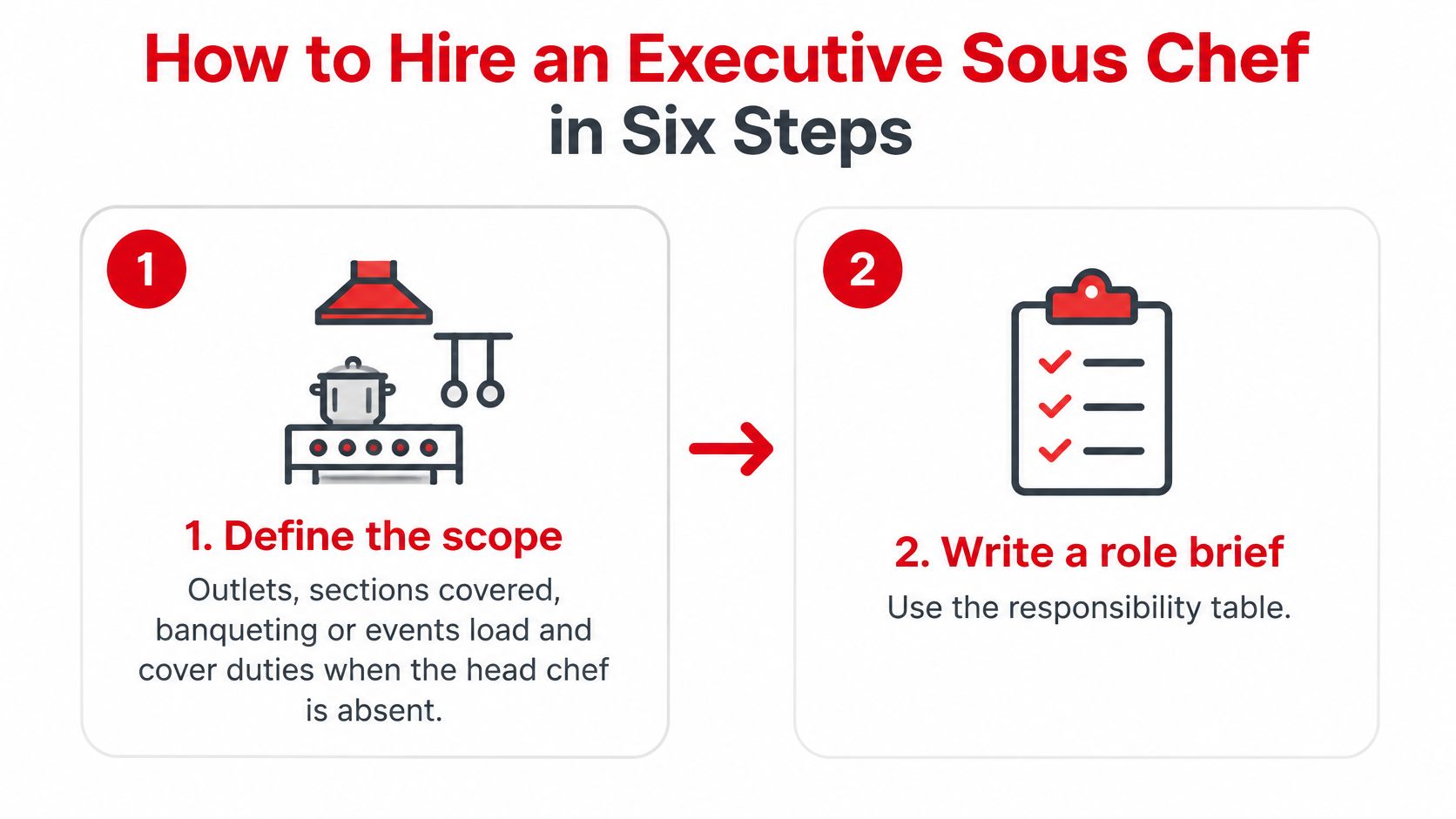
How to Hire an Executive Sous Chef in Six Steps
Hire for the shift you've got, not the tidy version in an advert. These six steps work for a permanent appointment and, with tighter timescales, for a temporary senior placement too.
Steps One to Three
- Define the scope. List outlets, sections covered, banqueting or events load, and exact cover duties when the head chef is absent. If you can't define the scope, you can't judge whether a candidate has done it before.
- Write a role brief. Use the responsibility table from earlier so candidates know who owns rotas, ordering, HACCP records, allergen controls, stock variance and handovers. This prevents the common slip where everyone assumes someone else owns food safety.
- Screen for operational evidence. Check HACCP and costing experience, rota knowledge and recent multi-section work. Ask for specific examples of running service alone, not general claims about being a team player.
Steps Four to Six
- Run a paid trial shift on the working pass. Use live tickets and watch how they handle a delay, an allergy query and a short-staffed section. Skipping this step is the most expensive mistake venues make, because a polished interview doesn't show how someone runs a Saturday service.
- Complete the checks before an offer. Take references, verify right to work and confirm insurance cover where relevant. Don't hand over supplier accounts, safe keys or food safety sign-off until those checks are done.
- Brief them properly on the first shift. Provide a written handover pack covering the covers forecast, section status, allergy list, supplier issues and sign-off routine. A strong appointee still needs local facts, and guesswork on day one creates avoidable risk.
First shift test: If your new exec sous chef has to hunt for allergen information, your handover has failed, whatever their experience.
Temporary appointees need exactly the same pack, even if they're only with you for a week. Short placements fail when venues assume experience replaces local knowledge. It doesn't. Menu specs, supplier cut-off times, fridge locations, function sheets and front of house contacts all need to be written down.
Keep the process moving. Good senior chefs have options, especially before summer, Christmas and wedding season. A slow decision after a strong trial shift often means you start again, while your existing team absorbs more overtime.
For background on how the wider brigade fits together, this overview of the kitchen brigade helps owners who are restructuring senior roles rather than just replacing a leaver. Use it to check reporting lines before you advertise. Clear structure makes recruitment, probation and performance management far easier.
Executive Sous Chef FAQs
Is Executive Sous Chef a Legal Requirement
No. UK law doesn't require the title, and neither does the National Careers Service. What the law requires is a documented HACCP-based food safety system that works in practice. If you've got several sections, functions and evening service running together, you need a named senior person to own that system on shift. That's a practical decision, not a legal label.
Can a Temporary Executive Sous Chef Sign Off Records on Day One
Only after your vetting checks are complete and they've received a written handover pack. That pack must cover the covers forecast, section status, allergy list, supplier issues and the sign-off routine. Don't let urgency shortcut this. A signature from someone who hasn't been briefed on your controls gives you paperwork, not protection.
Should You Promote a Sous Chef or Bring in Cover
Ask two questions. Has your sous chef run the pass alone through a full busy service, and do they already handle costing, rotas and HACCP verification confidently? If the answer to either is no, bring in an experienced temporary appointee and keep your sous chef on their own section. Pulling a strong section chef off the line to improvise a senior role can weaken two areas at once.
Choosing Cover and Confirming It Before Service
A Bristol hotel restaurant loses its executive sous chef to sickness three weeks before the summer wedding season. The head chef is already covering two sections, the banqueting diary is full, and the sous chefs are clocking up overtime. That's not a problem you solve by asking everyone to try harder. You need a cover decision before service quality, safety and morale start to slip.
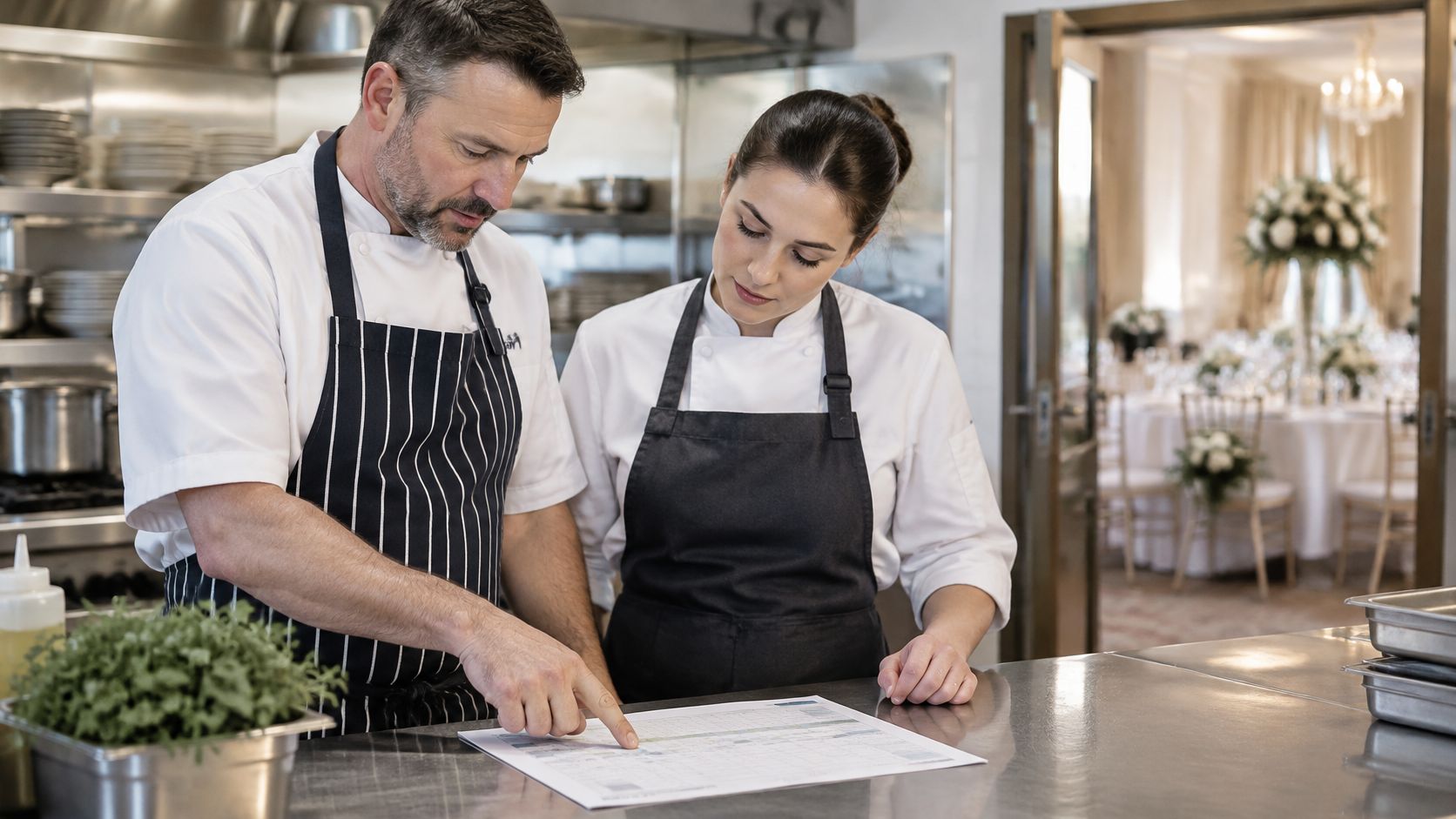
The image below captures the kind of schedule review that should happen before you confirm any senior cover.
Overtime, temporary cover, permanent hire and cheaper replacement compared
| Option | Speed to start | Cost profile | Control and risk | Best when |
|---|---|---|---|---|
| Overtime for an existing sous chef | Immediate | Premium hourly pay and rising fatigue | Low control, rest-period breaches likely over time | One or two short absences |
| Temporary executive sous chef cover | Same day to a few days with a specialist agency | Short-term fee with no long-term payroll cost | Medium, depends on handover quality and vetting | Sickness, seasonal peaks or a multi-outlet opening |
| Permanent executive sous chef hire | Several weeks to several months | Salary, employer National Insurance, holiday pay and pension | High once the appointee settles | A gap that will not close |
| Cheaper, less experienced replacement | Fast | Lowest hourly rate | High supervisory and food-safety exposure | Only as support, not as sole senior cover |
When Temporary Cover Is Justified
Use clear triggers. Repeated absence, lost covers, reduced opening hours, a multi-outlet opening or a planned seasonal peak in Devon, Dorset or Windsor all justify temporary senior cover. The same applies when weddings in Berkshire, events in Reading and Slough, or summer demand in Wales stretch a rota that's already short.
Don't judge solely on hourly rate. The cheapest hourly option is often the most expensive once you count weaker supervision, food waste, overtime concentration, cancelled bookings and compliance risk. A less experienced replacement may fill a name on the rota while increasing quality and food safety exposure. That's false economy in a senior role.
Watch this short video before you brief any incoming senior chef, then compare it with your own handover process.
Check Working Time Before You Stretch the Rota
UK rules normally entitle workers over 18 to 11 consecutive hours of rest between working days and either 24 hours without work in each seven-day period or 48 hours in each fortnight, with an uninterrupted 20-minute rest break when they work more than six hours in a day, as explained in HSE working time guidance. The break must fall during the working day, not at the start or end, and doesn't automatically have to be paid unless the contract says so.
Apply that to real rotas. A chef finishing at 23.00 after late service and returning at 07.00 for breakfast has only eight hours between shifts. That's a breach risk and a fatigue risk. Continuity of service and foreseeable surge exceptions can affect how entitlements operate, but they don't remove the need for safe scheduling.
Take three actions in order. First, decide whether the gap is temporary, seasonal or permanent. Second, issue the handover pack so any cover can start properly on the first shift. Third, contact a specialist rather than repeatedly reshuffling tired staff.
Relief Chefs UK has been a trusted nationwide chef recruitment agency since 2013, supplying vetted relief chefs, temporary chefs, temporary sous chefs and head chefs, permanent chef recruitment, executive chef search and 24/7 emergency cover. That support covers hotels, restaurants, gastro pubs, country inns and event venues across England, Scotland, Wales and Northern Ireland, plus yacht chefs, villa chefs and wider hospitality staffing support where needed. Every chef is screened, reference-checked and verified for right to work.
If you need senior cover confirmed, call 01392 715474, email info@reliefchefs.co.uk or visit the Relief Chefs UK website. Don't wait for the next short-notice absence to become tonight's service problem. Set up the cover route now, while you can still brief properly and choose on quality rather than desperation.
If your kitchen needs a vetted exec sous chef, temporary senior cover or a permanent appointment who can run service from the first shift, contact Relief Chefs UK today. Tell us your covers, sections and start date, and we'll help you secure reliable cover before the gap costs you bookings, standards or staff.
Call the team.
Office 01392 715474 · info@reliefchefs.co.uk