
What Is an Executive Chef and Why UK Venues Need One
12 August 2026
An executive chef is the senior kitchen leader who controls menu engineering, food cost, brigade standards and commercial outcomes. In the UK, that role sits inside a large chef workforce of around 342,000 people in 2024, so it's not a vanity title, it's a serious operational job with real money attached (ONS Labour Force Survey context).
That's why the wrong hire shows up fast on a busy Friday night, the covers fall off, the pass backs up, and gross profit starts to drift before the month-end figures even land.
Defining the Executive Chef Role in a UK Kitchen
Friday night in a hotel or pub shows the job for what it is. The head chef who should be on the pass has called in sick, the starter tickets are stacking up, and the general manager is watching service wobble while food cost drifts in the wrong direction. That is the point many operators realise they do not need a stronger cook. They need a senior kitchen leader who can hold the operation together and protect profit under pressure.
What the title really means
In practical UK terms, an executive chef is accountable for menu engineering, food cost, brigade standards and commercial outcomes. The role sits within the broader chefs and head cooks occupation, and it covers more than cooking food to order. In a busy kitchen, that seniority matters because the executive chef turns service pressure into decisions on staffing, purchasing, prep discipline and consistency.
The title is often treated as a fancier label for a head cook. In a well-run venue, it means something different. A head cook can be strong on the pans and still be the wrong person to manage budgets, coach a brigade, or standardise output across outlets. An executive chef is usually the senior decision-maker who sets culinary direction, manages food costs, supervises the brigade structure and keeps standards steady across service, especially in pubs, hotels, restaurants and contract catering.
Practical rule: if the person's main job is keeping service moving and the pass under control, you are looking at a head chef shape. If they are also steering cost, people, and standards across the business, you are in executive chef territory.
UK hospitality has also had persistent vacancy pressure, and that makes kitchen leadership a profit-protection decision, not a prestige purchase (vacancy pressure and labour context). If the role is wrong, you feel it in food waste, labour instability and guest consistency before you ever feel it in the vacancy advert. In larger operations, that pressure is even more obvious, because one weak senior chef can pull down the whole kitchen team. In a smaller pub, the same mistake usually shows up as overcomplicated menus, poor margins and a service that cannot hold up when trade surges.
Core Responsibilities of an Executive Chef
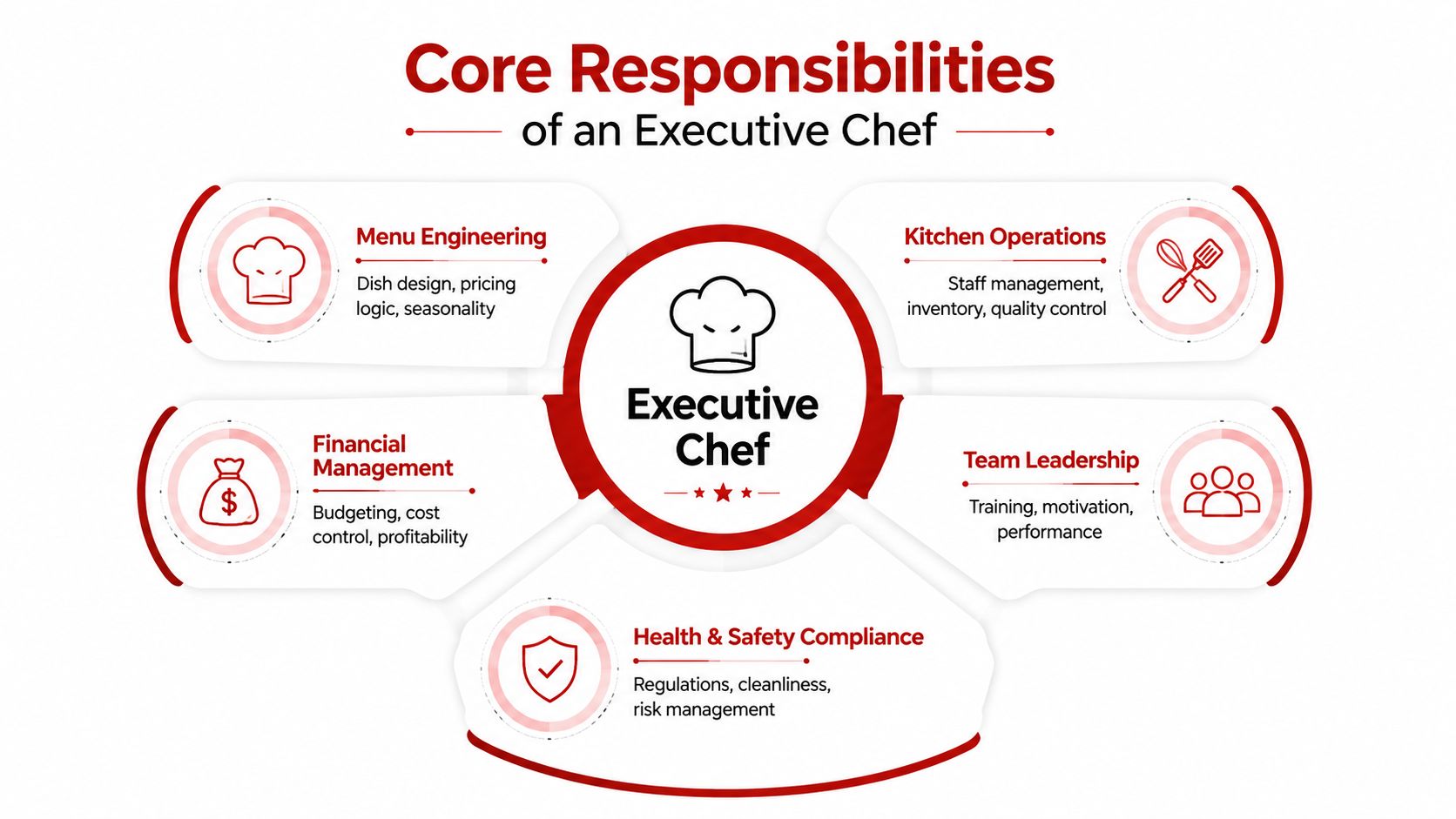
A busy Friday night usually exposes the job fast. The food has to leave on time, the labour has to stay controlled, the stock has to hold, and the team has to keep its shape when the pressure rises. That is why the executive chef role is less about culinary status and more about protecting margin, standards and service delivery across the kitchen.
A good executive chef does not just “do a bit of everything”. The role breaks into five areas that need to work together in a normal week, not only during a crisis. If one of them slips, the others start to wobble.
Menu engineering and commercial control
Menu work is never just creativity. In a UK kitchen, it means dish design, pricing logic, seasonality and allergens, and it has to fit the kitchen's real labour and equipment, not an ideal setup. A dish that looks exciting on paper can become a problem if it slows the line, depends on unreliable supplier items, or is awkward to hold during service.
That is where venue size matters. An independent pub needs a menu that sells, cooks quickly and keeps gross profit intact. A boutique hotel can carry a little more range, but the menu still has to match staffing levels, breakfast rhythm and banqueting demands. In a multi-site group, the executive chef also has to keep the offer coherent across locations without letting each kitchen drift into its own version of the menu.
Food cost and yield
The executive chef protects margin. Job specifications commonly include purchasing, yield, waste control, stock takes, food-cost targets and pricing dishes to maintain profitability (job specifications, commercial and budget duties). That means watching delivery quality, challenging supplier changes, tightening prep lists and staying close to the numbers with the GM or owner. If you do not know where the waste is going, profit is already leaking.
In practice, many operators mis-hire. They bring in a brilliant cook who can write a beautiful menu, then discover there is no grip on portions, trim, labour hours or ordering discipline. On a busy service, that gap shows up quickly in comped dishes, overproduction and a fridge full of dead stock.
Brigade leadership and staffing
An executive chef is also responsible for hiring, training, rota design and performance conversations (UK job description). That matters more than many owners admit. A well-trained brigade can absorb a bad day, a call-off or a sudden cover gap. A fragile team cannot.
This is also where the role changes with the venue. In a small pub, the executive chef may still be close to the pans, but their primary value is in building a team that can run the pass without constant intervention. In a larger hotel or group operation, the same person may spend more time on coaching, recruitment decisions and shift planning than on service tickets. Either way, poor staffing decisions hit guest experience and labour cost at the same time.
Compliance and standards
The role also sits on the compliance side, with HACCP, EHO readiness, allergen law and hygiene all part of the job. In practice, that means someone owns the paperwork, the cleaning routines and the checks before the inspector does. It is not glamorous, but it keeps the venue open and tradeable.
Standards are not just about passing an inspection. They also keep the kitchen repeatable when trade gets messy. Recipe specs, temperature logs, label control and cleaning routines all matter because they stop small mistakes from turning into customer complaints or avoidable waste.
Service consistency across the whole house
The last responsibility is standards. Recipe spec, plating, batch control and brand voice all matter, especially when one kitchen is feeding a restaurant, a bar menu and a private event at the same time. Where there is more than one outlet, the executive chef becomes the person who makes sure the same dish looks and tastes like the same dish everywhere.
That consistency is what separates a senior kitchen operator from someone who only keeps the pass moving. The executive chef is judged less by how well they plate a single dish and more by whether the whole operation behaves the same way on a Saturday night and a quiet Tuesday lunch.
Executive Chef vs Head Chef, Chef de Cuisine and Sous Chef
The easiest way to clear up the title confusion is to look at scope, authority and kitchen size. UK venues often use these terms loosely, but they're not the same job when the business is under pressure.
| Role | Primary Focus | Scope | Typical Venue |
|---|---|---|---|
| Executive Chef | Commercial leadership, standards, cost control | One or more outlets, often strategic | Hotels, groups, larger catering operations |
| Head Chef | Day-to-day kitchen leadership, service delivery | Single kitchen, strong operational control | Independent restaurants, pubs, smaller hotels |
| Chef de Cuisine | Culinary execution and standards | Kitchen-level culinary direction | Larger brigades, hotel restaurants |
| Sous Chef | Second-in-command, service support | Shift-to-shift execution | Most professional kitchens |
An executive chef is usually the more strategic role, with wider responsibility and often P&L-style accountability. A head chef is more likely to own the pass, the daily rota reality and the immediate service rhythm. A chef de cuisine typically focuses on culinary direction and standards inside a larger brigade, while the sous chef turns the plan into service reality and steps in when pressure rises.
That distinction matters because smaller venues often blend the titles. A good independent pub in Berkshire or a boutique hotel in Dorset might call one senior cook an executive chef, but the actual job is still hands-on, service-led and narrow in scope. A multi-site hotel group in London, Windsor or Reading needs a different shape altogether, with someone overseeing consistency rather than standing at every pass.
Rule of thumb: if one kitchen, one menu and one service team describe the job, a strong head chef is often enough. If there are multiple outlets, banqueting, purchasing decisions and cross-site standards, the executive chef label starts to make sense.
For a fuller look at the day-to-day remit of a head chef, see this role breakdown. It helps owners spot the point where a head chef becomes the wrong tier and the business needs broader leadership.
A Day in the Life Across Different UK Venues
An executive chef's day changes with the venue. That's the bit many hiring managers miss. The title stays the same, but the job can look very different depending on whether the business is a small independent, a boutique hotel group or a higher-volume pub.
Boutique hotel group in Berkshire
In one version of the role, the executive chef starts with menu planning for two outlets, then checks delivery changes from suppliers in Reading before heading to a service spot-check in Windsor. The morning is about margins, availability and prep lists. The afternoon is about tasting, training and making sure both kitchens are still cooking the same food to the same spec.
That person may never spend long on the pass unless something goes wrong. Their value sits in orchestration, not heroics. If the venue is growing, this is the shape that keeps standards from drifting as the business expands.
High-volume independent pub in Bristol
In another version, the executive chef is still hands-on on the pass during peak weekend trade. They're calling sections, adjusting the board, dealing with a missing commis and stepping into the fryer or garnish section when a call-off hits the rota. The seniority still matters, but the job is much more tactile because the kitchen can't carry a deep management layer.
That doesn't make the title any less real. It just means the business is using an executive chef shape to cover both strategy and service. In practice, that can work well in a busy pub group, but only if the candidate can still cook, coach and make commercial decisions under pressure.
A lot of hiring mistakes come from ignoring venue size. A small site that hires someone with multi-outlet ambitions often ends up paying for experience it can't use. A larger venue that hires a strong line cook without strategic grip often gets immediate service relief and long-term chaos.
Salary, KPIs and Commercial Outcomes UK Operators Should Track
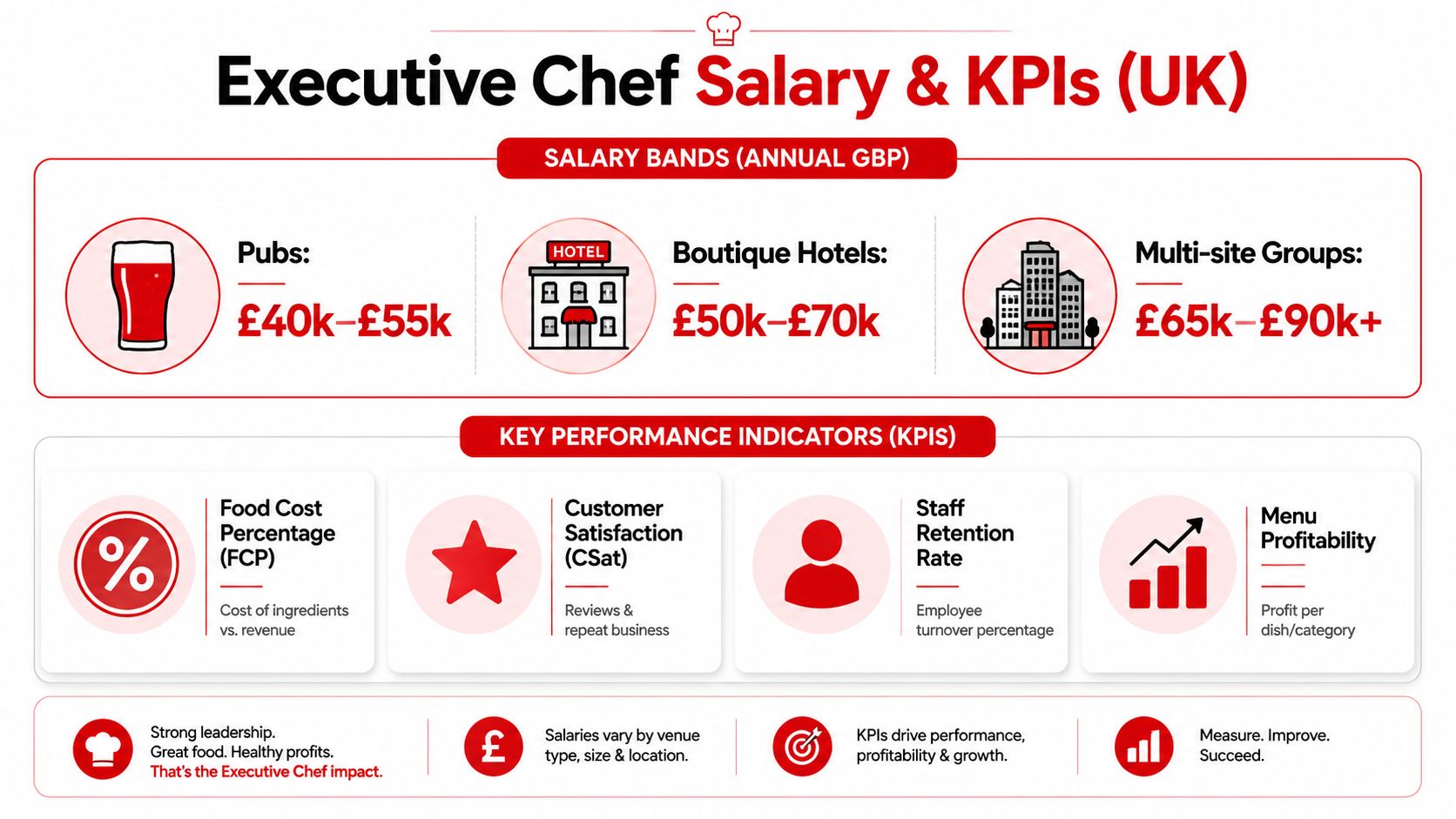
If you are hiring an executive chef for title alone, you are paying for the wrong thing. The pay has to fit the operation in front of you, because a one-site pub in Devon is carrying a very different burden from a multi-outlet hotel group in Berkshire or Wales. The question is whether the salary matches the commercial pressure, the span of control and the level of cost oversight you expect from the role.
The KPIs That Matter
Keep the scorecard tight. The numbers that usually tell you most are gross profit percentage, food waste as a percentage of purchases, labour cost as a percentage of revenue and guest review scores tied to food. If those are moving the right way, the kitchen is usually being led properly. If they drift, the title on the payslip does not buy you much.
Cost control sits at the centre of the job. Executive chefs are hired to keep menus profitable, watch labour, manage purchasing discipline and stop waste creeping into service. That lines up with the commercial duties expected in senior kitchen roles, where the chef is responsible for estimating food and labour costs, managing budgets and pricing dishes to protect margin (commercial duties). A practical UK job description also points to reviewing staffing levels against service, operational and financial objectives, which is the kind of accountability operators should be measuring every week (UK job description).
A chef can produce a polished menu and still cost the business money. That is why the commercial read matters more than the plate garnish. On a busy Friday night, the kitchen that protects gross profit, keeps waste down and holds labour within plan is doing the job that matters.
How Region and Venue Shape the Brief
A coastal property in Devon or Dorset often needs a different balance of seasonal menu control and staffing resilience than a year-round city venue. A short trading season changes the KPI picture, because the kitchen can look healthy on a strong weekend and still be fragile on a Tuesday in low season. Multi-site operations need more emphasis on consistency, while a single-site pub may care more about waste and labour discipline.
Pay should follow that reality. A senior kitchen hire in one venue might be judged mainly on margin, stock control and service stability, while a broader executive chef role may also carry menu governance, training and cross-site standardisation. For a practical guide to pay benchmarking, this UK chef salary breakdown gives a useful reference point when you are setting expectations for a senior kitchen hire.
When a UK Venue Needs an Executive Chef
The point to hire is rarely when the menu starts to feel stale. It is when the business needs one person to keep people, product and cost under control while service is under pressure.
The triggers that usually tip the balance
Short-notice sickness is often the first warning sign. If one absence can throw service off, the kitchen needs stronger leadership or a dependable relief setup. Seasonal demand is another trigger, especially in coastal and holiday-heavy parts of the UK where Devon and Dorset operators feel the swing sharply. Agency unreliability, multi-site growth and the loss of a long-standing head chef also push a venue towards a more senior hire.
The role becomes more necessary once the chef is doing far more than cooking. If one person is handling purchasing, training, rota gaps, supplier disputes and quality control at the same time, the kitchen is already being run like an executive chef function, even if the title has not caught up yet (role definition and operational scope).
A simple decision framework
- Small independent pub with one kitchen: an executive chef is usually optional. A strong head chef plus dependable relief cover often fits the business better.
- Boutique hotel with a single restaurant: the executive chef becomes more useful when the operation includes menu development, events or tight margin control.
- Multi-site group: an executive chef is often the right call because standards, purchasing and people management need one clear owner.
- Private household or yacht operation: the brief changes again, and the chef usually needs to manage discretion, sourcing and guest expectations without a normal brigade structure.
The question is whether the venue needs a profit-protection layer at kitchen level. A small independent pub usually does not need a full executive chef salary if the head chef can hold standards and a relief plan can cover absences. A boutique hotel often reaches the point where food consistency, purchasing discipline and event delivery justify the hire. A multi-site group generally needs someone who can set the line on standards, protect gross profit and stop each site drifting into its own habits.
Hiring an Executive Chef with a Practical Job Description Template
The fastest way to write a solid brief is to keep it simple and measurable. A good executive chef advert should tell candidates what the business expects, how success will be judged and who they report to. If it doesn't do that, you'll attract people who like the title but not the job.
Start with this structure and adapt it to your venue:
Role purpose
Lead the kitchen operation, maintain standards, control costs and support service delivery across one or more outlets.
Core duties
Menu development, supplier management, stock control, brigade leadership, compliance, training, and service consistency.
KPIs
Gross profit, food waste, labour cost, guest feedback tied to food, and rota stability.
Person spec
Experience at similar venue size, budget awareness, leadership under pressure, allergen and hygiene knowledge, and a track record of retaining staff.
Reporting line
Who they report to, usually the general manager, operations director or owner.
Shortlisting signals that matter
- GP track record at similar scale: not just “ran a kitchen”, but managed cost in a comparable operation.
- References on brigade retention: ask how the team behaved after the candidate took charge.
- Right-to-work documentation: check it early, not after the offer.
- Budget experience: if the role needs commercial grip, don't hire on cooking style alone.
A common mis-hire is promoting a brilliant head cook into an executive chef seat without the budget discipline or multi-site experience to support it. Another is under-sizing the cover model and expecting one person to fix a fragile rota.
If you need permanent chef recruitment, this recruitment page is the right place to start, especially when you're weighing up a permanent hire against temporary cover or a staged transition. A venue can also talk to the team about ongoing support when it needs a steadier pipeline rather than a one-off placement.
FAQs and Next Steps with Relief Chefs UK
An executive chef can still cook, but in stronger operations the job is mostly about leadership, control and consistency. In smaller venues the title is often used more loosely, and a head chef may do much of the same work without the wider remit. UK salary expectations depend on venue size and complexity, so the brief has to match the kitchen, not the name on the advert.
If you need short-term cover, the right answer is often faster than a permanent search. Relief Chefs UK works across relief chefs, temporary chefs, permanent chef recruitment, yacht chefs, villa chefs and wider hospitality staffing support, with a nationwide model built for venues that can't afford to lose service continuity. The team has been established since 2013 and is available 24/7 to help put vetted chefs in place, subject to availability.
Contact Relief Chefs UK for a confidential conversation if you're dealing with sickness cover, seasonal pressure, a senior chef departure or a multi-site hiring plan. If your business needs an executive chef shape, or the right level of support until you hire one, use the brief and the venue type to guide the decision.
If your kitchen needs stable leadership, relief cover or a permanent executive chef search, speak to Relief Chefs UK today. They place chefs across pubs, hotels, private households, yachts and villa operations, and they understand the difference between a quick fix and the right long-term fit. Visit Relief Chefs UK to arrange a confidential discussion and keep service moving.
Call the team.
Office 01392 715474 · info@reliefchefs.co.uk