
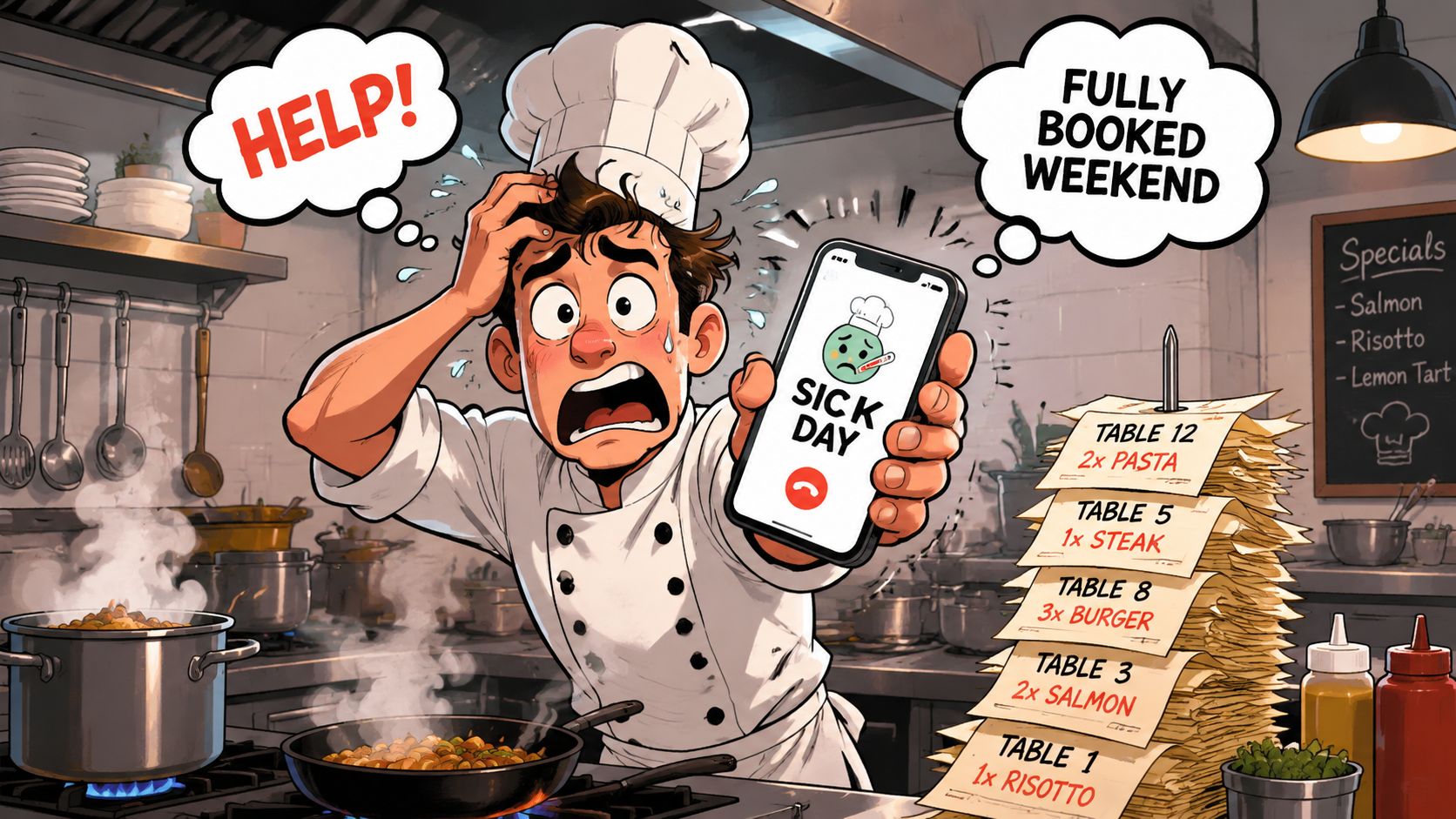
Friday lunch is booked out. Saturday dinner is full. A chef texts at 7:12am to say they're down sick, another has already hit overtime, and your sous chef is asking whether you want to cut the menu before service starts slipping.
That's the moment most operators know whether their staffing plan is real or just hopeful.
In hospitality, kitchen problems rarely arrive with notice. They land on busy weekends, bank holidays, wedding dates, race days, and school breaks. If your only model is a fixed brigade, you're carrying risk every day. One absence can trigger slower tickets, lower standards, stressed managers, guest complaints, and lost revenue by the end of the shift.
The wider market isn't helping. Hospitality vacancies in the UK remain approximately 48% above pre-pandemic levels, equal to about 132,000 open roles nationwide in 2025, and over 60% of businesses report cutting hours or closing on certain days because they don't have enough staff, according to UK hospitality staffing trends data.
Flexible staffing solutions exist for exactly this reality. Not as a vague HR policy. As operational protection.
They give kitchens a way to stay open when the rota breaks, protect service during seasonal surges, and reduce the damage caused by long hiring gaps. For an independent pub in Devon, a hotel in Dorset, or a restaurant group around Windsor and Reading, that changes the conversation from panic to control.
Your Kitchens Lifeline in a Staffing Crisis
A staffing crisis usually starts subtly. One message. One call. One no-show.
By mid-morning, it becomes expensive. You're calling old contacts, moving prep across stations, asking a tired chef to stay late again, and deciding which corners can't be cut. Guests never see the rota. They only see slow service, missing dishes, and a team that looks stretched.
What the scramble really costs
The immediate problem isn't just the gap on the rota. It's the chain reaction.
- Standards drop first: The menu stays the same, but the team behind it is thinner and more rushed.
- Managers get pulled off management: Instead of running service, they're covering sections, washing up, or trying to source help.
- Permanent staff burn out: Good people stay loyal until repeated crisis shifts make them rethink the job.
- Revenue leaks away: Covers are reduced, opening hours get trimmed, and premium bookings become harder to deliver with confidence.
For venues that still rely on ad hoc favour-calling, this isn't bad luck. It's an operating weakness.
Practical rule: If a single sick day can force you to reduce service, your staffing model is too rigid.
The answer isn't to carry an oversized full-time brigade all year. That creates a different problem when trade softens. The answer is to build access to chef cover before you need it, especially for emergency relief chef cover across the UK.
Why flexibility now matters more than it used to
Operators are dealing with a thinner labour market than they did a few years ago. The kitchen roles that used to be filled through local contacts or a quick agency call now often take longer and come with more uncertainty.
That's why flexible staffing has moved from backup plan to business-critical tool. It protects your busiest periods, gives your core brigade room to breathe, and keeps the venue trading when a key chef disappears without warning.
The businesses that handle this well don't wait for the crisis to start. They decide in advance who covers what, which roles must be protected first, and which staffing partner can respond when the pressure hits.
What Are Flexible Staffing Solutions in Hospitality
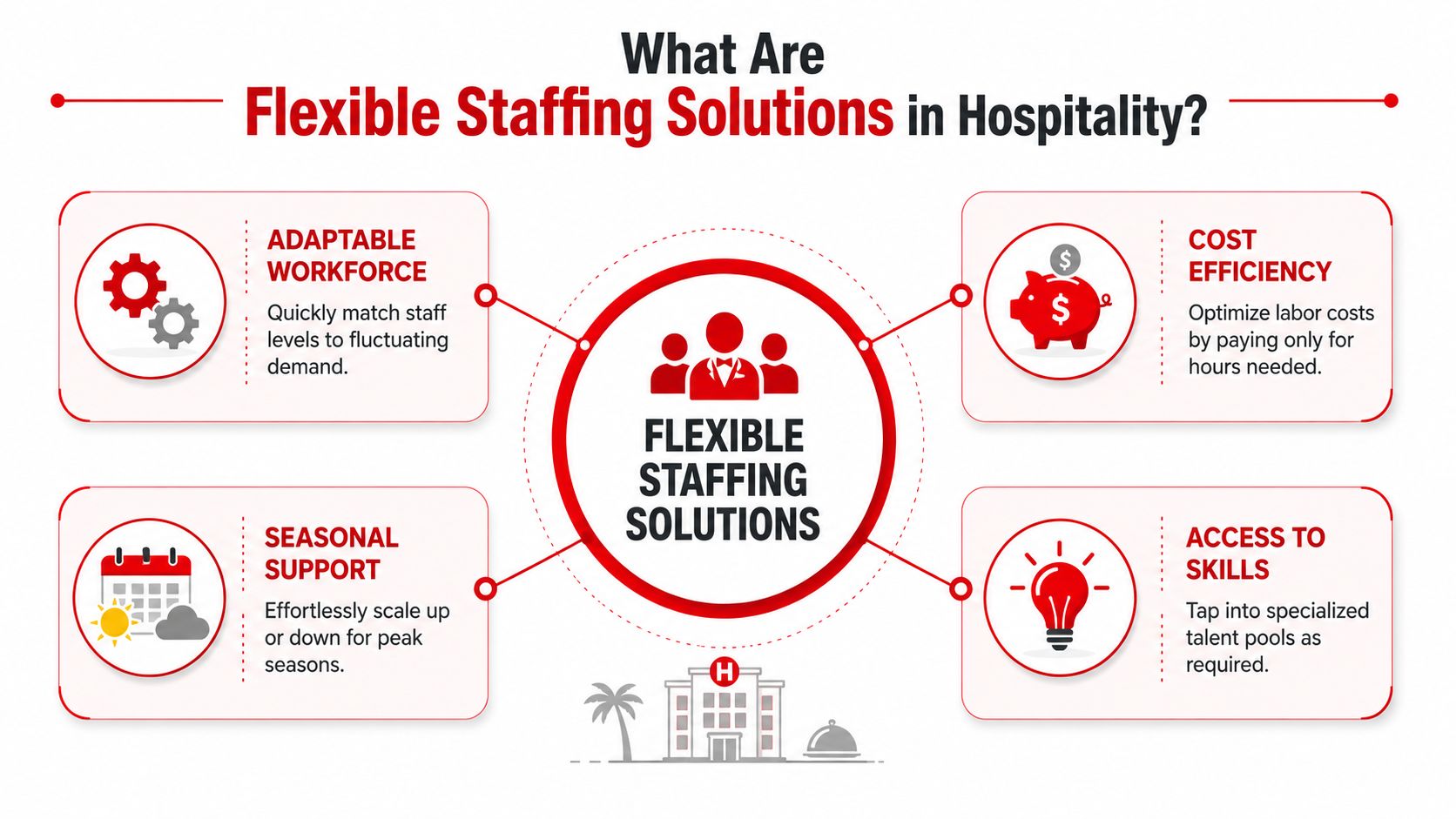
Flexible staffing solutions are a simple idea with a big operational effect. Instead of treating labour like a fixed annual cost, you treat part of it like a variable cost that moves with demand.
For most hospitality businesses, that means keeping a stable core team and adding temporary support only when trade, events, holidays, sickness, or recruitment gaps require it.
Fixed brigade versus flexible labour
A fixed brigade gives consistency, but it can be blunt financially. If you overstaff, labour costs stay high even in quieter weeks. If you understaff, the team carries the strain and service becomes fragile.
A flexible model works more like pay-as-you-go support. You bring in extra kitchen strength when the business needs it.
| Model | What happens in practice | Main risk |
|---|---|---|
| Rigid staffing | Full reliance on permanent team | High exposure when someone leaves or goes off sick |
| Overstaffed operation | Better cover, but wage pressure all year | Labour cost runs ahead of revenue in slow periods |
| Flexible staffing approach | Core team plus temporary chef support | Requires a reliable specialist partner and clear planning |
This is one reason the model has become standard practice. 83% of UK hospitality firms now offer flexible shift patterns, largely because it avoids the cost burden of a large fixed team year-round, according to reporting on the rise of flexible staffing in hospitality.
What it looks like in a real venue
A coastal hotel in Devon may need extra breakfast and banqueting support over summer. A gastropub in Bristol may only need short-notice relief when the head chef is on leave or a CDP resigns unexpectedly. A multi-site operator in Berkshire may need rolling support across several kitchens while permanent recruitment catches up.
Those are all flexible staffing situations, but they aren't the same.
- Emergency cover keeps service running after sickness or a walkout.
- Seasonal reinforcement protects quality during predictable demand spikes.
- Interim support buys time during permanent chef recruitment.
- Specialist placements fill niche roles such as yacht chefs, villa chefs, event chefs, or high-end private hospitality support.
Flexible staffing works best when it supports the permanent team, not when it replaces management discipline.
Used properly, this isn't about lowering standards. It's about protecting them. The strongest operators use flexible staffing solutions to decide where they need fixed commitment and where they need controlled agility.
Key Flexible Staffing Models for Your Venue
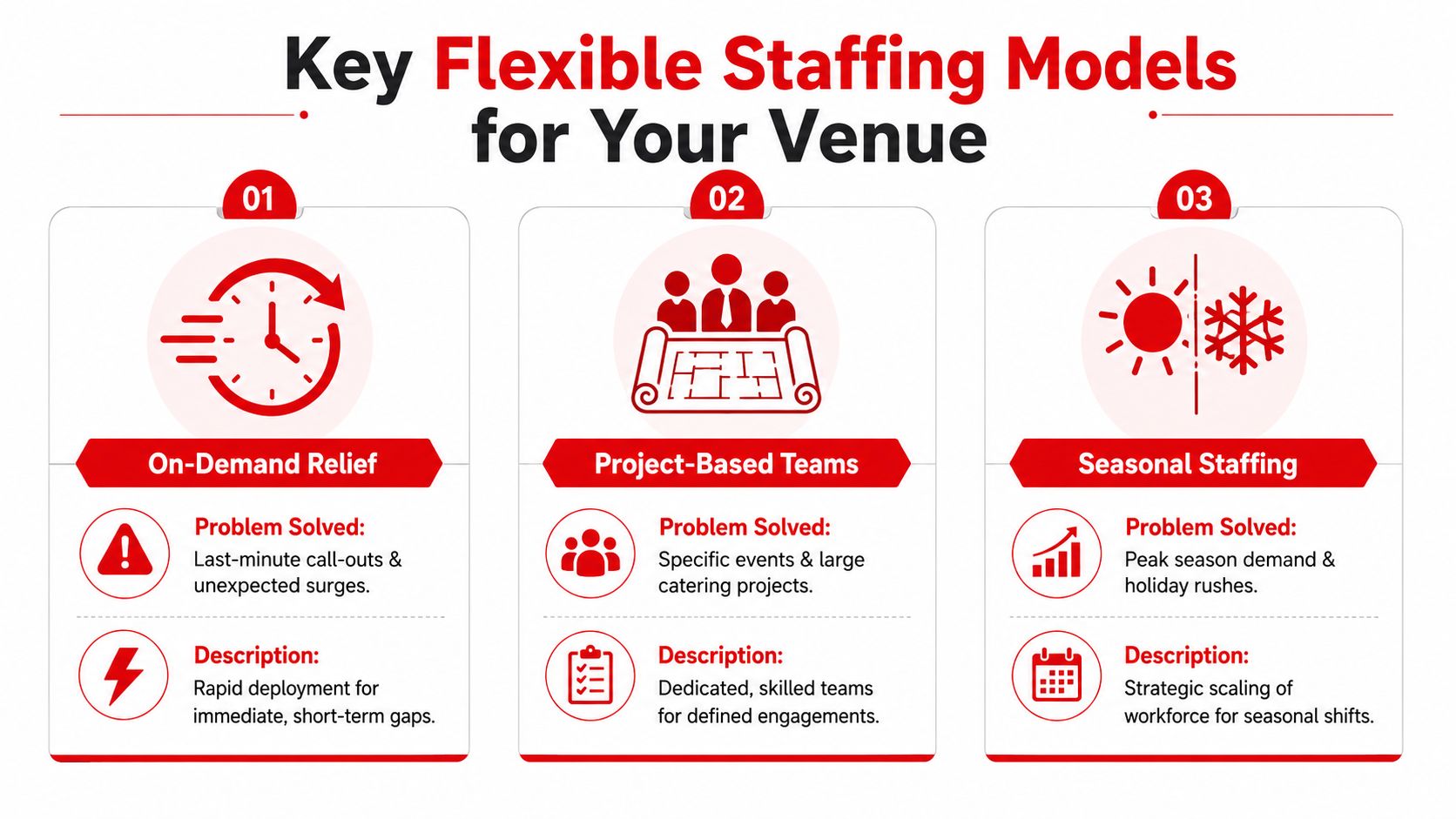
Not every staffing problem needs the same answer. Operators get better results when they match the model to the pressure point instead of asking one agency to do everything.
One point matters here. Nearly one-third of UK hospitality employees were on flexible or casual contracts in Q1 2024, which shows this isn't a fringe solution. It's part of how the sector now operates, as noted in analysis of flexible and casual employment in UK hospitality.
On-demand relief for immediate gaps
This is the model most independent venues need first.
A chef calls in sick. A trial shift doesn't work out. A wedding booking expands. A bank holiday hits harder than forecast. You need someone capable in the kitchen fast, not next week.
Best for:
- Short-notice sickness
- No-shows
- Weekend pressure
- Unexpected spikes in covers
- Bridging a gap before a permanent starter joins
The strength of on-demand relief is speed. The weakness is that not every supplier can deliver chefs who are kitchen-ready. Some agencies are fast at sending CVs but slow at placing people who can walk into your operation and hold a section.
For venues comparing options, it helps to review specialist temp staff agencies for hospitality support rather than broad labour suppliers that don't understand kitchen hierarchy, prep systems, allergens, or pace of service.
A busy venue should also know what “cover” means before calling anyone. Do you need a hands-on head chef, a sous to run pass, or a solid CDP who can keep prep and service stable? The clearer the role, the better the result.
Temp-to-perm for lower-risk hiring
Temp-to-perm is one of the smartest ways to recruit chefs when CVs look similar and interview performance tells you very little about service pressure.
Instead of committing immediately, you bring a chef into the kitchen on a temporary basis and assess:
- section control
- cleanliness and organisation
- pace during service
- team fit
- attitude with front of house and management
This model suits boutique hotels, destination pubs, and quality-led restaurants where a bad permanent hire causes months of disruption. It's especially useful in areas where candidate supply is uneven and operators can't afford repeated hiring mistakes.
Managed support for predictable pressure
Some businesses don't have a one-off problem. They have a recurring pattern.
That could mean a Dorset hotel with a long summer shoulder, a Wales venue that struggles with consistent rural recruitment, or a Berkshire group moving chefs between sites to plug regular gaps. In those cases, managed flexible staffing makes more sense than one-off bookings.
Monthly support plans and priority access matter. You're not asking for miracles each time. You're creating a standing layer of support around the core operation.
A short industry video gives a useful overview of how flexible staffing models are being used in practice:
Specialist roles beyond the standard kitchen rota
Some staffing needs sit outside the classic pub or hotel brigade.
Think:
- Yacht chefs for charter seasons
- Villa chefs for private households and holiday estates
- Event chefs for temporary catering projects
- Permanent chef recruitment when interim support needs to become long-term stability
These roles demand a tighter brief, stronger vetting, and clearer understanding of guest expectations. A chef who works well in a high-volume pub kitchen won't automatically fit a private household or yacht environment.
How to Choose the Right Staffing Partner
Most staffing problems aren't caused by the idea of agency cover. They're caused by weak agency execution.
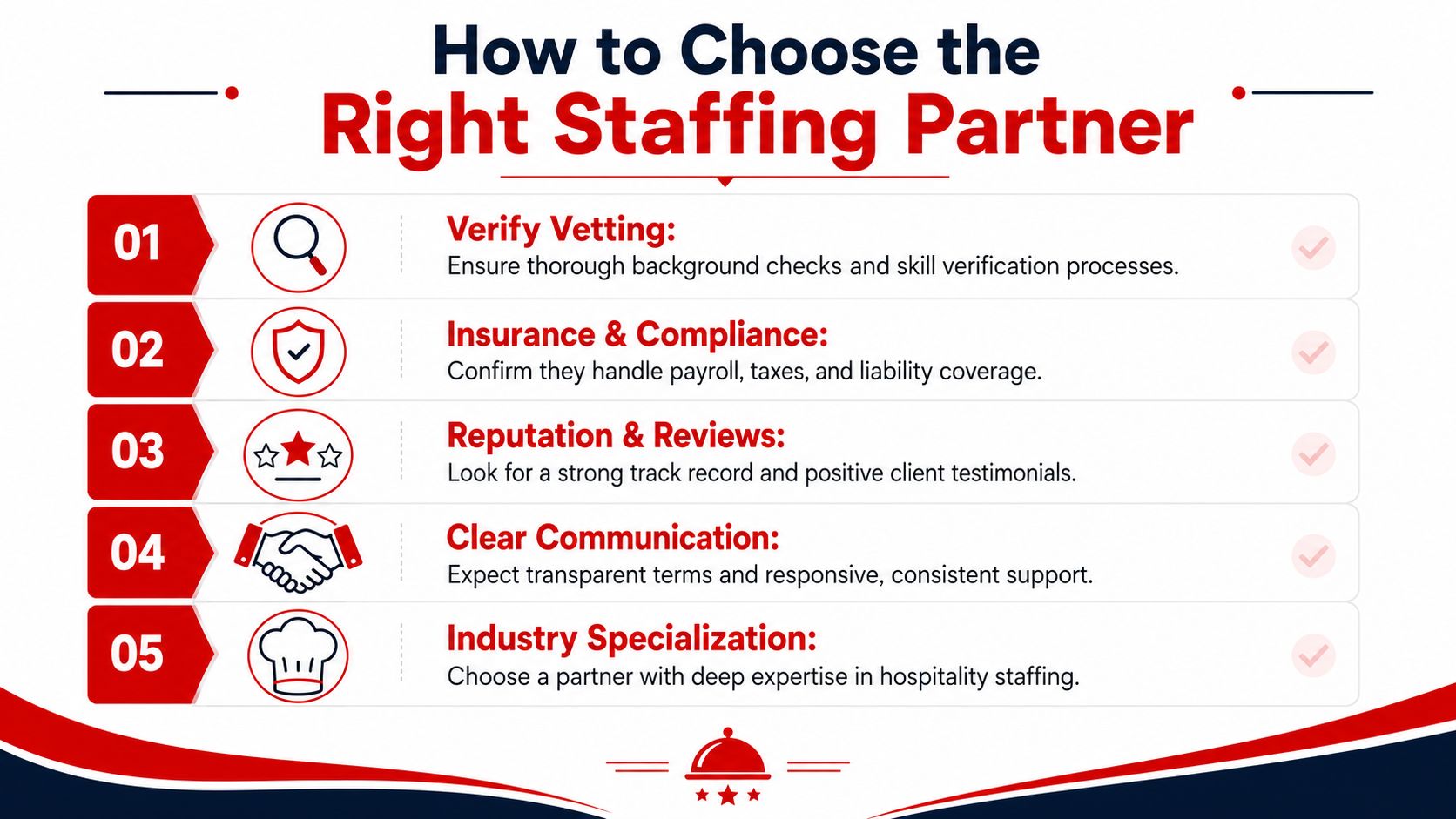
The wrong partner sends whoever is free. The right partner asks the right questions, checks the right documents, and understands what your kitchen needs before making the match.
Start with chef-specific compliance
Generalist agencies often fall short because a chef isn't just another temporary worker. They need to be legally clear to work and operationally ready to handle food safely from the first shift.
That means more than a basic profile check. It means right-to-work verification, role suitability, and relevant kitchen compliance being in order before the chef arrives.
That gap is costing operators money. A 2025 CIPD report found that 42% of UK hospitality firms faced staffing delays due to incomplete compliance documentation from agencies, with an average cost of £1,850 per incident, according to coverage of flexible staffing compliance failures.
If you're vetting a supplier, ask direct questions:
- Who checks right-to-work documents before dispatch?
- How do they verify chef experience, not just availability?
- What happens if paperwork is incomplete on the day?
- Can they confirm food-related compliance before the shift starts?
A “pre-vetted worker” and a chef who can legally and safely start service immediately are not the same thing.
Test speed, not promises
Any agency can say they respond quickly. What matters is whether they can place the right chef when the pressure is real.
Ask what happens on a Friday afternoon when your grill chef drops out. Ask what happens during Christmas week, summer holidays, or a major local event in Bristol, Slough, or Windsor. Ask whether they offer replacement support if the first match isn't right.
Reliable flexible staffing solutions depend on response systems, not nice wording on a website.
Check whether they understand kitchens
A supplier that doesn't understand kitchen structure usually briefs badly and places badly.
You want a staffing partner that can talk sensibly about:
| What they should understand | Why it matters |
|---|---|
| Kitchen hierarchy | A sous chef booking is different from a CDP booking |
| Service style | Fresh food pub, banqueting hotel, fine dining and care catering all need different profiles |
| Section competence | Someone who can prep isn't always someone who can run service |
| Shift pressure | Breakfast, prep, weddings, race days and late-night trading each carry different demands |
This is one reason many operators prefer specialist freelance chef agency support over broader staffing providers.
Demand clarity on price and support
Cheap cover that fails mid-service is expensive. Price matters, but clarity matters more.
Look for:
- Transparent rates: You should know what you're paying and for what.
- No hidden surprises: Admin charges, cancellation confusion, and vague overtime terms create friction.
- Named support: When a booking changes, you need a person who answers.
- Backup process: If a chef falls through, the agency should already have a response plan.
Operator check: If you can't explain the booking terms to your GM in one minute, the supplier has made it too complicated.
A good staffing partner removes uncertainty. A poor one adds another layer of it.
Putting Flexible Staffing into Practice
Flexible staffing only works when it's built into operations before the crisis lands. If you wait until the rota has already failed, your choices narrow fast and quality usually goes with them.
A 2025 UKHospitality report found 68% of independent pubs face a critical staffing gap during peak seasons, with many unable to secure cover because they don't have a pre-vetted flexible staffing partner, according to reporting on peak-season staffing pressure.
Audit where your kitchen is exposed
Start with the failure points, not the org chart.
Look back over the past year and identify where service came under pressure. Most venues see the same patterns repeat:
- One key person dependency: The head chef, sous chef, or breakfast lead carries too much of the operation.
- Seasonal overload: School holidays, Christmas, events, and summer weekends stretch the same thin team.
- Recruitment lag: A departure creates a gap that runs for weeks, not days.
- Manager cover creep: Senior people stop managing and start plugging stations.
Write down which roles are critical to keep service live. Usually that's not every job in the brigade. It's the positions that stop the kitchen from functioning if they vanish.
Separate core team from flexible support
This line needs to be clear.
Your core team should hold standards, culture, ordering, stock discipline, training, and menu execution. Your flexible layer should protect the operation when demand jumps or labour drops.
That might mean:
- keeping your head chef and sous permanent
- using temporary chefs for sickness, leave, and vacancy gaps
- lining up extra seasonal support before the busy period starts
- using permanent chef recruitment only for roles that need long-term continuity
Make onboarding simple and repeatable
Temporary chefs fail most often because the venue gives them too little information, too late.
Build a one-page shift brief that covers:
- reporting time and dress code
- kitchen contact and access details
- service style and expected covers
- section responsibilities
- menu notes, allergens, and equipment quirks
- break policy and finish expectations
A chef who walks in well briefed settles faster, asks fewer avoidable questions, and puts less strain on your permanent brigade.
The handover should be clear enough that a strong relief chef can start contributing in the first hour, not spend half the shift decoding your kitchen.
Measure protection, not just spend
Operators often assess agency use too narrowly. They compare the shift cost to payroll and stop there.
A better test is what the booking protected:
- service that stayed open
- bookings that didn't need cancelling
- managers who could keep managing
- team fatigue that didn't spiral
- guest experience that remained consistent
That's the actual return. Flexible staffing solutions aren't there to look cheap on paper. They're there to stop expensive operational damage.
Real World Examples from UK Venues
The best way to judge flexible staffing is to look at the situations where it either saves service or gives an operator room to make a better long-term decision.
Dorset hotel choosing carefully on a head chef hire
A boutique hotel in Dorset needed a new head chef but couldn't afford to rush the appointment. The owners had already made one poor hire and didn't want another expensive reset.
They used a temp-to-perm approach instead. The chef came in, ran service, handled ordering discipline, worked with front of house, and proved they could lead the pass under pressure. The venue got evidence, not just interview talk. The eventual permanent offer was made with confidence.
Bristol pub rescuing a booked weekend
An independent pub in Bristol lost a key kitchen team member just before a busy weekend with live sport and private bookings. The problem wasn't next month's recruitment. It was getting through the next forty-eight hours without cutting the menu.
A relief chef stepped in to stabilise the kitchen, keep prep under control, and give the permanent team enough support to deliver service properly. The pub stayed open, standards held, and management avoided the usual last-minute scramble through unreliable agency lists.
Windsor and Reading group creating repeatable cover
A small restaurant group across Windsor and Reading had a recurring issue. One site was usually short, and the strongest chefs were constantly being moved around to patch the weakest rota.
Instead of treating each week as a separate emergency, the group created a planned flexible support model around its busiest days and known pressure periods. That stopped the internal reshuffle, reduced disruption across sites, and gave GMs a clearer picture of labour planning.
Private charter requiring a very specific chef profile
A charter client needed a chef for a yacht booking. This wasn't a standard restaurant placement. The role called for discretion, adaptability, strong guest care, and the ability to work in a compact, highly personalised environment.
That's where specialist staffing matters. A solid pub chef might be excellent in service but wrong for life on board. Matching the setting, pace, and guest expectation was the whole job.
These examples all point to the same lesson. Flexible staffing works when the solution fits the operational problem, not when the venue grabs whoever is available.
Frequently Asked Questions for Independent Venues
Isn't agency cover always more expensive than employing directly
Not always in practical terms. A permanent hire carries wages, holiday, employer costs, management time, and risk if the person turns out to be wrong for the role. Temporary cover can cost more per shift, but it can still be the cheaper option when you only need support at peak times or while recruiting properly.
How do I know a temporary chef will match our standards
You improve the odds with two things. Strong vetting from the staffing partner and a proper venue brief from your side. If you ask for “a chef”, you'll often get a vague fit. If you specify service level, menu type, section, shift pattern, and kitchen culture, the match is usually much stronger.
Can flexible staffing help with permanent recruitment too
Yes. It often should. Temp-to-perm is one of the safest ways to hire chefs because you can see how they perform in your kitchen before committing. That's useful for pubs, hotels, restaurants, and private hospitality roles alike.
We're in a harder-to-reach location. Can this still work
Yes, if you plan earlier and work with a partner with proper regional coverage. Rural Wales, coastal Devon, parts of Dorset, and country house locations often need more notice and a better brief. The key is not waiting until the day before service to start looking.
What's the biggest mistake operators make
Using temporary staffing reactively with no process. The best venues already know which roles need cover first, who signs off the booking, what the shift brief includes, and what good looks like when the chef arrives.
Does flexible staffing only suit large groups
No. Independent pubs and boutique hotels often benefit most because a single absence hits them harder. A large group may have internal movement options. A smaller venue often doesn't, which makes dependable temporary chef support even more valuable.
Secure Your Kitchens Stability Today
Hospitality doesn't reward rigid staffing. It punishes it.
If your kitchen depends on every permanent team member being available all the time, you're one sick day, one resignation, or one busy weekend away from disruption. Flexible staffing solutions give operators another option. They protect service, support the permanent brigade, and buy time to make better long-term hiring decisions.
The strongest venues don't use flexible staffing because they're disorganised. They use it because they're realistic. They know chef shortages, seasonal pressure, short-notice sickness, and unreliable cover are part of the market. Planning for them is good operations.
If you run a pub, hotel, restaurant, private household, yacht, or multi-site hospitality business anywhere from Bristol to Berkshire, Devon to Wales, the aim is simple. Keep the kitchen stable and the guest experience consistent, even when staffing goes wrong.
If you need reliable chef cover, permanent chef recruitment, or specialist support for relief chefs, temporary chefs, yacht chefs, villa chefs, and wider hospitality staffing, contact Relief Chefs UK. Established in 2013 and trusted nationwide, they support independent pubs, restaurants, hotels, private households, and charter clients across the UK. Use their enquiry form or call directly to secure fast, vetted chef support before the next rota gap becomes a service problem.